
The Truth About Managing Attention Problems (And Why Standard Advice Is Falling Short)
Reviewed by Dr. Saloni Kabra, BHMS
If simply standing up leaves you with a pounding heart, lightheadedness, and heavy legs, you already know how exhausting it is when your body overreacts to gravity. If you’re tired of being told to “just drink more water and eat more salt,” this article provides a deeper, evidence-based perspective.

In this short guide, you will discover:
- Why standard advice may fall short
- The hidden connection to the autonomic nervous system
- A potential non-invasive approach
Read on to find out what is really driving your symptoms, and why there is a new reason to feel hopeful.
Conventional Strategies - Do They Work?
If you’ve been battling postural heart rate abnormalities for years, you’ve probably tried it all. A Patchwork approach often looks like this:
- Extreme Hydration & Salt Loading: Tracking every ounce of water and adding extra salt to every meal just to feel functional.
- Compression Garments: Wearing tight stockings, leggings, or abdominal binders that provide temporary symptomatic relief.
- Postural Avoidance: Carefully pacing your entire life and avoiding standing to prevent triggering a dizzy spell.
- Pharmacological Options: Using medications to manage heart rate and blood pressure, which may cause adverse events such as tiredness or gastrointestinal discomfort in some individuals.
- Psychological Support: Engaging in counselling or mindfulness practices to help manage stress and improve coping strategies.
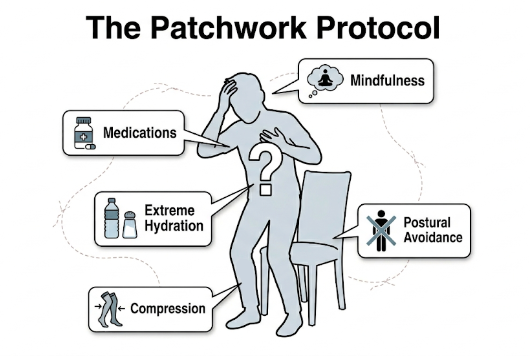
It’s a frustrating loop: you try a new protocol, feel a brief spark of hope, and then crash back down the next time you stand up too quickly. It’s not your fault. These conventional approaches may fall short because they primarily address symptoms, such as improving circulation or managing heart rate, without directly targeting underlying autonomic dysfunction.”
Research suggests that autonomic nervous system dysregulation is a key contributor to postural heart rate abnormalities.
When your nervous system is chronically stuck in an exaggerated “fight-or-flight” mode, your body overreacts to the simple act of standing, treating gravity like a threat. Lifestyle adjustments such as increased fluid and salt intake, compression garments, and activity modification may help manage symptoms but do not address the underlying autonomic imbalance. To find real stability, you need an approach that directly supports and regulates your autonomic balance.
That’s where vagus nerve stimulation comes in.
What is Vagus Nerve Stimulation (And Why Does It Work)?
Your vagus nerve is the main communication highway between your brain and your body. It plays a crucial role in regulating your heart rate, emotions, digestion, and your ability to shift into a calm, focused state (“rest-and-digest” mode).
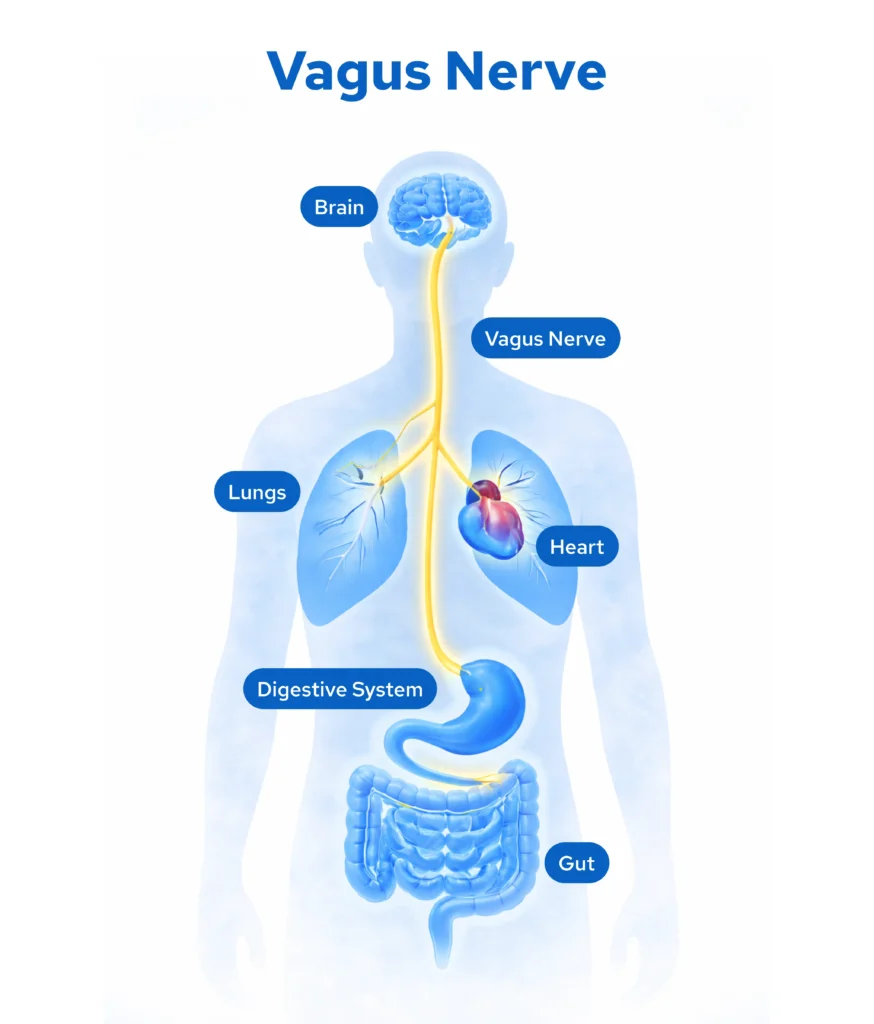
When your vagus nerve isn’t functioning optimally (often referred to as low “vagal tone”), your body may remain in a heightened stress state.
- Your nervous system stays locked in a state of hyperarousal or overwhelm.
- You experience intense brain fog and mental tiredness.
- Your emotional responses and impulses become harder to regulate.
- Your brain is constantly working overtime just to filter out distractions and stay on track.
Vagus nerve stimulation (VNS) uses gentle electrical pulses to activate this nerve, potentially supporting autonomic regulation. It is sometimes compared to resetting an overburdened system.
A New, Non-Invasive Approach to Autonomic Balance
For decades, the options for managing postural heart rate abnormalities were mostly limited to extra salt, compression wear, or heavy prescription medications. But in recent years, researchers have turned their attention to the vagus nerve to target the dysregulation at its source.
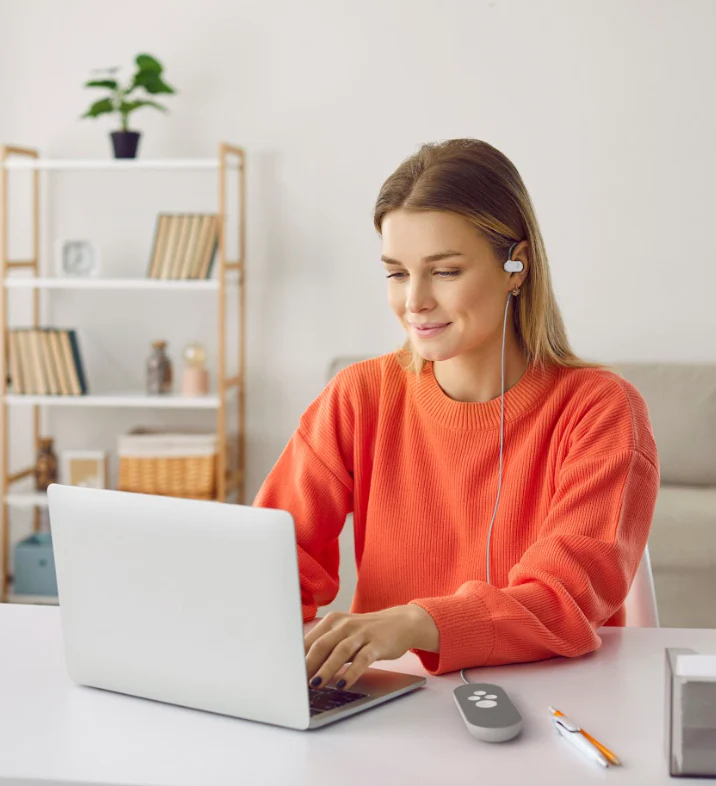
This has led to growing interest in non-invasive vagus nerve stimulation (tVNS) as a potential approach to supporting autonomic health. Now available through innovative, ear-worn devices, tVNS represents an emerging approach to supporting autonomic function. These devices use small, comfortable electrodes to deliver mild stimulation to the vagus nerve branch located in your ear. You can use it at home, while reading, working, or simply resting.
While individual results vary, preliminary evidence and consistent use indicate that this non-invasive approach may:
- Helfen Sie, Herzfrequenz und Kreislauf zu regulieren
- Reduce the severity of brain fog and daily tiredness
- Improve recovery and energy restoration
- Support long-term nervous system resilience
Scientific Validation & Safety Profile
VNS is a well-researched technology that has been studied across a wide range of autonomic, inflammatory, and neurological symptoms. It has been evaluated in university and hospital research settings, including institutions like Yale, Stanford, UCLA, and Imperial College London, with highly encouraging safety and tolerability profiles.
Research suggests that VNS may increase heart rate variability (HRV), a key marker of nervous system health, helping to modulate the overactive autonomic responses that make standing so exhausting.
Importantly for those sensitive to new therapies, VNS is:
- Non-pharmaceutical: No chemical dependency, no drug-induced sluggishness, and no stomach issues.
- Non-invasiv: Worn externally on the ear and requiring no surgery or implants.
- Generally well tolerated: Most users just feel a gentle, calming tingling sensation during a session.
Entdecken Sie Nurosym: Der natürliche Weg zum autonomen Gleichgewicht

Nurosym bietet einen wissenschaftlich untersuchten, medikamentenfreien Ansatz zur Wiederherstellung von Energie und Stabilität, indem es Ihren Vagusnerv durch Ohrstimulation gezielt anspricht.
Warum Nurosym funktioniert:
Evidence shows that targeted nerve stimulation can lower stress hormone levels, restore balance to your nervous system, and improve sleep quality. Early studies in high-stress and neurodivergent groups also show encouraging improvements in focus and emotional control, with larger scientific studies currently underway.

Sofortiger ANS-Reset
Beginnen Sie innerhalb weniger Minuten nach Gebrauch mit der Neugewichtung.

Scientifically studied
50+ Studien zur Erforschung des autonomen Gleichgewichts, der HRV, des Schlafs und der Müdigkeit.

Natürlich & sicher
Nicht-invasiv, keine Arzneimittelwechselwirkungen.
Nurosym ist ein CE-gekennzeichnetes Gerät in der EU und wird in US-Studien unter der FDA-Bezeichnung “nicht signifikantes Risiko” verwendet.
Unterstützt von führenden Spezialisten für Autonomie und Wiederherstellung

Anthony Kaveh, MD
Anästhesist & Medizinischer Direktor bei Clarus Health
"Ich wollte wissen, ob wir unseren Patienten zu einer noch nachhaltigeren Linderung eines außer Kontrolle geratenen Sympathischen Nervensystems verhelfen können. Ich freue mich, sagen zu können, dass die Antwort bisher ja lautet."
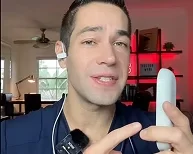
Dr Myro Figura
Anästhesist & Chief Medical Officer bei HealFast
„(Nurosym) steigert die Ruhe- und Verdauungsfunktion Ihres Nervensystems innerhalb von fünf Minuten um bis zu 61 % und ist ein wirksames Mittel gegen Angstzustände.“

Dr James Gill
Außerordentlicher Professor an der Warwick Medical School & Allgemeinmediziner
"Ich habe (Veröffentlichungen) ohne erklärten Interessenkonflikt von der Universität Leeds gefunden. Sie zeigten eine reduzierte sympathische Nervenaktivität. Persönlich ist meine HRV (mit Nurosym) von den 40ern auf 69 gestiegen."

Dr. Mikolaj Raszek
Forscher bei Merogenomics
"Basierend auf den vorliegenden Belegen sieht es so aus, als ob diese Geräte... scheinen bei postviraler Erschöpfung wirklich sehr zu helfen."

Ashley Ridout
Osteopath & Dozent
"Ich habe das bei zwei Patienten ausprobiert: Ein 45-jähriger Mann mit chronischen Nackenschmerzen berichtete von besserem und tieferem Schlaf... Eine 30-jährige Frau mit Kopfschmerzen bemerkte besseren Schlaf und weniger Schmerzen."

Bryan Johnson
Gründer von Braintree, Project Blueprint
„HRV ist ein ziemlich wichtiger Biomarker für die Gesundheit. Es hat einen klaren Zusammenhang mit dem Alter... Das HRV-Training hält mich zurückhaltend, entspannt und ruhig.“
Echte Ergebnisse von echten Menschen
“Von Haltungs-Herzfrequenzstörungen bis hin zu weniger harten Tagen —nehmen Sie es für einen Tag aus und ich spüre den Unterschied.”
– Nurosym-Benutzer
“Nach postviraler Dysautonomie habe ich endlich aus der Erschöpfung heraus Fuß gefasst.”
– Sarit
“Aus ständigen Abstürzen wurden stabilere Tage. Die Verbesserung trat sofort ein.”
– Erfahrungsbericht eines Patienten mit Haltungsherzfrequenzanomalien
Lernen Sie die Gesundheitsexperten kennen
Dr. Elisabetta ist praktizierende Psychiaterin, hat einen MBA von der INSEAD Business School und Erfahrung in der direkten Patientenversorgung, in der neurowissenschaftlichen Forschung sowie in Kommunikation und Management. Dr. Burchi ist Ärztin und Wissenschaftlerin, arbeitet bei Parasym im Bereich klinische Angelegenheiten und hat zahlreiche Veröffentlichungen in führenden wissenschaftlichen Fachzeitschriften wie The Lancet vorzuweisen, erfolgreiche Förderanträge für das NIH geschrieben und die Erstellung von redaktionellen, klinischen, regulatorischen und werblichen Materialien in interdisziplinären Teams geleitet. Außerdem hat Dr. Burchi klinische Studien koordiniert und eine Telemedizin-Praxis implementiert, die unter mehr als 100.000 Fachkräften eine Auszeichnung für Exzellenz erhalten hat.
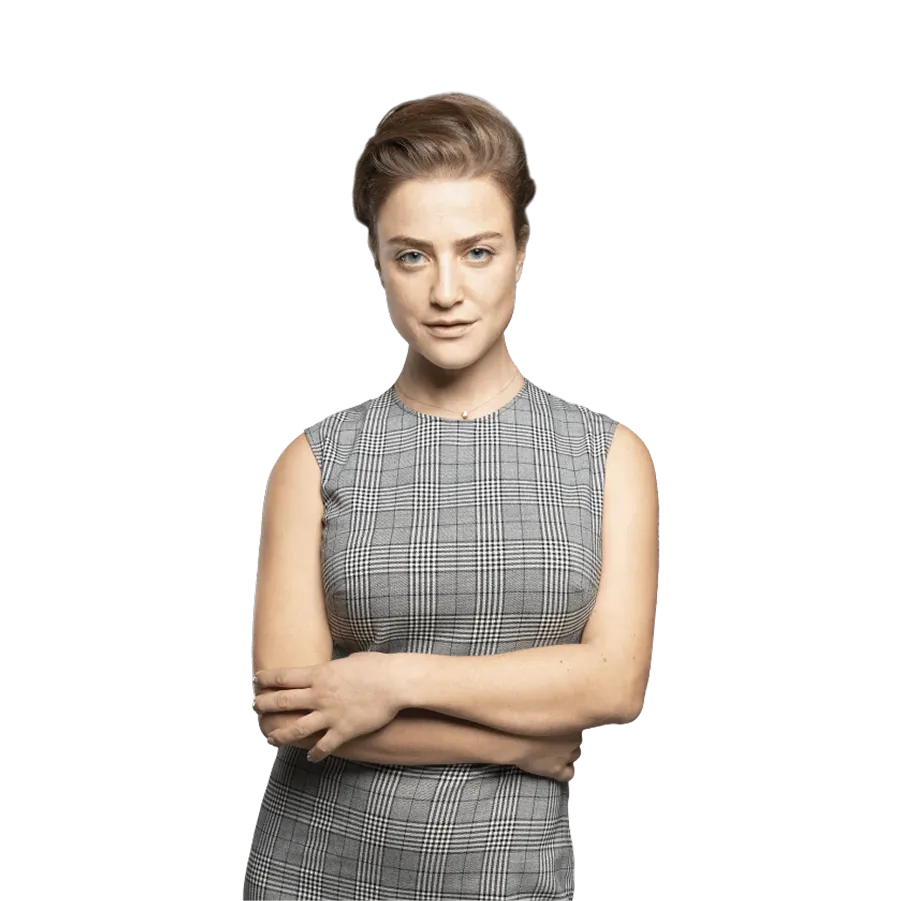
Dr. Elisabetta Burchi, MD, MBA
Leiter der Translationsforschung bei Parasym
Take Control of Your Focus and Energy Naturally
Übernehmen Sie auf natürliche Weise die Kontrolle über Ihre Haltungsherzfrequenzanomalien
Schließen Sie sich Tausenden an, die Stabilität und Energie zurückgewinnen.
Nehmen Sie am Forschungsprogramm zu Haltungsherzfrequenzanomalien teil und sparen Sie €70 auf Ihrem Nurosym-Gerät.
*Die Bewertung der Teilnahme an der Studie dauert weniger als 3 Minuten.
50+
Studien referenziert
4M+
Erfolgreiche Sitzungen durchgeführt
30
Tag Geld-zurück-Garantie

Zertifiziertes Medizinprodukt
Schließen Sie sich Tausenden an, die Stabilität und Energie zurückgewinnen.
Nehmen Sie am Forschungsprogramm zu Haltungsherzfrequenzanomalien teil und sparen Sie €70 auf Ihrem Nurosym-Gerät.
*Die Bewertung der Teilnahme an der Studie dauert weniger als 3 Minuten.
50+
Studien referenziert
4M+
Erfolgreiche Sitzungen durchgeführt
30
Tag Geld-zurück-Garantie

Zertifiziertes Medizinprodukt
30-Tage-Geld-zurück-Garantie
Für jedes Nurosym-Kit gilt eine 30-tägige Vollrückerstattungsrichtlinie, wenn Benutzer mit ihren Fortschritten nicht zufrieden sind.
Bezüge:
- Chakraborty, P., Farhat, K., Morris, L., Whyte, S., Yu, X., & Stavrakis, S. (2023). Non-invasive vagus nerve stimulation in postural orthostatic tachycardia syndrome. Arrhythmia & Electrophysiology Review, 12, e31. https://doi.org/10.15420/aer.2023.20
- Diedrich, A., Urechie, V., Shiffer, D., Rigo, S., Minonzio, M., Cairo, B., Smith, E. C., Okamoto, L. E., Barbic, F., Bisoglio, A., Porta, A., Biaggioni, I., & Furlan, R. (2021). Transdermal auricular vagus stimulation for the treatment of postural tachycardia syndrome. Autonomic Neuroscience, 236, 102886. https://doi.org/10.1016/j.autneu.2021.102886
- Geng, D., Liu, X., Wang, Y. und Wang, J. (2022). Die Wirkung der transkutanen Stimulation des Nervus auricularis vagus auf die HRV bei gesunden jungen Menschen. PLOS EINS, 17(2), e0263833. https://doi.org/10.1371/journal.pone.0263833
- Kim, A. Y., Marduy, A., de Melo, P. S., Gianlorenço, A. C., Kim, C. K., Choi, H., Song, J.-J., & Fregni, F. (2022). Safety of transcutaneous auricular vagus nerve stimulation (taVNS): A systematic review and meta-analysis. Wissenschaftliche Berichte, 12, 22055. https://doi.org/10.1038/s41598-022-25864-1
- Stavrakis, S., Chakraborty, P., Farhat, K., Whyte, S., Morris, L., Asad, Z. U. A., Karfonta, B., Anjum, J., Matlock, H. G., Cai, X., & Yu, X. (2024). Noninvasive vagus nerve stimulation in postural tachycardia syndrome: A randomized clinical trial. JACC: Klinische Elektrophysiologie, 10(2), 346–355. https://doi.org/10.1016/j.jacep.2023.10.015
- Zheng, Z. S., Simonian, N., Wang, J., & Rosario, E. R. (2024). Transcutaneous vagus nerve stimulation improves Long COVID symptoms in a female cohort: A pilot study. Frontiers in Neurology, 15, 1393371. https://doi.org/10.3389/fneur.2024.1393371
Der Artikel stellt in keiner Weise eine medizinische Beratung dar. Bitte konsultieren Sie einen zugelassenen Arzt, bevor Sie eine Behandlung beginnen. Diese Website kann Provisionen für die in diesem Artikel erwähnten Links oder Produkte erhalten.
Reviewed by Dr. Saloni Kabra, BHMS


 German
 English
 French
 Spanish
 Swedish
 Italian