
The Truth About Managing Attention Problems (And Why Standard Advice Is Falling Short)
If your brain is constantly racing, yet getting started on a simple task feels like climbing a mountain, you already know how exhausting it is when your executive function is out of balance.
If you’re tired of being told to “just try harder” or “buy a better planner,” this article offers an evidence-informed perspective.

Conventional Strategies - Do They Work?
If you’ve been battling Attention Problems for years, you’ve probably tried it all. The cycle usually looks like this:
- Endless Planners: Buying a new system, using it perfectly for three days, and then abandoning it completely.
- Caffeine Overload: Relying on coffee for a brief burst of focus, only to suffer a heavy mental crash by the afternoon.
- Exhausting Masking: Constantly monitoring your behaviour to avoid overstimulation, leaving you completely drained.
- Pharmacological Options: Managing medication schedules that can be highly effective, though some individuals may experience adverse events such as jitteriness or sleep disruption.
- Talk Therapy: Engaging in cognitive-behavioural therapy or mindfulness practices to improve coping strategies and emotional regulation.
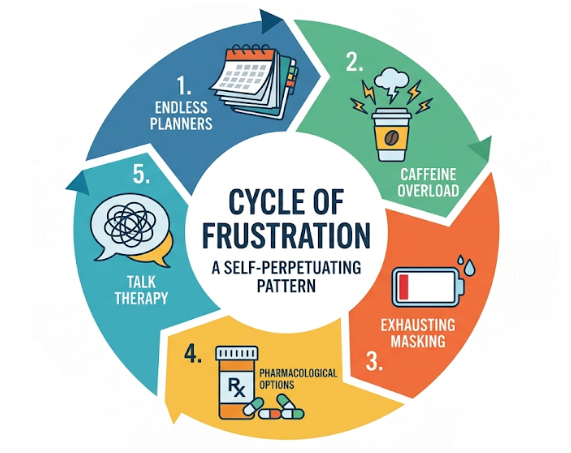
It’s a frustrating loop: you try a new protocol, feel a brief spark of motivation, and then crash. It’s not your fault. These conventional approaches may fall short because they primarily address symptoms rather than underlying neurobiological and regulatory mechanisms.
Emerging research suggests that autonomic nervous system dysregulation may contribute to executive dysfunction in some individuals with Attention Problems.
Some individuals with Attention Problems may experience heightened stress reactivity or autonomic dysregulation, which can contribute to feelings of overwhelm. Your body overreacts to everyday demands, leaving you paralysed by choices and mentally tired. Buying another productivity app, drinking more coffee, or forcing yourself to sit still may not adequately address underlying regulatory challenges. To find real cognitive stability, you need an approach that directly supports and regulates your autonomic balance.
That’s where vagus nerve stimulation comes in.
A New, Non-Invasive Approach to Autonomic Balance
For decades, the options for managing Attention Problems symptoms were mostly limited to rigid behavioural systems, generic coping strategies, or complex pharmacological options. But in recent years, researchers have turned their attention to the vagus nerve as a way to target autonomic dysregulation and stress at its source.
This has led to growing interest in non-invasive vagus nerve stimulation (tVNS) as a potential approach to supporting neurocognitive health. Now available through innovative, ear-worn devices, tVNS represents an emerging approach to supporting brain and body function. These devices use small, comfortable electrodes to deliver mild stimulation to the vagus nerve branch located in your ear. You can use it at home, while reading, working, or simply resting.
While individual responses vary, preliminary evidence suggests that this non-invasive approach may:
- Help support emotional regulation and calm an overactive mind
- Reduce the severity of brain fog and daily mental tiredness
- Improve recovery from sensory or cognitive overload
- Support long-term nervous system resilience and sustained focus
What is Vagus Nerve Stimulation (And Why Does It Work)?
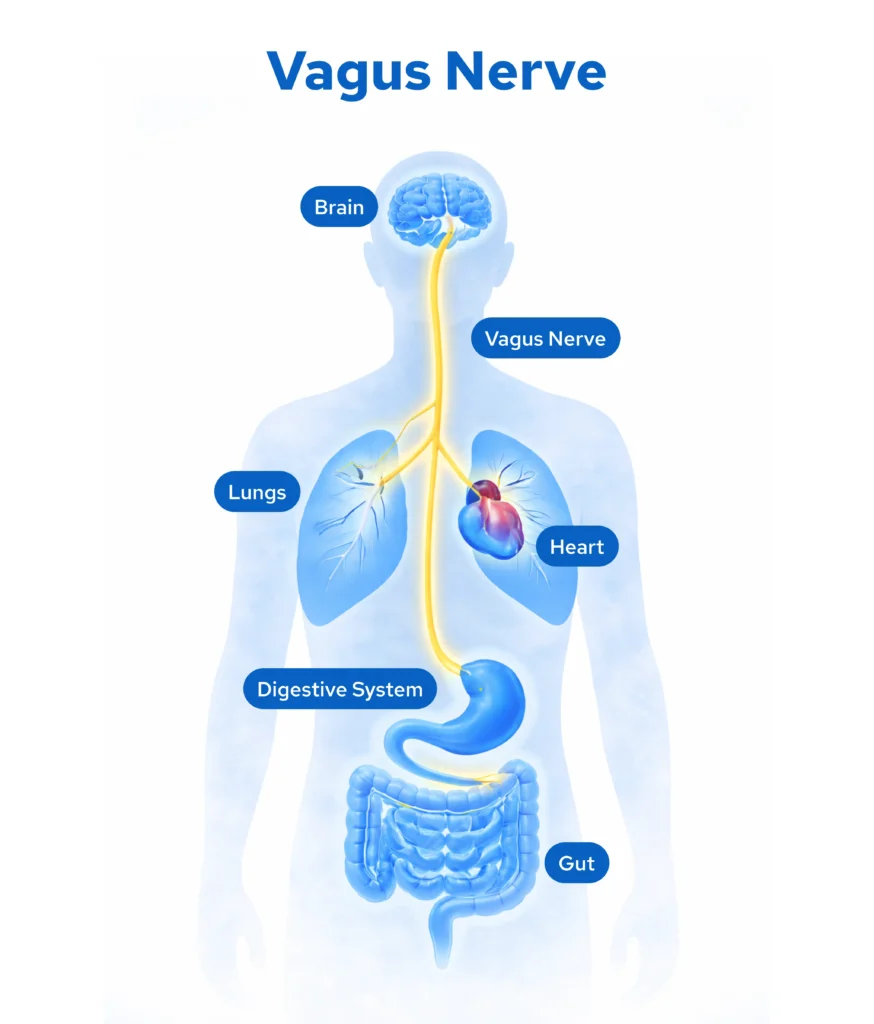
Your vagus nerve is the main communication highway between your brain and your body. It plays a crucial role in regulating your heart rate, emotions, digestion, and your ability to shift into a calm, focused state (“rest-and-digest” mode).
When your vagus nerve isn’t functioning optimally (often referred to as low “vagal tone”), your body may remain in a heightened stress state.
- Your nervous system stays locked in a state of hyperarousal or overwhelm.
- You experience intense brain fog and mental tiredness.
- Your emotional responses and impulses become harder to regulate.
- Your brain is constantly working overtime just to filter out distractions and stay on track.
Vagus nerve stimulation (VNS) uses gentle electrical pulses to activate this nerve, potentially supporting autonomic regulation. It is sometimes compared to resetting an overburdened system.
Scientific Validation & Safety Profile
VNS is a well-researched technology studied across a range of autonomic, inflammatory, and neurological symptoms. It has been evaluated in university and hospital research settings, including institutions like Yale, Stanford, UCLA, and Imperial College London, with highly encouraging safety and tolerability profiles.
Research shows that VNS increases heart rate variability (HRV), a key marker of autonomic nervous system function.
Importantly for those sensitive to new therapies, VNS is:
- Non-pharmaceutical: No chemical dependency, no drug-induced sluggishness, and no stomach issues.
- Non-invasiv: Worn externally on the ear, requiring no surgery or implants.
- Im Allgemeinen gut verträglich: Most users report a gentle, calming tingling sensation during a session.
Entdecken Sie Nurosym: Der natürliche Weg zum autonomen Gleichgewicht

Nurosym bietet einen wissenschaftlich untersuchten, medikamentenfreien Ansatz zur Wiederherstellung von Energie und Stabilität, indem es Ihren Vagusnerv durch Ohrstimulation gezielt anspricht.
Warum Nurosym funktioniert:
Evidence shows that targeted nerve stimulation can lower stress hormone levels, restore balance to your nervous system, and improve sleep quality. Early studies in high-stress and neurodivergent groups also show encouraging improvements in focus and emotional control, with larger scientific studies currently underway.

Sofortiger ANS-Reset
Beginnen Sie innerhalb weniger Minuten nach Gebrauch mit der Neugewichtung.

Scientifically studied
50+ Studien zur Erforschung des autonomen Gleichgewichts, der HRV, des Schlafs und der Müdigkeit.

Natürlich & sicher
Nicht-invasiv, keine Arzneimittelwechselwirkungen.
Nurosym ist ein CE-gekennzeichnetes Gerät in der EU und wird in US-Studien unter der FDA-Bezeichnung “nicht signifikantes Risiko” verwendet.
Unterstützt von führenden Spezialisten für Autonomie und Wiederherstellung

Anthony Kaveh, MD
Anästhesist & Medizinischer Direktor bei Clarus Health
"Ich wollte wissen, ob wir unseren Patienten zu einer noch nachhaltigeren Linderung eines außer Kontrolle geratenen Sympathischen Nervensystems verhelfen können. Ich freue mich, sagen zu können, dass die Antwort bisher ja lautet."
Dr Myro Figura
Anästhesist & Chief Medical Officer bei HealFast
„(Nurosym) steigert die Ruhe- und Verdauungsfunktion Ihres Nervensystems innerhalb von fünf Minuten um bis zu 61 % und ist ein wirksames Mittel gegen Angstzustände.“

Dr James Gill
Außerordentlicher Professor an der Warwick Medical School & Allgemeinmediziner
"Ich habe (Veröffentlichungen) ohne erklärten Interessenkonflikt von der Universität Leeds gefunden. Sie zeigten eine reduzierte sympathische Nervenaktivität. Persönlich ist meine HRV (mit Nurosym) von den 40ern auf 69 gestiegen."

Dr. Mikolaj Raszek
Forscher bei Merogenomics
"Basierend auf den vorliegenden Belegen sieht es so aus, als ob diese Geräte... scheinen bei postviraler Erschöpfung wirklich sehr zu helfen."
Ashley Ridout
Osteopath & Dozent
"Ich habe das bei zwei Patienten ausprobiert: Ein 45-jähriger Mann mit chronischen Nackenschmerzen berichtete von besserem und tieferem Schlaf... Eine 30-jährige Frau mit Kopfschmerzen bemerkte besseren Schlaf und weniger Schmerzen."

Bryan Johnson
Gründer von Braintree, Project Blueprint
„HRV ist ein ziemlich wichtiger Biomarker für die Gesundheit. Es hat einen klaren Zusammenhang mit dem Alter... Das HRV-Training hält mich zurückhaltend, entspannt und ruhig.“
Echte Ergebnisse von echten Menschen
“Von Haltungs-Herzfrequenzstörungen bis hin zu weniger harten Tagen —nehmen Sie es für einen Tag aus und ich spüre den Unterschied.”
– Nurosym-Benutzer
“Nach postviraler Dysautonomie habe ich endlich aus der Erschöpfung heraus Fuß gefasst.”
– Sarit
“Aus ständigen Abstürzen wurden stabilere Tage. Die Verbesserung trat sofort ein.”
– Erfahrungsbericht eines Patienten mit Haltungsherzfrequenzanomalien
Lernen Sie die Gesundheitsexperten kennen
Dr. Elisabetta ist praktizierende Psychiaterin, hat einen MBA von der INSEAD Business School und Erfahrung in der direkten Patientenversorgung, in der neurowissenschaftlichen Forschung sowie in Kommunikation und Management. Dr. Burchi ist Ärztin und Wissenschaftlerin, arbeitet bei Parasym im Bereich klinische Angelegenheiten und hat zahlreiche Veröffentlichungen in führenden wissenschaftlichen Fachzeitschriften wie The Lancet vorzuweisen, erfolgreiche Förderanträge für das NIH geschrieben und die Erstellung von redaktionellen, klinischen, regulatorischen und werblichen Materialien in interdisziplinären Teams geleitet. Außerdem hat Dr. Burchi klinische Studien koordiniert und eine Telemedizin-Praxis implementiert, die unter mehr als 100.000 Fachkräften eine Auszeichnung für Exzellenz erhalten hat.

Dr. Elisabetta Burchi, MD, MBA
Leiter der Translationsforschung bei Parasym
Take Control of Your Focus and Energy Naturally
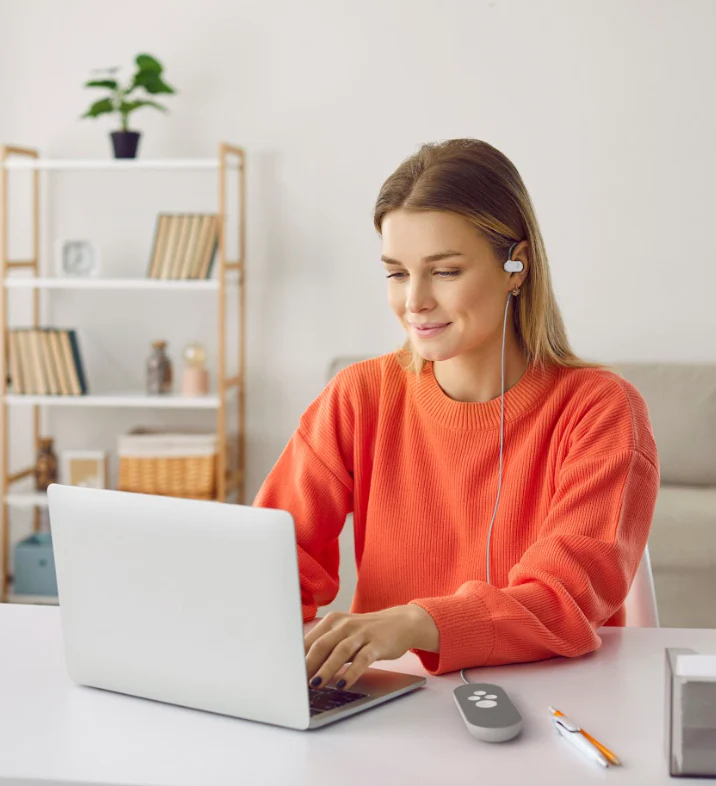
Schließen Sie sich Tausenden an, die Stabilität und Energie zurückgewinnen.
Participate in the Neuro-Cognitive research programand save €70 on your Nurosym device.
*Die Bewertung der Teilnahme an der Studie dauert weniger als 3 Minuten.
50+
Studien referenziert
4M+
Erfolgreiche Sitzungen durchgeführt
30
Tag Geld-zurück-Garantie

Zertifiziertes Medizinprodukt
Schließen Sie sich Tausenden an, die Stabilität und Energie zurückgewinnen.
Nehmen Sie am Forschungsprogramm zu Haltungsherzfrequenzanomalien teil und sparen Sie €70 auf Ihrem Nurosym-Gerät.
*Die Bewertung der Teilnahme an der Studie dauert weniger als 3 Minuten.
50+
Studien referenziert
4M+
Erfolgreiche Sitzungen durchgeführt
30
Tag Geld-zurück-Garantie

Zertifiziertes Medizinprodukt
30-Tage-Geld-zurück-Garantie
Für jedes Nurosym-Kit gilt eine 30-tägige Vollrückerstattungsrichtlinie, wenn Benutzer mit ihren Fortschritten nicht zufrieden sind.
Bezüge:
- American Psychiatric Association. (2022). Diagnostic and statistical manual of mental disorders (5th ed., text rev.; DSM-5-TR).
- Chang, J. P.-C., & Su, K.-P. (2020). Nutritional neuroscience as mainstream of psychiatry: The evidence-based treatment guidelines for using omega-3 fatty acids as a new treatment for psychiatric disorders in children and adolescents. Nutritional Neuroscience. https://doi.org/10.1080/1028415X.2019.1588315
- Cortese, S. (2020). Pharmacologic treatment of attention deficit–hyperactivity disorder. The New England Journal of Medicine, 383(11), 1050–1056. https://doi.org/10.1056/NEJMra1917069
- Kofler, M. J., Sarver, D. E., Harmon, S. L., Moltisanti, A., Aduen, P. A., Soto, E. F., & Ferretti, N. (2018). Working memory and organizational skills problems in ADHD. Journal of Child Psychology and Psychiatry, 59(1), 57–67. https://doi.org/10.1111/jcpp.12773
- Ramdass, D., & Zimmerman, B. J. (2011). Developing self-regulation skills: The important role of homework. Journal of Advanced Academics, 22(2), 194–218. https://doi.org/10.1177/1932202X1102200202
- Singh, A. S., Saliasi, E., van den Berg, V., Uijtdewilligen, L., de Groot, R. H. M., Jolles, J., Andersen, L. B., Bailey, R., Chang, Y.-K., Diamond, A., Ericsson, I., Etnier, J. L., Fedewa, A. L., Hillman, C. H., McMorris, T., Pesce, C., Pühse, U., Tomporowski, P. D., & Chinapaw, M. J. M. (2019). Effects of physical activity interventions on cognitive and academic performance in children and adolescents: A novel combination of a systematic review and recommendations from an expert panel. British Journal of Sports Medicine, 53(10), 640–647. https://doi.org/10.1136/bjsports-2017-098136
- Tarver, J., Daley, D., & Sayal, K. (2014). Attention-deficit hyperactivity disorder (ADHD): An updated review of the essential facts. Child: Care, Health and Development, 40(6), 762–774. https://doi.org/10.1111/cch.12139
Der Artikel stellt in keiner Weise eine medizinische Beratung dar. Bitte konsultieren Sie einen zugelassenen Arzt, bevor Sie eine Behandlung beginnen. Diese Website kann Provisionen für die in diesem Artikel erwähnten Links oder Produkte erhalten.
Reviewed by Dr. Saloni Kabra, BHMS


 German
 English
 French
 Spanish
 Swedish
 Italian