
The Truth About Managing Attention Problems (And Why Standard Advice Is Falling Short)
If your brain is constantly racing, yet getting started on a simple task feels like climbing a mountain, you already know how exhausting it is when your executive function is out of balance.
If you’re tired of being told to “just try harder” or “buy a better planner,” this article offers an evidence-informed perspective.

Conventional Strategies - Do They Work?
If you’ve been battling Attention Problems for years, you’ve probably tried it all. The cycle usually looks like this:
- Endless Planners: Buying a new system, using it perfectly for three days, and then abandoning it completely.
- Caffeine Overload: Relying on coffee for a brief burst of focus, only to suffer a heavy mental crash by the afternoon.
- Exhausting Masking: Constantly monitoring your behaviour to avoid overstimulation, leaving you completely drained.
- Pharmacological Options: Managing medication schedules that can be highly effective, though some individuals may experience adverse events such as jitteriness or sleep disruption.
- Talk Therapy: Engaging in cognitive-behavioural therapy or mindfulness practices to improve coping strategies and emotional regulation.
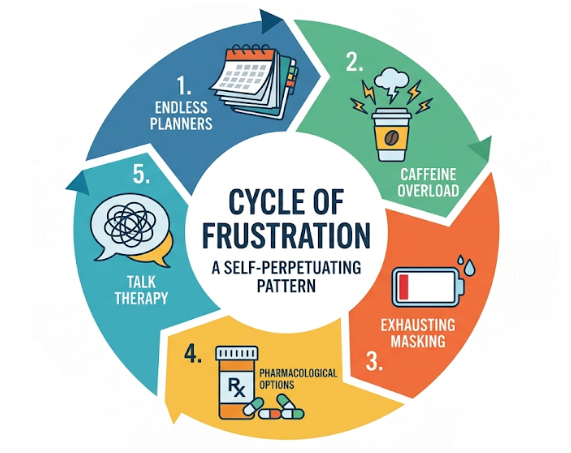
It’s a frustrating loop: you try a new protocol, feel a brief spark of motivation, and then crash. It’s not your fault. These conventional approaches may fall short because they primarily address symptoms rather than underlying neurobiological and regulatory mechanisms.
Emerging research suggests that autonomic nervous system dysregulation may contribute to executive dysfunction in some individuals with Attention Problems.
Some individuals with Attention Problems may experience heightened stress reactivity or autonomic dysregulation, which can contribute to feelings of overwhelm. Your body overreacts to everyday demands, leaving you paralysed by choices and mentally tired. Buying another productivity app, drinking more coffee, or forcing yourself to sit still may not adequately address underlying regulatory challenges. To find real cognitive stability, you need an approach that directly supports and regulates your autonomic balance.
That’s where vagus nerve stimulation comes in.
A New, Non-Invasive Approach to Autonomic Balance
For decades, the options for managing Attention Problems symptoms were mostly limited to rigid behavioural systems, generic coping strategies, or complex pharmacological options. But in recent years, researchers have turned their attention to the vagus nerve as a way to target autonomic dysregulation and stress at its source.
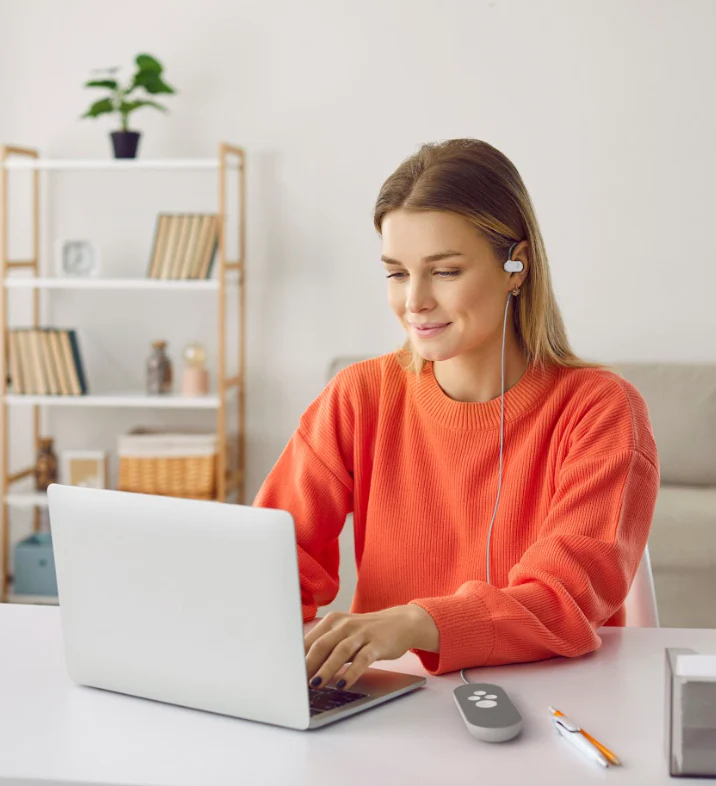
This has led to growing interest in non-invasive vagus nerve stimulation (tVNS) as a potential approach to supporting neurocognitive health. Now available through innovative, ear-worn devices, tVNS represents an emerging approach to supporting brain and body function. These devices use small, comfortable electrodes to deliver mild stimulation to the vagus nerve branch located in your ear. You can use it at home, while reading, working, or simply resting.
While individual responses vary, preliminary evidence suggests that this non-invasive approach may:
- Help support emotional regulation and calm an overactive mind
- Reduce the severity of brain fog and daily mental tiredness
- Improve recovery from sensory or cognitive overload
- Support long-term nervous system resilience and sustained focus
What is Vagus Nerve Stimulation (And Why Does It Work)?
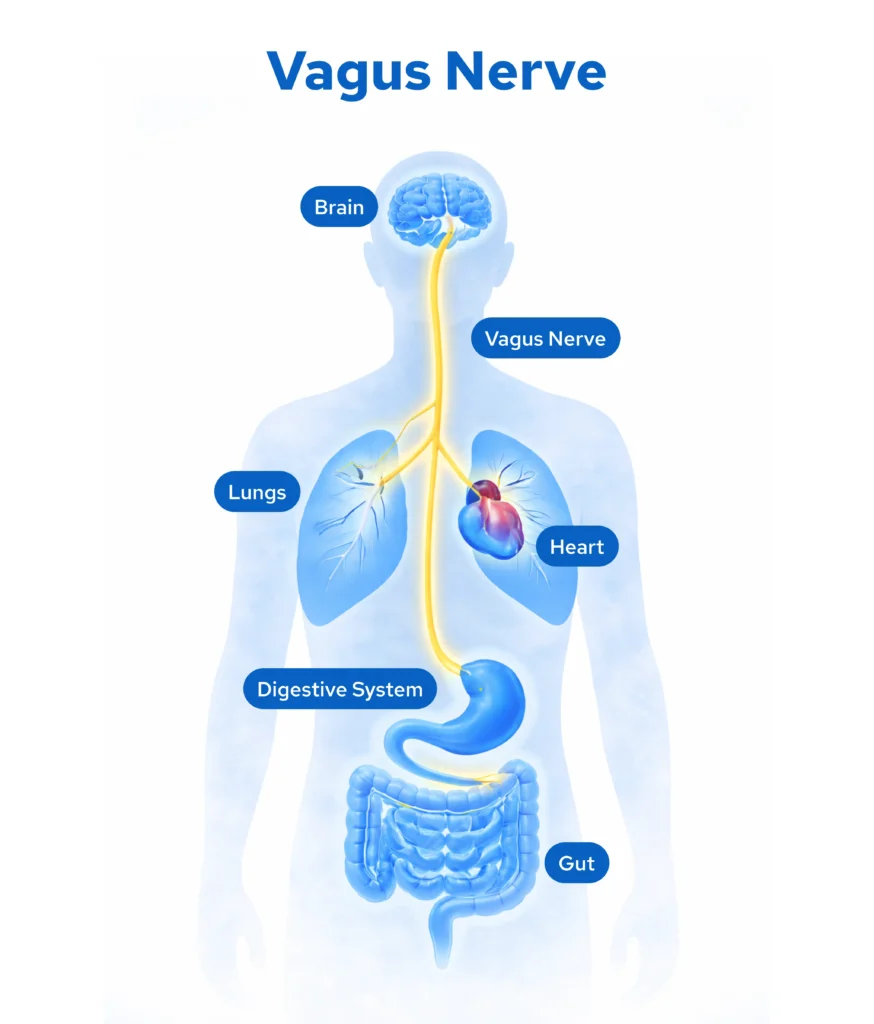
Your vagus nerve is the main communication highway between your brain and your body. It plays a crucial role in regulating your heart rate, emotions, digestion, and your ability to shift into a calm, focused state (“rest-and-digest” mode).
When your vagus nerve isn’t functioning optimally (often referred to as low “vagal tone”), your body may remain in a heightened stress state.
- Your nervous system stays locked in a state of hyperarousal or overwhelm.
- You experience intense brain fog and mental tiredness.
- Your emotional responses and impulses become harder to regulate.
- Your brain is constantly working overtime just to filter out distractions and stay on track.
Vagus nerve stimulation (VNS) uses gentle electrical pulses to activate this nerve, potentially supporting autonomic regulation. It is sometimes compared to resetting an overburdened system.
Scientific Validation & Safety Profile
VNS is a well-researched technology studied across a range of autonomic, inflammatory, and neurological symptoms. It has been evaluated in university and hospital research settings, including institutions like Yale, Stanford, UCLA, and Imperial College London, with highly encouraging safety and tolerability profiles.
Research shows that VNS increases heart rate variability (HRV), a key marker of autonomic nervous system function.
Importantly for those sensitive to new therapies, VNS is:
- Non-pharmaceutical: No chemical dependency, no drug-induced sluggishness, and no stomach issues.
- Non invasif : Worn externally on the ear, requiring no surgery or implants.
- Generally well-tolerated: Most users report a gentle, calming tingling sensation during a session.
Découvrir le Nurosme : la voie naturelle vers l’équilibre autonome

Nurosym propose une approche scientifiquement étudiée et sans médicament pour restaurer l’énergie et la stabilité en ciblant votre nerf vague par stimulation auriculaire.
Pourquoi Nurosym fonctionne :
Evidence shows that targeted nerve stimulation can lower stress hormone levels, restore balance to your nervous system, and improve sleep quality. Early studies in high-stress and neurodivergent groups also show encouraging improvements in focus and emotional control, with larger scientific studies currently underway.

Réinitialisation instantanée de l’ANS
Commencez à rééquilibrer dans les minutes suivant l’utilisation.

Scientifically studied
Plus de 50 études explorant l’équilibre autonome, la HRV, le sommeil et la fatigue.

Naturel et sûr
Non invasif, pas d’interactions médicamenteuses.
Nurosym est un dispositif marqué CE dans l’UE et est utilisé sous des désignations de « risque non significatif » de la FDA dans des études américaines.
Approuvé par les principaux spécialistes de l’autonomie et du rétablissement

Anthony Kaveh, MD
Anesthésiste & Directeur Médical chez Clarus Health
"Je voulais savoir si nous pouvions aider nos patients à avoir un soulagement encore plus soutenu d’un système nerveux sympathique hors de contrôle. Je suis heureux de dire que jusqu’à présent, la réponse a été oui.
Dr Myro Figura
Anesthésiste & Médecin en chef chez HealFast
"(Nurosym) augmente le côté repos et digestion de votre système nerveux jusqu’à 61% en cinq minutes et c’est un puissant soulagement pour les états anxieux."

Dr James Gill
Professeur associé à la Warwick Medical School & Médecin généraliste
« J’ai trouvé (publications) sans conflit d’intérêts déclaré par l’Université de Leeds. Ils ont démontré une activité réduite du nerf sympathique. Personnellement, (avec Nurosym) mon HRV est passé de 40 à 69.

Dr Mikolaj Raszek
Chercheur à Merogenomics
"Sur la base des preuves qui sortent, il semble que ces appareils... semblent aider beaucoup en termes de fatigue post-virale."

Ashley Ridout
Ostéopathe & Éducateur
"J’ai essayé cela sur deux patients : un homme de 45 ans avec une douleur chronique au cou a signalé un sommeil meilleur et plus profond... Une femme de 30 ans ayant des maux de tête a remarqué une amélioration du sommeil et une réduction de la douleur.

Bryan Johnson
Fondateur de Braintree, Projet Blueprint
« La HRV est un biomarqueur assez important pour la santé. Elle a une association claire avec l’âge... La formation en HRV me garde discret, détendu et calme. »
Résultats réels provenant de personnes réelles
« Des anomalies de fréquence cardiaque posturales à moins de jours difficiles — retirez-le pendant une journée et je sens la différence. »
– Utilisateur Nurosym
« Après la dysautonomie post-virale, j’ai finalement réussi à m’extraire de l’épuisement. »
– Sarit
« Les plantages constants se sont transformés en journées plus stables. L’amélioration a été immédiate. »
– Témoignage sur les anomalies de fréquence cardiaque posturales chez la victime
Rencontrez les professionnels de santé
Docteur en psychiatrie, Elisabetta est titulaire d’un MBA de l’INSEAD Business School et possède une expérience dans les soins directs aux patients, la recherche en neurosciences, la communication et la gestion. Dr. Burchi est un médecin-scientifique, travaillant avec Parasym dans les affaires cliniques avec une expérience de publication dans les revues scientifiques les plus importantes telles que The Lancet, écrivant des propositions de subvention réussies pour le NIH, et dirigeant la production d’éditorial, matériel clinique, réglementaire et promotionnel dans des équipes multidisciplinaires collaboratives. Dr. Burchi a également coordonné des essais cliniques et mis en œuvre une pratique de télémédecine qui a reçu une certification d’excellence parmi plus de 100 000 professionnels.
Dr. Elisabetta Burchi, MD, MBA
Responsable de la recherche translationnelle chez Parasym
Take Control of Your Focus and Energy Naturally
Rejoignez des milliers de personnes qui réclament stabilité et énergie.
Participate in the Neuro-Cognitive research programand save €70 on your Nurosym device.
*L’évaluation de la participation à la recherche prend moins de 3 minutes
50+
études mentionnées
4 millions
sessions réussies livrées
30
Jours garantie de remboursement

dispositif médical certifié
Rejoignez des milliers de personnes qui réclament stabilité et énergie.
Participez au programme de recherche sur les anomalies du rythme cardiaque postural et économisez 70 € sur votre appareil Nurosym.
*L’évaluation de la participation à la recherche prend moins de 3 minutes
50+
études mentionnées
4 millions
sessions réussies livrées
30
Jours garantie de remboursement

dispositif médical certifié
Garantie de remboursement de 30 jours
Chaque kit Nurosym est soutenu par une politique de remboursement complet de 30 jours si les utilisateurs ne sont pas satisfaits de leurs progrès.
Bibliographie :
- American Psychiatric Association. (2022). Diagnostic and statistical manual of mental disorders (5th ed., text rev.; DSM-5-TR).
- Chang, J. P.-C., & Su, K.-P. (2020). Nutritional neuroscience as mainstream of psychiatry: The evidence-based treatment guidelines for using omega-3 fatty acids as a new treatment for psychiatric disorders in children and adolescents. Nutritional Neuroscience. https://doi.org/10.1080/1028415X.2019.1588315
- Cortese, S. (2020). Pharmacologic treatment of attention deficit–hyperactivity disorder. The New England Journal of Medicine, 383(11), 1050–1056. https://doi.org/10.1056/NEJMra1917069
- Kofler, M. J., Sarver, D. E., Harmon, S. L., Moltisanti, A., Aduen, P. A., Soto, E. F., & Ferretti, N. (2018). Working memory and organizational skills problems in ADHD. Journal of Child Psychology and Psychiatry, 59(1), 57–67. https://doi.org/10.1111/jcpp.12773
- Ramdass, D., & Zimmerman, B. J. (2011). Developing self-regulation skills: The important role of homework. Journal of Advanced Academics, 22(2), 194–218. https://doi.org/10.1177/1932202X1102200202
- Singh, A. S., Saliasi, E., van den Berg, V., Uijtdewilligen, L., de Groot, R. H. M., Jolles, J., Andersen, L. B., Bailey, R., Chang, Y.-K., Diamond, A., Ericsson, I., Etnier, J. L., Fedewa, A. L., Hillman, C. H., McMorris, T., Pesce, C., Pühse, U., Tomporowski, P. D., & Chinapaw, M. J. M. (2019). Effects of physical activity interventions on cognitive and academic performance in children and adolescents: A novel combination of a systematic review and recommendations from an expert panel. British Journal of Sports Medicine, 53(10), 640–647. https://doi.org/10.1136/bjsports-2017-098136
- Tarver, J., Daley, D., & Sayal, K. (2014). Attention-deficit hyperactivity disorder (ADHD): An updated review of the essential facts. Child: Care, Health and Development, 40(6), 762–774. https://doi.org/10.1111/cch.12139
L’article ne constitue en aucun cas un avis médical. Veuillez consulter un professionnel de la santé agréé avant de commencer tout traitement. Ce site peut recevoir des commissions à partir des liens ou produits mentionnés dans cet article.
Reviewed by Dr. Saloni Kabra, BHMS


 French
 English
 German
 Spanish
 Swedish
 Italian