
Wichtige Punkte
- Der Blutsauerstoff verändert sich natürlich mit zunehmendem Alter und sinkt bei älteren Erwachsenen oft leicht.
- Ein niedriger Sauerstoffgehalt kann die Herzgesundheit, die Lungenfunktion und das kognitive Wohlbefinden beeinträchtigen.
- Warning signs include tiredness, dizziness, rapid heartbeat, and brain fog.
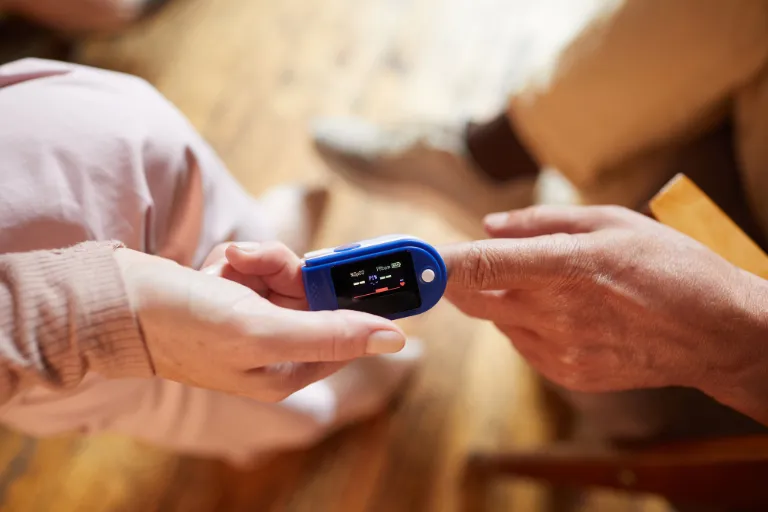
- Überwachungstools für zu Hause wie Pulsoximeter können dabei helfen, den Sauerstoffgehalt zu verfolgen.
- Lebensstilstrategien —wie Bewegung, Atemübungen und Schlaf— unterstützen einen gesunden Sauerstoffgehalt.
- Even age-related changes in posture, mobility, and respiratory efficiency can influence oxygen delivery.
Warum Senioren auf den Sauerstoffgehalt achten sollten
Imagine walking up a flight of stairs. For many younger adults, it’s a simple, almost mindless activity. But for seniors, the same effort can trigger shortness of breath, lightheadedness, or tiredness. These sensations are often linked to oxygen levels in the blood—a silent marker of health that becomes increasingly important with age.
Oxygen isn’t just about breathing; it’s about sustaining the body’s most vital functions. Even small dips in oxygen can noticeably affect the heart, brain, energy levels, and mood. As life expectancy increases, understanding these subtle but powerful shifts can make the difference between thriving in later years and struggling with preventable symptoms.
Even routine tasks like dressing, showering, or walking short distances may feel more tiring when oxygen delivery becomes less efficient.
Warum Sauerstoffüberwachung für die Gesundheit von Senioren wichtig ist
Oxygen fuels every cell in the body. Yet, as we age, natural changes in the lungs, heart, and blood vessels can reduce the body’s efficiency at delivering it. Seniors are particularly vulnerable to lower oxygen saturation, influencing daily energy, mobility, and even the ability to perform daily activities independently.
Monitoring oxygen isn’t just for those with diagnosed lung or heart problems. Even healthy older adults can benefit from understanding how their levels change over time. Unchecked, low oxygen saturation may contribute to chronic tiredness, heart palpitations, sleep problems, and reduced cognitive performance.
Recognising Warning Signs of Low Oxygen Saturation in Seniors
Blood oxygen saturation (SpO₂) refers to the percentage of oxygen-carrying haemoglobin in the blood. For most adults, normal levels range between 95% and 100%. In seniors, levels may naturally sit a little lower, sometimes around 92–95%.
Warnsignale für einen Sauerstoffmangel können sein:
- Anhaltende Müdigkeit, auch nach Ruhe
- Schwindel oder Benommenheit
- Schneller Herzschlag bei leichter Aktivität
- Kurzatmigkeit, insbesondere bei Anstrengung
- Gehirnnebel, Vergesslichkeit oder verlangsamtes Denken
These signs can sometimes be dismissed as “just ageing,” but they may also indicate oxygen delivery issues that need professional attention.
The Physiology of Ageing: How the Body’s Oxygen System Changes
Several physiological changes contribute to declining oxygen efficiency in the senior years:
- Abnahme der Lungenfunktion: Ageing lungs lose elasticity, making it harder to expand fully during breathing. This reduces oxygen exchange.
- Kreislaufverschiebungen: Blood vessels stiffen, and the heart pumps less efficiently, limiting oxygen transport to muscles and organs.
- Schwäche der Atemmuskulatur: Das Zwerchfell und die Brustmuskulatur können schwächer werden, was es schwieriger macht, tief durchzuatmen.
Research shows that these shifts can contribute to reduced physical stamina, slower recovery from illness, and increased risk for cognitive decline. For example, chronic low oxygen has also been associated with memory issues, mood changes, and decreased resilience during illnesses.
Another factor is reduced physical activity with age, which further lowers lung capacity and muscle oxygen uptake, creating a cycle of deconditioning.
Praktische Strategien zur Aufrechterhaltung eines gesunden Sauerstoffgehalts bei Senioren
The good news is that many strategies can help seniors maintain better oxygenation:
- aktiv zu bleiben: Regular walking, light strength training, or tailored exercises can improve lung and heart efficiency.
- Atemübungen: Techniques such as pursed-lip breathing and guided breathing exercises help maximise oxygen intake.
- Prioritise Sleep: Quality rest supports steady breathing patterns and stable oxygenation during sleep.
- Optimise Home Environments: Eine gute Belüftung und die Reduzierung von Schadstoffen in Innenräumen (wie Rauch oder Staub) können einen großen Unterschied machen.
- Überwachung zu Hause: Devices like pulse oximeters provide quick readings. While not perfect, they offer a useful snapshot of trends. Seniors should check levels during both rest and activity.
- Adding short bouts of outdoor exposure—like sitting in fresh air—can support better respiratory function.
- Flüssigkeitszufuhr is also important, as thicker mucus from dehydration can hinder air exchange.
When levels repeatedly drop below 92%, or when symptoms like dizziness or heart palpitations occur, it’s important to consult a health professional. Some may recommend further tests, supplemental oxygen, or structured therapies such as pulmonary rehabilitation.
Wann Sie professionelle Beratung suchen sollten
For seniors and caregivers, the first step is awareness. Tracking how oxygen levels behave at rest, during exercise, and while sleeping can reveal important patterns. If concerning dips are noticed, a health professional can help determine whether interventions—from simple lifestyle changes to medical solutions—are necessary.
Pflegekräfte können auch eine Rolle spielen, indem sie dafür sorgen, dass die häusliche Umgebung unterstützend ist, sichere Bewegung fördern und auf Anzeichen von schnellem Herzschlag, chronischer Müdigkeit oder unerklärlicher Verwirrtheit achten. Eine frühzeitige Intervention kann Komplikationen vorbeugen und die Unabhängigkeit unterstützen.
Fazit: Mit zunehmendem Alter leichter atmen
Oxygen levels may not be the first thing most people think about when it comes to ageing. Yet, they influence nearly every aspect of health—from stamina and heart rhythm to memory and mood. With timely awareness and simple daily habits, seniors can strengthen respiratory health and improve overall well-being.
Ihre nächsten Schritte
Caring for yourself or a loved one? Join our free newsletter for practical, science-backed tips that support healthier ageing and everyday wellness.
Dieser Blogbeitrag soll informativ sein und sollte keine professionelle Gesundheitsberatung ersetzen. Konsultieren Sie immer einen Arzt, um eine individuelle Beratung zu erhalten.
Quellen
- Torp KD, Simon LV. Pulse oximetry [Internet]. Nih.gov. StatPearls Publishing; 2023. Available from: https://www.ncbi.nlm.nih.gov/books/NBK470348/
- Wei Y, Giunta S, Xia S. Hypoxia in Aging and Aging-Related Diseases: Mechanism and Therapeutic Strategies. International Journal of Molecular Sciences. 2022 Jul 25;23(15):8165.
- Zou Q, Lai Y, Lun ZR. Exploring the Association between Oxygen Concentration and Life Expectancy in China: A Quantitative Analysis. International Journal of Environmental Research and Public Health [Internet]. 2023 Jan 8 [cited 2023 Nov 14];20(2):1125. Available from: https://www.ncbi.nlm.nih.gov/pmc/articles/PMC9859324/
- Chan NC, Li K, Hirsh J. Peripheral Oxygen Saturation in Older Persons Wearing Nonmedical Face Masks in Community Settings. JAMA. 2020 Oct 30;
- Chada VR, Gulla KM, Das RR, Kumar K. Normative values of oxygen saturation by pulse oximetry (SpO2) in apparently healthy children from Eastern India – A cross-sectional study. Lung India. 2024 Aug 31;41(5):362–5.
- Letnes JM, Nes BM, Wisløff U. Age-related decline in peak oxygen uptake: Cross-sectional vs. longitudinal findings. A review. International Journal of Cardiology Cardiovascular Risk and Prevention. 2023 Mar;16:200171.


 German
  English
  French
  Spanish
Really helpful, especially for anyone looking after ageing parents. Easy to understand too.
This explains why simple things feel harder as we get older.