
Die Herzfrequenzvariabilität (HRV) ist eines der deutlichsten messbaren Signale dafür, wie gut Ihr Nervensystem mit Stress, Schlaf und Erholung umgeht.
- Eine höhere HRV bedeutet, dass Ihr Körper belastbar und anpassungsfähig ist.
- Eine niedrigere HRV kann darauf hinweisen, dass Ihr Körper belastet ist: durch Stress, schlechten Schlaf, Übertraining oder chronische Entzündungen.
Die gute Nachricht: HRV reagiert direkt darauf, wie Sie Ihr Nervensystem unterstützen.
Eine der direktesten Möglichkeiten zur Verbesserung der HRV besteht darin, die Aktivität des Vagusnervs und die parasympathische Funktion zu unterstützen: den biologischen Motor hinter Ihrer parasympathischen Reaktion. Und mit modernen Wearables können Sie Änderungen im Laufe der Zeit auf einer Apple Watch, einem Oura Ring, einem Garmin oder Whoop verfolgen.
Inhaltsübersicht
Was ist HRV?
HRV steht für Herzfrequenzvariabilität.
Es misst das Zeitintervall zwischen aufeinanderfolgenden Herzschlägen. Nicht Ihre Herzfrequenz selbst, sondern wie stark dieser Rhythmus von Schlag zu Schlag variiert.
Dein Herz schlägt nicht wie ein Metronom.
Die Lücken zwischen den Schlägen dehnen sich ständig aus und ziehen sich zusammen, angetrieben von Ihrem autonomen Nervensystem.
Diese Variation ist HRV und spiegelt wider, wie effektiv Ihr Körper zwischen Stressmodus und Erholungszuständen wechselt.
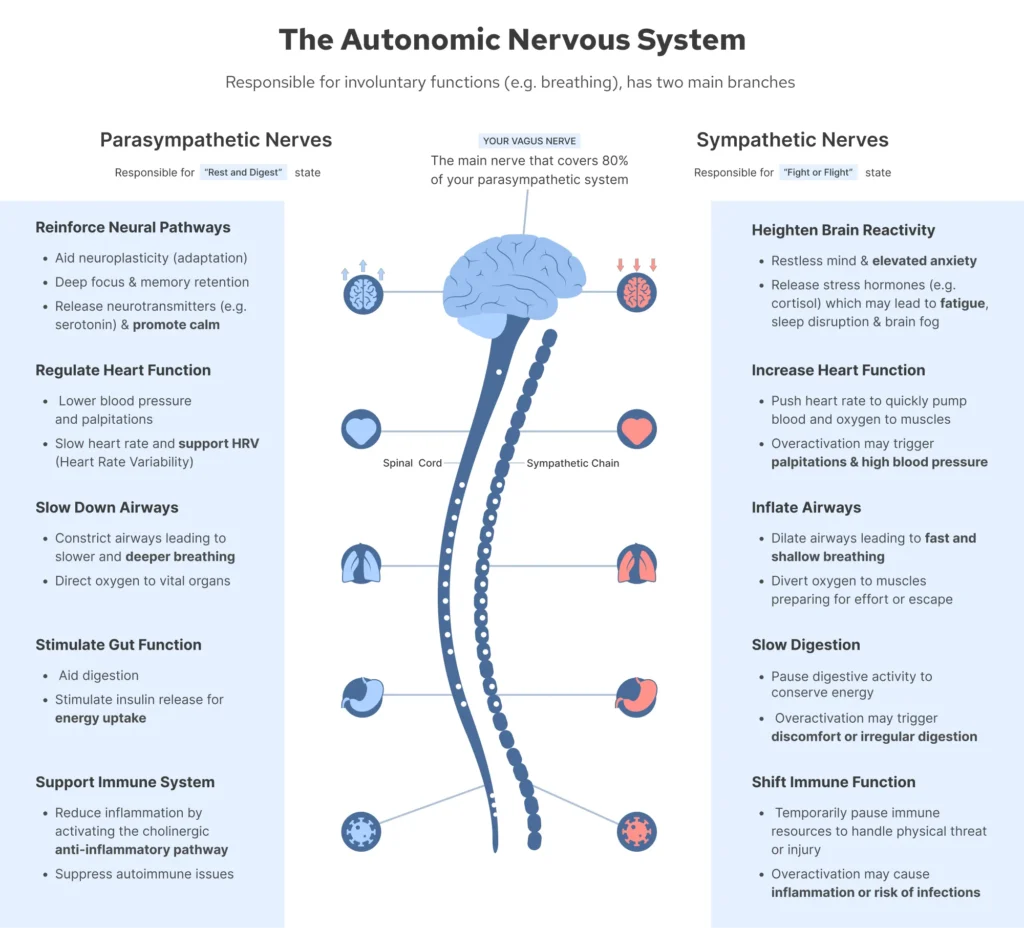
Zwei Zweige Ihres Nervensystems steuern dies:
- Sympathisch („Kampf oder Flucht“): Aktiviert durch Stress, Bedrohung und intensive Anstrengung. Beschleunigt das Herz und reduziert die Variation von Schlag zu Schlag.
- Parasympathikus („Ruhe und Verdauung“): aktiviert durch Ruhe und Erholung. Verlangsamt das Herz und erhöht die Variation von Schlag zu Schlag.
Eine hohe HRV bedeutet, dass Ihr parasympathisches System aktiviert ist und Ihr Körper anpassungsfähig ist. Im Gegenteil, eine anhaltend niedrige HRV kann auf eine erhöhte sympathische Aktivierung oder eine verringerte parasympathische Erholung hinweisen. Und das ist ein Zeichen dafür, dass Ihr Körper unter Druck steht, sei es durch Stress, schlechten Schlaf, Krankheit oder Übertraining.
Was ist ein guter HRV-Score?
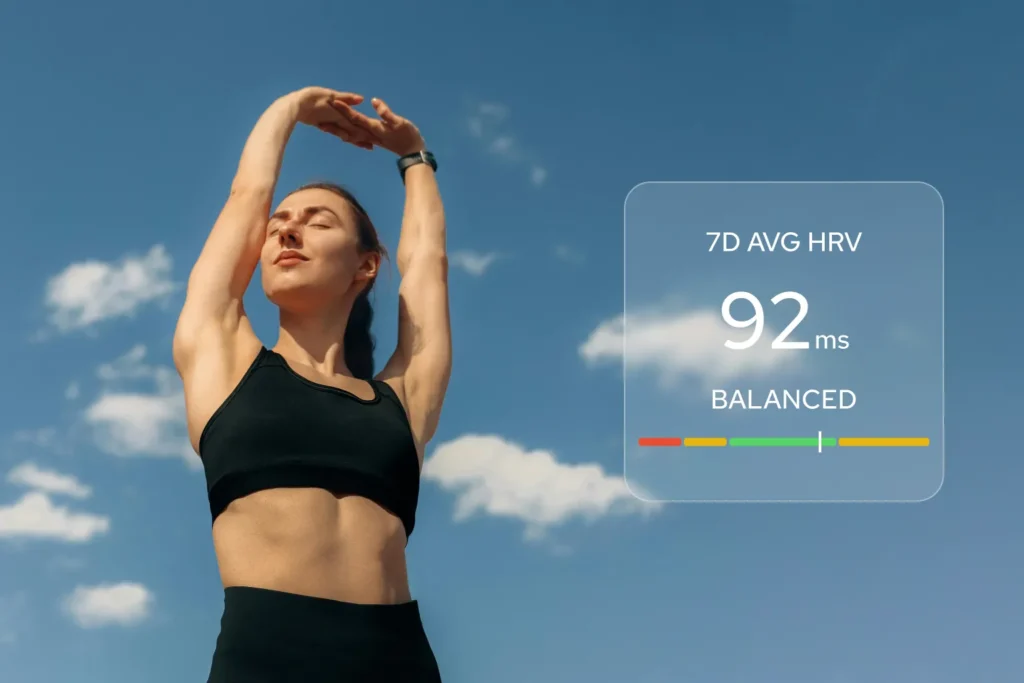
Die HRV wird in Millisekunden (ms) gemessen und variiert erheblich zwischen den einzelnen Personen.
Alter, Geschlecht, Fitness und Genetik beeinflussen alle Ihren Ausgangswert.
Am wichtigsten ist nicht, wie sich Ihre HRV im Vergleich zum Bevölkerungsdurchschnitt verhält, sondern wie sie sich im Vergleich zu Ihrem persönlichen Ausgangswert verändert.
Altersgruppe | Typischer HRV-Bereich | Wichtigste Erkenntnis |
20–29 | 55–105 ms | Hoher Ausgangswert; der Lebensstil prägt ihn immer noch erheblich |
30–39 | 45–90 ms | Allmählicher Niedergang beginnt; Gewohnheiten sind wichtiger |
40–49 | 35–75 ms | Gezielte Interventionen führen zu den deutlichsten Ergebnissen |
50–59 | 25–60 ms | Geringerer erwarteter Bereich; Verbesserung ist immer noch sehr erreichbar |
60+ | 20–50 ms | Das Nervensystem behält seine Plastizität; das Training funktioniert weiterhin |
Verfolgen Sie Ihre eigene HRV 2–4 Wochen lang täglich, um einen persönlichen Ausgangswert zu ermitteln, und achten Sie dann auf langfristige Trends und nicht auf tägliche Schwankungen.
Eine anhaltende Aufwärtsverschiebung von sogar 5–10 ms kann eine deutliche Verbesserung der Erholung und des autonomen Gleichgewichts widerspiegeln.
Experten-Tipp: Messen Sie die HRV immer gleichzeitig unmittelbar nach dem Aufwachen, bevor Sie aus dem Bett steigen. Dadurch werden Geräusche von Essen, Koffein, Körperhaltung und Aktivität vermieden und Sie erhalten jeden Tag einen sauberen, vergleichbaren Messwert.
Warum ist HRV wichtig für Ihre Gesundheit?
HRV ist nicht nur eine Fitnessmetrik.
Eine höhere HRV sagt durchweg bessere Ergebnisse in mehreren Gesundheitsbereichen voraus:
- Stressresistenz: Menschen mit höherer HRV erholen sich schneller von psychischen und physischen Stressfaktoren und berichten insgesamt von einem geringeren wahrgenommenen Stress
- Schlafqualität: Die HRV steigt typischerweise während eines tiefen, erholsamen Schlafs an und ist daher ein nützlicher Indikator dafür, ob sich Ihr Körper über Nacht ausreichend erholt
- Körperliche Genesung: Sportler mit höherer HRV erholen sich schneller vom Training und halten ihre Leistung im Laufe der Zeit konstanter aufrecht
- Kardiovaskuläre Gesundheit: Eine niedrige HRV ist ein anerkannter unabhängiger Prädiktor für kardiale Ereignisse und die Gesamtmortalität
- Mentale Gesundheit: Depressive Gedanken, ängstliche Gedanken und Traumata sind alle mit chronisch unterdrückter HRV verbunden
- Immunregulation: Der Vagusnerv, der den parasympathischen Tonus und damit die HRV steuert, steuert auch die Entzündungsreaktion des Körpers
Die HRV ist eine der nützlichsten nicht-invasiven Messgrößen zur Überwachung der Erholung, der Stressresistenz und des Gleichgewichts des autonomen Nervensystems.
Und anders als bei den meisten Gesundheitsmetriken können Sie es bewusst in die richtige Richtung lenken.

Wie wird die HRV gemessen?
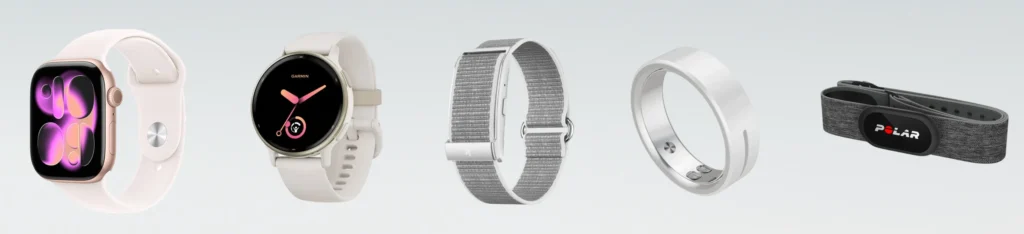
Viele Verbrauchergeräte können HRV verfolgen; Möglicherweise besitzen Sie bereits:
Gerät | Methode | Am besten geeignet für |
Apple Watch (Serie 4+) | Optischer Sensor; über Nacht über die Health-App | Bequeme tägliche Nachverfolgung; am besten beim Aufwachen lesen |
Oura Ring | Optischer Sensor am Finger; nächtliche HRV | Eine der genauesten Verbraucheroptionen |
Garmin (die meisten Modelle) | Optischer Handgelenksensor; Körperbatterie + HRV-Status | Sportler verfolgen Trainingsbelastung und Erholung |
Whoop | Kontinuierlicher Handgelenksensor; täglicher Wiederherstellungswert | HRV-basiertes Training und Regenerationscoaching |
Polar-Brustgurt | EKG-genau; präziseste Verbraucheroption | Höchste Genauigkeit; erfordert eine bewusste Sitzung |
Wearables für Verbraucher sind im Allgemeinen zuverlässig genug, um HRV-Trends im Zeitverlauf zu verfolgen, allerdings weniger präzise als ein EKG.
Um Ihren eigenen Fortschritt Woche für Woche zu überwachen, sind sie für die persönliche Trendüberwachung ausreichend genau, und die Konsistenz der Messung ist wichtiger als die wissenschaftliche Präzision.
Was verursacht eine niedrige HRV?
Eine niedrige HRV ist Ihr Körper, der Ihnen sagt, dass er unter Druck steht. Die Ursachen sind oft offensichtlich, sobald Sie mit der Verfolgung beginnen:
- Schlechter oder unzureichender Schlaf: Selbst eine schlechte Nacht senkt die HRV bis zum nächsten Morgen messbar
- Alkohol: unterdrückt die parasympathische Aktivität und kann die HRV 24–72 Stunden nach dem Verzehr signifikant senken
- Overtraining: Zu viel Bewegung ohne ausreichende Erholung hält die HRV chronisch unterdrückt
- Chronischer psychischer Stress: Eine anhaltende sympathische Aktivierung verhindert, dass sich HRV jemals vollständig erholt
- Krankheit oder Infektion: Die Immunantwort aktiviert das sympathische System und reduziert die HRV während und nach dem Unwohlsein
- Sitzender Lebensstil: Körperliche Inaktivität reduziert den Vagustonus und senkt die HRV-Basiswerte im Laufe der Zeit zunehmend
- Chronische Entzündung: Erhöhte Entzündungsaktivität kann die Funktion des Vagusnervs beeinträchtigen und zu einer dauerhaft niedrigeren HRV beitragen
Der Vagusnerv: Die Wurzel der HRV
Jede Methode zur Verbesserung der HRV wirkt in irgendeiner Weise über den Vagusnerv. Wenn man versteht, warum, wird das Gesamtbild klarer.
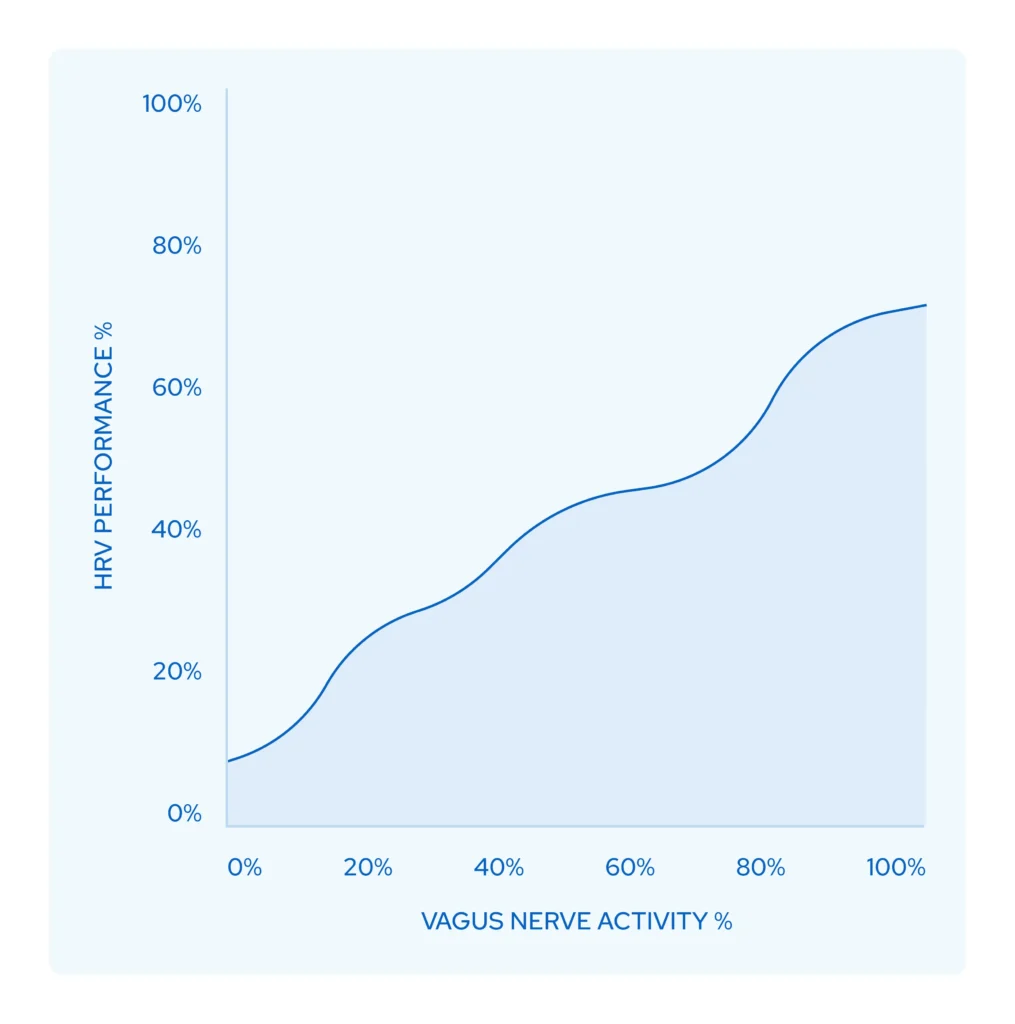
Die HRV ist im Kern ein Maß für den Vagustonus, die Aktivität der parasympathischen Fasern des Vagusnervs am Herzen.
Der Vagusnerv verläuft von Ihrem Hirnstamm durch Ihren Hals, Ihre Brust und Ihren Bauch und verbindet Ihr Gehirn direkt mit Ihrem Herzen, Ihrer Lunge und Ihrem Darm.
Es ist der primäre Kanal, über den Ihr Körper vom Stressmodus in den Erholungsmodus wechselt.
Wenn der Vagustonus stark ist, reagiert Ihre Herzfrequenz flexibel auf jeden Moment: Sie beschleunigt und verlangsamt sich in einem Rhythmus, der die Anpassungsfähigkeit in Echtzeit widerspiegelt.
Diese Flexibilität ist es, die auf Ihrem Gerät eine hohe HRV registriert.
Wenn der Vagustonus schwach ist (unterdrückt durch Stress, Entzündungen, schlechten Schlaf oder Alkohol), verschwindet diese Flexibilität und die HRV sinkt.
Das Ergebnis ist, dass alles, was nachgelagert ist, darunter leidet: Die Genesung verlangsamt sich, der Schlaf wird weniger erholsam, die Stresstoleranz sinkt und die Entzündungsbelastung steigt.
Aus diesem Grund zielen viele HRV-fokussierte Interventionen darauf ab, den Vagustonus und die parasympathische Regulierung zu verbessern.
Vagusnervstimulation – die direkteste Methode zur Verbesserung der HRV
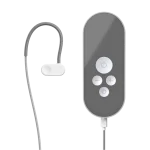
Nicht-invasive VNS-Geräte liefern präzise kalibrierte elektrische Signale über das Ohr an den Vagusnerv.
Mehrere randomisierte kontrollierte Studien haben über messbare Verbesserungen der HRV-Metriken nach Stimulation des Nervus vagus auricularis berichtet.
(Einige Benutzer bemerken möglicherweise innerhalb weniger Wochen regelmäßiger Nutzung Änderungen in den HRV-Trends bei tragbaren Verbrauchergeräten.
Es ist keine Operation oder Verschreibung erforderlich. Es wird durch 50+ wissenschaftliche Studien gestützt, die an Institutionen wie Stanford, Yale und UCLA durchgeführt wurden.
So verbessern Sie die HRV: 10 evidenzbasierte Methoden
HRV ist trainierbar und dies sind die zehn wirksamsten Hebel, ungefähr in der Reihenfolge ihrer Wirkung.
1. Trainieren Sie Ihren Vagusnerv direkt
Alle anderen Methoden auf dieser Liste funktionieren teilweise durch indirekte Aktivierung des Vagusnervs. Die Stimulation des Vagusnervs (VNS) erfolgt direkt: Sie liefert kalibrierte elektrische Impulse über das Ohr an den Vagusnerv. Randomisierte placebokontrollierte Studien zeigen messbare Erhöhungen der HRV-Metriken, einschließlich RMSSD und hochfrequenter HRV, im Vergleich zur Scheinstimulation. Die Auswirkungen auf tragbare Verbrauchergeräte sind innerhalb von 2–4 Wochen sichtbar.
Erfahren Sie mehr: Was ist ein aurikuläres VNS und wie funktioniert es?
2. Schützen Sie Ihren Schlaf vor allem anderen
Die HRV ist oft am stabilsten und aussagekräftigsten, wenn sie über Nacht gemessen wird. Ihr Nervensystem erholt sich während des Tiefschlafs, insbesondere im Slow-Wave- und REM-Stadium. Konsequent 7–9 Stunden mit einer festen Wachzeit zu erreichen, ist die Einzelgewohnheit mit der höchsten Rendite für HRV. Verfolgen Sie Ihre HRV über Nacht: Sie werden schon am nächsten Morgen sehen, welchen Unterschied eine gute Nacht macht.
3. Üben Sie langsames, kontrolliertes Atmen
Das Atmen mit 5–6 Atemzügen pro Minute (bekannt als Resonanzfrequenzatmung) aktiviert das parasympathische System direkt über den Vagusnerv. Untersuchungen zeigen, dass bereits 6 Minuten langsames Atmen täglich innerhalb weniger Wochen zu messbaren Verbesserungen der HRV führen können. 4 Sekunden einatmen, kurz ruhen, 5–6 Sekunden ausatmen.
4. Alkohol eliminieren oder drastisch reduzieren
Kein einzelner Lebensstilfaktor senkt die HRV zuverlässiger als Alkohol. Studien zeigen, dass zwei oder mehr Getränke die HRV am nächsten Morgen um 28–33% senken, wobei die Wirkung mehrere Tage anhält. Überprüfen Sie Ihren Wearable-Score am Morgen nach dem Trinken. Die Verringerung ist oft in tragbaren HRV-Daten am nächsten Morgen erkennbar, und die Erholung nach dem Alkoholabbau ist eine der schnellsten HRV-Verbesserungen, die die meisten Menschen erleben.
5. Trainieren Sie konsequent und erholen Sie sich härter
Regelmäßiges aerobes Training erhöht den Vagustonus und die HRV über Monate hinweg. Doch intensives Training unterdrückt vorübergehend die HRV, wenn sich der Körper erholt; das ist normal.
Wenn Ihr wöchentlicher HRV-Durchschnitt dauerhaft nach unten tendiert, benötigt Ihr Körper mehr Erholung und nicht mehr Training. Das Erholungsgleichgewicht ist wichtiger als nur die Erhöhung des Schulungsvolumens.
6. Bewältigen Sie chronischen Stress mit Absicht
Anhaltender psychischer Stress hält das sympathische System chronisch aktiviert und unterdrückt die HRV.
Meditation, Achtsamkeit und Zeit in natürlichen Umgebungen steigern durchweg die parasympathische Aktivität. Selbst kurze tägliche Stressreduktionspraktiken können im Laufe der Zeit zu allmählichen Verbesserungen der autonomen Regulierung beitragen.
7. Verwenden Sie Kälteexposition
Kalte Duschen und das Eintauchen in kaltes Wasser aktivieren den Vagusnerv und lösen nach dem anfänglichen sympathischen Schock eine parasympathische Erholungsreaktion aus.
Regelmäßige Kälteexposition kann die autonome Flexibilität und die Erholungsreaktionen im Laufe der Zeit verbessern. Die Wirkung ist im Vergleich zu direktem VNS mild, aber sie ist real und verstärkt sich mit der Zeit.
8. Reduzieren Sie die Entzündungsbelastung durch Ernährung
Chronische Entzündungen unterdrücken die Funktion des Vagusnervs und halten die HRV gedrückt. Die Reduzierung hochverarbeiteter Lebensmittel und überschüssigen zugesetzten Zuckers (bei gleichzeitiger Erhöhung ganzer, nährstoffreicher Lebensmittel) kann das Entzündungsgleichgewicht verbessern und im Laufe der Zeit eine gesündere HRV unterstützen.
9. Bauen Sie konsistente Tagesrhythmen auf
Ihr autonomes Nervensystem wird durch Vorhersehbarkeit beruhigt. Feste Essenszeiten, ein konsistenter Schlafplan und strukturierte Tagesabläufe reduzieren die sympathische Hintergrundbelastung und ermöglichen so die Erholung und Stabilisierung des parasympathischen Tonus (und damit der HRV).
10. Bekämpfung von Überschulung und Schuldeneintreibung
Wenn Sie sechs oder sieben Tage pro Woche trainieren und Ihre HRV dauerhaft niedrig ist, kann Ihr Körper nicht mithalten. Strategische Ruhetage, Entlastungswochen und aktive Erholung (Gehen, Schwimmen, Yoga) sind keine Rückschläge. Sie ermöglichen eine Konsolidierung der Anpassung und einen Anstieg des HRV.
Die direkteste Methode: Nicht-invasives VNS
Aurikuläre VNS-Geräte trainieren Ihr parasympathisches System an seiner Quelle durch den Vagusnerv. Die meisten Benutzer berichten von sichtbaren HRV-Verbesserungen auf ihrer Apple Watch, ihrem Oura Ring oder ihrem Garmin innerhalb von 2–4 Wochen täglicher Nutzung.
CE-zertifiziert, nicht-invasiv, keine Operation erforderlich.
Wie lange dauert es, die Herzfrequenzvariabilität zu verbessern?
Es kommt darauf an, wo Sie anfangen und welche Interventionen Sie anwenden. Hier ist ein realistischer Zeitplan:
Zeitrahmen | Was Sie erwarten können |
1-3 Tage | Alkohol reduzieren oder den Schlaf einer Nacht verbessern: sofortige akute Verbesserungen, die auf Ihrem Gerät sichtbar sind |
1-2 Wochen | Konsequente Atemarbeit oder VNS-Sitzungen: Im Tagesdurchschnitt zeichnet sich ein früher Aufwärtstrend ab |
3-4 Wochen | Regelmäßige VNS-Nutzung: messbare, anhaltende Verbesserungen bei RMSSD und HF HRV, die von den meisten Benutzern gemeldet werden |
6-8 Wochen | Kombinierte Lebensstilinterventionen: aussagekräftige Trendverschiebung des wöchentlichen HRV-Durchschnitts |
3-6 Monate | Zusammengesetzte Gewohnheiten: signifikante, dauerhafte Verbesserung der autonomen Ausgangs- und Stressresistenz |
Das Wichtigste ist, konsequent zu verfolgen.
Ihre tragbaren Daten sagen Ihnen viel genauer als jede allgemeine Empfehlung, was für Ihre Physiologie tatsächlich funktioniert.
Häufig gestellte Fragen zu HRV
F: Kann man die HRV in jedem Alter verbessern?
Ja. Die HRV nimmt mit zunehmendem Alter natürlich ab, da die parasympathische Funktion abnimmt, das Nervensystem behält jedoch sein ganzes Leben lang seine Plastizität. Bewegung, Vagustonustraining und Lebensstilinterventionen erhöhen die HRV in jedem Alter. Die Basislinie kann niedriger sein, die Fahrtrichtung ist jedoch immer kontrollierbar.
F: Ist eine hohe HRV immer besser?
Für die meisten gesunden Menschen ja. Eine höhere HRV weist auf eine größere autonome Flexibilität und Belastbarkeit hin. Wenn bei Ihnen bereits ein Herzsymptom vorliegt, besprechen Sie die HRV-Interpretation mit Ihrem Arzt. Bei der allgemeinen Gesundheits- und Leistungsverfolgung sind Aufwärtstrends im Allgemeinen mit einer verbesserten Genesung und autonomen Flexibilität verbunden.
F: Wie genau ist die HRV einer Apple Watch oder eines Oura-Rings?
Wearables für Verbraucher verwenden optische Sensoren, die weniger präzise sind als EKG-Brustgurte. Untersuchungen zeigen jedoch, dass sie die HRV mit hervorragender Genauigkeit messen, um Trends im Zeitverlauf zu verfolgen. Um Ihre eigenen Fortschritte Woche für Woche zu überwachen, sind sie mehr als ausreichend.
F: Senkt Alkohol die HRV wirklich so stark?
Ja. Studien zeigen, dass zwei oder mehr Getränke die HRV am nächsten Morgen um 28–33 % senken, wobei die Wirkung mehrere Tage anhält. Wenn Sie ein Ortungsgerät tragen, ist die Wirkung in der Regel unverkennbar und bessert sich oft nach einer Alkoholreduzierung oder einem Alkoholentzug.
F: Was ist der schnellste Weg, die HRV zu erhöhen?
Zu den schnellsten kurzfristigen Verbesserungen können der Verzicht auf Alkohol, die Behebung einer Nacht Schlaf und das Üben einer langsamen Zwerchfellatmung gehören. Für eine nachhaltige Verbesserung des Ausgangswerts führen regelmäßiges Aerobic-Training und direktes Vagustonustraining (einschließlich Ohrmuschel-VNS) über Wochen und Monate hinweg zu den nachhaltigsten Ergebnissen.
F: Verbessert die Stimulation des Vagusnervs tatsächlich die HRV?
Ja. Randomisierte, placebokontrollierte Studien zeigen messbare Erhöhungen des RMSSD, der hochfrequenten HRV und des LF/HF-Verhältnisses bei aurikulärem VNS im Vergleich zur Scheinstimulation. Der Effekt ist bei denselben tragbaren Konsumgütern messbar, die die meisten Menschen bereits besitzen, was einer der Gründe dafür ist, dass er weltweit großes Forschungsinteresse geweckt hat.
F: Kann Stress die HRV dauerhaft senken?
Chronischer, unkontrollierter Stress, der über Jahre anhält, kann den Vagustonus senken und die HRV dauerhaft senken. Das Nervensystem behält jedoch die Fähigkeit zur Verbesserung. Atemübungen, VNS, Bewegung und eine Änderung des Lebensstils können den parasympathischen Tonus selbst bei Menschen mit chronisch unterdrückter HRV wiederherstellen.
Fazit
HRV ist eines der stärksten, messbarsten Signale Ihrer allgemeinen Gesundheit und kann in jedem Alter trainiert werden.
Schlaf, regelmäßige Bewegung, reduzierter Alkoholkonsum, Stressbewältigung und langsames Atmen erhöhen den Wert.
Der direkteste Weg zu einer höheren HRV ist jedoch das Training des Vagusnervs selbst, eines wichtigen biologischen Signalwegs, der die HRV und die parasympathische Regulierung beeinflusst.
Ob durch tägliche Atemarbeit, Kälteeinwirkung oder Stimulation des Vagusnervs – die Unterstützung der Vagusfunktion kann die Stressresistenz, die Erholung und das allgemeine Wohlbefinden verbessern.
Und mit einem Gerät, das Sie bereits am Handgelenk tragen, können Sie jeden Schritt des Prozesses verfolgen.
Dieser Blogbeitrag soll informativ sein und sollte keine professionelle Gesundheitsberatung ersetzen. Konsultieren Sie immer einen Arzt, um eine individuelle Beratung zu erhalten.
Referenzen
- Balasubramanian, K., Harikumar, K., Nagaraj, N., & Pati, S. (2017). Vagus nerve stimulation modulates complexity of heart rate variability differently during sleep and wakefulness. Annals of Indian Academy of Neurology, 20(4), 403. https://pmc.ncbi.nlm.nih.gov/articles/PMC5682746/
- Genç, A., Tokuç, F. E. U., & Korucuk, M. (2024). Effects of vagal nerve stimulation parameters on heart rate variability in epilepsy patients. Grenzen der Neurologie, 15. https://www.frontiersin.org/journals/neurology/articles/10.3389/fneur.2024.1490887/full
- Jensen, M. K., Andersen, S. S., Andersen, S. S., Liboriussen, C. H., Kristensen, S., & Jochumsen, M. (2022). Modulating Heart Rate Variability through Deep Breathing Exercises and Transcutaneous Auricular Vagus Nerve Stimulation: A Study in Healthy Participants and in Patients with Rheumatoid Arthritis or Systemic Lupus Erythematosus. Sensors, 22(20), 7884. https://vbn.aau.dk/en/publications/modulating-heart-rate-variability-through-deep-breathing-exercise/
- Wessel, C. R., Karakas, C., Haneef, Z., & Mutchnick, I. (2024). Vagus nerve stimulation and heart rate variability: A scoping review of a somatic oscillatory signal. Clinical Neurophysiology, 160, 95–107. https://www.binasss.sa.cr/bibliotecas/bhm/abr24/38.pdf


 German
  English
  French
  Spanish
  Swedish