
Eine umfassende Übersicht darüber, wie VNS-Geräte die Dysregulation des Nervensystems bekämpfen, die der postviralen Müdigkeit zugrunde liegt, mit Expertenrankings der vier besten zertifizierten Optionen.

Schätzungsweise 10 bis 30 % der Personen, die sich mit SARS-CoV-2 infizieren, leiden unter postviraler Müdigkeit. Die Symptome halten länger als 12 Wochen an und sind in vielen Fällen sogar noch viel länger.
Und hier ist der Grund dafür:
Es hat sich heute schnell zu einer der häufigsten und am wenigsten verstandenen Quellen chronischer Krankheiten auf der Welt entwickelt und betrifft laut veröffentlichten Forschungsergebnissen weltweit schätzungsweise 65 Millionen Menschen.
Was die postvirale Müdigkeit von der normalen Genesung nach einer Krankheit unterscheidet, ist nicht ihre Dauer. Es ist sein Mechanismus.
Im Gegensatz zur Müdigkeit, die auf eine Erkältung oder Grippe folgt und innerhalb weniger Wochen abklingt, spiegelt die postvirale Müdigkeit eine grundlegende Störung des autonomen Nervensystems (des Hauptregulationsnetzwerks des Körpers) neben anhaltender Neuroinflammation, Immundysregulation und, bei einem erheblichen Teil der Betroffenen, direkter Schädigung des Vagusnervs selbst wider.
Jüngste neurowissenschaftliche Forschungen haben eine Funktionsstörung des Vagusnervs als zentrales und messbares Merkmal der postviralen Müdigkeit identifiziert, das in einem breiten Spektrum ihrer Symptome auftritt: schwächende Müdigkeit, Gehirnnebel, Schlafprobleme, ängstliche Gedanken, Magen-Darm-Symptome und Belastungsunverträglichkeit.
Warum?
Denn wenn dieser wichtigste parasympathische Nerv beeinträchtigt ist, ist der Körper strukturell nicht mehr in der Lage, sich zu erholen, unabhängig davon, wie viel Ruhe er erhält oder wie sorgfältig die Aktivität gesteuert wird.
Dieser Leitfaden untersucht den Zusammenhang zwischen Funktionsstörungen des Vagusnervs und postviraler Müdigkeit und bewertet die führenden Geräte zur Vagusnervstimulation (VNS), die bei den Betroffenen zur Wiederherstellung des autonomen Gleichgewichts, der Energie und der Funktionsfähigkeit beitragen können.
Symptome einer postviralen Müdigkeit
Postvirale Müdigkeit ist durch ein Multisystemmuster anhaltender Symptome gekennzeichnet, die nicht dem erwarteten Verlauf der Genesung nach der Krankheit folgen.
Die Intensität der Symptome kann schwanken, sie können sich nach körperlicher oder kognitiver Anstrengung verschlimmern und mehrere Körpersysteme gleichzeitig betreffen. Zu den häufigsten Erscheinungsformen gehören:
Energie und körperliche Symptome
- Starke, anhaltende Müdigkeit, die nichts mit dem Aktivitätsniveau oder der Schlafmenge zu tun hat
- Post-Exertional Malaise: eine charakteristische Verschlechterung der Symptome, die 12 bis 72 Stunden nach körperlicher oder geistiger Anstrengung anhält
- Signifikante Verringerung der körperlichen Ausdauer im Vergleich zum Ausgangswert vor der Erkrankung
- Muskelschwäche, Schweregefühl oder ausgedehnte Schmerzen ohne Anstrengung
- Unerfrischender Schlaf: Aufwachen so müde wie vor dem Schlafengehen
- Atemnot oder verminderte Belastungstoleranz, auch bei normaler Lungenfunktion
Kognitiven Symptome
- Gehirnnebel und Schwierigkeiten, klar zu denken, Informationen zu verarbeiten oder sich zu konzentrieren
- Langsamer Wortabruf und Schwierigkeiten, das Gespräch aufrechtzuerhalten
- Kurzzeitgedächtnisprobleme, die die Arbeit und die täglichen Aufgaben beeinträchtigen
- Schwierigkeiten beim Lesen, Befolgen von Anweisungen oder Aufrechterhalten der Aufmerksamkeit
- Geistige Erschöpfung, die schnell eintritt und deren Lösung unverhältnismäßig lange dauert
Autonome Symptome
- Schwindel oder Benommenheit beim Stehen oder nach längerem Sitzen
- Schneller Herzschlag oder Herzklopfen bei minimaler Anstrengung oder Positionsänderung
- Schwankende Herzfrequenz, die schwer zu regulieren ist
- Reduzierte Herzfrequenzvariabilität (HRV): ein messbares Zeichen für einen beeinträchtigten Vagustonus
- Temperaturstörungen mit einem Gefühl ungewöhnlicher Kälte, Überhitzung oder Unfähigkeit zur normalen Thermoregulation
Schlafsymptome
- Schlafprobleme und Schwierigkeiten beim Ein- oder Durchschlafen trotz Erschöpfung
- Gestörte Schlafarchitektur mit reduziertem erholsamen Slow-Wave-Schlaf
- Unregelmäßiger zirkadianer Rhythmus und das Gefühl, nachts am wachsamsten und tagsüber am erschöpftesten zu sein
- Nicht erholsamer Schlaf, unabhängig von der Dauer
- Lebendige, verstörende oder stark fragmentierte Träume
Gastrointestinale und Immunsymptome
- Übelkeit, Blähungen, saurer Reflux oder veränderte Darmmotilität
- Reizbare Darmsymptome, die nach der ersten Erkrankung auftraten oder sich verschlimmerten
- Erhöhte Empfindlichkeit gegenüber Lebensmitteln, die zuvor gut vertragen wurden
- Wiederkehrende Halsschmerzen, geschwollene Lymphknoten oder leichte grippeähnliche Symptome
- Längere Genesung von kleineren Infektionen, die zuvor schnell abgeklungen waren
Psychische und neurologische Symptome
- Ängstliche Gedanken, insbesondere über körperliche Symptome und deren Unvorhersehbarkeit
- Niedergeschlagenheit oder depressive Zustände, oft als Folge des Verlusts der Funktionsfähigkeit
- Sensorische Überempfindlichkeit mit erhöhter Reaktion auf Licht, Geräusche oder Gerüche
- Klingeln im Ohr oder Hörstörungen
- Kopfschmerzen, insbesondere solche, die sich bei kognitiver Anstrengung oder Positionsänderung verschlimmern
Die funktionellen Auswirkungen einer postviralen Müdigkeit sind schwerwiegend und werden häufig unterschätzt. Studien belegen, dass die Mehrheit der Betroffenen nicht in der Lage ist, zu ihrem Arbeits- oder Aktivitätsniveau vor der Krankheit zurückzukehren.
Und hier ist die Lösung:
Viele müssen ihre Arbeitszeit verkürzen, ihre Beschäftigung ganz aufgeben oder sich von sozialen, familiären und körperlichen Aktivitäten zurückziehen, die zuvor unauffällig waren.
Das Symptom wird von Gesundheitssystemen, die nicht darauf ausgelegt sind, es zu erkennen oder zu behandeln, weitgehend missverstanden, so dass die Betroffenen keine wirksame Therapie und keine Erklärung dafür haben, warum Standard-Wiederherstellungsansätze nicht funktioniert haben.
Selbsteinschätzung der postviralen Müdigkeit
Bewerten Sie die Symptome, die Sie seit Ihrer Krankheit regelmäßig erlebt haben:
Krankheitsbeginn und -muster
- Die Symptome begannen oder verschlechterten sich deutlich nach einer Viruserkrankung
- Sie sind nach 12 oder mehr Wochen nicht zu Ihrem Ausgangswert vor der Erkrankung zurückgekehrt
- Ihre Symptome folgen einem schubförmig-remittierenden Muster mit Phasen relativer Besserung, gefolgt von Abstürzen
- Die Symptome verschlimmern sich nach körperlicher Aktivität, kognitiver Anstrengung oder emotionalem Stress
- Vor der Viruserkrankung waren Sie ansonsten gesund
Energie und Erholung
- Sie leiden unter anhaltender Müdigkeit, die durch den Schlaf nicht ausreichend wiederhergestellt werden kann
- Körperliche Aktivität (auch leichte Anstrengung) führt zu einer mehrtägigen Verschlechterung der Symptome
- Sie haben Ihr Aktivitätsniveau deutlich reduziert, um Symptomschübe zu bewältigen
- Sie fühlen sich nach Stress schlechter, anstatt sich zu erholen, sobald er vorüber ist
- Ihr Energieniveau ist unvorhersehbar und entspricht nicht dem Aufwand
Kognitive Funktion
- Sie erleben einen Gehirnnebel, der Ihre Arbeits- oder Funktionsfähigkeit erheblich beeinträchtigt
- Es fällt Ihnen schwer, den Fokus länger als für kurze Zeit aufrechtzuerhalten
- Wortabruf, Gedächtnis und Informationsverarbeitung fühlen sich merklich langsamer an als vor Ihrer Krankheit
- Lesen, Bildschirme oder anhaltende Gespräche verschlimmern Ihre kognitiven Symptome
- Sie fühlen sich geistig erschöpft nach Aufgaben, die zuvor keine spürbare Anstrengung erforderten
Signale des autonomen Nervensystems
- Beim Stehen verspüren Sie Schwindel, Benommenheit oder Ohnmachtsanfälle
- Ihre Herzfrequenz steigt mit minimaler körperlicher Anstrengung deutlich an
- Sie haben niedrige HRV-Werte auf einem tragbaren Tracker
- Sie fühlen sich körperlich angespannt, verkabelt oder können nicht abschalten, selbst wenn Sie erschöpft sind
- Kleine Stressfaktoren oder sensorische Eingaben erzeugen unverhältnismäßige körperliche Reaktionen
Schlaf und zirkadiane Muster
- Schlaf gibt Ihnen nicht mehr die Energie zurück, die Sie vor Ihrer Krankheit hatten
- Sie haben Schlafprobleme, obwohl Sie sich zutiefst erschöpft fühlen
- Ihr Schlaf-Wach-Rhythmus hat sich verschoben und Sie sind nachts am wachsamsten. Am schwierigsten ist es, morgens aufzuwachen
- Du wachst mit einem so müden Gefühl auf wie damals, als du ins Bett gegangen bist
- Tagesmüdigkeit ist vorhanden, aber Schlaf lindert sie nicht
Erfahrung im Gesundheitswesen
- Standard-Bluttests, Scans und Untersuchungen haben normale Ergebnisse geliefert
- Ihnen wurde gesagt, dass Ihre Symptome stressbedingt oder psychologisch sind, ohne dass es eindeutige Beweise dafür gibt
- Herkömmliche Ansätze wie Ruhe, Tempo und abgestufte Übungen haben zu unvollständiger oder keiner Linderung geführt
- Mehrere medizinische Fachkräfte konnten das Fortbestehen Ihrer Symptome nicht erklären
- Sie haben zahlreiche Therapien in Anspruch genommen, ohne Ihr Funktionsniveau vor der Erkrankung wiederherzustellen
Wenn Sie sich mit mehreren Merkmalen in den Kategorien Krankheitsbeginn, Autonomie und Genesung identifizieren, kann eine Dysregulation des autonomen Nervensystems (und insbesondere ein beeinträchtigter Vagustonus) ein wesentlicher Faktor für die Aufrechterhaltung Ihrer Symptome sein.
Bei postviraler Müdigkeit benötigt das Nervensystem nicht einfach mehr Ruhe.
Es benötigt gezielte Unterstützung, um die durch das Virus gestörte Regulierungskapazität wiederherzustellen. Die Stimulation des Vagusnervs kann als zusätzlicher Ansatz ein Gespräch mit Ihrem Arzt rechtfertigen.
Die Vagusnervverbindung
Was ist der Vagusnerv?
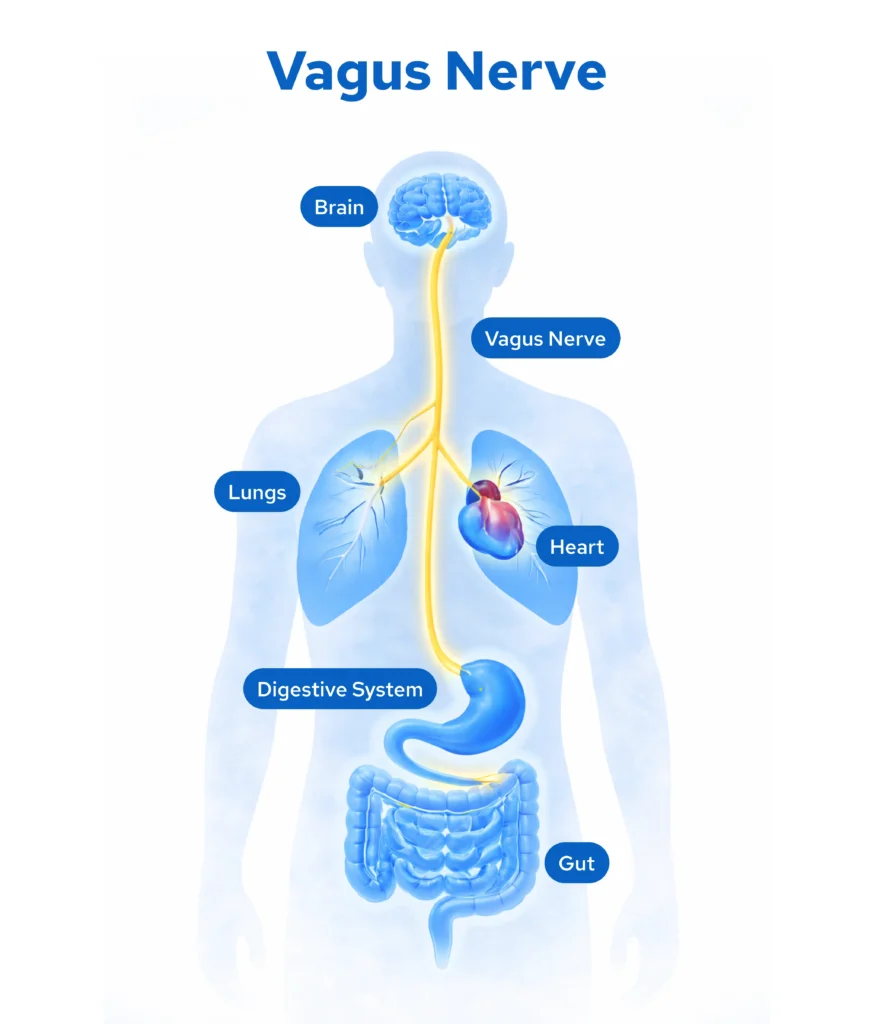
Der Vagusnerv (Hirnnerv X) ist der längste und komplexeste Nerv des autonomen Nervensystems. Er entspringt in der Medulla oblongata und ragt durch den Hals, um Herz, Lunge und Magen-Darm-Trakt zu innervieren.
Es vermittelt die wichtigsten restaurativen und regulatorischen Funktionen des Körpers:
- Herz-Kreislauf-Regulation und Herzfrequenzkontrolle sowie Baroreflexintegration
- Modulation des Atemmusters und Atemeffizienz
- Gastrointestinale Motilität, Verdauung und Nährstoffaufnahme
- Entzündungsreflexweg: der cholinerge entzündungshemmende Weg
- Regulierung der Schlafarchitektur und Synchronisierung des zirkadianen Rhythmus
- Immunüberwachung und Zytokinregulation
- Autonomes Gleichgewicht des Nervensystems: die primäre Bremse für die Kampf-oder-Flucht-Aktivierung
Das Zwei-Modus-System
Ihr autonomes Nervensystem funktioniert über zwei komplementäre Abteilungen:
- Sympathisch (Kampf oder Flucht): Erhöht die Herzfrequenz, erhöht Cortisol und Adrenalin, unterdrückt die Verdauung und mobilisiert Energiereserven. Unverzichtbar für das kurzfristige Überleben. Metabolisch teuer in der Aufrechterhaltung.
- Parasympathikus (Ruhe- und Verdauungsphase): Wird überwiegend durch den Vagusnerv gesteuert. Reduziert die Herzfrequenz, fördert die Zellreparatur, erleichtert einen tiefen erholsamen Schlaf, reguliert die Immunfunktion und füllt Energiereserven auf.
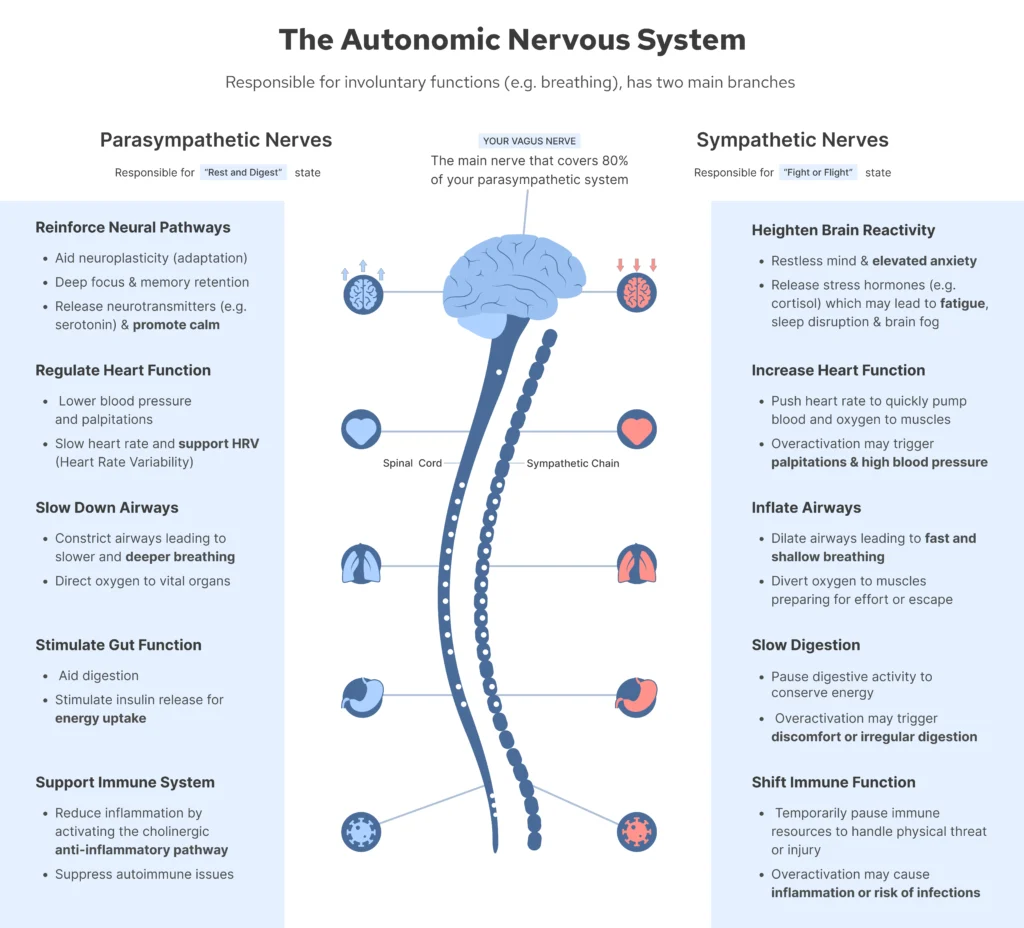
In einem gesunden Nervensystem arbeiten diese beiden Modi im dynamischen Gleichgewicht. Sie reagieren auf Anforderungen und erholen sich dann vollständig davon.
Bei postviraler Müdigkeit ist dieses Gleichgewicht auf struktureller Ebene gestört. Der Vagusnerv (der primäre Mechanismus, durch den der Körper von sympathischer zu parasympathischer Aktivität übergeht) ist beeinträchtigt.
Der Körper gerät in einen minderwertigen Kampf-oder-Flucht-Zustand, den er nicht verlassen kann. Jeder Bedarf, so gering er auch sein mag, trägt zu einem bereits erschöpften System bei. Die Ruhe sorgt für teilweise Linderung, jedoch nicht für Wiederherstellung.
Die Genesung stockt nicht, weil sich die Person nicht genug anstrengt, sondern weil dem Nervensystem die Regulierungskapazität fehlt, um den Genesungsprozess abzuschließen.
Wie eine Funktionsstörung des Vagusnervs zu postviralen Müdigkeitssymptomen führt
Wenn Ihr Vagusnerv nach einer Viruserkrankung eine verringerte Aktivität (niedriger Vagustonus) aufweist:
- Anhaltender sympathischer Overdrive:
Der beeinträchtigte Vagusnerv verliert nach Abklingen der akuten Krankheitsphase seine Fähigkeit, die sympathische Aktivierung herunterzuregulieren. Der Körper befindet sich weiterhin in einem schwachen Alarmzustand: Er erhöht den Cortisolspiegel, unterdrückt regenerierende Hormone, verbraucht Energiereserven und erzeugt die verdrahtete, aber erschöpfte Qualität, die zu den charakteristischsten und belastendsten Merkmalen der postviralen Müdigkeit gehört.
- Neuroinflammation:
Der Vagusnerv steuert den cholinergen entzündungshemmenden Weg, den primären Mechanismus des Körpers zum Abschalten von Entzündungsreaktionen. Wenn der Vagustonus beeinträchtigt ist, ist dieser Weg beeinträchtigt.
Proinflammatorische Zytokine (TNF-α, IL-1β, IL-6) bleiben auch weit über die akute Erkrankung hinaus erhöht. Diese Zytokine erzeugen durch ihre Wirkung auf das Zentralnervensystem direkt Gehirnnebel, Müdigkeit, schlechte Laune und Schmerzen, was erklärt, warum sich so viele postvirale Müdigkeitssymptome neurologischer Natur anfühlen, selbst wenn Gehirnscans normal erscheinen.
- Nicht erholsamer Schlaf:
Der Vagustonus ist ein direkter Regulator der Schlafarchitektur, insbesondere der Slow-Wave- und REM-Stadien, die für die körperliche Reparatur und kognitive Konsolidierung verantwortlich sind. Eine beeinträchtigte Vagusfunktion stört diese Phasen auf struktureller Ebene und führt zu einem Schlaf, der sich lang anfühlt, den Körper jedoch nicht mehr wiederherstellt als zuvor.
Aus diesem Grund reagieren Schlafprobleme nach viraler Müdigkeit nicht auf Standardmaßnahmen zur Schlafhygiene, das Problem ist nicht verhaltensbedingt. Es ist neurologisch.
- Störung der Darm-Hirn-Achse:
Aus diesem Grund reagieren Schlafprobleme nach viraler Müdigkeit nicht auf Standardmaßnahmen zur Schlafhygiene, das Problem ist nicht verhaltensbedingt. Es ist neurologisch.
Dies erklärt die Reizdarmsymptome, Übelkeit, sauren Reflux und Nahrungsmittelempfindlichkeiten, von denen ein erheblicher Teil der Menschen mit postviraler Müdigkeit betroffen ist, und ihren Zusammenhang mit kognitiven und energetischen Symptomen.
- Kardiovaskuläre Dysregulation:
Der Vagusnerv ist der primäre parasympathische Regulator der Herzfrequenz. Wenn sein Tonus reduziert wird, lässt sich die Herzfrequenz nur schwer regulieren, steigt mit minimalem Aufwand unverhältnismäßig an und schwankt unvorhersehbar.
Die Herzfrequenzvariabilität, ein validierter Marker des Vagustonus, ist bei postviraler Müdigkeit messbar und signifikant reduziert. Diese beeinträchtigte Herz-Kreislauf-Regulation trägt zu Belastungsintoleranz, Schwindel und dem Energiemangel bei, der selbst nach mäßiger körperlicher Aktivität auftritt.
- Immundysregulation:
Der Vagusnerv spielt eine zentrale Rolle bei der Immunüberwachung und beim Abschalten von Immunreaktionen, sobald ein Erreger beseitigt ist.
Eine Vagusstörung kann zu der anhaltenden Immunaktivierung und den erhöhten Autoantikörperspiegeln beitragen, die bei postviraler Müdigkeit dokumentiert sind, und einen niedriggradigen Zustand der Immunantwort aufrechterhalten, der auch ohne aktive Infektion anhaltende Symptome hervorruft.
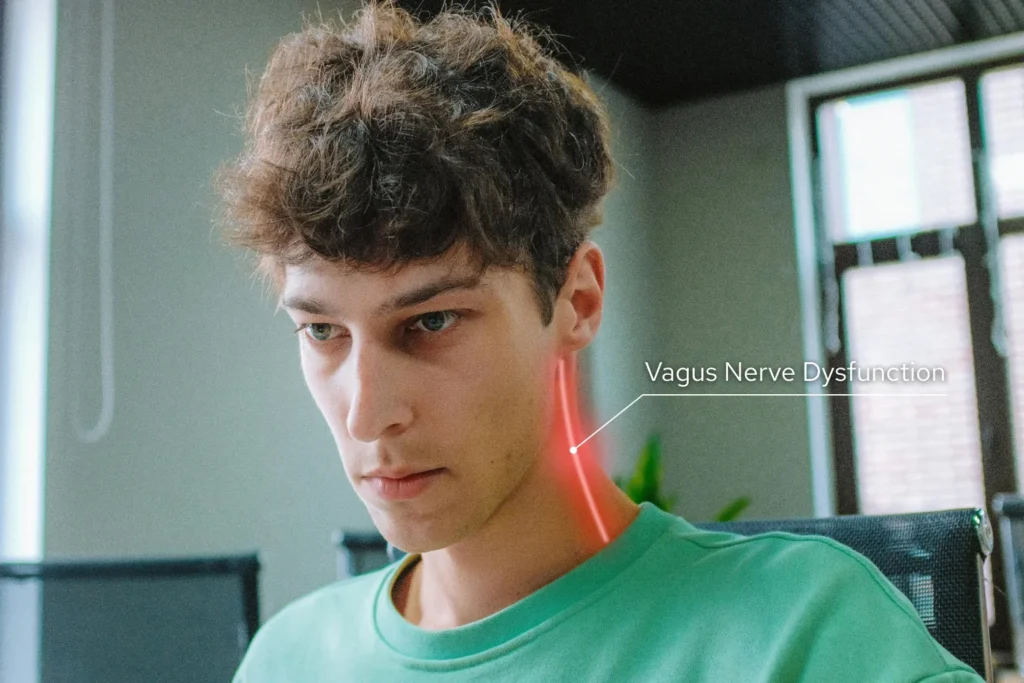
Postvirale Müdigkeit ist ein heterogenes Symptom und eine Funktionsstörung des Vagusnervs ist nicht für jeden Fall verantwortlich.
Einige Personen weisen überwiegend kardiovaskuläre Merkmale auf, andere zeigen Immun- oder mitochondriale Mechanismen und viele weisen eine überlappende Pathophysiologie auf.
Eine Vagusstörung scheint wissenschaftlich am relevantesten bei Personen mit reduzierter HRV, ausgeprägten autonomen Symptomen, Unwohlsein nach körperlicher Anstrengung und einem klaren viralen Auslöser zu sein.
Die wissenschaftlichen Beweise
Veröffentlichte Forschungsergebnisse haben eine klare und wachsende Zahl von Beweisen erbracht, die eine Funktionsstörung des Vagusnervs mit der Pathophysiologie der postviralen Müdigkeit in Verbindung bringen:
- Direkte Schädigung des Vagusnervs:
Untersuchungen haben dokumentiert, dass SARS-CoV-2 die Fähigkeit besitzt, direkt auf das autonome Nervensystem zuzugreifen und es zu schädigen. Studien haben eine Virusinfiltration über den Ohrast des Vagusnervs und die genaue anatomische Stelle identifiziert, auf die das Ohr-VNS abzielt. Postmortale und bildgebende Untersuchungen haben eine Neuroinflammation in autonomen Zentren des Hirnstamms dokumentiert, darunter im Nucleus tractus solitarius, dem primären Ziel der vagalen afferenten Signalgebung. Dies liefert eine direkte mechanistische Erklärung dafür, warum der Vagustonus bei postviraler Müdigkeit beeinträchtigt ist und warum herkömmliche Genesungsansätze, die sich nicht mit Nervenschäden befassen, zu unvollständigen Ergebnissen führen.
- Autonome Dysfunktion als bestimmendes Merkmal:
Studien belegen übereinstimmend, dass Personen mit postviraler Müdigkeit messbare autonome Anomalien aufweisen (deutlich verringerte HRV, beeinträchtigte Baroreflexempfindlichkeit und erhöhter sympathischer Tonus), die sie von Personen unterscheiden, die sich nach derselben Krankheit vollständig erholt haben. Diese Ergebnisse liegen auch dann vor, wenn herkömmliche Untersuchungen normale Ergebnisse liefern, was bestätigt, dass Standardtests die Symptome einer Funktionsstörung des Nervensystems, die zu einer Funktionsstörung führt, nicht erfassen.
- Vagusnervstimulation bei postviraler Müdigkeit:
Eine 2022 in EClinicalMedicine (The Lancet) veröffentlichte wissenschaftliche Studie zeigte, dass transkutanes VNS in einer Kohorte mit postviraler Müdigkeit zu signifikanten Verbesserungen der Müdigkeitswerte und der funktionellen Kapazität führte, wobei die Anwender nach 8 Wochen täglicher Stimulation von einem anhaltenden Nutzen berichteten. Diese Verbesserungen gingen mit messbaren Veränderungen der autonomen Funktion einher, was die mechanistische Relevanz der Vagusrehabilitation bei der Behandlung postviraler Müdigkeit unterstützt.
- VNS und kardiovaskuläre Symptome postviraler Müdigkeit:
Eine 2025 in Clinical Cardiology veröffentlichte Studie dokumentierte, dass die Stimulation des Tragusnervs (aurikuläres VNS, das auf den genauen Ast abzielt, der durch die AVNT™-Technologie von Nurosym stimuliert wird) die Symptome von Haltungsherzfrequenzanomalien bei Anwendern nach einer SARS-CoV-2-Infektion signifikant abschwächte. Die Studie berichtete über messbare Verringerungen des posturalen schnellen Herzschlags bei gleichzeitiger Verbesserung autonomer Marker und lieferte damit direkte wissenschaftliche Beweise für die vagale Stimulation bei den kardiovaskulären Manifestationen postviraler Müdigkeit.
- Der Entzündungsmechanismus:
Untersuchungen haben ergeben, dass erhöhte proinflammatorische Zytokine (insbesondere IL-6, TNF-α und IL-1β) ein konsistentes Merkmal der postviralen Müdigkeit sind und durch ihre Wirkung auf das zentrale Nervensystem direkt neurologische Symptome hervorrufen. Der cholinerge entzündungshemmende Weg des Vagusnervs ist der primäre Zytokinregulationsmechanismus des Körpers. Studien mit VNS haben eine signifikante Verringerung dieser Entzündungsmarker dokumentiert und einen mechanistisch glaubwürdigen Weg zur Symptomverbesserung bereitgestellt, der über eine einfache autonome Neuausrichtung hinausgeht.
- HRV als messbares Ergebnis:
Untersuchungen zeigen, dass die HRV (der validierte Biomarker für den Vagustonus) bei postviraler Müdigkeit deutlich reduziert ist und mit der Schwere der Müdigkeit, kognitiven Beeinträchtigungen und Belastungsintoleranz korreliert. Studien mit der AVNT™-Technologie von Nurosym haben in wissenschaftlichen Umgebungen eine Verbesserung der Vagustonusmetriken um 61 % dokumentiert und damit direkt das autonome Defizit behoben, das der Aufrechterhaltung der Symptome postviraler Müdigkeit zugrunde liegt.
Die mechanistische Schlussfolgerung: Die Wiederherstellung der Vagusnervenfunktion durch gezielte Stimulation befasst sich mit der Grundpathophysiologie der postviralen Müdigkeit (Vagusbeeinträchtigung, Neuroinflammation, sympathischer Overdrive, Störung der Darm-Hirn-Achse und beeinträchtigte Herz-Kreislauf-Regulation), anstatt die Symptome auf oberflächlicher Ebene zu behandeln, ohne ihre Ursache anzugehen.
VNS-Geräte als Lösung: So funktionieren sie
Der technologischen Revolution
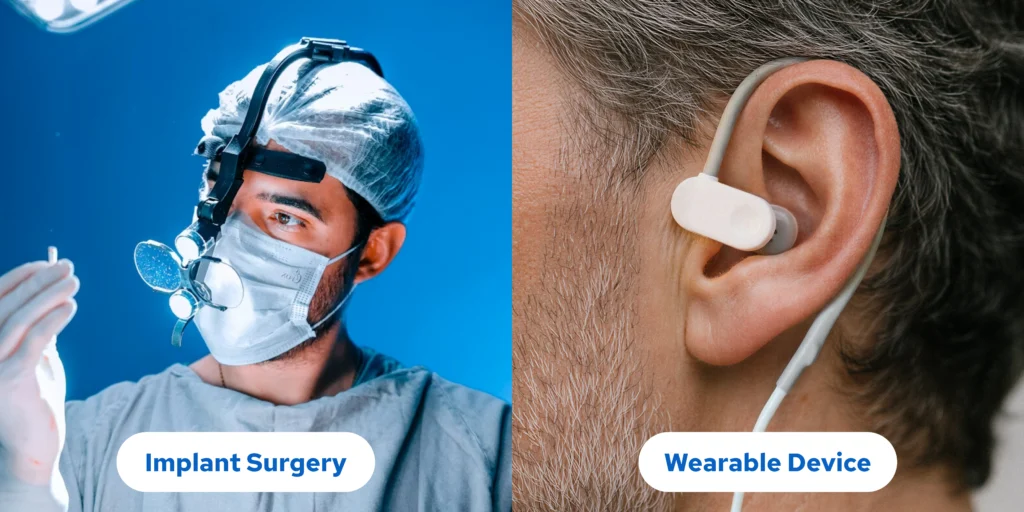
Bis vor Kurzem erforderte die Stimulation des Vagusnervs invasive chirurgische Eingriffe, die Implantation von Elektroden direkt in den Nerv durch Operationen, die erhebliche Risiken mit sich brachten, eine längere Genesung und die dauerhafte Platzierung des Geräts. Dies beschränkte die VNS-Therapie auf therapieresistente neurologische und psychiatrische Symptome, für die keine andere Option mehr blieb.
Der heutige Durchbruch verändert alles.
Die moderne transkutane Vagusnervstimulation (tVNS) liefert die gleichen therapeutischen elektrischen Impulse vollständig nicht-invasiv über die Haut an den Vagusnerv (wodurch die neuroplastische Anpassung und die echte Wiederherstellung des autonomen Tonus erleichtert werden).
Alles ohne Operation, Implantation, Erholungsphase oder Rezept.
Frühe Vagusnervstimulationsgeräte zielten auf den Nerv durch den Hals; der Halsast, in der Nähe der Halsschlagader.
Es hat funktioniert … aber es brachte echte Probleme mit sich:
– Muskelkrämpfe
– Hängendes Gesicht
– Ein Risiko für kardiale Nebenwirkungen
– Und die Notwendigkeit eines leitfähigen Gels bei jeder einzelnen Sitzung: chaotisch, unbequem und leicht falsch zu machen.
Das war es, was die Entwicklung eines präziseren Ansatzes vorangetrieben hat:
Aurikuläre Vagusneuromodulationstherapie, Pionierarbeit von Nurosym.
Der Tragus des Ohres ist die einzige Stelle im Körper, an der ein Hirnnerv die Hautoberfläche erreicht.
Damit ist es der direkteste, präziseste und sicherste Zugangspunkt zum Vagusnerv: ohne Gel, ohne Herzgefahren und ohne Muskelkrämpfe.
Es handelt sich auch um die genaue anatomische Stelle, über die SARS-CoV-2 nachweislich auf den Vagusnerv zugreift, was ihn besonders relevant für diejenigen macht, die an einer Funktionsstörung des postviralen Nervensystems leiden.
Es ist die Methode, die in allen 50+ abgeschlossenen wissenschaftlichen Studien von Nurosym verwendet wird.
Und das ist der Grund, warum Nurosym den Status eines zertifizierten Geräts besitzt, während es von 1.000+ lizenzierten medizinischen Fachkräften verwendet und empfohlen wird.
Dies ist insbesondere bei postviraler Müdigkeit relevant, bei der die Stelle des ursprünglichen Nervenzugangs direkt der Stelle der optimalen therapeutischen Stimulation entsprechen kann.
Dies stellt einen grundlegenden Wandel dar.
Die Vagusnervstimulationstherapie, die früher auf Operationssäle beschränkt war, steht heute für den täglichen Heimgebrauch zur Verfügung. Sie ist mit wissenschaftlicher Präzision ausgestattet, stellt kein Operationsrisiko dar und hat bedeutende Auswirkungen auf die Millionen von Menschen, deren postvirale Müdigkeit auf keinen anderen Ansatz reagiert hat.
Wirkmechanismus
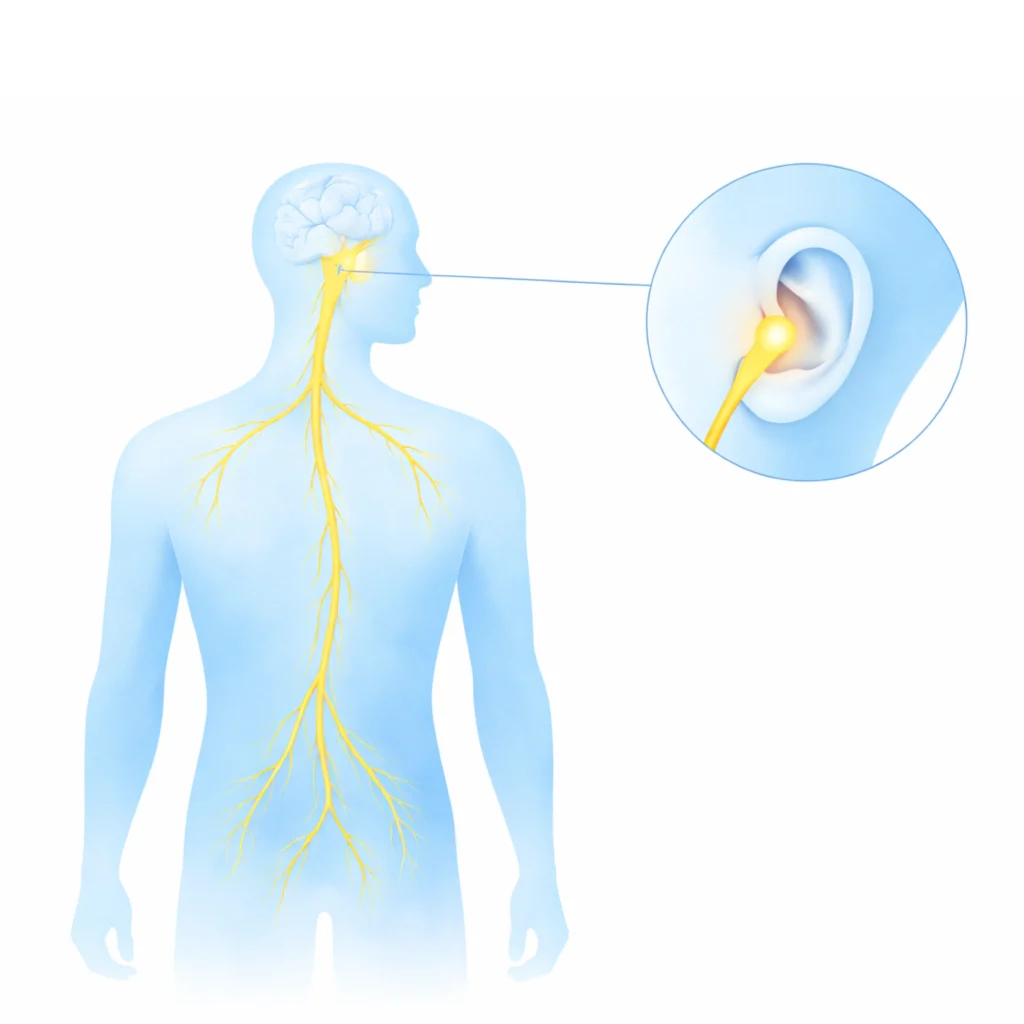
Wenn präzise kalibrierte elektrische Impulse den Vagusnerv erreichen, lösen sie eine Kaskade neurophysiologischer Reaktionen aus, die für die postvirale Müdigkeit direkt relevant sind:
1. Neurotransmittermodulation:
Die Stimulation löst die Freisetzung von Acetylcholin an parasympathischen Enden aus und wirkt so dem sympathischen Overdrive direkt entgegen, der den für postvirale Müdigkeit charakteristischen verdrahteten, aber erschöpften Zustand aufrechterhält.
2. Aktivierung des entzündungshemmenden Signalwegs:
Die vagale Stimulation aktiviert den cholinergen entzündungshemmenden Weg und reduziert die Produktion entzündungsfördernder Zytokine (TNF-α, IL-1β, IL-6), die für Gehirnnebel, Müdigkeit und schlechte Laune bei postviraler Müdigkeit verantwortlich sind.
3. Aktivierung des Hirnstammkerns:
Afferente Vagussignale projizieren zum Nucleus tractus solitarius, der autonome regulatorische Informationen integriert und die Herz-Kreislauf-Kontrolle, Schlaf-Wach-Schaltkreise und die Magen-Darm-Funktion in der Medulla moduliert.
4. Autonome Neugewichtung:
Konsistente Stimulationsprotokolle ermöglichen eine messbare Verschiebung von der sympathischen Dominanz hin zur parasympathischen Wiederherstellung, verbessern die HRV, senken die Ruheherzfrequenz und erzeugen die physiologischen Symptome, bei denen eine echte Genesung erfolgen kann.
5. Unterstützung der Neuroplastizität:
VNS fördert die synaptische Reorganisation in zentralen autonomen Netzwerken und unterstützt möglicherweise die Wiederherstellung von Vagusbahnen, die bei akuten Viruserkrankungen Schäden erleiden.
Wissenschaftliche Parameter
Forschungsvalidierte VNS-Protokolle für postvirale Müdigkeit verwenden typischerweise:
- Sitzungsdauer: 30 bis 60 Minuten täglich, was anhaltende neurophysiologische Effekte und eine kumulative autonome Anpassung ermöglicht.
- Intensität: Individualisiert auf die sensorische Schwelle, wahrnehmbare, aber angenehme Stimulation. Stark genug, um gefühlt zu werden, sanft genug, um durchzuhalten, ohne eine Verschlechterung nach der Belastung auszulösen.
- Konsistenz: Tägliche Anwendung für mindestens 8 bis 12 Wochen. Neuroplastische Veränderungen und eine echte autonome Neukalibrierung erfordern ein nachhaltiges Eingreifen. Die Ergebnisse in der wissenschaftlichen Literatur spiegeln diese Protokolldauer wider.
Erwarteten Zeitplan
VNS fördert die schrittweise Anpassung des Nervensystems.
Dies ist ein wichtiger Kontext insbesondere für die postvirale Müdigkeit, bei der das Nervensystem echte Schäden erlitten hat und die Genesung eher eine echte neurologische Rehabilitation als eine Symptomunterdrückung widerspiegelt:
- Woche 1 bis 2:
Verbessertes Gefühl der Ruhe während und nach Stimulationssitzungen. Bescheidene frühe Verbesserungen der Schlafqualität. Leichte Verringerung des kabelgebundenen, aber müden Ausgangswerts. Erste HRV-Verbesserungen sind auf tragbaren Trackern erkennbar.
- Woche 3 bis 4:
Spürbare Verbesserungen der Morgenenergie. Reduzierte Schwere und Dauer von Unfällen nach körperlicher Belastung. Verbesserte kognitive Klarheit in Zeiten geringerer Symptombelastung. Reduzierte Erhöhung der Herzfrequenz bei minimalem Aufwand.
- Monat 2 bis 3:
Nachhaltige Energieverbesserungen über den Tag hinweg. Messbare Fortschritte bei der Schlafarchitektur und der Wiederherstellung des Wachzustands. Reduzierte Häufigkeit und Schwere von Gehirnnebel. Verbesserte gastrointestinale Regelmäßigkeit. Erhöhte Belastungstoleranz mit verringerter Verschlechterung nach der Belastung.
- Monat 3+:
Wiederhergestelltes autonomes Gleichgewicht, das eine gleichmäßigere tägliche Funktion unterstützt. Sinnvolle Verbesserungen der funktionellen Kapazität mit der Fähigkeit, sich wieder an Arbeit, sozialen Aktivitäten und körperlichen Aktivitäten zu beteiligen, die zuvor nicht zugänglich waren. Messbare HRV-Gewinne. Reduzierte Abhängigkeit von Tempo-, Energiemanagement- und Symptomminderungsstrategien.
Sicherheitserwägungen
VNS mit transkutanen Ansätzen wird in der wissenschaftlichen Forschung im Allgemeinen gut toleriert. Mögliche vorübergehende Reaktionen können sein:
- Leichtes Kribbeln an der Stimulationsstelle während der Anwendung
- Temporäre Muskelspannung im Nackenbereich mit zervikalen Geräten
- Kurze Benommenheit in den ersten Sitzungen, die typischerweise durch Protokollanpassung behoben wird
Wichtiger Hinweis für postvirale Müdigkeit: Beginnen Sie bei niedrigeren Intensitätseinstellungen und steigern Sie diese allmählich.
Postvirale Müdigkeit geht mit einer erhöhten Empfindlichkeit gegenüber körperlichen Eingriffen und der Reaktion auf Unwohlsein nach körperlicher Anstrengung einher.
Die meisten Benutzer profitieren davon, mit kürzeren Sitzungen (15 bis 20 Minuten) zu beginnen und in den ersten zwei Wochen die volle Protokolldauer zu erreichen.
Wichtige Einschränkungen: Nicht geeignet für Personen mit Herzschrittmachern, kürzlich aufgetretenen akuten Herzereignissen, Schwangerschaft oder einer Vagotomie in der Vorgeschichte.
Vor der Einleitung eines VNS-Protokolls ist eine Konsultation durch medizinisches Fachpersonal unerlässlich.
Top 4 VNS-Geräte für postvirale Müdigkeit
#1: Nurosym
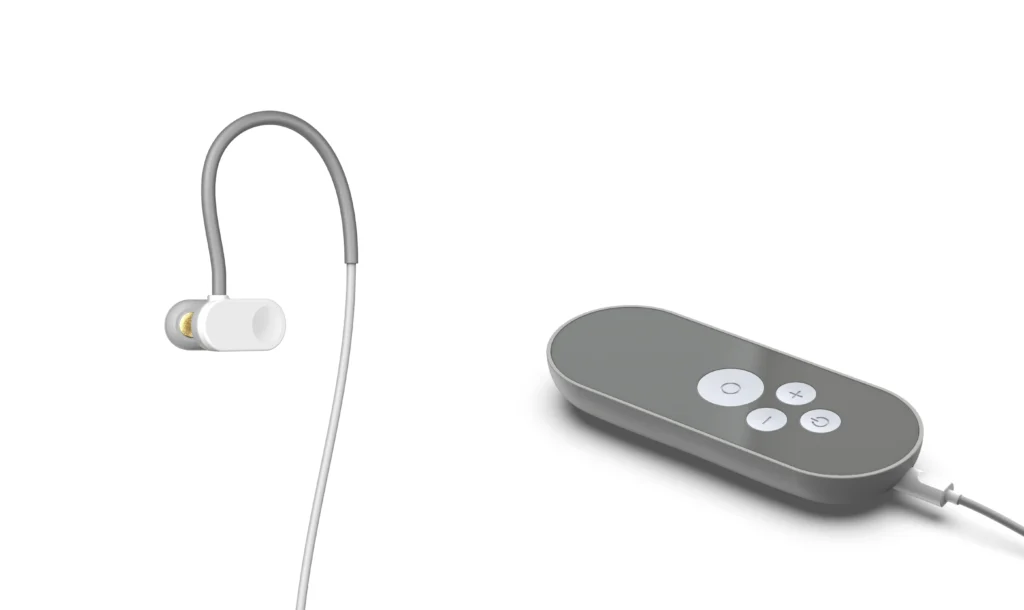
Preis: 700 EUR (variiert je nach Region — €40 Forschungszuschüsse verfügbar)
Art: Ohrmuschel (am Ohr getragen)
Bleifreitechnologie: AVNT™ von Parasym
Warum Nr. 1:
- Am umfassendsten validiert: Unterstützt durch 50+ abgeschlossene wissenschaftliche Studien der Harvard Medical School, der UCLA und führender Forschungseinrichtungen weltweit. Kein anderes tragbares VNS-Gerät kommt an diese Evidenzbasis heran.
- Ohrmuschelplatzierung, direkt relevant für postvirale Müdigkeit: Nurosym zielt auf den Ohrast des Vagusnervs am Tragus ab, denselben anatomischen Weg, der in der Forschung dokumentiert wurde wie der Weg des SARS-CoV-2-Zugangs zum autonomen Nervensystem. Dies ist kein Zufall. Es positioniert Nurosym als das mechanistisch relevanteste Gerät speziell für postvirale Müdigkeit.
- Nachgewiesene Wirksamkeit bei autonomer Dysregulation: Wissenschaftliche Studien dokumentieren eine 61-prozentige Verbesserung des Vagustonus (HRV-Metriken), eine signifikante Verringerung der sympathischen Überaktivierung, eine verbesserte Schlafarchitektur und reduzierte Entzündungsmarker und gehen dabei direkt auf die Kernpathophysiologie der postviralen Müdigkeit ein.
- 0 schwerwiegende unerwünschte Ereignisse in bisherigen Studien: In einer Bevölkerung, die so symptomempfindlich ist wie Anwender postviraler Müdigkeit (wo Nebenwirkungen von Interventionen häufig auftreten), ist diese Sicherheitsbilanz wissenschaftlich bedeutsam.
- Unabhängige Zertifizierung: CE-gekennzeichnet als tragbares Gerät, das strenge Sicherheits- und Leistungsstandards erfüllt und durch eine unabhängige Bewertung durch Dritte überprüft wird. Nicht selbstzertifiziert.
- Wissenschaftliche Einführung im großen Maßstab: Wird von 1.000+ lizenzierten medizinischen Fachkräften und Forschern verwendet. In institutionelle Protokolle integriert. Mehr als 4.000.000 glückliche Benutzersitzungen abgeschlossen.
- Umfassender Benutzersupport: 30-tägiger Evaluierungszeitraum, wissenschaftlich fundierte Beratungsressourcen und reaktionsschneller technischer Support durch ein Team, das auf wissenschaftlicher Forschung basiert.
Empfohlen für:
Personen mit postviraler Müdigkeit, die das wissenschaftlich validierteste und mechanistisch relevanteste verfügbare tragbare Gerät wünschen, insbesondere Personen mit ausgeprägten autonomen Symptomen, Merkmalen von Haltungsherzfrequenzanomalien, Gehirnnebel, Schlafproblemen oder Personen, die mehrere Therapien ohne ausreichende Genesung in Anspruch genommen haben.
#2: Truvaga Plus
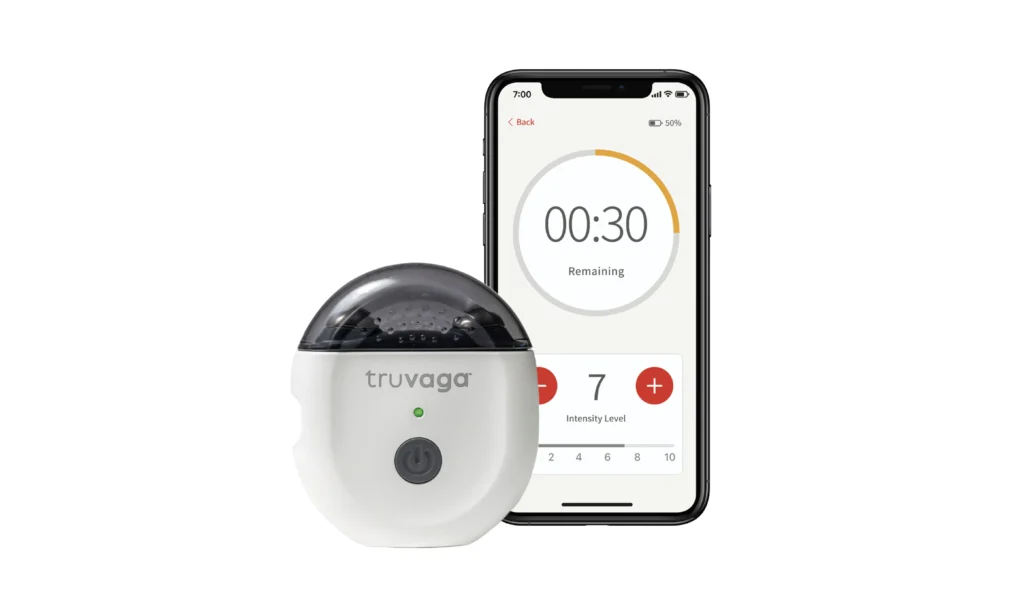
Preis: 544 $+ (Gerät 499 $ + leitfähiges Spray 45 $/Jahr + mögliches Abonnement)
Art: Halswirbelsäule (am Hals gehalten, in der Hand gehalten)
Teilt die Kerntechnologie mit gammaCore, einem von der FDA zugelassenen Gerät gegen Kopfschmerzen. Bietet schnelle parasympathische Effekte über den zervikalen Vagusast und folgt einem unkomplizierten Protokoll.
Überlegungen:
- Die laufenden Kosten für leitfähiges Spray und ein mögliches App-Abonnement summieren sich im Laufe der Zeit. Überprüfen Sie vor dem Kauf die jährlichen Gesamtpreise.
- Zu den bekannten Nebenwirkungen zählen Muskelkrämpfe, herabhängendes Gesicht, Lippenziehen und lokale Kopfschmerzen.
- Nicht geeignet für Personen mit Herzsymptomen, Herzschrittmachern oder kürzlich aufgetretenen kardiovaskulären Ereignissen.
- Es wurden Probleme mit der Konnektivität mobiler Apps gemeldet.
- Die FDA-Zulassung gilt für Kopfschmerzen, nicht für postvirale Müdigkeit oder autonome Funktionsstörungen.
- Die zervikale Platzierung zielt nicht auf den Ohrast des Vagusnervs ab, der an der Pathophysiologie der postviralen Müdigkeit beteiligt ist.
Empfohlen für: Diejenigen, die eine zervikale Stimulation mit einer von der FDA zugelassenen Technologielinie bevorzugen und das Potenzial für Nebenwirkungen auf die Gesichtsmuskulatur tolerieren können.
#3: Pulsetto
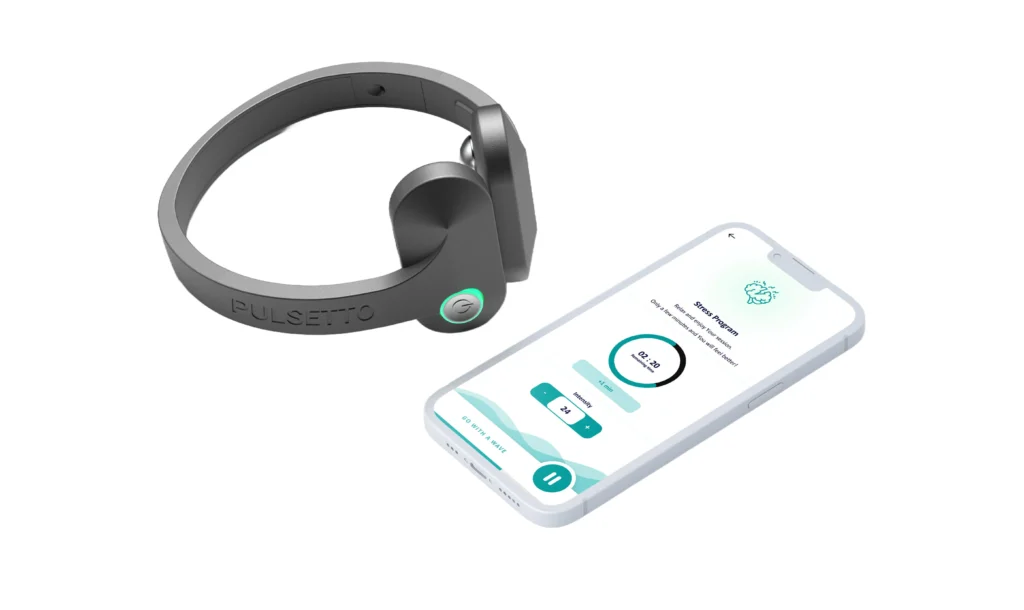
Preis: 350 $–371 $ (Gerät 269 $ + leitfähiges Gel 81 $–102 $/Jahr)
Art: Halswirbelsäule (handfreier Kragen)
Bietet ein freihändiges tragbares Design, HSA/FSA-Berechtigung und eine 2-jährige Garantie. Ein niedrigerer Eintrittspreis lässt es zugänglich erscheinen.
Kritische Einschränkungen:
- Keine wissenschaftlichen Studien, die die Wirksamkeit bei postviraler Müdigkeit, autonomer Dysregulation oder chronischen Symptomen belegen, sondern nur Pressemitteilungen des Unternehmens und Erfahrungsberichte im Einzelhandel.
- Häufige Passformprobleme führen zu unzureichendem Nervenkontakt, insbesondere bei Personen mit kleinerem Hals.
- Insbesondere bei postviraler Müdigkeit, wo die Placebo-Reaktionsfähigkeit begrenzt ist und Anwender in der Regel bereits zahlreiche unwirksame Therapien in Anspruch genommen haben, stellt das Fehlen einer wissenschaftlichen Validierung einen wesentlichen Gesichtspunkt dar.
- Benutzer, die mit postviraler Müdigkeit umgehen, berichten durchweg von minimalen bis keinen messbaren Verbesserungen im Vergleich zu forschungsvalidierten Geräten.
Nicht empfohlen bei postviraler Müdigkeit:
Monatelange anhaltende Behinderung bei der Verwendung eines unbewiesenen Geräts ist mit echten Kosten verbunden. Nicht nur finanziell, sondern auch im Hinblick auf das Fortschreiten der Krankheit, den Funktionsverlust und die psychischen Folgen einer weiteren ineffektiven Therapie.
#4: Sinnlich
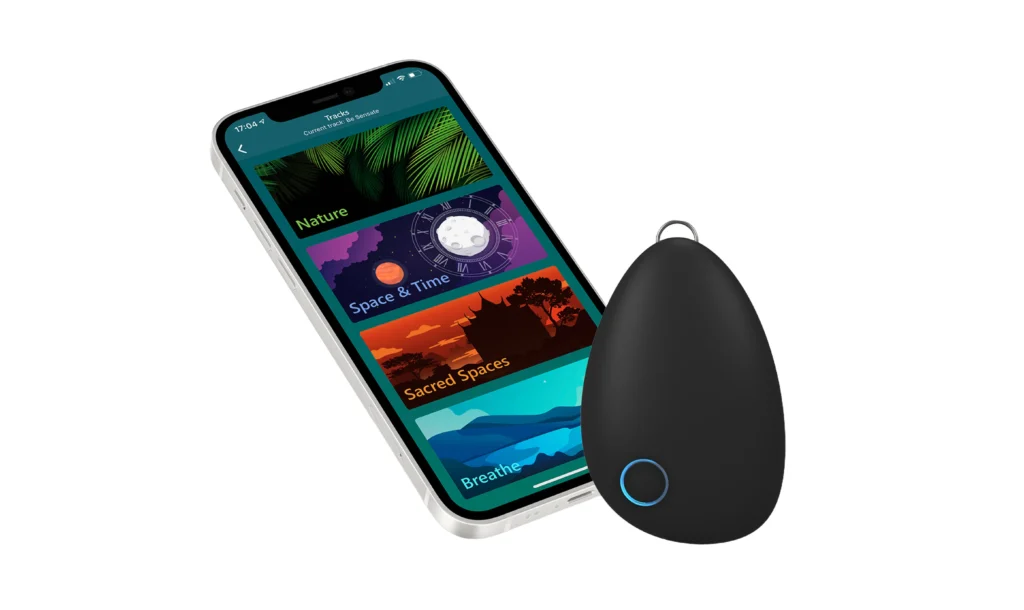
Preis: 299 $–349 $
Art: Vibrotaktiles Gerät zum Tragen auf der Brust (kein echtes VNS)
Ein bequemes kieselförmiges Gerät, das auf der Brust getragen wird. Einfache App-Oberfläche mit Klanglandschaften. Niedrigerer Preis. Konzipiert für die Verwendung im Liegen oder Ruhen.
Kritische Unterscheidung:
Sensate stimuliert den Vagusnerv nicht durch elektrische Impulse. Dabei kommen Infraschallschwingungen und Knochenleitung am Brustbein zum Einsatz, ein indirekter, allgemeiner Entspannungsansatz anstelle einer gezielten Aktivierung des Vagusnervs.
Diese Unterscheidung ist insbesondere bei postviraler Müdigkeit von Bedeutung.
Das Symptom wird durch unzureichende Entspannung nicht aufrechterhalten. Es wird durch messbare Vagusstörungen, Neuroinflammation, gestörte Schlafarchitektur und autonome Dysregulation aufrechterhalten. Ein Entspannungsgerät, das keinen dieser Mechanismen berücksichtigt, kann nicht die autonome Rehabilitation bewirken, die bei postviraler Müdigkeit erforderlich ist.
Keine wissenschaftlichen Studien belegen die Wirksamkeit von Sensate bei postviraler Müdigkeit, autonomen Symptomen oder chronischen Gesundheitssymptomen; nur unternehmensfinanzierte Studien zeigen eine leichte Stressreduzierung bei gesunden Freiwilligen.
Für Anwender postviraler Müdigkeit, die bereits viel Zeit, Geld und Hoffnung in Interventionen investiert haben, die nicht funktioniert haben, ist dieser Mangel an Beweisen ein wesentliches Problem.
Empfohlen für: Diejenigen, die im Rahmen einer umfassenderen Symptombehandlung ein sanftes Entspannungs- und Entspannungsinstrument suchen. Nicht empfohlen für Personen, die einer evidenzbasierten Therapie bei postviraler Müdigkeit Priorität einräumen.
Schlussfolgerung: Nurosym bietet die umfassendste wissenschaftliche Validierung, die mechanistisch relevanteste Ohrmuschelplatzierung für postvirale Müdigkeit, nachgewiesene Wirksamkeit bei autonomer Dysregulation, 0 schwerwiegende unerwünschte Ereignisse in bisherigen Studien und die einzige Evidenzbasis, die sich direkt mit der Vagusstörung befasst, die diesem Symptom zugrunde liegt.
Handeln
Postvirale Müdigkeit ist kein Rätsel, das die Medizin einfach noch nicht gelöst hat.
Für eine wachsende Zahl von Forschern und Gesundheitsfachkräften wird es zunehmend als messbare Folge einer Beeinträchtigung des Vagusnervs und einer autonomen Dysregulation verstanden, Symptome mit einem aufkommenden, wissenschaftlich unterstützten Rehabilitationsansatz.
Ihr autonomes Nervensystem besitzt die Fähigkeit zur neuroplastischen Anpassung.
Die durch Viruserkrankungen gestörten Signalwege können unterstützt, stimuliert und schrittweise wiederhergestellt werden. Unterstützt durch 50+ wissenschaftliche Studien, eine unabhängige CE-Kennzeichnung, eine Sicherheitsbilanz von 0 schwerwiegenden unerwünschten Ereignissen in bisherigen Studien und mehr als 4.000.000 dokumentierte Stimulationssitzungen von Benutzern weltweit …
Nurosym bietet den wissenschaftlich am besten validierten Ansatz, der derzeit für Personen mit postviraler Müdigkeit verfügbar ist, die bereit sind, die Grundursache anzugehen.
Haftungsausschluss: Dieser Artikel wurde von einem zugelassenen medizinischen Fachpersonal verfasst und dient ausschließlich allgemeinen Informationszwecken. Es ersetzt keine personalisierte medizinische Beratung, Diagnose oder Therapie. Bei Fragen zu medizinischen Symptomen oder Gesundheitszielen sollten Leser stets die Beratung eines qualifizierten medizinischen Fachpersonals in Anspruch nehmen. Ignorieren oder verzögern Sie niemals die Einholung ärztlichen Rates auf der Grundlage der hier präsentierten Informationen.
Quellen
- Dixit N, Trikha A, Rastogi A. Transcutaneous vagus nerve stimulation in post-viral fatigue: Autonomic and functional user outcomes. EClinicalMedicine (The Lancet). 2022;47:101396.
- Wang Z, Zhu T, Li X, Lai X, Chen M. Tragus Nerve Stimulation Attenuates Postural Orthostatic Rapid Heartbeat in Post-Viral Fatigue. Clinical Cardiology. 2025 Feb 27;48(3). https://doi.org/10.1002/clc.70110
- Stavrakis S, Chakraborty P, Farhat K, et al. Noninvasive Vagus Nerve Stimulation in Postural Heart Rate Abnormalities. JACC: Scientific Electrophysiology. 2023 Nov 1. https://doi.org/10.1016/j.jacep.2023.10.015
- Tracey KJ. The inflammatory reflex. Nature. 2002;420(6917):853–859. https://doi.org/10.1038/nature01321
- Bonaz B, Bazin T, Pellissier S. The Vagus Nerve at the Interface of the Microbiota-Gut-Brain Axis. Frontiers in Neuroscience. 2018;12:49. https://doi.org/10.3389/fnins.2018.00049
- Komaroff AL, Lipkin WI. Insights from myalgic encephalomyelitis/chronic tiredness may help unravel the pathogenesis of post-acute COVID-19 syndrome. Trends in Molecular Medicine. 2021;27(9):895–906. https://doi.org/10.1016/j.molmed.2021.06.002
- Thayer JF, Åhs F, Fredrikson M, Sollers JJ, Wager TD. A meta-analysis of heart rate variability and neuroimaging studies: implications for heart rate variability as a marker of stress and health. Neuroscience & Biobehavioural Reviews. 2012;36(2):747–756. https://doi.org/10.1016/j.neubiorev.2011.11.009
- Breit S, Kupferberg A, Rogler G, Hasler G. Vagus Nerve as Modulator of the Brain-Gut Axis in Psychiatric and Inflammatory Disorders. Frontiers in Psychiatry. 2018;9:44. https://doi.org/10.3389/fpsyt.2018.00044
Teilen über:


 German
  English
  French
  Spanish
  Swedish