
Müde, ängstlich, aufgebläht, schmerzt, schläft schlecht: Die meisten Menschen behandeln diese als separate Probleme. Ein Gehirnexperte erklärt, warum es sich oft um ein Problem handelt, einen einzelnen beeinträchtigten Nerv, und wie man ihn erkennt.

Sie betrachten sie wahrscheinlich nicht als miteinander verbunden.
Die Müdigkeit, die durch den Schlaf nicht behoben werden kann, die ängstlichen Gedanken, die nicht zur Ruhe kommen, der Bauch, der grundlos verrückt spielt, die Nächte, in denen man wach liegt.
Die Schmerzen, die häufigen Erkältungen, das Gefühl, dass man einfach nicht richtig läuft.
Die meisten Menschen behandeln diese Probleme als separate Probleme und verfolgen sie mit separaten Lösungen, manchmal mit jeweils einem anderen Spezialisten.
Was ist, wenn sie nicht getrennt sind?
“Wenn ich jemanden mit diesem ganzen Cluster sehe, sehe ich keine sechs Probleme,” sagt der Gehirnexperte. “Ich sehe ein System aus dem Gleichgewicht geraten. Fast alle dieser Symptome zeigen, wie es aussieht, wenn ein einzelner Nerv, der Ihren Körper eigentlich ruhig und reguliert halten sollte, seine Arbeit einstellt.”
Dieser Nerv ist der Vagus und die Idee ist einfacher, als es klingt.
Ihr Nervensystem verfügt über zwei Modi: einen Stressmodus, der Sie aufdreht, und einen Erholungsmodus, der Sie beruhigt und repariert.
Sie sollen sich fließend zwischen ihnen bewegen.
Der Vagus verläuft über die wiederhergestellte Seite und fungiert als Bremse.
Wenn diese Bremse schwächer wird, was Ärzte als Dysregulation des Nervensystems oder Beeinträchtigung des Vagusnervs bezeichnen, bleibt Ihr System in Richtung Stress stecken und kann sich nicht zurücksetzen.
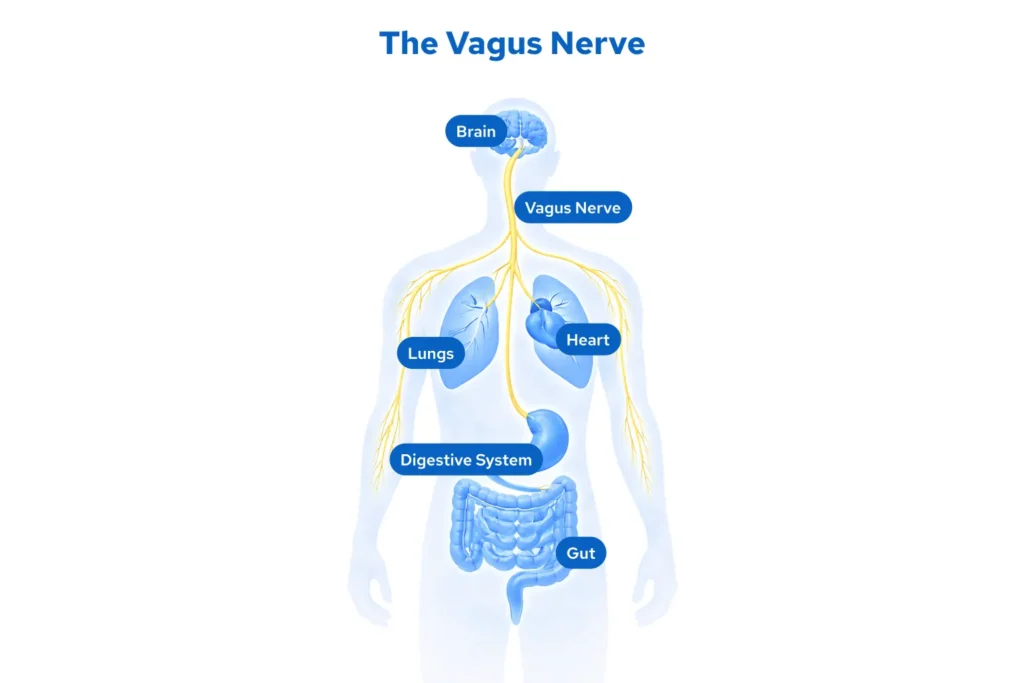
Und weil der Vagus fast alle wichtigen Systeme erreicht, das Herz, die Lunge, den Darm, das Immunsystem und das Gehirn, taucht ein beeinträchtigter Vagus nicht an einer Stelle auf. Es taucht überall auf.
Aus diesem Grund kann sich ein Nerv als sechs voneinander unabhängige Probleme tarnen.
Normalerweise ist es nicht so, dass der Nerv gebrochen ist. Es liegt daran, dass sein Ton gesunken ist und das System sein Gleichgewicht verloren hat.
Der ermutigende Teil, auf den wir zurückkommen werden, ist, dass der Vagustonus trainiert werden kann.
Hier sind sechs leise Anzeichen dafür, dass Ihr Vagusnerv beeinträchtigt sein könnte.

Du steckst in einer Schleife negativer Gedanken fest
Was es offenbart: Der Alarm Ihres Gehirns hängt fest und erzeugt daher weiterhin Sorgen.

Die gleichen Sorgen spielen sich in einer Schleife ab.
Sie wiederholen das Gespräch, proben den schlimmsten Fall und kreisen denselben Gedanken ein, und keine noch so große Argumentation lässt es aufhören.
Dies ist eines der deutlichsten Anzeichen einer schwachen Vagusbremse.
Ihre Bedrohungserkennung soll auf eine Gefahr hinweisen und dann verstummen, sobald diese vorüber ist.
Wenn der Vagus Sie nicht wieder herunterbringen kann, bleibt dieser Alarm an, sodass Ihr Geist immer wieder scannt und sich auf dieselben Sorgen konzentriert, was genau eine negative Denkschleife ist.
Der Aus-Schalter ist noch da.
Ihr Nervensystem hat gerade den einfachen Zugang dazu verloren.

Dein Denken ist neblig und die Worte werden nicht kommen
Was es offenbart: Ihr System hat seine Ressourcen vom denkenden Gehirn abgezogen.

Der Nebel wird sich nicht lichten.
Mitten im Satz verliert man den Faden, das gewünschte Wort kommt nicht und das Organisieren eines einfachen Gedankens fühlt sich an, als würde man durch Schlamm waten, also bestellt man ein, anstatt sich der kleinen Anstrengung des Kochens zu stellen.
Dies ist Gehirnnebel und eines der häufigsten Anzeichen für ein fehlreguliertes Nervensystem.
Wenn Ihr System im Überlebensmodus feststeckt, zieht es Ressourcen vom denkenden Gehirn weg und in Richtung Alarm, sodass klares, organisiertes Denken das Erste ist, was verloren geht.
Ein niedriger Vagustonus wird auch mit einer leichten Entzündung in Verbindung gebracht, die dazu führt, dass sich Ihr Kopf schwer, langsam und trüb anfühlt.
Der Nebel ist also keine Faulheit oder mangelnde Konzentration.
Es ist ein Gehirn, das gezwungen ist, im falschen Modus zu laufen.

Sie erholen sich langsam und Ihr HRV zeigt es
Was es verrät: Ihr Wiederherstellungssystem ist träge.

Ein hartes Training, eine stressige Woche oder eine leichte Krankheit machen Sie platt und halten Sie viel länger dort, als es sollte.
Bei der Erholung handelt es sich um die Erholungsmodus-Seite Ihres Nervensystems, die wieder in Aktion tritt, und die Herzfrequenzvariabilität, die Anzahl, die Ihr Ring oder Ihre Uhr verfolgt, ist im Wesentlichen eine Live-Anzeige darüber, wie stark Ihr Vagustonus ist.
Endergebnis?
Eine niedrige oder festgefahrene HRV ist eines der deutlichsten und messbarsten Anzeichen dafür, dass der Nerv beeinträchtigt ist, denn sie bedeutet, dass Ihr System nach allem, was ihn antreibt, nur langsam wieder zur Ruhe kommt.

Dein Schlaf ist kaputt, oder er stellt dich nicht wieder her
Was es verrät: Ihr Körper kann nachts nicht abschalten.
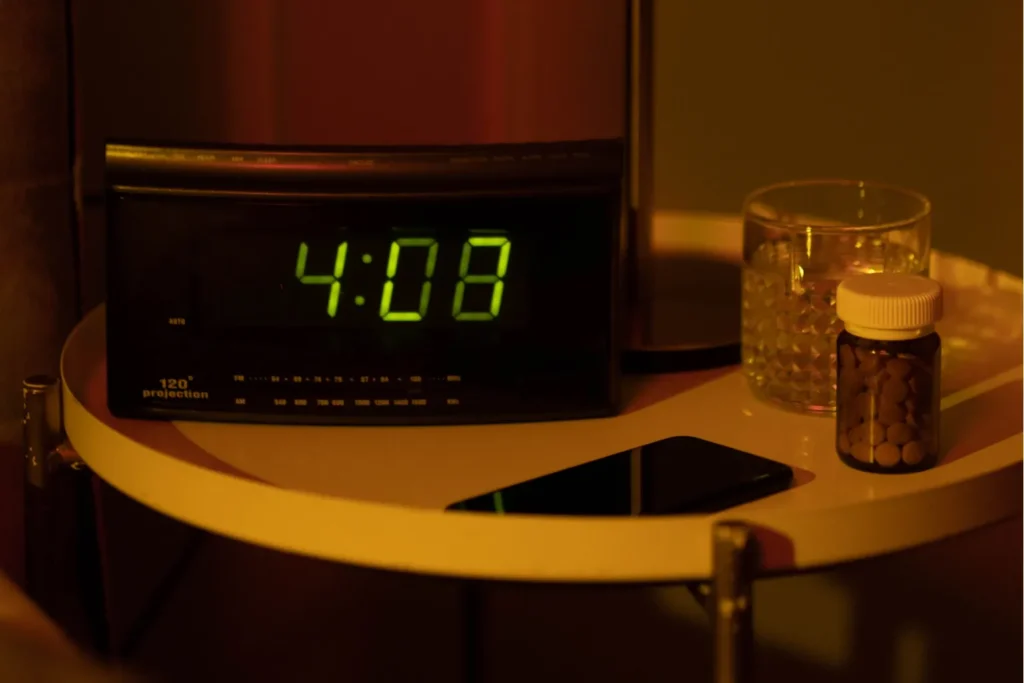
Sie haben Schwierigkeiten einzuschlafen, um 3 Uhr morgens aufzuwachen, mit den Zähnen zu knirschen oder nach einer ganzen Nacht immer noch unruhig aufzuwachen.
Tiefer, erholsamer Schlaf ist der parasympathischste Teil Ihrer Nacht, die Phase, in der der Vagus laufen soll.
Wenn der Nerv beeinträchtigt ist und das System nach Einbruch der Dunkelheit halb wachsam bleibt, können Sie nicht in diesen Tiefschlaf fallen und die Struktur der Nacht bricht zusammen.
Ein unterbrochener oder nicht erfrischender Schlaf ist oft darauf zurückzuführen, dass das Nervensystem einfach nicht in den Nachtmodus wechselt.

Ihr Bauch hat seinen eigenen Kopf
Was es offenbart: Die Grenze zwischen Ihrem Darm und Ihrem Gehirn ist durcheinander.

Blähungen, Krämpfe, der Wechsel zwischen träge und drängend, ein Darm, der auf Stress reagiert, bevor man ihn überhaupt registriert hat.
Der Vagus ist das wichtigste Kommunikationskabel zwischen Ihrem Darm und Ihrem Gehirn.
Wenn diese Leitung beeinträchtigt ist, wird sie laut und die Signale kreuzen sich, sodass die Verdauung fehlschlägt und der Darm auf Dinge überreagiert, mit denen er leise umgehen sollte.
Aus diesem Grund treten Darmprobleme und Probleme des Nervensystems so oft gemeinsam auf: Sie laufen über dasselbe Kabel.

Du bist entzündet, hast Schmerzen oder fängst dir ständig etwas ein
Was es verrät: Ihre eingebaute entzündungshemmende Bremse ist geschwächt.

Diffuse Schmerzen, ein Körper, der sich entzündet anfühlt, oder eine Reihe von Erkältungen und Insekten, die Sie scheinbar nicht abschütteln können.
Eine der leisesten Aufgaben des Vagusnervs besteht darin, Entzündungen zu bremsen und Ihre Immunreaktion zu regulieren.
Wenn der Nerv beeinträchtigt ist, schwächt sich diese Bremse ab, sodass die Entzündung weniger kontrolliert wird, was zu Schmerzen führt, schmerzempfindlicher und anfälliger für Krankheiten ist.
Es ist eines der am wenigsten bekannten Zeichen und eines der aussagekräftigsten.
Sechs Zeichen, ein Nerv
Wenn Sie diese gelesen haben und sich in drei, vier oder mehr Fällen wiedererkannt haben, ist das der springende Punkt.
Es handelt sich nicht um sechs verschiedene Dinge, die man einzeln reparieren kann.
Es handelt sich um sechs Flächen eines Nervensystems, das aus dem Gleichgewicht geraten ist, wobei der Vagusnerv, seine Hauptbremse, sein Gewicht nicht mehr zieht.

“Das ist die Neuformulierung, mit der die Leute gehen sollen,” sagt ein führender Gehirnexperte. “Hören Sie auf, die Symptome als Liste zu behandeln. Beginnen Sie zu fragen, warum das System unter ihnen dysreguliert ist. Korrigieren Sie die Regelung, und die Liste wird von selbst tendenziell kürzer.”
Und hier ist der ermutigende Teil, der zuvor versprochen wurde: Der Vagustonus ist nicht festgelegt.
Es verhält sich wie ein Muskel und kann gestärkt werden.
Genau aus diesem Grund hat sich die Vagusnervstimulation aus der Klinik zu etwas entwickelt, das Sie problemlos zu Hause durchführen können.
Der Vagus tritt ausgerechnet an der Oberfläche Ihres Außenohrs auf, sodass ein sanftes Signal, das genau dort angelegt wird, ihn erreichen kann, ohne dass es zu Eingriffen kommt.
Eines der darauf basierenden Geräte ist Nurosym™, ein CE-zertifizierter, nicht-invasiver Vagusnervenstimulator, der am Ohr befestigt wird und diese Art sanfter Stimulation in kurzen täglichen Sitzungen liefert.
Es ist kein Allheilmittel, und wer verspricht, dass ein Gerät alles von selbst repariert, überverkauft es.
Aber wenn Sie Ihr Nervensystem in diesen Anzeichen erkannt haben und an der Wurzel und nicht an den Symptomen einzeln arbeiten möchten, würde ich Sie anweisen, mit dem Lesen zu beginnen.

Wenn Sie genauer sehen möchten, wie es funktioniert, finden Sie auf der Nurosym™-Seite hier.
Dieser Artikel dient der Allgemeinbildung und stellt keine medizinische Beratung dar. Jedes hier beschriebene Anzeichen kann auch durch andere Erkrankungen verursacht werden, von denen einige schwerwiegend sind. Wenden Sie sich daher bitte zur Diagnose an einen qualifizierten Arzt, anstatt eine Selbstdiagnose anhand eines Artikels zu stellen. Nurosym® ist ein CE-zertifiziertes nicht-invasives Neuromodulationsgerät und dient nicht der Diagnose, Behandlung, Heilung oder Vorbeugung von Krankheiten. Die Stimulation des Vagusnervs ist ein Bereich, in dem derzeit geforscht wird, und die einzelnen Ergebnisse variieren. Ein Gerät ist kein Ersatz für professionelle Pflege.
Teilen über:



 German
  English
  French
  Spanish
  Swedish