
Warum Ihr Bauchgefühl möglicherweise immer noch überreagiert, selbst wenn Sie alles richtig machen
ENDLICH ENTHÜLLT: So stellen Sie das versteckte Nervensignal wieder her, das Ihren aufgeblähten, krampfartigen und reizbaren Darm steuert und das mit einer Diät ohne Eliminierung nie erreicht werden kann … und setzen Ihren Darm von innen heraus zurück!
Sie verzichtete auf Gluten, Milchprodukte und jedes Lebensmittel mit hohem FODMAP-Gehalt, das sie finden konnte Vier verschiedene Probiotika und führte sechs Monate lang ein Ernährungstagebuch.
So wie es ihr in jedem Artikel über Darmgesundheit gesagt wurde.
Kommt Ihnen das bekannt vor? Lernen Sie Sophie kennen.
Ja, manche Tage waren besser. Aber ihr Bauchgefühl beherrschte immer noch ihr Leben.


Sie hatte keine Diagnose, die alles erklärte …
Sie war einfach aufgebläht und hatte Krämpfe
Wirklich krampfhaft.
Ihr Darm ist jeden Tag unberechenbar, egal was sie isst.
Für manche Menschen ist das fehlende Stück kein weiterer Nahrungsauslöser, sondern ein übersehenes Problem bei der Darm-Hirn-Signalisierung, insbesondere im Zusammenhang mit dem Vagusnerv.
Hallo
Star Freudenberg
Ich bin der Gründer der Star Freud Wellness Clinic, wo ich als Spezialist für Darmgesundheit und Langlebigkeit meine eigene Privatklinik im Zentrum Londons betreibe. Darüber hinaus arbeite ich im öffentlichen Gesundheitswesen, wo ich sowohl ganzheitliche als auch konventionellere klinische Erfahrungen sammle.

Und ich zeige Ihnen, was Forscher in den letzten dreißig Jahren im Stillen über diesen Nerv herausgefunden haben …
Sie werden mit eigenen Augen sehen, warum die Nahrung, die Sie zu sich nehmen, nicht die Hauptursache für Ihre Blähungen, Krämpfe und Unvorhersehbarkeit der Verdauung ist.
Verstehen Sie den wahren Gründe Warum sich dein Bauch auch an den Tagen, an denen du perfekt isst, gegen dich wendet.
Und Sie lernen, wie Sie endlich die eigentliche Ursache des Problems angehen (und nicht nur die Symptome verschleiern) …
Ab
Doch kommt es Ihnen nicht seltsam vor?
Wenn dieser Nerv für die Darmfunktion so zentral ist …
Warum steht es nicht auf dem Etikett jedes Probiotikums, das Sie jemals gekauft haben?
Warum hat es Ihnen gegenüber noch nie ein Gastroenterologe erwähnt?
Nun, hier ist, was ich nach mehr als einem Jahrzehnt der Arbeit mit Menschen mit Darmgesundheitsproblemen verstanden habe.
Die Darmgesundheitsbranche basiert auf einer Annahme.
Und diese Annahme, so gut gemeint sie auch sein mag, lässt Millionen von Menschen in einer Schleife stecken, der sie immer noch zu entkommen versuchen.
Nehmen Sie sich also bitte ein paar Minuten Zeit, um diesen Brief jetzt zu lesen.
Denn was Sie gleich lernen werden, könnte endlich erklären
Warum sich einige Verdauungssymptome nicht vollständig beruhigen und warum der Blick über die Nahrung hinaus einen weiteren nützlichen Weg nach vorne bieten kann
Wenn Sie verfolgen, was ich mit Ihnen und einigen wenigen Auserwählten teilen werde, die diese Seite finden …
Aber bevor ich das tue, muss ich über … sprechen
Ein oft übersehenes Puzzleteil bei anhaltenden Verdauungsbeschwerden
Für viele Menschen kann dies einer der Gründe sein, warum Symptome wie Krämpfe, Blähungen und Unvorhersehbarkeit der Verdauung weiterhin das tägliche Leben beeinträchtigen.

Viele Ratschläge zur Darmgesundheit konzentrieren sich fast ausschließlich auf den Darm selbst, obwohl die Verdauung auch vom Nervensystem, der Stressreaktion, dem Schlaf und der Art und Weise, wie Gehirn und Darm kommunizieren, geprägt wird.
Daher wird vielen Menschen geraten, sich fast ausschließlich auf den Darm selbst zu konzentrieren, oft ohne der Seite des Nervensystems im Bild genügend Aufmerksamkeit zu schenken.
❌ Entfernen Sie die auslösenden Lebensmittel
❌ Bringen Sie das Mikrobiom wieder ins Gleichgewicht
❌ Ersetzen Sie die fehlenden Enzyme
❌ Nehmen Sie die krampflösenden Mittel, wenn die Krämpfe kommen
Und diese Ansätze können Erleichterung verschaffen
Aber für die Millionen Menschen mit Reizdarmsyndrom und funktionellen Darmerkrankungen, die alles richtig machen und trotzdem keine dauerhafte Lösung finden können …
Ihnen fehlt etwas Grundlegendes.
Weil Ihr Bauchgefühl nicht von selbst funktioniert.
Und kein Probiotikum, keine Eliminationsdiät oder kein Verdauungsenzym befasst sich mit dem, was tatsächlich das Sagen hat.
Was oft unterschätzt wird, ist, dass der Körper bereits über eingebaute Systeme zur Regulierung der Verdauung verfügt.
Der Körper verfügt bereits über Nervenbahnen, die die Verdauung regulieren, die Kommunikation zwischen Gehirn und Darm koordinieren und die normale Verdauungsfunktion unterstützen sollen, wenn diese Signalübertragung gut funktioniert.
Mit anderen Worten geht es hier nicht um die Einführung eines völlig neuen Systems. Es geht darum, Wege zu unterstützen, die bereits im Körper existieren und bereits eine wichtige Rolle bei der Verdauungsregulation spielen.
Das könnte erklären, warum dies zunächst leicht übersehen werden kann, insbesondere für Menschen, die bereits viele der Standardansätze ausprobiert haben.
Um zu verstehen, warum es wichtig ist, hilft es, die Physiologie genauer zu betrachten.
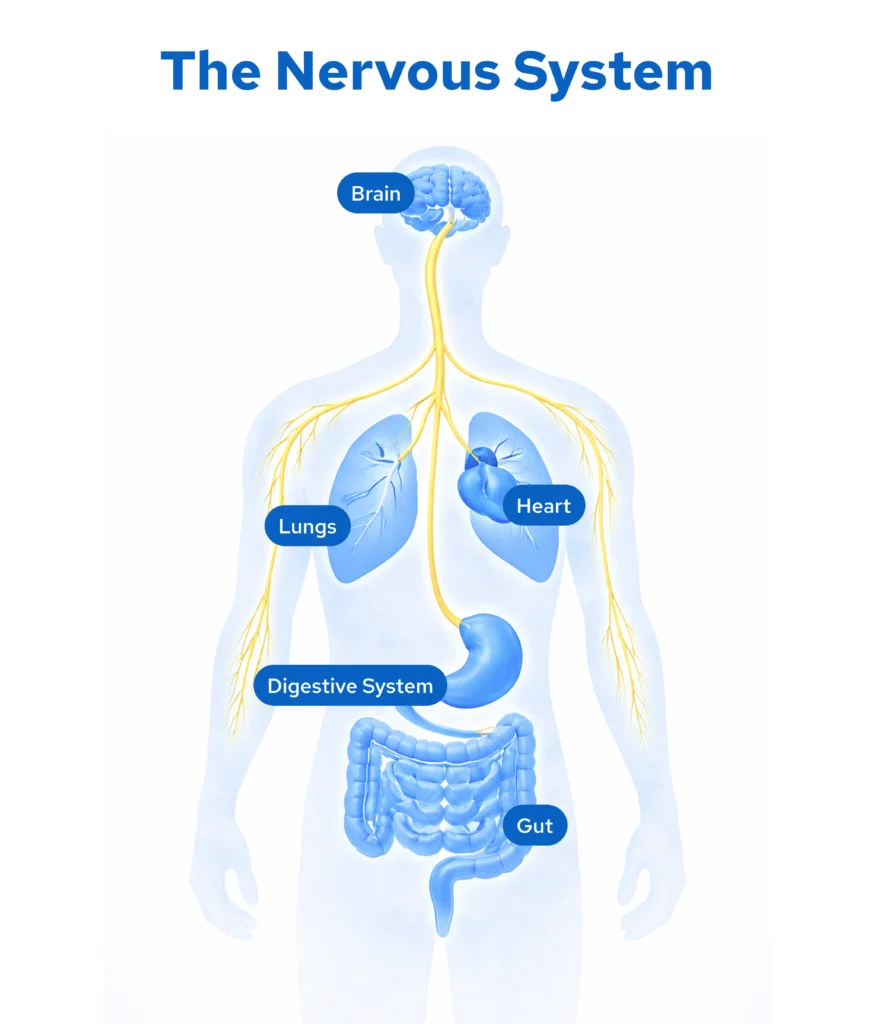
Für viele Menschen mit Reizdarmsyndrom und funktionellen Verdauungsstörungen ist Essen nicht immer die ganze Geschichte.
Die Ernährung kann ein wichtiger Teil der Symptombehandlung sein, aber die Verdauung hängt auch davon ab, wie gut der Darm reguliert wird.
Wenn das Verdauungssystem gut funktioniert, bewegt sich die Nahrung in einem angemessenen Tempo durch, die Muskeln ziehen sich in koordinierten Wellen zusammen, die Entzündungsaktivität bleibt angemessen kontrolliert, die Darmschleimhaut wird besser gestützt und normale Verdauungsempfindungen werden weniger wahrscheinlich als Bedrohungssignale interpretiert.
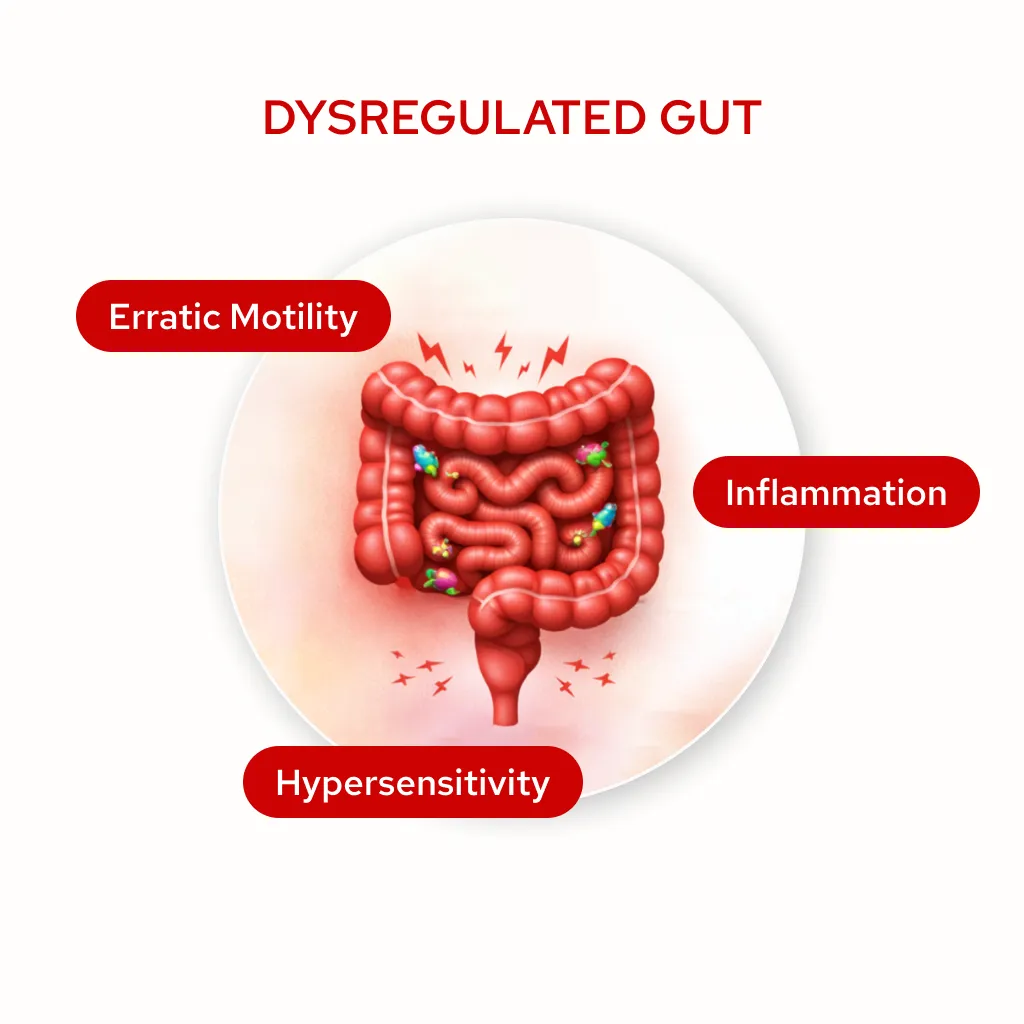
Bei vielen Menschen mit Reizdarmsyndrom können diese Regulierungsprozesse gestört werden.
Die Nahrung kann sich zu schnell, zu langsam oder inkonsistent bewegen, Muskelkontraktionen können weniger koordiniert oder reaktiver werden und sensorische Signale können verstärkt werden.
Als Ergebnis?
Gewöhnliche Verdauungsaktivitäten, die sich neutral anfühlen sollten, können stattdessen als Blähungen, Schmerzen, Dringlichkeit oder Krämpfe empfunden werden.
In einigen Fällen können auch eine geringgradige Immunaktivierung und eine beeinträchtigte Barriereresilienz zum Gesamtbild beitragen.
Für viele Menschen mit Reizdarmsyndrom geht es nicht nur darum, was sie essen, sondern auch darum, wie das Verdauungssystem reagiert.
Mit anderen Worten: Die Symptome können sowohl durch eine Fehlregulation als auch durch die Nahrung selbst verursacht werden.
Wenn die Verdauungsregulation stabiler ist, kann der Darm alltägliche Eingaben oft besser vertragen, ohne übermäßig reaktiv zu werden.
Wenn diese Regulierung beeinträchtigt ist, können sich normale Mahlzeiten, normale Empfindungen oder leichte Auslöser unverhältnismäßig störend anfühlen.
Wenn diese Regulierung weniger stabil wird, kann selbst eine gewöhnliche Mahlzeit ausreichen, um eine unverhältnismäßige Verdauungsreaktion hervorzurufen, die zu Symptomen wie Blähungen, Krämpfen, Dringlichkeit oder Schmerzen führt.
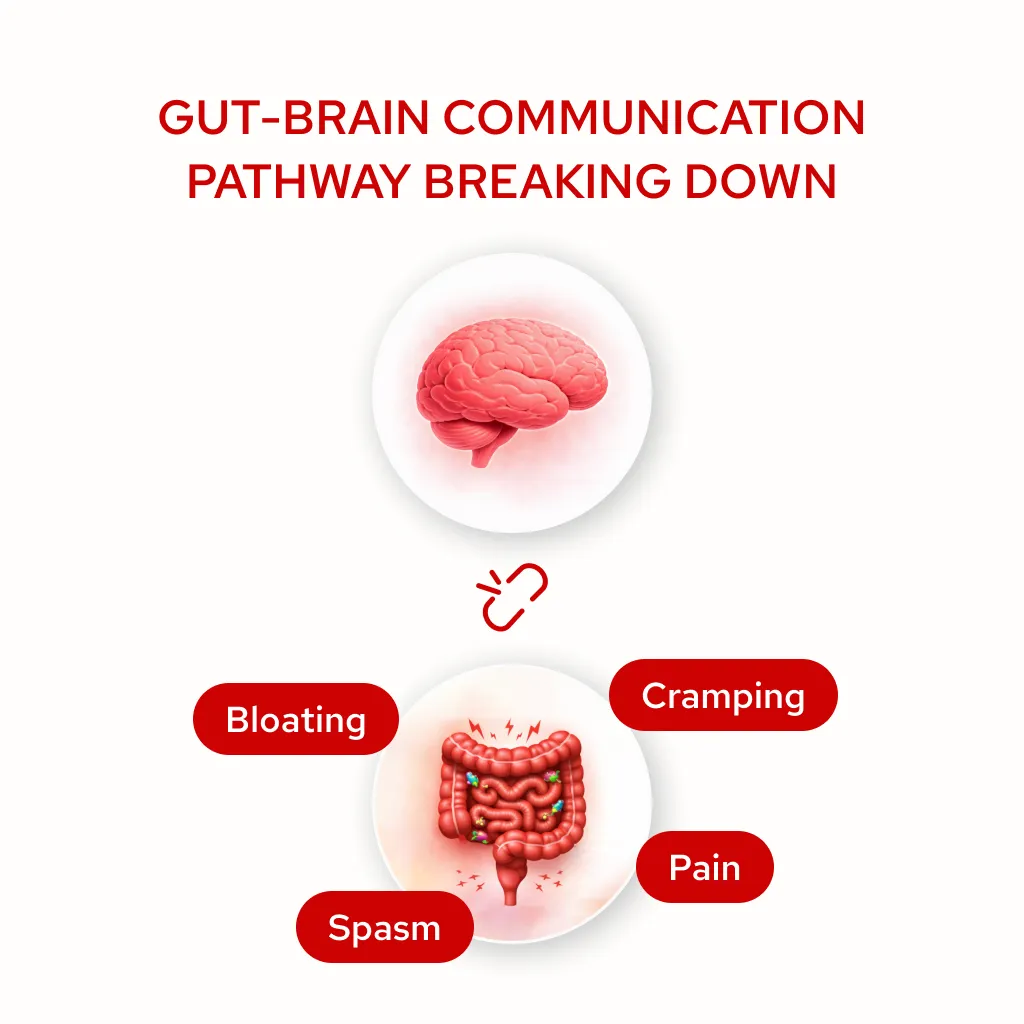
Mit der Zeit kann sich diese Art der Dysregulation selbst verstärken.
Der Darm kann zunehmend reaktiv werden, die Empfindlichkeit gegenüber Schmerzen oder Beschwerden kann zunehmen und der Stress oder die vorausschauende Angst, die sich häufig im Zusammenhang mit den Symptomen entwickelt, können sich auf die Physiologie selbst auswirken.
Dies ist eine Möglichkeit, die Dysregulation der Darm-Hirn-Achse zu verstehen: ein Muster, bei dem veränderte Darmsignale, erhöhte Empfindlichkeit und Stressreaktionen des Nervensystems beginnen, sich gegenseitig zu verstärken.
In der Praxis kann dies zu einem schwierigen Kreislauf führen, in dem die Symptome den Stress erhöhen und Stress wiederum die Linderung der Symptome erschwert.
Aus diesem Grund reicht es in manchen Fällen möglicherweise nicht aus, sich nur auf Nahrung, Nahrungsergänzungsmittel oder Symptommanagement zu konzentrieren. Es kann auch wichtig sein, Strategien in Betracht zu ziehen, die das Nervensystem unterstützen und dazu beitragen, die Kommunikation zwischen Gehirn und Darm zu verbessern.
Für manche Menschen können Probiotika, Eliminationsdiäten und krampflösende Mittel eine sinnvolle Linderung verschaffen, aber sie allein reichen möglicherweise nicht aus, um dauerhafte Veränderungen herbeizuführen.
Für manche Menschen können darmorientierte Strategien wie Nahrungsergänzungsmittel, Ernährungseinschränkungen und Symptomverfolgung hilfreich sein, sie können jedoch dennoch einen Teil der zugrunde liegenden Dysregulation unberücksichtigt lassen.
Hier wird die Seite des Nervensystems der Verdauungsregulation relevant.
Die Physiologie dahinter ist nicht neu. Der Vagusnerv ist seit Jahrhunderten bekannt. Frühe Anatomen, darunter Galen, beschrieben einen großen “wandernden” Nerv, der sich vom Gehirn in Brust und Bauch erstreckte, obwohl seine volle Funktion noch nicht verstanden war.
Im 19. Jahrhundert begannen Forscher herauszufinden, dass dieser Nerv eine Rolle bei der Verlangsamung des Herzens, der Beeinflussung der Atmung und der Regulierung von Aspekten der Verdauung spielt.

Dies ist der Vagusnerv, benannt nach der Art und Weise, wie er vom Hirnstamm in den Körper wandert “wandert”. Es ist einer der wichtigsten Nervenbahnen, die an der Kommunikation zwischen dem Gehirn und dem Verdauungssystem beteiligt sind, einschließlich des enterischen Nervensystems, das oft als Darm bezeichnet wird. “Es ist einer der wichtigsten Kommunikationswege zwischen dem Gehirn und dem Verdauungssystem, einschließlich des enterischen Nervensystems, das oft als Darm bezeichnet wird. “zweites Gehirn” – aus evolutionärer Sicht jedoch Einige Forscher argumentieren, dass es zutreffender sein könnte, es als das “erste Gehirn des Körpers”” zu betrachten
Warum dies bei Reizdarmsyndrom und anhaltenden Verdauungssymptomen wichtig ist:
Etwa 80 % der Fasern des Vagusnervs sind afferent, das heißt, sie transportieren sensorische Informationen vom Körper zurück zum Gehirn.
Im Darm umfasst dies Signale im Zusammenhang mit Dehnung, Nährstoffen, Immun- und Entzündungsaktivität sowie aus der Mikrobiota stammende Signale.
Diese Eingaben werden dann zentral integriert, wobei regulatorische Signale zurückgesendet werden, die zur Beeinflussung beitragen:
- Motilität (wie sich Nahrung durch den Verdauungstrakt bewegt)
- viszerale Sensibilität (wie stark normale Empfindungen wahrgenommen werden)
- Immun- und Entzündungsregulation
- Barrierefunktion (wie widerstandsfähig und gut gestützt die Darmschleimhaut ist)
Wenn die autonome Regulierung stabiler ist, kann die Verdauung oft besser im Hintergrund ablaufen, ohne übermäßig reaktiv zu werden.
Wenn diese Regulierung gestört ist, insbesondere in Zeiten von Stress, schlechtem Schlaf, Krankheit oder erhöhter Angst, können Verdauungsprozesse empfindlicher und weniger vorhersehbar werden.
Das erklärt, warum manche Menschen ihre Ernährung verbessern und das Mikrobiom unterstützen können, aber dennoch das Gefühl haben, dass sich das tiefere Muster nicht vollständig verändert hat.
In vielen dieser Fälle geht es nicht nur um die Ernährung, sondern auch um die Art und Weise, wie die Darm-Hirn-Achse reguliert wird.
Dies ist einer der Gründe, warum die Signalübertragung des Vagusnervs in der Medizin und den Neurowissenschaften wachsendes Interesse geweckt hat.
Die Vagusnervstimulation wurde zunächst in implantierbarer Form entwickelt und später in nicht-invasive Ansätze adaptiert, wodurch neue Möglichkeiten zur Beeinflussung der Darm-Hirn-Kommunikation ohne Operation geschaffen wurden.
In jüngerer Zeit hat dies zu einem wachsenden Interesse an nicht-invasiven Ansätzen geführt, die auf den Ohrast des Vagusnervs abzielen, einen kleinen sensorischen Ast, der Teile des Außenohrs versorgt.
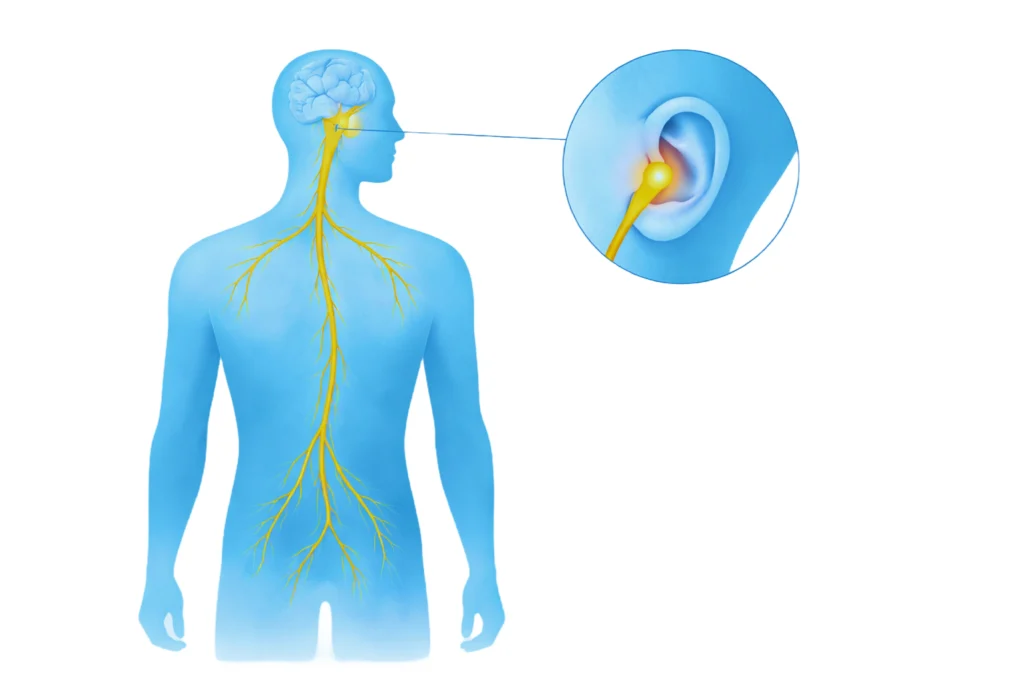
Dieser wird als Ohrast des Vagusnervs (ABVN) bezeichnet, ein kleiner Sinnesast, der Teile des Außenohrs versorgt. Es gilt allgemein als die am besten zugängliche oberflächliche Stelle für die nicht-invasive Stimulation der Vagusbahnen.
Im Prinzip ist das Konzept unkompliziert.
Ein mildes, präzise gesteuertes elektrisches Signal wird an das Außenohr abgegeben, wo es dazu beitragen kann, die an der autonomen Regulierung und der Darm-Hirn-Regulation beteiligten Ohrvagusbahnen zu beeinflussen.
Dieser anatomische Weg hat dazu beigetragen, das wachsende Forschungsinteresse an der Stimulation des Nervus vagus auricularis, auch bekannt als Neuromodulation des Nervus vagus auricularis, voranzutreiben. Geräte wie Nurosym gehören zu dieser breiteren Kategorie nicht-invasiver Neuromodulationswerkzeuge, die auf ihre potenzielle Rolle bei der Unterstützung der autonomen Regulierung untersucht werden.
Die Relevanz des Vagusnervs geht auch über die Verdauung allein hinaus.
Da es an umfassenderen autonomen Signalwegen beteiligt ist, die mit der Herzfrequenzregulierung, dem Atemrhythmus, der Entzündungssignalisierung und der Verdauungsfunktion verbunden sind, untersuchen Forscher auch, ob vagusorientierte Interventionen Symptome beeinflussen können, die häufig mit chronischer Darmfunktionsstörung einhergehen, wie z. B. Stressreaktivität, Schlafstörungen und Müdigkeit.
Das bedeutet weder, dass der Vagusnerv die einzige Grundursache dieser Symptome ist, noch dass die Neuromodulation eine eigenständige Lösung ist.
Aber im richtigen Kontext könnte es einen wichtigen Teil einer umfassenderen Strategie zur Unterstützung des Bauchhirns darstellen.
Wenn Sie über die bloße Behandlung von Blähungen, Krämpfen und Unberechenbarkeit des Darms hinausgehen und sich mit einem der tieferen Muster befassen möchten, die den Kreislauf möglicherweise am Laufen halten …
Viele Jahre lang war die klinisch etablierte Stimulation des Vagusnervs hauptsächlich über implantierbare medizinische Geräte möglich, die in spezialisierten Einrichtungen eingesetzt wurden.
Diese Ansätze erforderten in der Regel eine Operation, eine fachärztliche Aufsicht und erhebliche Kosten, was sie für die meisten Menschen, die einfach nach einer nicht-invasiven Möglichkeit zur Unterstützung der Darm-Hirn-Regulation suchen, unrealistisch macht.
Aus diesem Grund wurde die Identifizierung eines praktischen Ohrzugangspunkts so wichtig.
Es schuf die Möglichkeit, die vagusfokussierte Neuromodulation in einem weitaus zugänglicheren, nicht-invasiven Format zu erforschen.
Als ich zum ersten Mal auf ein Gerät stieß, das auf diesem Prinzip basierte, erregte es meine Aufmerksamkeit, weil es mit etwas übereinstimmte, das ich in der Praxis bereits wiederholt gesehen hatte: Viele Leute machten die “Darmarbeit”, schienen aber immer noch das Teil des Nervensystems zu vermissen.
Im Laufe der Zeit wurde es zu einem Instrument, das meiner Meinung nach bei ausgewählten Patienten in Betracht gezogen werden sollte, bei denen die Regulierung des Nervensystems ein relevanter Teil des Bildes zu sein schien.
Die wichtigere Frage wurde: Wenn es sich lohnte, diesen Ansatz zu untersuchen, welches Gerät hatte die stärkste klinische Begründung, den wissenschaftlich fundiertesten Ansatz und die Art von Beweisen, hinter die ich meinen Namen gerne stellen würde?
Denn bei dieser Art von Technologie kommt es auf Präzision an.
Wellenform, Intensität, Platzierung und Dauer können alle Einfluss darauf haben, ob die Stimulation wahrscheinlich die beabsichtigten Vagusbahnen auf sinnvolle Weise anspricht.
Wenn diese Variablen schlecht übereinstimmen, ist es möglicherweise weitaus unwahrscheinlicher, dass die Intervention auf die Wege abzielt, die Sie tatsächlich beeinflussen möchten.
Nach Durchsicht der verfügbaren Beweise fiel mir ein Gerät mehr auf als die anderen – nicht, weil es am meisten versprach, sondern weil es die glaubwürdigste Kombination aus physiologischer Begründung, Benutzerfreundlichkeit und klinischer Relevanz zu bieten schien.

Einführung von Nurosym
Nurosym ist ein tragbares Gerät mit CE-Kennzeichnung, das über einen kleinen Clip am Ohr ein präzise kalibriertes elektrisches Signal an den Ohrast des Vagusnervs liefert.
Es kann nur 15 Minuten am Tag genutzt werden, ohne Ihre üblichen täglichen Aktivitäten zu unterbrechen, was es zu einer praktischen Option für Menschen mit begrenzter Zeit macht.
Seine proprietäre AVNT™-Technologie (Auricular Vagal Neuromodulation Therapy) wurde in mehr als 50 abgeschlossenen wissenschaftlichen Studien in Zusammenarbeit mit Harvard, Yale, UCLA und Stanford getestet. Es ist das am besten erforschte Gerät seiner Art weltweit und ohne Rezept erhältlich.
Jetzt steht endlich die gleiche Vagusstimulation, die Forscher seit Jahrzehnten in Studien untersuchen, zu Hause zur Verfügung: einfach, sicher und ohne laufende Kosten.

Was Spezialisten über Nurosym sagen
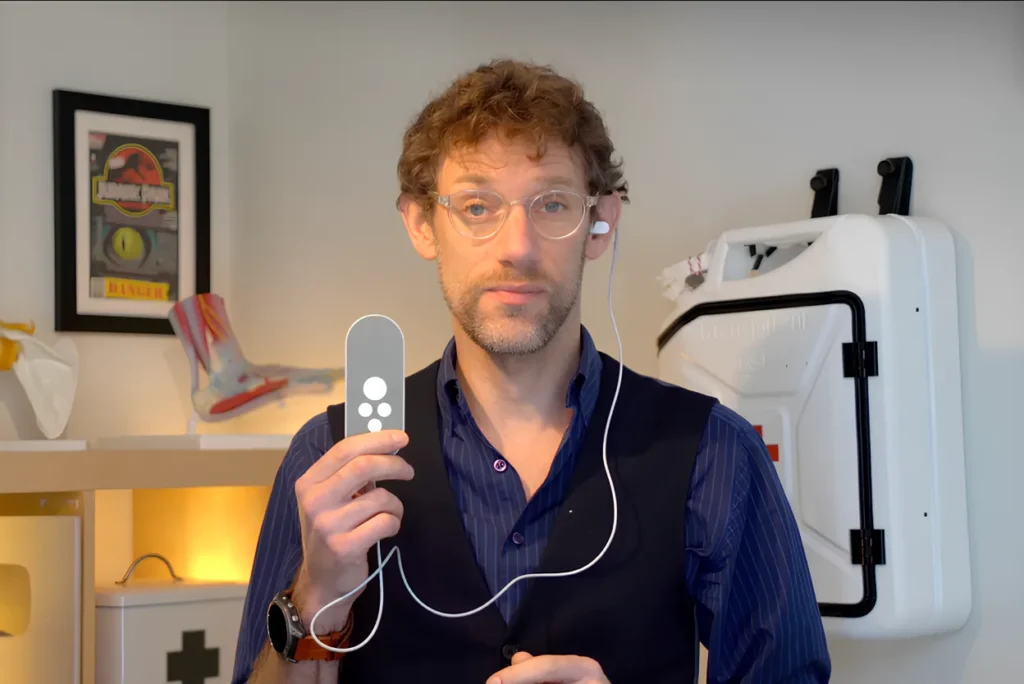
Eines der am besten untersuchten nicht-invasiven Geräte zur Vagusnervstimulation, die derzeit erhältlich sind
zur Unterstützung der Darm-Hirn-Kommunikation bei Menschen mit Reizdarmsyndrom und anderen funktionellen Verdauungssymptomen
Nurosyms AVNT™ stimuliert genau den anatomischen Punkt –den Ohrast –, den wissenschaftliche Forschung durchweg als optimalen Zugangspunkt für die vagale Neuromodulation identifiziert.
In untersuchten Populationen ist Nurosym mit einer signifikanten Verbesserung der gastrointestinalen Symptome, einer verringerten Darmüberempfindlichkeit, einer verbesserten Regelmäßigkeit des Darms und einer messbaren Verringerung von Angstgedanken und Müdigkeit verbunden, da alle diese Symptome dieselbe Wurzel haben …
Der Vagusweg.
Der Vagusnerv ist auch über Motilität und Empfindung hinaus relevant.
Es spielt eine anerkannte Rolle bei der neuroimmunen Signalübertragung, was ein Grund dafür ist, dass sich Forscher für seinen Zusammenhang mit der Entzündungsregulierung sowie der Darm-Hirn-Kommunikation interessieren.
Dies kann bei manchen Menschen mit Reizdarmsyndrom besonders relevant sein, insbesondere wenn sich die Symptome mit einer geringgradigen Immunaktivierung, postinfektiösen Veränderungen oder einer reaktiveren und sensibilisierten Darmumgebung zu überschneiden scheinen.
Neben den neuen Forschungsergebnissen halte ich es auch für sinnvoll, die Art der Veränderungen anzuerkennen, von denen manche Menschen bei der Verwendung von Nurosym berichten, und gleichzeitig anzuerkennen, dass die individuellen Reaktionen unterschiedlich sein können.

Was mir auffällt, ist, wie oft ich von Leuten höre, die bereits einen Großteil der “Darmarbeit” gemacht haben – ihre Ernährung umgestellt, Nahrungsergänzungsmittel ausprobiert, Symptome verfolgt haben – und immer noch das Gefühl hatten, dass etwas Wichtiges fehlt.
In vielen dieser Fälle ging es nicht darum, dass Nahrung irrelevant sei, sondern darum, dass die Seite des Nervensystems der Verdauungsregulation noch nicht richtig angegangen worden sei.

Warum ich Nurosym für beachtenswert halte
Es gibt drei Gründe, warum mir Nurosym als eine wirklich andere Unterstützungsebene aufgefallen ist als die üblichen Strategien zur Ernährung, Nahrungsergänzung und Symptombehandlung, die viele Menschen bereits ausgeschöpft haben.
#1 Der Schwerpunkt liegt auf der Regulierung, nicht nur auf der Symptomkontrolle
Viele herkömmliche Ansätze zur Darmgesundheit konzentrieren sich auf das, was im Verdauungstrakt selbst passiert – Nahrungsauslöser, Mikrobiomgleichgewicht, Motilitätsunterstützung oder Symptomlinderung. Diese Strategien können wertvoll sein, bei manchen Menschen berücksichtigen sie jedoch nicht vollständig die Seite des Nervensystems der Verdauungsregulation.
Nurosym fiel mir auf, weil es so konzipiert ist, dass es auf dieser breiteren regulatorischen Ebene über Wege funktioniert, die an der autonomen Signalübertragung und der Darm-Hirn-Signalübertragung beteiligt sind. Das macht es nicht zur einzigen Antwort, aber es macht es zu einer völlig anderen Art von Intervention.
#2 Es ist das am besten erforschte Gerät seiner Art weltweit.
AVNT™ ist kein Verbraucher-Wellness-Konzept. Es handelt sich um eine wissenschaftlich untersuchte Technologie, die in 50+ abgeschlossenen wissenschaftlichen Studien in Zusammenarbeit mit Harvard, Yale, UCLA und Stanford getestet wurde. Wenn Forscher die Darm-Hirn-Achse untersuchen, steht der Vagusnerv im Mittelpunkt fast jedes Befundes. Nurosym basiert auf dieser Beweislage, nicht um sie herum.
#3 Es ist nicht-invasiv und darauf ausgelegt, mit den körpereigenen Regulierungssystemen zu arbeiten und nicht gegen sie
Nurosym ist nicht-invasiv und soll bestehende autonome Bahnen beeinflussen, anstatt die Symptome direkt zu unterdrücken. Das ist einer der Gründe, warum es mir aufgefallen ist. Es ist auch praktisch in der Anwendung, was weitaus wichtiger ist, als den Menschen bewusst ist, wenn es um Konsistenz geht.
Wie bei jeder Intervention muss sie dennoch sorgfältig und im richtigen Kontext eingesetzt werden. Für viele Menschen liegt der Reiz jedoch darin, dass sie neben einer umfassenderen Arbeit zur Darmgesundheit eine zugänglichere und weniger belastende Möglichkeit bietet, die Unterstützung des Nervensystems zu erkunden.
Aus diesem Grund ist Nurosym meiner Ansicht nach eher ein glaubwürdigeres klinisches Instrument als ein weiteres trendorientiertes Wellness-Gadget.
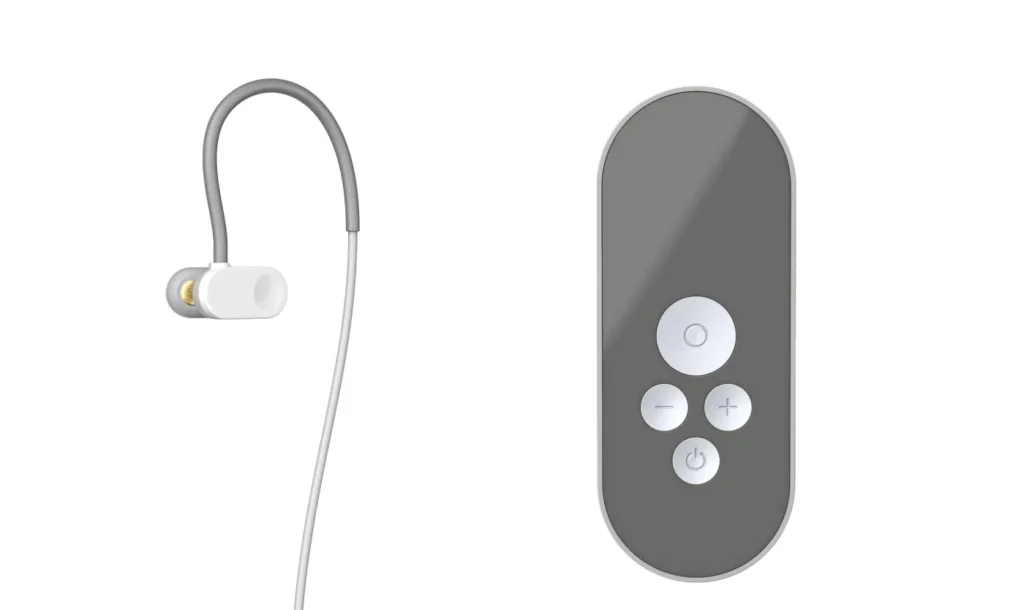
Wenn Sie sich entscheiden, es auszuprobieren, hoffe ich, dass es Ihnen eine neue Unterstützungsebene bietet, die Sie anderswo möglicherweise nicht gefunden haben.
Zu den Änderungen, die den Leuten möglicherweise auffallen, können gehören:
- Wie sich die Mahlzeiten möglicherweise weniger stressig anfühlen - und Sie möglicherweise essen können, ohne jedes darauf folgende Gefühl zu überwachen.
- Wie sich die Verdauung allmählich ruhiger und vorhersehbarer anfühlt und weniger von Dringlichkeit, Krämpfen oder plötzlicher Reaktivität getrieben wird.
- Wie sich die Blähungen, die Ihnen früher abends unangenehm waren, möglicherweise weniger intensiv, seltener und weniger störend anfühlen.
- Wie Lebensmittel sich weniger wie eine Bedrohung anfühlen können und wie Sie nach und nach damit beginnen können, Lebensmittel wieder einzuführen, die Sie jahrelang gemieden haben.
- Wie die Darmangst - die Hypervigilanz, die Planung, die Angst - neben den körperlichen Symptomen nachlassen kann, wenn sich beide Seiten des Bildes stärker unterstützt fühlen.
Nurosym bietet derzeit eine 30-tägige Geld-zurück-Garantie an, was meiner Meinung nach hilfreich für Menschen ist, die diese Art von Technologie erkunden möchten, ohne sich in die Entscheidung verwickelt zu fühlen. Wenn Sie es ausprobieren und nicht der Meinung sind, dass es zu Ihnen passt, besteht die Möglichkeit, es innerhalb dieses Zeitfensters zurückzugeben.

Sobald Sie Ihre Bestellung aufgegeben haben, versendet Nurosym direkt zu Ihnen nach Hause, normalerweise innerhalb von 24–48 Stunden.
Zusätzlich zu Nurosym selbst möchte ich sicherstellen, dass Sie alles bekommen, was Sie brauchen, um Ihre Darm-Hirn-Achse aus jedem Winkel zu unterstützen.
Aus diesem Grund bietet Nurosym unten einen Rabatt an, um es noch einfacher zu machen, dieses CE-gekennzeichnete Gerät in die Hände zu bekommen.
Um den aktuellen Rabatt von €70 zu nutzen, klicken Sie einfach auf die Schaltfläche unten, um Ihre Bestellung aufzugeben.
Von hier aus gibt es einige Möglichkeiten, wie Sie vorankommen können.


Fahren Sie mit den Strategien fort, die Sie vielleicht bereits gut kennen – Ernährungsanpassungen, Nahrungsergänzungsmittel, Symptomverfolgung, Stressbewältigung und versuchen Sie, die Dinge so gut wie möglich zusammenzusetzen.
Für manche Menschen helfen diese Ansätze.
Aber wenn Sie das alles bereits getan haben und sich immer noch festgefahren fühlen, erkennen Sie möglicherweise das Muster: die Blähungen, die Krämpfe, die Unvorhersehbarkeit, die ständige Planung und das Gefühl, dass Ihr Bauch immer noch viel zu viel von Ihrem Tag dominiert.


Eine andere Möglichkeit besteht darin, den konventionellen medizinischen Weg weiter fortzusetzen und mehr Untersuchungen, mehr Nachuntersuchungen und in einigen Fällen Medikamente zur Schmerzmodulation oder Darmüberempfindlichkeit durchzuführen.
Diese Ansätze können durchaus ihre Berechtigung haben und manchen Menschen helfen sie tatsächlich.
Aber selbst dann kann die Seite des Nervensystems und der Darm-Hirn-Regulation des Bildes immer noch unzureichend angesprochen werden, was oft der Grund dafür ist, dass sich manche Menschen weiterhin festgefahren fühlen, obwohl sie alles tun, wozu ihnen geraten wurde.


Eine dritte Möglichkeit besteht darin, Nurosym auf praktische, druckarme Weise zu erkunden.
Es ist so konzipiert, dass es etwa dreißig Minuten am Tag am Ohr angewendet werden kann, ohne dass eine vollständige Ernährungsumstellung oder eine völlig neue Nahrungsergänzungsroutine erforderlich ist.
Für neugierige, aber vorsichtige Menschen bietet die 30-tägige Geld-zurück-Garantie auch einen gewissen Spielraum bei der Entscheidung, ob sie sich wie eine sinnvolle Ergänzung zu ihrem umfassenderen Ansatz zur Darmgesundheit anfühlt. Wenn dies für Sie ein relevantes fehlendes Stück zu sein scheint, kann es ein lohnender nächster Schritt sein, den Sie in Betracht ziehen sollten.
Ein ruhigerer, besser regulierter Darm ist möglicherweise besser möglich, als Sie denken.

Und verwenden Sie Nurosym einfach täglich 30 Minuten lang.
Und verwenden Sie Nurosym etwa 30 Minuten am Tag. Manche Menschen berichten, dass sie innerhalb der ersten Wochen bemerken, dass sich der Darm ruhiger anfühlt – weniger Reaktivität nach den Mahlzeiten, vorhersehbarere Verdauung und weniger das anstrengende Gefühl, dass der Körper ständig gegen sie arbeitet.
Natürlich haben Sie vielleicht noch ein paar Fragen, bevor Sie entscheiden, ob sich das für Sie richtig anfühlt.
Wie verwende ich Nurosym?
Es ist so konzipiert, dass es etwa 30 Minuten am Tag am Ohr getragen werden kann. Eine Anleitung liegt bei. Viele Menschen entscheiden sich dafür, es beim Arbeiten, Lesen oder Entspannen zu verwenden, da Sie Ihre normalen täglichen Aktivitäten nicht unterbrechen müssen.
Ist eine langfristige Anwendung sicher?
Basierend auf den aktuellen Daten scheint Nurosym bei bestimmungsgemäßer Anwendung ein günstiges Sicherheitsprofil aufzuweisen. Es ist in Europa CE-gekennzeichnet und das Unternehmen berichtet, dass in klinischen Studien bisher keine schwerwiegenden unerwünschten Ereignisse gemeldet wurden. Wie bei jedem Neuromodulationsgerät können bei manchen Menschen dennoch leichte Nebenwirkungen wie Kribbeln, vorübergehende Ohrenbeschwerden oder Hautreizungen auftreten. Daher ist es wichtig, es wie angegeben zu verwenden und die individuellen Umstände zu berücksichtigen.
Wie wird es geliefert und wie schnell?
Nurosym wird direkt zu Ihnen nach Hause oder, falls gewünscht, an eine andere Lieferadresse versendet. Die Lieferzeiten können je nach Standort variieren, Bestellungen werden jedoch normalerweise innerhalb von 24–48 Stunden versandt. Am besten überprüfen Sie dennoch die neuesten Versanddetails am Ort der Bestellung.
Wird mir nach der Bestellung noch etwas in Rechnung gestellt?
Nein. Nurosym ist ein einmaliger Kauf ohne Abonnement oder wiederkehrende Abrechnung. Sobald Sie die Bestellung aufgegeben haben, fallen für das Gerät selbst keine automatischen Folgegebühren an.
Kann ich es zusammen mit meinen aktuellen Behandlungen verwenden?
In vielen Fällen ja. Nurosym wirkt auf einem anderen Weg als Probiotika, Ernährungsprotokolle oder Medikamente und wird daher häufig als ergänzendes Instrument und nicht als Ersatz verwendet.
Allerdings spielen die individuellen Umstände immer noch eine Rolle. Daher ist es immer sinnvoll, die Geräteanleitung zu überprüfen und professionellen Rat in Betracht zu ziehen, wenn Sie eine komplexe Krankengeschichte haben oder unsicher sind.
Was unterscheidet es von einem Standard-TENS-Gerät?
Ein Standard-TENS-Gerät bietet typischerweise eine allgemeinere transkutane elektrische Stimulation für Schmerz- oder Muskelanwendungen. Nurosym ist für einen anderen Zweck konzipiert: die aurikuläre vagale Neuromodulation. Es wendet ein kalibriertes Signal am Außenohr an, wo der Ohrast des Vagusnervs anatomisch zugänglich ist, sodass sich Platzierung, Wellenform und beabsichtigtes physiologisches Ziel von einem Standard-TENS-Gerät unterscheiden.
Ist es sicher, online zu bestellen?
Bestellungen werden über den sicheren Online-Checkout von Nurosym bearbeitet und in der Regel direkt an die von Ihnen gewählte Adresse versendet, wobei eine Sendungsverfolgung verfügbar ist.
Was ist, wenn es bei mir nicht funktioniert?
Das ist eine berechtigte Frage und ein Grund, warum die 30-tägige Geld-zurück-Garantie wichtig ist. Wenn es sich für Sie nicht richtig anfühlt, besteht die Möglichkeit, es innerhalb dieser Frist gegen volle Rückerstattung zurückzugeben. Für Menschen, die vorsichtig sind, etwas Neues auszuprobieren, kann sich die Entscheidung dadurch etwas einfacher anfühlen.
Die Informationen auf dieser Seite sind nicht als spezifische medizinische Beratung gedacht und stellen keinen Ersatz für eine professionelle Diagnose oder Behandlung dar. Nurosym ist ein tragbares Gerät mit CE-Kennzeichnung. Die individuellen Ergebnisse können variieren. Empfohlen von Star Freudenberg und der Star Freud Wellness Clinic zur Unterstützung des Darms, bei der das Nervensystem an erster Stelle steht.
Teilen über:



 German
  English
  French
  Spanish
  Swedish