
What I’ve learned about recovery, stress and the vagus nerve, and the questions I’d ask before you spend anything.
✓ Paid partnership
If you’ve spent any time around longevity, you know the routine. Most people who come to see me have already tried several things:
- A wearable that scores their sleep and recovery
- A supplement stack that keeps growing
- Strength training, long walks and earlier nights
- Breathwork, meditation, sauna or cold plunges
Then comes the question I hear most: “I’m doing all the right things. Why don’t I feel more recovered?”
They wake up tired after a full night in bed. They need longer to feel ready for their next workout, and by mid-afternoon they’re running on coffee, even when the tracker says they slept well.
For years, I looked at what my clients were adding to their lives. Then I started asking how well they were recovering from the lives they already had.
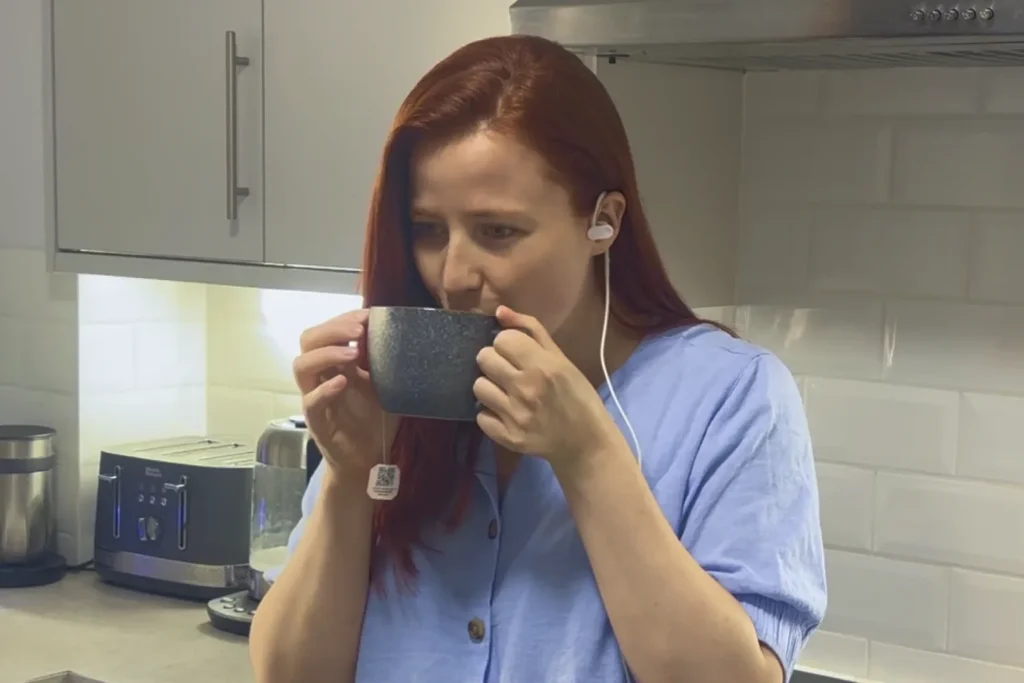
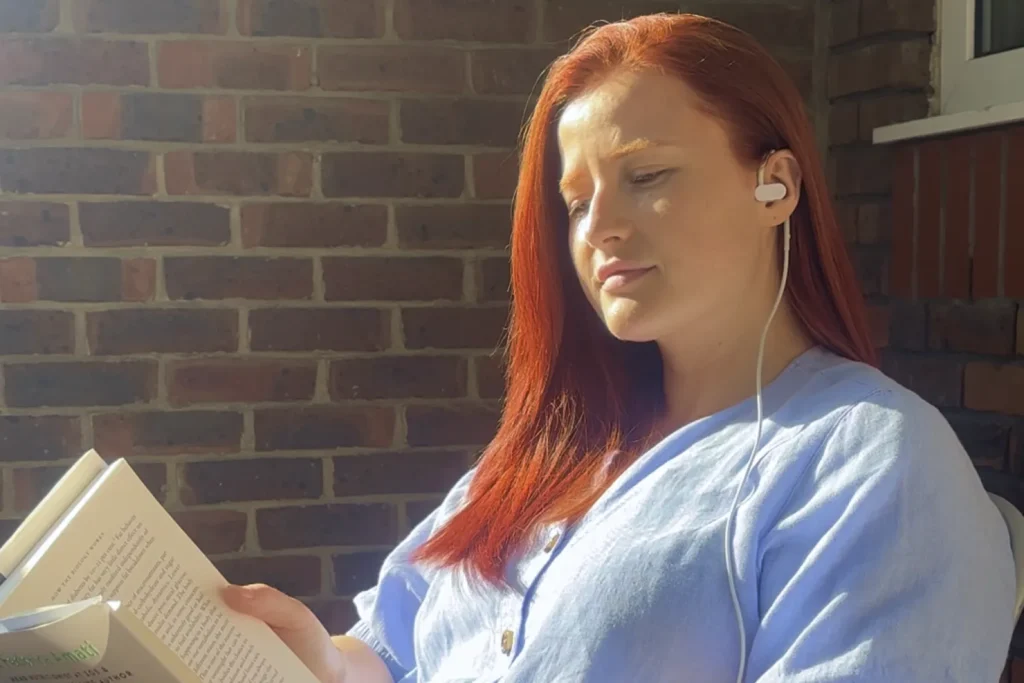
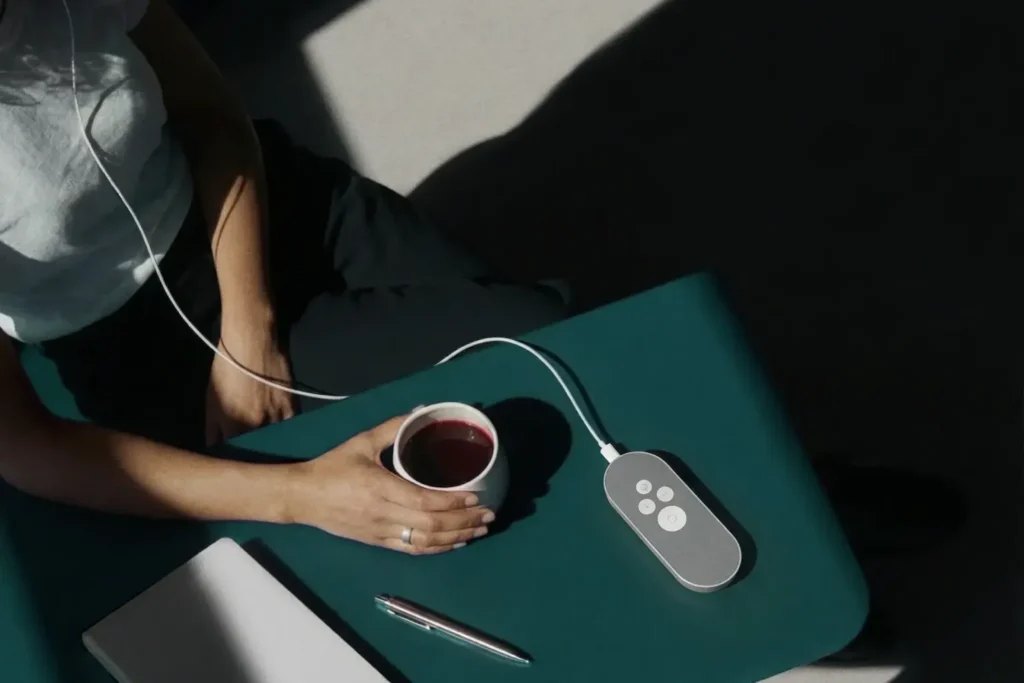
That question led me to Nurosym AVNT™ (Auricular Vagal Neuromodulation Technology), a small wearable that clips onto the tragus, the little flap of cartilage in front of your ear canal, and sends gentle pulses to a branch of the vagus nerve. It comes with a 30-day money-back guarantee, and the company reports more than 5 million sessions so far.¹ I stayed sceptical, so I wrote down what I wish I’d known first.
This article is general information, not medical advice. If you have symptoms that are new, persistent or worrying, please speak to your GP first.

I Used to Think Longevity Was About Adding More. Recovery Changed My Mind.
When I started in practice, my instinct was to build: a better protocol, more tracking. In my experience, two people on almost identical routines can look very different a few months later. The difference is rarely the protocol. It’s how well each person bounces back from an ordinary week.
Longevity isn’t only about how many years we live. It’s about how well we function through them, and recovery helps us keep doing the things that matter. I now see it as the foundation under everything else.

Stress Was the Missing Number in My Clients’ Longevity Plans
Before I went into practice full time, I worked as a chartered accountant, so I notice what’s missing from a set of numbers. Almost every plan I reviewed tracked sleep, steps and training. Hardly any tracked stress.
Stress isn’t only a feeling. It changes how the body regulates itself, day and night. A review of studies on brain imaging and heart rate variability (HRV) describes lower HRV as a marker of the link between stress and health.² Over months, one high-load day after another can leave the body very little room to recover.

Even Good Longevity Habits Are Hard to Maintain

I still recommend breathwork, meditation, sauna, cold plunges, strength training and early nights. The evidence is stronger for some, such as strength training and good sleep, than for others, such as cold plunges. The trouble is keeping them going.
Every new practice is one more thing to remember, and a habit only sticks if it has a place in your day. A breathing exercise can take a minute or two, but you still have to remember it on a school-run morning. A cold plunge needs willpower at 6 a.m. in January. Now I ask whether a person will still be doing it in three months. That question is why the vagus nerve caught my attention.

The Vagus Nerve Connects Stress and Recovery, and the Ear Is a Way In
Here’s how I explain it to clients, one step at a time.
Step 1: The accelerator and the brake. Your autonomic nervous system works without you thinking about it. The sympathisch side is the accelerator, your “fight or flight” response. The Parasympathikus side is the brake, “rest and digest”. Much of your recovery happens when the brake is working.
Step 2: The vagus nerve. It’s one of the main pathways of the parasympathetic nervous system, running from the brainstem to the heart, lungs and gut. Most of its fibres, an estimated 80 to 90 per cent, carry information up from the body to the brain.³
Step 3: Vagus nerve stimulation (VNS). VNS means stimulating this nerve with gentle electrical pulses. It began with surgical implants, which is still how it is done in some medical sidesettings.
Step 4: Through the ear. A small branch of the vagus nerve reaches the outer ear, including the tragus.⁴ That makes it possible to stimulate an area supplied by this branch without surgery, a method called transcutaneous auricular VNS, or taVNS.
Step 5: Nurosym. Nurosym is a wearable built on this idea, and its makers call their approach AVNT™, Auricular Vagal Neuromodulation Technology.
What surprised me wasn’t that the nervous system plays a part in recovery. It was that this part of the nervous system can be reached through the ear, with no implant and no surgery.
Why Nurosym stood out to me
- An independent review: Wareable called it "expensive but well-executed".⁵
- Research I could read: the company lists 60+ scientific studies,¹ although, as I explain in point 6, the evidence has clear limits.
- Practical design: a one-off cost with no subscription, no app and no gel, with a clip you can wear while you get on with your day.⁵

HRV Is a Useful Clue, Not a Verdict
Heart rate variability, or HRV, is the small variation in time between your heartbeats. It offers an indirect window into some aspects of autonomic regulation, and on average it falls as we get older.⁶ In a large study of middle-aged adults, lower HRV was linked with a higher risk of heart-related events and death.⁷
HRV is personal, though. Age, sex, breathing and posture all change it, so comparing yours with a friend’s tells you little.⁸ Chasing perfect scores can even backfire. Sleep researchers have described a similar pattern with sleep trackers, called orthosomnia.⁹
Use the trend as a clue, never as a grade. HRV doesn’t tell us whether a device improves recovery or long-term health.

What the Research Shows About Vagus Nerve Stimulation, and What It Doesn’t
I went to the research expecting to be disappointed. I was, partly.
- The encouraging part: a 2022 paper, which Nurosym lists among its own studies,¹ reported two small studies in healthy young adults, with 14 and 20 participants. In the first, active auricular stimulation increased several HRV measures compared with sham stimulation.¹⁰
- The cautious part: those studies are small and short. An improvement in HRV during a short study isn't proof of better day-to-day recovery, let alone a longer life. Dr Simon Thomson, founder of the Neuromodulation Society of the UK and Ireland, told BBC Science Focus: “It is challenging to prove something is causing the positives.”¹¹
- What I checked myself: the company's evidence page lists studies using its own technology, but many are small, one-group studies in specific user groups, with no control group to separate the device from other factors.¹
Nothing I read supports a promise to turn back the clock. What I can say is that it stimulates a nerve involved in how the body responds to stress, and that the science is early.

I Tried It Myself, Starting With Sleep, Before Recommending It
I don’t recommend anything I haven’t used. I wore Nurosym most mornings for about six weeks, initially to support my sleep and how my body handles stress, and made a short note each evening on how I’d slept and how the day had felt.
I wasn’t trying to prove it works, because one person’s notes can’t do that. I wanted to answer three simpler questions:
- Could I use it most days without resenting it?
- Would I still be using it once the novelty wore off?
- Could I explain the evidence to a client honestly?
Six weeks in, the answer to all three was yes. There was no dramatic moment, and I’d be wary of anyone who describes one. It was easy to keep going, and that’s why I talk about it with clients who want to try. I was also impressed that you can try it with a 30-day money-back guarantee, which makes it a low-risk commitment.

I Didn’t Expect a Daily Routine to Fit Into an Already Busy Day
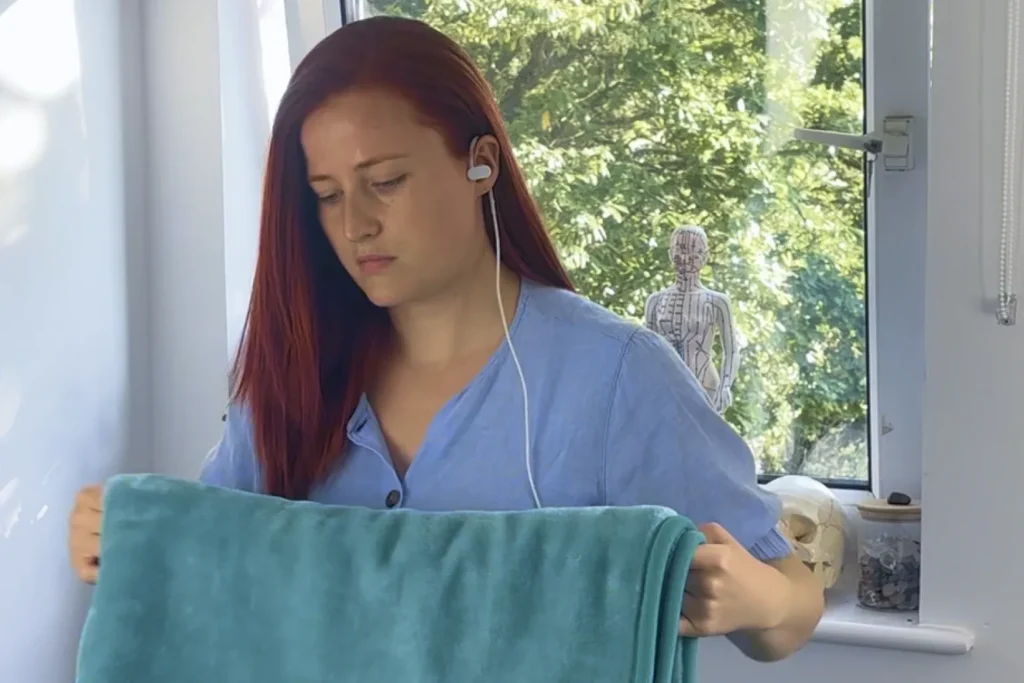
The recommended use is 30 to 60 minutes a day, in one session or two shorter ones. It still takes a daily commitment, but it doesn’t always require you to stop what you’re doing. It can sit alongside ironing, washing up, eating breakfast, reading, watching TV or answering emails. The manufacturer advises against using it while you sleep or exercise.
There’s no app and no gel. It’s wired, so you will notice it, and with a small ear the clip may take a few tries to sit comfortably, as one independent reviewer found.⁵ We’re all time-poor, and habit stacking is how I fit everything in. That’s why this felt like a breath of fresh air: a way to support something as important as my nervous system without carving out extra time, because it sits alongside things I’m already doing.
Before you try it, though, there’s a part I would never skip.

What I’d Want Every Client to Know Before Trying It
When to speak to your GP
If you have a heart symptom, take prescription medication, or have new symptoms such as chest pain, palpitations or fainting, speak to your GP before trying anything new.
Who should not use Nurosym
The manufacturer lists these as reasons not to use it:¹²
- Du schwanger bist
- You have had surgery to cut the vagus nerve (cervical vagotomy)
- You have been diagnosed with severe low resting heart rate
- You have a permanent metallic or electronic device, or jewellery, close to the tragus
The manufacturer also advises supervision by a healthcare professional if you have severe coronary disease or have had a heart attack in the last five years, and says children should only use it with a parent or guardian supervising sessions.
I wouldn’t use it with a pacemaker or any other implanted device unless the specialist who manages that device has agreed. That’s my own caution, not part of the manufacturer’s list. If you aren’t sure whether any of this applies to you, ask your GP before you order.
The most common effect is tingling where the clip sits.¹² Other temporary effects are described in the manufacturer’s instructions for use, so please read them before you order. If you feel unwell, stop using it.

The Cost, and How I Think About the Value
Nurosym costs £599 (around €700), and that’s a lot of money. In 2024, BBC Science Focus reported that devices of this kind tend to start at around £600 and can exceed £1,000 with extra fees.¹¹
Many people already pay for things they don’t stick with: supplements, a tracker, a gym or sauna membership. Nurosym is a one-off cost with no app and no subscription, and the honest question is whether you’ll use it most days for a few months. If not, don’t buy it.
For me, the value isn’t a promised result. It’s a non-invasive way to explore vagus nerve stimulation, if you’re comfortable with the limits of the evidence and the daily commitment. There’s a 30-day money-back guarantee, a safety net rather than a reason to buy on impulse. Please read the return terms before you order.
Abschließende Überlegungen
I came into this believing longevity was a matter of adding things. I’m leaving it with a different question: how well is a person recovering from the life they already have?
Stop adding more. Start paying attention to how well you recover.
Nurosym isn’t a shortcut. The research is early, and your results may differ from anyone else’s. What it offers is a convenient way to stimulate a nerve involved in how the body responds to stress, one that can fit around the day you already have. If that matches your question, it may be worth a look. If you’re unsure, start with your GP and the habits you can keep up.
EXCLUSIVE OFFER FOR OUR READERS: Get 5% Off Nurosym From Our Editorial Team!
This article is for general information only and isn’t medical advice. Individual experiences vary.
Referenzen
- Nurosym. Scientific evidence. https://nurosym.com/en-gb/pages/clinical-evidence
- Thayer JF, Åhs F, Fredrikson M, Sollers JJ, Wager TD. A meta-analysis of heart rate variability and neuroimaging studies: implications for heart rate variability as a marker of stress and health. Neurosci Biobehav Rev. 2012;36(2):747-756. https://doi.org/10.1016/j.neubiorev.2011.11.009
- Breit S, Kupferberg A, Rogler G, Hasler G. Vagus nerve as modulator of the brain-gut axis in psychiatric and inflammatory disorders. Front Psychiatry. 2018;9:44. https://pmc.ncbi.nlm.nih.gov/articles/PMC5859128/
- Butt MF, Albusoda A, Farmer AD, Aziz Q. The anatomical basis for transcutaneous auricular vagus nerve stimulation. J Anat. 2020;236(4):588-611. https://pubmed.ncbi.nlm.nih.gov/31742681/
- Juozaponytė L. Nurosym review. Wareable. 15 June 2026. https://www.wareable.com/health-tech/nurosym-review
- Umetani K, Singer DH, McCraty R, Atkinson M. Twenty-four hour time domain heart rate variability and heart rate: relations to age and gender over nine decades. J Am Coll Cardiol. 1998;31(3):593-601. https://pubmed.ncbi.nlm.nih.gov/9502641/
- Dekker JM, Crow RS, Folsom AR, et al. Low heart rate variability in a 2-minute rhythm strip predicts risk of coronary heart disease and mortality from several causes: the ARIC study. Circulation. 2000;102(11):1239-1244. https://pubmed.ncbi.nlm.nih.gov/10982537/
- Shaffer F, Ginsberg JP. An overview of heart rate variability metrics and norms. Front Public Health. 2017;5:258. https://pmc.ncbi.nlm.nih.gov/articles/PMC5624990/
- Baron KG, Abbott S, Jao N, Manalo N, Mullen R. Orthosomnia: are some users taking the quantified self too far? J Clin Sleep Med. 2017;13(2):351-354. https://pmc.ncbi.nlm.nih.gov/articles/PMC5263088/
- Geng D, Liu X, Wang Y, Wang J. The effect of transcutaneous auricular vagus nerve stimulation on HRV in healthy young people. PLoS ONE. 2022;17(2):e0263833. https://pmc.ncbi.nlm.nih.gov/articles/PMC8830655/
- Hughes A. Anti-ageing neuro-tech: The bold new devices built to keep your brain young. BBC Science Focus. 22 March 2024. https://www.sciencefocus.com/future-technology/antiageing-neuromodulation-devices
- Nurosym. Frequently asked questions: safety and contraindications. https://nurosym.com/pages/faq



 German
 English
 French
 Spanish
 Swedish
 Italian