
Points clés
- Les pensées anxieuses à haut niveau de fonctionnement peuvent être courantes dans des environnements très performants et peuvent être négligées car la détresse est masquée par la compétence.
- Les gens peuvent sembler calmes mais vivre avec une pression interne, trop réfléchir ou la peur de l’échec.
- La pensée anxieuse chronique peut affecter la concentration, les relations et la santé à long terme.
- La sensibilisation, l’équilibre du mode de vie et les thérapies fondées sur des preuves peuvent aider à rétablir le calme et la résilience.
Derrière le calme extérieur : quand les masques du succès luttent
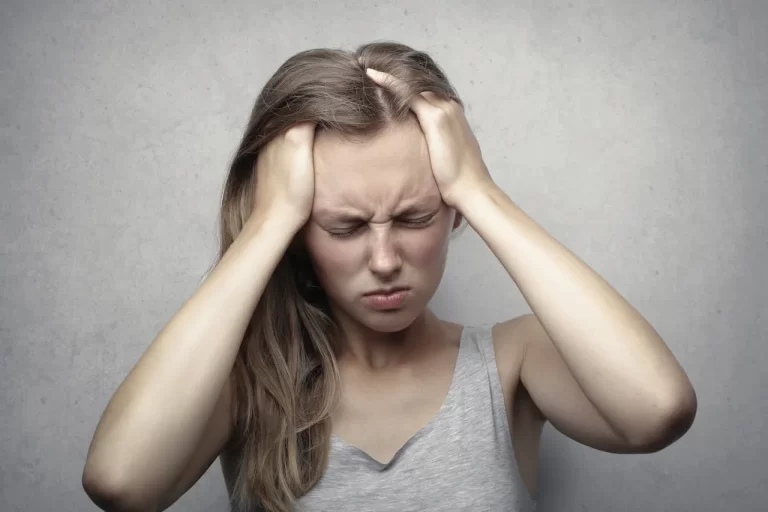
À première vue, ils semblent imparables—le collègue qui ne manque jamais une échéance, l’ami qui semble toujours calme, l’étudiant qui dépasse toutes les attentes. Pourtant, derrière cet extérieur poli, beaucoup vivent avec un bourdonnement mental constant de questions et d’autocritique. Ce poids invisible porte un nom : pensées anxieuses à haut fonctionnement.
Bien que la société récompense souvent la productivité et le perfectionnisme, ces traits mêmes peuvent masquer un courant sous-jacent calme mais persistant d’anxiété—qui ressemble rarement à des crises de panique ou à des pannes, mais se manifeste plutôt par une tension chronique, une agitation et une réussite excessive.
Pourquoi c’est important : le coût caché du séjour « bien »
À une époque où « tout faire » est célébré, les pensées anxieuses qui fonctionnent bien sont devenues une épidémie négligée. Les personnes touchées ne s’identifient souvent pas aux symptômes anxieux traditionnels parce qu’elles semblent gérer bien vivre. Pourtant, en interne, leurs esprits se reposent rarement.
Le problème est que ce mode de vie hautement efficace, motivé par l’inquiétude et le doute de soi, peut lentement éroder le bien-être. L’inquiétude/la rumination persistante est associée à un sommeil plus pauvre et à une charge de stress plus élevée, et peut contribuer à un risque pour la santé physique à long terme par le biais de voies de stress soutenues. Si elle n’est pas contrôlée, cela peut entraîner un burn-out, un épuisement émotionnel et des états dépressifs [2].
Comment cela se manifeste : Signes subtils qui pourraient vous faire trop réfléchir à la vie
Les pensées anxieuses hautement fonctionnelles s’annoncent rarement par une détresse visible. Au lieu de cela, ils se manifestent par des motifs subtils que d’autres peuvent mal interpréter comme étant de l’ambition ou de la diligence. Les signes courants incluent :
- Le perfectionnisme déguisé en professionnalisme – Un besoin incessant de performer sans faille, souvent lié à la peur de décevoir les autres.
- Surpenser et rumination – Passer trop de temps à analyser des conversations passées ou s’inquiéter de scénarios futurs.
- Difficulté à se détendre – Se sentir coupable en se reposant ou en prenant des pauses, comme si la productivité définissait la valeur.
- Répression émotionnelle – Garder les émotions étroitement contrôlées pour maintenir un extérieur calme.
- Troubles du sommeil – Difficulté à s’endormir en raison de pensées rapides ou d’agitation nocturne.
Au fil du temps, ce schéma peut avoir des conséquences physiques. Le stress prolongé et les pensées négatives répétitives sont liés à la physiologie du stress dérégulé (y compris l’activité de l’axe HPA), à la tension musculaire et aux symptômes gastro-intestinaux chez certaines personnes. De nombreux utilisateurs signalent des symptômes comme des maux de tête, un inconfort digestif et de la fatigue—sans se rendre compte qu’ils peuvent être liés à des schémas de pensée anxieux.
Dans l’esprit : ce que la science révèle sur l’anxiété de haut niveau
D’un point de vue scientifique, les pensées anxieuses à haut fonctionnement impliquent une interaction entre les régions du cerveau qui régulent l’émotion, la réponse aux menaces et le contrôle exécutif. L’anxiété implique un fonctionnement modifié à travers les circuits de détection et de régulation des menaces, y compris les réseaux amygdala-préfrontal.
Les neuroscientifiques soulignent également le rôle de la nerf vague, un composant clé du système nerveux parasympathique qui aide à réguler le stress et à calmer le corps. La HRV inférieure à médiation vagale est associée à une flexibilité réduite dans la régulation du stress et peut être corrélée avec des symptômes liés à l’anxiété. Les premières études suggèrent que le taVNS peut influencer la HRV et la physiologie liée au stress dans certains contextes; le bénéfice clinique pour les symptômes d’anxiété reste un domaine de recherche actif.
Bien que ces systèmes ne remplacent pas la thérapie, ils représentent une approche scientifique évolutive pour gérer la physiologie du stress aux côtés de la pleine conscience, du travail respiratoire et des techniques cognitives.
Trouver l’équilibre : stratégies pratiques pour calmer un esprit occupé
Gérer les pensées anxieuses à haut niveau commence par la reconnaissance. Parce que ces schémas de pensée semblent souvent faire partie de l’identité — « Je suis juste un perfectionniste »—la conscience est le premier pas vers l’équilibre. Les stratégies fondées sur des données probantes comprennent :
- Pleine conscience – Remarquer des pensées sans jugement aide à interrompre la boucle automatique de l’inquiétude. Les interventions basées sur la pleine conscience montrent des bénéfices faibles à modérés pour l’anxiété/la dépression et peuvent réduire la rumination ; une pratique quotidienne brève peut être utile pour certaines personnes.
- Cognitive Reframing – Les techniques utilisées en thérapie cognitivo-comportementale (TCC) encouragent l’identification des peurs irrationnelles et leur remplacement par des perspectives équilibrées.
- Réglementation physique – Les pratiques basées sur le mouvement telles que le yoga, la marche ou la respiration contrôlée stimulent le nerf vague et favorisent le calme.
- Détermination des limites – Apprendre à dire « non » ou prioriser les tâches peut réduire le surengagement et la fatigue mentale.
- Technologies émergentes – Certaines approches de thérapeutique numérique réglementée et de neuromodulation sont prometteuses; la force des preuves varie selon le produit et l’indication.
Ces stratégies n’éliminent pas les pensées anxieuses, mais aident à déplacer le système nerveux vers un état plus équilibré—où la concentration, le repos et le bien-être peuvent coexister.
Aller de l’avant : apprendre à se reposer sans culpabilité
Si vous vous reconnaissez dans ces schémas—toujours pousser, toujours réfléchir, rarement vous reposer — considérez cela comme une douce invitation à faire une pause. Commencez par de petits changements : pauses en pleine conscience, respiration plus lente ou discussion avec un professionnel de santé de confiance sur les outils de gestion du stress.
Pour ceux qui s’intéressent à des options innovantes, explorez les solutions portables qui soutiennent l’activité du nerf vague et la résilience émotionnelle. Le but n’est pas d’éliminer les pensées anxieuses mais d’apprendre à les gérer avec conscience et compassion.
Conclusion : Redéfinir ce que cela signifie d’être « fort »
Les pensées anxieuses hautement fonctionnelles sont la preuve que la lutte mentale ne ressemble pas toujours au chaos. Parfois, cela ressemble à un succès. Comprendre et aborder ces schémas cachés n’est pas un signe de faiblesse—c’est un acte d’équilibre et de conscience de soi.
Parce que la vraie force n’est pas de tout faire parfaitement—c’est de savoir quand faire une pause, respirer et simplement être.
L’article ne constitue en aucun cas un avis médical. Veuillez consulter un professionnel de la santé agréé avant de commencer tout traitement. Ce site peut recevoir des commissions à partir des liens ou produits mentionnés dans cet article.
Abonnez-vous gratuitement pour des articles de santé plus éclairants adaptés à vos besoins.
Sources
- Harvard Health Publishing. (2022). L’anxiété et le corps : Effets du stress chronique.
- American Psychological Association. (2021). Connexion entre anxiété et burn-out.
- McEwen, B. S. (2017). Neurobiologie du stress et adaptation. Physiologie et comportement.
- Etkin, A. et al. (2015). Neurobiologie des troubles anxieux. Revue annuelle des neurosciences.
- Porges, S. W. (2018). La théorie polyvagale : Fondements neurophysiologiques des émotions, de l’attachement, de la communication et de l’autorégulation.
- Yakunina, N. et al. (2018) Stimulation non invasive du nerf vague et son impact sur la modulation du stress. Frontiers en neurosciences.
- Goldberg, S. B. et al. (2022). Méditation de pleine conscience et réduction de l’anxiété : une méta-analyse. Revue de psychologie clinique.
- Bell, I. H., et al. (2023). L’effet du traitement psychologique sur la pensée négative répétitive chez les jeunes souffrant de dépression et d’anxiété : une méta-analyse et une méta-régression. Médecine psychologique, 53(1), 6–16. https://doi.org/10.1017/S0033291722003373
- Caudle, D. D., et al. (2024). Pensées négatives répétitives dans l’anxiété et la dépression : une revue systématique et méta-analyse des effets de l’intervention. Psychiatry Research, 334, 115787. https://doi.org/10.1016/j.psychres.2024.115787
- Cuijpers, P., et al. (2014). Traitement psychologique du trouble anxieux généralisé : une méta-analyse. Revue de psychologie clinique, 34(2), 130–140. https://doi.org/10.1016/j.cpr.2014.01.002
- Etkin, A. (2012). Neurobiologie de l’anxiété : des circuits neuronaux aux solutions innovantes ? Dépression et anxiété, 29(5), 355–358. https://doi.org/10.1002/da.21957
- Geng, D., Liu, X., Wang, Y., & Wang, J. (2022). L’effet de la stimulation transcutanée du nerf vague auriculaire sur la variabilité du rythme cardiaque chez les jeunes en bonne santé. PLOS ONE, 17(2), e0263833. https://doi.org/10.1371/journal.pone.0263833
- Lunn, T. E., et al. (2023). Perfectionnisme et troubles intériorisés chez les jeunes : une méta-analyse. thérapie cognitivo-comportementale. https://doi.org/10.1080/16506073.2023.2211736
- Perestelo-Pérez, L., et al. (2017). Interventions basées sur la pleine conscience pour le traitement de la rumination dépressive : revue systématique. Revue internationale de psychologie clinique et de la santé, 17(3). https://doi.org/10.1016/j.ijchp.2017.07.004
- Wu, C., et al. (2018). Stimulation non invasive du nerf vague : une revue systématique et méta-analyse d’essais contrôlés randomisés. Medicine, 97(41), e13845. https://doi.org/10.1097/MD.0000000000013845
- Xie, Y., et al. (2019). Perfectionnisme et pensée négative répétitive : une revue méta-analytique. Personality and Individual Differences. https://doi.org/10.1016/j.paid.2018.11.028



 French
  English
  German
  Spanish
Great reminders—easy tips that help when anxious thoughts sneak in.
Love the friendly tone and practical advice—brightens the heavy moments.