
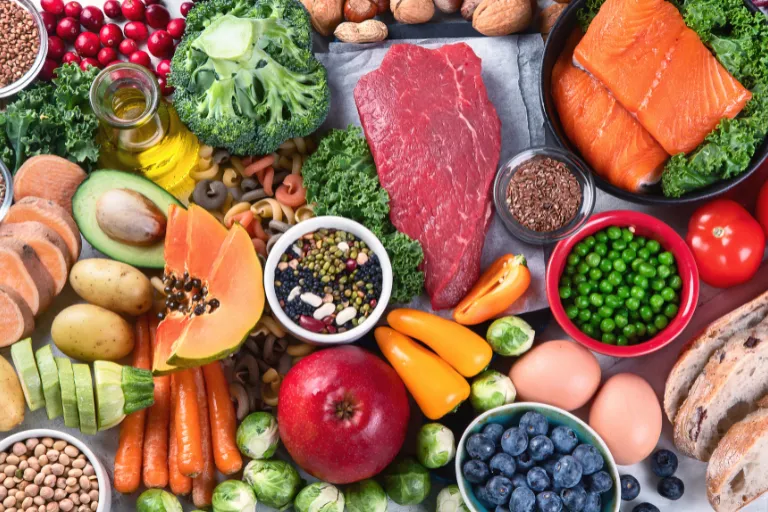
Points clés
- En raison de sa nature restrictive, l’AIP doit être suivie sous la direction d’un professionnel de santé qualifié.
- Le protocole auto-immun (AIP) est une approche axée sur la nourriture conçue pour réduire l’inflammation et soutenir l’équilibre immunitaire chez les personnes atteintes de troubles auto-immuns.
- Il se compose de deux phases principales : une phase d’élimination et une phase de réintroduction structurée pour identifier les déclencheurs alimentaires.
- AIP se concentre sur les aliments riches en nutriments et anti-inflammatoires tout en éliminant les irritants courants.
- Les premières études montrent des améliorations dans la gravité des symptômes, la santé intestinale et la qualité de vie.
- AIP n’est pas destiné à remplacer la thérapie médicale et fonctionne mieux comme un ajout aux soins continus.
Quand la nourriture devient plus que du carburant
Pour des millions d’Américains vivant avec des symptômes auto-immuns—allant de la douleur articulaire et de l’inconfort digestif à la fatigue chronique et aux éruptions cutanées — le fardeau quotidien peut être implacable. Alors que les médicaments aident à gérer l’hyperactivité immunitaire, beaucoup de gens regardent au-delà des prescriptions. De plus en plus, ils se tournent vers l’alimentation—non pas comme un remède, mais comme un outil stratégique. Parmi les approches dont on parle le plus : le régime de protocole auto-immun, ou AIP.
Mais qu’est-ce que l’AIP exactement ? Et ça fonctionne ?
Pourquoi c’est important : un fardeau auto-immun croissant
Les troubles auto-immuns se produisent lorsque le système immunitaire attaque par erreur les propres tissus du corps, entraînant une inflammation chronique et des symptômes persistants. Plus de 24 millions d’Américains sont touchés, selon les National Institutes of Health. Des problèmes comme la thyroïdite d’Hashimoto, les problèmes intestinaux inflammatoires et le psoriasis connaissent une augmentation.
Bien que la génétique joue un rôle, les déclencheurs environnementaux—en particulier le régime alimentaire, le stress et la santé intestinale — sont maintenant considérés comme des contributeurs majeurs. La recherche met en évidence le microbiome intestinal et la barrière intestinale comme des acteurs essentiels dans la régulation immunitaire.
C’est là que le protocole auto-immun entre en jeu : une réinitialisation alimentaire structurée qui vise à identifier et éliminer les déclencheurs immunitaires par l’alimentation.
Le problème : Déclencheurs insaisissables et frustrations quotidiennes
Les symptômes auto-immuns peuvent être imprévisibles. Un jour, la digestion s’améliore ; le lendemain, les ballonnements ou la fatigue reviennent sans cause claire.
Identifier les déclencheurs est difficile. Les sensibilités alimentaires, l’augmentation de la perméabilité intestinale (« intestin leaky ») et l’inflammation liée au stress sont parmi les facteurs potentiels. Le régime AIP offre un processus étape par étape pour supprimer—et ensuite lentement réintroduire — des déclencheurs communs pour aider les utilisateurs à reconnaître leurs sensibilités personnelles.
La science derrière l’AIP : intestin, système immunitaire et inflammation
Le régime AIP repose sur les bases du paléo-alimentation, mais il élimine encore plus d’aliments soupçonnés d’irriter le système immunitaire ou la paroi intestinale—tels que les céréales, les produits laitiers, les légumineuses, le sucre raffiné, les œufs et les noctiluques. Il élimine également les additifs, les huiles de graines et l’alcool.
L’idée est basée sur des recherches suggérant qu’une perméabilité intestinale accrue permet aux composants alimentaires et aux toxines microbiennes de passer dans la circulation sanguine et de stimuler le système immunitaire. Cela peut contribuer aux symptômes auto-immuns.
Une revue scientifique de 2023 a décrit l’AIP comme un « régime d’élimination personnalisé » créé pour réduire les déclencheurs immunitaires potentiels et soutenir l’équilibre immunitaire intestinal. Bien que les résultats soient encourageants, des études plus vastes sont encore nécessaires.
Une étude pilote plus récente sur les personnes atteintes de polyarthrite rhumatoïde ajoute du soutien. Les participants ont suivi l’AIP pendant huit semaines après une courte période de contrôle. À la semaine 12, beaucoup ont signalé une amélioration de la fatigue, de la qualité du sommeil et des douleurs quotidiennes. Bien qu’il soit encore tôt, ces résultats suggèrent qu’une approche structurée d’élimination axée sur les nutriments peut offrir un soulagement des symptômes lorsqu’elle est associée à une thérapie conventionnelle.
Ces études mettent en évidence les avantages potentiels, mais des résultats à long terme et des essais plus larges sont encore attendus.
Comment fonctionne le régime AIP : Phases et aliments
Phase 1 : Élimination
Cette phase dure généralement de 30 à 90 jours et implique l’évitement strict des aliments potentiellement inflammatoires. À leur place, les utilisateurs mangent des options denses en nutriments et anti-inflammatoires comme :
- Viandes nourries à l’herbe et poissons sauvages
- Viandes d’organes (riches en fer et en vitamines B)
- Légumes-feuilles et légumes riches en soufre
- Bouillon d’os, légumes fermentés, noix de coco et huile d’olive
Phase 2 : Réintroduction
Une fois les symptômes stabilisés, les aliments sont réintroduits un à la fois sur plusieurs jours tout en surveillant le retour des symptômes. Le but est d’identifier les déclencheurs personnels—ce qu’une personne tolère peut en enflammer une autre.
Les experts mettent en garde contre le fait de rester trop longtemps dans la phase d’élimination. Sans une planification minutieuse, les utilisateurs peuvent développer des carences en calcium, vitamine D ou glucides. En conséquence, les professionnels de la santé recommandent de mettre en œuvre le AIP sous la supervision d’une diététiste agréée ou d’un coach formé.
La réintroduction doit être lente et structurée pour éviter toute confusion dans l’identification des réactions.
Avantages et défis du régime AIP
Avantages potentiels
- Digestion plus calme et ballonnement réduit
- Moins de flares cutanées et articulaires
- Humeur et énergie plus stables
- Autonomisation par la sensibilisation à l’alimentation
- Amélioration possible de la qualité du sommeil et de la clarté mentale
Défis communs
- Une forte restriction peut entraîner un burn-out
- Difficile à maintenir dans les milieux sociaux ou en voyage
- Risque de lacunes en nutriments si elles ne sont pas gérées avec soin
- Coûts d’épicerie plus élevés en raison de l’accent mis sur les produits frais et les viandes de qualité
« AIP n’est pas pour toujours », déclare Angie Alt, nutritionniste et co-auteur de Le manuel de bien-être auto-immun. « C’est un outil pour aider les utilisateurs à se réinitialiser et à apprendre sur leur corps — pas un mode de vie permanent. »
Ce que disent les experts et les utilisateurs
Les praticiens de la médecine fonctionnelle et les nutritionnistes intégratifs utilisent de plus en plus l’AIP comme outil thérapeutique. Sarah Ballantyne, PhD, chercheuse biomédicale et l’une des premières défenseures de l’AIP, souligne que les changements dans le microbiome intestinal constituent l’un des points forts du régime alimentaire. Dans son examen des recherches actuelles, elle note que l’AIP augmente la diversité microbienne et réduit les marqueurs inflammatoires en quelques semaines.
Les sceptiques soutiennent que des études plus vastes et contrôlées sont encore nécessaires. « Les données sont prometteuses, mais tôt », déclare le Dr Amy Burkhart, MD, RD. « Nous avons besoin d’essais plus rigoureux. Cela dit, de nombreuses personnes se sentent mieux lors des AIP, surtout lorsqu’elles sont bien guidées. »
Les communautés en ligne partagent des expériences mixtes mais généralement prometteuses—beaucoup signalent un soulagement des symptômes aux côtés de défis tels que la planification des repas, la monotonie alimentaire et les restrictions sociales.
Dernier mot : La nourriture comme outil, pas comme remède
Le protocole auto-immun n’est pas une solution miracle—mais il peut être un outil puissant pour réduire l’inflammation et découvrir des sensibilités alimentaires cachées. Lorsqu’il est utilisé sous la direction d’un expert, l’AIP offre un moyen de calmer les symptômes et de retrouver un sentiment de contrôle.
Si vous envisagez une AIP, priorisez la diversité des nutriments, surveillez les symptômes de manière réfléchie et associez-vous à un professionnel de santé pour éviter les pièges courants.
Une approche équilibrée donne les meilleurs résultats—la cohérence compte plus que la perfection.
Prochaines étapes
- Explorer la planification des repas AIP et les conseils à Bien-être auto-immun
- Revoir les études scientifiques via Pubmed
- Trouver un expert formé à Entraîneurs certifiés AIP
Envisager l’AIP ou explorer d’autres approches basées sur la nutrition pour le soutien auto-immun ? Abonnez-vous gratuitement pour recevoir des conseils d’experts, des astuces pratiques et des informations scientifiques directement dans votre boîte de réception.
Cet article de blog est fourni à titre informatif et ne remplace pas l’avis d’un professionnel de santé. Consultez toujours un professionnel de santé pour obtenir des conseils personnalisés..
Sources
- Pardali EC, Gkouvi A, Gkouskou KK, Manolakis AC, Tsigalou C, Goulis DG, et al. Autoimmune protocol diet: A personalized elimination diet for patients with autoimmune diseases. Metabolism Open [Internet]. 2024 Dec 30;25:100342. Available from: https://www.sciencedirect.com/science/article/pii/S2589936824000744
- McNeill J, Zinn C, Mearns G, Grainger R. What Is the Efficacy of the Autoimmune Protocol (AIP) Diet in People with Rheumatoid Arthritis? A Mixed-Methods Pilot Intervention Study. Medical Sciences Forum [Internet]. 2023 [cited 2023 Jul 2];18(1):10. Available from: https://www.mdpi.com/2673-9992/18/1/10
- Ihnatowicz P, Gębski J, Drywień M. Effects of Autoimmune Protocol (AIP) diet on changes in thyroid parameters in Hashimoto’s disease. Annals of Agricultural and Environmental Medicine. 2023 Jun 1;
- Guilliams TG, Weintraub J. Implementing Personalized Dietary Interventions for Immune-Mediated Inflammatory Diseases. Integrative Medicine: A Clinician’s Journal [Internet]. 2023 Nov;22(5):18. Available from: https://pmc.ncbi.nlm.nih.gov/articles/PMC10734970/



 French
  English
  German
  Spanish
  Swedish
  Italian
I like how it focuses on learning what your own body reacts to
Nice to see a balanced view that doesn’t promise miracles, just real steps people can try.