
Faits saillants :
- La thérapie virtuelle a élargi l’accès pour les populations rurales, à mobilité limitée et autrement mal desservies.
- Des études montrent que la téléthérapie est aussi efficace que les séances en personne pour gérer les pensées anxieuses et les états dépressifs.
- Les utilisateurs rapportent une forte satisfaction envers les plateformes en ligne, citant souvent la commodité, la confidentialité perçue et le confort émotionnel.
- Les thérapeutes adoptent des outils virtuels et adaptent leurs méthodes pour rencontrer les utilisateurs là où ils sont.
- Les changements de politique après la pandémie ont élargi de manière permanente l’accès à la télésanté pour beaucoup.
La montée de la thérapie virtuelle : un changement qui est là pour rester
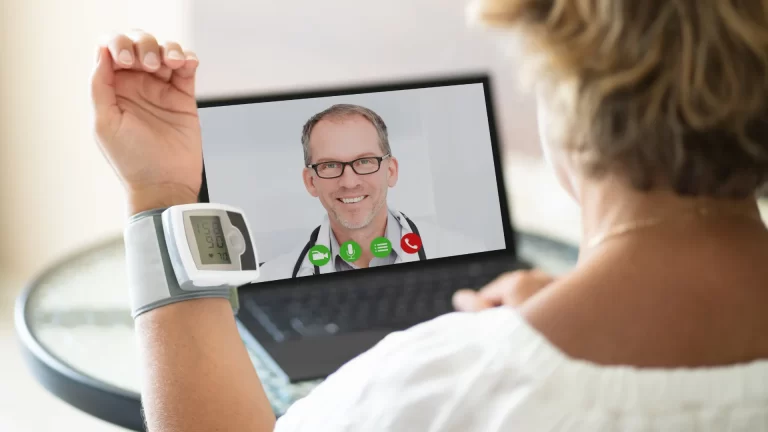
Ce qui a commencé comme une réponse à la pandémie s’est transformé en une option durable et largement utilisée pour les soins de santé mentale – bien que la part des visites varie selon le contexte et au fil du temps. Aujourd’hui, plus de personnes que jamais reçoivent une thérapie par le biais d’appels vidéo sécurisés, de sessions audio et de messagerie basée sur des applications – souvent avec des résultats qui correspondent, voire dépassent, les soins traditionnels en cabinet.
À partir de 2024, la téléthérapie représente environ un tiers de toutes les visites en santé mentale en clinique externe aux États-Unis. Le changement concerne plus que simplement la commodité – c’est permettre des soins qui sont plus cohérents, plus accessibles et, dans bien des cas, plus alignés avec les réalités de la vie moderne.
Pourquoi c’est important : Une crise de l’accès et de la stigmatisation
Environ un adulte sur cinq aux États-Unis souffre d’une maladie mentale chaque année; de nombreuses personnes présentant des symptômes diagnostiquables ne reçoivent toujours pas de thérapie. Les obstacles sont souvent des défis logistiques – de transport, des horaires inflexibles ou une pénurie de fournisseurs locaux – mais ils sont aussi émotionnels. Beaucoup de gens évitent de chercher une thérapie en raison de la stigmatisation, des préoccupations liées à la vie privée ou des pressions culturelles.
La télésanté aide à aborder les deux. Il permet aux utilisateurs d’accéder à des soins dans un environnement sûr et familier, ce qui facilite souvent l’ouverture et le maintien de la thérapie au fil du temps.
Ce que la science dit : des résultats qui tiennent le coup
Plusieurs études évaluées par des pairs confirment maintenant ce que les utilisateurs soupçonnaient depuis longtemps : la téléthérapie fonctionne.
Une méta-analyse de 2022 publiée dans le Journal des troubles affectifs a examiné 17 études contrôlées randomisées et a constaté que la thérapie virtuelle produisait des améliorations similaires dans les états dépressifs et les pensées anxieuses par rapport aux soins en personne. D’autres études ont montré que la téléthérapie cognitivo-comportementale (TCC) est particulièrement efficace pour gérer les traumatismes et les symptômes liés au stress, y compris chez les anciens combattants et les adolescents.
Des approches encore plus intensives comme la thérapie comportementale dialectique (TCD) et les soins tenant compte des traumatismes donnent des résultats prometteurs lorsqu’ils sont fournis par le biais de plateformes sécurisées, en particulier lorsque les utilisateurs peuvent accéder à des outils interactifs et communiquer entre les sessions.
Comment la télésanté élimine les obstacles du monde réel
1. Atteindre les défavorisés
Pour les utilisateurs dans les zones rurales ou éloignées, la disponibilité de professionnels de la santé mentale est souvent rare. Selon le CDC, plus de 115 millions d’Américains vivent dans des zones où il y a une pénurie de prestataires de santé mentale. La téléthérapie aide à combler cette lacune. Dans une enquête fédérale de 2023, plus de 65 % des visites en santé mentale en milieu rural ont été effectuées virtuellement, contre seulement 3 % en 2019.
2. Réduire la stigmatisation
La télésanté offre également une couche de confidentialité que la thérapie traditionnelle ne peut pas toujours garantir. Dans les communautés où les conversations sur la santé mentale restent taboues, se connecter depuis chez soi – loin des yeux vigilants – peut se sentir plus en sécurité et plus digne. Ce tampon émotionnel est particulièrement précieux pour les groupes marginalisés, y compris les utilisateurs LGBTQ+ et les immigrants de première génération.
3. S’intégrer à la vie quotidienne
La thérapie virtuelle permet aux gens d’assister à des séances pendant les pauses déjeuner, entre les quarts de travail ou après les routines du coucher. Selon un rapport de 2023, la flexibilité et les économies de temps font partie des principales raisons pour lesquelles les utilisateurs préfèrent la téléthérapie – et ces commodités sont directement liées à une meilleure adhérence à la thérapie et aux résultats.
La technologie qui fait que tout fonctionne
Des plateformes comme BetterHelp, Talkspace, Amwell et Teladoc offrent des sessions vidéo conformes à la loi HIPAA, des fonctionnalités de chat sécurisées et une planification basée sur des applications. Certains services utilisent des algorithmes de correspondance alimentés par l’IA pour associer les utilisateurs à des thérapeutes en fonction de leur spécialité, de leur expérience et de leur adaptation culturelle.
Ces outils ne sont pas seulement des cloches et des sifflets – ils améliorent l’accès et l’engagement des utilisateurs. Des fonctionnalités comme la messagerie asynchrone (envoi de notes ou de contrôles entre les séances) sont de plus en plus courantes et il a été démontré qu’elles améliorent la continuité des soins, en particulier pour ceux qui gèrent des symptômes chroniques.
Les thérapeutes reçoivent une formation spécialisée dans la création de rapports virtuels, les protocoles de sécurité et l’adaptation des techniques fondées sur des preuves pour les environnements en ligne. Comme le note l’American Psychological Association, le cœur de la thérapie reste le même : une relation de confiance et un processus collaboratif – même si cela commence par un écran.
Ce que disent les utilisateurs et les thérapeutes
Les taux de satisfaction des utilisateurs pour la téléthérapie sont constamment élevés. Dans un sondage APA de 2023, 84 % des répondants ont déclaré qu’ils étaient satisfaits de leur expérience de thérapie virtuelle, et beaucoup ont indiqué que le fait d’être dans leur propre espace les aidait à se sentir plus à l’aise et ouverts.
Pour les thérapeutes, le changement a nécessité de la flexibilité – mais il a également révélé des avantages inattendus. « Voir les utilisateurs dans leurs propres environnements m’aide à mieux comprendre leur monde », a déclaré un psychologue clinique interviewé dans un Lancet Psychiatry interview. « Cela apporte du contexte, vous ne l’obtenez pas dans un bureau. »
Coûts, couverture et progrès des politiques
L’abordabilité reste une préoccupation – mais il y a de bonnes nouvelles. En 2024 :
- La plupart des grands assureurs – y compris Medicare et Medicaid – couvrent les services de téléthérapie.
- Certaines plateformes d’abonnement annoncent des coûts par session plus bas, mais le total des dépenses directes dépend de la couverture d’assurance et du prix de la plateforme.
- Les politiques de l’ère pandémique qui ont élargi l’accès à la télésanté ont été rendues permanentes dans plusieurs États, y compris des dispositions pour une autorisation d’exercer entre États et une parité de paiement.
Cependant, il existe encore des lacunes. Tout le monde n’a pas accès à l’internet haut débit et les services non anglophones restent limités sur de nombreuses plateformes.
Un regard au-delà des États-Unis
Globalement, la téléthérapie joue un rôle crucial dans les contextes humanitaires et à faibles ressources. En Ukraine, par exemple, les services mobiles de santé mentale ont aidé plus de 30 000 personnes à faire face aux traumatismes pendant la guerre en cours. Au Kenya, des programmes de conseil textuel axés sur les jeunes fournissent des soins aux adolescents confrontés à une pression émotionnelle et sociale, en particulier dans les écoles mal desservies.
L’Organisation mondiale de la santé considère la santé mentale numérique comme une stratégie fondamentale pour l’équité en matière de santé à l’échelle mondiale, en particulier dans les interventions en cas de crise et les efforts de soins communautaires.
Bottom Line : Numérique, Oui – Mais Profondément Humain
La téléthérapie n’est pas une version édulcorée des soins en personne – c’est une approche réinventée et moderne qui répond aux utilisateurs là où ils se trouvent, à la fois physiquement et émotionnellement.
Les outils peuvent être numériques, mais les résultats – stabilité émotionnelle, conscience de soi et connexion humaine – sont profondément réels.
Marche à suivre
- Vous cherchez un thérapeute ? Commencez avec des répertoires comme Psychology Today, ou explorer des plateformes comme BetterHelp, Talkspace ou Amwell.
- Besoin d’options abordables ? consulter Mental Health America ou explorez la couverture via Medicaid ou votre employeur.
- Voulez-vous rester informé sur la politique ? Suivre les mises à jour via Telehealth.HHS.gov ou votre département de la santé de l’État.
Cet article de blog est fourni à titre informatif et ne remplace pas l’avis d’un professionnel de santé. Consultez toujours un professionnel de santé pour obtenir des conseils personnalisés..
Abonnez-vous gratuitement pour des articles de santé plus éclairants adaptés à vos besoins.
Sources
- NIMH (2023). “Mental Illness Statistics.” https://www.nimh.nih.gov/health/statistics/mental-illness
- Giovanetti. et al. (2022). “Teletherapy Versus In-Person Psychotherapy for Depression: A Meta-Analysis of Randomized Controlled Trials.” https://pubmed.ncbi.nlm.nih.gov/35007437/
- Morland, L.A. et al. (2020). “Advances in PTSD Treatment Delivery: Review of Findings and Clinical Considerations for the Use of Telehealth Interventions for PTSD.” https://pmc.ncbi.nlm.nih.gov/articles/PMC7261035/
- CDC (2023). “Mental Health Provider Shortage Data.” https://www.cdc.gov
- ASPE (2023). “Telehealth in Rural Areas.” https://aspe.hhs.gov
- APA (2022). “Mental Health and Equity Report.” https://www.apa.org
- APA Services (2023). “Telepsychology Best Practices.” https://www.apaservices.org
- CMS (2024). “Medicare Telehealth Services.” https://www.cms.gov
- HHS (2024). “Telehealth Policy Updates.” https://telehealth.hhs.gov
- WHO (2023). “Ukraine Crisis Mental Health Response.” https://www.who.int



 French
  English
  German
  Spanish
  Swedish
  Italian
Telehealth therapy sounds so helpful and easy
Therapy from home feels safe and effective—great read
Nice to see online mental‑health care working so well.