

Par VJ Hamilton, nutritionniste clinique et spécialiste de l’auto-immunité| Published on February 19, 2026 | Medically reviewed by Dr Aneesia Satheesan, BAMS, MD, MSc

Te réveilles-tu épuisé(e) peu importe combien de temps tu dors ?
Vous poser
- Te traînes-tu déjà hors du lit fatigué, comme si ta nuit ne t’avait pas donné de carburant ?
- As-tu l’impression que les matins sont la partie la plus difficile de ta journée, ton corps lourd et lent avant même d’avoir commencé ?
- Passez-vous des week-ends à « rattraper » du sommeil, sans jamais vous sentir rafraîchi ?
- Est-ce que tes matins donnent l’impression de marcher dans la boue, chaque pas et chaque effort ?
Si vous avez répondu oui, votre système nerveux autonome (SNA) pourrait être dérégulé. Au lieu de permettre un sommeil réparateur, votre corps reste bloqué en mode stress toute la nuit, vous laissant vidé avant le début de la journée.
VJ Hamilton (praticien en médecine fonctionnelle et fondateur de l’Autoimmune Nutrition Clinic) connaît intimement ce schéma, ayant elle-même surmonté le syndrome de fatigue chronique.
Elle aide maintenant à découvrir les facteurs cachés derrière le dysfonctionnement du système nerveux en utilisant des tests fonctionnels avancés comme les profils de stress surrénaliens et les panneaux métaboliques.
Son approche personnalisée, axée sur les causes profondes, s’associe puissamment à la neuromodulation pour traiter la fatigue à tous les niveaux.
Mécanismes physiologiques :
- Cycles de récupération atténués : Un sommeil sain alterne entre la dominance sympathique (alerte) et parasympathique (repos). Les personnes souffrant de fatigue restent enfermées dans une domination sympathique, bloquant la restauration profonde.
- Ton vagal supprimé : Une faible activité du nerf vague signifie une mauvaise variabilité de la fréquence cardiaque (VFC) et une récupération inefficace, comme si votre corps ne passait jamais en « mode réparation ».
- Persistance inflammatoire : Un système nerveux stressé maintient une inflammation de bas grade qui empêche la récupération musculaire, nerveuse et immunitaire pendant que vous dormez.
De courtes séances de taVNS (stimulation auriculaire transcutanée du nerf vague) ont montré une réduction de la réponse au cortisol en cas de stress mental aigu dans des études contrôlées, et l’utilisation quotidienne pendant deux semaines a amélioré l’équilibre autonome ainsi que certains aspects du sommeil et de l’humeur.
Les praticiens de médecine fonctionnelle comme VJ Hamilton à l’Autoimmune Nutrition Clinic intègrent désormais la stimulation du nerf vague dans leurs protocoles clients, reconnaissant que la régulation du système nerveux est fondamentale pour résoudre la fatigue chronique.


Les chutes d’énergie de l’après-midi contrôlent-elles votre journée ?
Vous poser
- Frappez-vous un mur de manière fiable vers 14h-15h, ayant du mal à vous concentrer même sur des tâches simples ?
- Dépendez-vous de la caféine ou du sucre pour « pousser » les après-midis, seulement pour foncer plus fort plus tard ?
- As-tu l’impression que le brouillard dans ton cerveau s’épaissit au fur et à mesure que la journée avance, les conversations et les réunions te drainent complètement ?
- Annulez-vous les plans du soir simplement parce que vous êtes trop épuisé ?

Mécanismes physiologiques :
- Déséquilibre autonome : Au lieu de passer en douceur entre les états d’activité et de récupération, votre ANS passe comme un moteur défectueux, drainant l’énergie en milieu de journée.
- Suppression mitochondriale : Le tonus vagal bas contribue au stress oxydatif et à la dysfonction mitochondriale ; vos cellules ne peuvent pas générer d’énergie soutenue.
Les voies vagales sont essentielles à la régulation de l’inflammation.
Les recherches montrent que le taVNS peut moduler ces signaux, favorisant la récupération et réduisant le stress inflammatoire qui contribue à la fatigue.
Les praticiens de la médecine fonctionnelle comme VJ Hamilton vont encore plus loin, en utilisant des tests avancés tels que l’analyse complète des selles et des panels métaboliques pour identifier les déclencheurs inflammatoires spécifiques propres à chaque personne, créant ainsi un plan ciblé pour calmer le système immunitaire de l’intérieur.

Est-ce que le brouillard cérébral vole votre concentration et votre motivation ?
Vous poser
- Est-ce que tu relis plusieurs fois la même phrase parce que rien ne colle ?
- Oublies-tu des tâches simples, comme pourquoi tu es entré dans une pièce ?
- Te sens-tu mentalement vidé même lorsque ton corps est au repos ?
- Avez-vous du mal à suivre les conversations, en décrochant au milieu d’une phrase ?
Mécanismes physiologiques:
- Sous-activation du cortex préfrontal : Le dysfonctionnement du système nerveux lié à la fatigue amortit le « centre de concentration » du cerveau, ce qui nuit à la concentration.
- Déséquilibre des neurotransmetteurs : Le faible tonus vagal perturbe la dopamine et l’acétylcholine, des produits chimiques essentiels pour l’attention et la motivation.
- Neuroinflammation : La fatigue chronique est liée à une inflammation cérébrale qui ralentit le traitement mental comme un ordinateur fonctionnant avec des logiciels obsolètes.
Des recherches scientifiques montrent que le VNS peut influencer les réseaux cérébraux impliqués dans l’attention et la mémoire de travail, certaines études rapportant des améliorations en matière de concentration et de clarté mentale.
Lorsque le brouillard cérébral persiste, des causes profondes comme la dysfonction mitochondriale ou l’épuisement des nutriments peuvent être en jeu, exactement ce que la clinique de nutrition auto-immune de VJ Hamilton se spécialise à découvrir grâce à des tests fonctionnels et des protocoles personnalisés.

As-tu l’impression que ton corps ne se rétablit jamais ?
Vous poser
- Est-ce que même les activités simples (comme monter des escaliers ou faire les courses) te laissent épuisé ?
- Les entraînements vous poussent-ils à « s’effondrer » pendant des jours, au lieu de vous dynamiser ?
- Vos muscles vous font-ils mal et vos articulations sont-elles enflammées même après le repos ?
- As-tu l’impression que ton corps a perdu sa capacité à rebondir ?
Mécanismes physiologiques:
- Dysfonctionnement autonome : Une mauvaise signalisation vagus maintient votre système bloqué en mode catabolique (panne), empêchant les processus anaboliques (réparation).
- Verrouillage de l’inflammation : Sans activation vagale du réflexe anti-inflammatoire, les cytokines comme l’IL-6 restent élevées, ce qui perpétue la fatigue et la douleur.
- Effondrement du système de récupération : Les études sur le HRV montrent que les individus fatigués n’ont pas les surtensions parasympathiques nécessaires à la réparation des tissus après un stress ou un effort.

Dans une étude scientifique randomisée, le taVNS a réduit la gravité des problèmes de sommeil par rapport au contrôle, ce qui suggère un rôle dans le soutien d’un sommeil plus profond et plus réparateur.
Lorsque le corps ne se rétablit toujours pas malgré le repos, des facteurs plus profonds peuvent être en jeu.
La clinique de nutrition auto-immune de VJ Hamilton identifie les facteurs métaboliques, immunitaires et intestinaux qui bloquent la récupération, la stimulation du nerf vague faisant désormais partie de l’approche intégrative qu’elle recommande à ses clients.

Votre fatigue affecte-t-elle l’humeur et la résilience ?
Vous poser
- Te sens-tu émotionnellement plat, détaché ou démotivé ?
- Les petits facteurs de stress semblent-ils accablants, comme si vous n’aviez plus de tampon ?
- Ressentez-vous de la tristesse ou de l’irritabilité plus souvent lorsque l’épuisement atteint son pic ?
- Évitez-vous les activités que vous aimiez autrefois simplement parce que vous « n’avez pas l’énergie » ?

Mécanismes physiologiques:
- Échec de la communication vagal-cerveau : Une mauvaise signalisation vagale modifie les neurotransmetteurs régulateurs de l’humeur, alimentant des états dépressifs ou anxieux. Texte
- Boucle de rétroaction énergie-émotion : L’épuisement amplifie les pensées négatives, tandis que la baisse d’humeur sape encore plus l’énergie, un cycle enraciné dans le déséquilibre autonome.
- Perturbation hippocampique : La fatigue chronique et le stress réduisent le volume de l’hippocampe, ce qui affecte à la fois la régulation énergétique et la résilience émotionnelle.

La fatigue perturbe-t-elle votre digestion et votre immunité ?
Vous poser
- Est-ce que vous êtes ballonné ou mal à l’aise après les repas, comme si votre intestin ne pouvait pas suivre ?
- Avez-vous des rhumes fréquents ou une guérison lente à cause de maladies mineures ?
- Avez-vous des habitudes intestinales imprévisibles, alternant entre lenteur et urgence ?
- Les semaines stressantes laissent-elles votre estomac et votre énergie également dévastés ?
Mécanismes physiologiques:
- Dysfonctionnement de l’axe intestin-cerveau : Un faible tonus vagal réduit la sécrétion d’enzymes digestives et la motilité intestinale, laissant les aliments mal digérés et les nutriments sous-absorbés.
- Dysrégulation immunitaire : Une mauvaise activation du nerf vague atténue les voies anti-inflammatoires, laissant le système immunitaire à la fois faible et hyperactif.
- Déséquilibre du microbiome : La dysfonction vagale contribue à la perturbation du microbiome qui aggrave la fatigue via une inflammation d’origine intestinale.
VNS comme solution à la fatigue et à l’épuisement
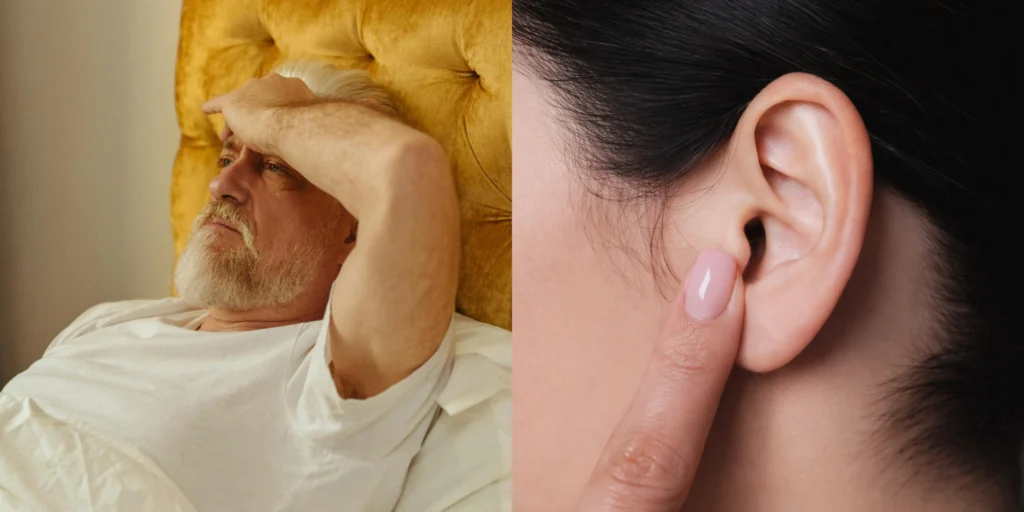
La fatigue persistante n’est pas toujours un problème de « batterie faible »... C’est souvent un problème de régulation, où le corps a du mal à revenir aux valeurs de base.
C’est pourquoi les chercheurs se penchent sur le nerf vague, une voie majeure pour accéder au système parasympathique de « repos et réparation ».
Le nerf vague est souvent considéré comme le réseau qui aide à ralentir la fréquence cardiaque, à adoucir la signalisation du stress, à soutenir la digestion et à orienter le corps vers le maintien et la restauration. Lorsque ce système fonctionne de manière fiable, le sommeil a tendance à être plus réparateur physiologiquement et la capacité de récupération diurne s’améliore.
Problème?
Pour beaucoup de gens, cette voie peut devenir sous-active (presque « dormante »), elle ne s’engage donc pas de manière fiable sans soutien.
La solution aux problèmes énergétiques
Lorsque la fatigue semble « bloquée » (même après une nuit de sommeil complète), le problème concerne souvent moins la volonté que la physiologie de la récupération.
Mais après avoir investi 10 millions de dollars dans la recherche, la science a trouvé un moyen d’aider le système nerveux à sortir du mode de stress et à revenir vers le « repos et la réparation ».
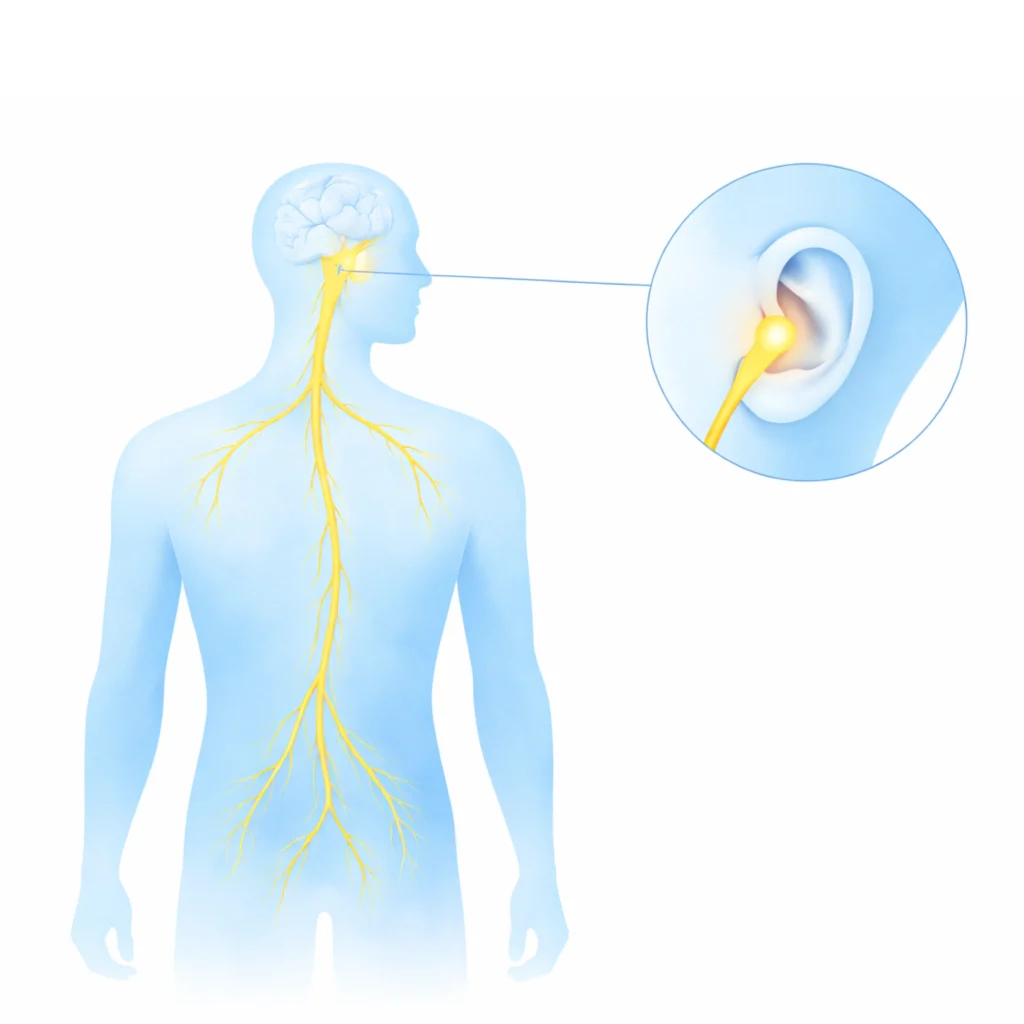
Présentation de Nurosym : la stimulation non invasive du nerf vague pour la récupération
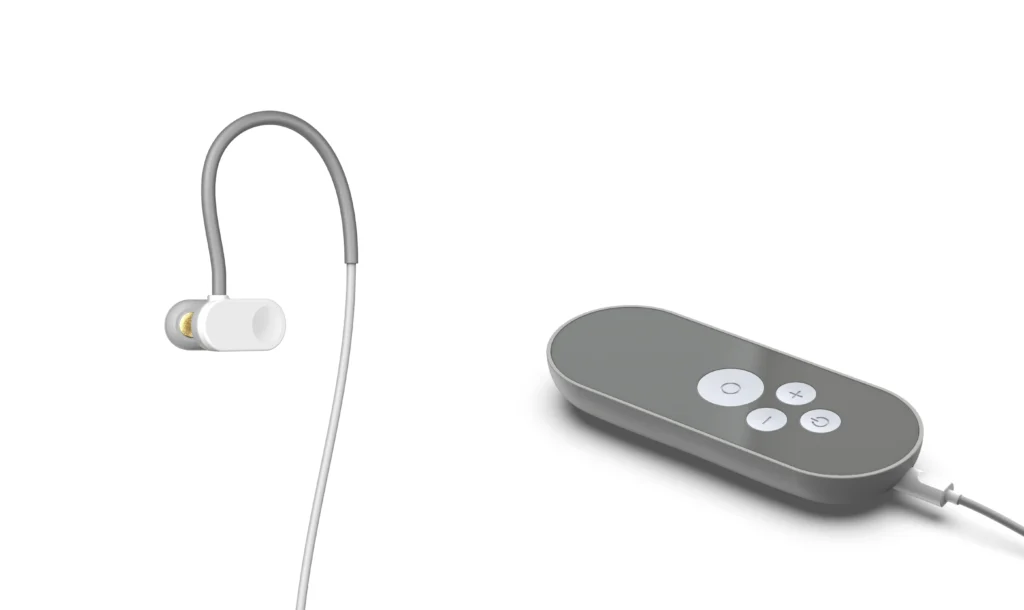
Nurosym est un dispositif de stimulation non invasive du nerf vague (SNV) marqué CE, à domicile conçu pour favoriser la récupération lorsque la fatigue semble « bloquée », même après une nuit de sommeil complète.
Nurosym délivre cette stimulation par l’oreille, où le dispositif peut accéder à une voie vagale sans chirurgie ni médicament.
Il est conçu pour une utilisation constante à domicile. Ainsi, soutenir la récupération devient quelque chose que vous pouvez faire quotidiennement, et pas seulement en lire.
Comment ça marche
Nurosym utilise une stimulation douce à l’oreille et est calibré pour ressentir un léger picotement plutôt qu’un choc intense.
L’objectif n’est pas un rapide « coup de pouce énergétique », mais plutôt d’aider le système nerveux à se remettre en marche et à sortir du mode d’alerte maximale pour que la récupération redevienne possible.
À quoi ressemble l’utilisation
- Un petit appareil domestique utilisé dans le cadre d’une routine
- Les utilisateurs le décrivent généralement comme une légère sensation de picotement.
- Conçu pour être simple et sans drogue
La fatigue persistante n’est pas toujours « batterie faible »...
Pour beaucoup de gens, cela reflète un système qui ne revient pas complètement à la base... alors le sommeil peut être long, mais ne pas être réparateur, laissant les gens non reposés et cognitivement ralentis.
Et voici ce que les gens qui ont essayé Nurosym ont à dire...
« Cinq étoiles de ma part. Dans ce monde où il n’y a pas grand-chose sur lequel on peut compter, c’est l’une des choses sur lesquelles on peut compter. »
– Derek
« Je remarque vraiment que quand je ne l’ai pas utilisé, je ne dors pas aussi bien. ... » « Quand je ne l’utilise pas, je me sens beaucoup plus enflammé, douloureux et tout simplement mal. »
– Kate
« J’adore. Je l’utilise tous les jours. Il m’aide à mieux dormir et à me sentir mieux. Je le recommanderais à tout le monde. »
– Tijana
« Je l’ai commandé en ligne, et je peux dire honnêtement qu’après quelques jours d’utilisation, les symptômes ont disparu ».
– Lucy
« Je recommanderais de tout cœur le dispositif de neurostimulation Nurosym à toute personne souffrant de stress et souhaitant améliorer son bien-être et sa tranquillité d’esprit ».
– Jordan
« J’ai eu une très bonne expérience avec elle, et je la recommanderais à tous ceux qui espèrent un soulagement, en particulier des symptômes de fatigue et de brouillard cérébral. »
– Tasha
« Nurosym semble avoir eu un impact positif sur moi. Est-ce que je me sens un peu moins stressé ? Oui. Je suis donc heureux de dire que l’intervention semble avoir été efficace ».
– Doctor James Gill
« Pour moi, j’ai toujours eu du mal avec ma récupération. Mais maintenant, avec Nurosym, je peux obtenir mes meilleurs scores chaque jour en utilisant Nurosym. »
– Tanya
Beaucoup plus d’utilisateurs signalent des améliorations au fil du temps, telles qu’une meilleure qualité de sommeil, une énergie diurne plus stable et un fonctionnement mental plus clair, en particulier lorsqu’ils sont utilisés régulièrement dans le cadre d’une routine de récupération.
Des recherches récentes discutent de la SNV dans des contextes tels que les schémas de fatigue post-virale et les symptômes similaires à ceux de la fatigue chronique, en se concentrant souvent sur des mécanismes tels qu’une activité parasympathique accrue et des effets sur la signalisation inflammatoire (par exemple, les cytokines).
La stimulation VNS « normale » est probablement inefficace...
Nurosym est spécifiquement conçu pour la stimulation non invasive du nerf vague par l’oreille : l’approche la plus couramment utilisée dans la recherche sur les SNV transcutanées (ciblant souvent des zones comme le tragus ou le cymba conchae).
Mais voici ce que vous devez savoir :
Contrairement à la stimulation appliquée sur le cou, qui peut être plus difficile à placer de manière constante et peut stimuler un mélange de tissus voisins, la stimulation auriculaire est conçue pour accéder à une voie vagale d’une manière plus contrôlée et pratique pour une utilisation quotidienne à domicile.
Ce que ça veut dire ?
Par rapport aux dispositifs de « bien-être électrique » généraux qui n’ont pas été conçus ou régulés pour la neuromodulation spécifique au nerf vague, Nurosym se positionne comme un dispositif marqué CE avec une conception axée sur la recherche.
Comme l’explique le Dr VJ Hamilton aux clients de la clinique de nutrition auto-immune, ce cadre peut aider à expliquer pourquoi certaines personnes souffrant de fatigue chronique et de symptômes liés à l’auto-immunité peuvent dormir pendant des heures sans jamais vraiment se sentir reposées.
Approuvé par les principaux spécialistes de la fatigue et de la récupération

Anthony Kaveh, MD
Anesthésiste & Directeur Médical chez Clarus Health
« Je voulais savoir si nous pouvions aider les patients à échapper à l’épuisement causé par un système nerveux hors de contrôle. Jusqu’à présent, la réponse est oui. »
Dr Myro Figura
Anesthésiste & Médecin en chef chez HealFast
« (Nurosym) augmente le côté repos-et-réparation de votre système nerveux—un outil important pour restaurer l’énergie.
Dr James Gill
Professeur associé à la Warwick Medical School & Médecin généraliste
« Des recherches indépendantes à l’université de Leeds ont démontré une activité réduite du nerf sympathique. Personnellement, mon HRV est passé des années 40 à 69 avec Nurosym.

Bryan Johnson
Fondateur de Braintree, Projet Blueprint
« En cinq mois, ma HRV s’est améliorée de 37 ms à 54 ms. La HRV est un biomarqueur majeur de la résilience, de la récupération et du vieillissement. »
Prenez naturellement le contrôle de votre fatigue
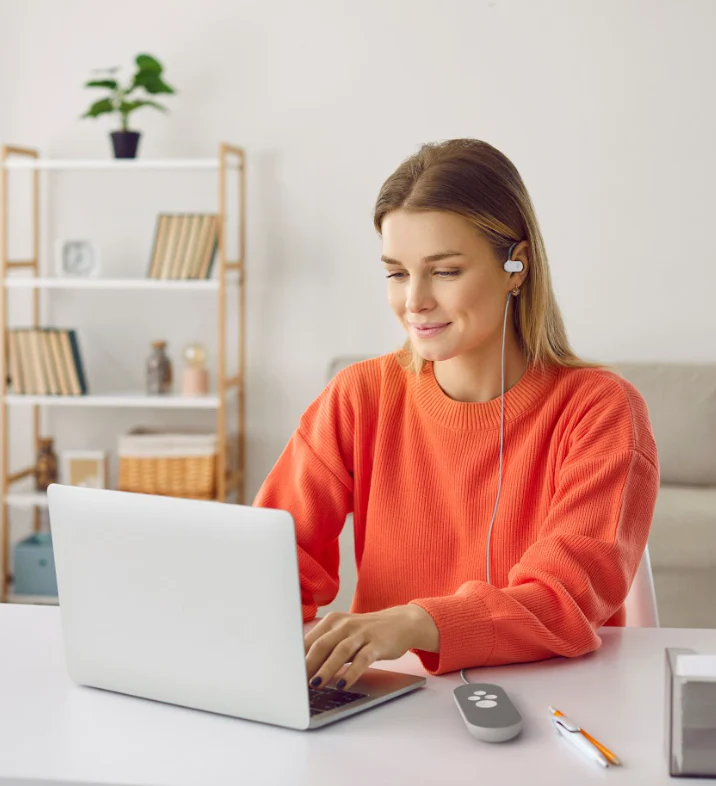
Rejoignez des milliers de personnes qui ont récupéré leur énergie naturellement.
Participez à notre étude de recherche sur la fatigue et la récupération et économisez 40 € sur votre appareil Nurosym.
*L’évaluation de la participation à la recherche prend moins de 3 minutes
60+
Études scientifiques terminées référencées
4 millions
Sessions utilisateur livrées avec satisfaction
30
Jours garantie de remboursement

dispositif médical certifié
Rejoignez des milliers de personnes qui ont récupéré leur énergie naturellement.
Participez à notre étude de recherche sur la fatigue et la récupération et économisez 40 € sur votre appareil Nurosym.
*L’évaluation de la participation à la recherche prend moins de 3 minutes
60+
Études scientifiques terminées référencées
4 millions
Sessions utilisateur livrées avec satisfaction
30
Jours garantie de remboursement

dispositif médical certifié
Garantie de remboursement de 30 jours
Faites l’expérience d’un renouvellement énergétique avec Nurosym pendant 30 jours. Si vous ne constatez aucune amélioration de votre fatigue, de votre clarté ou de votre sommeil, ils vous rembourseront.
Ils sont convaincus que la stimulation du nerf vague de Nurosym, scientifiquement prouvée, vous aidera à surmonter la fatigue naturellement, sans médicaments ni chirurgie.
Bibliographie :
- Morris, G., & Maes, M. (2013). Myalgic encephalomyelitis/chronic tiredness syndrome and multiple sclerosis show remarkable similarities in neuroimmune characteristics. BMC Medicine, 11, 205. https://doi.org/10.1186/1741-7015-11-205
- VanElzakker, M. B. (2013). Chronic tiredness syndrome from vagus nerve infection: A psychoneuroimmunological hypothesis. Medical Hypotheses, 81(3), 414–423. https://doi.org/10.1016/j.mehy.2013.05.034
- Tarn, J., Legg, S., Mitchell, S., Simon, B., & Ng, W.-F. (2019). The effects of non-invasive vagus nerve stimulation on tiredness and immune responses in users with primary Sjögren’s syndrome. Neuromodulation, 22(5), 580–585. https://doi.org/10.1111/ner.12879
- Tarn, J., Legg, S., Mitchell, S., Simon, B., & Ng, W.-F. (2023). The effects of noninvasive vagus nerve stimulation on tiredness in participants with primary Sjögren’s syndrome. Neuromodulation, 26(3), 681–689. https://doi.org/10.1016/j.neurom.2022.08.461
- Zhang, S., Zhao, Y., Qin, Z., Han, Y., He, J., Zhao, B., Wang, L., Duan, Y., Huo, J., Wang, T., Wang, Y., & Rong, P. (2024). Transcutaneous auricular vagus nerve stimulation for chronic sleep problems: A randomized scientific study. Réseau JAMA ouvert, 7(12), e2451217. https://doi.org/10.1001/jamanetworkopen.2024.51217
- Zheng, Z. S., Simonian, N., Wang, J., & Rosario, E. R. (2024). Transcutaneous vagus nerve stimulation improves Post-Viral symptoms in a female cohort: A pilot study. Frontiers en neurologie, 15, 1393371. https://doi.org/10.3389/fneur.2024.1393371
- Geng, D., Liu, X., Wang, Y., & Wang, J. (2022). L’effet de la stimulation transcutanée du nerf auriculaire vague sur le HRV chez les jeunes en bonne santé. PLOS ONE, 17(2), e0263833. https://doi.org/10.1371/journal.pone.0263833
- Fang, Y.-T., Lin, Y.-T., Tseng, W.-L., Tseng, P., Hua, G.-L., Chao, Y.-J., & Wu, Y.-J. (2023). Neuroimmunomodulation of vagus nerve stimulation and the therapeutic implications. Frontiers in Aging Neuroscience, 15, 1173987. https://doi.org/10.3389/fnagi.2023.1173987
- Redgrave, J., Day, D., Leung, H., Laud, P. J., Ali, A., Lindert, R., & Majid, A. (2018). Safety and tolerability of transcutaneous vagus nerve stimulation in humans: A systematic review. Brain Stimulation, 11(6), 1225–1238. https://doi.org/10.1016/j.brs.2018.08.010
- Kim, A. Y., Marduy, A., de Melo, P. S., Gianlorenço, A.C., Kim, C. K., Choi, H., Song, J.-J., & Fregni, F. (2022). Sécurité de la stimulation transcutanée du nerf vague auriculaire (taVNS) : Une revue systématique et méta-analyse. Rapports scientifiques, 12, 22055. https://doi.org/10.1038/s41598-022-25864-1

VJ Hamilton, nutritionniste clinique et spécialiste de l’auto-immunité
VJ is an autoimmune disease expert and functional medicine practitioner who has helped hundreds of people rebuild their strength, rebalance their immune systems, and reclaim their energy.
Partager cet article :


 French
  English
  German
  Spanish
  Swedish