
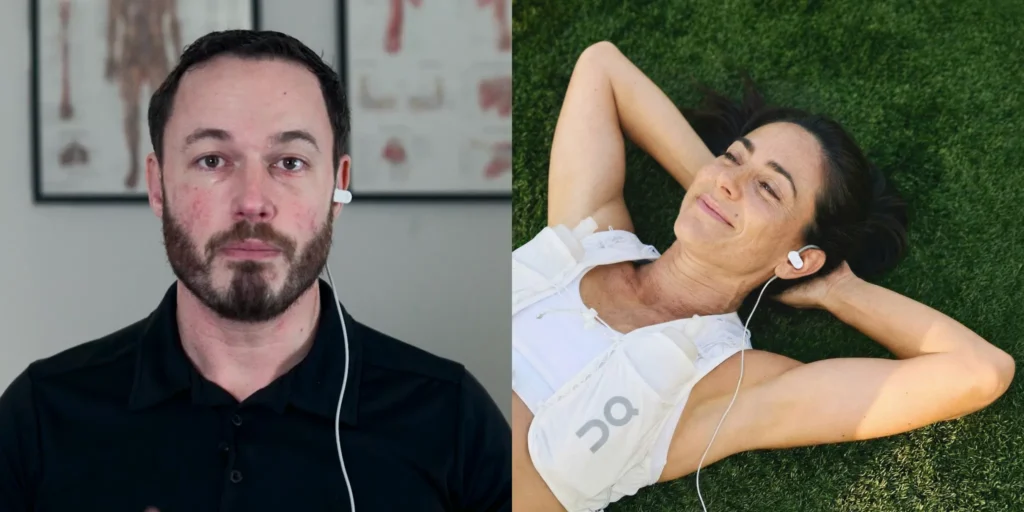
Vous avez probablement déjà essayé les choses évidentes.
Magnésium avant de se coucher. Une capsule d’ashwagandha tous les soirs. L-théanine pour le bavardage mental. Une application de méditation – ouverte régulièrement pendant environ trois semaines avant que l’habitude ne se dissolve discrètement. Respiration en boîte. Aucun écran après neuf heures.
Ça a aidé en partie. Ça a aidé en partie pendant un moment.
Et tu es là. Épuisé. Mais d’une manière ou d’une autre, toujours en train de courir.
La sensation de bouger à 23h quand tu es debout depuis 6h. Les week-ends ne te récupèrent plus comme avant. Les pensées qui s’emballent au moment où vous arrêtez de bouger. Le faible bourdonnement de quelque chose – malaise, tension, préparation – qui reste juste sous la surface même lorsque rien ne va mal.
Le schéma se manifeste à travers des vies très différentes. Une infirmière qui termine un quart de douze heures et ne peut pas s’arrêter de rejouer la journée. Un parent qui n’a pas eu une soirée ininterrompue depuis des mois. Un cadre qui ne se souvient pas de la dernière fois d’un week-end s’est senti véritablement réparateur. Les circonstances sont différentes. La réponse du système nerveux est la même.
Je vois le même schéma presque chaque semaine dans ma pratique.
Quelqu’un entre avec une tension cervicale qui ne change pas. Des épaules serrées. Une mâchoire qui fait mal le matin. Les maux de tête qui arrivent d’ici mercredi et ne partent pas avant le week-end.
Nous abordons les symptômes physiques. Mais quand je commence à poser des questions, la situation devient plus claire.
Ils ne dorment pas mal. Ils dorment bien – et se réveillent quand même épuisés. Ils rentrent à la maison prêts à se reposer. Mais dès qu’ils s’assoient, quelque chose recommence. La réunion de demain. L’e-mail qu’ils ont oublié. La conversation qu’ils ne cessent de rejouer.
« Je rentre chez moi, j’enlève mes chaussures, je m’assois avec une tasse de thé – et d’une certaine manière, je me sens plus énervé qu’à mon départ. »
C’est quelque chose que j’entends constamment.
Le corps est sur le canapé. Le système nerveux est toujours au bureau.
Le système nerveux ne se soucie pas de savoir si la pression vient d’un patient difficile, d’un patron exigeant, d’un bébé qui pleure ou d’une pile croissante d’e-mails. Il ne fait qu’enregistrer la charge. Et lorsque cette charge a été maintenue assez longtemps, le repos cesse de ressembler à du repos.
Ce n’est pas de la fatigue. La fatigue répond au repos. Ce que je décris ne le fait pas.
Ce que je vois constamment, c’est ceci : les personnes qui ne peuvent pas se déconnecter ne font rien de mal. Leur système nerveux n’a tout simplement pas reçu le signal que la journée de travail est terminée. Et jusqu’à ce qu’il en soit ainsi, aucun repos ne sera réconfortant.
Résumé rapide – classé du moins efficace au plus efficace :
- #5 Suppléments : glycinate de magnésium, ashwagandha, L-théanine
- #4 Méditation, applications de pleine conscience, retraites
- #3 Respiration : Respiration en boîte, 4-7-8, soupir physiologique
- #2 Libération physique : Roulement de mousse, pistolet de massage, yoga, Pilates
- #1 Stimulation directe du nerf vague : Nurosym AVNT™
Voici ce que j’ai trouvé qui fonctionne – du moins au plus efficace – et pourquoi la distinction entre chaque niveau est plus importante qu’on ne le pense.

Suppléments : glycinate de magnésium, ashwagandha, L-théanine
L’approche biochimique – Avantages réels, plafond réel
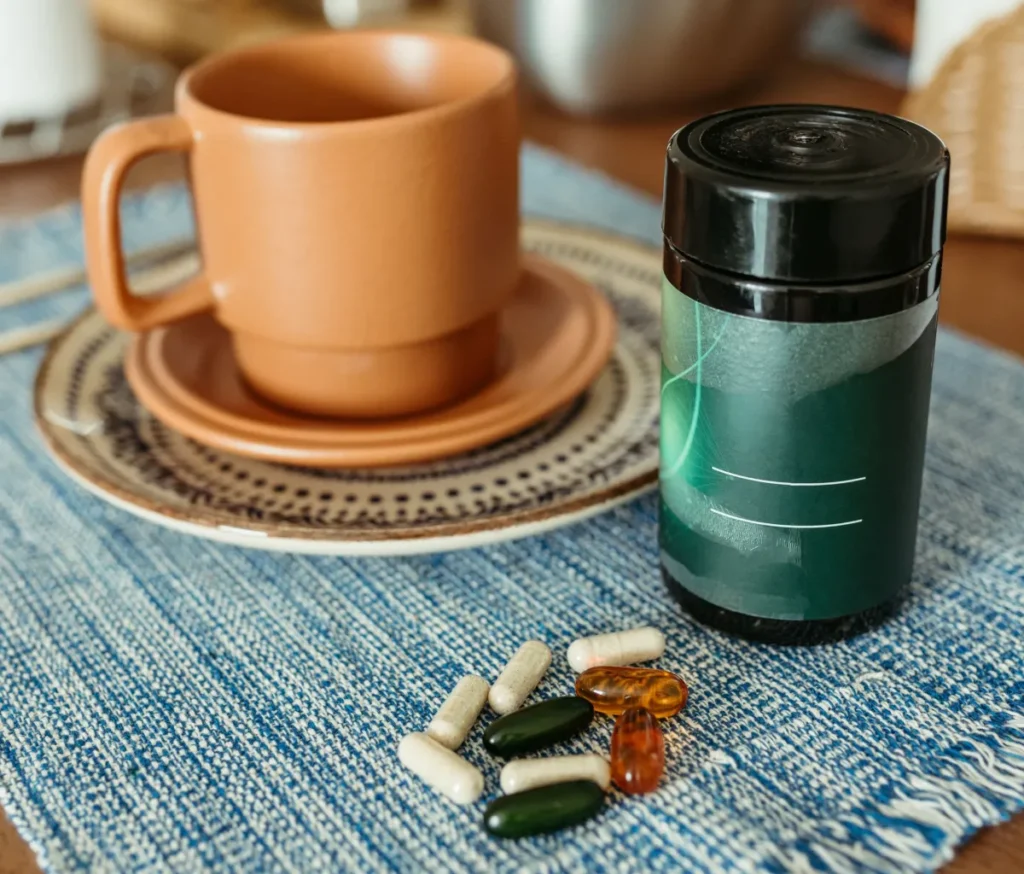
Le glycinate de magnésium, l’ashwagandha et la L-théanine sont – ce n’est pas un hasard – les trois compléments alimentaires les plus couramment pris par les personnes qui sont épuisé mais ne peut pas décompresser. L’industrie des suppléments a même un nom pour cette combinaison : le “trio calme.” Et la science derrière chacun d’eux est réelle.
Glycinate de magnésium favorise la relaxation musculaire et le GABA – le neurotransmetteur que le cerveau utilise pour ralentir l’activité. Beaucoup de gens qui courent sous l’effet d’un stress chronique en sont véritablement déficients. Ashwagandha module le cortisol au fil du temps – l’hormone du stress la plus directement responsable de cette sensation de connexion, même lorsque le corps est épuisé. L-theanine favorise une concentration calme sans sédation, réduisant ce que les gens décrivent comme du bavardage mental – le bruit de fond qui persiste même lorsque le corps est immobile.
Une méta-analyse de 2022 dans le Journal of Ethnopharmacology confirmé l’efficacité de l’ashwagandha pour la réduction du stress.
Ce ne sont pas des tendances – elles s’attaquent aux véritables déficits biochimiques créés par le stress chronique.
Avantage :
- Facile à intégrer dans n’importe quelle routine
- Aucune technique ou environnement spécial n’est requis
- Bien documenté et largement disponible
The Real Limitation:
Les suppléments agissent au niveau hormonal et neurochimique. Ashwagandha en particulier, nécessite des semaines d’utilisation régulière avant de construire un effet significatif.
Le corps peut être adéquatement supplémenté et avoir toujours un système nerveux qui traite chaque moment de calme comme quelque chose à préparer.
Quelque chose d’autre doit atteindre le système lui-même.
L’approche suivante va plus loin : travailler directement avec le système nerveux plutôt qu’avec la chimie qui le nourrit.

Méditation, applications de pleine conscience, retraites
L’approche mentale – éprouvée, mais exigeant exactement ce que vous avez épuisé
La méditation possède l’une des bases factuelles les plus solides de tout outil de gestion du stress.
Plus de 200 études évaluées par des pairs documentent les changements structurels dans le cerveau résultant d’une pratique régulière – réduction de la réactivité de l’amygdale, amélioration de la régulation émotionnelle, diminution mesurable du cortisol. Pour les personnes qui pratiquent régulièrement, cela change vraiment la façon dont le système nerveux réagit au stress au fil du temps.
Avantage :
- Bien documenté avec des décennies de preuves à l’appui
- Accessible via l’application - aucun équipement requis
- Développe la résilience à long terme du système nerveux grâce à une pratique constante
- Les retraites offrent une véritable réinitialisation en profondeur
The Real Limitation:
Le principal défi de la méditation pour les personnes qui ne peuvent pas se déconnecter est qu’elle demande d’abord de calmer l’esprit.
Mais calmer l’esprit est précisément ce que le système nerveux suractivé résiste à faire.
Beaucoup de gens trouvent que rester assis en silence intensifie les pensées qui s’emballent – parce que pour la première fois de toute la journée, il n’y a rien d’extérieur qui demande de l’attention, et l’esprit remplit l’espace.
Les applications fonctionnent le mieux lorsqu’elles sont utilisées de manière constante – ce qui peut être vraiment difficile lorsque le système nerveux est déjà affaibli.
L’approche classée au-dessus fonctionne plus près de la source, mais vient avec son propre plafond pratique.

Respiration : Respiration en boîte, 4-7-8, soupir physiologique
L’approche directe du système nerveux – puissante, avec une barrière pratique
De tout ce qui figure sur cette liste, la respiration se rapproche le plus d’une influence directe sur le système nerveux sans aucun équipement.
Le diaphragme et le nerf vague partagent une relation anatomique étroite. Une respiration lente et délibérée – en particulier une expiration plus longue qu’une inspiration – active directement le système nerveux parasympathique. Le soupir physiologique (une double inspiration suivie d’une longue expiration prolongée) a été démontré dans des recherches évaluées par des pairs à Stanford comme étant l’une des méthodes les plus rapides pour réduire le stress physiologique en temps réel.
La légende du jiu-jitsu Rickson Gracie – largement considérée comme l’un des artistes martiaux les plus complets à avoir concouru – a construit tout son système de récupération et de performance autour de la respiration. « La respiration a toujours été ma meilleure amie en tant que combattante. » Sa méthode – la respiration diaphragmatique avec un fort accent sur l’expiration – est utilisée par les athlètes d’élite et les SEAL pour la même raison : réguler à la baisse le système nerveux sous une pression soutenue.
La méthode de Wim Hof – qui combine l’hyperventilation contrôlée avec la rétention du souffle – fonctionne sur un principe similaire, utilisant des schémas respiratoires délibérés pour modifier l’état autonome.
En tant qu’ostéopathe, je travaille directement avec la mécanique de la respiration. La mobilité réduite du diaphragme et de la cage thoracique – que je vois chez presque tous les patients porteurs d’une tension chronique – peut maintenir le système nerveux en position de domination sympathique simplement parce que le corps ne peut pas respirer pleinement.
Avantage :
- Aucun équipement requis
- Influence directement le nerf vague et la variabilité de la fréquence cardiaque
- Étayé par de solides preuves examinées par des pairs
- Utilisé par les artistes d’élite dans le sport et l’armée
The Real Limitation:
La respiration nécessite un espace calme, une attention concentrée et suffisamment de calme mental pour ralentir réellement et pratiquer.
Lors d’un trajet bondé, dans un bureau décloisonné ou en milieu d’après-midi entre deux réunions – c’est rarement réaliste.
J’ai essayé la respiration en boîte entre les patients et un collègue m’a demandé si j’avais besoin d’un moment.
Ça marche aussi sur le moment. Dès que vous vous arrêtez, le système nerveux peut revenir à son état habituel. Pour une personne souffrant de dysrégulation chronique, l’effet est réel mais temporaire à moins que la base de référence sous-jacente n’ait changé.
Ce qui se classe au-dessus fonctionne à travers le corps lui-même – et envoie un autre type de signal.

Relâchement physique : Roulement de mousse, pistolet de massage, étirement, yoga, Pilates
L’approche structurelle – Ma spécialité, et où elle atteint ses limites
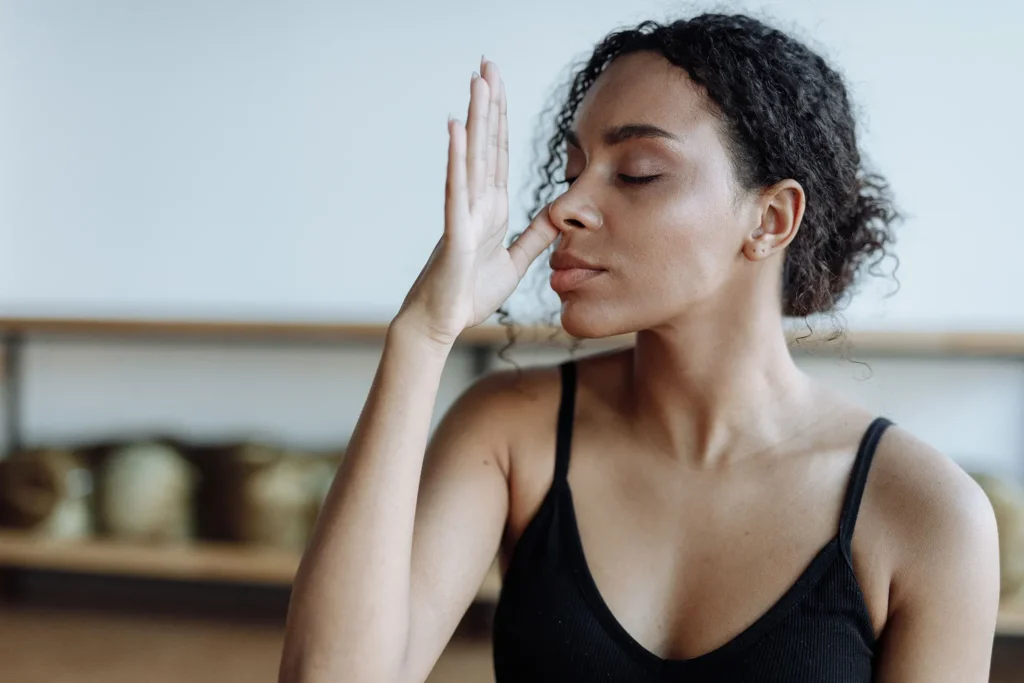
C’est le territoire où je travaille tous les jours.
Je place ce point au-dessus du travail respiratoire pour une raison : le travail respiratoire fonctionne avec le système nerveux à travers la respiration. Le relâchement physique fonctionne à travers le corps lui-même – les tissus, les fascias, les endroits où la tension vit depuis des mois sans que vous ne vous en rendiez compte. En tant qu’ostéopathe, je peux vous dire que libérer ce que le corps retient physiquement envoie un signal différent et souvent plus rapide que de changer la façon dont vous respirez.
Lorsque le système nerveux reste suffisamment longtemps en lutte ou en fuite, le corps commence à retenir physiquement les preuves.
Épaules surélevées vers les oreilles. La tension de la mâchoire – souvent pendant la nuit, produisant les douleurs faciales et les gardes de nuit usés que mes patients mentionnent lors de la première consultation. Douleur au cou et au haut du dos qu’aucun ajustement postural ne semble résoudre.
Le rolling de mousse, les pistolets de massage, le yoga, le pilates et l’étirement abordent tous directement ces manifestations physiques.
Ils relâchent les tensions accumulées dans les muscles et le fascia – et envoient différentes informations au système nerveux par l’intermédiaire du corps lui-même.
Beaucoup de patients quittent une séance nettement plus calmes, non seulement à cause de ce que j’ai fait aux muscles, mais parce que le système nerveux a reçu un signal soutenu qu’il était sûr de lâcher prise.
Avantage :
- Traite directement les endroits où le stress chronique s’accumule physiquement
- Accessible à la maison avec un équipement de base
- Le yoga et le pilates ajoutent de l’effet en combinant mouvement et respiration.
- Soulagement physique immédiat en une seule séance
The Real Limitation:
La libération physique fonctionne au niveau structurel et musculaire – elle n’atteint pas directement le système de contrôle autonome.
Un patient a une séance, se sent beaucoup mieux en sortant et revient à ses valeurs de référence en deux jours – non pas parce que le traitement a échoué, mais parce que le système sous-jacent n’a pas changé.
Les pistolets à rouler et à masser en mousse nécessitent également de la place au sol, de l’énergie et une motivation qu’il est difficile de trouver à la fin d’une journée vraiment épuisante.
Ce qui soulève la question : à quoi ressemblerait le travail au niveau du système lui-même – et non pas ce qu’il produit ?
Ce que les quatre ont en commun
Procédé | Travaille sur | Exige de vous | Changement durable |
Suppléments | Chimie du cerveau | Constance quotidienne, semaines | Partiel |
Méditation | Schémas mentaux | Concentration, calme, habitude | Partiel |
Respiration | Système nerveux (indirect) | Attention, espace calme | Temporaire |
Sortie physique | Tension musculaire | Énergie, motivation, espace | Partiel |
Nurosym AVNT™ | Système autonome (direct) | Rien | Oui |
Je veux être honnête à propos de quelque chose que j’ai mis du temps à exprimer clairement – et que la plupart des patients trouvent utile lorsqu’ils l’entendent.
Les quatre méthodes ci-dessus ont une réelle valeur. Je les utilise, je les recommande et je les ai vues aider considérablement les gens.
Mais ils partagent tous une limite : ils s’approchent indirectement du système nerveux.
Et si la raison pour laquelle rien n’a vraiment fonctionné, ce n’est pas que vous n’avez pas fait assez d’efforts – mais que tout ce que vous avez essayé s’adresse au mauvais niveau ?
Le modèle que je vois le plus souvent est celui-ci : la personne qui a déjà tout essayé sur cette liste. Qui l’a fait correctement, régulièrement et de bonne foi ? Qui a pris le magnésium chaque soir ? Qui a utilisé l’application ? Qui est allé en cours ? Qui a fait le travail de respiration jusqu’à ce qu’un collègue demande s’ils avaient besoin d’un moment ?
Et qui est allongé de toute façon ?
Ce n’est pas un problème de discipline. C’est un schéma du système nerveux. Et le système nerveux ne se réinitialisera pas simplement parce que vous le souhaitez.
Ils s’attaquent à ce que le stress chronique laisse derrière lui – la chimie épuisée, l’esprit hyperactif, la tension contenue dans le corps – sans atteindre le système qui l’a produit.
Le système nerveux autonome est principalement atteint par une voie spécifique : le nerf vague.
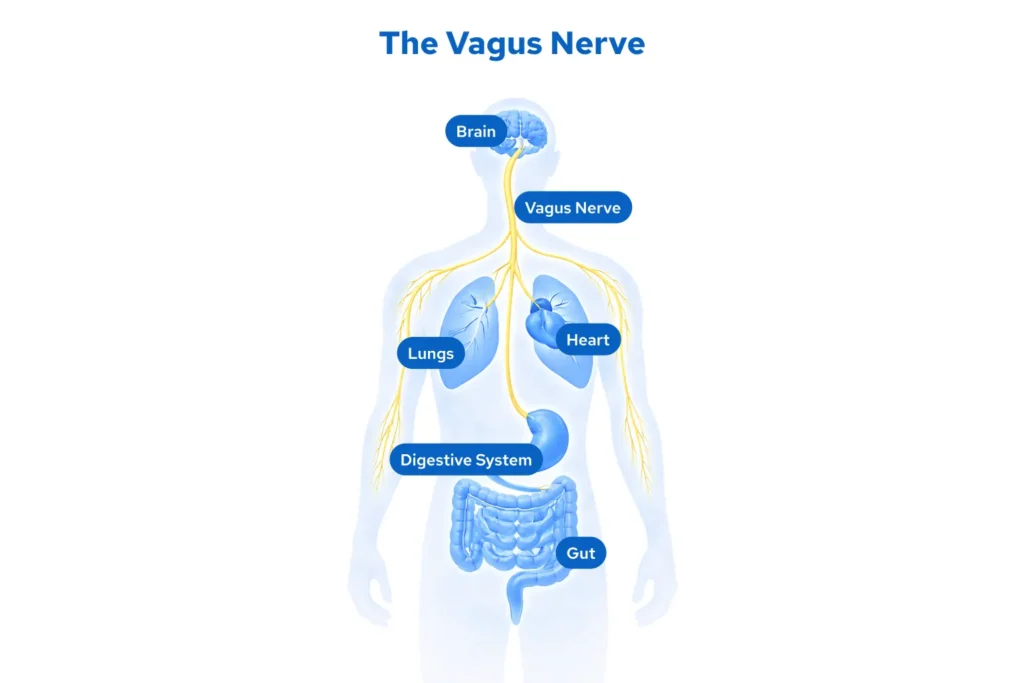
Le nerf vague (nerf crânien X) s’étend du tronc cérébral jusqu’au cou, au cœur, aux poumons et au système digestif. En termes simples, il s’agit de l’interrupteur d’arrêt principal du corps.
Lorsque le tonus vagal est bas – ce qui se développe après des périodes de pression prolongées – cet interrupteur devient plus difficile à activer. Les arrêts de travail procurent une sensation réparatrice. Le corps reste soutenu même lorsque rien ne l’exige.
Pendant longtemps, la stimulation directe du nerf vague a nécessité un dispositif implanté chirurgicalement. Cela a changé lorsque les chercheurs ont découvert qu’une branche du nerf vague s’étend près de la surface de la peau, à l’extérieur de l’oreille – rendant possible pour la première fois la stimulation transcutanée auriculaire du nerf vague (taVNS). Des impulsions électriques douces sont appliquées à l’extérieur, atteignant le nerf vague sans chirurgie ni procédure.
Lorsque j’ai rencontré pour la première fois des appareils grand public faisant cette affirmation, ma réponse a été le scepticisme. J’ai passé quatorze ans à travailler avec des corps – des clips auriculaires prétendant réinitialiser le système nerveux tombent exactement dans la catégorie que je rejetterais normalement.
Ce qui m’a fait regarder plus attentivement, c’est le volume et l’indépendance de la littérature scientifique derrière un appareil spécifique.
Les études évaluées par des pairs dans des établissements que je reconnais – King’s College London, UCL, Imperial College. Il s’agit d’une catégorie de preuves différente.
Cet appareil était Nurosym.
Ce que j’ai trouvé dans la recherche m’a empêché de le rejeter comme j’avais rejeté tout le reste dans cet espace.

Stimulation directe du nerf vague : Nurosym AVNT™
Travailler au niveau autonome
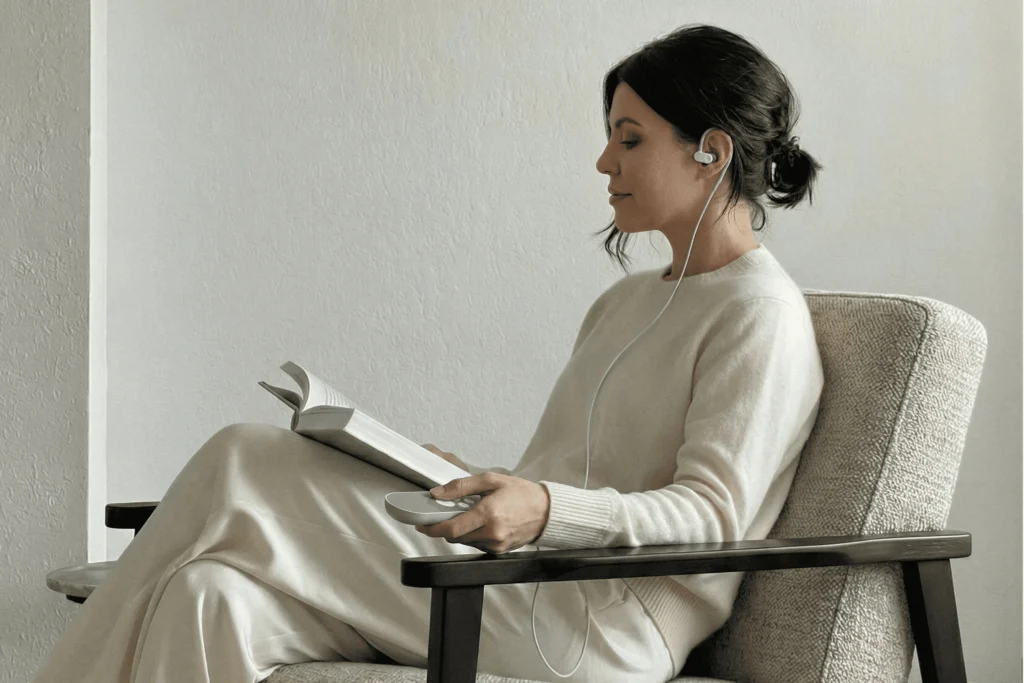
Nurosym est un système taVNS (stimulation transcutanée auriculaire du nerf vague) marqué CE device – le premier de son genre à obtenir la certification CE pour un dispositif médical de neuromodulation auriculaire vagale. La technologie qui le sous-tend est appelée AVNTTM (Auricular Vagal Neuromodulation Therapy) - une méthode brevetée développée après plus de 10 ans de recherche et développement spécifiquement pour activer le nerf vague par l’oreille externe.
Il est soutenu par plus de 60 études scientifiques indépendantes évaluées par des pairs. à travers plus de 150 institutions internationalement reconnues, notamment le King’s College de Londres, l’UCL et l’Imperial College de Londres – une profondeur de recherche spécifique aux appareils qui est inhabituelle dans cette catégorie.
Les recherches publiées ont montré :
- +61 % d’augmentation de l’activité du nerf vague dans les cinq minutes suivant une séance
- +18% d’augmentation de la VRC (Variabilité de la Fréquence Cardiaque) - une seule séance a favorablement modifié tous les paramètres par rapport au placebo
- -48 % de réduction des scores de fatigue, maintenue une semaine après l’arrêt de l’utilisation
- +30 % d’amélioration de la qualité du sommeil sur quatre semaines
- -35 % de réduction des pensées anxieuses
- -78 % de réduction des cytokines inflammatoires IL-6 (Interleukine-6)
Résultats d’études évaluées par des pairs dans des populations spécifiques. Les chiffres reflètent la variation relative par rapport au placebo ou à la valeur de référence. Les résultats individuels peuvent varier.
Ce qui la rend différente de tout le reste sur cette liste, ce n’est pas que les autres ne fonctionnent pas.
C’est ce qu’il te demande.
Toutes les autres approches de cette liste nécessitent quelque chose d’un système qui peut déjà fonctionner à vide.
- Les suppléments nécessitent de la constance et des semaines avant un effet significatif
- L’application de méditation nécessite de la concentration – précisément ce à quoi le système nerveux suractivé résiste.
- La respiration artificielle nécessite un espace calme, une attention concentrée et suffisamment de calme mental pour ralentir.
- Le rouleau en mousse nécessite de l’espace, de l’énergie et une motivation qu’il est difficile de trouver à la fin d’une journée vraiment épuisante.
Nurosym n’exige rien de tout cela.
Pas de pièce calme. Pas d’attention focalisée. Pas de technique à apprendre. Aucune motivation pour descendre du canapé.
Tu te l’attaches à ton oreille. Tu t’assieds sur le canapé. Tu regardes par la fenêtre si tu veux. Tu existes juste.
Et cela fonctionne – non pas en demandant plus à un système épuisé, mais en envoyant un signal direct à la partie du système qui contrôle le reste.
« Personnellement, j’ai trouvé deux avantages évidents. Cela m’aide à me concentrer – il y a des études qui le confirment – et quand j’ai mesuré mon HRV après les séances, la différence était claire. »
Un patient, un enseignant du secondaire avec un emploi du temps chargé et deux jeunes enfants à la maison, est revenu après trois semaines et a dit quelque chose que j’ai entendu dans des mots différents de plusieurs personnes depuis : « Je rentre chez moi et j’ai vraiment l’impression d’avoir arrêté. Je ne savais pas que j’avais oublié ce que ça faisait. »
Avantage :
- Premier dispositif de neuromodulation vagale auriculaire marqué CE
- Plus de 60 études scientifiques terminées et évaluées par des pairs
- plus de 10 ans de R&D et plus de 10000 heures de développement
- Approuvé par plus de 1000 professionnels de santé
- Plus de 5 000 000 sessions terminées à ce jour
- Aucune application requise. Pas de gel. Pas d’ordonnance.
- Peut être utilisé lors des déplacements, pour manger, lire ou se reposer
Une Considération :
Une utilisation cohérente est importante. La plupart des gens remarquent les changements dans les deux à trois semaines suivant les séances quotidiennes. Elle fonctionne bien avec les autres approches de cette liste – non pas pour les remplacer, mais comme quelque chose qui fonctionne à un niveau différent.
Personnes concernées
Peut bénéficier :
- Les personnes qui se sentent épuisées après le travail mais ne peuvent pas se détendre correctement le soir
- Ceux qui dorment suffisamment mais ne se réveillent pas reposé, ou qui présentent des tensions récurrentes dans la mâchoire, le cou ou les épaules
- Toute personne ayant des pensées qui s’emballent ou un bourdonnement de fond, que l’effort conscient seul ne peut apaiser
- Toute personne dont la boîte à outils de récupération – suppléments, travail respiratoire, méditation – a cessé de fournir les résultats qu’elle produisait autrefois.
- Des personnes dont les week-ends ne sont plus aussi réparateurs qu’avant
- Les personnes hautement performantes, les travailleurs postés, les parents et les aidants subissent une pression soutenue – le système nerveux ne fait pas la distinction entre les sources de demande.
- Toute personne qui a tout essayé sur cette liste et qui est encore allongée, éveillée
Ne pas utiliser si vous avez un stimulateur cardiaque ou un dispositif cardiaque implantable, si vous êtes enceinte, si vous avez eu récemment un événement cardiaque grave ou si vous avez moins de 18 ans. Consultez toujours un professionnel de santé qualifié avant de commencer.
Une façon sûre de l’essayer
- Garantie de remboursement de 30 jours - suffisamment de temps pour remarquer si vos soirées, votre sommeil et vos matinées semblent réellement différents
- Nombre limité de créneaux de recherche subventionnés - certains participants peuvent recevoir jusqu’à 70 € de réduction en échange du partage de leur expérience
Une dernière note d’Ashley
Les personnes que je vois qui ont le plus de mal avec cela ne sont pas en difficulté parce qu’elles manquent de discipline ou de volonté. La plupart sont des personnes très compétentes qui gèrent des demandes importantes – et les gèrent bien, de l’extérieur.
Ce que je remarque, c’est que le corps tient le score discrètement.
La tension dans la mâchoire, les épaules qui ne tombent jamais tout à fait, le sommeil qui ne se rétablit jamais tout à fait – ce ne sont pas des défauts de caractère. Ils sont un système nerveux qui fonctionne très fort depuis longtemps sans qu’on lui demande de se calmer.
La bonne nouvelle, c’est que le système nerveux n’est pas bloqué de façon permanente. Il répond. Avec le bon signal, il change.
Mais pour le changer, il faut l’atteindre – et non le contourner.
C’est la distinction qui, d’après mon expérience, fait la différence entre les approches qui aident temporairement et celles qui changent réellement le modèle.
Références
Geng D, et al. The effect of transcutaneous auricular vagus nerve stimulation on HRV in healthy young people. PLoS ONE. 2022. https://link.springer.com/article/10.1007/s10286-023-00997-z
Dasari TW, et al. Low-level tragus stimulation reduces systemic inflammation. Clinical Autonomic Research. 2023. https://pubmed.ncbi.nlm.nih.gov/36689057/
Ferstl M, et al. Non-invasive vagus nerve stimulation boosts mood recovery after effort exertion. 2021. https://www.ncbi.nlm.nih.gov/pmc/articles/PMC9693679/
Dolcini J, et al. Effects of taVNS on sleep quality: Randomised controlled trial. 2025.
Forte G, et al. Ear your heart: taVNS on heart rate variability in healthy young participants. PeerJ. 2022. https://pmc.ncbi.nlm.nih.gov/articles/PMC9638401/
Arumugam, et al A meta-analysis of ashwagandha for anxiety and stress. EXPLORE. 2024
https://www.sciencedirect.com/science/article/abs/pii/S1550830724001691
Farmer AD, et al. International consensus based review on taVNS. Frontiers in Human Neuroscience. 2021. https://www.frontiersin.org/articles/10.3389/fnhum.2020.568051/full
Zheng S, et al. taVNS reduces anxiety scores in a controlled study population. Brain Stimulation. 2024.
Gracie R. Breathe: A Life in Flow. 2021.
This article reflects my professional evaluation of the evidence and experience. I may receive a referral arrangement from purchases made through links in this article. This is not medical advice – always consult a qualified health professional before starting any new intervention. Individual results may vary.

 French
  English
  German
  Spanish
  Swedish
  Italian