
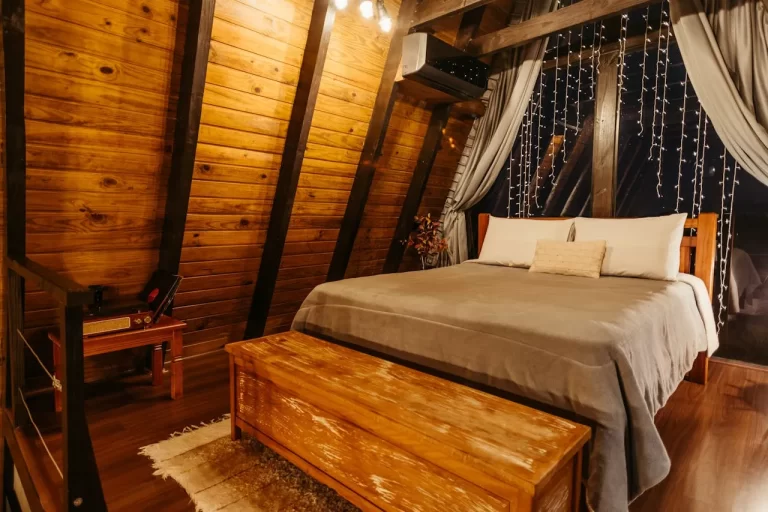
Points clés
- Sleep tourism is a fast-growing wellness trend offering curated travel experiences designed to improve sleep quality.
- Luxury hotels and retreats now feature sleep-focused programs including circadian lighting, noise-blocking design, aromatherapy, and coaching.
- Scientific evidence supports the importance of sleep for mental and physical health, with chronic tiredness linked to mood issues, memory lapses, and weakened immunity.
- Early research and user reports suggest sleep tourism may offer relief, though long-term benefits depend on follow-through at home.
Sleep Is the New Status Symbol
Forget red-eye flights and jam-packed itineraries—today’s luxury traveller is chasing something far rarer: a full night’s sleep.
Across the globe, high-end resorts and boutique hotels are redefining what it means to get away. Instead of chasing adventure or indulgence, these destinations promise deep, uninterrupted rest—complete with soundproof rooms, circadian lighting, and custom sleep therapies. It’s a growing phenomenon known as sleep tourism, and it’s quickly becoming a hallmark of wellness-forward travel.
In an age where burnout is common and chronic tiredness is normalised, sleep has become a form of self-care—and increasingly, a status symbol.
This shift reflects a broader cultural trend: valuing rest as a marker of well-being and productivity rather than laziness.
Rising Demand for Rest in a Burned-Out World
Sleep problems are now widespread. The CDC estimates that 1 in 3 U.S. adults doesn’t get enough sleep on a regular basis, and insufficient rest is linked to a range of serious health issues—including anxious thoughts, depressive states, blood sugar regulation problems, and heart problems.
The post-pandemic landscape has amplified these challenges. More people are experiencing post-viral tiredness, disrupted circadian rhythms, and screen-induced overstimulation. A recent questionnaire-based study found that screen exposure and lifestyle disruption during the COVID-19 pandemic were associated with deteriorating sleep quality worldwide.
Defining Sleep Tourism and Its Roots
Sleep tourism refers to purpose-driven travel experiences that centre on optimising sleep. While rest has always played a role in vacationing, the intentional design of travel programs specifically to improve sleep quality is relatively new.
The concept began gaining traction in the 2010s, as wellness travel grew into an $800+ billion industry. By 2020, global uncertainty, work-from-anywhere culture, and rising stress levels accelerated the trend. Today, sleep-focused travel experiences range from luxury retreats to urban hotels offering tailored rest environments. And what began as niche wellness experimentation has evolved into a mainstream travel category.
The Physiology Behind Restorative Sleep
Sleep is an essential biological process—not passive downtime. During sleep, the brain consolidates memories, regulates mood, and clears metabolic waste through the glymphatic system. The body, meanwhile, repairs tissue and balances key hormones like cortisol and melatonin.
Even modest sleep loss can impair cognitive performance and emotional regulation. A systematic review and meta-analysis of over 50 years of experimental research highlights that chronic sleep disruption affects attention, memory, immune resilience, and emotional reactivity.
Sleep quality is influenced by several factors:
- Light exposure (especially blue light)
- Ambient noise and silence
- Room temperature and air quality
- Stress load and mental stimulation
- Mattress and pillow comfort
Sleep-focused destinations aim to optimise these variables.
Inside the Sleep Retreat Experience
Hotels and wellness retreats are increasingly building entire programs around sleep health. These experiences combine environmental design, therapeutic techniques, and personalised coaching to create an optimal set-up for rest.
Top Destinations and Features in Sleep Tourism
Some of the most innovative global offerings include:
- Six Senses (Global) – Their “Sleep with Six Senses” program features sleep tracking, customised advice, and organic mattresses.
- Equinox Hotel (New York) – Rooms feature blackout blinds, temperature-regulated bedding, and soundproofing—designed with circadian alignment in mind.
- Park Hyatt New York – Partners with Bryte to offer AI-powered smart beds that adjust firmness and temperature through the night.
- Zedwell Hotels (London) – A hotel chain built entirely around sleep, with minimalist, windowless “cocoons” that eliminate noise and blue light.
- Lanserhof Tegernsee (Germany) – Offers medical-grade sleep diagnostics, wearable tracking, and health coaching in a luxury spa setting.
Common features found in sleep retreats:
- Circadian lighting systems
- Aromatherapy using calming essential oils
- White noise machines and acoustic insulation
- Breathwork and guided meditation
- Nutritional strategies for sleep support
- Smart mattresses and sleep-tracking wearables
User Profiles and Travel Motivations
Sleep tourism now attracts a wide range of travellers. Research shows that women in midlife (roughly 35–60 years) report significantly higher rates of sleep disruption, often linked to hormonal transitions such as perimenopause, as well as cumulative stress and mental tiredness. This makes them one of the groups most likely to seek structured sleep-focused recovery.
Other common user groups include:
- High-performing professionals experiencing burnout
- Parents of infants and toddlers looking to reset
- Biohackers focused on cognitive performance and longevity
- Older adults managing post-viral tiredness
For many of these travellers, sleep-focused trips aren’t simply restorative—they serve as preventive health interventions.
Emerging Evidence and Limitations
While research into sleep tourism is still early-stage, initial findings are encouraging. A 2021 pilot study examining a 4-day meditation retreat with 413 participants found significant improvements in both sleep quality and sleep duration for at least 40 days after the experience. Similarly, another 2024 study observed reduced sleep latency and improved mood scores among attendees of a structured sleep program.
However, experts caution that these effects may not last unless healthy sleep routines are sustained at home. As Dr. Matthew Walker, neuroscientist and author of Why We Sleep, notes: “You can’t ‘bank’ sleep on vacation. It must be prioritised consistently”.
Sleep-Enhancing Strategies for Everyday Travellers
Not staying at a sleep resort? You can still travel with rest in mind.
Simple upgrades that support sleep on the go:
- Request quiet rooms, away from elevators and street-facing sides.
- Use a white noise app to block disruptive sounds.
- Bring an eye mask and essential oils like lavender or chamomile.
- Avoid caffeine and heavy meals late at night.
- Stick to a regular bedtime, even across time zones.
- Practice 15–30 minutes of screen-free wind-down time before sleep.
- Expose yourself to natural morning light to help reset your circadian rhythm while travelling.
These techniques can help bridge the gap between luxury-level rest and daily sleep wellness.
Reframing Sleep as Essential, Not Optional
As sleep tourism gains momentum, it’s doing more than offering plush pillows and blackout curtains. It’s reframing the way we value rest—as a cornerstone of health rather than a luxury or afterthought.
While sleep retreats aren’t a universal fix, they send a powerful message: prioritising sleep isn’t indulgent—it’s essential. For many, a sleep-focused getaway is the first step in reclaiming control over their well-being, one restful night at a time.
In the long run, the real transformation happens not on vacation, but in the habits people bring back home.
Etapes suivantes
Restore your sleep. Restore your life.
Cet article de blog vise à être informatif et ne doit pas remplacer les conseils de santé professionnels. Toujours consulter un professionnel de santé pour des conseils personnalisés.
Sources
- CDC. 1 adulte sur 3 ne dort pas assez [Internet]. CDC. 2016. Disponible à : https://archive.cdc.gov/www_cdc_gov/media/releases/2016/p0215-enough-sleep.html
- Moavero R, Di Micco V, Forte G, Voci A, Mazzone L, Valeriani M, et al. Screen exposure and sleep: How the COVID-19 pandemic influenced children and adolescents – A questionnaire-based study. Sleep Medicine [Internet]. 2023 Jul 1;107:48–54. Available from: https://www.sciencedirect.com/science/article/pii/S1389945723001399
- Reddy OC, van der Werf YD. The Sleeping Brain: Harnessing the Power of the Glymphatic System through Lifestyle Choices. Brain Sciences [Internet]. 2020 Nov 17;10(11):868. Available from: https://www.ncbi.nlm.nih.gov/pmc/articles/PMC7698404/
- Palmar CA, Bower JL, Cho KW, Clementi MA, Lau S, Oosterhoff B, et al. Sleep Loss and Emotion: A Systematic Review and Meta-Analysis of Over 50 Years of Experimental Research [Internet]. Apa.org. 2024. Available from: https://www.apa.org/pubs/journals/releases/bul-bul0000410.pdf
- Zeng LN, Zong QQ, Yang Y, Zhang L, Xiang YF, Ng CH, et al. Gender difference in the prevalence of insomnia: A meta-analysis of observational studies. Frontiers in Psychiatry [Internet]. 2020 Nov 20;11. Available from: https://www.ncbi.nlm.nih.gov/pmc/articles/PMC7714764/
- Kanchibhotla D, Parekh SG, Harsora P, Kulkarni S. Improvements in Sleep Quality and Duration Following a Meditation Retreat: an Open-Trial Pilot Study. Sleep and Vigilance. 2021 Sep 1;
- Urbanová L, Vaníček O, Červená K, Bartoš A, Evansová K. The impact of sleep education, light intervention and relaxation on sleep and mood in the elderly. Chronobiology International. 2024 Apr 11;1–10.



 French
  English
  German
  Spanish
I’ve done spa retreats before, but a sleep retreat sounds way more valuable long-term.
Love the idea that sleep is becoming a status symbol — finally something healthy to aspire to.