

Nurosym is a CE-marked, non-invasive vagus nerve stimulation device that has been studied for its effects on heart rate variability (HRV), a widely used marker of autonomic nervous system activity and stress regulation.


Understanding HRV and Vagus Nerve Stimulation
Nurosym is a portable vagus nerve stimulation device with published scientific research examining its effects on heart rate variability (HRV).
Heart rate variability—the variation in time between your heartbeats—is the most validated measure of how well your nervous system handles stress.
Higher HRV means better stress resilience, faster recovery, and improved overall health. Lower HRV is associated with impaired stress regulation and correlates with increased risk of adverse health outcomes, including cardiovascular disease, cognitive decline, and reduced longevity.
Nurosym delivers direct vagal nerve stimulation through precise electrical signals, activating the primary neural pathway that regulates heart rate variability.
- Validated through 50+ completed research studies and over 4 million user sessions, demonstrating measurable, reproducible HRV improvements.
- CE marking indicates compliance with European safety and manufacturing standards for wearable devices.
- Développé grâce à un investissement de recherche de 10 millions de dollars with Chicago University Medical School, UCLA, Imperial College London, and 100+ research institutions.
- The most researched wearable vagus nerve device available, establishing the gold standard for non-invasive HRV optimisation.
« Parmi des dispositifs de bien-être similaires, il se distingue par sa solide fondation de recherche et un design convivial.
– DEREK, US
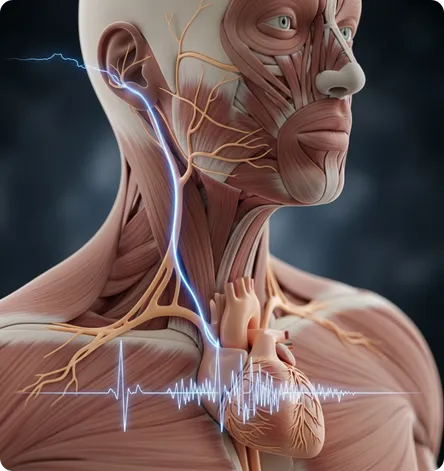

Direct Pathway to Cardiac Autonomic Control
Your HRV is controlled by your autonomic nervous system—specifically the balance between your sympathetic (stress) and parasympathetic (recovery) branches.
Your vagus nerve is the primary parasympathetic pathway to your heart.
When your vagus nerve activates, it releases signals that slow your heart rate and increase the natural variation between beats. This vagal influence on your heart creates HRV. Stronger vagal tone equals higher HRV.
Nurosym delivers precisely calibrated electrical signals to your vagus nerve through your ear. This activates the direct neural pathway from your brainstem to your heart’s pacemaker cells, immediately increasing parasympathetic influence and HRV.
- Targets the auricular branch of your vagus nerve, the most accessible and effective location for non-invasive HRV optimisation
- Activates the direct vagal pathway to your heart, producing parasympathetic cardiac control.
- Works through the brainstem autonomic centres that regulate the balance between your heart's stress and recovery systems.
- Améliore considérablement l’activité du système nerveux parasympathique with measurable changes in HRV markers appearing within one hour in controlled study settings (statistically significant in select studies, p=0.002), with effects lasting 2-4 hours after each session.
« Cela m’aide à atteindre un état de tranquillité similaire à la méditation. Le changement est subtil, mais je remarque que je me sens plus à l’aise.”
– TOM, UK


To Support Parasympathetic Activity and Restore Balance
Chronic stress, poor sleep, sedentary lifestyle, and ageing all reduce your HRV by shifting your nervous system toward sympathetic dominance.
When your sympathetic (stress) system is overactive, and your parasympathetic (recovery) system is suppressed, HRV drops.
Low HRV reflects this imbalance—your heart is stuck in a rigid pattern dominated by stress activation, lacking the flexible variability that comes from strong parasympathetic influence.
Vagus nerve stimulation shifts this balance by directly enhancing parasympathetic activity.
This doesn’t just temporarily calm you—it may actively influence autonomic regulation toward better baseline balance.
- Reduces sympathetic overactivation by enhancing inhibitory pathways that calm your stress response system.
- Increases parasympathetic tone through direct vagal pathway activation, restoring the "brake" on your stress system.
- Improves autonomic flexibility, the ability to shift appropriately between stress and recovery modes.
« Parce que ... de mon lieu de travail, à cause d’un stress vraiment élevé... J’ai eu un reflux sévère. La pression constante pour fournir plus de travail a détruit mon organisme. Chaque fois que je mettais l’appareil, je pouvais libérer la tension de mon système nerveux.
– JAKUB, UK
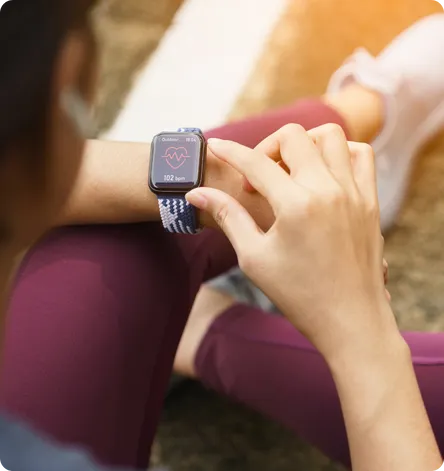

For Measurable, Trackable Nervous System Improvement
One of HRV’s most powerful advantages is that you can measure it. Consumer wearables like Oura Ring, WHOOP, Apple Watch, Garmin, and Polar devices provide daily HRV data, giving you objective feedback on your nervous system health.
This makes HRV the ultimate biomarker for tracking the effectiveness of any health intervention. Unlike subjective measures (“I feel better”), HRV gives you concrete numbers showing whether your nervous system is actually improving.
Nurosym produces measurable HRV changes you can see on your device. This provides objective validation that the intervention is working—and motivates continued use.
- Benefits can be tracked with all major consumer wearables for standardised HRV analysis (Oura Ring, WHOOP, Apple Watch, Garmin, Polar H10, and others).
- Produces measurable physiological changes within one hour of use, with statistically significant improvements in nervous system markers (p=0.002) and effects lasting 2-4 hours after each session.
- Delivers cumulative baseline improvements observable over weeks as your nervous system adapts and strengthens.
- Enables data-driven optimization allowing you to track which protocols, timing, and duration produce your best HRV improvements.
- Provides objective biofeedback connecting your daily sessions to measurable health outcomes.
« Quand je n’obtenais pas un sommeil assez profond et réparateur, cela a eu un impact sur mon humeur et ma routine quotidienne. Nurosym a complètement transformé ma façon de me reposer.
– DANIEL, WALES
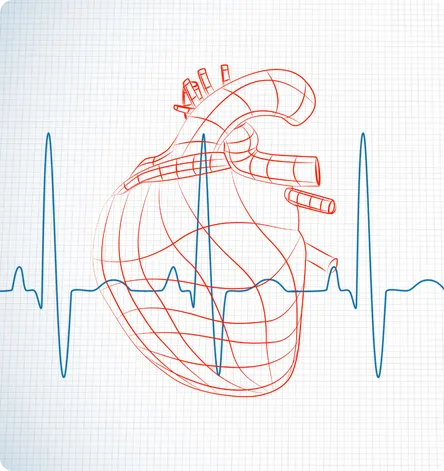

To Support Cardiovascular Health and Longevity
Low HRV is one of the strongest predictors of cardiovascular disease, all-cause mortality, and adverse cardiac events.
Research consistently shows that individuals with higher HRV live longer and have a significantly lower risk of heart disease, heart attack, and sudden cardiac death.
Your HRV reflects the health of your cardiac autonomic nervous system—the neural regulation keeping your heart functioning optimally.
When this regulation is impaired (low HRV), your heart loses protective flexibility and becomes more vulnerable to arrhythmias and cardiovascular stress.
Changes in HRV are associated with cardiac autonomic regulation; however, improvements in HRV should not be interpreted as prevention or therapy of cardiovascular disease.
- Low HRV independently predicts cardiovascular disease risk even after controlling for traditional risk factors like blood pressure and cholesterol.
- Higher HRV associates with reduced all-cause mortality across multiple large-scale population studies.
- HRV improvement indicates enhanced cardiac autonomic function, nervous system regulation, protecting your heart.
- Vagal stimulation has been associated with improvements in heart rate recovery and autonomic regulation, which may support cardiovascular resilience.
- Measurable HRV increases reflect improved cardiovascular resilience, providing objective evidence of heart health optimisation.
“Honnêtement, j’ai remarqué un changement si positif. J’ai beaucoup moins de jours où je me sens trop vidé pour suivre ma routine quotidienne.
– FRANCESCA, UK
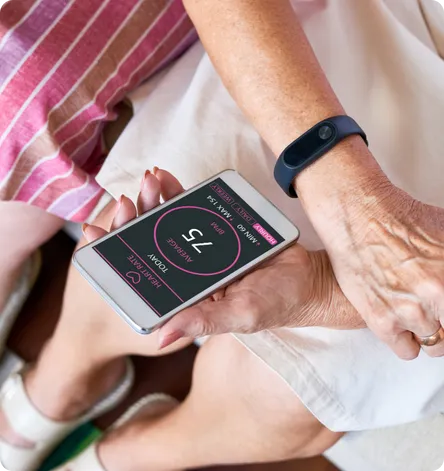

For Improved Stress Reactivity and Recovery Speed
HRV isn’t just about your resting baseline—it’s also about how quickly your HRV drops during stress and how fast it recovers afterwards.
Individuals with good stress resilience show rapid HRV recovery following challenges. Poor recovery indicates impaired stress regulation.
This HRV recovery kinetics—how quickly you bounce back—is a critical marker of nervous system health and predicts both physical and mental health outcomes.
Vagus nerve stimulation enhances both aspects: reducing excessive HRV drops during stress and accelerating recovery afterwards. This means you handle stressors more efficiently and return to baseline faster.
- Reduces excessive HRV suppression during stress by maintaining parasympathetic buffering capacity even under pressure.
- Accelerates post-stress HRV recovery, enabling faster return to balanced autonomic function after challenges.
- Improves stress-recovery cycles, allowing you to handle multiple stressors without progressive autonomic depletion.
- Enhanced recovery kinetics predict better health outcomes in both cardiovascular and mental health domains.
- Measurable improvements in HRV recovery are observable within weeks of consistent use.
“Depuis que j’ai commencé à l’utiliser, j’ai remarqué une amélioration significative de la façon dont je me sens globalement. Cela fait maintenant trois mois, et j’espère que des changements encore plus positifs—c’est certainement un pas dans la bonne direction.
– TERRY, UK


To Optimise Athletic Performance and Recovery
Elite athletes and performance-focused individuals increasingly use HRV as their primary training optimisation tool.
Higher HRV indicates readiness to train hard; lower HRV signals insufficient recovery requiring rest or lighter training.
Athletes with higher average HRV demonstrate better endurance, faster recovery between training sessions, reduced injury risk, and improved adaptation to training stress. Many professional sports teams now make HRV-guided training decisions.
Vagus nerve stimulation offers athletes a tool to actively improve HRV rather than simply monitoring it. This accelerates recovery, enhances training adaptation, and maintains higher baseline readiness.
- Higher HRV correlates with superior athletic performance across endurance, strength, and skill-based sports.
- HRV-guided training reduces overtraining risk by providing an objective recovery status assessment.
- Vagal stimulation accelerates post-exercise recovery by enhancing parasympathetic reactivation after training stress.
- Improved HRV baseline enables higher training volume by maintaining autonomic capacity for adaptation.
- Used by elite athletes and performance professionals as an active recovery tool and HRV optimisation strategy.
« Je cherchais un moyen de mieux naviguer dans les défis saisonniers. J’avais essayé des séances d’entraînement et des applications de méditation, mais j’ai découvert Nurosym, et j’ai remarqué des changements en seulement quelques semaines. Je me sens plus équilibré et mieux équipé pour gérer les pressions quotidiennes.”
– TIJANA, US


For Sleep Quality Improvement Through HRV Enhancement
HRV during sleep provides critical insight into sleep quality and recovery effectiveness. During deep, restorative sleep, your HRV should be high, reflecting strong parasympathetic dominance. Low HRV during sleep indicates insufficient recovery—your nervous system isn’t fully relaxing.
Many sleep disorders and poor sleep quality manifest as suppressed nocturnal HRV. Improving your ability to achieve high HRV during sleep directly enhances sleep’s restorative benefits.
Vagus nerve stimulation before sleep enhances the parasympathetic activation necessary for sleep initiation and maintenance, producing higher nocturnal HRV and improved sleep architecture.
- High nocturnal HRV indicates quality restorative sleep, reflecting proper parasympathetic dominance during rest.
- Pre-sleep vagal stimulation facilitates sleep initiation by accelerating the autonomic shift necessary for sleep onset.
- Enhanced parasympathetic activity during sleep produces higher HRV throughout the night and deeper sleep stages.
- 31% d’amélioration des scores de qualité du sommeil as measured by the Pittsburgh Sleep Quality Index over 4 weeks (p < 0.05).
- Better sleep produces higher daytime HRV, creating a positive cycle of improved recovery and daytime resilience.
« J’ai remarqué des indicateurs de récupération améliorés suivis par mon appareil de fitness et un plus grande capacité à rester concentré or train for extended periods.”
– HENRY, UK

To Support Cognitive Function Through the HRV-Brain Connection
Emerging research reveals strong connections between HRV and cognitive performance. Higher HRV associates with better executive function, faster processing speed, improved working memory, and enhanced emotional regulation.
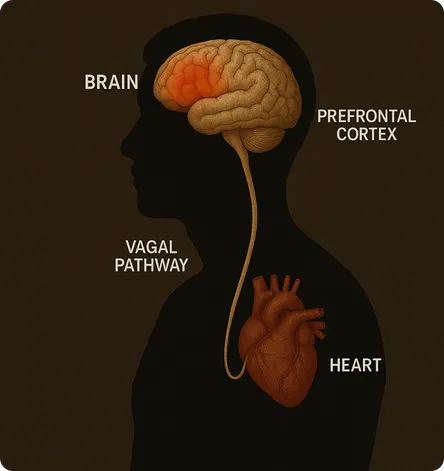
The vagal pathway connecting your heart and brain enables bidirectional communication—your HRV both reflects and influences your brain function. Low HRV predicts cognitive decline, while HRV improvement corresponds with cognitive enhancement.
This heart-brain connection means HRV optimisation through vagal stimulation provides cognitive benefits beyond simple stress reduction.
- Higher HRV correlates with superior cognitive performance, particularly in executive functions requiring attentional control.
- Low HRV predicts cognitive decline and dementia risk in longitudinal ageing studies.
- The vagal pathway enables heart-brain communication, with HRV reflecting the integrity of this connection.
- HRV improvement is associated with cognitive enhancement in attention, memory, and executive function domains.
- Vagal stimulation produces both HRV and cognitive improvements through shared neural pathways.
« Parfois, je le mets en lisant, et Je trouve que cela m’aide à rester concentré, même sur des morceaux d’écriture plus difficiles.
– YVONNE, UK


As Objective Biofeedback for Overall Health Optimisation
HRV serves as a “master biomarker”—a single metric that integrates information from multiple physiological systems. Your HRV reflects your cardiovascular health, stress system function, sleep quality, recovery capacity, metabolic health, and inflammatory status simultaneously.
This makes HRV the ideal biomarker for tracking overall health optimisation efforts. When HRV improves, it signals that multiple systems are improving together. When HRV declines, it provides an early warning of health deterioration.
Nurosym allows you to actively optimise this master biomarker, creating measurable improvements that cascade across multiple health domains.
- HRV integrates information from multiple physiological systems, providing a holistic health status indicator.
- HRV improvement reflects multi-system health enhancement, including cardiovascular, metabolic, inflammatory, and stress regulation.
- HRV provides early warning of health issues declining before other symptoms appear.
- Objective tracking enables optimization showing which interventions (diet, exercise, sleep, stress management) produce real improvements.
- HRV optimisation creates cascading benefits as improved autonomic function supports every physiological system.
« Je fais souvent face à une tension la nuit qui affecte mon visage et ma tête, mais j’ai commencé à remarquer une différence—ça a été un changement positif, même dans la façon dont je me sens physiquement.”
– HOGAN, US


For Long-Term Health Span and Resilience
HRV naturally declines with ageing, reflecting a progressive reduction in autonomic nervous system flexibility.
However, individuals who maintain higher HRV as they age demonstrate better health span—more years of healthy, functional life with reduced disease burden.
Higher HRV in older adults predicts lower mortality risk, reduced cardiovascular events, better cognitive function, and maintained physical capacity. Essentially, HRV is one of several physiological markers associated with autonomic function and ageing.
Maintaining and improving HRV through vagus nerve stimulation represents an anti-ageing intervention targeting the autonomic nervous system—one of the fundamental systems governing longevity.
- HRV decline with ageing reflects autonomic nervous system deterioration, one of the hallmarks of biological ageing.
- Higher HRV in older adults predicts an extended health span with more years of healthy function.
- Maintaining HRV slows biological ageing by preserving the autonomic nervous system capacity.
- Vagal stimulation actively improves HRV even in older individuals, potentially slowing autonomic ageing.
- HRV represents a modifiable longevity biomarker; unlike genetic factors, HRV can be improved through targeted intervention.
« Un professionnel m’a dit qu’ils n’étaient pas sûrs de ce qui causait mes défis, mais une approche à long terme a été suggérée. J’ai commencé à chercher des moyens de subvenir à mes besoins et j’ai découvert le Nurosym.
– TREVOR, UK
Proposed Mechanisms of Auricular Vagus Nerve Stimulation
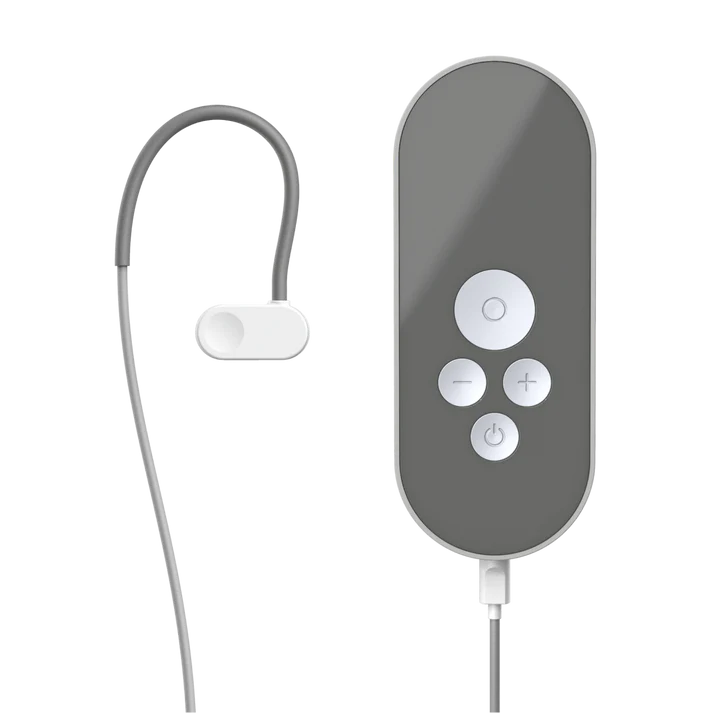
Auricular Vagal Neuromodulation Therapy (AVNT™) — Nurosym’s proprietary protocol developed with the University of Chicago, UCLA, Imperial College London, and 60+ research institutions, specifically validated for HRV optimisation across 4+ million supervised sessions.
Comment ça fonctionne :
Your HRV is created by your vagus nerve’s influence on your heart. When your vagus nerve is active, it releases signals that slow your heart rate and create variation between beats. Stronger vagal activity = higher HRV.
Nurosym delivers precisely calibrated electrical signals to your vagus nerve through your ear, activating the direct pathway that increases HRV:
- Peripheral Activation: Electrical stimulation activates vagal nerve fibres in your ear’s cymba conchae—the optimal location for HRV enhancement.
- Brainstem Transmission: Signals travel to the nucleus tractus solitarius (NTS)—your primary autonomic control centre.
- Cardiac Vagal Pathway Activation: The NTS connects to the dorsal motor nucleus and nucleus ambiguus—the brainstem centres that send vagal signals directly to your heart.
- Heart Pacemaker Modulation: Vagal signals reach your sinoatrial node (heart’s pacemaker), increasing parasympathetic influence and creating greater beat-to-beat variability.
- Autonomic Balance Restoration: Simultaneously reduces sympathetic overactivation while enhancing parasympathetic tone.
- HRV Optimisation: The result is measurably increased in multiple validated HRV metrics in research settings.
Measurable Outcome: Immediate HRV increases are observable within minutes, plus cumulative baseline improvements developing over weeks of consistent use.
These pathways are based on current neurophysiological models and may vary between individuals.
Acute HRV Effects:
- Immediate measurable changes in heart rate variability patterns are observable through standard HRV analysis during and after sessions.
- Sustained vagal activation with HRV elevation continues for hours after stimulation ends.
Cumulative HRV Improvements:
- Significant increases in time-domain HRV metrics, including SDNN (standard deviation of normal-to-normal intervals)—the measure of overall autonomic health—across multi-week intervention periods.
- Significant increases in RMSSD (root mean square of successive differences)—the validated measure of parasympathetic activity.
- Improved LF/HF ratio indicating better autonomic balance, with statistically significant favourable shifts demonstrated in placebo-controlled studies (p=0.002).
- Enhanced stress reactivity and recovery avec une récupération accélérée de la HRV suite à des facteurs de stress.
Multi-System Benefits Validated in Scientific Studies:
- 35% reduction in anxious thoughts symptoms as measured by validated BURNS. Anxious Thoughts Inventory within 10 days, with sustained improvements at one-month follow-up (p < 0.001.
- 31% d’amélioration des scores de qualité du sommeil using the Pittsburgh Sleep Quality Index over 4 weeks (p < 0.05).
- 48% reduction in fatigue severity as measured by Pichot Fatigue Scale within 10 days (p < 0.0001), with sustained improvements maintained after therapy completion.
- Significantly reduces inflammatory markers, including IL-6, in randomised placebo-controlled studies over 3 months, correlating with improvements in fatigue, cognitive function, and stress resilience.
- Améliore considérablement l’attention et le contrôle inhibiteur as measured by validated cognitive testing, with measurable gains within 10 days (p < 0.01) and sustained improvements at one-month follow-up (p < 0.001).
Real-World Effectiveness:
- Plus de 4 millions de sessions utilisateur completed worldwide.
- Users reporting scientifically meaningful improvements in stress resilience, recovery capacity, or overall health.
- High adherence rates facilitated by objective biometric feedback showing measurable progress.
- Benefits can be tracked with all major consumer wearables, including Oura Ring, WHOOP, Apple Watch, Garmin devices, and Polar H10, enabling users to track their personal HRV improvements in real-time.
These HRV improvements are associated with markers of improved stress resilience, recovery capacity, and autonomic regulation.
For individuals seeking evidence-based HRV optimisation—whether for performance enhancement, health span extension, stress resilience, or cardiovascular protection—Nurosym represents the most thoroughly validated, measurable intervention available.
Track your progress objectively. Optimise the biomarker that matters most. Build a more resilient nervous system.
Nurosym is a CE-marked Class IIa wearable device. Scientifique outcomes represent average results from controlled studies and real-world effectiveness analyses. Individual responses vary. The device is intended for general wellness and autonomic function optimisation; it is not intended to diagnose, treat, cure, or prevent any disease. Users with pacemakers, arrhythmias, or other significant medical symptoms should consult healthcare providers before use. HRV measurements and interpretations should not replace professional medical advice.
Cet article de blog vise à être informatif et ne doit pas remplacer les conseils de santé professionnels. Toujours consulter un professionnel de santé pour des conseils personnalisés.
Sources
- Machetanz K, Berelidze L, Guggenberger R, Gharabaghi A. Transcutaneous auricular vagus nerve stimulation and heart rate variability: Analysis of parameters and targets. Autonomic Neuroscience. 2021 Oct;102894.
- Forte G, Favieri F, Leemhuis E, Cristina M, Giannini AM, Gennaro LD, et al. Ear your heart: transcutaneous auricular vagus nerve stimulation on heart rate variability in healthy young participants. 2022 Nov 21;10:e14447–7.
- Kaduk K, Petrella A, Müller SJ, Koenig J, Kroemer NB. Non‐Invasive Auricular Vagus Nerve Stimulation Decreases Heart Rate Variability Independent of Caloric Load. Psychophysiology [Internet]. 2025 Feb 1;62(2). Available from: https://pmc.ncbi.nlm.nih.gov/articles/PMC11862327/
- Gianlorenço AC, Pacheco-Barrios K, Daibes M, Camargo L, Choi H, Song JJ, et al. Age as an Effect Modifier of the Effects of Transcutaneous Auricular Vagus Nerve Stimulation (taVNS) on Heart Rate Variability in Healthy Subjects. Journal of Clinical Medicine. 2024 Jul 22;13(14):4267–7.
- Soltani D, Azizi B, Sima S, Tavakoli K, Negin, Vahabie AH, et al. A systematic review of the effects of transcutaneous auricular vagus nerve stimulation on baroreflex sensitivity and heart rate variability in healthy subjects. Clinical autonomic research. 2023 Apr 1;33(2):165–89.
- Wu ML, Hu DM, Wang JJ, Liu XL, Liu L, Li Y, et al. Pre- and postoperative heart rate variability and vagus nerve stimulation in patients with drug-resistant epilepsy – A meta-analysis. Epilepsy & Behavior. 2021 Oct;123:108247.
Partager cet article :



 French
  English
  German
  Spanish