
Un VFC plus élevé signifie une meilleure résilience au stress, un sommeil plus profond et une récupération plus rapide. Voici ce qui fonctionne réellement et ce que la science dit.

Pourquoi votre VFC compte plus que vous ne le pensez
Si vous suivez la variabilité de votre rythme cardiaque, vous savez déjà quelque chose d’important : votre corps essaie de vous dire quelque chose.
Peut-être que votre VFC est à la baisse depuis des semaines. Ou peut-être avez-vous remarqué qu’elle chute après des journées stressantes, un mauvais sommeil ou des entraînements intenses. Vous ne l’imaginez pas, ces schémas sont de vrais signaux de votre système nerveux.
La variabilité de la fréquence cardiaque mesure les petits changements dans le temps entre vos battements cardiaques. Lorsque cette variabilité est élevée, cela signifie que votre corps peut s’adapter. Il peut passer du « mode de fonctionnement » au « mode repos » en douceur. Il se rétablit plus rapidement et gère mieux le stress.
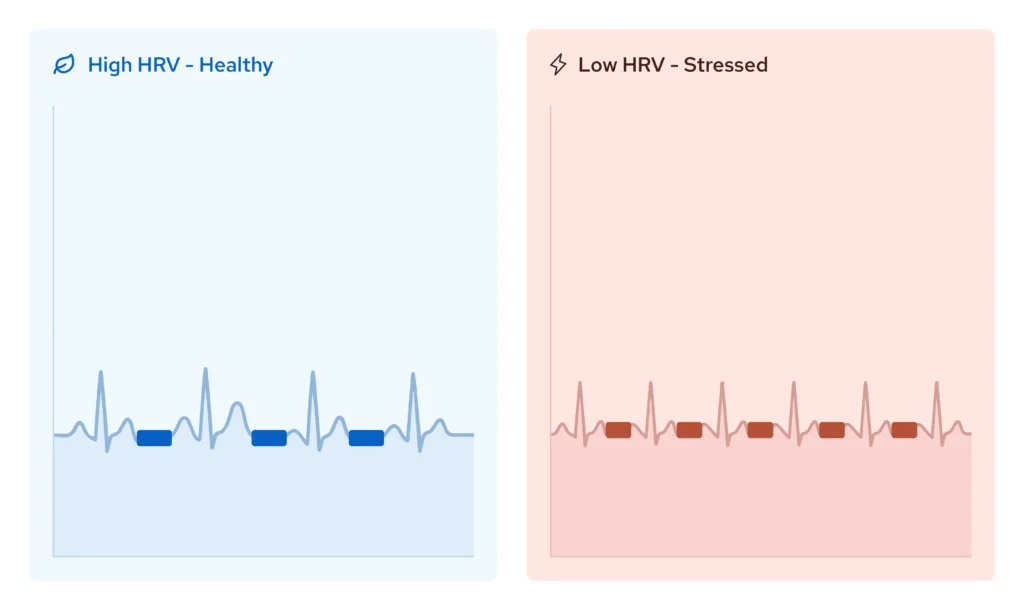
Quand la HRV est basse ? Votre système nerveux est bloqué. Vous ressentez comme de l’épuisement que le sommeil ne répare pas. Des pensées anxieuses qui ne s’apaiseront pas. Une récupération qui prend des jours au lieu de plusieurs heures.
La bonne nouvelle : le HRV n’est pas corrigé. Il répond à la façon dont vous soutenez votre système nerveux. Et contrairement à la plupart des indicateurs de santé, vous pouvez mesurer les changements en temps réel, juste là sur votre poignet.
Ce guide explique ce qui améliore réellement la VFC, selon la science. Pas les tendances du bien-être. Pas des conjectures. Seulement les interventions qui ont été étudiées, mesurées et dont l’efficacité a été prouvée.
Quelles mesures concrètes la VFC prend-elle (et pourquoi est-ce important)
La variabilité de la fréquence cardiaque ne concerne pas votre rythme cardiaque : elle concerne l’espace entre les battements.
Votre système nerveux a deux modes principaux :
- Sympathique (« fight-or-flight » : actif, alerte, réactif au stress
- Parasympathique ("rest-and-digest") : calme, récupération, restauration
Un système nerveux sain passe facilement d’un mode à l’autre. Lorsque vous devez vous concentrer ou répondre au stress, votre système sympathique s’active. Lorsque le moment passe, votre système parasympathique prend le relais pour se reposer et récupérer.
HRV mesure à quel point ce système fonctionne bien.
Haute HRV signifie que votre système nerveux est flexible.
→ L’espace entre les battements de cœur varie davantage car votre corps s’adapte d’un moment à l’autre. C’est un signe de résilience.
Faible HRV signifie que votre système nerveux est rigide.
→ L’espace entre les beats devient plus uniforme, souvent parce que vous êtes coincé en overdrive sympathique. Cela se traduit par une mauvaise récupération, une fatigue persistante ou une difficulté à gérer le stress.
Votre système nerveux autonome contrôle des fonctions auxquelles vous ne pensez pas consciemment : respiration, rythme cardiaque, digestion, niveaux d’énergie, régulation de l’humeur. Quand c’est dérégulé, tout semble plus difficile.
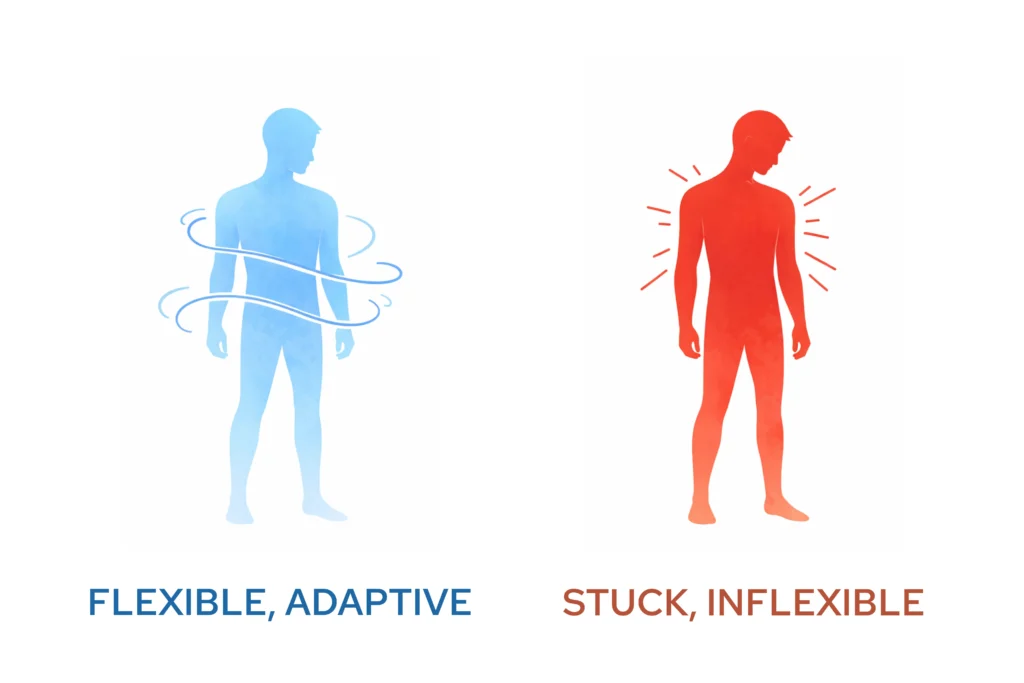
C’est pourquoi la VFC est importante : c’est une fenêtre pour savoir si votre système nerveux fonctionne bien ou s’il a des difficultés.
La cause profonde : un système nerveux dérégulé
La plupart des conseils sur l’amélioration de la VFC se concentrent sur le mode de vie : mieux dormir, moins stresser, faire modérément de l’exercice. Ces choses aident, mais elles n’expliquent pas pourquoi votre système nerveux a été dérégulé en premier lieu.
La vie moderne maintient la plupart des gens en activation sympathique chronique.
- Stress au travail.
- Temps d'antenne.
- Manque de sommeil.
- Constante stimulation.
Votre corps reste en mode « combat ou fuite », tombant rarement dans le vrai repos.
Au fil du temps, cela devient la base. Votre système parasympathique (la pédale de frein qui devrait activer la récupération) cesse de s’enclencher correctement.
Le résultat ? Un faible VFC. Et tous les symptômes qui l’accompagnent :
- Se réveiller fatigué malgré 7 à 8 heures de sommeil
- Difficulté à se calmer après le stress
- Se sentir « câlin mais fatigué »
- Récupération lente après l’exercice
- Brouillard cérébral ou diminution de la concentration
- Pensées anxieuses ou sautes d’humeur
Voici ce que la plupart des gens ne savent pas :
Le nerf vague contrôle l’activation parasympathique.
Ce nerf s’étend de votre cerveau à votre corps, signalant à votre cœur, vos poumons et votre système digestif de se détendre et de récupérer.
Lorsque le tonus vagal est faible, votre système parasympathique ne peut pas faire son travail. Votre HRV reste bas et votre corps reste bloqué en mode stress.
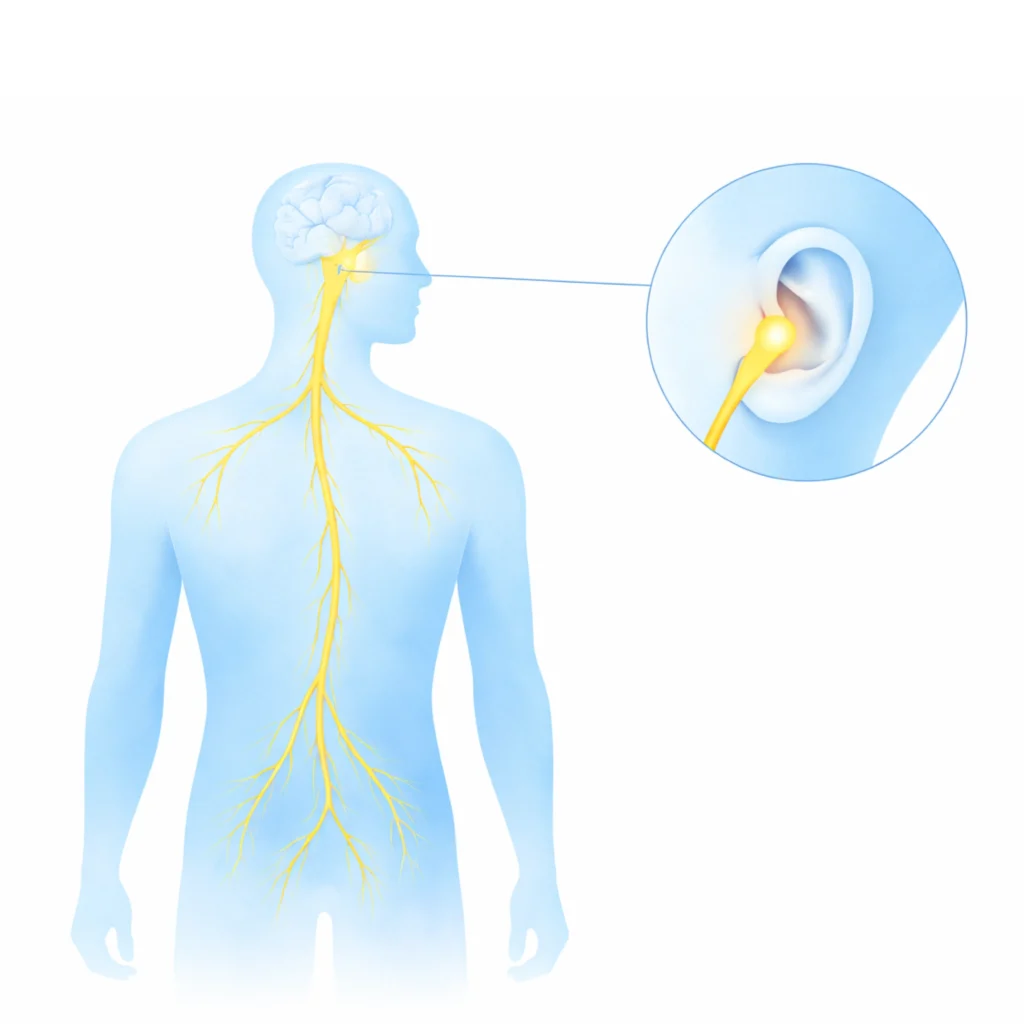
La solution ne consiste pas seulement à gérer les symptômes, mais aussi à renforcer le système lui-même.
Ce que la recherche montre : Stimulation du nerf vague et HRV
Des chercheurs étudient comment la stimulation du nerf vague affecte les fonctions autonomes. Les preuves sont convaincantes.
Dans les études croisées randomisées et contrôlées contre placebo, la stimulation du nerf vague auriculaire (ciblant le nerf vague par l’oreille) a montré des effets mesurables sur la HRV.
Voici ce que la recherche démontre :
Configuration
Des études ont comparé la stimulation active au niveau du tragus (la petite projection de cartilage devant le conduit auditif) avec une stimulation factice au niveau du lobe de l’oreille. Les participants ont subi des périodes de base de 5 minutes, des périodes de stimulation de 5 minutes et des périodes de récupération de 5 minutes, avec une surveillance ECG continue pour mesurer les changements de la HRV.
Résultats
La stimulation active du tragus a considérablement augmenté plusieurs mesures de HRV associées à l’activité parasympathique :
- Augmentation du HRV à haute fréquence (HF) comparé à la stimulation par placebo
- RMSSD, pRR50 et SDRR améliorés à tous les niveaux
- Le rapport LF/HF a diminué, indiquant un glissement vers une prédominance parasympathique
- Les effets ont persisté pendant la période de récupération, même après la fin de la stimulation
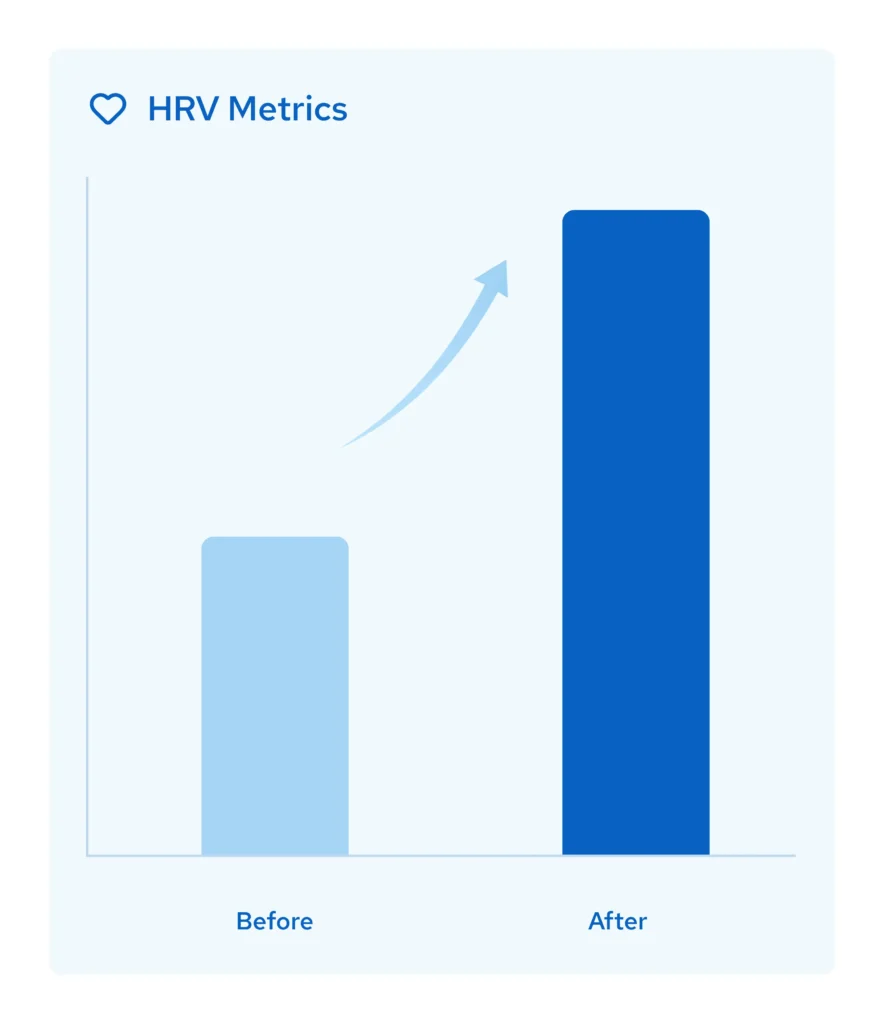
La composante haute fréquence du HRV (0,15–0,40 Hz) est spécifiquement liée à la modulation parasympathique. Lorsque le HRV HF augmente, cela indique une influence vagale plus forte sur la régulation du rythme cardiaque.
Dans une expérience contrôlée chez des adultes en bonne santé, le taVNS (tragus) a augmenté plusieurs indices de HRV par rapport au placebo, certains effets persistant brièvement jusqu’à la guérison. Les résultats liés aux symptômes nécessitent des études distinctes.
Pourquoi c'est important
Ce n’est pas un effet subtil. Il est mesurable sur les mêmes appareils que vous utilisez déjà : Apple Watch, Oura Ring, WHOOP ou tout moniteur basé sur l’ECG.
La raison de son efficacité : la stimulation du nerf vague auriculaire active directement les voies du système nerveux parasympathique. Il signale à votre corps de passer du « combat ou fuite » au « repos et digestion ». Avec une utilisation régulière, cela renforce votre tonus vagal : l’activité de base de votre nerf vague.
Un tonus vagal plus prononcé signifie :
- Votre corps se rétablit plus rapidement après un stress
- Votre corps se rétablit plus rapidement après un stress
- Tu te sens plus calme sans forcer
- Le sommeil devient plus réparateur
Cette approche a été testée dans plus de 60 études scientifiques menées en collaboration avec des institutions d’élite comme Stanford, Yale, l’Université de Chicago et UCLA.
Ce n’est pas expérimental, c’est une méthode scientifiquement validée pour soutenir la régulation du système nerveux.

Autres méthodes fondées sur des données probantes pour améliorer la VFC
La stimulation du nerf vague est l’intervention la plus directe. Mais d’autres approches favorisent l’amélioration de la HRV lorsqu’elles sont utilisées de manière cohérente :
1. Prioriser la qualité du sommeil
La durée et la continuité du sommeil sont fortement liées à la récupération autonome. Le manque de sommeil est courant. réduit le HRV, bien que l’ampleur varie. Votre système nerveux se rétablit pendant le sommeil profond, en particulier lors des phases de sommeil paradoxal et d’ondes lentes.
Ce qui aide:
- Horaire de sommeil régulier (même heure du coucher/réveil tous les jours)
- Environnement de sommeil frais et sombre
- Limitez les écrans 1 à 2 heures avant de vous coucher
- Évitez l’alcool à l’approche de l’heure du coucher (il supprime le sommeil paradoxal)
Visez 7 à 9 heures par nuit. Suivez les tendances de votre VFC, vous verrez immédiatement l’impact sur la qualité du sommeil.
2. Gérer la charge de formation
Un exercice intense réduit temporairement la HRV à mesure que votre corps se rétablit. C’est normal. Mais un surentraînement chronique maintient la HRV supprimée.
Ce qui aide:
- Équilibrer les journées d’entraînement intenses avec la récupération active
- Surveillez les tendances de votre VFC : si elle reste basse pendant des jours, reposez-vous plus longtemps
- Évitez les entraînements à haute intensité lorsque le HRV est déjà faible
- Donner la priorité à la récupération : étirements, mobilité, mouvements de faible intensité
Si vous vous entraînez dur, votre système nerveux a besoin de soutien pour faire face à la charge de stress.
3. Réduire le stress chronique
Plus facile à dire qu’à faire. Mais le stress chronique maintient votre système sympathique activé, ce qui supprime directement la HRV.
Ce qui aide:
- Respiration : respiration lente, diaphragmatique (4-6 respirations par minute activent le système parasympathique)
- Temps passé dans la nature (prouvé pour réduire le cortisol et améliorer la HRV)
- La pleine conscience ou la méditation (même 10 minutes par jour aide)
- Limitez les stimulants : un excès de caféine maintient votre système nerveux connecté
La gestion du stress n’est pas facultative si vous voulez une amélioration durable de la VFC.
4. Limiter l’alcool
L'alcool peut réduire de manière dose-dépendante la récupération nocturne/l’activité parasympathique, en particulier dans les premières heures de sommeil ; les effets varient selon la dose et les facteurs individuels.
Si vous buvez régulièrement, essayez de réduire ou d’éliminer l’alcool pendant 2 à 3 semaines. Suivez votre HRV. La différence est souvent spectaculaire.
5. Soutenez naturellement votre nerf vague
Certaines pratiques de mode de vie stimulent doucement le tonus vagal :
- Exposition au froid (douches froides, bains de glace)
- Fredonner ou chanter (fait vibrer le nerf vague)
- L’eau en gargarisme (active les muscles de la gorge reliés au nerf vague)
Ces méthodes sont utiles. Mais elles sont douces comparées à la stimulation directe du nerf vague, qui fournit une activation constante et mesurable.
L’approche la plus rapide et la plus efficace : Nurosym
Si vous voulez vraiment améliorer la HRV, il y a un chemin direct : renforcer votre nerf vague.
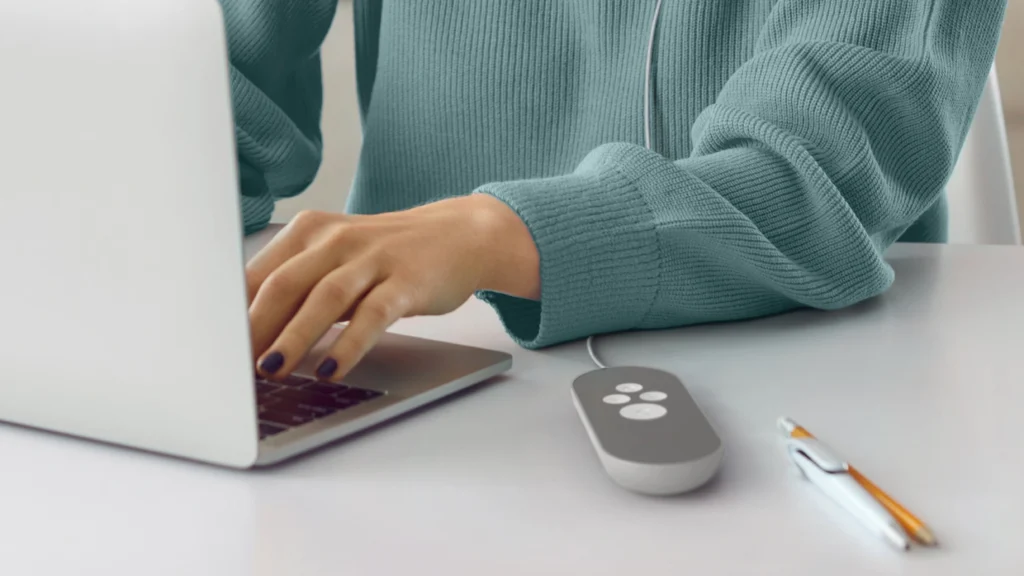
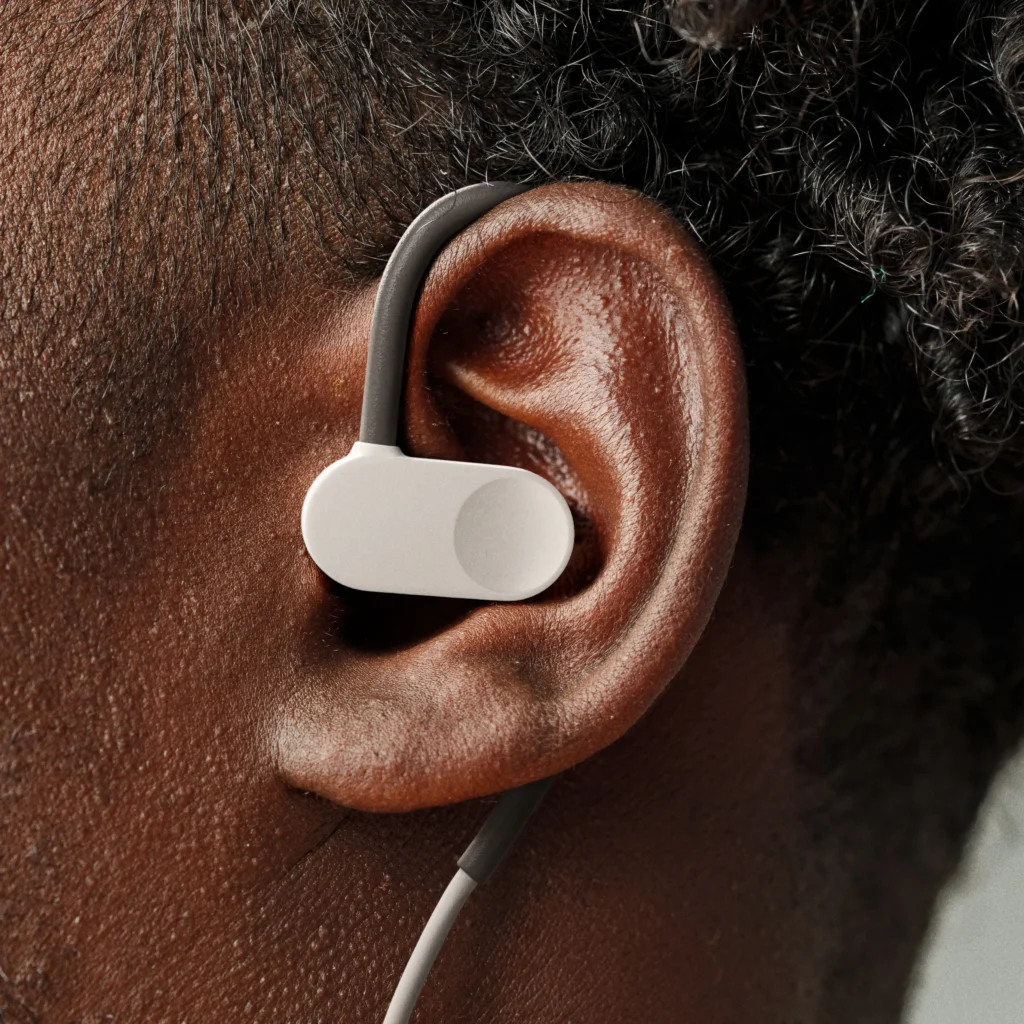
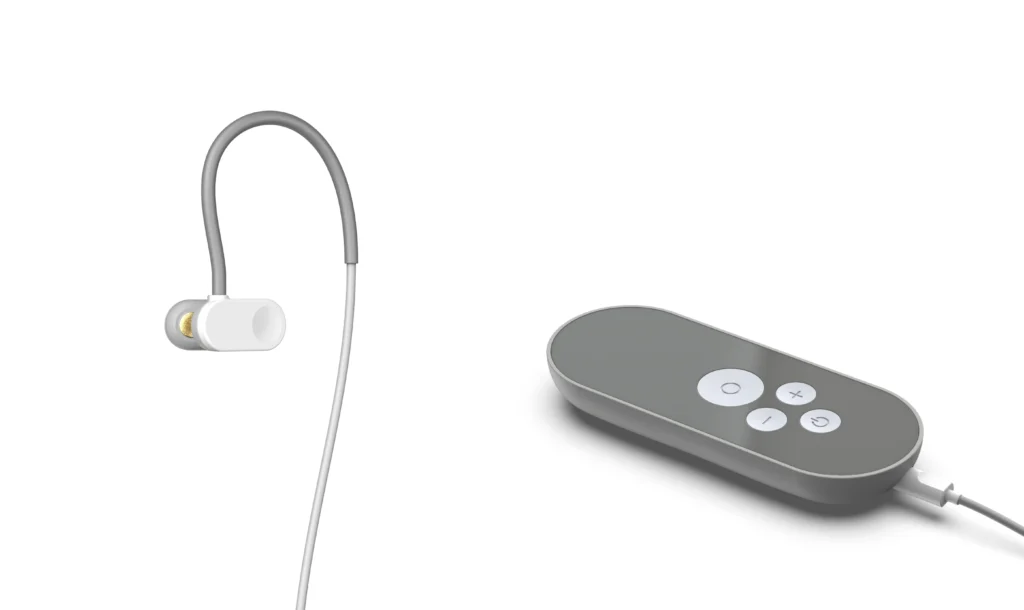
Nurosym est un appareil portable qui utilise la thérapie de neuromodulation auriculaire vagale (AVNT) : une méthode scientifiquement validée qui stimule le nerf vague à travers l’oreille.
C’est le seul appareil portable certifié conçu spécifiquement à cette fin. Pas de chirurgie. Juste des signaux électriques doux envoyés à la branche auriculaire de votre nerf vague.
Pourquoi Nurosym fonctionne
Nurosym cible la cause première d’un faible HRV : une faible activation parasympathique.
L’appareil envoie des signaux calibrés avec précision à votre nerf vague. Ces signaux activent votre système de « repos et de digestion », entraînant votre système nerveux à sortir plus facilement du mode de stress.
Au fil du temps, cela renforce votre tonus vagal. Votre HRV de base s’améliore. Votre corps devient plus résistant.
La science derrière elle
La technologie de Nurosym (AVNT) a été testée dans plus de 60 études scientifiques, menées en collaboration avec des institutions comme Yale, Stanford ou UCLA.
Les résultats des études comprennent :
- Réduction de 35 % des symptômes d’anxiété mentale
- Réduction de 48 % de la fatigue et augmentation de l’énergie
- 31% d’amélioration des scores de sommeil
- Amélioration de 61 % du brouillard cérébral, de la fonction gastro-intestinale et de la douleur
- Amélioration de 45 % du score de dépression et amélioration de l’humeur
Il ne s’agit pas d’un gadget de bien-être faisant des affirmations générales. C’est un appareil portable sûr, conforme aux normes de sécurité examinées par la FDA (États-Unis) et à la certification CE.
Comparaison avec d’autres méthodes
Procédé | Impact HRV | Délais d'obtention des résultats | Durabilité |
Stimulation du nerf vague (Nurosym) | Augmentation significative | 2-4 semaines | Élevé : entraînement direct du système nerveux |
Meilleur sommeil | Modéré | Semaines | Modéré : nécessite une cohérence parfaite |
Gestion du stress (respiration, méditation) | Doux | Mois | Modéré : nécessite une pratique quotidienne |
Exposition au froid | Doux | Immédiat (temporaire) | Faible : inconfortable, difficile à maintenir |
Alcool réduite | Modéré | Jours | Élevé : s’il est maintenu |
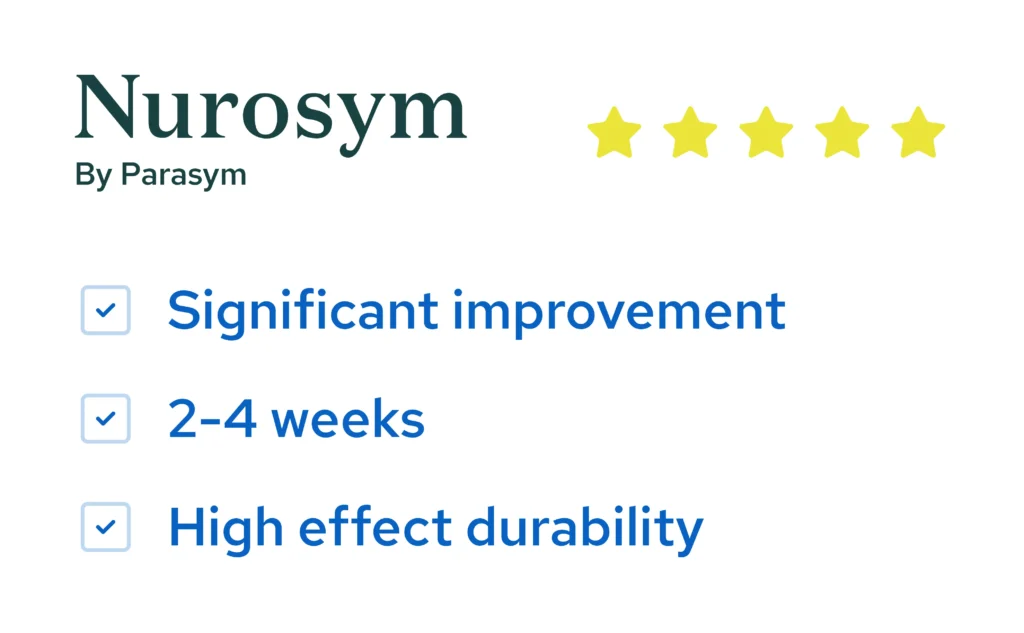
Nurosym s’adresse directement au système. Vous n’essayez pas de gérer les symptômes. Vous entraînez votre système nerveux à se réguler.
À quoi ressemble l’utilisation de Nurosym
Nurosym est simple à utiliser :
- Fixez l’appareil sur votre oreille (en particulier le tragus, où le nerf vague est accessible)
- Utilisez-le pendant 30 à 60 minutes par jour : en travaillant, en lisant ou en vous détendant
- Suivez votre HRV sur votre Apple Watch, Oura Ring ou tout autre appareil
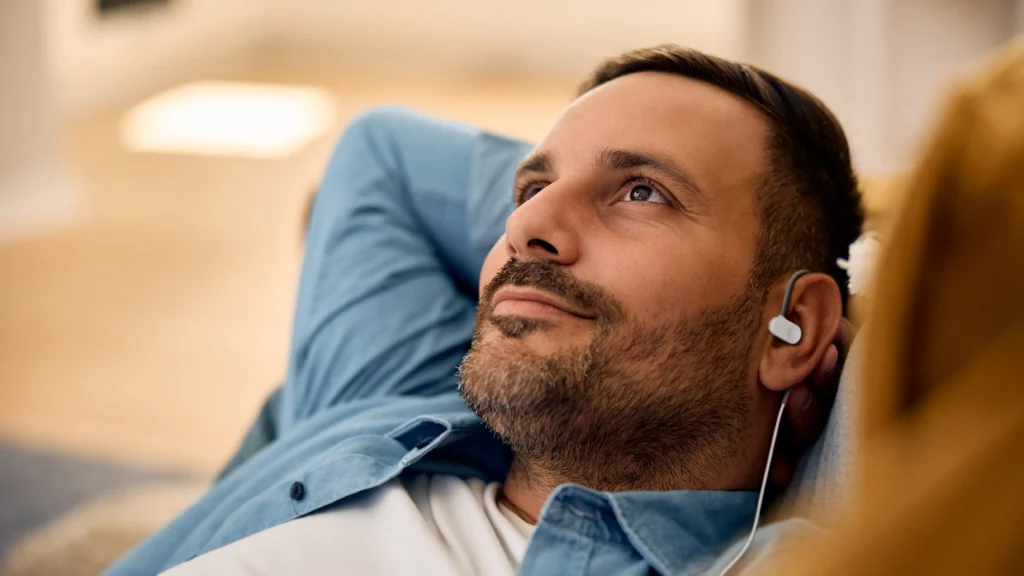
La plupart des utilisateurs remarquent des améliorations mesurables de la VFC en quelques semaines. Certains ressentent des changements subjectifs plus tôt : un meilleur sommeil, une récupération du stress plus facile ou une énergie plus constante.
L’appareil s’intègre à votre routine et vous n’avez pas besoin d’apprendre une technique. Vous n’avez pas besoin de changer votre emploi du temps, portez-le quand vous voulez et où que vous alliez.
Pourquoi le nurosme est-il un choix évident
Si vous avez suivi votre HRV, vous comprenez déjà ce qui est en jeu. Vous savez, un faible HRV n’est pas qu’un chiffre, c’est un signal que votre corps a du mal à récupérer.
Vous avez probablement essayé les bases : plus de sommeil, moins de stress, un meilleur entraînement.
Ils viennent en aide.
Mais ils ne suffisent pas si votre système nerveux est bloqué.
Voici pourquoi Nurosym est différent :
Soutenu par la science réelle et les résultats
- Plus de 4 millions de sessions utilisateur terminées.
- Testé dans des institutions d’élite comme Yale, UCLA, Stanford, l’Université de médecine de Chicago et de nombreuses autres institutions de recherche de premier plan.
- Recommandé par plus de 1000 professionnels de santé agréés - Ce n’est pas une tendance, c’est une technologie médicale validée.
- Efficacité confirmée dans plusieurs études randomisées contrôlées contre placebo examinées par des pairs.
Résultats mesurables
Vous pouvez suivre votre HRV avant et après. La plupart des utilisateurs constatent des améliorations sur leurs appareils portables en quelques semaines. L’effet est mesurable, pas subjectif.
Sûre et non invasive
Nurosym a été désigné par la FDA comme présentant un risque non significatif dans plusieurs études de sécurité (normes américaines) et certifié CE en tant que dispositif de neuromodulation non invasif. Il ne nécessite pas de chirurgie et a été prouvé sans effets secondaires graves dans des études rapportées à ce jour. Juste des signaux électriques doux qui activent votre système parasympathique.

Facile à utiliser
Attache-le. Utilise-le tous les jours. C’est ça.
Pas besoin de techniques compliquées, de routines chronophages.
Il est conçu pour s’intégrer dans votre vie aussi facilement que le port d’un casque.
Ce que vous pouvez attendre
Au cours des premières semaines d’utilisation quotidienne de Nurosym, la plupart des utilisateurs signalent :
- Les augmentations mesurables du HRV sont visibles sur leurs dispositifs de suivi
- Récupération plus facile après des événements stressants ou des séances d’entraînement
- Amélioration de la profondeur du sommeil et réveil plus rafraîchi
- Réduction du sentiment d’être « coincé » dans le stress ou les pensées anxieuses
- Une énergie plus constante tout au long de la journée
Une énergie plus constante tout au long de la journée
Un utilisateur l’a décrit de cette façon :
“J’adore cet appareil. Il fonctionne parfaitement et je n’ai eu aucun problème jusqu’à présent. Je le recommande vivement.“

Un autre a dit:
« Dans l’ensemble, c’est quelque chose dont je ne voudrais pas être séparé. C’est mon compagnon quotidien, cela me garde sur la bonne voie. Et j’imagine que je continuerai à l’utiliser pour le reste de ma vie.
Ce ne sont pas des valeurs aberrantes. Elles sont typiques de ce qui se passe lorsque vous donnez à votre système nerveux le soutien dont il a besoin pour améliorer votre VFC.
Commencer aujourd'hui
Si vous avez cherché comment améliorer votre HRV, vous connaissez déjà les enjeux. Vous savez que le faible HRV n’est pas qu’un chiffre, c’est votre corps qui vous dit qu’il a du mal.
Vous pouvez continuer à gérer les symptômes avec de meilleures habitudes. Ou vous pouvez vous adresser directement au système.
Nurosym vous donne un moyen d’entraîner votre système nerveux, de renforcer votre tonus vagal et de voir des résultats mesurables en quelques semaines.
La science est claire.
Les résultats sont traçables.
Et la solution est simple.
Dernières réflexions : votre système nerveux est formable
La variabilité de la fréquence cardiaque n’est pas statique.
Ce n'est pas génétique.
Il répond à la façon dont vous soutenez votre système nerveux.
La plupart des gens essaient de gérer le VFC indirectement : par le sommeil, la gestion du stress ou les changements de mode de vie. Ceux-ci aident, mais ils ne sont pas suffisants si votre nerf vague ne fonctionne pas correctement.
Nurosym s’adresse directement au système : il entraîne votre réponse parasympathique. Il renforce le nerf vague. Et il vous donne des résultats mesurables que vous pouvez suivre en temps réel.
Si vous voulez vraiment améliorer votre VFC, c’est l’approche la plus efficace et la plus fondée sur la science.
Votre corps essaie déjà de se rétablir. Maintenant, vous pouvez lui donner le soutien dont il a besoin.
Bibliographie :
- de Brito, J. N., et al. (2020). The effect of green walking on heart rate variability: A pilot crossover study. Environmental Research, 185, 109408. https://doi.org/10.1016/j.envres.2020.109408
- Geng, Y., et al. (2022). Transcutaneous auricular vagus nerve stimulation modulates autonomic activity… PLOS ONE, 17(2), e0263833. https://doi.org/10.1371/journal.pone.0263833
- Gitler, A., et al. (2025). Harnessing non-invasive vagal neuromodulation: HRV… https://doi.org/10.3892/mi.2025.236
- Laborde, S., Mosley, E., & Thayer, J. F. (2017). Heart rate variability and cardiac vagal tone in psychophysiological research: Recommendations… Biological Psychology, 130, 1–??. https://doi.org/10.1016/j.biopsycho.2017.01.009
- Mizumoto, T., et al. (2025). Physiological adjustment effects of viewing natural environments… rapports scientifiques. https://doi.org/10.1038/s41598-025-00681-4
- Muñoz, M. L., et al. (2018). [HRV genetic architecture paper]. Frontiers in Cardiovascular Medicine. https://doi.org/10.3389/fcvm.2018.00054
- Pietilä, J., et al. (2018). Acute effect of alcohol intake on cardiovascular autonomic regulation during the first hours of sleep… JMIR Mental Health, 5(1), e23. https://doi.org/10.2196/mental.9519
- Pop, G. N., et al. (2021). Assessment of the impact of alcohol consumption patterns on heart rate variability… Medicina, 57(9), 956. https://doi.org/10.3390/medicina57090956
- Sato, M., et al. (2025). Effects of sleep deprivation on autonomic function: A systematic review and meta-analysis. Frontiers in Neuroscience. https://doi.org/10.3389/fnins.2025.1560531
- Schumann, A., et al. (2022). [Slow-paced breathing systematic review/meta-analysis]. Revues en neurosciences et biocomportementales. https://doi.org/10.1016/j.neubiorev.2022.104711
- Shaffer, F., & Ginsberg, J. P. (2017). An overview of heart rate variability metrics and norms. Frontiers in Public Health, 5, 258. https://doi.org/10.3389/fpubh.2017.00258
- Shao, R., et al. (2024). The effect of slow-paced breathing on cardiovascular and psychological outcomes… pleine conscience. https://doi.org/10.1007/s12671-023-02294-2
- Tegegne, B. S., et al. (2020). [HRV heritability/genetics paper]. BMC Medical Genetics. https://doi.org/10.1186/s12881-020-01181-2
L’article ne constitue en aucun cas un avis médical. Veuillez consulter un professionnel de la santé agréé avant de commencer tout traitement. Ce site peut recevoir des commissions à partir des liens ou produits mentionnés dans cet article.
Partager cet article :



 French
  English
  German
  Spanish
  Swedish