For Hyrox Athletes, CrossFit Competitors, Marathon Runners, Triathletes and Ironman Athletes Who Train Hard But Can’t Seem to Recover Fast Enough
You train consistently. You sleep well enough. You eat right, take the supplements, do the pre-hab.
And yet your HRV keeps coming in low – one of the clearest signals that your sports performance has hit a ceiling. Not because of your training. Because of what happens after it. Your legs feel heavy going into sessions that should feel manageable. Your stamina and endurance have plateaued in ways you can’t explain. Your motivation dips in ways that don’t match your training load.
You’re not injured. You’re not burned out. But you’re not improving either.
“I’m doing everything right. Why isn’t my body responding?”
I hear this regularly in clinic. From Hyrox athletes three weeks out from a race. From CrossFit competitors whose benchmark times have stalled. From marathon runners and triathletes whose long sessions feel harder than they did six months ago.
The assumption is almost always the same: I must be overtrained. I need to do less.
In most cases, that’s not what’s happening.
The training isn’t the problem. The nervous system’s ability to recover from it is. And what most recovery plans never address is a direct intervention for the autonomic nervous system itself.
Your body isn’t refusing to recover. It’s waiting for a signal that never comes.
What Your HRV Is Actually Measuring – And Why Most Athletes Misread It
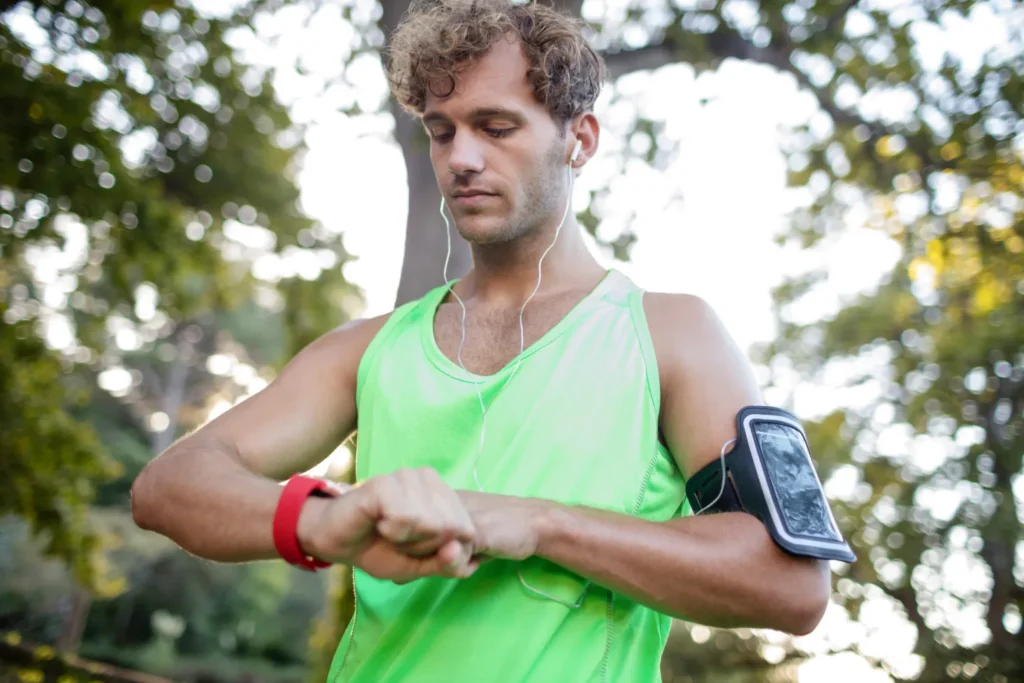
HRV - Variabilidad de la frecuencia cardíaca – measures the variation in time between heartbeats. It is one of the most direct indicators of how well your autonomic nervous system is recovering from stress.
High HRV = parasympathetic dominance. Your body is in recovery mode.
Low HRV = sympathetic dominance. Your body is still in stress mode.
Most athletes know this. What most athletes miss is what drives chronically low HRV – and why rest alone often doesn’t fix it.
Every session – whether it’s a Hyrox workout, a CrossFit WOD, a long marathon run, or an Ironman bike leg – places significant stress on the autonomic nervous system, not just the muscles. The sistema nervioso simpático (SNS) activates. Heart rate climbs. The body enters performance mode.
The problem isn’t the activation. It’s what happens after.
For genuine recovery to occur, the sistema nervioso parasimpático (PNS) – the recovery branch – needs to take over. Heart rate drops. HRV rises. The body shifts into repair.
In athletes training across multiple disciplines, this shift often doesn’t happen fully. The sympathetic branch stays partially activated. The nervous system never fully comes down. And the next session starts from a baseline that’s already compromised.
This isn’t overtraining. It’s autonomic under-recovery. And your HRV is the clearest signal that it’s happening.
Why Your Stamina and Endurance Hit a Wall – Even When Your Training Is Solid
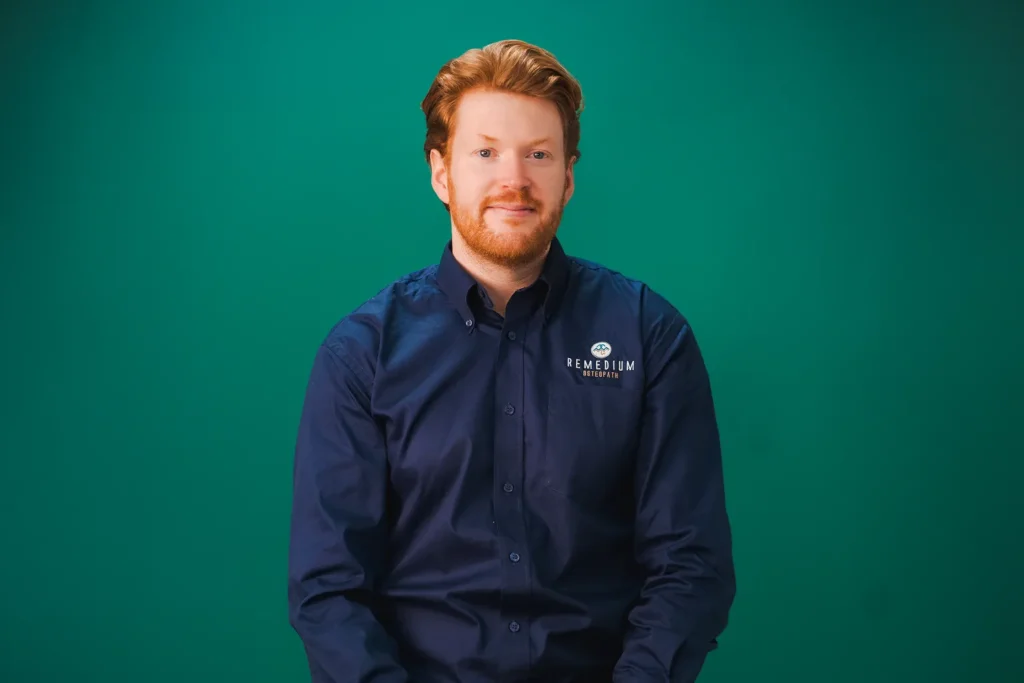
I’m Ewen McDonald, a GOsC Registered Osteopath and Director of Remedium Wellness. Over six years and 2,000+ people across Worcester, London and Birmingham – from fatigue presentations to elite endurance athletes – I’ve watched the same pattern repeat.
In clinic, I work with:
- Hyrox athletes whose recovery scores don't reflect the rest they're getting
- CrossFit competitors whose benchmark times have plateaued despite consistent training
- Marathon runners and triathletes managing cumulative load across multiple disciplines
- Ironman athletes whose stamina and endurance gains have stalled mid-training block
These are people doing everything right by conventional standards. Sleep prioritised. Nutrition dialled in. Recovery tools used consistently.
And still the HRV sits low. Still the stamina plateaus. Still the endurance gains slow.
What’s missing from almost every recovery plan I review is this: a direct intervention for the autonomic nervous system itself.
Training loads the system. Sleep and nutrition support it. But neither sends the nervous system a direct signal to shift from stress mode into genuine recovery. Until that signal arrives, the body stays partially braced – and partially braced is not recovered.
The problem was never the training. The problem was that the body never got the signal it was safe to recover.
What I was looking for was something that worked at the level of the system itself – without demanding anything from it.
Why the Standard Recovery Stack Has a Ceiling – And Why Stamina and Endurance Suffer for It

Every tool in the standard recovery stack has genuine value. I recommend most of them.
Sueño – the most important recovery tool available. But when the nervous system is stuck in sympathetic dominance, sleep quality suffers regardless of duration. You can spend eight hours in bed and wake up with a low HRV score that doesn’t reflect the rest you got.
Cold exposure and ice baths – real acute benefits for inflammation and perceived recovery. But they require a cold water setup, mental preparation, and a dedicated 15+ minutes you may not have between a morning double session and a full working day. And when the system is already depleted, summoning the motivation for a cold plunge is often the first thing that goes.
Sauna – well-evidenced for cardiovascular recovery. Requires access, a separate visit, and 20+ minutes. Not something that fits between a lunch-hour run and an afternoon of meetings.
Foam rolling and massage – addresses where stress accumulates physically. In clinic, I see people leave noticeably calmer – and return to their pre-session baseline within 48 hours. The muscular tension releases. The autonomic state underneath doesn’t change.
Suplementos – magnesium, omega-3, ashwagandha all have genuine evidence. They support brain chemistry, but don’t directly signal the autonomic control system.
All of these share the same problem: they require something from a system that’s already depleted – time, setup, motivation, mental bandwidth. The harder you’ve trained, the less of all four you have.
Each works. But they all address what training stress produces – without directly signalling the nervous system to shift.
The answer I found was something I initially dismissed entirely. I’ve been wrong about things before. But I’ve rarely been this wrong.
The Nerve That Controls Whether Your Body Actually Recovers – And Whether Your Stamina Comes Back
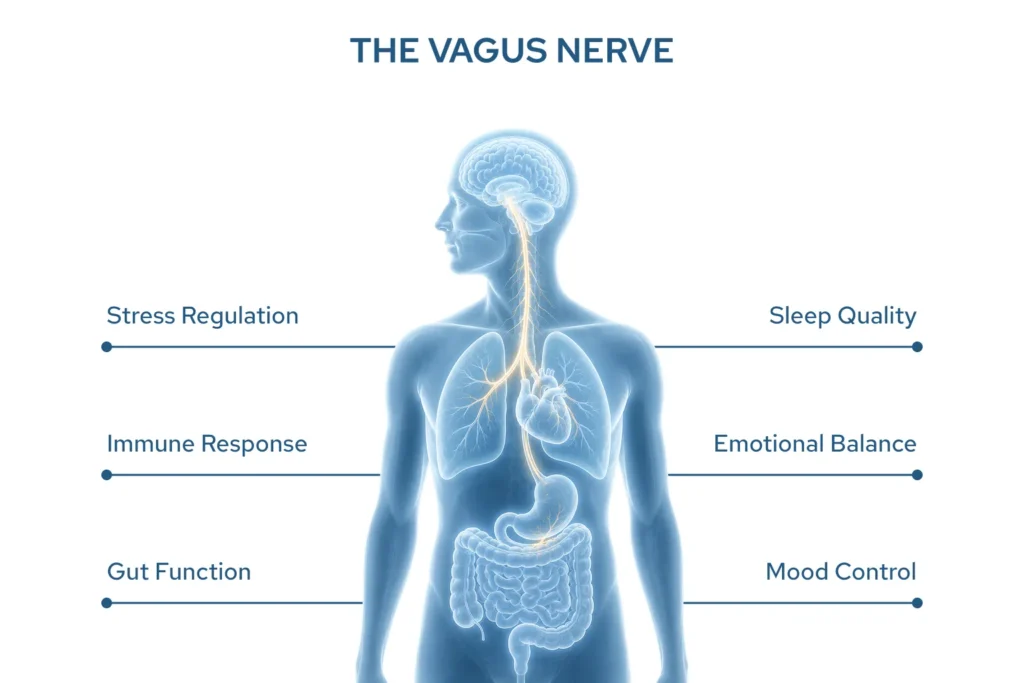
The parasympathetic nervous system operates primarily through one specific nerve.
La nervio vago (cranial nerve X) is the longest nerve in the body, running from the brainstem through the neck, chest, and abdomen. It carries the parasympathetic signals – the instructions that tell the body it is safe to rest, repair, and regulate.
Tono vagal – the activity level of this nerve – directly determines how efficiently your body shifts from stress to recovery after training. High vagal tone means HRV rises quickly after a session. Low vagal tone means the sympathetic branch stays dominant – and HRV stays suppressed.
Sustained high training loads, compounded by work stress and life pressure, suppress vagal tone over time. This is the direct mechanism behind chronically low HRV in hard-training athletes – not overtraining, but autonomic under-recovery.
A 2026 study in Informes científicos encontró que taVNS (Transcutaneous Auricular Vagus Nerve Stimulation) applied after exercise significantly increased parasympathetic activity and cardiac vagal control – exactly the shift that drives HRV upward and enables genuine endurance and stamina recovery.
When I first came across consumer devices making this claim, I dismissed them without much thought.
What changed my mind wasn’t marketing. It was the research. And then testing it on myself.
I Started Using It Between Clients. Here’s What I Found.
On busy days – back-to-back clients, high cognitive and physical demands of manual therapy, no meaningful break between sessions – I noticed the same autonomic pattern I see in athletes. Sympathetic activation accumulates. The ability to decompress diminishes. By the end of clinic, the fatigue isn’t muscular. It’s systemic.
I started using Nurosym between sessions – fifteen minutes, clipped to the ear, while reviewing notes or preparing for the next patient.
Within two weeks, my morning HRV had shifted noticeably on my wearable. Not dramatically – but consistently. Which in recovery terms is the only thing that matters.
The shift in how I felt by the end of clinic was equally clear. Less accumulated tension by end of day. Sharper between clients. The recovery from sleep felt more complete.
That was when I started recommending it to athletes.
The Daily Habit: Nurosym AVNT™
Resultados de estudios revisados por pares en poblaciones específicas del estudio. Las cifras reflejan el cambio relativo en comparación con placebo o la línea de base. Los resultados individuales pueden variar.
What makes it different from everything else in your recovery stack is what it asks of you.
Ice baths need cold water, setup time, and mental preparation you may not have after a double session. Sauna needs access and 20+ dedicated minutes. Supplements need weeks. Foam rolling needs floor space and energy.
Nurosym needs fifteen minutes and whatever you were already doing.
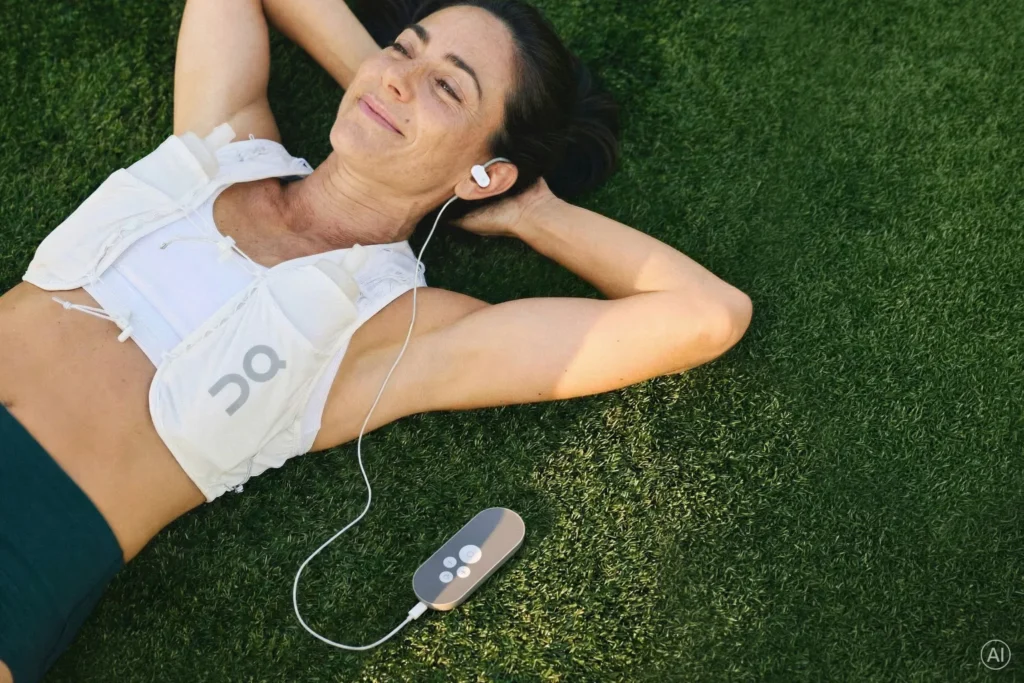
It clips to the ear – small, wired, sitting much like an earbud – and you carry on. Post-Hyrox cooldown on the gym floor. Commute home after work. Evening meal. Reading before sleep. Fifteen minutes. That’s the daily habit.
If you’re already tracking on a Whoop, Oura, or Apple Watch – you’ll see it in the data within two to three weeks.
Will, athlete tracking HRV with a chest strap: “I’ve struggled with a consistently low HRV for years, averaging around 26 each month. Since using Nurosym, I’ve consistently seen a 10–20% increase – especially valuable in helping me balance a high-cognitive-load job, regular training, and family life.”
Ruben, strength and endurance athlete: “I’ve noticed faster recovery from my daily strength and endurance training. My HRV readings have improved noticeably, reflecting a calmer and more resilient nervous system.”
It works alongside your existing recovery stack – not instead of it. Sleep, cold exposure, nutrition, foam rolling – all of these still matter. Nurosym works at the level of the autonomic baseline that everything else builds on top of.
Desventajas:
- First CE-certified auricular vagal neuromodulation device
- 60+ completed independent peer-reviewed studies
- Trusted by 1,000+ licensed healthcare professionals
- No app, no gel, no prescription required
- 15 minutes a day - post-workout, commute, evening wind-down
- Garantía de devolución del dinero en 30 días
One consideration:
Most athletes notice meaningful HRV improvement within two to three weeks of consistent daily use. Results build gradually – consistent with how autonomic recalibration works. Not a quick fix. A baseline shift that compounds over time.
Hyrox, CrossFit, Marathon, Triathlon, Ironman – Do You Recognise This?
This pattern shows up consistently across training types and experience levels:
- Hyrox athletes whose recovery scores don't reflect their rest - and whose race-day stamina suffers for it
- CrossFit competitors hitting performance plateaus despite consistent well-programmed training
- Marathon and ultra-endurance runners whose long runs feel harder than they should at this stage of training
- Triathletes and Ironman athletes managing cumulative load across swim, bike and run - finding genuine recovery increasingly difficult
- Anyone whose HRV sits chronically low despite adequate sleep and nutrition
- Anyone whose stamina and endurance have plateaued in ways the training load alone doesn't explain
Do not use if you have a pacemaker or implantable cardiac device, are pregnant, have had a recent serious cardiac event, or are under 18. Always consult a qualified healthcare professional before starting.
Una forma segura de intentarlo
- Garantía de devolución del dinero en 30 días - enough time to see whether your HRV responds, your recovery improves, and your next training block actually feels different
- Limited subsidised research slots - some participants may receive up to €70 off in exchange for sharing their experience
A Final Note
The athletes I see who struggle most with recovery are rarely the ones training too much. They’re the ones whose nervous system has never received a direct signal to stand down.
They’re not overtrained. They’re autonomically under-recovered.
And until that distinction becomes part of how athletes think about their training – not just what they do in the gym, but what they do for the system that makes the gym work – the plateau won’t shift.
The training load isn’t the problem. The system’s ability to respond to it is.
Your HRV has been trying to tell you something. Now you know what it means – and what to do about it.
Referencias
- Scientific Reports. Post-exercise auricular vagus nerve stimulation modulates autonomic and recovery responses. 2026. https://www.nature.com/articles/s41598-026-47143-z
- Geng D, et al. The effect of taVNS on HRV in healthy young people. PLoS ONE. 2022. https://doi.org/10.1371/journal.pone.0263833
- Tarn J, et al. The Effects of Noninvasive Vagus Nerve Stimulation on Fatigue. Neuromodulation. 2022. https://pubmed.ncbi.nlm.nih.gov/37032583/
- Farmer AD, et al. International consensus based review on taVNS. Frontiers in Human Neuroscience. 2021. https://www.frontiersin.org/articles/10.3389/fnhum.2020.568051/full
- Frontiers in Psychology. The vagus nerve: a cornerstone for mental health and performance optimization in recreation and elite sports. 2025. https://www.frontiersin.org/journals/psychology/articles/10.3389/fpsyg.2025.1639866/full
This article reflects my professional evaluation of the evidence and experience. I may receive a referral arrangement from purchases made through links in this article. This is not medical advice – always consult a qualified health professional before starting any new intervention. Individual results may vary.
Compartir a través de:


 Spanish
  English
  German
  French
  Swedish