
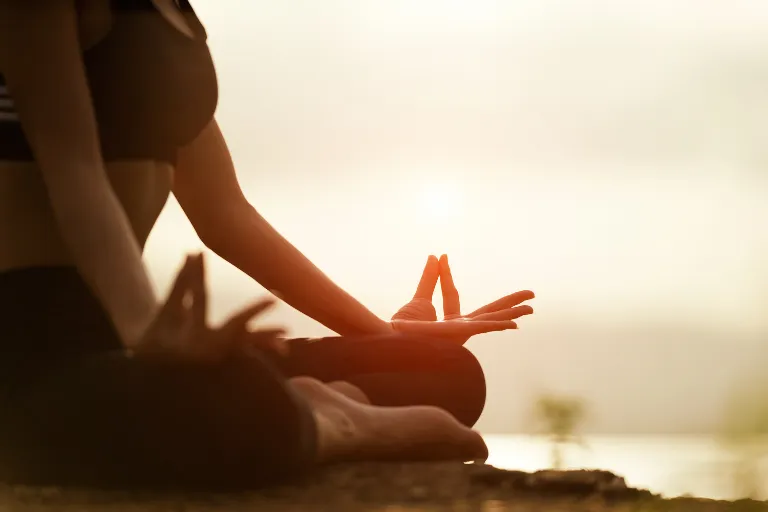
I dagens snabba värld kan stillhet känna sig utom räckhåll. Från ständiga aviseringar till dagstryck får våra sinnen sällan en paus. För många — från studenter och föräldrar till sjukvårdspersonal — har meditation blivit mer än bara en wellness-trend. Det är ett verktyg för motståndskraft och tydlighet.
Men inte alla meditationsmetoder är desamma. Vissa erbjuder snabba ögonblick av lugn, medan andra stöder djupare känslomässiga och fysiologiska förändringar. Här är en jämförelse av tre populära tillvägagångssätt: två ledande appar, Headspace och Calm, och en traditionell andningspraxis, Sudarshan Kriya.
Moderna meditationsverktyg: Headspace och Calm
- Huvudutrymme -Denna app gör mindfulness tillgänglig för nybörjare. Med vänliga animationer och tydlig vägledning är det perfekt för dem som just börjar. Sessioner fokuserar på stress, fokus och känslomässigt välbefinnande — bra för att bygga en daglig vana.
Forskningsinsikt: Användare av Headspace visade förbättringar i humör, stressnivåer och irritabilitet efter kortvarig användning. - Lugna – Lugn är mest känd för sina lugnande sömnhistorier, guidade meditationer och avkopplande ljudlandskap. Det är ett populärt alternativ för dem som kämpar med sömn eller söker snabba känslomässiga återställningar i slutet av en lång dag.
Bevistips: Lugn har studerats för sina positiva effekter på sömnkvalitet och daglig stress.
Traditionell andningspraxis: Sudarshan Kriya
Sudarshan Kriya, undervisat av Art of Living Foundation, är en strukturerad andningsteknik som involverar långsamma, medelstora och snabba andningscykler.
Till skillnad från appbaserade metoder kräver denna metod korrekt utbildning, men forskning visar att den kan ge djupare fysiologiska fördelar:
- Kan minska kortisolnivåerna (kroppens stresshormon)
- Kan förbättra immunfunktionen
- Visas för att hjälpa till med oroliga tankar och depressiva tillstånd
Varför det sticker ut: Till skillnad från korta meditationer kan Sudarshan Kriya flytta nervsystemet djupare och stödja både mental klarhet och fysisk motståndskraft.
Att välja vad som fungerar för dig
Här är en snabb guide för att välja din meditationsväg:
- Nytt för meditation? Börja med Huvudutrymme för enkel, daglig vägledning.
- Kämpar du med sömn eller överväldigad dagligen? Lugna erbjuder mjukt stöd.
- Söker du en djupare återställning? Överväga Sudarshan Kriya, särskilt om du är öppen för att delta i en strukturerad kurs.
Vissa användare tycker att kombination av metoder fungerar bäst — med en app för korta dagliga sessioner och öva Sudarshan Kriya en eller två gånger i veckan för djupare fördelar.
Slutsats: Meditation är en skicklighet, inte en genväg
Meditation handlar inte om att ställa in — det handlar om att ställa in. Oavsett om du väljer en app eller en andningsbaserad övning, är målet detsamma: ett lugnare sinne, stabilare känslor och större motståndskraft. I en värld av konstant aktivitet är dessa stillhetsmoment inte övergivna — de är viktiga.
Medicinsk ansvarsfrihet: Denna artikel har skrivits av en licensierad sjukvårdspersonal och är endast avsedd för allmän informationsändamål. Det ersätter inte personlig medicinsk rådgivning, diagnos eller behandling. Läsarna bör alltid söka vägledning från en kvalificerad vårdgivare med frågor om ett medicinskt tillstånd eller hälsomål. Ignorera eller försena aldrig att söka medicinsk rådgivning baserad på information som presenteras här.
Prenumerera gratis för mer insiktsfulla hälsoartiklar anpassade efter dina behov.
Referenser
- Brown, R. P., & Gerbarg, P. L. (2005). Sudarshan Kriya yogic breathing in the treatment of stress, anxiety, and depression: Part I—Neurophysiologic model. Journal of Alternative and Complementary Medicine, 11(1), 189–201. https://doi.org/10.1089/acm.2005.11.189
- Zope, S. A., & Zope, R. A. (2013). Sudarshan Kriya Yoga: Breathing for health. International Journal of Yoga, 6(1), 4–10. https://doi.org/10.4103/0973-6131.105935
- Seppälä, E. M., et al. (2014). Breathing-based meditation decreases PTSD symptoms. Journal of Traumatic Stress, 27(4), 397–405. https://doi.org/10.1002/jts.21936
- Huberty, J., et al. (2019). Testing a mindfulness app for sleep symptoms. Journal of Alternative and Complementary Medicine, 25(9), 889–896. https://doi.org/10.1089/acm.2019.0021
- Economides, M., et al. (2018). Mindfulness-based app improves stress and affect. Mindfulness, 9(5), 1584–1593. https://doi.org/10.1007/s12671-018-0905-4



 Swedish
  English
  German
  French
  Spanish