

Ask yourself these questions:
- Is your gut unpredictable every single day?
- Bloating that starts at your first meal and builds with every bite after that?
- Abdominal cramping that strikes without warning, regardless of what you have eaten?
Then there may be more going on beneath the surface than stress or food triggers alone.
It’s easy to feel frustrated or overwhelmed when your gut is always on your mind. Worrying before meals out, turning down social plans, or building your day around digestive symptoms can all be signs that something beyond the gut itself needs attention.
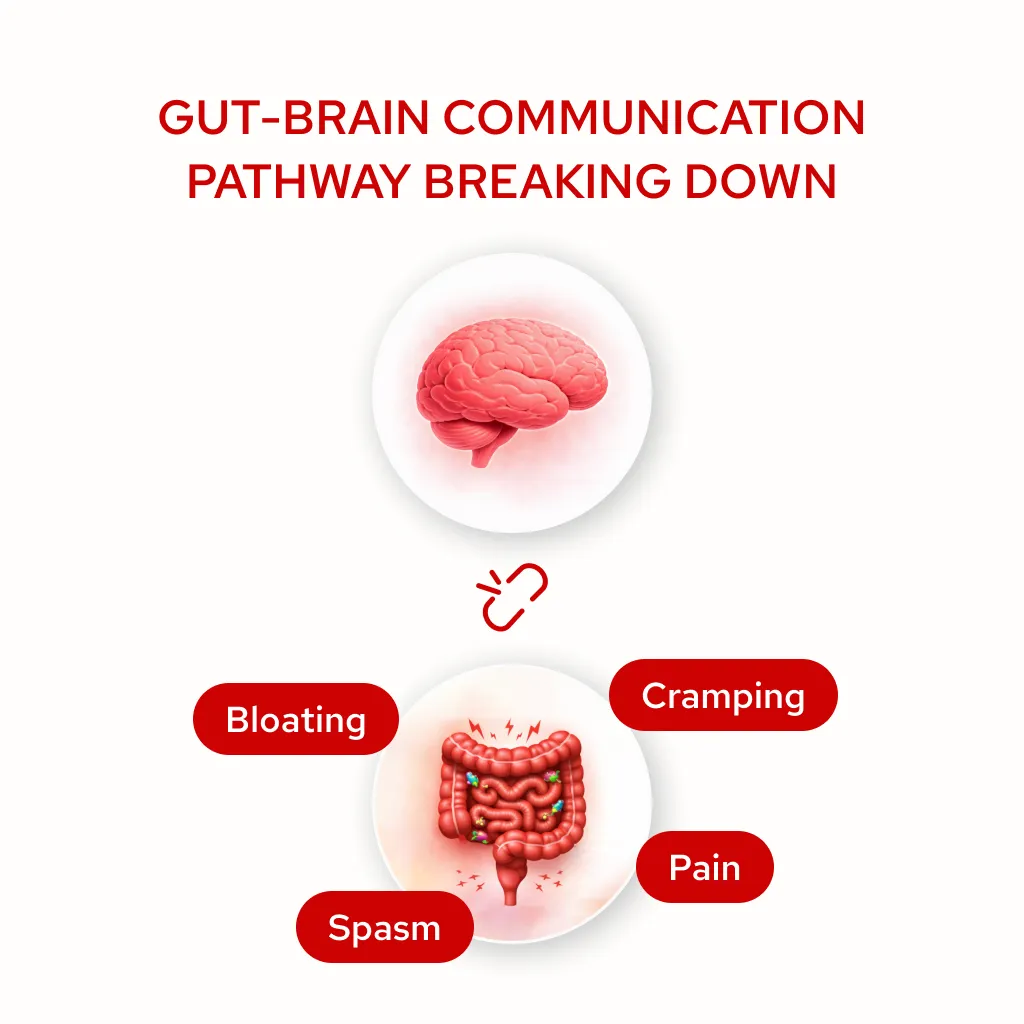
For many people, these patterns point to a deeper issue: disrupted communication along the gut-brain axis.
And one of the key pathways involved in that communication is the vagus nerve.
As gut dysfunction progresses, vagal signalling drops sharply. Without proper vagal tone, your body can’t coordinate digestion, control inflammation, or maintain gut motility. This leads to those heartbreaking signs of decline [1].
If ignored, these symptoms progress rapidly into chronic isolation.
Over time, these symptoms can start to affect your confidence, your routine, and your quality of life.
That is why supporting the nervous system, not just the gut itself, may be an important part of a more complete approach to IBS.
Why?
Because healthy vagal activity plays an important role in digestion, motility, and the body’s ability to regulate stress and inflammation. The first step is recognising when that gut-brain communication may be under strain, and understanding that there may be more you can do about it than you have been told.
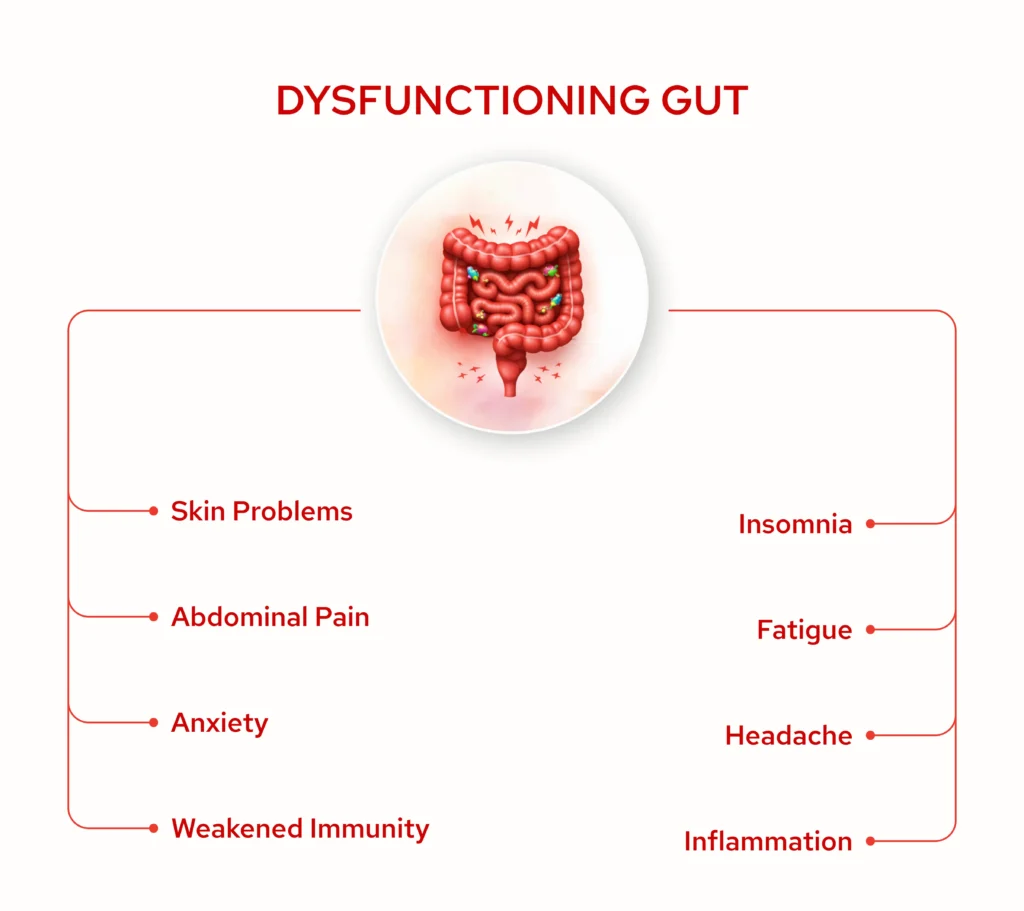
Could These Symptoms Be Signs of Gut-Brain Imbalance?
- Bloating that starts after meals and builds throughout the day
- Cramping, urgency, or bowel movements that feel unpredictable
- Avoiding social plans or thinking ahead about bathroom access
- Becoming more reactive to foods that once felt easier to tolerate
- Brain fog or fatigue after eating
- Having anxious thoughts around meals or overly focused on when symptoms might flare
- Trying diet after diet without lasting relief
These can all be signs that your digestive symptoms may be rooted in a deeper gut-brain imbalance, not food alone.
The key is understanding what may be driving your symptoms, so you can explore support that goes beyond food alone, without the feeling that you have somehow failed your diet.
Research increasingly suggests that IBS is a complex condition with multiple contributing factors, and that disruption along the gut-brain axis may play a meaningful role in why symptoms develop, persist, and prove difficult to resolve through diet alone.
A collapsing vagal tone drives it.
As vagal signalling drops, your gut can no longer regulate itself. Motility shuts down, and every system weakens [2].
The result can be a pattern of symptoms that feels increasingly disruptive: bloating, cramping, and unpredictable bowel habits alongside growing food reactivity, meal-related anxiety, and a reduced sense of confidence around eating.
And here’s why it matters:
For many people, this reflects a deeper imbalance within the gut-brain axis, rather than stress or food triggers alone.
That is why supporting vagal tone and nervous system regulation may be such an important part of the picture.
When that communication is better supported, the gut is often more able to regulate motility, manage stress responses, and maintain digestive comfort, moving you toward more predictable, resilient digestion over time.
A 90-Day Approach to Supporting Gut-Brain Balance
When digestive symptoms start to shape your daily life, the impact can extend far beyond the gut itself, affecting how you eat, how you plan your day, and how confident you feel in social situations.
But most people get it wrong.
They try approaches such as elimination diets, probiotics, or symptom-targeted support, and for some these can provide meaningful relief.
But for others, they may not fully address the gut-brain component that continues to drive symptoms beneath the surface. Dietary strategies and digestive support have an important role to play, but they do not always directly target nervous system regulation or vagal tone.
Here’s why:
Supporting the gut-brain axis may offer a meaningful additional layer of support for some people with persistent digestive symptoms. And it helps explain why, for some, symptom-focused strategies alone can feel frustrating when relief is only partial or short-lived.
While that won’t reflect every person’s experience…
It does highlight an important point:
Symptom relief alone is not always the same as long-term regulation. For some people, especially where stress reactivity, autonomic imbalance, or recurring symptom flares are part of the picture, broader support for the gut-brain axis may be worth exploring alongside diet and lifestyle strategies.
When symptoms persist despite your best efforts, it’s understandable to feel frustrated and ready for a different approach. Many people try multiple strategies in search of relief, especially when bloating, bowel irregularity, or food-related anxiety continue to affect daily life.
That’s why more people are now exploring tools that support the gut-brain axis more directly.
With over 4,000,000 sessions completed, Nurosym has become a widely used non-invasive option for those looking to support vagal activity and nervous system regulation alongside a broader digestive health plan.
By supporting vagal activity through auricular nerve stimulation, Nurosym is designed to help support gut-brain communication, autonomic balance, and the body’s inflammatory response. For some users, this may translate into improvements in digestive comfort, symptom predictability, and overall day-to-day resilience.
Using CE-certified AVNT™ delivery, Nurosym offers a non-invasive way to support nervous system regulation, with many users choosing to use it consistently over a 90-day period as part of a broader gut health strategy

1,000+ Licensed Healthcare Professionals Use Nurosym as Part of a Broader Gut-Brain Strategy
Nurosym was developed by researchers exploring how non-invasive vagus nerve stimulation could support people with chronic symptoms linked to gut-brain axis dysregulation.
Working alongside leading research institutions, they focused on creating an approach designed to support nervous system regulation rather than simply addressing symptoms at the surface level.
Instead, it was designed to support one of the key pathways involved in gut-brain communication: the vagus nerve
The result is a non-invasive device built around Auricular Vagal Neuromodulation Therapy (AVNT™), designed to support the vagus nerve through targeted auricular stimulation. Developed with a focus on precision and nervous system regulation, Nurosym is intended to support the gut-brain axis in a more direct and structured way.
For some users, this can translate into more settled digestion, greater confidence around meals, and fewer day-to-day disruptions.
While experiences vary, some people report noticing changes within the first few weeks, with more meaningful improvements often emerging through consistent use over a longer period, such as 8–12 weeks.
Rather than focusing only on symptom suppression, this approach is designed to support a broader picture of gut-brain regulation, which may be an important missing piece for some people living with IBS.

What makes this approach different from symptom-only support” or “Why a more targeted approach may matter in IBS” or “Supporting the nervous system may be the missing piece
Many people with IBS are already familiar with symptom-targeted digestive support, where different supplements are used to address different parts of the clinical picture:
- Probiotics for microbiome modulation
- Fibre supplementation for bowel regularity
- Digestive enzymes to support bloating or post-meal discomfort
The challenge is that IBS is rarely about a single symptom or a single trigger. It often involves a broader pattern of gut-brain axis dysregulation, where motility, visceral sensitivity, stress reactivity, and nervous system signalling can all play a role. This is why symptom-targeted supplements can be helpful for some people, yet still leave part of the picture unaddressed.
Nurosym is different because it is designed to support a different layer of the problem: the communication between the nervous system and the gut.
As a CE-certified non-invasive auricular vagus nerve stimulation device, it is intended to support vagal activity and gut-brain signalling in a more direct way, rather than focusing only on individual symptoms.
Nurosym offers a non-invasive approach designed to support key pathways involved in gut-brain axis function:
- Auricular Nerve Stimulation: Restores declining vagal tone to reignite digestive regulation [4]
- AVNT™ Technology: Powers motility restoration and inflammatory control for resilience [5]
- Gut-Brain Rebalancing: Reduces visceral hypersensitivity and gut-related anxiety [6]
- Autonomic Support: Strengthens stress response and recovery capacity [7]
Nurosym is designed to support more than individual digestive symptoms by targeting the gut-brain axis and the nervous system pathways that may be contributing to them. For some people, that may mean more settled digestion, greater confidence around food, and improved day-to-day resilience.
- Supports digestive motility and regulation
- May help reduce bloating and abdominal discomfort
- May support more consistent eating patterns
- Supports nervous system resilience and stress regulation
Rather than focusing only on symptom suppression, Nurosym is designed to support a broader picture of gut-brain regulation. For people with IBS who feel they have tried many symptom-led strategies, this may offer a more meaningful next layer of support.
A 90-Day Framework for Supporting Digestive Regulation
Meaningful change with IBS rarely happens overnight. But when the gut-brain axis is supported consistently, some people begin to notice gradual improvements within the first few weeks.
That’s why Nurosym is often used as part of a structured 90-day approach. With consistent use over time, the aim is to support digestive regulation, nervous system balance, and greater day-to-day resilience as part of a broader gut health strategy
While experiences vary, some users describe the following pattern over time:

Weeks 1–3 – The Settling Phase
In the first few weeks, some users begin to notice early shifts as the nervous system starts to respond to more consistent vagal support.
This may show up as feeling less reactive after meals, reduced bloating, or a greater sense of calm around eating.
For some, it’s the stage where digestion starts to feel a little more settled and less unpredictable.

Weeks 4–6 – The Regulation Phase
By this stage, some users begin to notice a greater sense of digestive consistency.
For some, this may mean more regular bowel patterns, less cramping, and a reduced feeling of unpredictability around digestion.
It is often the point where day-to-day symptoms begin to feel more manageable and routines start to feel easier again.

Weeks 7–9 – The Reintroduction Phase
By this stage, some users describe feeling more confident around food and less reactive to meals.
For some, this can be the point where they begin reintroducing previously avoided foods more comfortably, with less bloating, less meal-related anxiety, and a greater sense of flexibility around eating.
While responses vary, it may be the stage where social meals start to feel less stressful and food choices begin to feel a little less restricted.

Weeks 10–12 – The Consolidation Phase
By weeks 10–12, some users report that digestion feels more settled, more consistent, and easier to manage day to day. For some, this is the stage where earlier improvements begin to feel more established, with greater confidence around meals, fewer flare-ups, and a stronger sense of control over symptoms.
Nurosym also offers a 30-day money-back guarantee, giving you the opportunity to explore whether it feels like the right fit for your needs. If not, you can request a refund in line with their guarantee policy.
Life-Changing Reviews

Nurosym was developed in response to a growing recognition that persistent digestive symptoms often involve more than the gut alone.
For many people, the nervous system and the gut-brain axis play an important role in how symptoms are experienced and maintained.
That is why the device is built around a science-led, non-invasive neuromodulation approach designed to support vagal activity through targeted auricular stimulation. Rather than focusing only on symptom suppression, the aim is to offer a more direct way to support the regulatory systems that may be influencing digestive function.

Limited-Time Offer: Save an Additional €70
- CE-certified non-invasive neuromodulation device
- Built around AVNT™ technology to support vagal activity through targeted auricular stimulation
- 30-day money-back guarantee
- Available as a one-time purchase, with no subscription required
- Overall, for people looking to support the gut-brain axis more directly, this may be a worthwhile option to consider
People living with IBS often need more than ongoing dietary restriction alone.
For those who feel they have been managing symptoms without making lasting progress, exploring a more targeted gut-brain approach may be a worthwhile next step.
Nurosym offers a different kind of support, one that focuses on the gut-brain axis rather than only symptom-targeted digestive tools.
If you feel you’ve tried the usual routes without fully addressing the nervous system side of the picture, it may be worth exploring. You can currently save an additional €70 if you decide to try it.
References
[1] Bonaz, Bruno et al. Vagus Nerve Stimulation and Functional Gastrointestinal Disorders. Neurogastroenterology & Motility, 2020. https://onlinelibrary.wiley.com/doi/10.1111/nmo.13911
[2] Mayer, Emeran A. et al. Gut Feelings: The Emerging Biology of Gut-Brain Communication. Nature Reviews Neuroscience, 2011. https://www.nature.com/articles/nrn3071
[3] Halmos, Emma P. et al. A Diet Low in FODMAPs Reduces Symptoms of IBS. Gastroenterology, 2014. https://www.sciencedirect.com/science/article/abs/pii/S0016508513014078
[4] Geng, Dingxin et al. Effect of Transcutaneous Auricular Vagus Nerve Stimulation on HRV. PLOS ONE, 2022. https://journals.plos.org/plosone/article?id=10.1371/journal.pone.0263833
[5] Bonaz, Bruno et al. Chronic Vagus Nerve Stimulation in Crohn’s Disease. Gastroenterology, 2016. https://onlinelibrary.wiley.com/doi/abs/10.1111/nmo.12792
[6] Fang, Yun-Ting et al. Neuroimmunomodulation of Vagus Nerve Stimulation. Frontiers in Aging Neuroscience, 2023. https://www.frontiersin.org/articles/10.3389/fnagi.2023.1173987/full
[7] Redgrave, Jessica et al. Safety and Tolerability of Transcutaneous Vagus Nerve Stimulation. Brain Stimulation, 2018. https://www.sciencedirect.com/science/article/abs/pii/S1935861X18302936
Why people choose Nurosym
- 30-day money-back guarantee
- Supported by clinical research in vagus nerve stimulation
- CE-certified non-invasive neuromodulation device
- Currently available with an additional €70 saving
A non-invasive nerve stimulation device designed to support the gut-brain axis
Through its AVNT™ delivery approach, Nurosym is designed to provide targeted auricular stimulation in support of vagal activity. Unlike dietary strategies or supplements, which act through different mechanisms, this offers a more direct way to support the nervous system pathways involved in gut-brain regulation.
Share via:


 English
  German
  French
  Spanish