
The Best Treatments for Chronic Fatigue in 2026 (Ranked by Effectiveness)

If you’re reading this, you’re probably exhausted. Not the “I need a good night’s sleep” kind of tired: the bone-deep, crushing fatigue that makes getting through a normal day feel like climbing Everest in flip-flops.
You’ve probably tried everything.
- The morning coffee that stopped working years ago.
- The supplement stack that turned your kitchen counter into a pharmacy.
- The sleep hygiene protocols that still leave you waking up like you've been hit by a truck.
Here’s what nobody tells you:
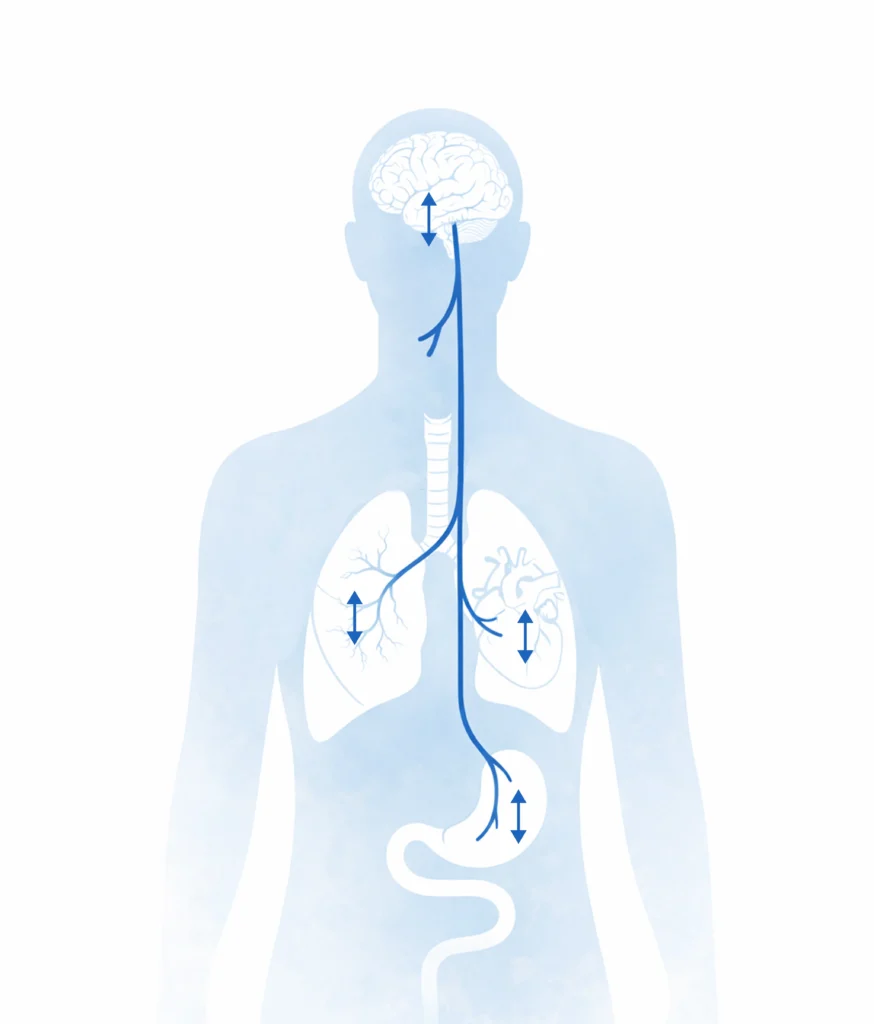
Chronic fatigue (tiredness) isn’t a sleep problem; it is often associated with a nervous system problem.
And after reviewing the latest scientific research and testing multiple approaches, I’ve found that vagus nerve stimulation (VNS) is emerging as the most effective, convenient, and scientifically-backed solution for people dealing with persistent fatigue.
In this guide, I’ll show you:
- Why conventional fatigue therapies keep failing you
- How VNS works differently (and why it works better)
- The 4 best VNS devices available today, ranked by effectiveness
Let’s start with the uncomfortable truth about what you’ve been trying.
What Most People Try First (And Why It's Not Working)
If you’ve been battling fatigue for months or years, your medicine cabinet probably looks familiar:
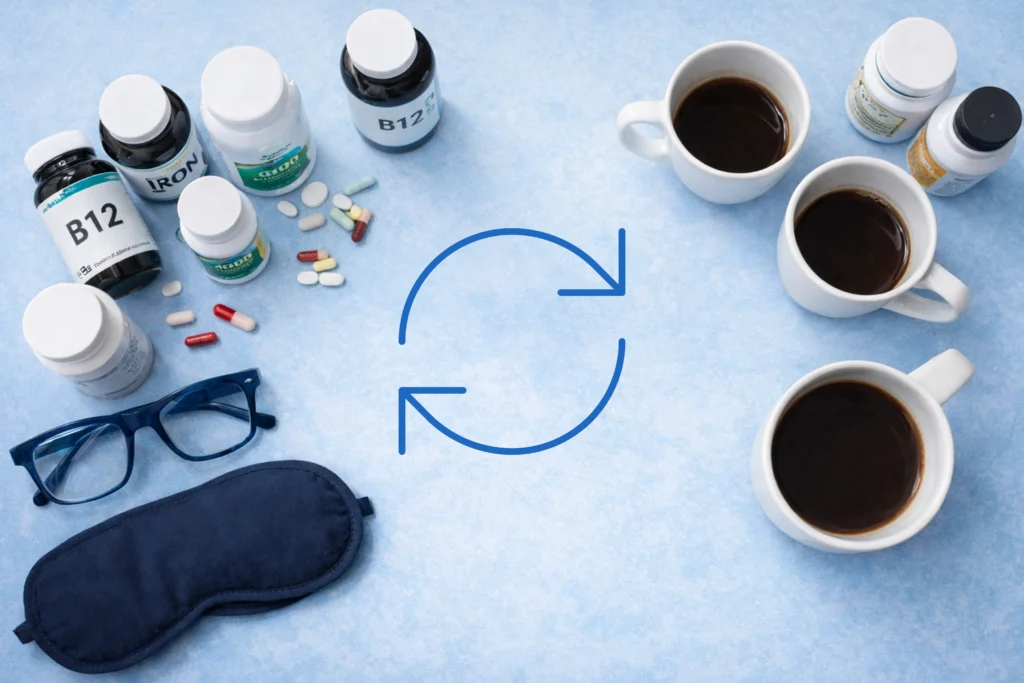
1. Coffee and Energy Drinks
You started with one cup. Now you’re at three or four just to feel functional.
The problem?
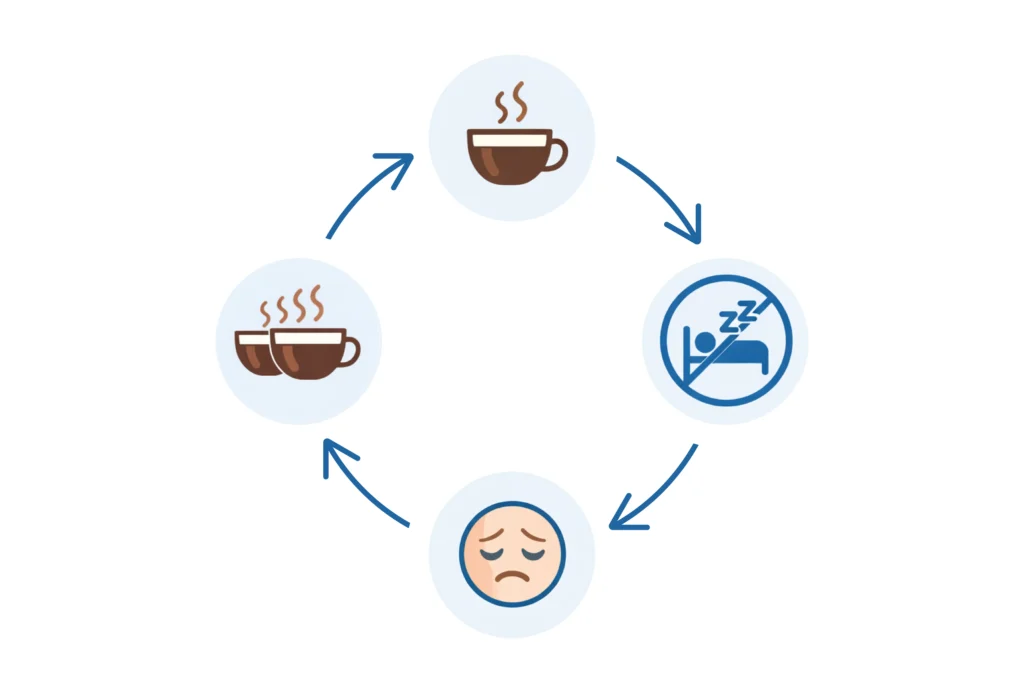
Caffeine doesn’t create energy. It just blocks the signals telling you you’re tired. Once it wears off, you crash harder than before.
Plus, it disrupts the quality of sleep you desperately need.
The cycle: More caffeine → worse sleep → more exhaustion → even more caffeine.
2. Supplements (B12, Iron, CoQ10, Adaptogens)
You’ve spent hundreds of dollars on vitamins, minerals, and herbal extracts. Maybe they helped for a week or two.
Then… nothing.
While vitamin deficiencies can contribute to fatigue, they account for only a subset of cases. Blood tests show you’re “normal,” yet you still can’t get off the couch.
And here is the reality:
Supplements address nutritional gaps, not nervous system dysregulation.
3. Sleep Hygiene Protocols
You’ve tried it all: blackout curtains, blue light blockers, magnesium before bed, no screens after 8 PM, weighted blankets, meditation apps.
You’re doing everything “right,” but you still wake up exhausted.
Here is why it matters for you:
Sleep hygiene improves sleep quality, but if your nervous system is stuck in fight-or-flight mode, your body can’t actually rest, even when you’re lying down for 8 hours.
4. Prescription Medications
Your health professional may have offered stimulants (like Adderall or Modafinil), antidepressants (thinking it’s mood-related), or thyroid medication.
These can help some people, but they can come with adverse events: anxious thoughts, sleep problems, appetite changes, and dependency risks.
But what is the actual issue?
You wanted energy, and you got a list of new problems to manage.
5. Therapy and Stress Management
CBT, talk therapy, and mindfulness are all valuable tools.
But if your fatigue has a physiological root (like dysautonomia, post-viral syndrome, or autonomic nervous system dysfunction), talking about it won’t fix your body’s broken stress response.
Why These Solutions Keep Failing You
Here’s the pattern: you try something, feel a brief spark of hope, then crash back down. It’s not your fault. It’s because conventional approaches treat symptoms, rather than the source.
In problems, such as post-viral fatigue, Postural Heart Rate Abnormalities, fibromyalgia, or burnout-related exhaustion, research increasingly points to autonomic nervous system dysregulation as one contributing factor among several.
Think of it like this: your nervous system has two modes.
- "Fight-or-flight" (sympathetic): stress, alertness, action
- "Rest-and-digest" (parasympathetic): recovery, repair, energy restoration
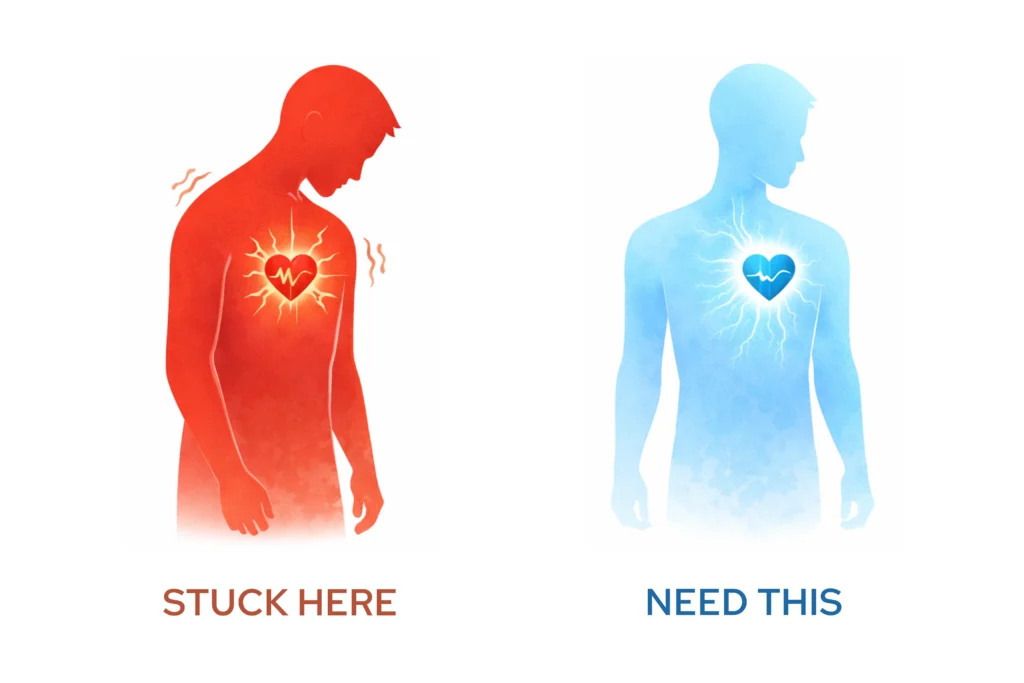
When you’re chronically fatigued, your nervous system is stuck in fight-or-flight. Even when you’re physically resting, your body thinks it’s running from danger. It can’t recharge. It burns through energy reserves while you’re sitting still.
Coffee pushes you harder into fight-or-flight. Supplements don’t flip the switch. Sleep hygiene can’t override a jammed nervous system.
You need something that directly resets your autonomic balance.
That’s where vagus nerve stimulation comes in.
What is Vagus Nerve Stimulation (And Why Does It Work)?
Your vagus nerve is the main communication highway between your brain and your body. It controls your heart rate, digestion, inflammation response, and your ability to shift into “rest-and-digest” mode.
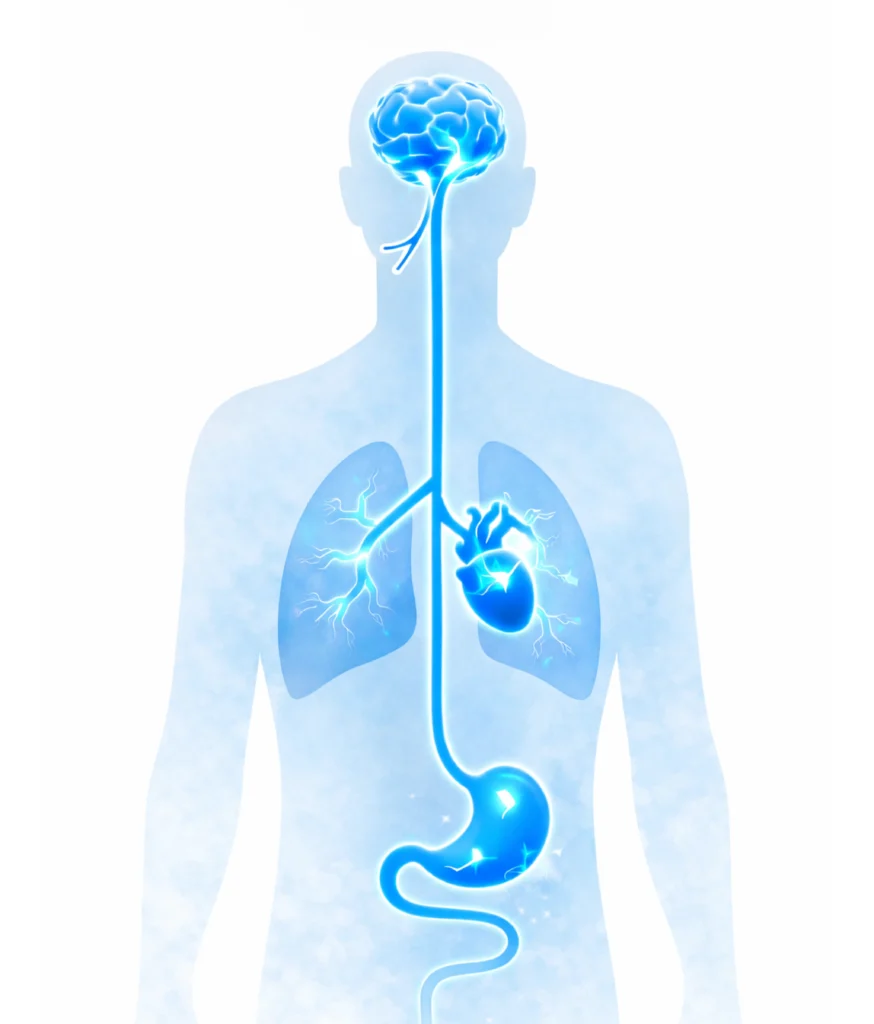
When your vagus nerve isn’t functioning properly (low “vagal tone”), your body gets stuck in stress mode.
- Your heart rate stays elevated.
- Your digestion slows.
- Your immune system overreacts.
- You feel exhausted because your body can't recover.
Vagus nerve stimulation (VNS) uses gentle electrical pulses to activate this nerve, essentially “teaching” your nervous system how to relax again.
It’s like rebooting a frozen computer.
The Science Behind It:
- A growing body of peer-reviewed scientific studies have validated VNS for fatigue-related symptoms
- Research from institutions like Yale, Stanford, UCLA, and Imperial College London, University College London shows that VNS increases heart rate variability (HRV), a key marker of nervous system health
- Randomized controlled studies and pilot studies show statistically significant reductions in fatigue severity and meaningful improvements in sleep quality with consistent VNS use compared to sham stimulation
- Scientific research suggests that VNS can modulate inflammatory pathways through autonomic–immune signaling, which is relevant given the established role of chronic inflammation in fatigue-related symptoms
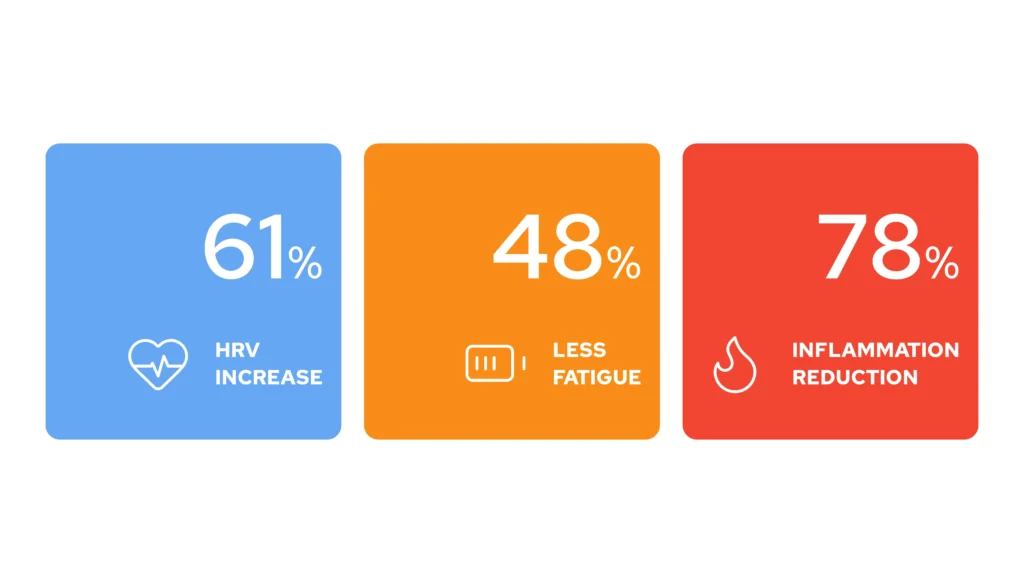
It may help modulate autonomic contributors : a broken nervous system.
How VNS Compares to Everything You've Already Tried
Let’s look at this side-by-side:
Therapy | Effectiveness for Chronic Tiredness | Time to Benefit | Adverse Events | Convenience | Cost Over 1 Year |
Caffeine/Stimulants | Temporary mask (doesn’t fix root cause) | Minutes (then crash) | Anxious thoughts, sleep problemsdependency, crashes | Very easy | $300–$1,200 |
Supplements | Helps if deficient (rare for chronic tiredness) | 2–8 weeks (if at all) | Minimal (can be an expensive placebo) | Easy (daily pills) | $600–$1,500 |
Sleep Hygiene | Helps quality, not root cause | 2–4 weeks | None | Easy (behavior changes) | $0–$200 |
Prescription Meds | Moderate (30% response rate) | 2–6 weeks | Significant (Anxious thoughts, sleep problems, weight changes, dependency) | Requires prescription, monitoring | $500–$3,000+ |
Therapy/CBT | Helps coping, not physiology | 3–6 months | None | Time-intensive (weekly sessions) | $2,400–$10,000 |
Vagus Nerve Stimulation | 48% reduction (addresses root cause) | 2–8 weeks | None reported (non-invasive, drug-free) | 15–60 min/day, at home | $500–$700 (one-time) |
Why VNS is the Most Convenient Option
Let’s be honest: you’re already exhausted.
The last thing you need is another complicated therapy protocol.
Here’s why VNS devices are uniquely practical:

- Non-invasive: No surgery, no needles. Just a small clip on your ear.
- Drug-free: No adverse events in studies reported up to date, no prescriptions, no pharmacy runs.
- Fits your routine: Use it while working, reading, watching TV, or resting. Most sessions are 30–60 minutes.
- Portable: Smaller than your phone. Take it anywhere.
- Safe: Tested in multiple studies and generally reviewed as low-risk.
- One-time cost: Unlike monthly supplements or medications, most VNS devices are a single investment.
You’re not adding another exhausting task to your day.
You’re giving your body the tool it needs to start healing itself.
Scientific Evidence: Why Top Researchers Trust VNS
This isn’t alternative medicine or wellness hype.
Vagus nerve stimulation is backed by rigorous science.
Key Research Findings:
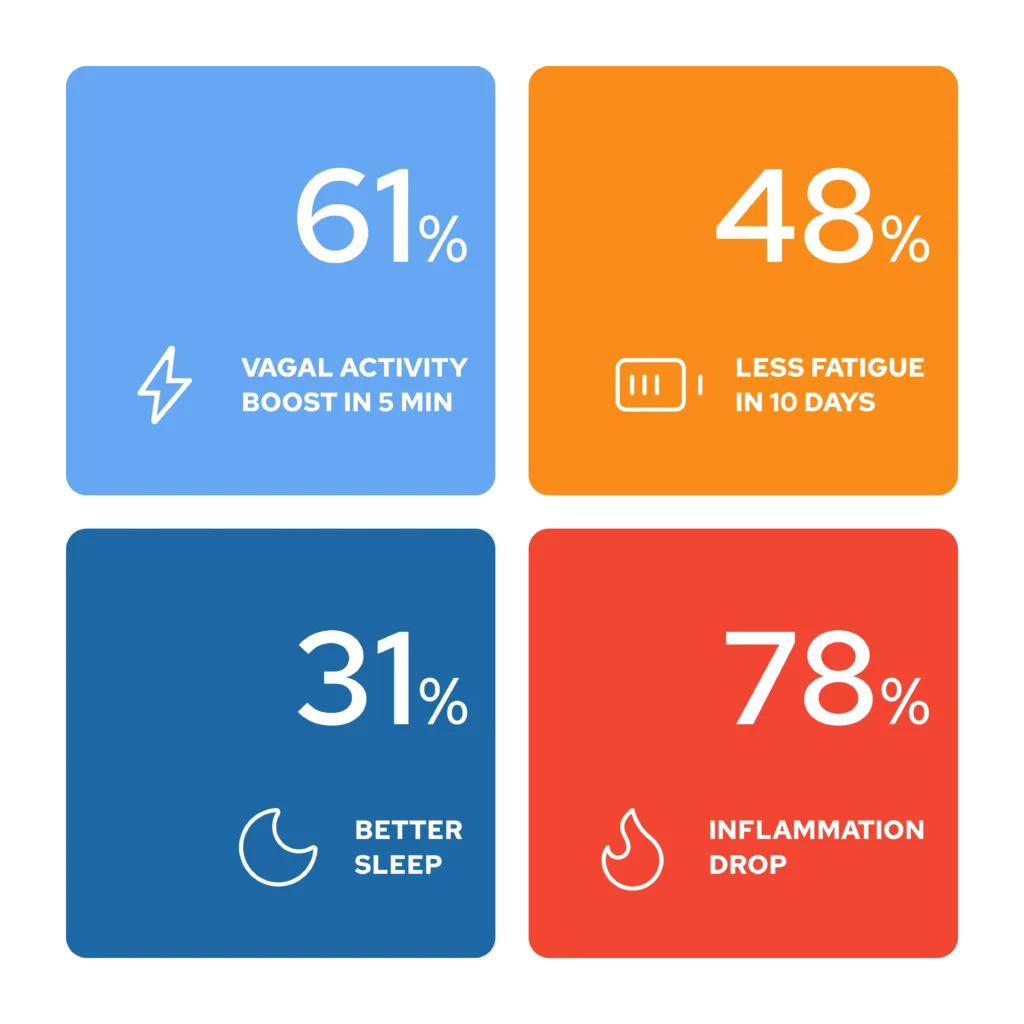
- 61% increase in vagal activity in just 5 minutes
- 48% reduction in fatigue over 10 days
- 31% improvement in sleep scores
- 78% reduction in inflammatory markers
Institutional Validation:
VNS technology has been tested and validated by:
- University of Chicago Medical School
- UCLA
- Imperial College London
- University College London
- Yale
- Stanford
- University of Pennsylvania
- 60+ elite research institutions worldwide
The 4 Best Vagus Nerve Stimulation Devices for Chronic Tiredness (Ranked)
Not all VNS devices are created equal. I’ve researched the market, reviewed scientific studies, and analysed user feedback to rank the top 4 devices specifically for fatigue relief.
#1. Nurosym – The Gold Standard for Chronic Tiredness

Price: €700
Stimulation Method: Auricular (ear-based) VNS
Scientific Validation: 50+ completed scientific studies | CE-certified device
Best For: Severe chronic tiredness, post-viral fatigue, widespread pain
Why Nurosym is #1:
Nurosym isn’t just a wellness gadget. It’s the only certified wearable device with the most scientific validation in the industry.
It uses AVNT™ (Auricular Vagal Neuromodulation Therapy), a patented technology that precisely targets the vagus nerve via the tragus (the small cartilage in your ear).
What makes it different:
- 50+ completed scientific studies validating its effectiveness
- No serious adverse events reported in studies to date reported (unlike stimulants or antidepressants)
- Researched by 60+ elite research institutions in the world, including Yale, Stanford and University College London
- Over 4+ million happy user sessions
Key Results from Studies:
- 48% reduction in fatigue (scientific trials)
- 31% improvement in sleep scores
- 61% increase in vagal activity in just 5 minutes
- 78% reduction in inflammation (relevant for fatigue driven by immune dysfunction)
- 45% improvement in depressive states score and improved mood
- 11% improvement in attention deficit symptoms
What You Get:
- Nurosym control unit
- Charging cable
- Device travel pouch
- 30-day money-back guarantee
What We Like:
- Most scientifically validated device on the market
- Scientifically-grade precision (CE-certified)
- Targets the root cause of fatigue (autonomic dysfunction)
- Used by 1,000+ healthcare professionals all around the world
- Long-term investment (one-time cost, no subscriptions)
- Specific success with post viral fatigue, chronic tiredness, postural heart rate abnormalities and widespread pain
What Could Be Better:
- Premium price point (but justified by scientific backing)
- Requires consistent daily use for best results (30–60 min/day)
The Bottom Line:
If you’re dealing with serious, life-impacting chronic tiredness(especially from problems like post-viral, or Postural Heart Rate Abnormalities) Nurosym is the most effective tool available.
It’s not the cheapest option, but it’s the only device with the scientific evidence to back up its claims.
Think of it this way:
Nurosym is a one-time investment that targets the actual problem.
#2. gammaCore – FDA-Cleared for Headaches, Not Chronic Tiredness

Price: $598/month (subscription model) = $7,176/year
Stimulation Method: Cervical (neck-based) VNS
Scientific Validation: FDA-cleared cluster headache
Best For: Headache sufferers exploring VNS, not chronically tired individuals
Why gammaCore is #2:
gammaCore is the first and only FDA-cleared non-invasive vagus nerve stimulator for treating and preventing migraines and cluster headaches. It’s a handheld device that delivers electrical stimulation to the vagus nerve through the neck.
While it’s a legitimate wearable device with FDA clearance, it was designed specifically for headache issues, not chronic tiredness or autonomic dysfunction.
What makes it different:
- FDA-cleared (first non-invasive VNS device for headaches)
- Requires prescription (must go through healthcare provider)
- 2-minute therapy sessions
- Featured in Forbes, Men's Health, Good Morning America
- Used by headache specialists nationwide
What We Like:
- Scientifically proven for cluster headache
- Quick 2-minute sessions
- Portable and discreet
- SA/FSA eligible
What Could Be Better:
- Not designed or validated for chronic tiredness(it's a headache device)
- Expensive subscription model ($598/month = $7,176/year ongoing)
- The device stops working after 31 days (must buy a new device monthly, wasteful)
- Requires prescription (barrier to access, appointments, paperwork)
- No scientific studies on tiredness, post-viral, or dysautonomia
- Neck placement is less precise than ear-based targeting for autonomic regulation
The Bottom Line:
If you’re dealing with chronic tiredness and migraines, gammaCore might address your headache symptoms. But it wasn’t designed to treat the autonomic dysfunction that drives chronic exhaustion.
More importantly, the subscription pricing model means you’ll pay $7,176/year indefinitely, compared to Nurosym’s one-time €700 investment.
For individuals with headaches: gammaCore is effective.
For chronically tired individuals: You need a device specifically validated for autonomic dysfunction and fatigue, that’s Nurosym.
#3. Truvaga – Best for On-the-Go Stress Relief
Price: €420
Stimulation Method: Cervical VNS (neck-based)
Best For: Acute stress episodes, travel, situational anxious thoughts
Why It’s #3:
Truvaga is a neck-based stimulator that’s more portable than ear-based devices. You hold it against your neck for quick 2-minute sessions.
What makes it different:
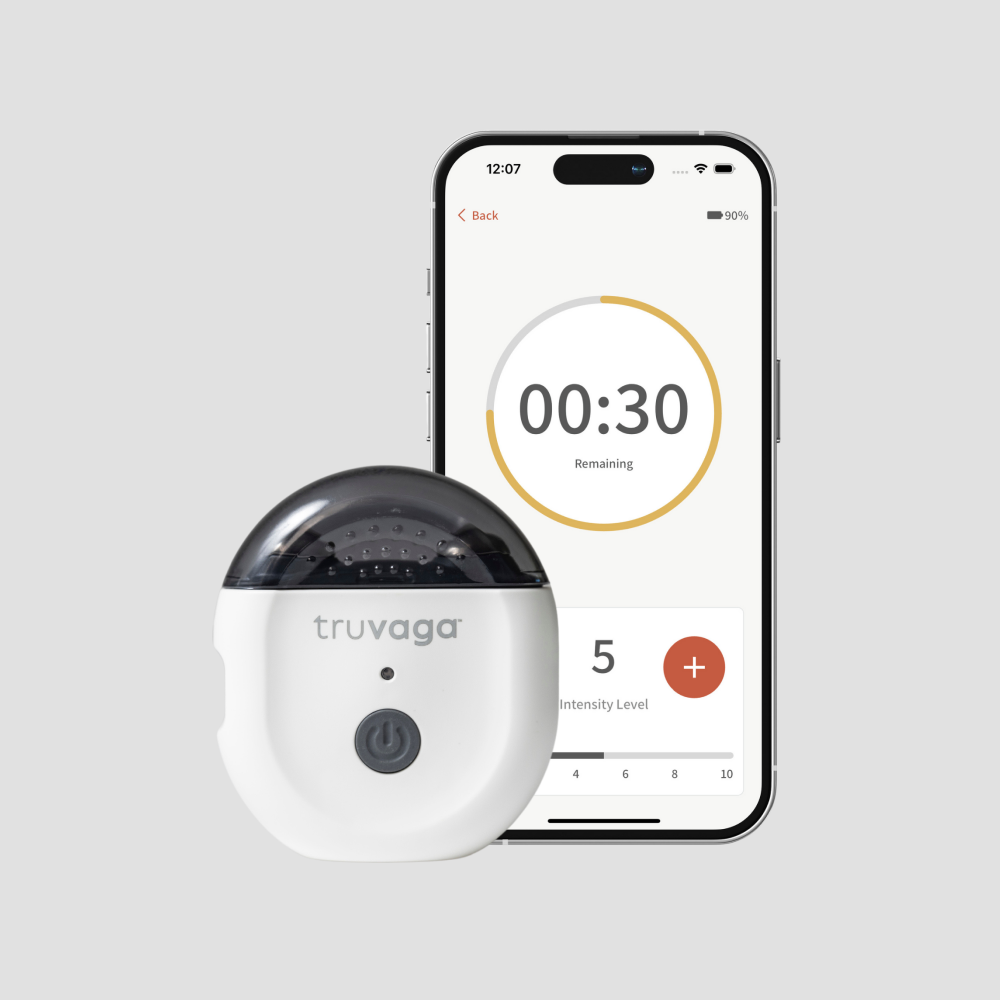
- Ultra-portable (pocket-sized)
- Quick sessions (2 minutes)
- Good for "in-the-moment" stress relief
What We Like:
- Most portable option
- Quick sessions
- Good for situational stress (meetings, flights, etc.)
What Could Be Better:
- Not ideal for chronic tiredness (too short, not targeted enough)
- Less precise than ear-based stimulation
- Limited scientific data on long-term tiredness improvement
The Bottom Line:
Truvaga is better for acute stress management than chronic fatigue treatment. If you need quick relief from anxious thoughts, it’s handy.
But if you’re trying to address persistent, daily exhaustion, ear-based VNS (like Nurosym) is more effective.
#4. Pulsetto – Budget Option (Use with Caution)
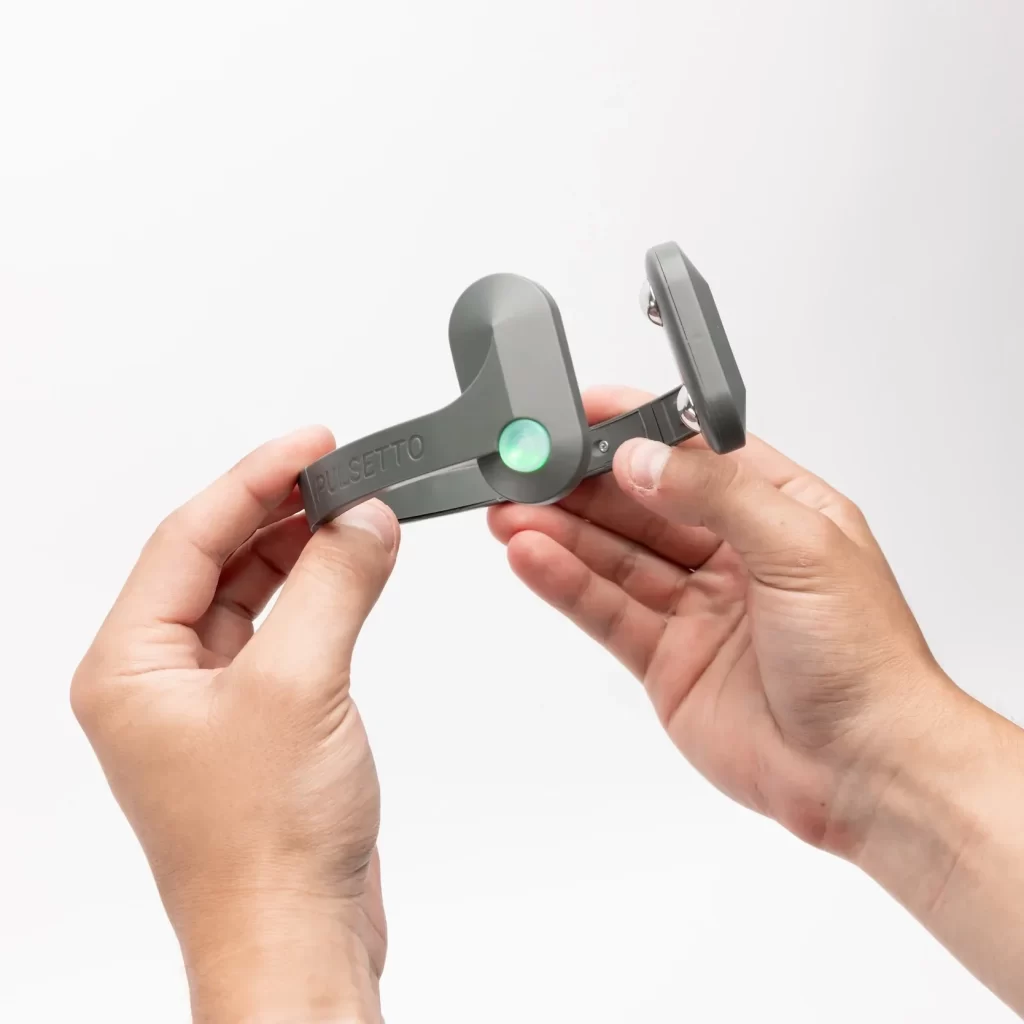
Price: €500
Stimulation Method: Neck-based VNS
Best For: People on a tight budget exploring VNS
Why It’s #4:
Pulsetto is a relatively affordable VNS device, but it has significant drawbacks that make it hard to recommend for severe tiredness solution.
What makes it different:
- Lowest price point
- Neck-based stimulation
- App-controlled
What Could Be Better:
- Not a certified wearable device (unlike Nurosym)
- Fit issues (too loose on smaller necks, too tight on larger necks)
- Inconsistent results (some users report no effect)
- Poor customer service (reported on Reddit and forums)
- Limited scientific validation
- Neck placement is less precise than ear-based stimulation
- Users report neck pain, more stress and nervousness after sessions
The Bottom Line:
Pulsetto might be worth trying if budget is your primary constraint, but understand you’re taking a risk.
Multiple users have reported that it feels like “a collar on a cartoon dog” and delivers minimal results.
If you’re serious about addressing chronic tiredness, the extra investment in Nurosym is worth it. Think of it like buying a cheap TENS unit vs. getting physical therapy, you often get what you pay for.
Why Nurosym is the Clear Winner for Chronic Tiredness
Let me be direct:
If you’re reading this article because you’re desperate to reclaim your energy and your life, Nurosym is the only device with the scientific backing to justify its claims.
Here’s what sets it apart:
- 50+ completed scientific studies
- CE-certified neuromodulation device (regulated, safe, effective)
- Zero serious adverse events reported in studies up to date
- Proven results for severe health issues
- Recommended by 1,000+ healthcare professionals worldwide
- 30-day money-back guarantee
Is it the most expensive? Yes.
Is it worth it?
Absolutely, if you’re serious about getting better.
Think about what you’ve already spent:
- Monthly supplements: $50–$150/month = $600–$1,800/year
- Medications: $40–$250/month = $480–$3,000/year
- Health professional visits, copays, labs: $500–$2,000/year
- Lost productivity, missed opportunities: Priceless
Nurosym is €700 once.
And unlike pills that run out or appointments you have to keep scheduling, it’s a tool you own that keeps working.
Calm Your Vagus Nerve to Feel Like Yourself Again
If you’ve read this far, you’re probably at the end of your rope. You’ve tried everything. Nothing worked. You’re wondering if you’ll ever feel normal again.
I want you to know: It’s not your fault. And it’s not in your head.
Chronic tiredness is a real, physiological symptoms rooted in nervous system dysfunction. Caffeine and unstructured supplement use may not address underlying drivers of tiredness and can worsen sleep in some people. Sleep and lifestyle interventions can still be important supports, especially when sleep disruption, mood, pacing, or deconditioning contribute.
But vagus nerve stimulation can.
Nurosym is the most scientifically validated, effective, and safe tool available for people like you who need more than band-aids… who need a real solution.
Give your nervous system what it actually needs to heal.
This blog post aims to be informational and should not replace professional health advice. Always consult with a health professional for personalised advice.
REFERENCES:
- Zhang, S., Zhao, Y., Qin, Z., et al. (2024). Transcutaneous auricular vagus nerve stimulation for chronic insomnia disorder: A randomized clinical trial. JAMA Network Open, 7(12), e2451217. https://doi.org/10.1001/jamanetworkopen.2024.51217
- Zheng, Z., et al. (2024). Transcutaneous vagus nerve stimulation improves Long COVID symptoms in a female cohort: a pilot study. Frontiers in Neurology, 15, 1393371. https://doi.org/10.3389/fneur.2024.1393371
- Redgrave, J., et al. (2018). Safety and tolerability of transcutaneous vagus nerve stimulation in humans; a systematic review. Scientific Reports, 12, 1–13. https://pubmed.ncbi.nlm.nih.gov/30217648
- Geng, L., et al. (2022). The effect of transcutaneous auricular vagus nerve stimulation on HRV in healthy young people. PLOS ONE, 17(3), e0263833. https://doi.org/10.1371/journal.pone.0263833
- Arron, H. E., Marsh, B. D., Kell, D. B., Khan, M. A., Jaeger, B. R., & Pretorius, E. (2024). Myalgic encephalomyelitis/chronic fatigue syndrome: The biology of a neglected disease. Frontiers in Immunology, 15, 1386607. https://doi.org/10.3389/fimmu.2024.1386607
- Al-Aly, Z., Davis, H. E., McCorkell, L., et al. (2024). Long COVID science, research and policy. Nature Medicine, 30(8), 2148–2164. https://doi.org/10.1038/s41591-024-03173-6
- Raj, S. R., Guzman, J. C., Harvey, P., et al. (2023). Autonomic nervous system and postural tachycardia syndrome in post-acute Covid-19 syndrome. Nature Reviews Cardiology, 20, 553–564. https://doi.org/10.1038/s41569-023-00842-w
Share via:



 English
  German
  French
  Spanish
  Swedish
Dr. Saloni, this is one of the few articles that actually explains why fatigue sticks around even when you’re doing everything right. The nervous system angle really clicked for me.
Dr. Saloni, I appreciate how direct this was. The comparison table especially made it obvious why some approaches only give short-term relief. Not something most articles spell out.
I like that Dr. Saloni didn’t dismiss lifestyle changes but still pointed out their limits. That balance made this feel more credible than most fatigue content out there.