
Eine umfassende Übersicht darüber, wie VNS-Geräte die Schmerz- und Entzündungsregulierung unterstützen, indem sie Dysregulationen des Nervensystems angehen, mit Expertenrankings der vier besten zertifizierten Optionen.
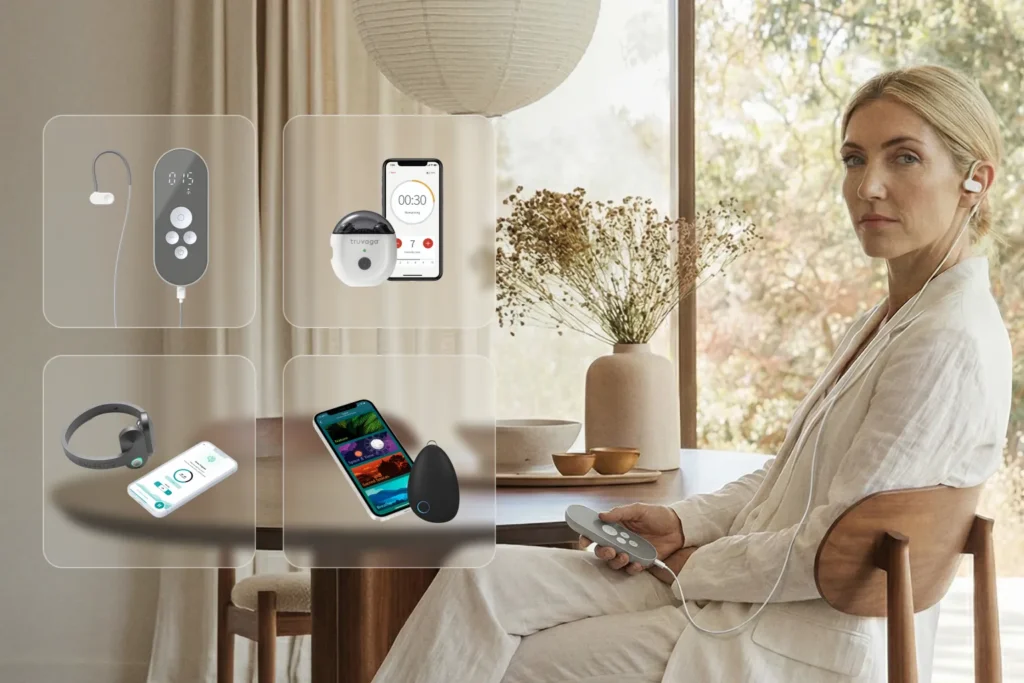
Eine umfassende Übersicht darüber, wie VNS-Geräte die Schmerz- und Entzündungsregulierung unterstützen, indem sie Dysregulationen des Nervensystems angehen, mit Expertenrankings der vier besten zertifizierten Optionen.
Vieles davon hat auf einem Scan keine einzelne sichtbare Ursache und ist stattdessen mit einer chronischen, geringgradigen Entzündung verbunden.
Im Gegensatz zu den akuten Schmerzen einer Verletzung, die mit der Heilung des Körpers verschwinden, spiegeln anhaltende Schmerzen und Entzündungen häufig eine zugrunde liegende Schwierigkeit im autonomen Nervensystem wider, dem System, das dafür verantwortlich ist, die Entzündungsreaktion des Körpers unter Kontrolle zu halten.
Und die Wissenschaft holt auf
Neuere neurowissenschaftliche Forschungen legen nahe, dass eine Funktionsstörung des Vagusnervs neben strukturellen Ursachen, Autoimmunprozessen und zentraler Sensibilisierung ein wichtiger Mechanismus sein könnte, der bei einer Untergruppe von Personen mit chronischen Schmerzen und Entzündungen eine Rolle spielt.
Wenn dieser wichtigste parasympathische Nerv eine verminderte Aktivität zeigt, kann der Körper einen Teil seiner Fähigkeit verlieren, Entzündungen zu regulieren, Schmerzsignale zu dämpfen und sich von alltäglichen körperlichen Anforderungen zu erholen.
Dieser Leitfaden untersucht den Zusammenhang zwischen der Funktion des Vagusnervs und chronischen Schmerzen und Entzündungen und bewertet die führenden Geräte zur Vagusnervenstimulation (VNS), die zur Wiederherstellung des autonomen Gleichgewichts beitragen und die körpereigenen Regulierungssysteme unterstützen können.
Symptome chronischer Schmerzen und Entzündungen
Chronische Schmerzen und Entzündungen sind durch anhaltende Beschwerden und das Gefühl einer Entzündung des Körpers gekennzeichnet, die über die normale Heilungszeit hinausgehen und oft keine einzige klare strukturelle Ursache haben. Zu den häufigsten Erscheinungsformen gehören:
Schmerzbedingte Symptome:
- Anhaltende Schmerzen in den Gelenken, Muskeln oder im Rücken
- Länger anhaltende Morgensteifheit, die im Laufe des Tages langsam nachlässt
- Weit verbreitete Schmerzen oder Druckempfindlichkeit ohne offensichtliche Verletzung
- Schmerzen, die von Tag zu Tag wandern oder variieren
- Eine erhöhte Empfindlichkeit, bei der sich leichte Stöße oder Druck schlimmer anfühlen als erwartet
Entzündliche Merkmale:
- Ein geschwollenes oder geschwollenes Gefühl in den Händen, im Gesicht oder in den Gelenken
- Ein Gefühl von Hitze oder Wärme in den betroffenen Bereichen
- Wiederkehrende Flares, oft ohne offensichtlichen Auslöser
- Langsame Erholung von körperlicher Anstrengung oder geringer Belastung
- Steifheit nach Ruhephasen oder Inaktivität
Systemische und damit verbundene Symptome:
- Anhaltende Müdigkeit, die in keinem Verhältnis zur Aktivität steht
- Kognitive Verlangsamung oder „Gehirnnebel“
- Gestörter, nicht erholsamer Schlaf
- Niedrige Stimmung oder verminderte Stresstoleranz
- Ein allgemeines Gefühl, heruntergekommen oder entzündet zu sein
Autonome und physiologische Merkmale:
- Reduzierte Herzfrequenzvariabilität
- Ein erhöhter, „in Alarmbereitschaft“ befindlicher physiologischer Zustand
- Symptomausbrüche, die eng mit Stress einhergehen
- Muskelverspannungen und Entspannungsschwierigkeiten
- Langsame Rückkehr zum Ausgangswert nach Anstrengung
Die funktionellen Auswirkungen gehen weit über die Beschwerden selbst hinaus und beeinträchtigen Arbeit, Schlaf, körperliche Aktivität, Stimmung und allgemeine Lebensqualität.
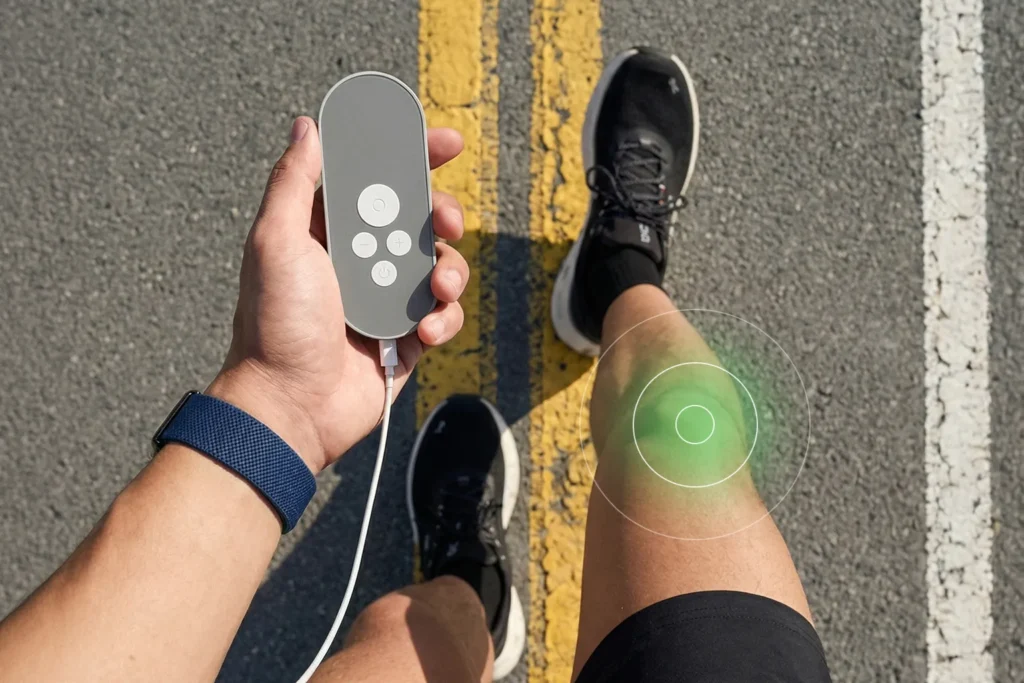
Selbsteinschätzung chronischer Schmerzen und Entzündungen
Bewerten Sie die Funktionen, die Sie regelmäßig erleben:
schmerzen
- Ich habe anhaltende Schmerzen in meinen Gelenken, Muskeln oder im Rücken
- Meine Steifheit ist morgens am schlimmsten und lässt langsam nach
- Ich fühle mich wund oder empfindlich, ohne eine offensichtliche Verletzung
- Kleinere Stöße oder Druck fühlen sich schmerzhafter an, als sie sollten
- Meine Schmerzen dauern drei Monate oder länger
Entzündungen
- Ich fühle mich oft geschwollen oder geschwollen in meinen Händen, meinem Gesicht oder meinem Gelenk
- Ich bemerke Wärme oder Hitze in den betroffenen Bereichen
- Ich erlebe Leuchtraketen, die ohne klare Auslöser kommen und gehen
- Ich bin steif, nachdem ich still gesessen oder mich ausgeruht habe
- Ringe, Uhren oder Schuhe fühlen sich manchmal enger an als sonst
Erholung und körperliche Funktion
- Ich erhole mich langsam von körperlicher oder körperlicher Anstrengung
- Ein arbeitsreicher oder aktiver Tag kostet mich die nächsten ein oder zwei Tage
- Körperliche Aktivität löst oft einen Schub aus
- Ich habe reduziert, was ich tue, um später nicht dafür bezahlen zu müssen
- Ich verlasse mich mehr auf entzündungshemmende Medikamente, als mir lieb ist
Systemische und autonome Zeichen
- Ich fühle mich ständig müde und erschöpft
- Mein Schlaf ist schlecht oder nicht erholsam
- Ein Wearable zeigt, dass meine HRV konstant niedrig ist
- Meine Symptome verschlimmern sich in stressigen Zeiten merklich
- Es fällt mir schwer, mich auch im Ruhezustand zu entspannen
Geschichte und Kontext
- Standardbehandlungen haben nur unvollständige Linderung gebracht
- Scans und Tests haben meine Symptome nicht vollständig erklärt
- Meine Schwierigkeiten verschlimmern sich in Stressphasen
- Meine Symptome erstrecken sich über mehr als einen Körperteil
- Die medizinische Untersuchung hat keine einzige eindeutige Ursache identifiziert
Wenn Sie sich mit mehreren Merkmalen in den Kategorien Schmerz, Entzündung und Genesung identifizieren, können chronische Schmerzen und Entzündungen eine formelle Beurteilung durch einen Arzt rechtfertigen.
Bei manchen Personen können ein beeinträchtigter Vagustonus und ein erhöhter Entzündungszustand zur Schwere der Symptome beitragen, sodass Ansätze, die die autonome Regulierung unterstützen, unter medizinischer Anleitung eine mögliche Ergänzung darstellen.
Die Stimulation des Vagusnervs kann als ein solcher zusätzlicher Ansatz ein Gespräch mit Ihrem Arzt rechtfertigen.
Die Vagusnervverbindung
Was ist der Vagusnerv?
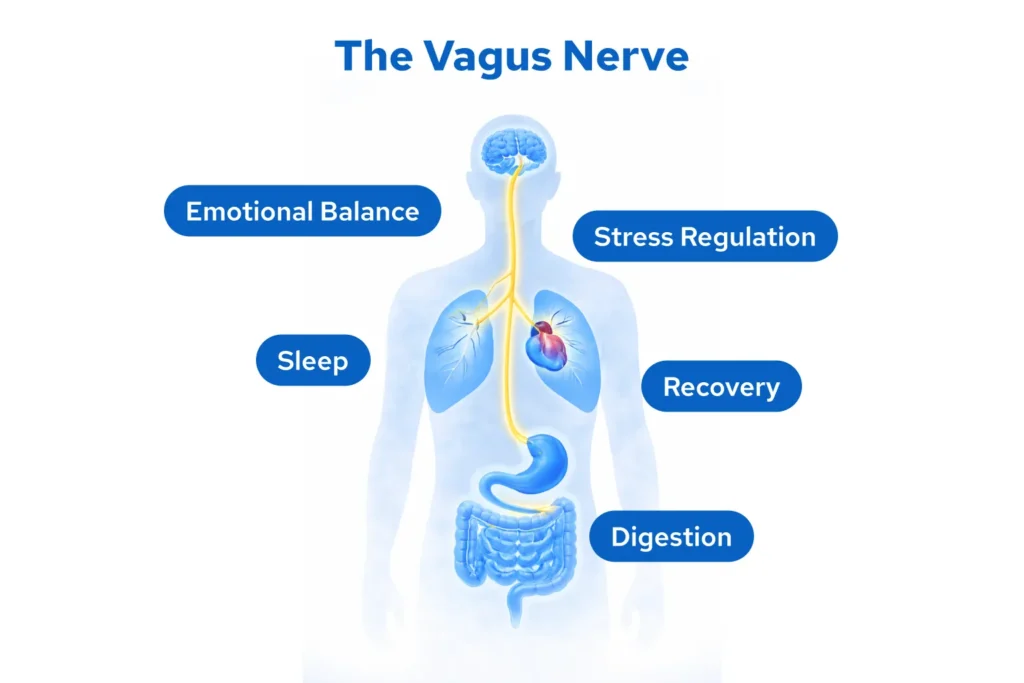
Der Vagusnerv (Hirnnerv X) ist der längste und komplexeste Nerv des autonomen Nervensystems. Er entspringt in der Medulla oblongata und ragt durch den Hals, um Herz, Lunge und Magen-Darm-Trakt zu innervieren.
Es vermittelt mehrere Funktionen, die direkt für Schmerzen und Entzündungen relevant sind:
- Der Entzündungsreflexweg (der cholinerge entzündungshemmende Weg)
- Regulierung entzündungsfördernder Signale im gesamten Körper
- Herz-Kreislauf- und Atemwegsregulierung
- Der Übergang des Körpers in Ruhe-, Reparatur- und Erholungszustände
- Integration von Schmerz- und Stresssignalen im Hirnstamm
- Modulation der gesamten physiologischen Erregung
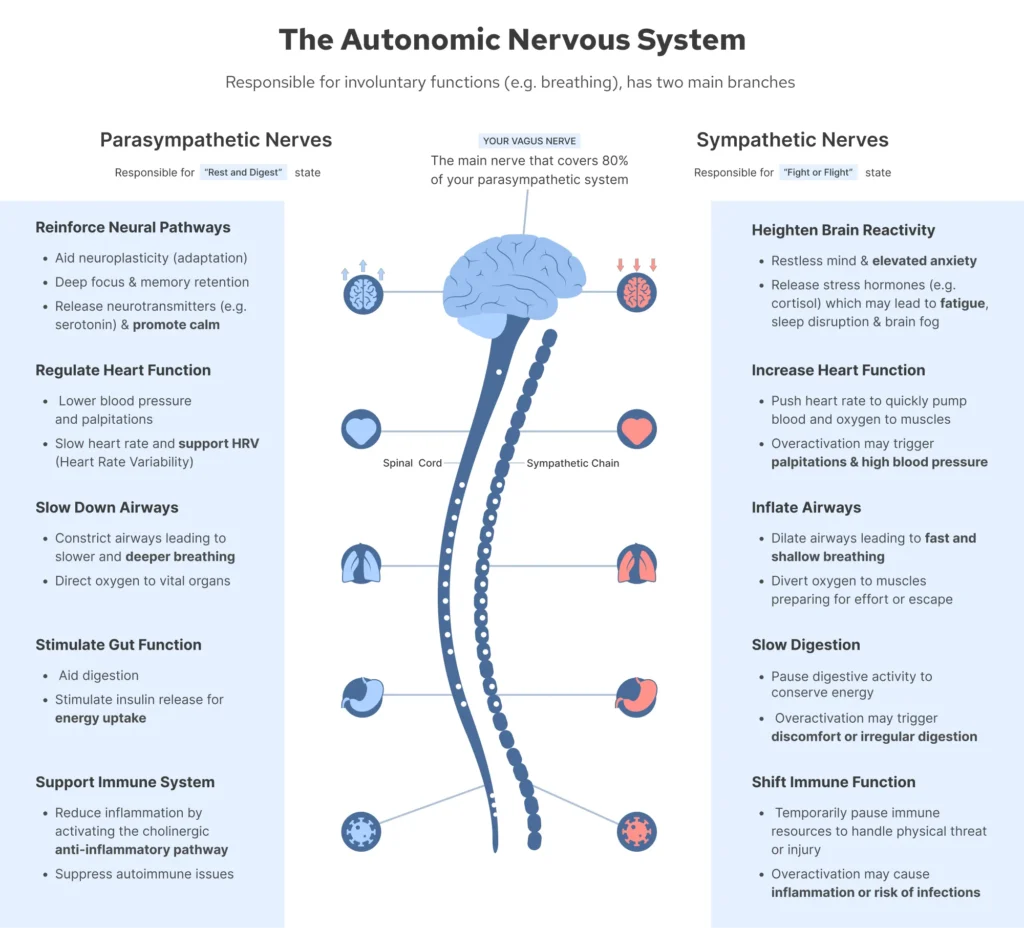
Das Zwei-Modus-System
Ihr autonomes Nervensystem funktioniert über zwei komplementäre Abteilungen:
- Sympathisch (thorakolumbaler Ausfluss): Erhöht die Herzfrequenz, steigert die Erregung und bereitet den Körper auf Aktivität oder wahrgenommene Bedrohung vor. Eine anhaltende Aktivierung ist mit einem erhöhten Entzündungs- und Schmerzzustand verbunden.
- Parasympathikus (vagaler Ausfluss): Es wird überwiegend vom Vagusnerv gesteuert, unterstützt die Genesung und Reparatur und wirkt vor allem als Bremse für die Entzündungsreaktion des Körpers.
Eine gesunde Regulierung erfordert ein dynamisches Gleichgewicht zwischen diesen Systemen.
Anhaltender Stress, Krankheit oder chronische Belastung können jedoch den Vagustonus beeinträchtigen, wodurch das sympathische System dominant und die Entzündungsbremse weniger wirksam wird.
Wie eine Funktionsstörung des Vagusnervs zu chronischen Schmerzen und Entzündungen beiträgt
Wenn der Vagusnerv eine verringerte Aktivität aufweist (niedriger Vagustonus):
- Verlust der Entzündungsbremse: Der Vagusnerv reguliert den cholinergen entzündungshemmenden Weg, das im Körper eingebaute System zur Eindämmung von Entzündungen. Wenn der Vagustonus niedrig ist, verliert diese Bremse an Wirksamkeit, wodurch eine chronische, leichte Entzündung bestehen bleibt
- Erhöhte entzündungsfördernde Signalgebung: Eine verringerte Vagusaktivität ist mit höheren Konzentrationen entzündungsfördernder Moleküle wie TNF-alpha, IL-6 und IL-1 beta verbunden, die zu Gewebeempfindlichkeit, Schmerzen und langsamer Genesung beitragen.
- Erhöhte Schmerzempfindlichkeit: Anhaltende sympathische Dominanz und chronische Entzündungen sind mit einer zentralen Sensibilisierung verbunden, bei der das Nervensystem reaktiver wird und gewöhnliche Signale als Schmerz empfunden werden.
- Reduzierte Herzfrequenzvariabilität: HRV ist ein validierter Biomarker für den Vagustonus, und Personen mit chronischen Schmerzen und entzündlichen Erkrankungen weisen häufig eine verringerte HRV auf, was darauf hindeutet, dass das Regulierungssystem nicht ausreichend aktiviert ist.
- Der Spannungs-Flare-Zyklus: Da Stress die sympathische Aktivierung vorantreibt und den Vagustonus unterdrückt, können Stressphasen Entzündungen und Schmerzen verschlimmern, was wiederum die Stressbelastung des Körpers erhöht und eine sich selbst verstärkende Schleife erzeugt.
Es ist wichtig zu beachten, dass chronische Schmerzen und Entzündungen eher eine heterogene Erkrankung als eine einzelne Krankheitseinheit sind.
Eine Funktionsstörung des Vagusnervs ist nicht für alle Fälle verantwortlich.
Einige Personen haben eine klare strukturelle oder autoimmune Ursache, andere haben überwiegend zentrale oder psychologische Treiber und viele weisen überlappende Mechanismen auf.
Eine vagale Beeinträchtigung scheint bei Personen mit verringerter Herzfrequenzvariabilität, einem starken Stress-Flare-Muster oder einer systemischen, multilokalen Manifestation am relevantesten zu sein.
Die wissenschaftlichen Beweise
Veröffentlichte Forschungsergebnisse belegen bedeutsame Zusammenhänge zwischen der Funktion des Vagusnervs, Entzündungen und Schmerzen:
- Der Entzündungsreflex: Eine gut etablierte neurowissenschaftliche Forschung beschreibt den cholinergen entzündungshemmenden Weg, über den die Aktivität des Vagusnervs dem Körper signalisiert, die Produktion entzündungsfördernder Moleküle zu reduzieren. Dies ist die mechanistische Grundlage für das Interesse an der Vagusstimulation bei entzündlichen Erkrankungen.
- Zytokinregulation: Untersuchungen zeigen, dass die Vagusstimulation die Produktion entzündungsfördernder Zytokine wie TNF-alpha reduzieren kann, den Molekülen, die am unmittelbarsten an entzündlichen Gewebeschäden und Schmerzen beteiligt sind.
- HRV und Entzündung: Mehrere Studien berichten von einer umgekehrten Beziehung zwischen dem Vagustonus, gemessen über die Herzfrequenzvariabilität, und Markern systemischer Entzündungen, wobei eine niedrigere HRV mit einer höheren Entzündungslast einhergeht.
- Auswirkungen der transkutanen Vagusnervstimulation: Kontrollierte Untersuchungen zeigen, dass eine transkutane Stimulation des Nervus auricularis vagus die Vagusaktivität innerhalb von Minuten steigern und das autonome Gleichgewicht in Richtung parasympathischer Dominanz verschieben kann, einem Zustand, der mit einer besseren Entzündungsregulierung einhergeht.
- Die mechanistische Schlussfolgerung: Die Unterstützung der Vagusnervenfunktion durch gezielte Stimulation befasst sich mit einem der zugrunde liegenden Treiber chronischer Schmerzen und Entzündungen, dem Versagen des körpereigenen entzündungshemmenden Systems, Schritt zu halten, anstatt nur das Symptom zu maskieren.
VNS-Geräte als Lösung: So funktionieren sie
Der technologischen Revolution
Bis vor Kurzem erforderte die Stimulation des Vagusnervs invasive chirurgische Eingriffe, bei denen Elektroden durch Operationen direkt auf dem Nerv implantiert wurden, die ein chirurgisches Risiko, Erholungszeit und eine dauerhafte Platzierung des Geräts mit sich brachten.
Dies beschränkte die VNS-Therapie in erster Linie auf schwere, behandlungsresistente Erkrankungen, bei denen der Nutzen eine Operation rechtfertigte.
Der heutige Ansatz ändert das.
Die moderne transkutane Vagusnervstimulation (tVNS) liefert vergleichbare therapeutische elektrische Impulse an den Vagusnerv und unterstützt so die Wiederherstellung eines geeigneten Tonus, jedoch völlig nicht-invasiv durch die Haut. Keine Operation, keine Implantation und keine Erholungsphase.
Diese Geräte arbeiten über präzise positionierte Elektroden an zwei zugänglichen Stellen:
- Ohrmuschel (Ohr): Ziel ist der Ohrast des Vagusnervs an den Tragus- und Cymba-Muscheln, der einzigen Stelle, an der ein Hirnnerv die Körperoberfläche erreicht.
- Zervikal (Hals): Ziel ist der zervikale Ast des Vagusnervs, wo er oberflächlich unter der Haut in der Nähe der Halsschlagader verläuft.
Dies stellt einen grundlegenden Wandel dar: Stimulationen, die früher auf Operationssäle beschränkt waren, stehen heute für den täglichen Heimgebrauch zur Verfügung, mit Präzision auf Forschungsniveau und ohne Operationsrisiko.
Wirkmechanismus
Wenn präzise kalibrierte elektrische Impulse den Vagusnerv erreichen, lösen sie eine Kaskade von Reaktionen aus, die für Schmerzen und Entzündungen relevant sind:
- Aktivierung des entzündungshemmenden Signalwegs: Die Stimulation aktiviert den cholinergen entzündungshemmenden Weg und unterstützt die körpereigene Unterdrückung entzündungsfördernder Zytokine.
- Neurotransmittermodulation: Die Stimulation löst die Freisetzung von Acetylcholin an parasympathischen Enden aus, wirkt der sympathischen Dominanz direkt entgegen und unterstützt einen ruhigeren physiologischen Zustand.
- Aktivierung des Hirnstammkerns: Afferente Vagussignale projizieren zum Nucleus tractus solitarius, der autonome und schmerzbezogene Informationen integriert und zentrale Regulationszentren moduliert.
- Autonome Neuausrichtung: Konsistente Stimulation unterstützt eine Verschiebung von sympathischer Dominanz hin zur parasympathischen Wiederherstellung, verbessert die Herzfrequenzvariabilität und reduziert den physiologischen Zustand, der Entzündungen aufrechterhält.
- Verbesserung der Neuroplastizität: Sustained use may help reduce central sensitisation over time, rather than producing only a single-session effect.
Wissenschaftliche Parameter
Forschungsvalidierte VNS-Protokolle verwenden typischerweise:
- Sitzungsdauer: 30 bis 60 Minuten täglich, um eine anhaltende Wirkung zu ermöglichen.
- Intensität: Individualisiert auf die sensorische Schwelle, wahrnehmbar, aber angenehm.
- Konsistenz: Tägliche Anwendung für mindestens 8 bis 12 Wochen, da die zugrunde liegenden Veränderungen eine anhaltende Anwendung erfordern.
Erwarteten Zeitplan
VNS unterstützt eher eine schrittweise Anpassung des Nervensystems als eine sofortige Schmerzlinderung:
- Woche 1–2: Verbesserte Entspannung während der Sitzungen, eine mögliche Linderung der Muskelverspannungen und leichte Verbesserungen im Schlaf.
- Woche 3–4: Spürbare Verringerung der Morgensteifheit, stabilere alltägliche Symptome und verbesserte Erholung von alltäglichen Aktivitäten.
- Monat 2–3: Anhaltende Verringerung des geschwollenen oder entzündeten Gefühls, weniger oder mildere Schübe, messbare HRV-Verbesserungen und geringere Abhängigkeit von Symptommanagementstrategien.
- Monat 3+: Wiederherstellung des autonomen Gleichgewichts, dauerhafte Verbesserung des Komforts und der Erholung sowie die Fähigkeit, zuvor begrenzte Aktivitäten wieder aufzunehmen.
Sicherheitserwägungen
Transkutanes VNS wird in Forschungsumgebungen im Allgemeinen gut vertragen. Mögliche vorübergehende Reaktionen können sein:
- Leichtes Kribbeln an der Stimulationsstelle
- Vorübergehende Muskelspannung im Nackenbereich (zervikale Geräte)
- Kurze Benommenheit, die sich normalerweise mit der Protokollanpassung auflöst
Wichtige Einschränkungen: Nicht geeignet für Personen mit Herzschrittmachern, kürzlich aufgetretenen akuten Herzereignissen, Schwangerschaft oder einer Vagotomie in der Vorgeschichte.
Anhaltende Schmerzen sollten immer von einem Arzt untersucht werden, da sie auf eine Erkrankung hinweisen können, die einer direkten Behandlung bedarf. Vor der Einleitung eines VNS-Protokolls ist eine Konsultation des Gesundheitsdienstleisters unerlässlich.
Top 4 VNS-Geräte für chronische Schmerzen und Entzündungen
#1: Nurosym
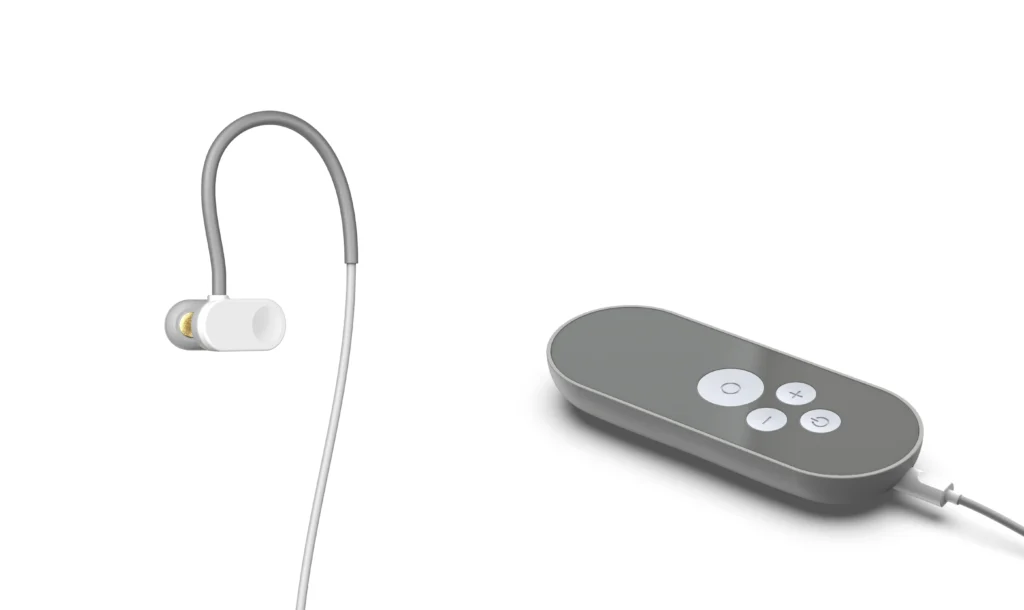
Preis: 700 EUR. Variiert je nach Region (Forschungszuschuss verfügbar)
Art: Ohrmuschel (am Ohr getragen)
Bleifreitechnologie: AVNT™ von Parasym
Warum Nr. 1:
- Am umfassendsten validiert: Unterstützt durch 60+ abgeschlossene klinische Studien führender Forschungseinrichtungen weltweit.
- Nachgewiesene Wirkung auf die autonome Funktion: Untersuchungen dokumentieren eine Verbesserung des Vagustonus (HRV-Metriken) um 61% und eine deutliche Verringerung der sympathischen Überaktivierung, dem autonomen Zustand, der am engsten mit der Entzündungsregulation verbunden ist.
- Mechanistisch ausgerichtet: Wirkt direkt auf den Vagusweg, der die cholinerge entzündungshemmende Reaktion des Körpers steuert, und bietet nicht nur allgemeine Entspannung.
- Unabhängige Zertifizierung: Tragbares Gerät mit CE-Kennzeichnung, das strenge Sicherheits- und Leistungsstandards erfüllt und von Dritten überprüft wurde.
- Forschungseinführung: Wird von 1000+ medizinischen Fachkräften und Forschern verwendet, wobei 5 M+-Benutzersitzungen und 100+ laufende klinische Studien im Gange sind.
- Umfassende Unterstützung: 30-tägiger Evaluierungszeitraum, Beratungsressourcen und reaktionsschneller technischer Support.
Empfohlen für: Personen, deren Schmerzen und Entzündungen systemisch oder an mehreren Stellen auftreten, Personen mit einem starken Stress-Flare-Muster oder einer niedrigen HRV und Personen, die Beweisen Vorrang vor Marketingaussagen einräumen.
#2: Truvaga Plus
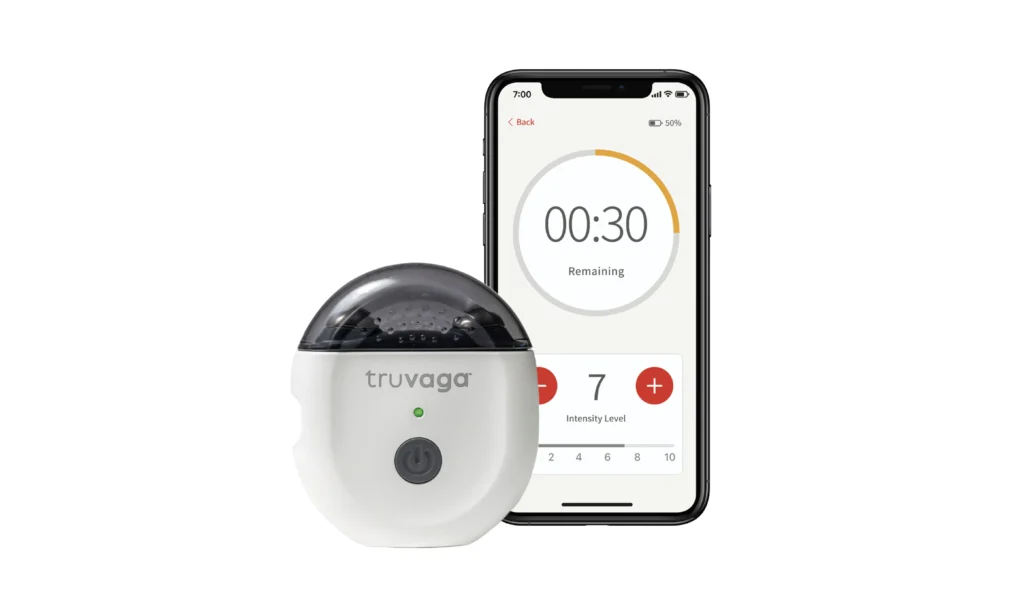
Preis: 544 $+ (Gerät plus leitfähiges Spray und mögliches Abonnement).
Art: Zervikal (Handheld am Hals).
Teilt die Kerntechnologie mit gammaCore, einem von der FDA zugelassenen Gerät gegen Cluster-Kopfschmerzen, nicht gegen chronische Schmerzen oder Entzündungen im Allgemeinen. Erzeugt schnelle parasympathische Effekte mit einem unkomplizierten Protokoll.
Überlegungen: Laufende Kosten für leitfähiges Spray und ein mögliches App-Abonnement. Überprüfen Sie daher vor dem Kauf die Preise.
Zu den berichteten Nebenwirkungen zählen Muskelkrämpfe, Ziehen im Gesicht und Kopfschmerzen. Nicht geeignet für Benutzer mit Herzerkrankungen, Herzschrittmachern oder kürzlich aufgetretenen Herzproblemen. Es wurden einige Probleme mit der App-Konnektivität gemeldet.
Empfohlen für: Diejenigen, die eine zervikale Stimulation mit einer von der FDA zugelassenen Technologielinie (gegen Kopfschmerzen, nicht gegen Entzündungen) bevorzugen und mögliche Auswirkungen auf die Gesichtsmuskulatur tolerieren können.
#3: Pulsetto
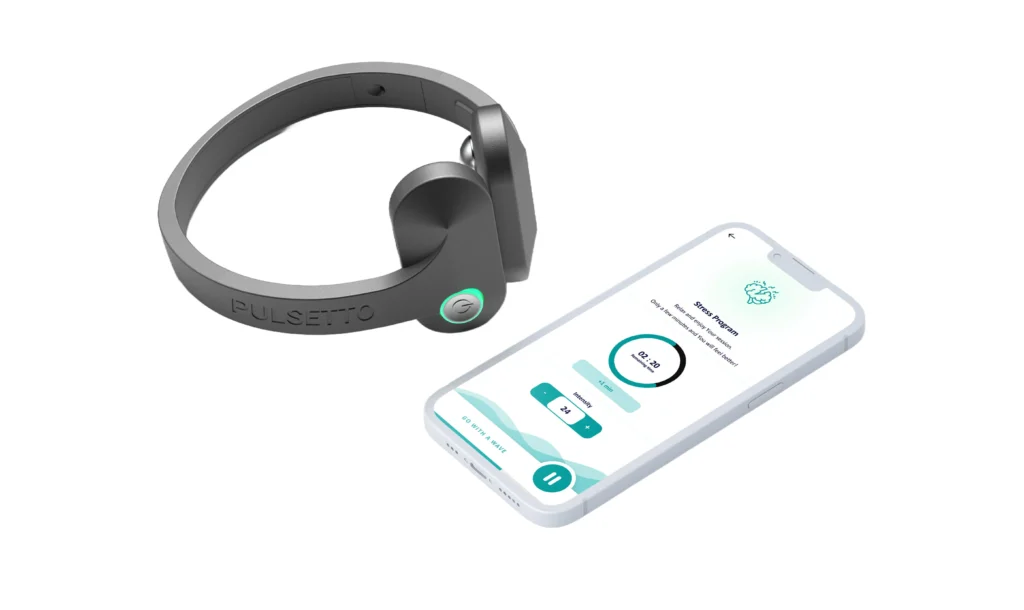
Preis: 350–371 $ (Gerät plus Jahresgel).
Art: Halswirbelsäule (Freihandkragen).
Zu den Vorteilen gehören ein freihändiges tragbares Design, HSA/FSA-Berechtigung und eine 2-jährige Garantie.
Kritische Einschränkungen: Es liegen keine von Experten begutachteten Studien vor, die eine Wirksamkeit speziell bei Schmerzen oder entzündlichen Erkrankungen belegen. Anstelle unabhängiger Forschungsergebnisse wurden Pressemitteilungen des Unternehmens und Erfahrungsberichte aus dem Einzelhandel veröffentlicht.
Fit-Probleme können zu unzureichendem Nervenkontakt führen, insbesondere bei kleineren Hälsen.
Der niedrigere Preis kann verlockend sein, aber das Fehlen einer unabhängigen Validierung bedeutet, dass seine Wirksamkeit bei entzündlichen und schmerzbedingten autonomen Dysregulationen ungewiss bleibt.
#4: Sinnlich
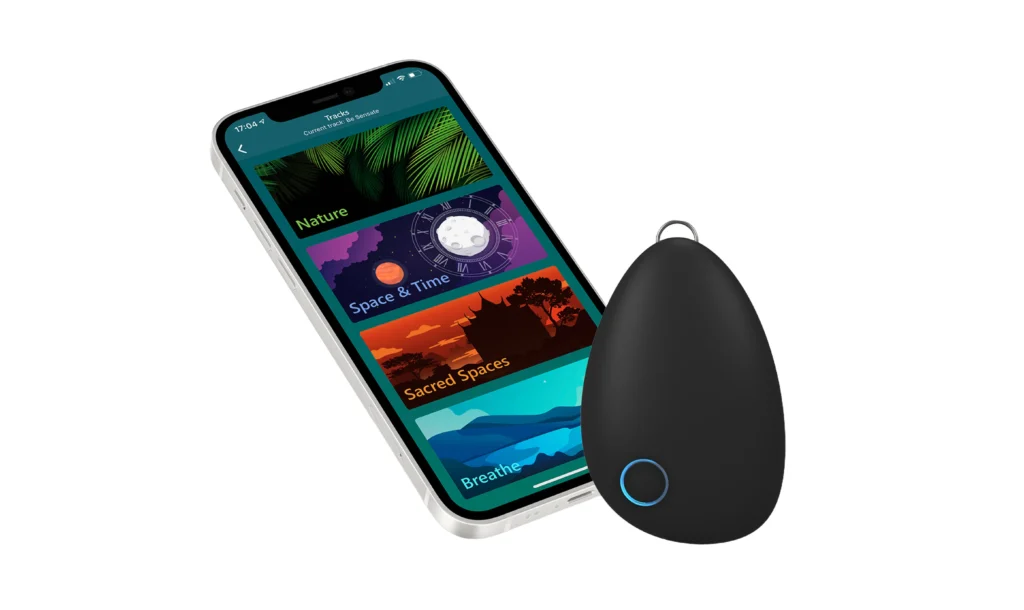
Preis: $299-$349.
Art: Auf der Brust getragenes vibrotaktiles Gerät (kein echtes VNS).
Zu den Vorteilen zählen ein komfortables Design, eine einfache App mit Klanglandschaften und ein niedrigerer Preis.
Kritische Unterscheidung: Sensate stimuliert den Vagusnerv nicht direkt mit elektrischen Impulsen. Dabei kommen Infraschallvibrationen und Knochenleitung auf der Brust zum Einsatz, ein indirekter Ansatz, der eher auf allgemeine Entspannung als auf spezifische Vagusaktivierung abzielt.
Bei Schmerzen und Entzündungen, die durch autonome Dysregulation verursacht werden, ist dies wichtig, da allgemeine Entspannungsinstrumente bei Stress helfen können, den cholinergen entzündungshemmenden Weg jedoch nicht auf die gleiche gezielte Weise aktivieren.
Die verfügbaren Erkenntnisse spiegeln eher eine allgemeine Stressreduzierung als validierte Auswirkungen auf Entzündungsmarker oder Schmerzen wider.
Empfohlen für: Diejenigen, die eine allgemeine Entspannungshilfe anstelle einer gezielten Stimulation des Vagusnervs bei entzündlichen und schmerzbedingten Dysregulationen suchen.
Schlussfolgerung:
Nurosym Bietet möglicherweise die umfassendste Forschungsvalidierung, eine nachgewiesene Wirkung auf die autonomen Marker, die für die Entzündungsregulierung am relevantesten sind, eine unabhängige Zertifizierung und das beste Gleichgewicht zwischen Forschungsgrundlage und praktischer täglicher Anwendung für diejenigen, die evidenzbasierte Ergebnisse priorisieren.
Handeln
Chronische Schmerzen und Entzündungen im Zusammenhang mit einer Funktionsstörung des Vagusnervs stellen eine Schwierigkeit bei neuen, ergänzenden Unterstützungsansätzen dar.
Das autonome Nervensystem behält die Fähigkeit zur Anpassung und zur Wiederherstellung des regulatorischen Gleichgewichts, das Entzündungen unter Kontrolle hält.
Diese Informationen werden zu Bildungszwecken bereitgestellt. VNS-Geräte sind nicht zur Diagnose, Behandlung, Heilung oder Vorbeugung von Krankheiten bestimmt. Personen mit chronischen Schmerzen oder entzündlichen Erkrankungen sollten mit qualifizierten Gesundheitsdienstleistern zusammenarbeiten, um umfassende Behandlungsstrategien zu entwickeln. Konsultieren Sie immer Ihren Arzt, bevor Sie mit einem neuen Eingriff beginnen.
Quellen
- Borges, U., Laborde, S., & Raab, M. (2019). Influence of transcutaneous vagus nerve stimulation on cardiac vagal activity: A randomized controlled trial. PLOS ONE, 14(10), e0223848.
https://journals.plos.org/plosone/article?id=10.1371/journal.pone.0223848 - Redgrave, J., et al. (2018). Safety and tolerability of transcutaneous vagus nerve stimulation in humans: A systematic review. Brain Stimulation, 11(6), 1225-1238.
- Yap, J. Y. Y., et al. (2020). Critical review of transcutaneous vagus nerve stimulation. Frontiers in Neuroscience, 14, 284
https://www.frontiersin.org/journals/neuroscience/articles/10.3389/fnins.2020.00284/full - Task Force of the European Society of Cardiology. (1996). Heart rate variability: standards of measurement, physiological interpretation and clinical use. Circulation, 93(5), 1043-1065.
https://www.ahajournals.org/doi/10.1161/01.cir.93.5.1043
Teilen über:


 German
  English
  French
  Spanish
  Swedish