
Sie dehnen sich, schäumen die Rolle und bekommen sogar Massagen – aber Ihr Körper entspannt sich immer noch nie vollständig
Du hast alles versucht.
Du dehnst dich den ganzen Tag.
Sie rollen vor dem Schlafengehen mit Schaumstoff.
Vielleicht halten Sie eine Massagepistole in der Nähe oder bitten Ihren Partner, jeden Abend an derselben engen Stelle zu arbeiten.
Und für eine Weile hilft es.
Dann kriecht die Spannung langsam wieder zurück.
Die Schultern ziehen sich nach der Hälfte des Tages zusammen.
Ihr Kiefer fühlt sich zusammengepresst an, ohne es überhaupt zu merken.
Manchmal fühlen sich deine Beine nachts unruhig an – als ob dein Körper sich immer noch nicht richtig niederlassen kann.
Manche Menschen wachen bereits mit dem Gefühl auf, körperlich vorbereitet zu sein.
Andere fühlen sich durch die Schlafenszeit erschöpft, können sich aber immer noch nicht ganz entspannen, wenn sie sich endlich hinlegen.
Manche wachen mit knirschenden Zähnen auf.
Andere strecken oder positionieren ihre Beine nachts ständig neu und versuchen, es sich wieder bequem zu machen.
Und selbst nach stundenlangem Schlafen fühlt sich der Körper immer noch nicht richtig erholt.
Wenn Ihnen das bekannt vorkommt, sind Sie nicht allein.
Seit Jahren machen Menschen die Körperhaltung, zu langes Sitzen, schwache Muskeln oder “Engegefühl” selbst dafür verantwortlich.
Und ehrlich gesagt spielen diese Dinge wahrscheinlich eine Rolle.
Aber hier ist die überraschende Wahrheit:
anhaltend Bei körperlicher Anspannung geht es oft nicht einfach nur um “verspannte Muskeln.”
Tatsächlich dehnen sich viele Menschen regelmäßig, probieren jede erdenkliche Genesungsroutine aus und spüren immer noch, wie ihr Körper immer wieder in denselben gestressten, bewachten Zustand zurückfällt.
Also, was ist los?
Warum rutscht der Körper immer wieder in den gleichen angespannten, unruhigen Zustand zurück – auch wenn man alles tut, um sich zu entspannen?
Was ich in der Klinik sehe (15+ Jahre, Tausende von Fällen)
Ich habe mehr als 15 Jahre damit verbracht, mit Menschen zu arbeiten, die mit wiederkehrenden Nackenverspannungen, Kieferpressen, Kopfschmerzen, Schulterverspannungen, schlechter Genesung, unruhigem Schlaf und stressbedingten Schmerzmustern zu kämpfen haben, die immer wieder auftreten.
Meine Arbeit kombiniert:
- osteopathische Therapie
- Rehabilitations- und Bewegungsarbeit
- Schmerzaufklärung
- Strategien zur Regulierung des Nervensystems
- Lebensstil und stressbedingte Unterstützung, falls angemessen
Im Laufe der Jahre fiel immer wieder ein Muster auf.
Viele Leute haben bereits die “richtigen” Dinge getan.
- Sie streckten sich.
- Sie verbesserten ihre Haltung.
- Sie verwendeten ergonomische Aufbauten.
- Sie haben Sport getrieben.
- Sie probierten Massage, Mobilitätsarbeit, Genesungsinstrumente und Nahrungsergänzungsmittel aus.
Und ehrlich gesagt haben viele dieser Dinge vorübergehend geholfen.
Aber der Körper rutschte immer noch wieder in den gleichen bewachten, körperlich “auf” Zustand zurück.
Viele beschrieben, dass sie sich geistig erschöpft fühlten – aber körperlich nicht in der Lage waren, nachts vollständig abzuschalten.
Einige wachten bereits mit geballtem Kiefer auf.
Andere streckten sich im Schlaf ständig, positionierten sich neu oder bewegten ihre Beine, weil sich der Körper darunter immer noch leicht angespannt anfühlte.
Da fing ich an, genauer darauf zu achten Die Rolle des Nervensystems bei anhaltender körperlicher Anspannung und schlechter Genesung.
Wenn Sie alles richtig machen – Ihr Körper sich aber immer noch “an” fühlt
Manche Menschen konzentrieren sich extrem auf die Genesung.
Sie:
- Dehnen Sie sich ständig
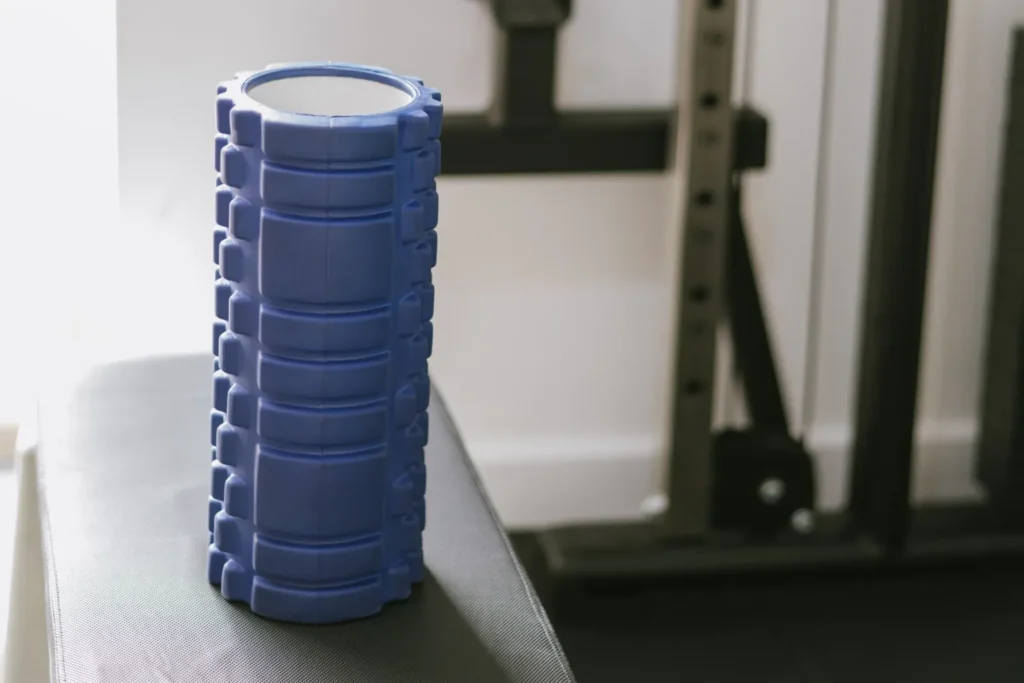
- Schaumstoffrolle vor dem Schlafengehen
- Verwenden Sie Massagepistolen und Mobilitätswerkzeuge
- Ergonomische Stühle oder Haltungskorrektoren kaufen
- Passen Sie Kissen, Schreibtische und Bildschirmhöhe ständig an
- Probieren Sie Magnesium, Regenerationsergänzungsmittel oder Schlafroutinen aus
Und ehrlich gesagt helfen diese Dinge oft vorübergehend.
Doch mit der Zeit bemerken viele Menschen etwas Frustrierendes:
- Die Schultern ziehen sich nach der Hälfte des Tages immer noch zusammen
- der Kiefer fühlt sich am Abend immer noch verkrampft an
- Der Körper fühlt sich nachts immer noch subtil abgestützt an
- Der Schlaf fühlt sich immer noch nicht zutiefst erholsam an
Manche Menschen wachen sogar schon angespannt auf, bevor der Tag richtig begonnen hat.
Andere fühlen sich durch die Schlafenszeit erschöpft – aber ihr Körper fühlt sich immer noch körperlich unruhig an, sobald sie sich endlich hinlegen.
Das ist keine Faulheit.
Es ist nicht “schlechte Haltung.”
Und in vielen Fällen handelt es sich dabei nicht einfach nur um verspannte Muskeln.
Es ist oft ein Nervensystem steckt in einem Stressmuster fest und Übermäßiger Schutz des Körpers.
Körperliche Anspannung vs. ein Körper, der im Stressmodus feststeckt
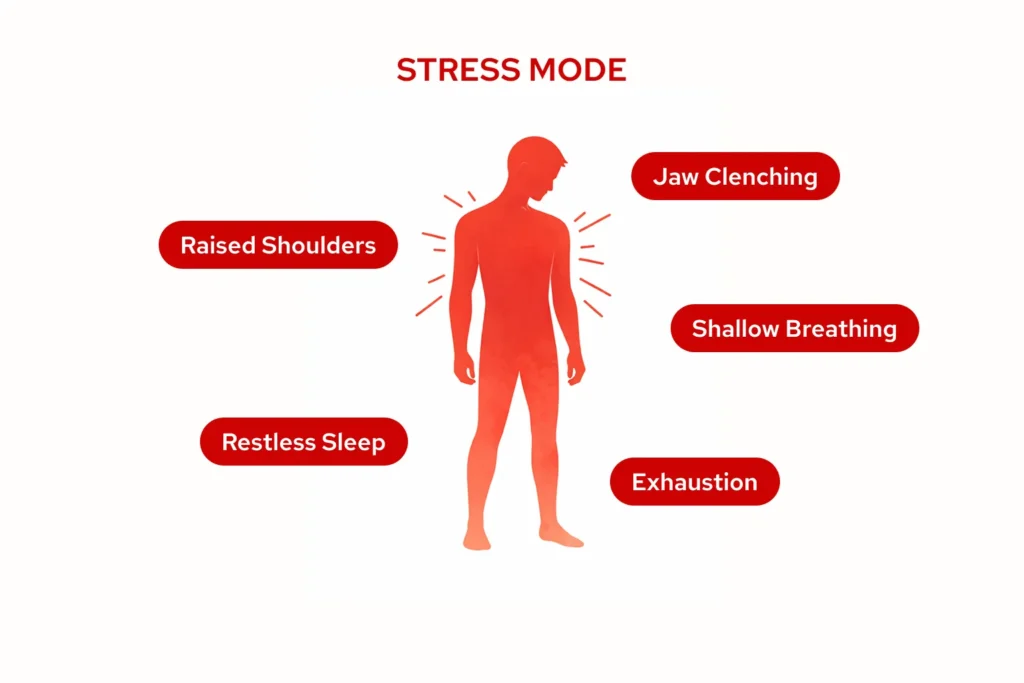
Körperliche Anspannung ist das, was viele Menschen spüren.
Doch unter diesen Symptomen kann das Nervensystem immer noch in einem Zustand anhaltender Stressreaktion stecken bleiben.
Wenn der Körper über längere Zeiträume festsitzt “kämpft oder fliegt”, können die Muskeln leicht angespannt bleiben – sogar in der Ruhephase.¹
Diese geringe Bewachung kann dazu führen, dass sich der Körper steif, reaktiv, schwer, unruhig oder schwer vollständig zu entspannen anfühlt.
Es ist ein bisschen so, als würde der Körper nie ganz das Signal bekommen, dass er sicher abschalten kann.
Mit der Zeit behandeln viele Menschen die Symptome körperlich:
- mehr dehnen
- mehr Massage
- mehr Mobilitätsarbeit
- mehr Wiederherstellungsroutinen
Wenn sich das Nervensystem darunter jedoch immer noch unter Druck fühlt, kann es sein, dass der Körper immer wieder genau die gleichen Spannungsmuster nachbildet.
Die Rolle des Nervensystems in einem Körper, der nie vollständig abschaltet
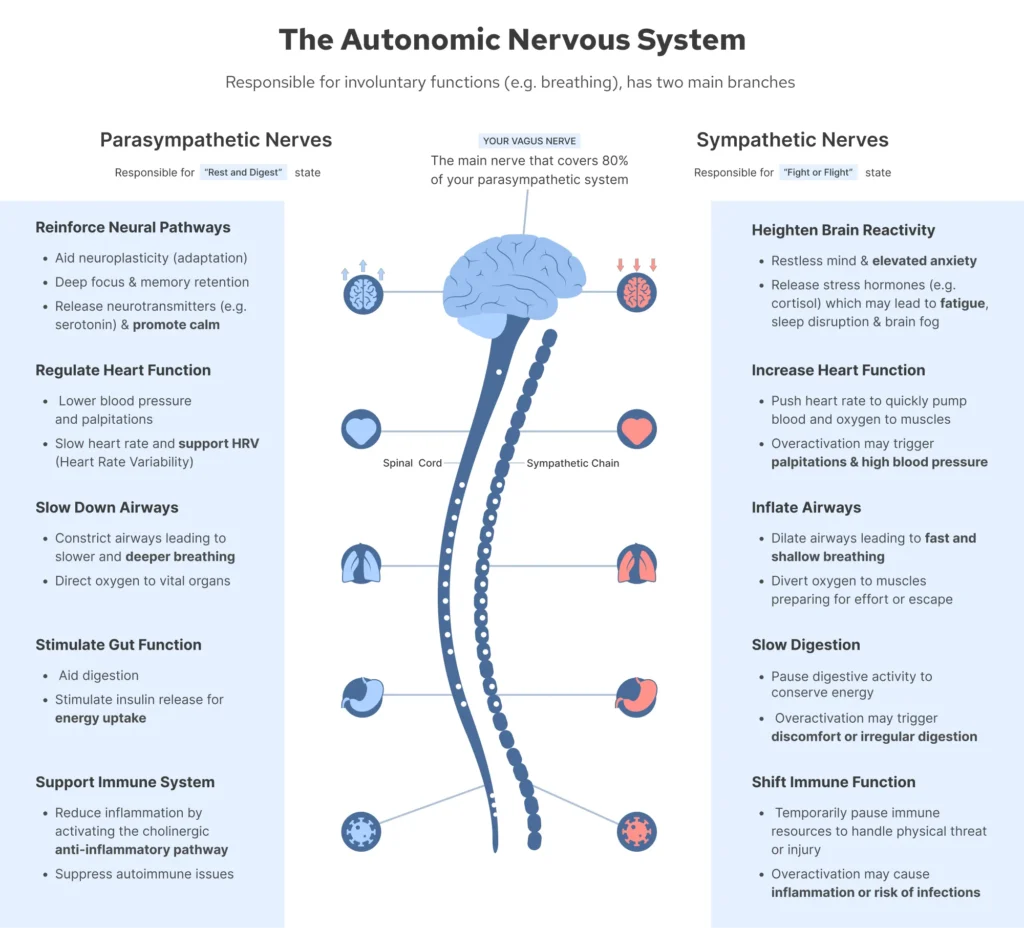
Die autonomes Nervensystem hat zwei Primärzustände:
- Sympathisch (“Kampf oder Flucht”) - verbunden mit Stress, Wachsamkeit, Muskelschutz und Überleben
- Parasympathikus (“ausruhen und erholen”) - verbunden mit Entspannung, Erholung, Schlaf und körperlicher Reparatur
Das Problem besteht darin, dass viele Menschen heute viel mehr Zeit im ersten Staat verbringen, als ihnen bewusst ist.
Und moderner Stress sieht selten dramatisch aus.
Es aus:
- ständigen Benachrichtigungen
- schlechter Schlaf
- aufeinanderfolgende Arbeitstage
- Bildschirmüberlastung
- mentalen Druck
- Nie vollständig ausschalten
Mit der Zeit kann der Körper beginnen, darunter subtil geschützt zu bleiben.
Schultern leicht angehoben.
Kiefer leicht geballt.
Leicht flach atmend.
Der Körper fühlt sich nie ganz entspannt.
Und für manche Menschen folgt ihnen derselbe bewachte Zustand sogar in den Schlaf.
Sie fühlen sich geistig erschöpft – aber körperlich immer noch “verkabelt.”
Dieser anhaltende Zustand der Aktivierung des Nervensystems kann Folgendes beeinflussen:
- Muskeltonus
- Schmerzempfindlichkeit
- Kieferpressen
- Wiederherstellungsqualität
- sleep quality
- Wie leicht sich der Körper wieder entspannt
Der Vagusnerv – der “Ruheschalter Ihres Körpers”
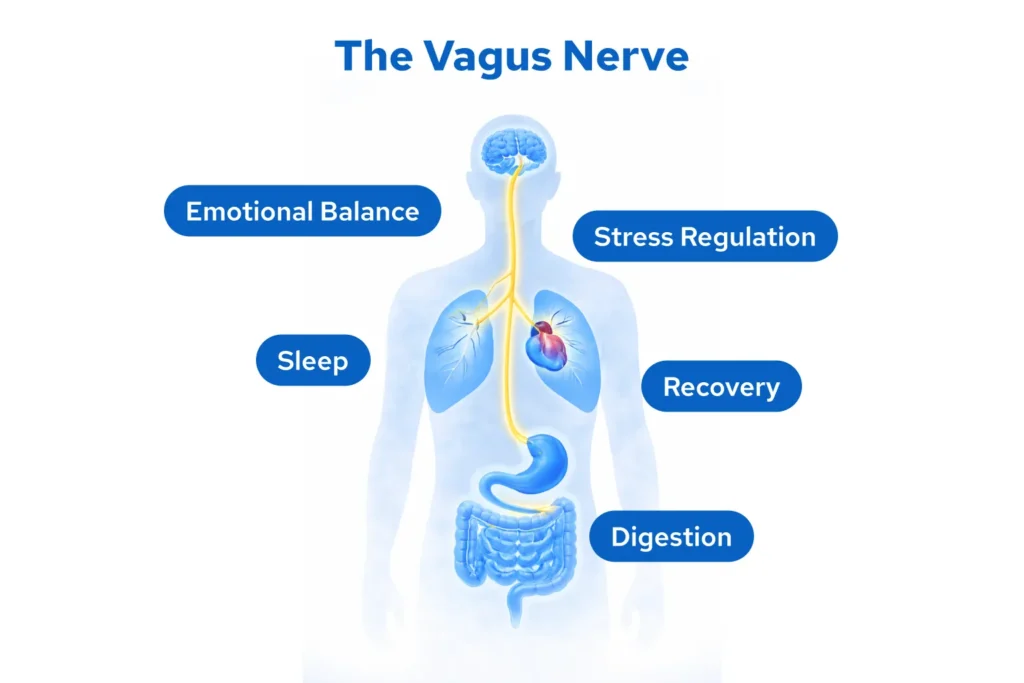
Einer der Hauptwege, die mit dem Erholungszustand des Körpers verbunden sind, ist Vagusnerv.
Es hilft, Entspannung, Erholung, Atmung, Herzfrequenz und die Fähigkeit des Körpers, aus dem Stressmodus herauszukommen, zu regulieren.
Wenn die Vagusaktivität gesund ist, erholt sich der Körper tendenziell leichter.
- Die Atmung verlangsamt sich natürlicher.
- Der Schlaf fühlt sich tiefer an.
- Die Muskeln fühlen sich nicht mehr ständig leicht angespannt an.
- Der Körper wird widerstandsfähiger gegenüber alltäglichem Stress, anstatt ihn den ganzen Tag körperlich zu tragen.
Aber wenn das Nervensystem chronisch überlastet bleibt, haben viele Menschen das Gefühl, dass sie nie wieder vollständig zum Ausgangswert zurückkehren – auch nach Ruhe.
Das ist einer der Gründe, warum ich mich zunehmend für Ansätze interessierte, die sich nicht nur auf Muskeln und Körperhaltung konzentrieren, sondern auch auf die Unterstützung der Regulierung des Nervensystems selbst.
Was die Forschung sagt
Die Wissenschaft bestätigt, was ich in der Klinik sehe:
Selbst wenn sich Menschen regelmäßig dehnen, ihre Körperhaltung verbessern oder ständig versuchen, körperlich Spannungen abzubauen, kann das Nervensystem dennoch in einer längeren Stressreaktion stecken bleiben.¹
Untersuchungen zeigen, dass chronischer Stress und eine Überlastung des Nervensystems die Muskelabwehr, körperliche Anspannung, Schmerzempfindlichkeit und schlechte Genesung verstärken können.¹
Dabei taVNS (transkutane Stimulation des Nervus auricularis vagus) hat sich gezeigt als:
- steigern Herzfrequenzvariabilität (HRV), ein wichtiger Marker, der damit zusammenhängt, wie anpassungsfähig und widerstandsfähig³ das Nervensystem unter Stress steht
- Reduzieren Sie übermäßigen Muskelschutz und Schmerzempfindlichkeit⁴ ⁵
- Helfen Sie dem Körper, effektiver in einen ruhigeren “Ruhe- und Erholungs-”Zustand³ zu wechseln - in dem Schlaf, Erholung, Stressregulierung und Muskelentspannung wieder normaler funktionieren können
Sicherheit: Mehr als 60 veröffentlichte Studien zu taVNS Bei sachgemäßer Anwendung bisher keine schwerwiegenden unerwünschten Ereignisse melden.⁶ ⁷
Dies ist auch die gleiche Art von Technologie, die in Geräten wie verwendet wird Nurosym.⁸
Wo Nurosym zum Einsatz kommt (Unterstützung zu Hause)
In meiner Praxis konzentriere ich mich immer auf die Grundursache – nicht nur auf die vorübergehende Beruhigung der Symptome.
Das bedeutet, zu untersuchen, wie das Nervensystem auf Stress, Überlastung, schlechte Genesung und anhaltenden Muskelschutz reagiert – und nicht nur die Enge selbst zu behandeln.
Manchen Anwendern, insbesondere denen, die sich trotz Dehnung, Massage, Physiotherapie oder gesunder Gewohnheiten ständig angespannt oder körperlich “aufgeregt” fühlen, empfehle ich manchmal eine zusätzliche Unterstützung des Nervensystems zu Hause.
Denn realistisch gesehen fällt es vielen Menschen bereits schwer, zusätzliche Zeit für die Genesung zu finden.
Ein weiterer Termin, eine weitere Genesungsroutine, eine weitere Stunde, die aus einem ohnehin schon überlasteten Tag herausgeschnitten wurde, ist nicht immer nachhaltig.
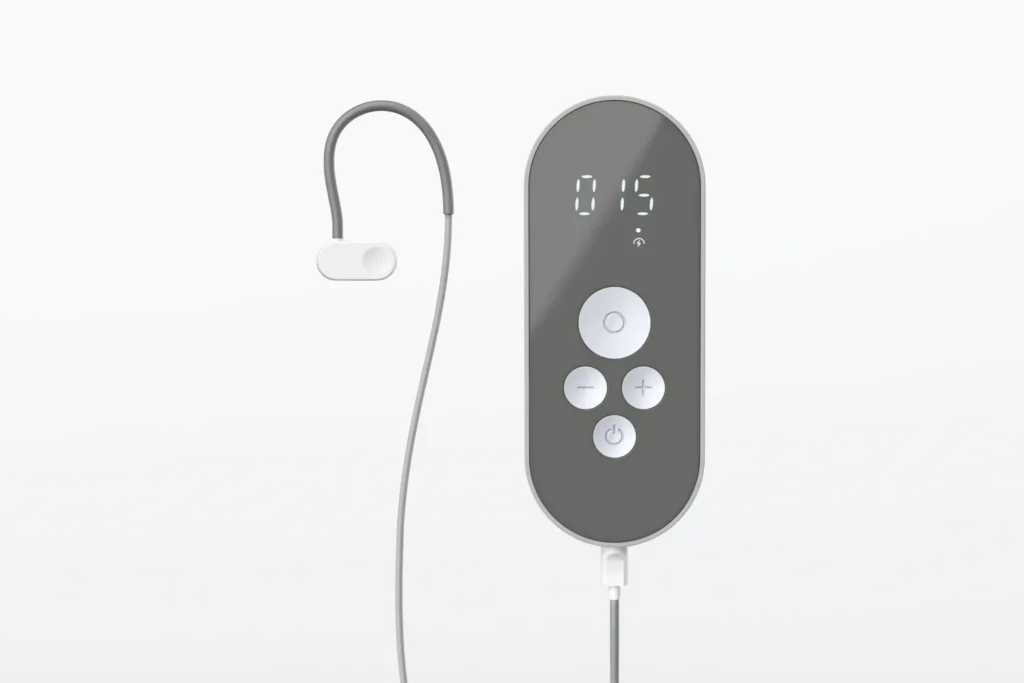
Nurosym ist ein CE-gekennzeichnetes taVNS-Gerät Das stimuliert sanft einen Teil des Ohrs, der mit dem verbunden ist Vagusnerv mit milden elektrischen Impulsen.⁸
Das Ziel ist einfach:
Dies hilft dem Körper, leichter in einen ruhigeren, erholungsorientierten Zustand zu wechseln – in dem die Spannung natürlicher nachlässt und der Körper sich effektiver erholen, schlafen und Stress regulieren kann.
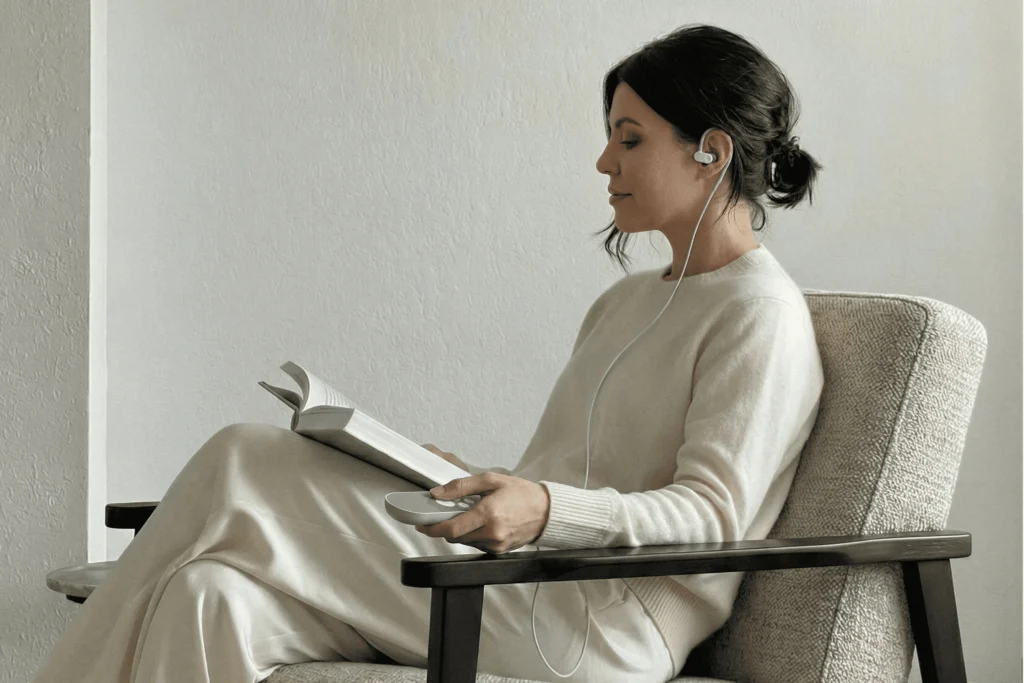
Manche Leute verwenden es beim Lesen, Arbeiten, Mittagessen oder zum Entspannen am Abend.
ist es nicht a “schnelle Lösung” oder Wundermittel.
Aber für die richtige Person kann es dem Körper helfen, nicht mehr immer wieder die gleichen Spannungsmuster nachzubilden.
Die realen Muster, die ich am häufigsten sehe
Der stets angespannte Büroangestellte
Fühlt sich gegen Mittag körperlich angespannt an, egal wie oft sie sich dehnen, neu positionieren oder versuchen, sich zu lockern.
Der Fall “Ich habe alles versucht”
Massage, Physio, Yoga, Schaumrollen, Haltungsarbeit – Erleichterung hilft vorübergehend, aber die Anspannung kehrt immer zurück.
Der müde, aber verdrahtete Schläfer
Nachts erschöpft, aber im Bett immer noch körperlich angespannt. Wacht am nächsten Morgen angespannt und unruhig auf.
Der ständige Kiefer- und Schulterklopfer
Erkennt nicht einmal, wie viel Anspannung sie tragen, bis sich Kopfschmerzen, Steifheit, Müdigkeit oder schlechte Genesung aufbauen.
Wer könnte davon profitieren – und wer sollte es nicht nutzen
Könnte profitieren:
- Menschen, die trotz Dehnungs- oder Erholungsarbeit mit wiederkehrenden Muskelverspannungen zu kämpfen haben
- Büroangestellte mit anhaltender Engegefühl im Nacken, in den Schultern, im Kiefer oder im Rücken
- Menschen, die sich ständig angespannt oder unruhig fühlen oder körperlich nicht in der Lage sind, sich vollständig zu entspannen
- diejenigen, die mit stressbedingter Anspannung und schlechter Genesung zu kämpfen haben
- Menschen, die mit einem steifen, angespannten oder unruhigen Gefühl aufwachen
Vermeiden Sie es, wenn:
- Sie haben einen Herzschrittmacher oder ein implantiertes Herzgerät
- Du schwanger bist
- Sie haben vor kurzem ein schweres kardiales Ereignis erlebt
- du unter 18
Befolgen Sie vor Beginn immer den ärztlichen Rat.
Abschließende Gedanken: Behandeln Sie das System, nicht nur die Symptome
Dehnen ist wichtig.
Bewegung ist wichtig.
Auch Kraft, Körperhaltung, Schlaf und Erholung sind wichtig.
Aber wiederkehrende körperliche Anspannung ist oft größer als nur “verspannte Muskeln.”
Denn für viele Menschen geht es nicht nur um Nacken, Schultern, Kiefer oder Rücken selbst.
Es ist ein Körper, der sich nie ganz abschaltet.
Und mit der Zeit beginnt sich eine schlechte Genesung auch auf alles andere auszuwirken:
- Schlaf
- Energie
- Fokus
- Stressresistenz
- Wie sich der Körper von Tag zu Tag fühlt
Wenn Sie versucht haben, Verspannungen zu lösen, ohne dauerhafte Linderung zu erfahren, ist es möglicherweise an der Zeit, tiefer zu schauen als nur auf die Muskeln.
Denn manchmal ist es das, was dem Nervensystem hilft, sich wieder sicher zu fühlen, was es dem Körper endlich ermöglicht, sich zu entspannen.
Durch die Beruhigung des Systems, das den Muskeltonus steuert, können Sie Ihre Haltung endlich natürlich und nicht erzwungen anfühlen — und sich ohne ständige Beschwerden bewegen.
Dieser Blogbeitrag soll informativ sein und sollte keine professionelle Gesundheitsberatung ersetzen. Konsultieren Sie immer einen Arzt, um eine individuelle Beratung zu erhalten.
Referenzen
¹ Yaribeygi, H., et al. (2017). The impact of stress on body function: A review. https://pmc.ncbi.nlm.nih.gov/articles/PMC5579396/
³ Wolf, V., et al. (2021). Does transcutaneous auricular vagus nerve stimulation affect vagally mediated heart rate variability? https://doi.org/10.1111/psyp.13933
⁴ Pacheco-Barrios, K., et al. (2024). Transauricular vagus nerve stimulation (taVNS) enhances conditioned pain modulation (CPM) in healthy subjects. https://doi.org/10.1016/j.brs.2024.03.006
⁵ Ferreira, L. M. A., et al. (2024). Transcutaneous auricular vagus nerve stimulation modulates masseter muscle activity, pain perception, and anxiety levels. https://doi.org/10.3389/fnint.2024.1422312
⁶ Redgrave, J., et al. (2018). Safety and tolerability of transcutaneous vagus nerve stimulation in humans: A systematic review. https://doi.org/10.1016/j.brs.2018.08.010
⁷ Kim, A. Y., et al. (2022). Safety of transcutaneous auricular vagus nerve stimulation (taVNS): A systematic review and meta-analysis. https://doi.org/10.1038/s41598-022-25864-1
⁸ Parasym Ltd. (2024). Nurosym certification (CE Mark) information. https://care.nurosym.com/hc/en-us/articles/25945331731597-Is-Nurosym-a-certified-device
Teilen über:



 German
  English
  French
  Spanish
  Swedish