
Puntos clave
- The best results come from combining apps with accountability and expert input.
- Home fitness apps have surged since 2020, with the global market expected to exceed $56.29 billion by 2030.
- Scientific studies show that apps can increase physical activity and improve fitness, especially when used consistently.
- Success depends on motivation, personalisation, and behaviour-tracking features.
- Risks include poor exercise form, declining engagement, and inconsistent progress.
How Our Homes Became the New Fitness Studios
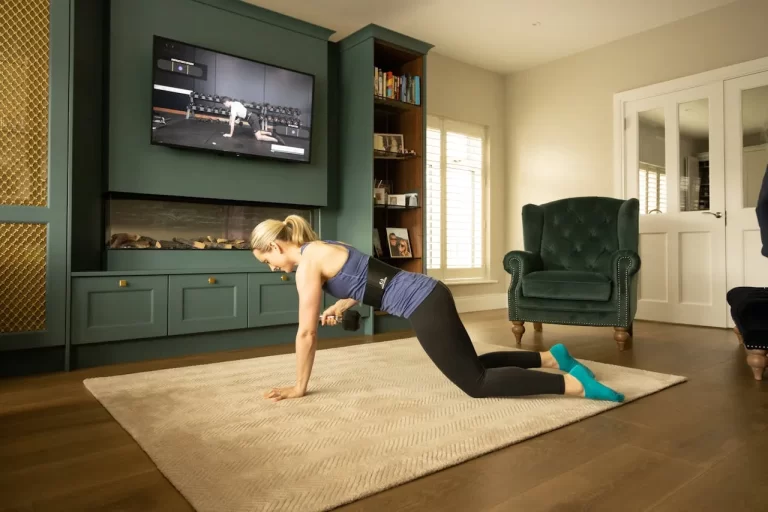
When the world shut down in 2020 and gyms closed, fitness simply went digital. It went digital. The global fitness app market, valued at over $10.6 billion in 2023, is projected to more than double by 2030, reaching $56.29 billion, driven by users’ desire for convenience, flexibility, and technology-enabled workouts.
Popular apps like Peloton, Nike Training Club, Freeletics, and Fitbod have seen huge growth in usage. For example, Peloton reported over 6.4 million members in 2024, with hundreds of millions of completed workouts annually. But are these tools truly effective for building strength, improving endurance, or supporting weight management?
Why Home Fitness Isn’t Just a Trend
According to the CDC, only about one in four U.S. adults meets physical activity guidelines for both aerobic and muscle-strengthening activities. Workout apps offer a promising solution for people facing time constraints, limited access to gyms, or motivation barriers. But with dozens of apps flooding the market, it’s vital to understand which ones work—and for whom.
Do Workout Apps Actually Work? What Research Tells Us
Research suggests that fitness apps can drive meaningful improvements in health—especially when users maintain engagement.
A 2024 meta-analysis published in JMIR mHealth and uHealth found that app-based exercise interventions improved total physical activity, reduced sedentary time, and helped boost muscular strength, agility, and weight loss, especially in adolescents and young adults.
Another 2019 systematic review noted that fitness apps led to modest improvements in daily step counts and weight control, particularly in short-term interventions lasting three months or less. For older adults, using a fitness app resulted in an average increase of 735 steps per day and reductions in sedentary behaviour.
However, many studies warn that long-term adherence is challenging. Once the novelty wears off, engagement drops—unless apps include features like goal setting, reminders, or community interaction.
The Psychology Behind Fitness Apps: Motivation by Design
App effectiveness depends on smart behavioural design. Features like push notifications, habit tracking, progress dashboards, and social rewards can significantly affect motivation and adherence. In one large study on digital walking competitions, users increased physical activity by 23% during app-based challenges, with women and older adults showing the highest improvement.
“Apps that personalise the user experience and offer community-based motivation are more likely to keep people moving,” says Dr. Catherine Sabiston, an expert in exercise psychology at the University of Toronto. “What works is making fitness feel doable, rewarding, and part of daily life.”
Which Workout App Is Right for You? A Feature Breakdown
| App | Workouts Offered | Personalization | Wearable Sync | Community Features |
| Peloton | Cardio, strength, yoga | Moderate | Yes (Apple Watch, Fitbit) | Live classes, leaderboards |
| Nike Training Club | HIIT, mobility, strength | Limited | No | Curated challenges |
| Freeletics | HIIT, bodyweight | High (AI-coaching) | Yes | Custom goals, progress charts |
| Fitbod | Resistance, weightlifting | High (adaptive planning) | Yes | Personal logs, auto-tracking |
| Apple Fitness+ | Multi-style classes | Moderate | Deep Apple Watch integration | Daily classes, awards |
Freeletics and Fitbod stand out for using artificial intelligence to adjust workout intensity, reps, and duration based on performance. Meanwhile, platforms like Peloton leverage group energy through live-streamed classes and real-time leaderboards.
Workout Apps: Pros, Cons, and What to Watch For
Pros
- On-demand access: Exercise anywhere, anytime
- Affordability: Many apps are free or under $15/month
- Variety: Options range from yoga to high-intensity strength training
- Accountability: Many apps use notifications, streaks, and progress graphs to help build exercise habits.
Contra
- Limited real-time feedback: Without a human trainer, apps may miss form errors — potentially increasing injury risk
- Drop-off rates: Engagement often declines without social or trainer support
- Too many choices: App overload may lead to decision fatigue or inaction
Who Benefits Most from App-Based Fitness?
Fitness apps tend to work best for:
- Beginners seeking guidance and structure
- Busy professionals with limited time
- Budget-conscious users who can’t afford gyms or trainers
- Tech-savvy users who like to sync apps with wearables for real-time feedback
Those who need real-time coaching, peer accountability, or social motivation may prefer hybrid approaches combining digital and in-person support.
One User’s Story: From App Fatigue to Fitness Success
Sarah, a 35-year-old working mom, shared:
“I started with Nike Training Club during the pandemic, but lost motivation after a few weeks. Switching to Peloton helped—I loved the live classes and seeing friends’ names on the leaderboard. It kept me showing up.”
Her story reflects a broader trend: social connection—even virtual—is a powerful driver of consistency.
The Future of Digital Workouts: What’s Next?
The future of fitness apps is headed toward even more personalisation. Expect real-time biometric feedback, wearable-linked insights, and virtual reality workouts that immerse users in gamified environments. Peloton has already introduced on-bike real-time coaching, and Apple is expanding haptic feedback on the Apple Watch to guide exercise form.
But tech is only part of the picture. “The best fitness program is the one you’ll actually stick with,” says Dr. Miguel Alvarez, a physical therapist at HealthScience Institute. “Apps can help—but consistency, support, and proper pacing are what create results.”
Final Verdict: Are Workout Apps Worth Your Time?
They certainly can be—if you use them.
Look for apps that:
- Customise workouts based on your level and goals
- Provide clear video instructions and form guidance
- Integrate habit-tracking and motivational tools
- Sync with wearable devices for feedback
For best results, combine app use with regular check-ins from a certified trainer or health professional—especially if you’re managing injury recovery, joint pain, or chronic symptoms.
Your Next Steps:
Fitness tech is advancing fast. Subscribe for evidence-based updates on the latest tools, tips, and science behind home exercise—so you can choose what truly supports your wellbeing.
Este artículo de blog tiene como objetivo ser informativo y no debe reemplazar el asesoramiento profesional en salud. Consulte siempre con un profesional de la salud para obtener asesoramiento personalizado.
Suscríbase gratis para obtener artículos de salud más perspicaces adaptados a sus necesidades.
Fuentes
- Wu K, Li Q, Liu Y. The code of sustainable success in fitness apps: social comparison mechanism enabled by user facilitated supports. Frontiers in Public Health. 2025 Aug 4;13.
- Wang JW, Zhu Z, Shuling Z, Fan J, Jin Y, Gao ZL, et al. Effectiveness of mHealth App–Based Interventions for Increasing Physical Activity and Improving Physical Fitness in Children and Adolescents: Systematic Review and Meta-Analysis. JMIR mHealth and uHealth [Internet]. 2024 Apr 30 [cited 2024 May 12];12(1):e51478. Available from: https://mhealth.jmir.org/2024/1/e51478
- Romeo A, Edney S, Plotnikoff R, Curtis R, Ryan J, Sanders I, et al. Can Smartphone Apps Increase Physical Activity? Systematic Review and Meta-Analysis. Journal of Medical Internet Research. 2019 Mar 19;21(3):e12053.
- Islam MM, Poly TN, Walther BA, Jack) Li YC. Use of Mobile Phone App Interventions to Promote Weight Loss: Meta-Analysis. JMIR mHealth and uHealth. 2020 Jul 22;8(7):e17039.
- Antoun J, Itani H, Alarab N, Elsehmawy A. The Effectiveness of Combining Nonmobile Interventions With the Use of Smartphone Apps With Various Features for Weight Loss: Systematic Review and Meta-analysis. JMIR mHealth and uHealth. 2022 Apr 8;10(4):e35479.
- Ghelani DP, Moran LJ, Johnson C, Mousa A, Naderpoor N. Mobile Apps for Weight Management: A Review of the Latest Evidence to Inform Practice. Frontiers in Endocrinology [Internet]. 2020 Jun 24;11(412). Available from: https://www.ncbi.nlm.nih.gov/pmc/articles/PMC7326765/
- Nguyen L, Faulkner G, Taylor C, Mitchell MS. Can fitness apps work long term? A 24-month quasiexperiment of 516 818 Canadian fitness app users. British Journal of Sports Medicine. 2025 Sep 23;bjsports-2025-109901.
- Pradal-Cano L, Lozano-Ruiz C, Pereyra-Rodríguez JJ, Saigí-Rubió F, Bach-Faig A, Esquius L, et al. Using mobile applications to increase physical activity: a systematic review. International Journal of Environmental Research and Public Health [Internet]. 2020 Nov 7;17(21):8238. Available from: https://www.ncbi.nlm.nih.gov/pmc/articles/PMC7664696/



 Spanish
  English
  German
  French
Home workouts are great—apps make it simple!
Nice article—makes me want to try a new workout app.
Workout apps help me keep going—easy and fun.