
Puntos clave
- Smart rings represent an emerging frontier in wearable technology—small, discreet, and data-rich.
- These devices track vital health metrics such as heart rate, sleep quality, and stress trends with increasing accuracy for consumer-grade devices.
- A medida que crece la integración de la IA, los anillos inteligentes están listos para remodelar la salud preventiva y el bienestar digital.
- La privacidad y la gestión ética de los datos siguen siendo desafíos clave a medida que aumenta la adopción.
La próxima generación de wearables está a tu alcance
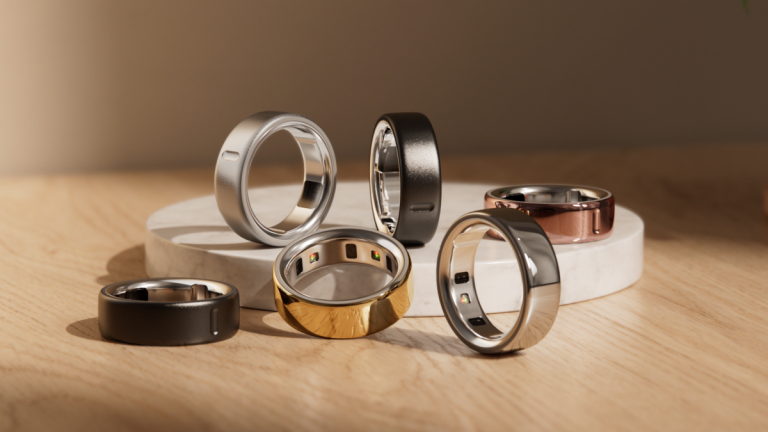
En el mundo de la tecnología portátil, más pequeño ya no significa menos capaz. El concepto una vez futurista de un anillo de seguimiento de la salud es ahora una realidad emergente. Estos dispositivos livianos y minimalistas, no más grandes que un anillo de boda, están recogiendo datos silenciosamente cuando estaban reservados para relojes inteligentes y sensores médicos. Desde la frecuencia cardíaca y la calidad del sueño hasta los patrones de estrés y recuperación, los anillos inteligentes representan una nueva fase en cómo monitoreamos nuestra salud e interactuamos con la tecnología.
Pero, ¿puede algo tan pequeño realmente rivalizar con los gigantes del mercado de los wearables basados en la muñeca o incluso superarlos?
De bandas de fitness a compañeros invisibles de la salud
La revolución de la tecnología wearable comenzó con las pulseras que contaban los pasos. Luego vinieron los relojes inteligentes que midieron todo, desde los niveles de oxígeno en la sangre hasta los electrocardiogramas. Ahora, el foco se ha desplazado hacia discreción y comodidad. Smart rings have entered the scene, offering comparable precision for selected metrics, particularly during rest and sleep, wrapped in elegant, barely noticeable designs.
Unlike bulkier wearables, rings allow continuous, passive data collection without disrupting daily routines. Many models can last several days to up to a week on a single charge, depending on usage and features. The trend signals a cultural shift: technology that fits seamlessly into life rather than demanding attention.
Cómo funcionan los anillos inteligentes: la ciencia dentro del círculo
Despite their size, smart rings are powerhouses of miniaturised engineering. Beneath the metal or ceramic surface lies an array of sensors—photoplethysmography (PPG) to measure heart rate, infrared LEDs for estimating blood oxygen saturation trends, accelerometers for movement, and temperature sensors for tracking subtle bodily changes.
Data from these sensors is transmitted via Bluetooth Low Energy (BLE) to smartphone apps that translate raw signals into insights on sleep cycles, readiness scores, and stress responses. Advanced algorithms powered by artificial intelligence then interpret these metrics, offering personalised lifestyle insights, such as rest or activity readiness indicators.
What truly sets smart rings apart is their high contact fidelity—the ring’s close proximity to arteries in the finger enables precise pulse readings, often providing more consistent readings than wrist-based sensors during sleep and low-motion state.
Salud y bienestar de un vistazo
Los anillos inteligentes ya no se limitan al seguimiento de la forma física, se están convirtiendo en herramientas para wellness monitoring and early trend awareness. Dispositivos como el Oura Ring y el Ultrahuman Ring Air ahora proporcionan informes detallados sobre la variabilidad de la frecuencia cardíaca (HRV), un marcador clave del estrés y la recuperación. Otros, como el anillo Evie de Movano, se centran específicamente en la salud de las mujeres, el seguimiento de los ciclos menstruales y las variaciones de temperatura.
These insights allow users to spot early deviations in their physiological data that may indicate fatigue, stress buildup, or potential illness. A 2023 study from the University of California found that wearable-derived HRV and temperature trends identified physiological pattern changes that, in retrospective analyses, preceded symptom onset by up to 48 hours. Such findings suggest smart rings could soon play an integral role in personalised, AI-supported health management.
Más allá de la salud: pagos, seguridad e integración digital
The appeal of smart rings extends beyond wellness. Several models, like the RingConn and McLear RingPay, enable contactless payments through NFC (Near Field Communication) chips. Others act as digital keys, unlocking doors, devices, or cars securely via device-level authentication and encrypted credentials.
A medida que los ecosistemas digitales se expanden, los anillos inteligentes se están posicionando como asistentes personales multifuncionales: combinando conocimientos sobre salud, credenciales de seguridad y herramientas de productividad en un único accesorio sutil.
Esta convergencia de funciones sugiere un futuro en el que los wearables se mezclarán sin problemas con entornos inteligentes-sistemas domésticos, automóviles y plataformas sanitarias-conectados a través de una red unificada de IA [6].
El dilema de la privacidad: ¿quién es dueño de sus datos?
Con la innovación surge una pregunta inevitable: ¿Qué sucede con los datos íntimos que recopilan los anillos inteligentes?
Desde los ciclos de sueño hasta los patrones de estrés, los datos almacenados y transmitidos por estos dispositivos ofrecen una visión profunda del estilo de vida y el estado de salud de un usuario.
Los expertos advierten que, sin salvaguardias sólidas, esta información podría ser vulnerable al uso indebido por parte de aseguradoras, empleadores o anunciantes externos. Algunos fabricantes, como Oura, han implementado el cifrado de extremo a extremo y la conformidad con el RGPD, pero las políticas de intercambio de datos siguen siendo inconsistentes entre las marcas [7].
The emerging challenge lies in balancing personalisation with privacy—ensuring that AI-driven health insights serve users, not corporations.
Users should review data-sharing policies carefully and understand how their information may be stored, analysed, or shared before adopting any health-tracking wearable.
Impulso del mercado y lo que viene
According to recent industry projections, the global smart ring market is projected to surpass $1.2 billion by 2030, growing at a rate of nearly 25% annually. The drivers? Rising health awareness, the integration of AI, and consumer demand for discreet design.
Next-generation models are being explored in research and prototype development, including non-invasive glucose estimation, hydration status indicators, and cuffless blood pressure technologies—capabilities once thought impossible for a device so small. As AI becomes more predictive, smart rings could evolve into real-time health companions, capable of early illness detection and personalised feedback loops that adapt dynamically to the wearer.
Conclusión: El futuro de los wearables es sutil pero poderoso
El futuro de la tecnología wearable no se trata de pantallas más brillantes o notificaciones más ruidosas, sino de inteligencia invisible tejida en la vida cotidiana. Los anillos inteligentes encarnan esta visión, fusionando forma, función y previsión en una sola herramienta minimalista.
As they evolve, may support greater health awareness and informed lifestyle decisions—helping us live more intuitively, more proactively, and more connected to our own biological rhythms.
exención de responsabilidad médica
Este artículo de blog tiene como objetivo ser informativo y no debe reemplazar el asesoramiento profesional en salud. Consulte siempre con un profesional de la salud para obtener asesoramiento personalizado.
Suscríbase gratis para obtener artículos de salud más perspicaces adaptados a sus necesidades.
Fuentes
- Gong EJ, Bang CS, Lee JJ, Baik GH. Smart Ring in Clinical Medicine: A Systematic Review. Biomimetics [Internet]. 2025 Dec 5 [cited 2025 Dec 13];10(12):819. Available from: https://www.mdpi.com/2313-7673/10/12/819
- Fiore M, Bianconi A, Sicari G, Conni A, Lenzi J, Tomaiuolo G, et al. The Use of Smart Rings in Health Monitoring—A Meta-Analysis. Applied Sciences. 2024 Nov 21;14(23):10778.
- Ramchandani B. Enhancing Health Information Management with Smart Rings [Internet]. Available from: https://www.ijfmr.com/papers/2023/6/10584.pdf
- Wang Z, Yu R, Wang X, Ding J, Tang J, Fang J, et al. Computing with Smart Rings: A Systematic Literature Review. Proceedings of the ACM on Interactive, Mobile, Wearable and Ubiquitous Technologies. 2025 Sep 3;9(3):1–54.
- Patnaik SK, Medimi N, Ariwa E. Smart Rings. Handbook of Artificial Intelligence and Wearables. 2024 Feb 14;217–35.
- Asgari Mehrabadi M, Azimi I, Sarhaddi F, Axelin A, Niela-Vilén H, Myllyntausta S, et al. Sleep Tracking of a Commercially Available Smart Ring and Smartwatch Against Medical-Grade Actigraphy in Everyday Settings: Instrument Validation Study. JMIR mHealth and uHealth. 2020 Nov 2;8(10):e20465.



 Spanish
  English
  German
  French