

La estimulación del nervio vago (VNS) ha ganado atención como un enfoque no farmacológico para los pensamientos ansiosos y la regulación del pánico al apuntar al desequilibrio del sistema nervioso autónomo. Una creciente investigación sugiere que apoyar la actividad vagal puede ayudar a reducir la sobreactivación fisiológica asociada con pensamientos ansiosos crónicos y síntomas relacionados con el estrés.
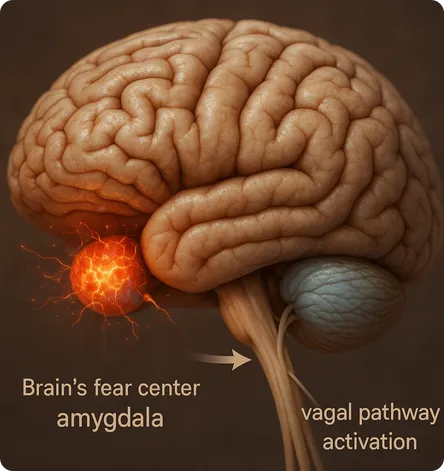

Por qué se está estudiando la estimulación del nervio vago para la regulación de los pensamientos ansiosos
Trastornos del pensamiento ansioso Refleja fundamentalmente la desregulación del sistema nervioso: tu cuerpo está atascado en modo de lucha o huida incluso cuando no hay peligro real.
Cuando la actividad de tu nervio vago es baja, tu sistema nervioso pierde su "freno" natural en la respuesta al estrés. Esto te deja en constante alerta alta: corazón acelerado, pensamientos acelerados e incapacidad para calmarte, mucho que te esfuerces.
A diferencia de los enfoques que apuntan principalmente a las vías cognitivas o neurotransmisoras, la estimulación del nervio vago tiene como objetivo influir en los pensamientos ansiosos al apoyar la actividad del sistema nervioso parasimpático. Esta vía fisiológica puede ayudar al cuerpo a salir de un estado sostenido de lucha o huida, particularmente durante períodos de mayor estrés.
- Validado a través de más de 50 estudios de investigación completados y más de 4 millones de sesiones de usuarios, demostrando reducciones significativas en los puntajes validados de evaluación de pensamientos ansiosos (Inventario de ansiedad BURNS, GAD-7, STAI).
- 35% de reducción promedio en los puntajes de síntomas de pensamientos ansiosos en estudios que utilizan protocolos estandarizados, sin acontecimientos adversos graves notificados hasta la fecha.
- Certificación de dispositivo portátil con marca CE cumple con rigurosos estándares de seguridad y eficacia para los pensamientos ansiosos.
- Estudió en la Facultad de Medicina de la Universidad de Chicago, UCLA y más de 100 instituciones de investigación, establecer el estándar de oro para la intervención no invasiva en los pensamientos ansiosos.
"Entre los dispositivos de bienestar similares, destaca por su sólida base de investigación y diseño fácil de utilizar."
- DEREK, US
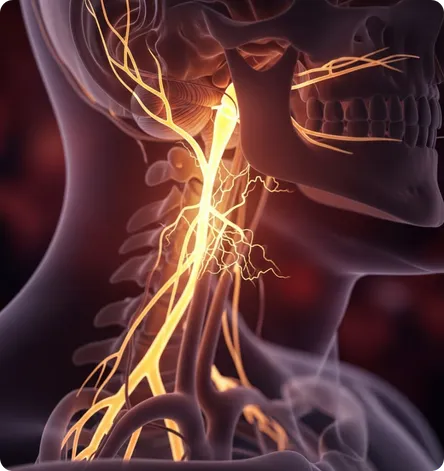

Ruta directa para calmar su respuesta de lucha o huida
Su nervio vago es el "interruptor de apagado" principal para la respuesta al estrés de su cuerpo. Cuando está activo, envía señales calmantes que ralentizan su frecuencia cardíaca, profundizan su respiración, relajan sus músculos y le dicen a su cerebro que usted está seguro.
En los trastornos de pensamientos ansiosos, este "freno" vagal no funciona correctamente. Tu sistema de estrés se activa con demasiada facilidad y permanece activado durante demasiado tiempo. Incluso cuando sabes conscientemente que no hay peligro, tu cuerpo sigue respondiendo como si lo hubiera.
Nurosym envía señales eléctricas calibradas con precisión al nervio vago a través del oído. Esto activa directamente la vía neuronal que cambia su sistema nervioso del modo de lucha o huida al modo de descanso y digestión sin requerir un esfuerzo consciente.
- Activa el sistema calmante natural de tu cuerpo, enviar señales parasimpáticas inmediatas a través de las vías vagales al corazón, los pulmones y el sistema digestivo.
- Funciona en el nivel del tronco encefálico, modular los centros primarios de control del estrés antes de que las señales mentales ansiosas lleguen a la conciencia.
- No requiere esfuerzo mental, a diferencia de los ejercicios de respiración o la meditación-funciona incluso cuando tu mente está demasiado ansiosa para concentrarse.
- Produce efectos fisiológicos y calmantes medibles observable a través de la reducción del ritmo cardíaco, el aumento de la variabilidad del ritmo cardíaco y la normalización de los patrones de las hormonas del estrés.
"Me ayuda a alcanzar un estado de tranquilidad similar a la meditación. El cambio es sutil, pero noto que me siento más a gusto.”
- TOM, Reino Unido
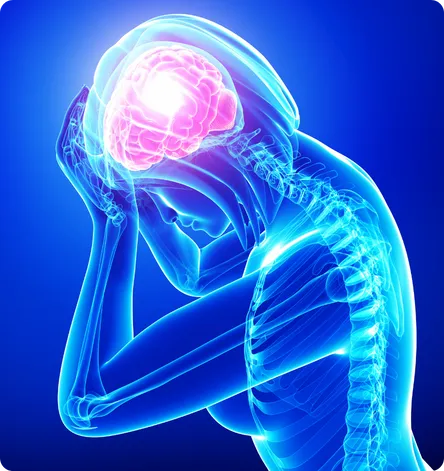

Reducir la sobreactivación del centro de miedo de tu cerebro
Pensamiento ansioso los trastornos implican hiperreactividad de la amígdala: el miedo y la detección de amenazas por parte del cerebro centro. In pensamientos ansiosos, tu amígdala reacciona de manera excesiva a factores de estrés menores, percibiendo amenazas que en realidad no existen y provocando respuestas de miedo intenso ante situaciones cotidianas.
Esta hiperactividad de la amígdala crea la sensación constante de peligro, el latido del corazón antes de las presentaciones, el pánico en espacios abarrotados y el miedo a que algo terrible esté por suceder. No es que estés eligiendo sentirte ansioso-tu miedo centro está genuinamente sobreactivado.
Su nervio vago tiene conexiones directas con la amígdala y envía señales calmantes que reducen su reactividad. La estimulación vagal ayuda a calmar esta respuesta de miedo hiperactiva, haciendo que su cerebro sea menos propenso a disparar falsas alarmas.
- Se ha asociado con una activación reducida de la amígdala inducida por el estrés a través de una señalización vagal mejorada hacia las regiones nerviosas del cerebro que regulan los pensamientos, documentada mediante estudios de imágenes cerebrales.
- Disminuye la percepción de la amenaza y el condicionamiento del miedo al fortalecer la comunicación entre su cerebro racional (corteza prefrontal) y el cerebro emocional (amígdala).
- Ayuda a romper el ciclo de pensamientos ansiosos-pensamientos ansiosos, donde el miedo a los pensamientos ansiosos mismo desencadena pensamientos más ansiosos al reducir la reactividad básica que te hace hipervigilante.
- Se ha observado que influye en reducciones medibles de la sobreactivación del centro de pensamientos ansiosos correspondiente a la disminución de la ruminación, mejora de la regulación emocional y reducción de los pensamientos ansiosos anticipatorios.
"Debido ... a mi lugar de trabajo, debido al estrés muy alto ... tengo un reflujo severo. El empuje constante para entregar más trabajo destruyó mi organismo. Cada vez que me ponía el dispositivo podía liberar la tensión de mi sistema nervioso."
- JAKUB, Reino Unido
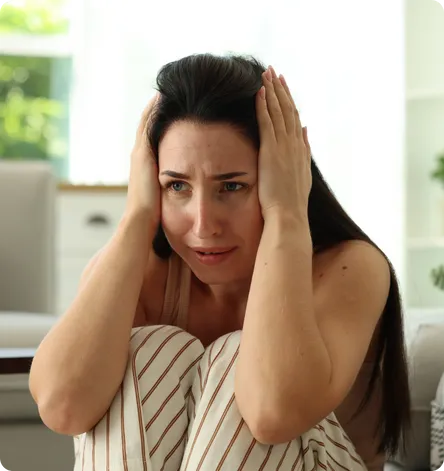

Ayuda a interrumpir la espiral de pánico antes de que llegue al máximo.
Los ataques de pánico representan una activación extrema de su sistema de lucha o huida-su cuerpo inundado con hormonas del estrés, latidos cardíacos, dificultad para respirar, opresión en el pecho y miedo abrumador. Durante el pánico, su sistema nervioso simpático está en plena activación mientras que su sistema parasimpático (calmante) está completamente suprimido.
El miedo de tener otro ataque de pánico a menudo crea un círculo vicioso: pensamientos ansiosos sobre el pánico provoca más pánico. Tales anticipatorio los pensamientos ansiosos se mantienen tu sistema nervioso está preparado para el próximo ataque, haciendo que los ataques sean más frecuentes.
La estimulación vagal aborda tanto el pánico agudo como la sensibilidad subyacente del sistema nervioso que te hace propenso a los ataques. Al fortalecer tu "freno" vagal, te vuelves menos reactivo a las sensaciones internas que normalmente desencadenan el pánico.
- Fortalece la respuesta del sistema nervioso parasimpático, Proporciona una oposición fisiológica más fuerte a las ondas simpáticas que inducen el pánico.
- Reduce la sensibilidad de los pensamientos ansiosos basales, Esto hace que sea menos probable que malinterprete las sensaciones corporales normales (aumento de la frecuencia cardíaca, cambios en la respiración) como peligrosas.
- Se puede utilizar durante o después de los episodios de pánico acelerar la recuperación y volver a una situación de calma.
- Te ayuda a recuperar el control más rápido, especialmente en las etapas tempranas de un brote de pánico.
"Cuando no estaba teniendo suficiente profundo, sueño reparador, impactó mi estado de ánimo y rutina diaria. Nurosym ha transformado completamente la forma en que descanso."
- DANIEL, GALES
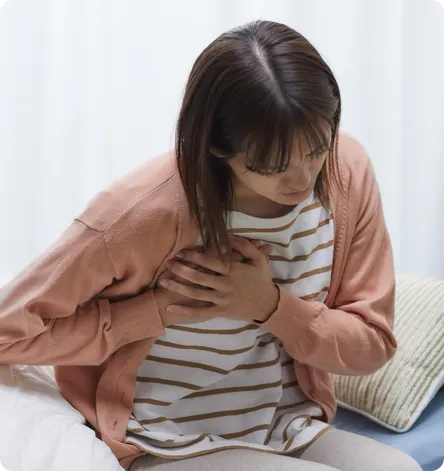

Abordar directamente los síntomas de los pensamientos ansiosos físicos
Los pensamientos ansiosos no son simplemente mental-crea síntomas físicos intensos. El corazón acelerado, la opresión en el pecho, la dificultad para respirar, la tensión muscular, los problemas estomacales, el mareo y la sudoración son todos impulsados por tu respuesta al estrés hiperactivo. Con frecuencia, estos síntomas físicos son más angustiantes que los pensamientos preocupados.
Muchas personas con pensamientos ansiosos temen que estos síntomas físicos significan que algo está médicamente mal con su corazón, pulmones o sistema digestivo. Las pruebas médicas vuelven a la normalidad porque el problema no es un daño en los órganos, sino una desregulación del sistema nervioso.
La estimulación vagal aborda directamente estos síntomas físicos activando las vías parasimpáticas que controlan la frecuencia cardíaca, la respiración, la digestión y la tensión muscular. Esto crea cambios fisiológicos medibles que usted puede sentir.
- Reduce la frecuencia cardíaca en reposo y la reactividad de la frecuencia cardíaca a través de la influencia vagal directa en las células del marcapasos de tu corazón.
- Mejora los patrones de respiración activando el control parasimpático del ritmo respiratorio, reduciendo la respiración superficial y rápida característica de los pensamientos ansiosos.
- libera la tensión muscular a través de la relajación del sistema nervioso en lugar de requerir un esfuerzo consciente para "relajarse".
- Puede apoyar una función digestiva más equilibrada, restaurar el control vagal de la motilidad intestinal y las secreciones interrumpidas por la activación del pensamiento ansioso crónico.
- Crea una calma física tangible puedes sentir en tu cuerpo-no solo un estado mental sino un cambio fisiológico real.
“Honestamente, he notado un cambio tan positivo. Tengo muchos menos días en los que me siento demasiado agotado para seguir con mi rutina diaria."
– FRANCESCA, UK
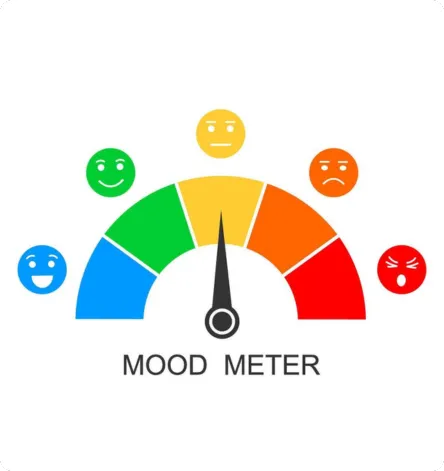

Para mejorar la regulación emocional y reducir la reactividad
Los pensamientos ansiosos te hacen emocionalmente reactivo-pequeños factores de estrés desencadenan grandes respuestas, los contratiempos menores se sienten catastróficos y no puedes "simplemente dejar que las cosas se vayan". Esta desregulación emocional surge de una comunicación alterada entre tu cerebro emocional (sistema amigdalino y límbico) y tu cerebro racional (corteza prefrontal).
Cuando el tono vagal es bajo, la corteza prefrontal pierde su capacidad de regular las respuestas emocionales. Tu cerebro emocional se hace cargo, dejándote sintiéndote fuera de control, reaccionando en exceso ante las situaciones y luchando por calmarte incluso cuando sabes que estás reaccionando en exceso.
La estimulación vagal mejora el control regulatorio de la corteza prefrontal sobre las emociones centros, dándote más flexibilidad y resiliencia emocional. Esto no elimina las emociones, sino que restablece tu capacidad de responder proporcionalmente en lugar de explosivamente.
- Fortalece la comunicación prefrontal-amígdala, Mejorar los circuitos naturales de regulación emocional del cerebro.
- Reduce la reactividad emocional a los desencadenantes, lo que hace que sea menos probable que te metas en pensamientos ansiosos debido a factores de estrés menores.
- Mejora la tolerancia al estrés, aumentar su capacidad para experimentar emociones incómodas sin sentirse abrumado.
- Mejora el control cognitivo sobre la preocupación, facilitando desviar la atención de los pensamientos ansiosos cuando sea necesario.
- Crea un espacio entre el estímulo y la respuesta, Te da más opciones en cómo reaccionar en lugar de la activación automática de pensamientos ansiosos.
“Desde que empecé a usarlo, he notado una mejora significativa en cómo me siento en general. Ya han pasado tres meses, y espero que haya cambios aún más positivos; definitivamente es un paso en la dirección correcta."
– TERRY, UK


Romper el ciclo de pensamientos ansiosos y problemas para dormir
Pensamientos de ansiedad DNA problemas de sueño crear un círculo vicioso: los pensamientos ansiosos previenen dormir (pensamientos acelerados, tensión física, hipervigilancia), mientras que la privación del sueño empeora pensamientos ansiosos al debilitar la regulación emocional y aumentar la reactividad al estrés. Cada uno alimenta al otro, empeorando progresivamente ambos síntomas.
antes de dormir pensamientos ansiosos-preocuparse por no conciliar el sueño, revisar mentalmente el día o anticipar los factores de estrés del mañana-reflejar Activación compasiva sostenida cuando tu cuerpo debería pasar al modo sueño parasimpático. Tu sistema nervioso no puede hacer esta transición naturalmente.
La estimulación vagal facilita el cambio autónomo necesario para iniciar el sueño mientras se aborda el problema subyacente. pensamientos ansiosos que prevenir dormir. Esto rompe el ciclo al mejorar ambos síntomas al mismo tiempo.
- Acelera el cambio del sistema nervioso de despertar al modo de sueño mediante la mejora de la activación parasimpática durante el período crítico previo al sueño.
- Reduce la excitación cognitiva previa al sueño, calmar los pensamientos acelerados y la preocupación que típicamente retrasa el inicio del sueño.
- Mejora la calidad del sueño y la arquitectura, resultando en un sueño más reparador que mejora la resiliencia de los pensamientos ansiosos del día siguiente.
- Mejora del 31 % de las puntuaciones de la calidad del sueño con las correspondientes reducciones en los síntomas del pensamiento ansioso, ya que un mejor sueño restaura la capacidad de regulación emocional.
- Crea un ciclo positivo donde un mejor sueño reduce los pensamientos ansiosos, lo que mejora aún más la calidad del sueño.
"Estaba buscando una manera de navegar mejor los desafíos estacionales. Había probado entrenamientos y aplicaciones de meditación, pero descubrí Nurosym, y noté cambios en solo un par de semanas. Me siento más equilibrado y mejor equipado para manejar las presiones diarias.”
– TIJANA, US
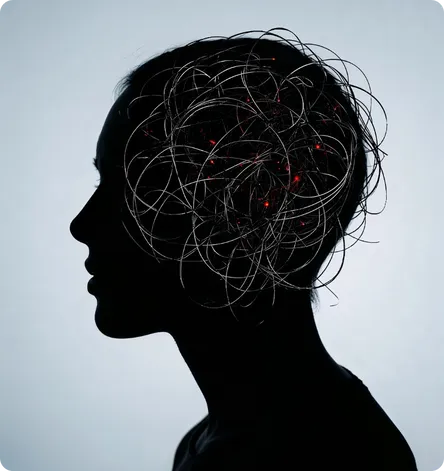

Para reducir el exceso de pensamiento y los patrones de preocupación
El exceso de pensamiento, la preocupación por los eventos futuros, la catástrofe de posibles resultados y la ansiedad por sentirse ansioso, representa un patrón específico de desregulación del sistema nervioso. Tu cerebro se queda atascado en el modo de exploración de amenazas, anticipando constantemente el peligro.
Esta preocupación crónica no es un problema de pensamiento que se puede resolver con la lógica. Es impulsado por un sistema de estrés hiperactivo que mantiene su cerebro en modo de detección de amenazas. Cuando su tono vagal es bajo, su cerebro interpreta la incertidumbre como peligro y genera los peores escenarios posibles.
La mejora de la función vagal cambia el estado básico de su sistema nervioso de uno orientado a la amenaza a uno orientado a la seguridad. Esto no elimina la preocupación apropiada por los desafíos reales-reduce el bajo nivel constante pensamientos ansiosos sobre cosas que tal vez nunca sucedan.
- Reduce la sensibilidad de detección de amenazas de referencia, haciendo que su sistema nervioso sea menos propenso a interpretar situaciones ambiguas como peligrosas.
- Disminuye la ruminación y la preocupación repetitiva desplazando la actividad cerebral lejos de los ciclos de pensamiento ansiosos.
- Mejora la capacidad de tolerar la incertidumbre, reducir la necesidad de controlar o predecir todo como una forma de sentirse seguro.
- Amortigua el patrón de pensamientos ansiosos-acerca-pensamientos ansiosos, donde el miedo a los pensamientos ansiosos futuros crea pensamientos ansiosos presentes.
- Crea un estado emocional de base más neutral, Hacer que sea más fácil involucrarse con el momento presente en lugar de las preocupaciones futuras.
"He notado una mejora en los indicadores de recuperación rastreados por mi dispositivo de fitness y un mayor capacidad de concentración o formarse durante períodos prolongados."
– HENRY, UK


Como una alternativa no farmacéutica a los medicamentos ansiolíticos
Terapia farmacéutica estándar para generalizado pensamientos ansiosos típicamente involucra a SSRI, SNRI, benzodiazepinas o buspirona. Si bien son efectivos para algunos, estos medicamentos vienen con una cantidad significativa desafíos. Benzodiazepinas dependencia del riesgo, deterioro cognitivo y retirada peligrosa.
Muchas personas buscan pensamientos ansiosos alivio sin exposición crónica a medicamentos-ya sea debido a efectos sistémicos intolerables, preferencia filosófica por enfoques no farmacéuticos, preocupaciones sobre la alteración química cerebral a largo plazo o ineficacia de los medicamentos probados.
La neuromodulación vagal proporciona pensamientos ansiosos Reducción a través de la regulación directa del sistema nervioso -activando las vías naturales de relajación de su cuerpo- en lugar de alterar las concentraciones de neurotransmisores con compuestos sintéticos.
- No tiene los mismos efectos sistémicos que la medicación, como la disfunción sexual, el aumento de peso, el entumecimiento emocional, la niebla cognitiva y la dependencia física.
- Funciona a través de los sistemas naturales de regulación de tu cuerpo, mejorar las vías de apaciguamiento existentes en lugar de introducir productos químicos extranjeros.
- Soluciones farmacológicas para los pensamientos ansiosos puede ser efectivo, pero puede estar asociado con efectos adversos o preocupaciones de tolerabilidad para algunas personas.
- Enfoques no farmacológicos como la estimulación del nervio vago se están explorando como opciones complementarias en lugar de sustitutos para el cuidado médico establecido.
- Se puede utilizar junto con la terapia, proporcionar una regulación fisiológica que haga más efectivas las intervenciones psicológicas.
"A veces me la pongo mientras leo, y Encuentro que me ayuda a concentrarme, incluso en las partes más difíciles de la escritura."
– YVONNE, UK
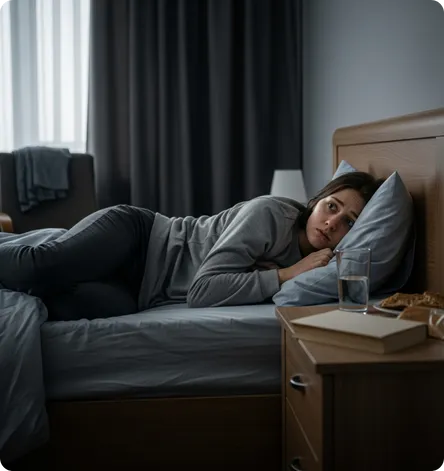

Para personas resistentes a la terapia o intolerantes a los medicamentos
Terapiaresistente pensamientos ansiosos-insuficiente mejora a pesar de intentar múltiples pruebas basadas en evidencia soluciones-afectar aproximadamente el 30-40 % de las personas con generalizado pensamientos ansiosos trastorno. Algunas personas no responden adecuadamente a los ISRS o la terapia. Otros experimentan efectos sistémicos intolerables que obligan a interrumpir la medicación.
Además, ciertas personas tienen contraindicaciones médicas a la norma pensamientos ansiosos medicamentos (embarazo, lactancia, cierta salud) síntomas, interacciones medicamentosas), dejándolos sin un tratamiento convencional terapia opciones.
La neuromodulación vagal ofrece un mecanismo fundamentalmente diferente -la modulación directa del sistema nervioso autónomo en lugar de una intervención basada en neurotransmisores- proporcionando una nueva vía para aquellos que no han respondido a los enfoques convencionales.
- Diferentes mecanismos de los medicamentos y la terapia ofrecer esperanza a quienes no han respondido a las intervenciones basadas en neurotransmisores.
- Validado en entornos científicos reales con los usuarios informando de una reducción científicamente significativa en pensamientos ansiosos.
- Se puede utilizar cuando los medicamentos están contraindicados, ofrecer una opción segura durante la lactancia, o con ciertos síntomas médicos (siempre consulte a un proveedor de atención médica).
- Se dirige directamente al sistema nervioso autónomo, apuntar al sustrato fisiológico que puede no responder a las intervenciones cognitivas o farmacéuticaslone.
- Funciona como una solución adicional o independiente, complementar la terapia existente o ofrecer una alternativa cuando otras opciones han fracasado.
"A menudo trato con la tensión en la noche que afecta a mi cara y la cabeza, pero empecé a notar una diferencia-ha sido un cambio positivo, incluso en cómo me siento físicamente.”
– HOGAN, US


Complementar la terapia con regulación fisiológica
Cognitivo-conductual terapia (TCC) y otras terapias basadas en evidencia son altamente efectivas para pensamientos ansiosos-pero requieren capacidad cognitiva y capacidad de regulación emocional que los propios pensamientos ansiosos a menudo afectar. Durante el pico pensamientos ansiosos, tu corteza prefrontal (cerebro racional) está parcialmente apagada, lo que dificulta la aplicación de habilidades terapéuticas.
Muchos terapeutas reconocer que pensamientos ansiosos tienen componentes tanto psicológicos como fisiológicos. Abordar los pensamientos ansiosos sin abordar el sistema nervioso desregulado que produce lo físico pensamientos ansiosos los síntomas a menudo producen resultados incompletos.
La estimulación vagal proporciona la regulación fisiológica que hace que la terapia sea más efectiva. Al calmar tu sistema nervioso, creas el síntomas donde las técnicas terapéuticas pueden realmente funcionar.
- Reduce la excitación fisiológica basal, crear mejores síntomas para el trabajo cognitivo y la aplicación de habilidades terapéuticas.
- Mejora la capacidad de participar en la terapia proporcionando suficiente calma para acceder al pensamiento racional durante las sesiones.
- Hace más accesibles las técnicas terapéuticas cuando más los necesitas-tu sistema nervioso está lo suficientemente tranquilo como para recordar y aplicar las habilidades de TCC.
- Aborda el componente fisiológico que la terapia de conversación por sí sola puede no alcanzar plenamente.
- Crea efectos sinérgicos en donde una mejor función del sistema nervioso mejora los resultados de la terapia, y las habilidades terapéuticas ayudan a mantener una función mejorada.
- Recomendado por profesionales de la salud mental como una herramienta complementaria que mejora la efectividad general de la terapia.
"Me lo dijo un profesional que no estaban seguros de lo que estaba causando mis desafíos, pero se sugirió un enfoque a largo plazo. Empecé a investigar formas de mantenerme y descubrí Nurosym."
– TREVOR, UK


Reducir los patrones de evitación, como los pensamientos ansiosos sociales y la procrastinación
Social pensamientos ansiosos y la procrastinación a menudo se malinterpretan como problemas de personalidad, siendo "demasiado tímido", "no lo suficientemente seguro" o "perezoso".
En realidad, ambos son fisiológicos pensamiento ansioso respuestas impulsadas por el mismo mecanismo: tu sistema nervioso interpreta ciertas situaciones como amenazas, provocando una respuesta de estrés que te hace querer evitarlas.
Cuando el tono vagal está bajo, la amígdala (el miedo de tu cerebro) centro) reacciona con demasiada fuerza a situaciones que implican incertidumbre, evaluación o posible juicio. Tu corteza prefrontal -la parte que normalmente mantiene las cosas en perspectiva- queda anulada. El resultado es evitar: no porque no quieras actuar, sino porque tu cuerpo se siente inseguro al hacerlo.
La estimulación vagal fortalece el "freno" fisiológico en esta respuesta de estrés, reduciendo las señales internas de alarma que hacen que las tareas e interacciones cotidianas se sientan abrumadoras.
- Reduce la reactividad de amenaza en la amígdala, hacer que las situaciones sociales se sientan menos intensas.
- Mejora el control prefrontal, mejorar tu capacidad para iniciar tareas sin pánico ni evasión.
- Disminuye la incomodidad física (latido acelerado, pecho apretado, tensión) que impulsa los comportamientos de evitación.
- te ayuda a involucrar - incluso cuando algo se siente emocionalmente cargado o vulnerable.
No se trata de forzar la confianza o la motivación.
Se trata de cambiar el estado fisiológico que hace que la evitación se sienta necesaria en primer lugar.
El mecanismo: cómo la VNS regula los pensamientos ansiosos
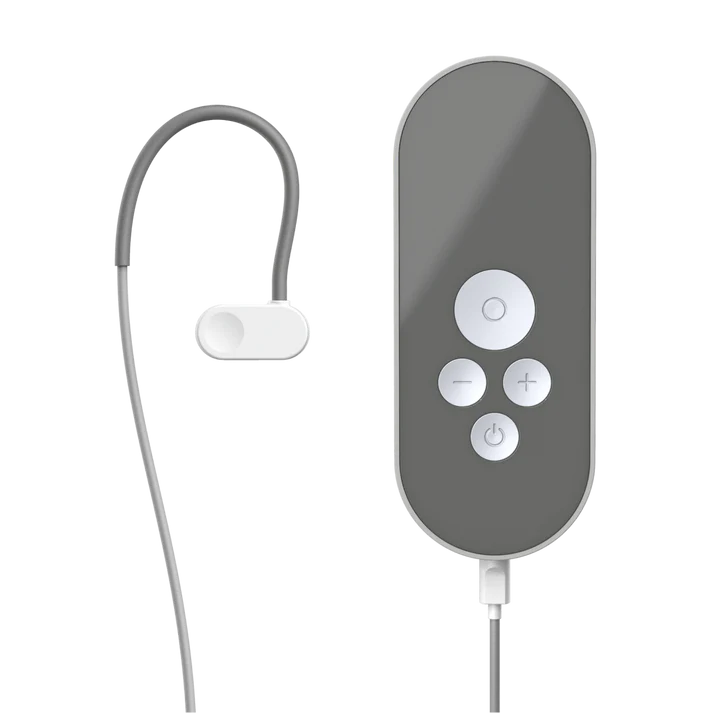
Terapia de neuromodulación vagal auricular (AVNT TM) - El protocolo exclusivo de Nurosym, desarrollado con la Escuela Médica de la Universidad de Chicago, la UCLA, el Imperial College de Londres y más de 60 instituciones de investigación, validado específicamente para los pensamientos ansiosos en más de 4 millones de sesiones supervisadas.
Funciona así:
Los trastornos del pensamiento ansioso implican fundamentalmente que su sistema nervioso esté atascado en modo de lucha o huida con una activación insuficiente del sistema calmante (parasimpático). El nervio vago es la vía principal que activa la respuesta natural del cuerpo al modo de calma.
Nurosym transmite señales eléctricas calibradas con precisión al nervio vago a través del oído, activando las vías que cambian el sistema nervioso de pensamientos ansiosos a la calma:
- Activación Periférica: La estimulación eléctrica activa las fibras nerviosas vagales en el concha címbal de tu oído, el punto de acceso óptimo no invasivo.
- Transmisión del tronco cerebral: Las señales viajan al tracto solitario del núcleo (NTS), el principal centro de regulación del estrés y las emociones del cerebro.
- Pensamientos ansiosos: activación de la red regulatoria: El NTS se conecta a estructuras clave que controlan los pensamientos ansiosos:
- Locus coeruleus - regula la excitación, la percepción de amenazas y la activación de lucha o huida.
- Amígdala - tu centro de miedo; las señales vagales reducen su hiperreactividad a las amenazas percibidas.
- Córtex prefrontal - mejora el control de un cerebro racional sobre las reacciones emocionales.
- Hipotálamo - reduce la producción y liberación de la hormona del estrés (cortisol).
- Activación parasimpática: Aumento de la actividad del sistema "descansar y digerir" en todo su cuerpo: disminución de la frecuencia cardíaca, profundización de la respiración, liberación de la tensión muscular
- Normalización de los neurotransmisores: Equilibra la norepinefrina (excitación), la serotonina (estado de ánimo) y el GABA (calmante) naturalmente a través de una mejor función del sistema nervioso
- Regulación de las hormonas del estrés: Normaliza los patrones de cortisol y reduce la elevación crónica de las hormonas del estrés que perpetúa pensamientos ansiosos
Científico Efecto: Intervención multinivel que aborda pensamientos ansiosos en su origen -la desregulación del sistema nervioso- sin requerir un esfuerzo consciente o una intervención farmacéutica.
Validación científica: reducción de síntomas en los pensamientos ansiosos
- Reducción media del 35% en las puntuaciones de BURNS Anxiety Inventory (p<0,001) en el análisis de intención de tratar de estudios controlados aleatorios.
- Reducciones significativas en múltiples medidas validadas de pensamientos ansiosos, incluyendo GAD-7 (Escala de Trastorno de Ansiedad Generalizada) y STAI (Inventario de Estado-Rasgo de Ansiedad).
- Mejora del 45% en los índices de estado depresivo y el estado de ánimo según lo medido por el Inventario de Depresión de Beck en 10 días, con mejoras notables que aparecen tan pronto como 5 días (p<0,05).
Cambios neurobiológicos:
- Reducciones mensurables en la hiperactivación de la amígdala han sido documentados a través de estudios de imágenes cerebrales, correspondientes a respuestas de miedo disminuidas.
- Mejora de la conectividad prefrontal-amígdala, mejorar la capacidad de regulación emocional.
- Mejora significativamente la función del sistema nervioso parasimpático con cambios medibles en los marcadores de variabilidad del ritmo cardíaco que aparecen dentro de una hora (p=0,002).
- Normalizar los patrones de las hormonas del estrés con una mejora del ritmo del cortisol y una reducción de la elevación basal de las hormonas de estrés.
Mejora de los síntomas físicos:
- Reducción de la frecuencia cardíaca en reposo y disminución de la reactividad del ritmo cardíaco a los factores estresantes.
- Mejora de la variabilidad de la frecuencia cardíaca, indicando una mejor resiliencia al estrés y equilibrio autónomo.
- Disminución de la tensión física y síntomas somáticos relacionados con el estrés.
- Mejora significativa de la calidad del sueño (mejora del 31% en las evaluaciones validadas del sueño en 4 semanas), rompiendo el ciclo de pensamientos ansiosos-problemas de sueño.
Mejoría de los síntomas comorbíticos:
- Mejoras significativas del estado de ánimo en individuos con pensamientos ansiosos y estados depresivos, con estudios científicos que demuestran una reducción del 35% en los síntomas del pensamiento ansioso y una mejora del 45% en las puntuaciones de estados depresivos utilizando evaluaciones psicológicas validadas.
- Reducción de la fatiga (reducción del 48%) a medida que mejora el agotamiento relacionado con los pensamientos ansiosos.
- Función digestiva mejorada mientras la desregulación del eje intestino-cerebro se normaliza.
Eficacia en el mundo real:
- Más de 4 millones de sesiones científicas supervisadas completado en entornos de investigación y científicos.
- Usuarios que informan de mejoras científicamente significativas en los síntomas del pensamiento ansioso, la resiliencia al estrés o la calidad de vida.
- Altas tasas de cumplimiento cuando los usuarios experimentan beneficios tangibles.
- Perfil de seguridad favorable sin acontecimientos adversos graves y sin efectos sistémicos típicos de los medicamentos ansiolíticos.
Científico Importancia:
Para las personas que experimentan generalizado pensamientos ansiosos, trastorno de pánico o preocupación crónica, Nurosym representa una intervención científicamente validada que aborda pensamientos ansiosos en su fuente fisiológica-activando las vías del sistema nervioso que regulan el estrés y el equilibrio emocional.
Para las personas que exploran estrategias no farmacológicas para apoyar la regulación de los pensamientos ansiosos, entender el papel del sistema nervioso autónomo puede ser un primer paso importante. Cualquier intervención debe considerarse como parte de un plan de atención más amplio y personalizado guiado por profesionales sanitarios cualificados.
Nurosym es una clase IIa con marca CE portátil aparato. Científico los resultados representan resultados promedio de estudios controlados y análisis de eficacia en el mundo real. Las respuestas individuales varían. El dispositivo está destinado para el bienestar general y la gestión del estrés; no está destinado a diagnosticar, tratar, curar o prevenir ninguna enfermedad. Pensamientos de ansiedad los trastornos deben ser evaluados por profesionales de la salud calificados. Usuarios con marcapasos o otros asuntos médicos importantes síntomas debe consultar a un proveedor de atención médica antes de usar. Nurosym no es un sustituto para el profesional de la salud mental soluciones y debe utilizarse como parte de un enfoque integral para gestionar los pensamientos ansiosos.
Este artículo de blog tiene como objetivo ser informativo y no debe reemplazar el asesoramiento profesional en salud. Consulte siempre con un profesional de la salud para obtener asesoramiento personalizado.
Fuentes
- Bremner JD, Wittbrodt MT, Gurel NZ, Shandhi MH, Gazi AH, Jiao Y, et al. Transcutaneous Cervical Vagal Nerve Stimulation in Patients with Posttraumatic Stress Disorder (PTSD): A Pilot Study of Effects on PTSD Symptoms and Interleukin-6 Response to Stress. Journal of Affective Disorders Reports. 2021 Dec;6:100190.
- Mueller B, Figueroa A, Robinson-Papp J. Structural and functional connections between the autonomic nervous system, hypothalamic–pituitary–adrenal axis, and the immune system: a context and time dependent stress response network. Neurological Sciences. 2022 Jan 16;43(2):951–60.
- Zhang H, Shan A, Wan C, Cao X, Yuan Y, Ye S, et al. Transcutaneous auricular vagus nerve stimulation improves anxiety symptoms and cortical activity during verbal fluency task in Parkinson’s disease with anxiety. Journal of Affective Disorders [Internet]. 2024 Jun 24 [cited 2024 Oct 15];361:556–63. Available from: https://www.sciencedirect.com/science/article/abs/pii/S0165032724010152?via%3Dihub
- Szeska C, Ventura-Bort C, Giraudier M, Weymar M. A vagal route to memory: evidence from invasive and non-invasive electrical vagus nerve stimulation studies and areas for future clinical application. Frontiers in Human Neuroscience. 2025 Jul 8;19.
- Ruiz AA. Transcutaneous Auricular Vagus Nerve Stimulation to Improve Emotional State. Biomedicines. 2024 Feb 9;12(2):407–7.
- Trifilio E, Shortell D, Olshan S, O’Neal A, Coyne J, Lamb D, et al. Impact of transcutaneous vagus nerve stimulation on healthy cognitive and brain aging. Frontiers in Neuroscience. 2023 Jul 28;17.



 Spanish
  English
  German
  French
  Swedish
A well-structured article that makes a complex topic easier to follow.
Good to see emerging technologies being discussed with scientific context.