

La estimulación del nervio vago (VNS) se está explorando como un enfoque no farmacológico para la fatiga y la baja energía mediante el apoyo al equilibrio del sistema nervioso autónomo. La investigación emergente sugiere que mejorar la actividad vagal puede influir en la recuperación, la resiliencia al estrés y los niveles de energía percibidos en ciertos individuos.


Por qué se está explorando la estimulación nerviosa vaga para generar energía y fatiga
Nurosym es el primer dispositivo portátil de estimulación del nervio vago validado a través de más de 50 estudios de investigación completados. Proporciona estimulación no invasiva a la rama auricular del nervio vago, una vía implicada en la regulación autonómica que puede influir en la recuperación y la percepción de la fatiga.
A diferencia de los enfoques basados en estimulantes que aumentan temporalmente el estado de alerta, las intervenciones basadas en la autonomía apuntan a apoyar los procesos subyacentes de recuperación más que la excitación a corto plazo.
- Validado mediante más de 50 estudios científicos completados y más de 4 millones de sesiones de usuario.
- Certificación de dispositivo portátil con marca CE cumple rigurosas normas de la UE.
- Utilizado por cientos de profesionales sanitarios para mejoras mensurables en la energía.
- Desarrollado a través de una inversión en investigación de más de 10 millones de dólares con los principales centros médicos académicos.
"Entre los dispositivos de bienestar similares, destaca por su sólida base de investigación y diseño fácil de utilizar."
- DEREK, US
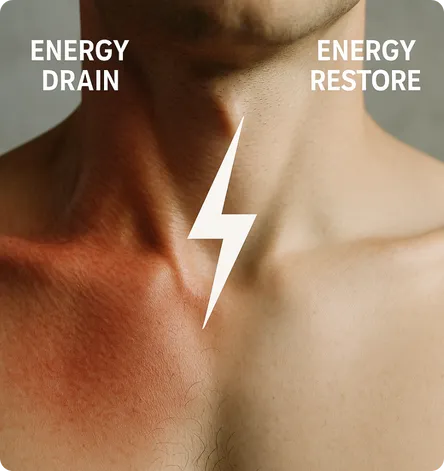

Pasar del modo de agotamiento energético al modo de recuperación
Tu nervio vago controla si tu cuerpo quema energía o la restaura. El estrés crónico te encierra en un estado de "lucha o huida", diseñado para la supervivencia, no para la energía sostenible.
Cuando estás atrapado en modo estrés, tu cuerpo prioriza Combustible inmediato sobre reservas de largo plazo. Esto crea un agotamiento rápido, una recuperación alterada y una disfunción progresiva.
Nurosym transmite señales eléctricas precisas a tu nervio vago a través del oído, activando vías que desplazan tu metabolismo desde el agotamiento hasta la restauración.
- Activa el estado natural de recuperación de tu cuerpo, pasar del colapso a la restauración.
- Reduce el gasto energético de referencia normalizando el elevado costo del estrés crónico.
- Apoya la actividad del sistema nervioso parasimpático, que desempeña un papel en la recuperación y conservación de energía durante los períodos de descanso.
"Me ayuda a alcanzar un estado de tranquilidad similar a la meditación. El cambio es sutil, pero noto que me siento más a gusto.”
- TOM, Reino Unido
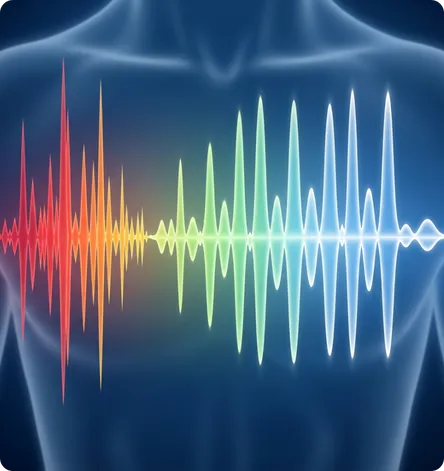

Normalizar las hormonas del estrés que alteran la energía
El estrés crónico crea patrones hormonales que agotan tu energía: el cortisol aplanado elimina la oleada matutina, el cortisol nocturno elevado impide la recuperación durante la noche y la exposición sostenida a las hormonas genera resistencia celular.
Esto produce fatiga matutina a pesar del sueño, colapsos vespertinos, incapacidad para mantener la energía y empeoramiento progresivo.
El nervio vago regula directamente la producción de hormonas del estrés. La señalización vagal mejorada normaliza los patrones de cortisol y restaura tu ritmo natural diario de energía.
La investigación sugiere que la actividad vagal está involucrada en la regulación de las hormonas del estrés, lo que puede contribuir a mejorar los patrones de energía y reducir la fatiga en algunas poblaciones.
- Restaura el despertar saludable del cortisol respuesta que produce energía natural matutina.
- Reduce la elevación del cortisol por la noche permitir una recuperación adecuada durante la noche.
- Revierte la resistencia a las hormonas del estrés improving cellular response.
- Normalizes daily energy rhythm creating predictable patterns.
- Significantly reduces fatigue with 48% improvement in validated fatigue assessments within 10 days (p < 0.0001), with sustained benefits after therapy completion.
"Debido ... a mi lugar de trabajo, debido al estrés muy alto ... tengo un reflujo severo. El empuje constante para entregar más trabajo destruyó mi organismo. Cada vez que me ponía el dispositivo podía liberar la tensión de mi sistema nervioso."
- JAKUB, Reino Unido


Para un sueño reparador que realmente restaure la energía
La energía deficiente refleja una restauración nocturna inadecuada. El estrés interrumpe las etapas del sueño profundo en las que tu cuerpo repone los sustratos de energía, repara el daño celular y restablece los sistemas de estrés.
Sin suficiente activación parasimpática durante el sueño, tu cuerpo no puede completar la restauración. Te despiertas sin descansar a pesar de las horas en la cama y acumulas progresivamente déficits de energía.
La estimulación del nervio vago mejora la activación parasimpática durante la transición al sueño y estabiliza tono autónomo, que facilita el sueño profundo esencial para una restauración completa de la energía.
- Acelera la transición a un sueño reparador al pasar rápidamente a la dominancia parasimpática.
- Aumenta la duración del sueño de onda lenta, mejorar el sueño más profundo donde se produce la máxima restauración.
- Mejora la eficiencia del sueño, reducir el despertar nocturno.
- Mejora los niveles de energía del día siguiente a través de una restauración completa durante la noche.
- Estudios científicos sobre el VNS auricular han informado mejoras en la calidad subjetiva del sueño, que puede apoyar una mejor energía diurna y recuperación.
"Cuando no estaba teniendo suficiente profundo, sueño reparador, impactó mi estado de ánimo y rutina diaria. Nurosym ha transformado completamente la forma en que descanso."
- DANIEL, GALES
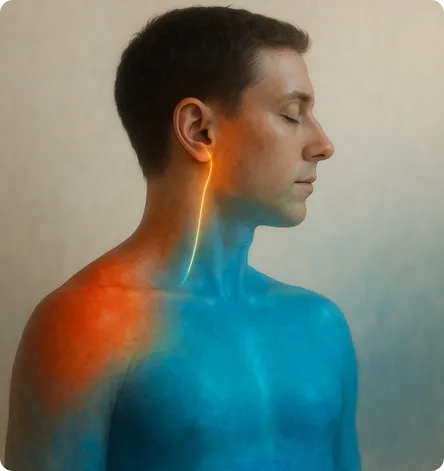

Para reducir la inflamación drenante de energía
La inflamación crónica de bajo grado es una de las causas más ignoradas de fatiga persistente. Los marcadores inflamatorios elevados afectan directamente la producción de energía celular, aumentan la demanda metabólica y provocan "enfermedad" comportamiento" que se manifiesta como una fatiga profunda.
Esta fatiga inflamatoria persiste a pesar del descanso, crea sensaciones pesadas, perjudica la motivación y la energía mental, y resiste las intervenciones convencionales.
Tu nervio vago controla la vía principal antiinflamatoria de tu cuerpo. El estrés crónico debilita este control. Restaurar la actividad vagal reactiva los sistemas naturales antiinflamatorios.
- Activa la supresión inflamatoria natural, reducir las sustancias químicas inflamatorias que inducen la fatiga.
- Las vías vagales están involucradas en la comunicación del sistema inmune-nervioso, y la modulación de esta vía está siendo estudiada por su potencial papel en la regulación inflamatoria y la percepción de fatiga.
“Honestamente, he notado un cambio tan positivo. Tengo muchos menos días en los que me siento demasiado agotado para seguir con mi rutina diaria."
– FRANCESCA, UK


Para optimizar sus plantas de energía celular
Tus mitocondrias producen ATP, la moneda de energía directa de tu cuerpo. El estrés crónico afecta la función mitocondrial a través del estrés oxidativo, la inflamación y la activación simpática sostenida que desplaza el metabolismo hacia vías ineficientes.
El deterioro de la función mitocondrial crea a crisis energética progresiva: reducción de la producción de ATP, aumento de subproductos que inducen fatiga y agravamiento de los déficits energéticos.
La estimulación del nervio vagal mejora la función mitocondrial a través de un metabolismo mediado por el parasimpático. optimización, apoyando tanto la eficiencia como la biogénesis.
La función mitocondrial está estrechamente vinculada a la fisiología del estrés y el equilibrio autónomo. La investigación preliminar sugiere que las intervenciones que apoyan la actividad parasimpática pueden influir indirectamente en los procesos de energía celular, aunque esta sigue siendo una área de estudio en evolución.
- Mejora la biogénesis mitocondrial estimular la creación de nuevas mitocondrias saludables.
- Mejora la eficiencia mitocondrial aumentar la producción de ATP por molécula de oxígeno.
- Reduce el estrés oxidativo proteger a las mitocondrias del daño progresivo.
- Optimiza el metabolismo celular al pasar de vías energéticas ineficientes a vías energéticas eficientes.
- Mejoras medibles en los marcadores celulares de estrés oxidativo-28% de reducción en las especies reactivas de oxígeno (p = 0,004) en ensayos controlados con placebo, apoyando una función mitocondrial mejorada y la producción de energía celular.
“Desde que empecé a usarlo, he notado una mejora significativa en cómo me siento en general. Ya han pasado tres meses, y espero que haya cambios aún más positivos; definitivamente es un paso en la dirección correcta."
– TERRY, UK
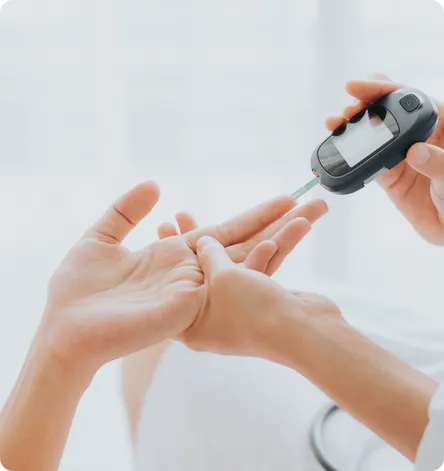

Para estabilizar el azúcar en la sangre y prevenir las caídas de energía
Los colapsos energéticos reflejan una disfunción autónoma. El nervio vago regula la secreción de insulina, la captación de glucosa y la selección del combustible metabólico. La alteración de la función vagal crea niveles erráticos de azúcar en sangre: picos exagerados después de comer, caídas rápidas cuando la insulina se compensa en exceso y mala flexibilidad metabólica.
Estas oscilaciones crean la montaña rusa energética: fatiga post-comida, colapsos a media tarde, antojos de carbohidratos e incapacidad para mantener una energía estable.
El tono vagal mejorado mejora la regulación metabólica: optimizar Cronometraje de la insulina, mejorando la absorción celular de glucosa y aumentando la capacidad de su cuerpo para utilizar energía almacenada sin problemas.
La función autonómica juega un papel en la regulación metabólica, incluyendo las respuestas digestivas y post-comida. Apoyar la actividad vagal puede contribuir a niveles de energía percibidos más estables durante todo el día.
- Mejora la sensibilidad a la insulina mejorar la absorción celular de glucosa.
- Estabiliza la respuesta de glucosa después de la comida reducir los picos que conducen a accidentes.
- Mejora la flexibilidad metabólica mejorar las transiciones suaves entre fuentes de combustible.
- Reduce el hambre y los antojos normalizando la inestabilidad del azúcar en sangre.
- Crea una disponibilidad sostenida de energía a lo largo del día.
"Estaba buscando una manera de navegar mejor los desafíos estacionales. Había probado entrenamientos y aplicaciones de meditación, pero descubrí Nurosym, y noté cambios en solo un par de semanas. Me siento más equilibrado y mejor equipado para manejar las presiones diarias.”
– TIJANA, US
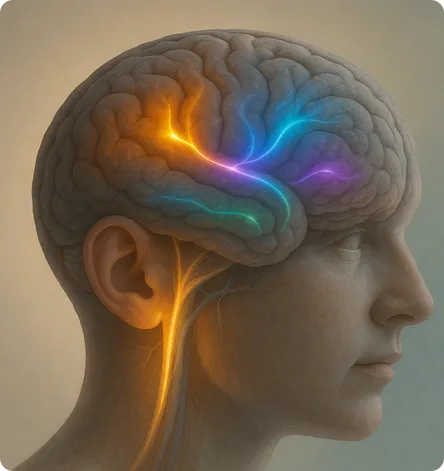

Restaurar los neurotransmisores críticos para la energía
La fatiga mental y la neblina cerebral reflejan una disfunción de los neurotransmisores. El estrés crónico agota la dopamina (motivación), la norepinefrina (alerta), la serotonina (estado de ánimo) y la acetilcolina (procesamiento cognitivo).
Este agotamiento neuroquímico crea fatiga mental: dificultad para iniciar tareas, disminución de la concentración, reducción de la motivación y an sensación agotadora de forzar actividades básicas.
Tu nervio vago modula los sistemas de neurotransmisores. La estimulación vagal influye en el cerebro. centros que producen y regulan estas sustancias químicas críticas para la energía.
Las vías vagales interactúan con regiones cerebrales involucradas en el estado de alerta, la motivación y el procesamiento cognitivo, lo que puede influir en la fatiga mental y la concentración.
- Mejora la función de la dopamina mejorar la motivación y la energía mental.
- Optimiza los sistemas de noradrenalina mejorar la alerta y la concentración sin nervios.
- Normaliza las vías de la serotonina apoyar la estabilidad del estado de ánimo.
- Mejora la señalización de la acetilcolina mejorar la eficiencia del procesamiento cognitivo.
- Mejoras medibles en la energía cognitiva incluyendo la reducción de la fatiga mental.
"He notado una mejora en los indicadores de recuperación rastreados por mi dispositivo de fitness y un mayor capacidad de concentración o formarse durante períodos prolongados."
– HENRY, UK
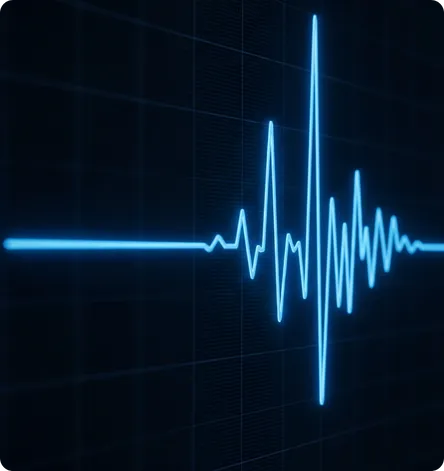

Mejorar la variabilidad de la frecuencia cardíaca: tu biomarcador energético
La variabilidad de la frecuencia cardíaca (VFC) predice la disponibilidad de energía y la capacidad de recuperación. Un alto HRV indica una robusta flexibilidad autonómica y una gestión eficiente de la energía. Un bajo HRV indica una rigidez autonómica y una recuperación alterada.
Crónico cansancio se correlaciona consistentemente con la reducción del HRV, reflejando la disfunción autónoma subyacente al agotamiento de energía.
La estimulación del nervio vago mejora directamente la actividad vagal cardíaca que determina el HRV, produciendo mejoras medibles en la flexibilidad autonómica y la gestión de la energía.
- Aumenta las métricas HRV de dominio temporal indicando una capacidad autónoma mejorada.
- Mejora la potencia del HRV de alta frecuencia, el marcador validado de la actividad parasimpática.
- Mejora la recuperación de HRV después del esfuerzo, acelerar el retorno a la línea de base.
- Rastreable a través de wearables de consumo, incluyendo Oura Ring, WHOOP, Apple Watch y Garmin.
"A veces me la pongo mientras leo, y Encuentro que me ayuda a concentrarme, incluso en las partes más difíciles de la escritura."
– YVONNE, UK


Como base para otras estrategias energéticas
Energético eficaz optimización requiere múltiples enfoques: sueño adecuado, nutrición adecuada, ejercicio regular, DNA control de estrés.
Cada uno aborda diferentes aspectos, pero muchos logran resultados subóptimos cuando la disfunción autonómica subyacente permanece sin resolver.
- La dieta proporciona sustratos, pero la disfunción autónoma dificulta su utilización.
- El ejercicio desarrolla la capacidad, pero una recuperación deficiente impide la adaptación.
- El sueño ofrece oportunidades de restauración, pero sin la activación parasimpática, la restauración permanece incompleta.
La estimulación del nervio vago proporciona el autonomico fundamento, permitiendo otras intervenciones para que funcionen de manera óptima, creando el entorno fisiológico donde la dieta, el ejercicio, el sueño y los suplementos ofrezcan todo su potencial.
- Mejora la eficacia de las intervenciones dietéticas mejorando el metabolismo de los nutrientes y estabilizando el azúcar en la sangre.
- Amplifica los beneficios del ejercicio al mejorar la capacidad de recuperación y reducir la inflamación.
- Maximiza la restauración del sueño mediante la profundización de las etapas del sueño restaurador.
- Mejora la utilización del suplemento normalizando las vías metabólicas.
- Proporciona seguimiento biométrico objetivo a través del monitoreo de HRV.
- Crea efectos sinérgicos cuando se combina con nutrición, ejercicio y optimización del sueño.
"A menudo trato con la tensión en la noche que afecta a mi cara y la cabeza, pero empecé a notar una diferencia-ha sido un cambio positivo, incluso en cómo me siento físicamente.”
– HOGAN, US


Como una alternativa no estimulante para la energía sostenida
La gestión energética estándar depende de la cafeína, las bebidas energéticas o los estimulantes. Estos funcionan a través de la activación compasiva-el endeudamiento de la energía del mañana para hoy-creando dependencia, tolerancia, colapsos, alteración del sueño y pensamientos ansiosos.
El enfoque estimulante entra en conflicto con la energía sostenible: agota en lugar de reponer las reservas, obstaculiza la recuperación, interrumpe el sueño y perpetúa la fatiga. ,,,,,,,,,,,,,,,,,,,,,,,,,,,
La neuromodulación vagal proporciona un aumento de la energía a través de mecanismos opuestos: activación de vías parasimpáticas que restauran las reservas, mejora de la recuperación nocturna que crea energía para el día siguiente y creación de capacidad sostenible.
- Elimina los efectos asociados a estimulantes, incluyendo nerviosismo, pensamientos ansiosos, colapsos y dependencia.
- Crea capacidad de energía sostenible en lugar de endeudarse con reservas agotadas.
- Mejora el sueño en lugar de interrumpirlo, crear restauración nocturna.
- Funciona sinérgicamente con las rutinas matutinas, complementar las prácticas saludables.
- Proporciona una solución a largo plazo y rentable sin compras recurrentes ni aumento de dosis.
- Apunta a la disfunción autónoma aguas arriba, Puede ofrecer mejoras más integrales.
- Enfoques no estimulantes que apoyan la recuperación puede ser útil para las personas que buscan estrategias de energía sostenible sin depender de estimulantes.
"Me lo dijo un profesional que no estaban seguros de lo que estaba causando mis desafíos, pero se sugirió un enfoque a largo plazo. Empecé a investigar formas de mantenerme y descubrí Nurosym."
– TREVOR, UK
El mecanismo: Cómo la estimulación del nervio vagal mejora la energía
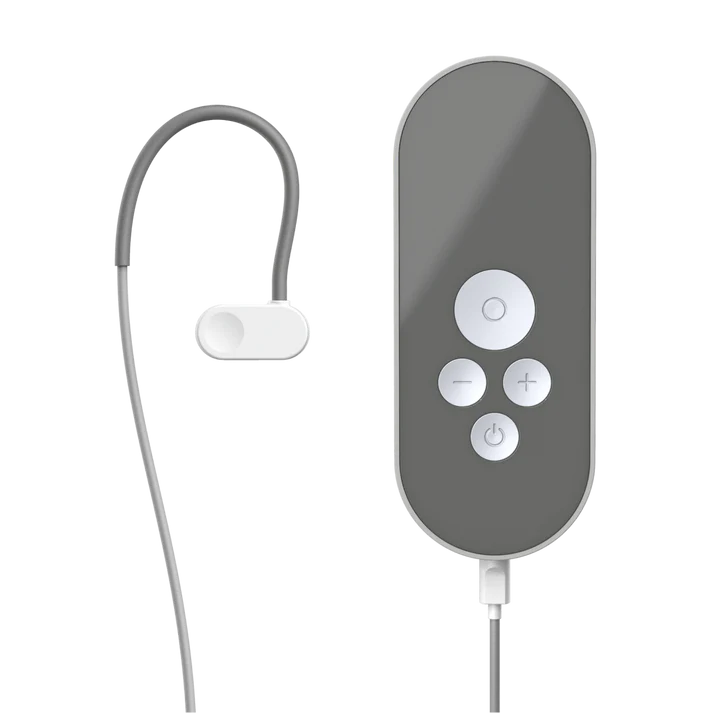
Terapia de neuromodulación vagal auricular (AVNT TM) - El protocolo exclusivo de Nurosym fue desarrollado con la Escuela Médica de la Universidad de Chicago, UCLA, Imperial College London y más de 60 instituciones de investigación.
Funciona así:
Nurosym entrega formas de onda eléctricas patentadas a la rama auricular del nervio vago en el oído.
- Activación Periférica: La estimulación eléctrica activa las fibras nerviosas vagales, generando señales que viajan a tu cerebro.
- Integración del tronco cerebral: Las señales llegan al tracto solitario del núcleo (NTS), tu principal centro de control autónomo.
- Red de regulación energética: El NTS se conecta a estructuras clave que gobiernan la energía y el metabolismo:
- Locus coeruleus - optimiza la alerta y la energía mental.
- Hipotálamo - regula las hormonas críticas para la energía.
- Núcleo motor dorsal - controla la función digestiva.
- Sustancia gris periacueductal - modula el malestar agotador de energía.
- Córtex prefrontal - mejora la energía cognitiva.
- Reequilibrio Metabólico: Pasar de una activación por estrés que agota la energía a un modo parasimpático que restaura la energía.
- Energía Celular Optimización: Mejora multinivel que incluye una reducción del 28% en el estrés oxidativo celular (p=0,004), apoyando la función mitocondrial, la supresión inflamatoria y la eficiencia metabólica.
- Restauración de la energía sistémica: Normalizó las hormonas del estrés, mejoró la calidad del sueño y el aprovechamiento de los nutrientes.
Científico Efecto: Intervención de múltiples sistemas que produce una producción mejorada de energía celular, optimizado eficiencia metabólica, capacidad de recuperación mejorada, normalizado ritmo energético diario, y mejora sostenida de la energía-sin estimulantes.
Importancia Científica:
La magnitud de la reducción de la fatiga (48% en 10 días, p < 0,0001) y la mejora de la función autonómica (aumento significativo del parasimpatismo en una hora, p = 0,002) lograda a través de la neuromodulación vagal proporciona una vía no estimulante hacia la energía sostenible-sin desarrollo tolerante, riesgo de dependencia, alteración del sueño o fatiga por recuperación.
Otros resultados validados incluyen:
- 31% de mejora en la calidad del sueño durante 4 semanas (p < 0,05).
- 28% de reducción del estrés oxidativo celular en estudios controlados con placebo (p = 0,004).
- Reducciones significativas en los marcadores inflamatorios, incluyendo IL-6, durante 3 meses.
- Mejora del 45% en los resultados de estados depresivos y reducción del 35% en síntomas de ansiedad a los 10 días.
La convergencia de más de 50 estudios de investigación, más de 4 millones sesiones de usuario, y marca CE portátil la certificación del dispositivo establece a Nurosym como el estándar de referencia en neuromodulación vagal no invasiva para mejorar la energía sostenible y el metabolismo optimización.
Para las personas que buscan una intervención no estimulante basada en la evidencia para abordar las causas fundamentales de la enfermedad crónica cansancio-o profesionales de la salud evaluando opciones de neuromodulación para usuarios con déficits de energía persistentes-Nurosym representa el sistema VNS transcutáneo más completamente validado disponible.
Nurosym es una clase IIa con marca CE portátil aparato. Científico los resultados representan resultados promedio de estudios controlados y análisis de eficacia en el mundo real. Las respuestas individuales varían. El dispositivo está destinado al bienestar general y la gestión de energía; no está destinado a diagnosticar, tratar, curar o prevenir ninguna enfermedad. Usuarios con marcapasos u otros médicos significativos síntomas debe consultar a los proveedores de atención médica antes de usar.
Este artículo de blog tiene como objetivo ser informativo y no debe reemplazar el asesoramiento profesional en salud. Consulte siempre con un profesional de la salud para obtener asesoramiento personalizado.
Fuentes
- Tarn J, Evans E, Traianos E, Collins A, Stylianou M, Parikh J, et al. The Effects of Noninvasive Vagus Nerve Stimulation on Fatigue in Participants With Primary Sjögren’s Syndrome. Neuromodulation: Technology at the Neural Interface. 2022 Oct;
- Percin A, Ozden AV, Yenisehir S, Pehlivanoglu BE, Yılmaz RC. Effects of Transcutaneous Auricular Vagus Nerve Stimulation on Fatigue in Post‐COVID Syndrome: A Randomized, Single‐Blind, Sham‐Controlled Study. International Journal of Clinical Practice. 2025 Jan 1;2025(1).
- McIntire LK, McKinley RA, Goodyear C, McIntire JP, Brown RD. Cervical transcutaneous vagal nerve stimulation (CTVNS) improves human cognitive performance under sleep deprivation stress. Communications Biology. 2021 Jun 10;4(1).
- Gierthmuehlen M, Höffken N, Timmesfeld N, Schmieder K, Reinacher-Schick A. Effect of transcutaneous auricular vagal nerve stimulation on the fatigue syndrome in patients with gastrointestinal cancers — FATIVA: a randomized, placebo-controlled pilot study protocol. Pilot and Feasibility Studies. 2023 Apr 22;9(1):66–6.
- Ferstl M, Teckentrup V, Lin WM, Kräutlein F, Kühnel A, Klaus J, et al. Non-invasive vagus nerve stimulation boosts mood recovery after effort exertion. Psychological Medicine. 2021 Feb 15;52(14):1–11.
Compartir a través de:



 Spanish
  English
  German
  French
  Swedish
The science behind vagal stimulation is quite compelling
The HRV section helped me understand how stress affects the body.