
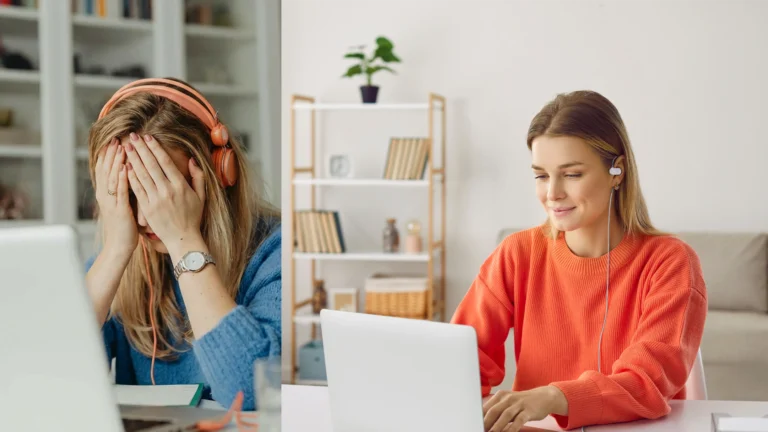
Leer el Autoevaluación del deterioro nervioso vago y averiguar
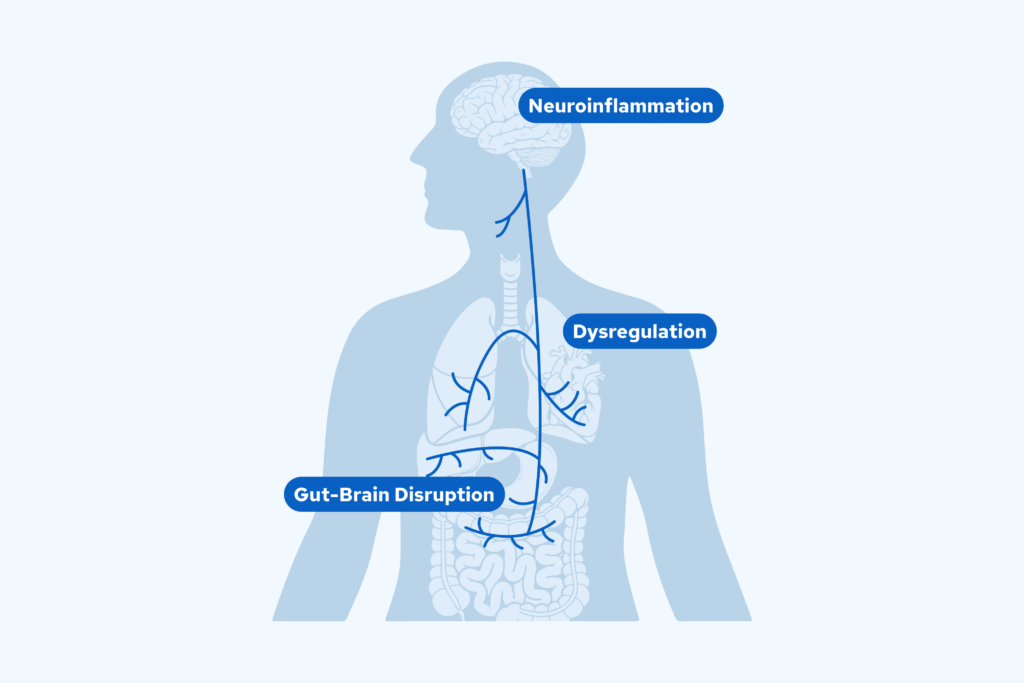

¿Es tu sistema nervioso lo que te mantiene en una fatiga y niebla mental postvirales persistentes?
Pregúntate a ti mismo
- ¿Experimentas un cansancio abrumador que no mejora con el descanso, incluso meses después de tu infección inicial por COVID?
- ¿Tu cerebro se siente borroso, con dificultades para concentrarse, recordar cosas o encontrar palabras?
- ¿Te sientes mental y físicamente agotado después de un esfuerzo mínimo que podrías manejar fácilmente antes del COVID?
Si respondiste que sí, tu sistema nervioso puede estar atrapado en un estado desregulado después de tu infección viral, lo que impide una recuperación adecuada y la función cognitiva.
Mecanismos Fisiológicos:
- Disfunción autonómica posviral: La COVID-19 puede dañar el nervio vago e interrumpir la función autonómica, lo que lleva a un cansancio persistente y un deterioro cognitivo que se asemeja al síndrome del cansancio crónico.
- Persistencia de la neuroinflamación: La inflamación continua en el cerebro altera el equilibrio de los neurotransmisores, afectando las vías de la dopamina, la serotonina y la acetilcolina, que son críticas para la energía y la cognición.
- Disfunción mitocondrial: La infección viral puede afectar la producción de energía celular, lo que lleva a un profundo cansancio y una reducción de la claridad mental que persiste mucho después de la recuperación inicial.
Los síntomas neurológicos posvirales pueden estar directamente vinculados a la disfunción del sistema nervioso autónomo, con el nervio vago desempeñando un papel crítico en la recuperación posviral y la restauración cognitiva.
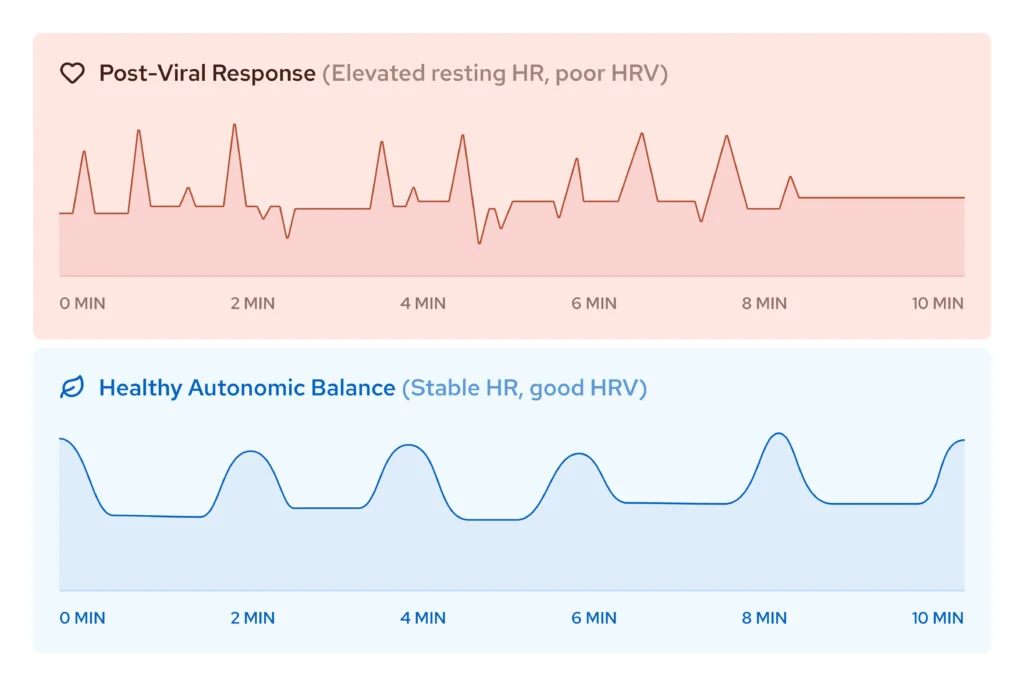

¿Contribuye su sistema nervioso a las palpitaciones cardíacas posvirales y la intolerancia al ejercicio?
Pregúntate a ti mismo
- ¿Experimentas un ritmo cardíaco acelerado, palpitaciones o opresión en el pecho que comenzó después del COVID?
- ¿La actividad física mínima te deja sin aliento o hace que tu corazón se acelere excesivamente?
- ¿Tiene problemas de intolerancia al ejercicio, ya que no puede alcanzar los niveles previos de forma física sin síntomas graves?
Mecanismos Fisiológicos:
- Anormalidades posturales posvirales del ritmo cardíaco: La COVID-19 puede desencadenar el síndrome de latido cardíaco rápido postural ortostático, causando respuestas anormales del ritmo cardíaco y intolerancia al ejercicio a través de una desregulación autónoma.
- Deterioro del nervio vagal: El daño viral al nervio vago reduce su capacidad para regular la variabilidad de la frecuencia cardíaca y mantener la estabilidad cardiovascular durante la actividad.
- Respuesta al estrés desregulada: La activación persistente del sistema nervioso simpático conduce a una mayor reactividad cardiovascular y a una menor tolerancia al ejercicio.
Los síntomas cardiovasculares posvirales a menudo reflejan una disfunción del sistema nervioso autónomo en lugar de un daño cardíaco directo, lo que explica por qué las pruebas cardíacas estándar pueden parecer normales a pesar de la persistencia de los síntomas.
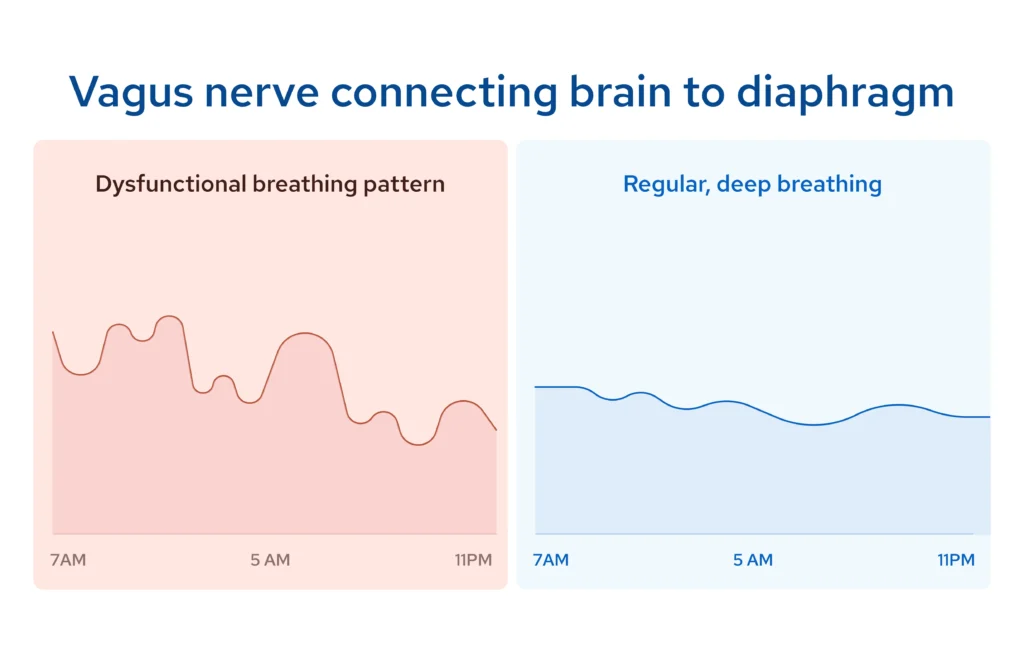

¿Contribuye su sistema nervioso a la falta de aliento y al hambre por aire después del virus?
Pregúntate a ti mismo
- ¿Experimentas con frecuencia dificultad para respirar o sientes que no puedes tomar una respiración profunda y satisfactoria?
- ¿Hablar, caminar o hacer un esfuerzo suave te deja sin aliento de maneras que no ocurrían antes del COVID?
- ¿Experimentas "hambre de aire" -una sensación de que no estás recibiendo suficiente oxígeno a pesar de los niveles normales de oxígeno?
Mecanismos Fisiológicos:
- Alteración del control respiratorio vagal: La COVID-19 puede afectar la regulación del nervio vago del diafragma y los patrones de respiración, lo que lleva a una disfunción respiratoria incluso después de la recuperación pulmonar.
- Disregulación autonómica de la respiración: El control autónomo alterado puede causar patrones de respiración irregulares, hiperventilación o incapacidad para respirar profundamente.
- Efectos del sistema nervioso central: El impacto viral en los centros respiratorios del tronco encefálico puede persistir, causando dificultades respiratorias continuas a pesar de tener los pulmones limpios.
Las dificultades respiratorias posvirales pueden originarse en la desregulación del sistema nervioso más que en el daño pulmonar, razón por la cual las pruebas de función pulmonar a menudo parecen normales a pesar de los síntomas persistentes.
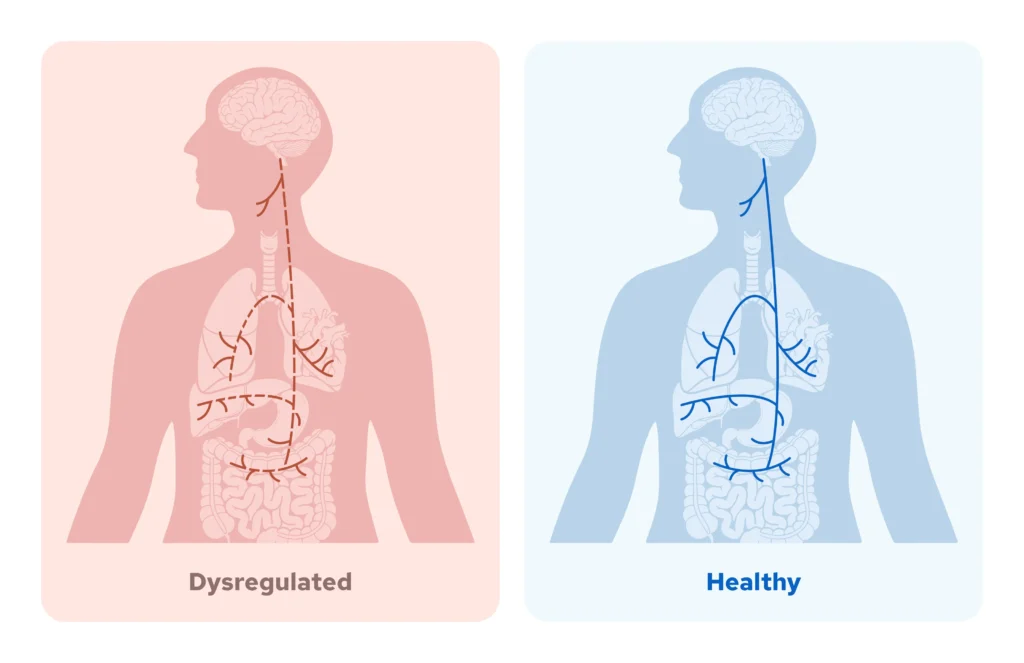

¿Está causando su sistema nervioso problemas digestivos post-virales?
Pregúntate a ti mismo
- ¿Experimentas problemas digestivos nuevos o agravados como náuseas, hinchazón o cambios en los hábitos intestinales desde el COVID?
- Ha desarrollado intolerancias o sensibilidades alimentarias que no estaban presentes antes de su infección?
- ¿Tiene problemas de pérdida de apetito, saciedad temprana o síntomas similares a un vaciamiento gástrico retardado?
Mecanismos Fisiológicos:
- Perturbación del eje intestino-cerebro: La COVID-19 puede dañar el sistema nervioso entérico y las vías vagales que controlan la digestión, lo que lleva a retrasos en el vaciado gástrico y trastornos de la motilidad.
- Disbiosis e inflamación: La infección viral puede alterar el equilibrio del microbioma intestinal y aumentar la permeabilidad intestinal, lo que contribuye a una disfunción digestiva en curso.
- Gastroparesia vagal: La función alterada del nervio vago puede ralentizar el vaciado gástrico y reducir la producción de enzimas digestivas, causando síntomas gastrointestinales persistentes.
Los síntomas gastrointestinales posvirales a menudo reflejan una disfunción del nervio vago y una alteración del eje intestino-cerebro, lo que requiere enfoques que aborden la regulación del sistema nervioso en lugar de solo los síntomas digestivos.
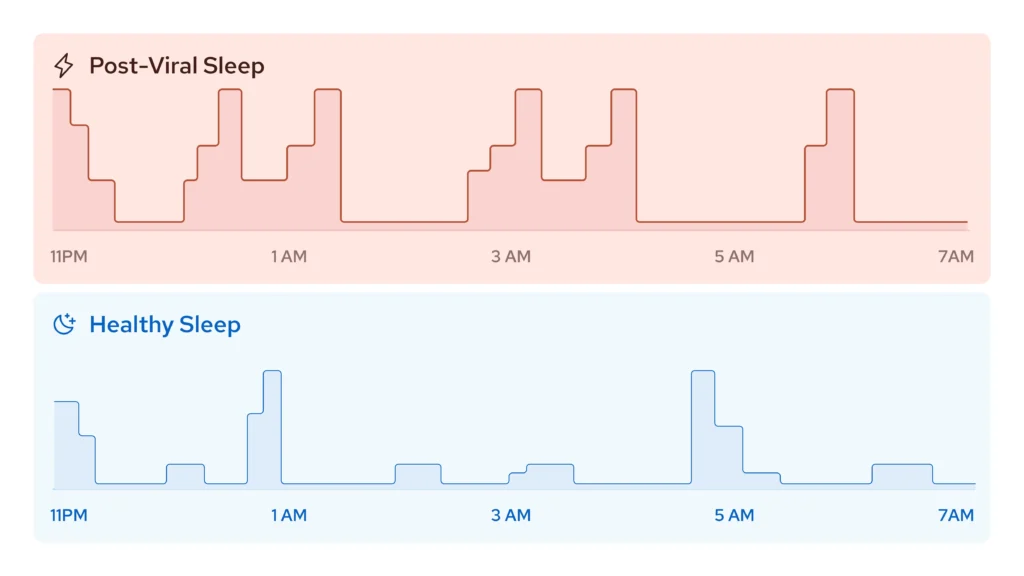

¿Contribuye su sistema nervioso a la interrupción del sueño después de un episodio vírico y al descanso no forzoso?
Pregúntate a ti mismo
- ¿Tienes problemas con despertares nocturnos frecuentes o dificultades para conciliar el sueño desde que tienes COVID?
- ¿Te despiertas sintiéndote mal descansado y agotado, sin importar cuántas horas duermas?
- ¿Ha cambiado tu arquitectura del sueño, con menos sueño profundo o sueños vívidos y perturbadores?
Mecanismos Fisiológicos:
- Alteración del ritmo circadiano: La COVID-19 puede afectar el eje hipotálamo-pituitario y perturbar los ciclos naturales de sueño-vigilia, lo que lleva a problemas persistentes de sueño y sueño no reparador.
- Alteración autonómica de la regulación del sueño: La función del nervio vago dañado impide una transición adecuada al dominio parasimpático necesario para un sueño profundo y reparador.
- Hipervigilancia persistente: La activación continua del sistema nervioso simpático mantiene el cuerpo en estado de alerta, impidiendo la relajación necesaria para un sueño de calidad.
Los trastornos del sueño posvirales a menudo se derivan de la desregulación del sistema nervioso autónomo, donde el cuerpo no puede pasar al estado parasimpático necesario para un sueño reparador, independientemente de los niveles de cansancio.

¿Son parte de un síndrome autonómico posviral tus síntomas posvirales?
Pregúntate a ti mismo
- ¿Experimentas múltiples síntomas inexplicables que parecen no relacionados pero todos comenzaron después del COVID?
- ¿Has desarrollado nuevas sensibilidades a la temperatura, la luz, el sonido o el estrés que no estaban presentes antes?
- ¿Tus síntomas fluctúan de manera impredecible, con días buenos y malos que no se correlacionan con tu nivel de actividad?
Mecanismos Fisiológicos:
- Disfunción autónoma multisistema: La COVID-19 puede desencadenar una disfunción generalizada del sistema nervioso autónomo que afecta a múltiples sistemas de órganos simultáneamente, creando el complejo patrón sintomático de síntomas posvirales persistentes.
- Neuropatía autonómica autoinmune: Las respuestas autoinmunes posvirales pueden atacar fibras nerviosas autónomas, lo que lleva a una disfunción persistente en múltiples sistemas corporales.
- Sensibilización central: La neuroinflamación inducida por el virus puede aumentar la sensibilidad del sistema nervioso, haciendo que los síntomas persistan y fluctúen de manera impredecible mucho tiempo después de la infección inicial.
Las complicaciones post-infecciosas representan un síndrome autónomo posviral donde el SARS-CoV-2 desencadena una disfunción duradera en el control de las funciones vitales del sistema nervioso, lo que explica la naturaleza diversa y persistente de los síntomas.
La pieza faltante en el entendimiento extendido de SARS-Cov-2
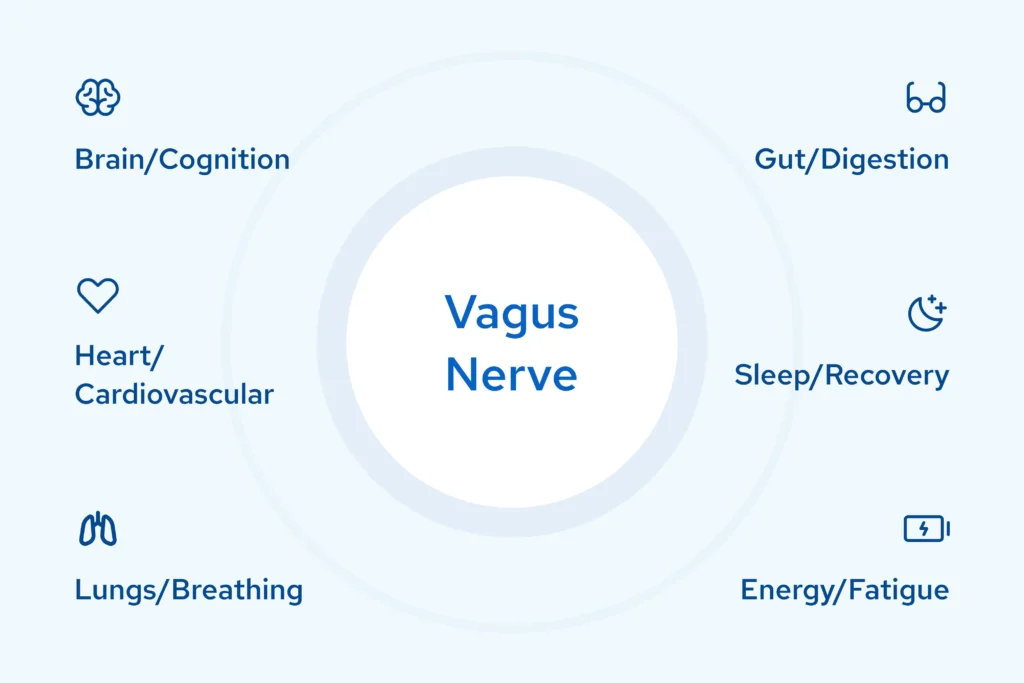
Esto es lo que conecta todos estos síntomas post-virales: tu nervio vago orquesta cada uno de estos procesos de recuperación.
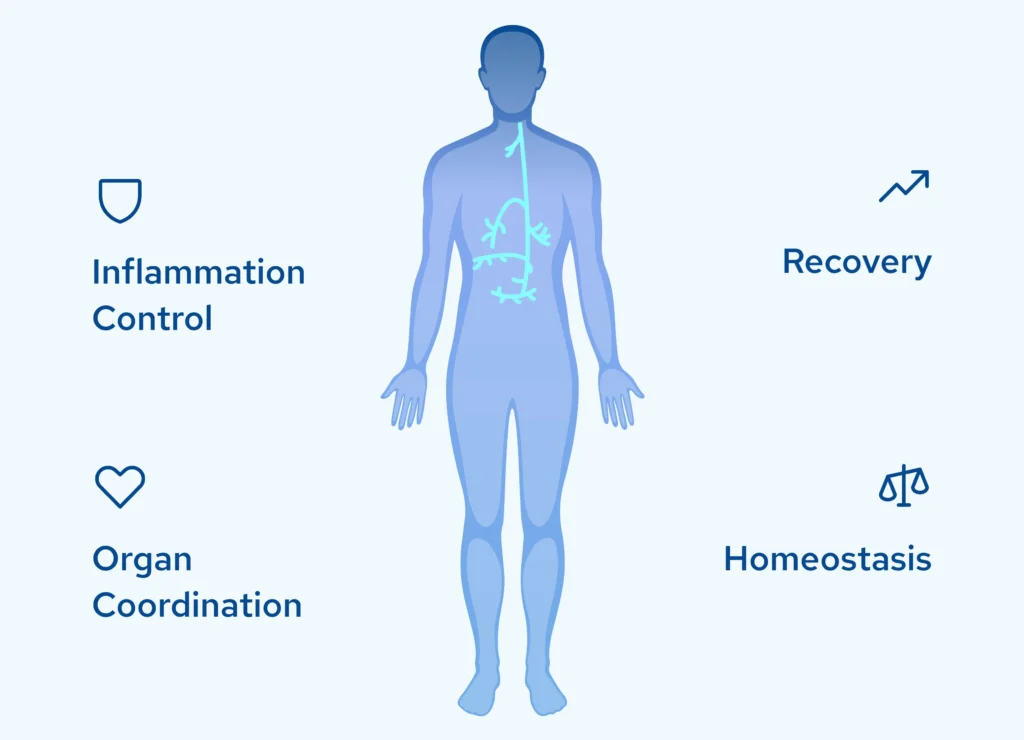
El nervio vago sirve como la principal vía de recuperación del cuerpo, regulando la inflamación, coordinando la función de los órganos y facilitando el retorno a la homeostasis después de un insulto viral. Cuando la COVID-19 interrumpe este sistema, la cascada de síntomas persistentes se vuelve no sólo explicable, sino abordable.
La investigación muestra que la estimulación del nervio vago puede modular las respuestas inflamatorias y mejorar el equilibrio autonómico, ofreciendo nuevos conocimientos sobre los mecanismos de recuperación post-viral.
Avance en la investigación del SARS-Cov-2 a través de la modulación del nervio vago

Investigaciones científicas recientes han comenzado a explorar la estimulación del nervio vago transcutáneo como una posible intervención para la disfunción autonómica posviral. Nurosym representa el enfoque más estudiado en este campo emergente.
Aspectos destacados de la investigación:

Validación Científica
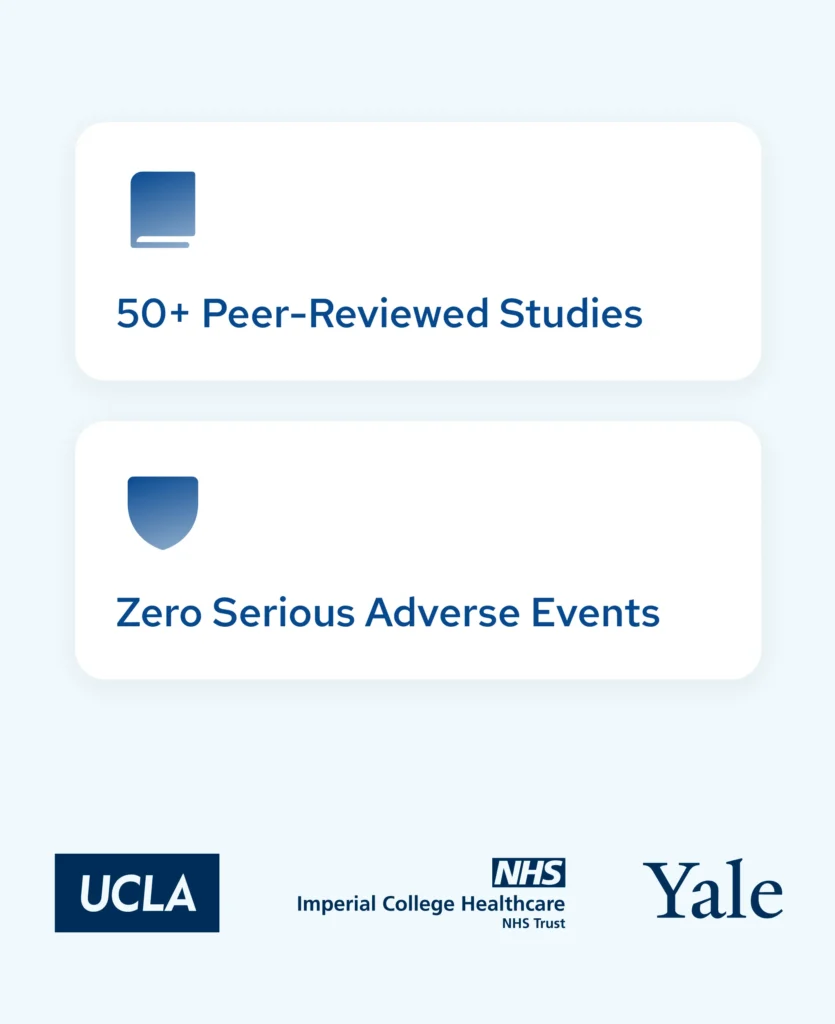
Más de 50 estudios revisados por pares que examinan la estimulación del nervio vago a través de múltiples síntomas, con investigaciones específicas en curso para los síntomas posvirales.

Colaboración Institucional
Estudios realizados en colaboración con Harvard, UCLA, NHS y otras instituciones de investigación líderes.

Perfil de seguridad
Hasta la fecha, no se han notificado efectos adversos graves en estudios científicos, con aprobación regulatoria como dispositivo médico.
Perspectivas de la comunidad médica

Anthony Kaveh, MD
Anestesiólogo y Director médico en Clarus Health
"La pregunta era si podríamos ayudar a los pacientes a lograr un alivio sostenido de un sistema nervioso simpático fuera de control. Los primeros resultados han sido alentadores".
Dr Mikolaj Raszek
Investigador en Merogenomics
"Según las pruebas que están saliendo a la luz, parece que estos dispositivos parecen estar ayudando mucho en términos de fatiga post-viral."
Dr James Gill
Profesor Asociado en la Escuela de Medicina y Médico General de Warwick
"Una investigación independiente demostró que la actividad del nervio simpático se redujo. Las mejoras objetivas en la variabilidad de la frecuencia cardíaca fueron particularmente notables."
Entender la ciencia
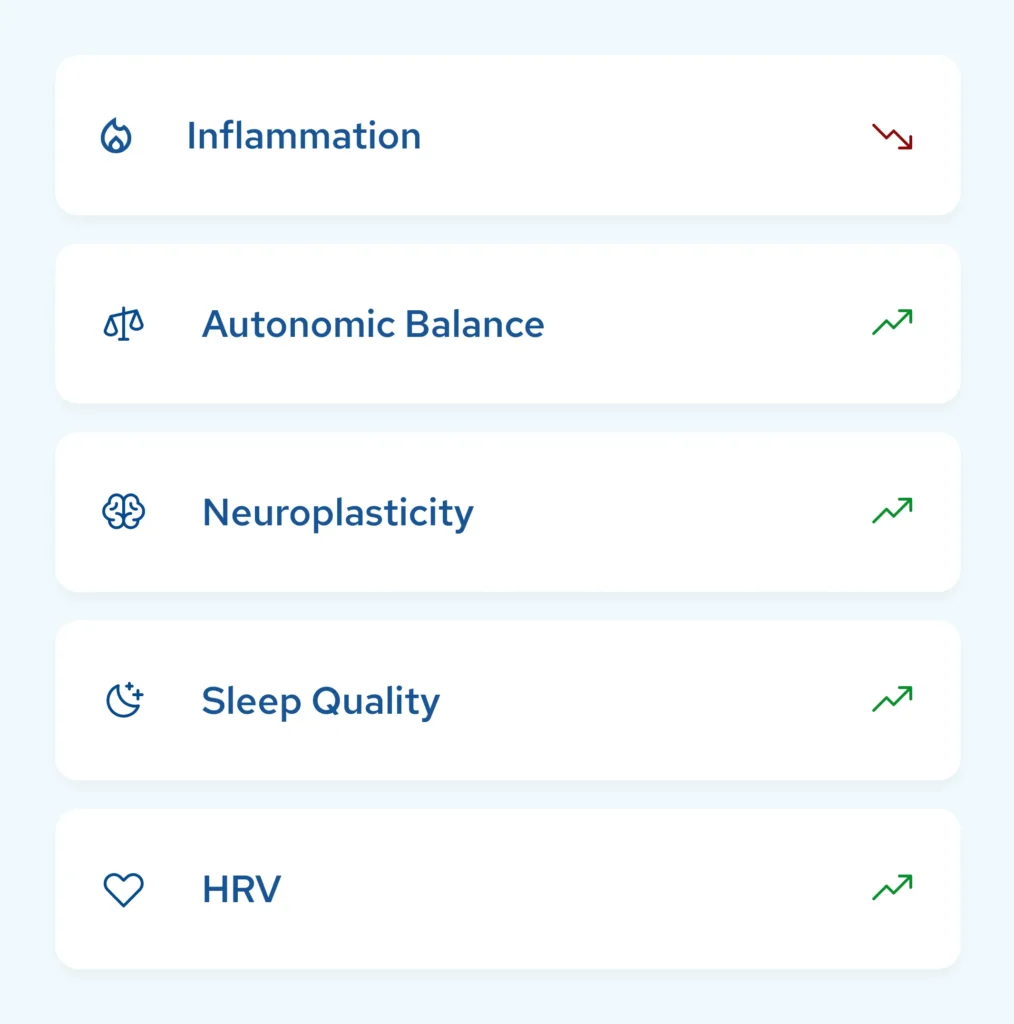
La investigación actual sugiere que la estimulación del nervio vago puede ayudar a abordar los efectos persistentes del COVID a través de varios mecanismos:
- Modulación inflamatoria: Activación de la vía antiinflamatoria colinérgica
- Reequilibrio autonómico: Restablecimiento del equilibrio simpático-parasimpático
- Mejora de la neuroplasticidad: Apoyo a la recuperación y adaptación neuronal
- Mejora de la arquitectura del sueño: Facilitación de ciclos de sueño restauradores
- Optimización HRV: Mejora de los marcadores de variabilidad de la frecuencia cardíaca
Estos cambios fisiológicos se alinean con las disfunciones centrales observadas en los síntomas prolongados, lo que sugiere una base mecanicista para la intervención terapéutica.
Investigación en curso sobre el SARS-Cov-2
La comunidad científica continúa investigando la estimulación del nervio vago para la recuperación posviral.
Estudios Actuales:n
- Fatiga post-viral y función cognitiva
- Disfunción autonómica en SARS-Cov-2
- Trastornos del sueño después de una infección viral
- Intolerancia al ejercicio y síntomas cardiovasculares
- Recuperación gastrointestinal después del COVID
Participación en la investigación: Las personas con síntomas posvirales pueden ser elegibles para participar en estudios de investigación en curso mientras acceden a posibles intervenciones terapéuticas.
Síntomas bajo investigación
La investigación está examinando el impacto potencial de la estimulación del nervio vago en estas manifestaciones posvirales:
- Fatiga post-viral y regulación energética
- Disfunción cognitiva y niebla mental
- Síntomas cardiovasculares e intolerancia al ejercicio
- Dificultades respiratorias y patrones de respiración
- Arquitectura del sueño y descanso restaurador
- Función gastrointestinal y digestión
- Regulación de la temperatura y control autónomo
- Síntomas neurológicos y procesamiento sensorial
- Regulación del estado de ánimo y respuesta al estrés
- Modulación del dolor y marcadores inflamatorios
La naturaleza interconectada de estos síntomas apoya la hipótesis de que abordar la disfunción autónoma puede proporcionar beneficios sistémicos para la recuperación posviral.
Nota sobre enfoques terapéuticos
Si bien la investigación en curso sobre el SARS-Cov-2 continúa evolucionando, las primeras evidencias sugieren que los enfoques dirigidos a la regulación del sistema nervioso pueden ofrecer ventajas sobre las terapias específicas de los síntomas.
El papel del sistema nervioso autónomo como regulador maestro de la función fisiológica lo convierte en un objetivo terapéutico lógico para la disfunción post-viral multisistémica.
Las estrategias de gestión actuales a menudo abordan los síntomas individuales de manera aislada.
Sin embargo, entender la infección por SARS-CoV-2 como un síndrome autónomo unificado sugiere que las intervenciones que apoyan la recuperación general del sistema nervioso pueden proporcionar beneficios más amplios.
Los resultados individuales pueden variar. Esta información es para fines educativos y no debe sustituir la consulta con profesionales de la salud familiarizados con su situación médica específica.
Aviso legal de la investigación: Este contenido trata sobre investigaciones en curso y no debe considerarse consejo médico. La gestión ampliada del COVID debe involucrar a proveedores de atención médica calificados. La participación en la investigación y el uso del dispositivo deben discutirse con su equipo médico.
Cómo elegir un estimulador del nervio vago
Con la gran variedad de dispositivos disponibles en el mercado, es importante investigar bien y elegir el que mejor se adapte a tus necesidades. Lo más importante es asegurarte de que la intervención que estás considerando haya sido científicamente probada para actuar sobre el nervio vago.
Estos son algunos de los factores clave que hay que tener en cuenta a la hora de tomar una decisión:
- Consulte con su profesional de la salud
Antes de comenzar cualquier nueva intervención médica, siempre es recomendable consultar primero con un profesional sanitario. Para la estimulación del nervio vago, elija un neurólogo o especialista que esté familiarizado con los dispositivos de VNS, para que pueda aconsejarle correctamente sobre si le ayudará con sus síntomas específicos. - Compatibilidad con tus síntomas
Los dispositivos VNS están diseñados para mejorar síntomas específicos, como estados depresivos, cansancio crónico, problemas gastrointestinales y confusión mental. Asegúrate de que la estimulación del nervio vago haya sido estudiada y evaluada en cuanto a su eficacia para tus necesidades de salud específicas. Los dispositivos VNS también tienen diferentes ubicaciones de estimulación, como el cuello y la oreja. Sensate, que no es un dispositivo VNS, afirma estimularlo a través del pecho. Sin embargo, Nurosym’Tanto el enfoque AVNT como el de Gammacore tienen evidencia científica de una focalización precisa y seguridad. Otros enfoques en cualquier lugar son, en el mejor de los casos, tocar el piano fuera de tono y, en el peor, activamente peligrosos. - Seguridad y certificación como dispositivo portátil
Muchos dispositivos afirman ser dispositivos VNS y ser seguros, pero es importante evaluar la investigación científica realizada sobre cada dispositivo para comprender su perfil de seguridad. Sensate y Pulsetto afirman que activan el nervio vago, pero no tienen ninguna evidencia científica que lo confirme. Los diferentes métodos de estimulación del nervio vago también están asociados a diferentes efectos secundarios, por lo que es conveniente comprender todos los riesgos antes de comprar. Los dispositivos que han obtenido la certificación Wearable Device son fundamentales, ya que esta certificación requiere rigurosas pruebas de calidad y estudios de seguridad para garantizar que no dañan el sistema nervioso. - Eficacia e investigación
Asegúrese de buscar dispositivos respaldados por investigaciones científicas y, a ser posible, estudios controlados con placebo. Un dispositivo de buena reputación habrá publicado investigaciones que respalden sus afirmaciones. Las pruebas aleatorias controladas con placebo garantizan que los efectos de un dispositivo no se basan en el placebo, lo que da confianza en los beneficios terapéuticos reales del dispositivo. Del mismo modo, los estudios revisados por pares reducen el riesgo de resultados sesgados y demuestran la credibilidad del dispositivo probado.Muchos dispositivos citan investigaciones genéricas sobre la VNS, pero no han realizado ningún estudio de seguridad y eficacia sobre su dispositivo. El hecho de que un dispositivo emita una corriente eléctrica en la zona donde se encuentra el nervio vago no garantiza que active el nervio vago ni que tenga un impacto positivo en él. La mayoría de las investigaciones sobre la estimulación del nervio vago se realizaron con métodos invasivos, no con dispositivos portátiles. Por lo tanto, un dispositivo portátil que hace referencia a investigaciones invasivas sobre la VNS está tergiversando los datos para vender su producto.
- Estimulación frente a modulación
También es importante tener en cuenta que algunos dispositivos, como Pulsetto o GammaCore, proporcionan una estimulación de alta intensidad que puede aumentar la probabilidad de efectos secundarios y puede perjudicar a las personas con síntomas crónicos cuyo sistema nervioso ya está desregulado. Nurosym con 45 niveles de energía ofrece un control preciso de la modulación para proporcionar los mismos beneficios con menos riesgos.
- Precio
El dispositivo que elijas debe ajustarse a tu presupuesto. Algunos dispositivos tienen un modelo de suscripción que requiere pagos continuos a lo largo del tiempo. Otros, como Nurosym y Sensate son compras únicas. Dado que los beneficios del uso de la VNS requieren un uso constante, cuanto más se utilicen, mejores serán los resultados. Por lo tanto, al considerar la adquisición de un dispositivo, piense a largo plazo en cómo se acumularían los costes de su uso prolongado. Tomando Nurosym por ejemplo, el coste medio del dispositivo es de aproximadamente 2 euros al día durante un año, y después ya no hay que realizar más pagos. Por su parte, GammaCore viene precargado con sesiones para tres meses. Después, será necesario adquirir más sesiones para seguir utilizándolo. Pulsetto ofrece una suscripción de pago a la aplicación, por lo que los costes de uso a largo plazo pueden acumularse.
Protocolo de pruebas
Dado que estos dispositivos NO son iguales, es esencial evaluar cuidadosamente sus características, efectividad y experiencia del usuario antes de tomar una decisión. Así que nos propusimos comparar cuatro de los dispositivos más populares que las personas compran para la estimulación del nervio vago: Pulsetto, Sensate, Gammacore y Nurosym. Sin embargo, es importante señalar que, a diferencia de Nurosym y GammaCore, Pulsetto y Sensate no son dispositivos VNS certificados.
Para realizar una comparación precisa, cada dispositivo fue evaluado por un equipo de doctores y profesionales sanitarios. Utilicé cada dispositivo durante un mes, con un descanso de un mes entre cada uno para evitar cualquier efecto residual. Empecé con Sensate, luego Pulsetto, Nurosym, y por último, GammaCore.
Aquí están los resultados y las clasificaciones:
| Nurosym | Gammacore | Pulsetto | Sensorial | |
| Evaluado y respaldado por estudios científicos revisados por pares y controlados con placebo | ✓ | ✓ | Χ | Χ |
| Número de estudios científicos realizados | 40+ | 20+ | 0 | 0 |
| Inversión en estudios científicos | $10M+ | $50M+ | $0 | $0 |
| Se puede usar sin aplicación | ✓ | Χ | Χ | Χ |
| Disponible sin receta médica | ✓ | Χ | ✓ | ✓ |
| Modo de acción | Terapia de neuromodulación vagal auricular (AVNT) | Estimulación no invasiva del nervio vago cervical (ncVNS) | Sin modo de acción validado. | Sin modo de acción validado. |
| Zona de aplicación | Rama auricular del nervio vago | Rama cervical del nervio vago | Cuello | Pecho |
| Entrega | Propio (Eléctrico) | Propio (Eléctrico) | Eléctrico | Vibración |
| Agradabilidad de la estimulación | Agradable, suave | Más intenso, puede apretar la mandíbula. | Más intenso | Sin estimulación directa, vibración agradable. |
| ¿Es necesario usar gel? | Sin | Sí | Sí | Sin |
| Duración de la batería | >1 mes | 1 semana | 1 semana | 1 semana |
| Fácil de llevar de viaje | Sí | Sin | Sin | Sí |
| Tipo de dispositivo que requiere revisión y aprobación reglamentaria antes de su comercialización | Obligatorio | Obligatorio | Obligatorio | Χ |
| Aprobado para uso público | ✓ | ✓ | Χ | n/a |
| Dispositivo portátil certificado | ✓ | ✓ | Χ | Χ |
| Proceso de evaluación médica en la compra | ✓ | ✓ | Χ | Χ |
| Controles de seguridad documentados | ✓ | ✓ | Χ | Χ |
| SAE (eventos adversos graves) notificados en un estudio científico | 0 | 0 | No hay evaluación científica. Se han notificado efectos adversos en Internet. | Sin evaluación científica. |
| Perfil de riesgo | Bajo riesgo según estudios científicos | Bajo riesgo según estudios científicos | Alto riesgo debido a la falta de estudios científicos e informes de usuarios | Bajo riesgo basado en la entrega (vibración) |
| Coste inicial | £599 | 350 £ (solo los primeros 3 meses) | £209.20 | £299 |
| Costes adicionales | £0 | 466 £ cada 3 meses | 99,99 £ al año. Aplicación de pago con más funciones | 50 £ al año. Aplicación de pago con más funciones |
| Coste total estimado durante 5 años de uso diario | £599 | £10,718 | £709.15 | £549 |
| Recomendación general | Nuestra mejor selección - Muy recomendable | Recomendado para personas que sufren de dolor de cabeza | No recomendado |
Se puede utilizar como herramienta complementaria |
Conozca a los doctores
Médico psiquiatra en ejercicio, Elisabetta tiene un MBA de la Escuela de Negocios INSEAD y experiencia en atención directa al paciente, investigación en neurociencia, comunicación y gestión. La Dra. Burchi es una médico-científica, trabajando con Parasym en asuntos clínicos con un historial de publicaciones en las revistas científicas más importantes como The Lancet, escribiendo propuestas de subvención exitosas para el NIH, y liderando la producción de material editorial, clínico, regulatorio y promocional en equipos multidisciplinarios colaborativos. La Dra. Burchi también ha coordinado ensayos clínicos e implementado una práctica de telemedicina que recibió una certificación de excelencia entre más de 100,000 profesionales.

Dr. Elisabetta Burchi, MD, MBA
Líder de investigación traslacional en Parasym
Experimente el futuro de la medicina bioelectrónica
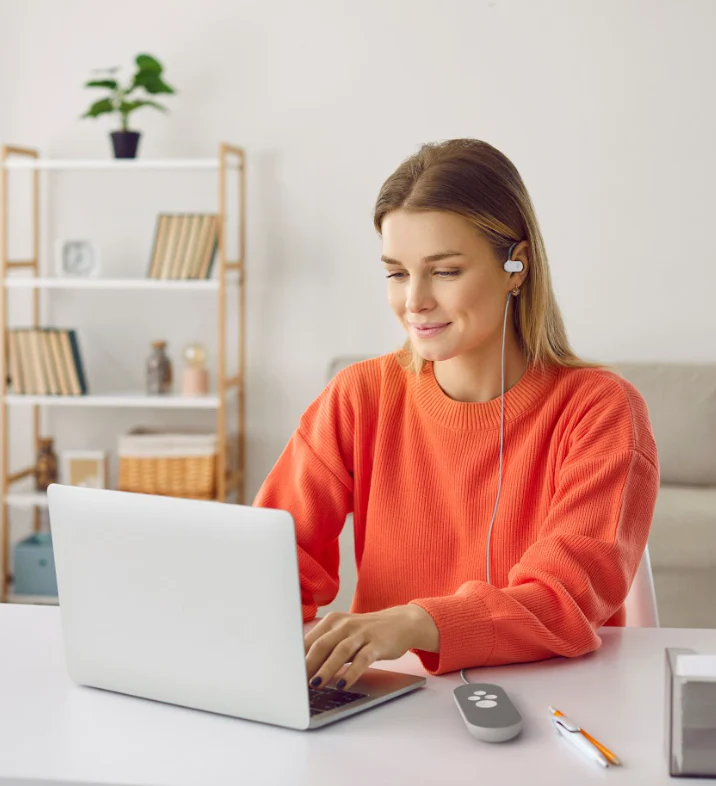
Reclama 70€ OFF el dispositivo de neuromodulación vagal más estudiado del mundo.
Participa en el estudio para avanzar en la investigación de la neuromodulación y reclama un subsidio de 70€ a tu dispositivo.
*Tarda menos de 2 minutos en completarse.
50+
Estudios científicos en curso
4M+
Sesiones de usuario felices
30
Días de devolución de dinero

Dispositivo médico certificado
Reclama 70€ OFF el dispositivo de neuromodulación vagal más estudiado del mundo.
Participa en el estudio para avanzar en la investigación de la neuromodulación y reclama un subsidio de 70€ a tu dispositivo.
*Tarda menos de 2 minutos en completarse.
50+
Estudios científicos en curso
4M+
Sesiones de usuario felices
30
Días de devolución de dinero

Dispositivo médico certificado
Garantía de devolución del dinero en 30 días
Cada kit Nurosym está respaldado por una política de 30 días de reembolso completo si los usuarios no están satisfechos con su progreso.
Tienes preguntas? Aquí está todo lo que necesitas saber
Síntomas que estudiamos
Estos síntomas se han vinculado con el desequilibrio del sistema nervioso autónomo y la alteración de los nervios vagos:
- Cansancio crónico, fatiga, niebla mental, agotamiento
- Problemas de sueño
- Pensamiento negativo
- Síntomas inflamatorios
- Dolor, dolores de cabeza
- Problemas de memoria y atención
- Síntomas posvirales
- Dolor corporal generalizado
Nuestros últimos datos de investigación también sugieren que Nurosym mejora el aprendizaje y la memoria y cognición a corto plazo.
También se ha demostrado que Nurosym promueve la relajación, el estado de ánimo, el sueño, una digestión saludable y un aumento del VHR, así como alivia los síntomas de estrés, agotamiento y fatiga adrenal.
¿Cuándo puedo empezar a sentir los efectos?
El plazo para experimentar los efectos de Nurosym varía. Las personas con síntomas severos pueden notar mejoras dentro de 1 a 3 días, mientras que otros pueden ver resultados dentro de 4 a 6 semanas. Puede estar seguro de que los beneficios transformadores de Nurosym estarán al alcance de la mano.
Nurosym está a salvo?
Neuromodulation via Nurosym is considered safe when used as intended. Nurosym ha sido certificado por los reguladores de la UE como dispositivo médico con certificación CE. Esto significa:
- Se basa en pruebas científicas
- Es seguro de usar
- Ha demostrado su eficacia científica
Asegúrese de leer la información de seguridad importante antes de usar. Miles de usuarios han probado el dispositivo y no se han reportado efectos adversos graves en los estudios hasta la fecha.
¿Cómo se siente?
Se siente como una agradable y ligera vibración o sensación de hormigueo en el oído.
¿Hay costos adicionales o cuotas de suscripción?
No hay costos o tarifas adicionales, solo la compra única del Nurosym.
¿Cuánto tiempo debo usar Nurosym cada día para obtener resultados óptimos?
Recomendamos usar Nurosym durante 1 hora cada día, sin embargo, los beneficios se pueden ver con tan solo 15 minutos de uso.
¿Puedo realizar otras actividades mientras lo uso?
Sí, puedes experimentar los beneficios de la neuroestimulación en cualquier lugar y momento mientras realizas cualquier actividad.
¿Necesito una receta para comprar Nurosym?
No. Sin embargo, le recomendamos que consulte con su profesional de la salud si no está seguro de si Nurosym es adecuado para usted.
¿Cuáles son los detalles de su garantía de 30 días?
Si prueba Nurosym diariamente durante 30 días y no está satisfecho con los resultados, le enviaremos un reembolso completo. Sin preguntas.
¿Nurosym viene con una garantía?
Sí! Ofrecemos una garantía de un año con cada dispositivo Nurosym.
¿Cuánto tiempo tardan los pedidos en enviarse?
Los pedidos se procesan y envían dentro de 1-3 días hábiles.
¿Qué hay en el paquete Nurosym?
- Dispositivo Nurosym
- Auricular
- Cargador USB
- Caso
- Guía de inicio rápido
El artículo no constituye en modo alguno un consejo médico. Consulte con un profesional médico autorizado antes de iniciar cualquier tratamiento. Este sitio web puede recibir comisiones por los enlaces o productos mencionados en este artículo.


 Spanish
  English
  German
  French
  Swedish
  Italian