
Gut Specialist Reveals :
Pourquoi vos symptômes digestifs pourraient ne pas s’améliorer avec l’alimentation seule, et ce que suggère la science intestin-cerveau

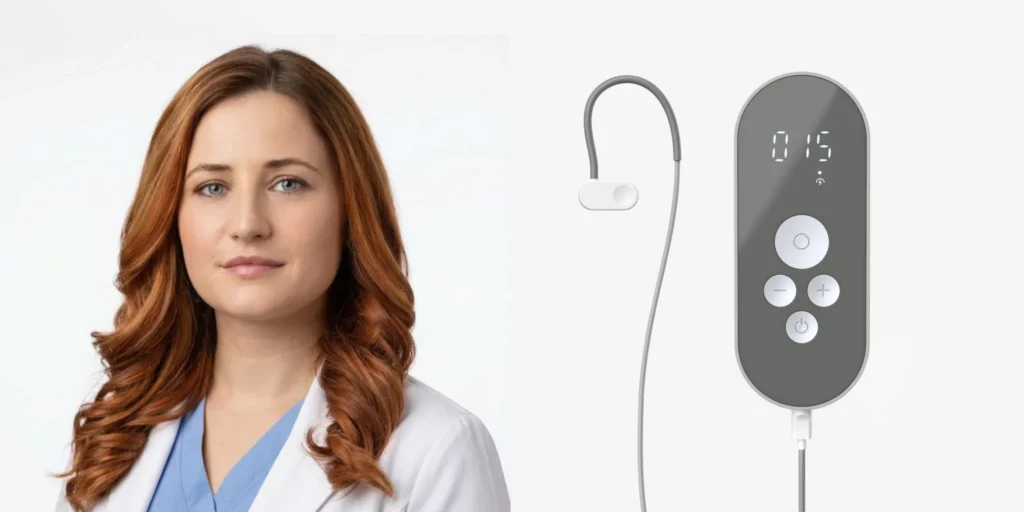
Vous avez éliminé les aliments déclencheurs, essayé les probiotiques et tenu un journal alimentaire.
Mais ton instinct est encore imprévisible, et tu commences à te demander s’il le sera toujours.
C’est un modèle que je rencontre régulièrement dans ma pratique ; quelqu’un vient me voir, ayant déjà fait une grande partie des bonnes choses.
- Ils ont supprimé le gluten, les produits laitiers et tous les aliments riches en FODMAP qu’ils pouvaient trouver.
- Ils ont travaillé sur plusieurs probiotiques.
- Ils suivent ce qu’ils mangent avec plus de rigueur que la plupart des gens ne suivent leurs finances.
Et leur instinct dicte encore leur journée.
Certains jours sont meilleurs, mais les ballonnements reviennent, les crampes arrivent sans prévenir et l’imprévisibilité demeure.
Et sous tout cela, une question calme et épuisante : y a-t-il quelque chose qui me manque encore ?
Pour beaucoup de gens, la réponse peut être oui.
Mais il ne s’agit souvent pas d’un autre aliment à éliminer. Cela peut faire partie du tableau que les conseils habituels sur la santé intestinale n’abordent pas toujours.
Lorsque vous faites tout ce qui est bon pour votre ventre, mais que vous ne parvenez toujours pas à trouver un soulagement durable

Je suis le fondateur de la clinique de bien-être Star Freud dans le centre de Londres, où je pratique en tant que spécialiste des causes profondes de la santé intestinale et de la longévité.
Je travaille également au sein du NHS, ce qui me donne une perspective qui englobe à la fois les approches scientifiques conventionnelles et intégratives.
Le principe fondamental de mon travail est de chercher ce qui provoque réellement les symptômes, plutôt que de les gérer à la surface.
La plupart des clients qui viennent me voir ont déjà suivi le parcours standard : des examens qui ont donné des résultats normaux, un diagnostic d’intestin irritable et des conseils axés principalement sur la gestion alimentaire et le contrôle des symptômes.
Cette orientation n’est pas fausse.
L’alimentation joue un véritable rôle dans les symptômes digestifs, et il y a des personnes pour qui une gestion alimentaire soignée produit une amélioration significative et durable.
Mais il y a un groupe important de personnes pour qui ce n’est pas le cas.
Et la raison, dans la plupart de ces cas, n’est pas qu’ils ont échoué à l’approche alimentaire. C’est que l’approche, aussi bien exécutée soit-elle, n’atteint pas le moteur sous-jacent.
Ce que j’ai remarqué en plus d’une décennie de travail avec des clients pour la santé intestinale
Chez des centaines de clients présentant des symptômes digestifs persistants, un schéma se dégage clairement.
Il y a un sous-ensemble de personnes qui ont tout fait sur la liste de contrôle standard pour la santé intestinale. Plusieurs régimes d’élimination. Plusieurs cours de différents probiotiques. Enzymes digestives. Supplémentation en fibres. Le suivi des symptômes est si approfondi qu’il est devenu une source de pensées anxieuses en soi.
Et ils sont encore ballonnés et encore crampés.
Lorsque je regarde attentivement ce que ces clients partagent, il ne s’agit pas d’un déclencheur alimentaire particulier ou d’un déséquilibre spécifique du microbiome.
C’est un système nerveux qui ne régule pas adéquatement l’intestin.
Ils présentent souvent des symptômes qui s’étendent au-delà du tractus digestif :
- Mauvaise qualité de sommeil
- Fatigue qui ne se résout pas avec le repos
- Réactivité accrue au stress
- Un sentiment persistant de tension ou de vigilance qui se cache sous tout le reste
Leur intestin ne réagit pas simplement à la nourriture.
Elle répond à un système de régulation qui ne fonctionne pas comme il le devrait, et cela peut nécessiter un autre type de soutien.
La science derrière les symptômes intestinaux persistants
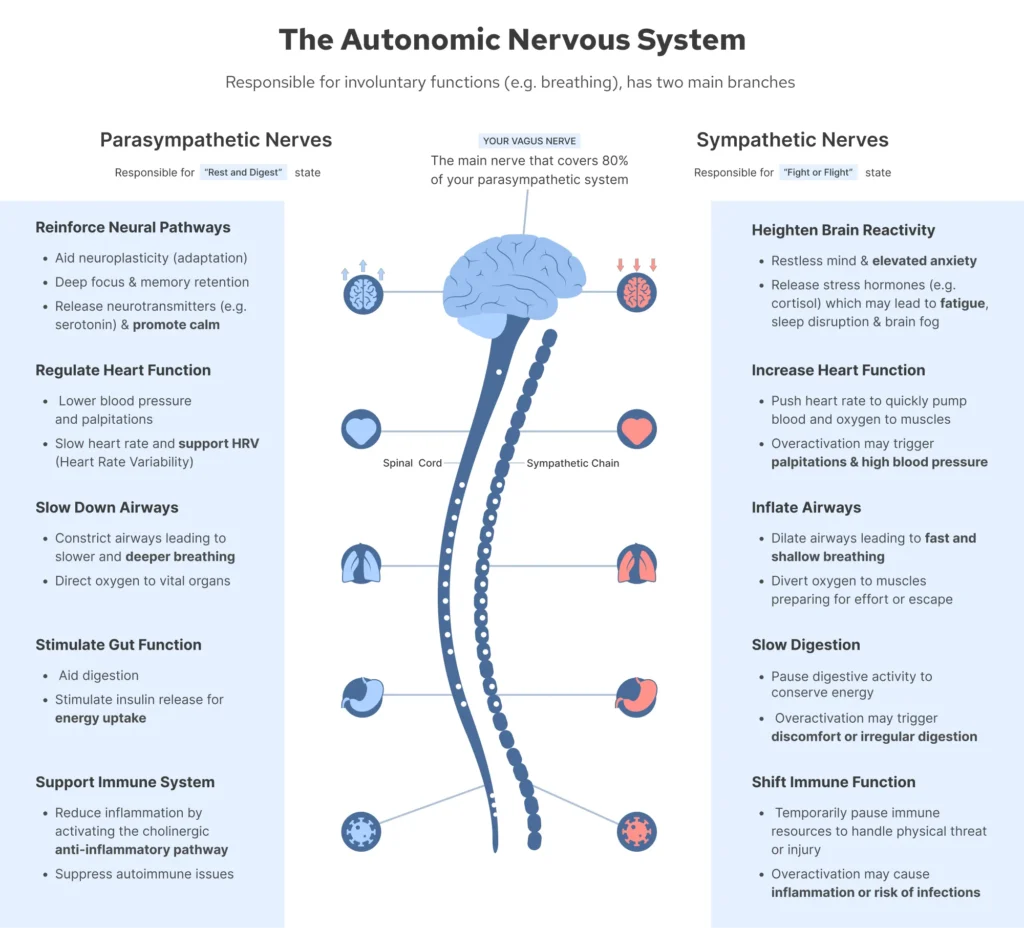
Le système digestif ne fonctionne pas de manière indépendante. Il est régulé en continu par le système nerveux autonome, qui régit chaque processus involontaire dans le corps à travers deux modes primaires.
Le système nerveux sympathique est le mode de stress et de survie. Lorsqu’il est actif, la digestion est dépriorisée, la motilité intestinale ralentit ou devient erratique, le flux sanguin est redirigé loin du tractus digestif et la réponse immunitaire dans la paroi intestinale passe à un état plus réactif.
Le système nerveux parasympathique est le mode repos, digest et réparation. Lorsqu’il est actif de manière appropriée pendant et après les repas, la motilité intestinale est coordonnée, la sensibilité viscérale est correctement calibrée, la réponse immunitaire dans la paroi intestinale est régulée et la digestion se déroule en arrière-plan sans devenir symptomatique.
Pour les personnes souffrant d’irritabilité intestinale persistante et de troubles digestifs fonctionnels, cet équilibre est fréquemment perturbé. Le système sympathique devient dominant sur une plus grande partie de la journée, y compris les repas et les heures qui devraient être consacrées à la récupération et à la réparation.
Et lorsque cela se produit, même un régime à faible déclenchement soigneusement géré ne peut pas compenser entièrement.
C’est pourquoi les sensibilités alimentaires peuvent sembler s’étendre au fil du temps.
Ce n’est pas que plus d’aliments deviennent vraiment problématiques.
C’est qu’un intestin réactif et dérégulé traite une plus large gamme d’intrants ordinaires comme des menaces.
Le nerf vague : le système de régulation de votre intestin
Le nerf au centre de cette image est le nerf vague.
C’est le nerf le plus long et le plus complexe du système nerveux parasympathique, prenant naissance dans le tronc cérébral et s’étendant à travers le cou et la poitrine jusqu’à l’abdomen, où il entre en contact direct avec le tractus digestif.
Environ 80 % des fibres du nerf vague transportent l’information de l’intestin vers le cerveau, plutôt que l’inverse. Cela signifie que le nerf vague ne se contente pas de donner des instructions à l’intestin. Il transmet également un flux continu d’informations sensorielles au système nerveux central et intègre la réponse réglementaire.
Voici ce que cela signifie pour les symptômes intestinaux persistants :
Le nerf vague n’est pas un système secondaire. C’est la voie principale par laquelle l’intestin est régulé, et les approches alimentaires seules ne peuvent pas y accéder directement.
Lorsque le tonus vagal est fort, l’intestin a tendance à courir tranquillement en arrière-plan : la motilité est coordonnée, les sensations qui devraient sembler neutres semblent neutres et la réponse immunitaire dans la paroi intestinale est correctement calibrée.
Lorsque le tonus vagal est réduit, ces fonctions régulatrices se décomposent de manière directement liée au tableau des symptômes de l’intestin irritable.
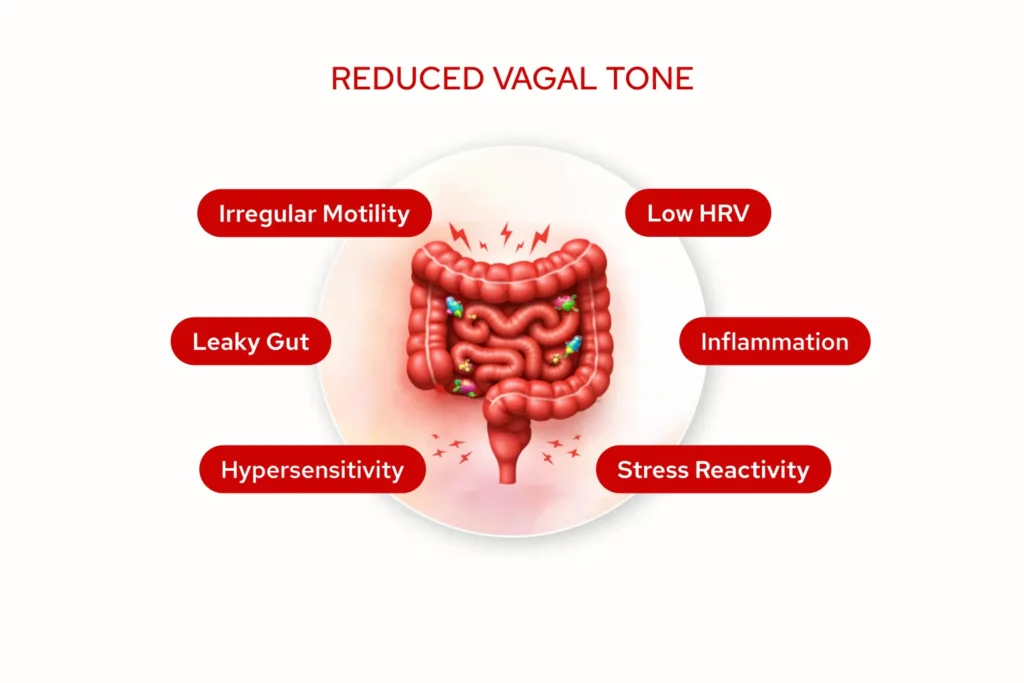
Dans des recherches publiées, la tonicité vagale réduite chez les personnes souffrant d’irritabilité intestinale et de troubles digestifs fonctionnels a été associée à :
- Une motilité intestinale dérégulée, produisant l’alternance d’urgence et de léthargie qui caractérise l’expérience de nombreuses personnes souffrant d’irritabilité intestinale
- Hypersensibilité viscérale, dans laquelle les sensations digestives ordinaires, y compris les gaz et la distension intestinale normale, sont perçues comme inconfortables ou douloureuses à des seuils plus bas que chez les individus en bonne santé
- Intégrité de la barrière intestinale altérée et réactivité muqueuse accrue, particulièrement pertinente dans les présentations intestinales irritables post-infectieuses
- Signalisation inflammatoire de bas grade qui persiste sans régulation anti-inflammatoire vagale adéquate
- Réduction significative de la variabilité du rythme cardiaque, un marqueur validé et mesurable du sevrage parasympathique
- Une réactivité accrue au stress et un cycle auto-entretenue dans lequel les symptômes intestinaux génèrent des pensées anxieuses, tandis que les pensées anxieuses amplifient la réactivité intestinale
Pourquoi cela est important pour l’intestin irritable et les symptômes digestifs persistants
Les implications de cela sur la façon dont nous pensons à l’intestin irritable sont importantes.
Si le moteur sous-jacent n’est pas principalement la nourriture, mais le système de réglementation qui régit la façon dont l’intestin traite tout ce qu’il reçoit, alors se concentrer exclusivement sur la gestion alimentaire s’attaque aux résultats tout en laissant les intrants intacts.
Cela aide à expliquer quelque chose que je vois régulièrement dans mon cabinet : des clients qui obtiennent une amélioration partielle grâce à des restrictions alimentaires, mais constatent que leur seuil de symptômes continue de changer. Ils éliminent de plus en plus, et le soulagement devient à chaque fois de plus en plus court.
L’intestin ne devient pas plus sensible à davantage d’aliments.
Il devient globalement plus réactif, car le système réglementaire qui entraîne cette réactivité n’a pas été pris en compte.
Cela aide également à expliquer la nature systémique de l’intestin irritable chez de nombreux clients : les ballonnements et les crampes sont les symptômes les plus visibles.
Cela aide également à expliquer la nature systémique de l’intestin irritable chez de nombreux clients : les ballonnements et les crampes sont les symptômes les plus visibles.
Ils reflètent la même dysrégulation autonome opérant simultanément à travers plusieurs systèmes corporels.
Pour ces clients, ce qui reste souvent non pris en compte n’est pas une autre intervention alimentaire. Ce sont les voies régulatrices du système nerveux et de l’intestin-cerveau que les approches alimentaires seules ne peuvent pas atteindre.
Soutenir l’axe intestin-cerveau au-delà de la gestion alimentaire
Beaucoup de mes clients utilisent déjà des approches qui soutiennent le système nerveux parallèlement à leurs protocoles alimentaires. La respiration, la pratique de la pleine conscience et les techniques structurées de gestion du stress peuvent toutes jouer un rôle significatif, et je les intègre régulièrement dans des recommandations scientifiques.
Ces approches peuvent être véritablement utiles, mais elles ont tendance à fonctionner indirectement.
Ils créent les situations dans lesquelles le système nerveux peut se déplacer, mais ils n’engagent pas directement la voie vagale qui entraîne la régulation intestin-cerveau.
Ils nécessitent également une pratique quotidienne constante et peuvent prendre un temps considérable avant de produire des changements mesurables dans le tonus vagal sous-jacent.
Ces dernières années, une approche plus directe a suscité un intérêt croissant en médecine et en neurosciences : la stimulation transcutanée du nerf vague auriculaire (taVNS), qui délivre un signal électrique doux et précisément calibré à la branche auriculaire du nerf vague par l’intermédiaire de l’oreille externe.
La branche auriculaire est le seul endroit à la surface du corps où une branche d’un nerf crânien est directement accessible sans chirurgie.
La stimulation ici engage directement les voies afférentes vagales, et des recherches ont associé cette approche à des améliorations mesurables dans les résultats de la régulation du cerveau intestinal, y compris des modifications de la motilité, de la sensibilité viscérale, de la signalisation inflammatoire et de la variabilité du rythme cardiaque.
À quel point le nurosme convient-il : soutien du système nerveux et soins dirigés vers l’intestin
Lorsque j’ai commencé à envisager sérieusement la stimulation auriculaire du nerf vague comme un outil scientifique potentiel, ma question principale n’était pas de savoir si cette approche avait une justification scientifique.
Les éléments de preuve à l’appui de cette affirmation semblaient raisonnablement substantiels.
Ma question était de savoir quel appareil présentait la combinaison la plus crédible de preuves scientifiques, de précision de stimulation et d’utilisabilité que je me sentirais à l’aise de recommander aux clients.
En neuromodulation, l’étalonnage du signal est important : la forme d’onde, l’intensité, le placement et la durée influencent tous la capacité de la stimulation à engager de manière significative les voies vagales prévues.
Après avoir examiné ce qui était disponible, Nurosym a été l’appareil auquel je suis revenu le plus régulièrement. Non pas parce qu’il fait les affirmations les plus fortes, mais parce que son corpus de preuves semblait le plus directement pertinent pour l’image scientifique sur laquelle je travaille.
La question n’est pas de savoir quelle approche répond à la plupart des symptômes, mais plutôt de savoir si le système réglementaire qui génère ces symptômes est en train d’être atteint.
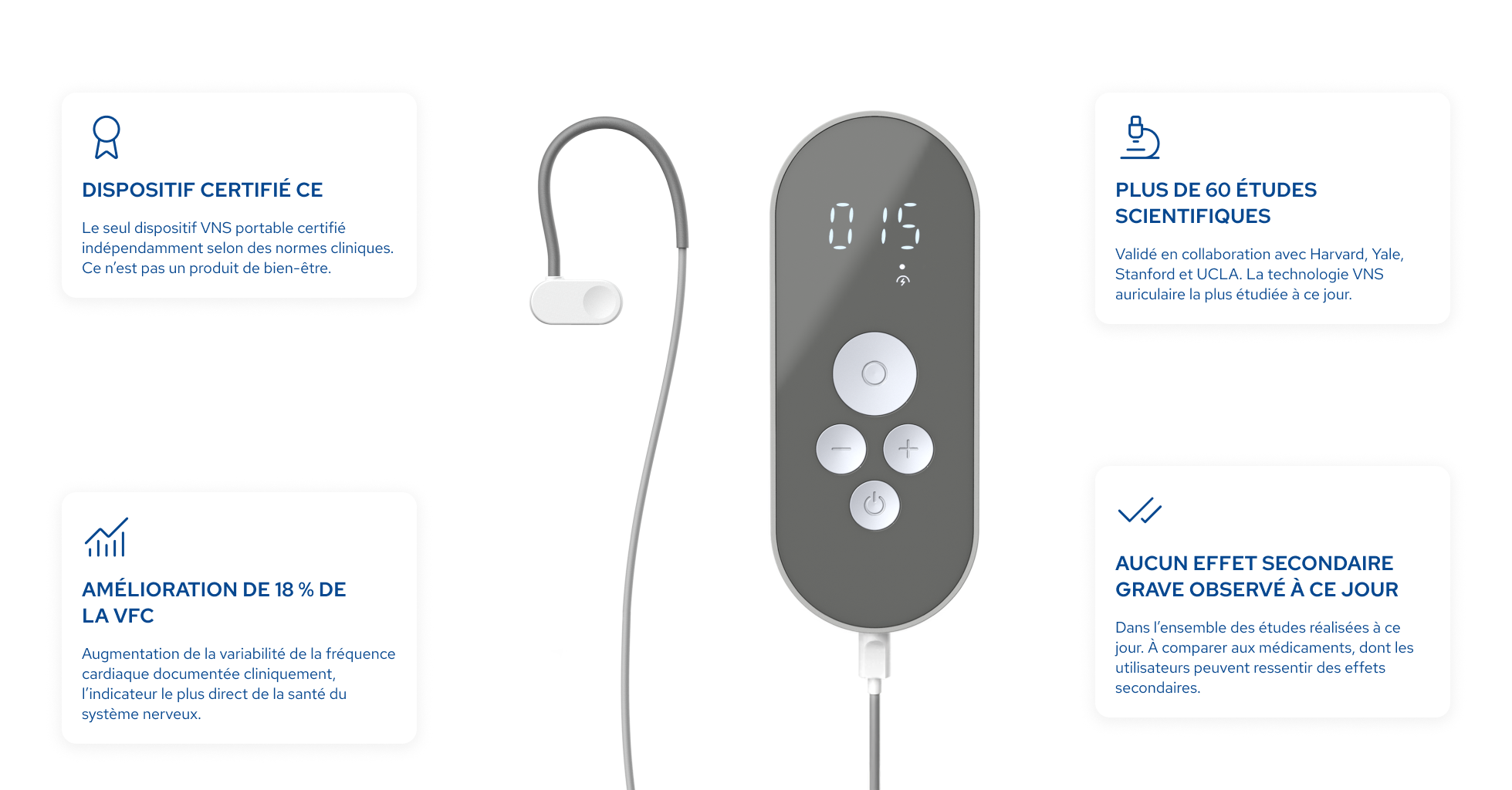
Nurosym est un dispositif portable marqué CE qui délivre une stimulation à la branche auriculaire du nerf vague par le biais d’une petite pince portée sur l’oreille. Sa technologie propriétaire AVNTTM a été étudiée dans plus de 50 études scientifiques menées en partenariat avec Harvard, Yale, UCLA et Stanford. C’est l’appareil le plus étudié de son type actuellement disponible sans ordonnance.
Il est utilisé environ 30 minutes par jour, peut être porté pendant les activités quotidiennes normales et ne nécessite ni gel, ni consultation d’un spécialiste, ni ordonnance.
Ce que la recherche suggère
Dans des recherches publiées, la stimulation du nerf vague auriculaire à l’aide de cette technologie a été associée à :
- Améliorations mesurables de la variabilité de la fréquence cardiaque, reflétant la restauration du tonus vagal et l’amélioration de l’équilibre autonome
- Réductions de l’hypersensibilité viscérale et améliorations des schémas de motilité intestinale dans les populations irritables liées à l’intestin
- Améliorations de la régularité intestinale et réductions des scores composites des symptômes gastro-intestinaux par rapport aux circonstances simulées
- Réduction de la fatigue et des pensées anxieuses qui accompagnent couramment les symptômes intestinaux persistants
- Activation de la voie anti-inflammatoire cholinergique, ce qui pourrait réduire l’activité inflammatoire muqueuse de bas niveau associée à une réactivité intestinale continue
Parce que le nerf vague influence la motilité, la sensibilité viscérale, la signalisation immunitaire et la fonction de barrière à travers une seule voie intégrée, sa prise en charge peut produire des effets qui couvrent ce qui semble être autrement des symptômes distincts.
Qui est le plus susceptible de bénéficier
- Les personnes atteintes d’intestin irritable ou de troubles digestifs fonctionnels qui ont apporté des changements importants à leur alimentation, mais qui présentent encore des symptômes persistants ou imprévisibles
- Ceux dont les symptômes intestinaux sont nettement plus graves pendant des périodes de stress, un mauvais sommeil ou des pensées anxieuses exacerbées, ce qui suggère une composante importante du système nerveux
- Les personnes atteintes d’irritabilité intestinale post-infectieuse, où la dérégulation du système nerveux consécutive à une maladie gastro-intestinale est un mécanisme contributif reconnu
- Les personnes dont le tableau des symptômes s’étend au-delà de l’intestin pour inclure la fatigue, un sommeil perturbé, une sensibilité à l’humeur et une réactivité systémique plus large
- Ceux qui souhaitent explorer le soutien du système nerveux en complément, plutôt qu’en remplacement, de leurs stratégies existantes de gestion axée sur l’intestin
Qui ne doit pas l’utiliser
Les appareils Nurosym et taVNS ne doivent pas être utilisés par des personnes qui :
- Avoir un stimulateur cardiaque ou un dispositif cardiaque implanté
- Étre enceinte
- Vous avez eu récemment un événement cardiaque grave
- ont moins de 18 ans
Les circonstances individuelles comptent toujours.
Si vous avez des antécédents médicaux complexes ou que vous prenez en charge un problème de santé existant associé à des symptômes digestifs, il est utile de consulter les instructions relatives au dispositif et de demander l’avis d’un professionnel avant de commencer.
Une façon réfléchie de l’essayer

- Garantie de remboursement de 30 jours : Nurosym inclut une garantie de remboursement de 30 jours avec une option de remboursement complet si vous ne trouvez pas qu’il s’agit d’un ajout significatif au soutien de votre cerveau. Pour les personnes qui sont naturellement prudentes après avoir essayé plusieurs approches, cela rend la décision initiale un peu plus facile.
- Remboursement pour la recherche : Parfois, les participants au programme de recherche en cours de Nurosym peuvent recevoir une subvention allant jusqu’à 70 € pour partager leur expérience.
Je voudrais également noter que Nurosym fonctionne mieux dans le cadre d’une approche plus large.
Pour la plupart des clients, je pense qu’il s’agit d’aborder la couche du système nerveux de l’image en parallèle, et non à la place, du travail sur l’alimentation et le mode de vie qui reste pertinent.
Les deux ne sont pas en concurrence.
Ils abordent différents niveaux du même problème.
Réflexions finales : la couche que les conseils alimentaires ne peuvent pas atteindre
Si vous avez suivi attentivement les conseils, investi sérieusement dans la gestion alimentaire et que vous constatez toujours que vos symptômes digestifs ne sont pas là où vous le souhaitez, il peut être utile de considérer qu’il ne s’agit pas d’un échec d’effort ou de discipline.
Pour un sous-ensemble significatif de personnes présentant des symptômes intestinaux persistants, le facteur limitant n’est pas ce qu’elles mangent.
C’est ainsi que l’intestin est régulé.
Et ce système de régulation, l’axe intestin-cerveau et les voies vagales qui le sous-tendent, peut ne pas être entièrement accessible par des approches alimentaires seules.
Pour certaines personnes, explorer le soutien du système nerveux en plus du travail qu’elles font déjà peut offrir une aide supplémentaire que d’autres approches n’ont pas été en mesure de fournir.
Cet article ne constitue pas un avis médical. Veuillez consulter un professionnel de la santé agréé avant de commencer tout traitement. Recommandé par Star Freudenberg et la clinique de bien-être Star Freud en tant qu’approche d’appoint pour des patients sélectionnés chez qui une dysrégulation de l’axe intestin-cerveau semble constituer une partie cliniquement pertinente du tableau. Les résultats individuels peuvent varier. Ce site peut recevoir des commissions à partir des liens ou produits mentionnés dans cet article.
Références
- Bonaz, B., Sinniger, V., and Pellissier, S. (2019). Vagus nerve stimulation at the interface of brain-gut interactions. Cold Spring Harbor Perspectives in Medicine, 9(8), a034199. https://doi.org/10.1101/cshperspect.a034199
- Bonaz, B., Bazin, T., and Pellissier, S. (2018). The vagus nerve at the interface of the microbiota-gut-brain axis. Frontiers in Neuroscience, 12, 49. https://doi.org/10.3389/fnins.2018.00049
- Farmer, A. D., and Aziz, Q. (2009). Visceral pain hypersensitivity in functional gastrointestinal disorders. British Medical Bulletin, 91(1), 123-136. https://doi.org/10.1093/bmb/ldp026
- Pellissier, S., Dantzer, C., Canini, F., Mathieu, N., and Bonaz, B. (2010). Psychological adjustment and autonomic disturbances in inflammatory bowel diseases and irritable bowel syndrome. Psychoneuroendocrinology, 35(5), 653-662. https://doi.org/10.1016/j.psyneuen.2009.10.004
- Sowder, E., Gevirtz, R., Shapiro, W., and Ebert, C. (2010). Restoration of vagal tone: a possible mechanism for functional abdominal pain. Applied Psychophysiology and Biofeedback, 35(3), 199-206. https://doi.org/10.1007/s10484-010-9128-8
- Breit, S., Kupferberg, A., Rogler, G., and Hasler, G. (2018). Vagus nerve as modulator of the brain-gut axis in psychiatric and inflammatory disorders. Frontiers in Psychiatry, 9, 44. https://doi.org/10.3389/fpsyt.2018.00044
- Mayer, E. A., Naliboff, B. D., and Craig, A. D. (2006). Neuroimaging of the brain-gut axis: from basic understanding to treatment of functional GI disorders. Gastroenterology, 131(6), 1925-1942. https://doi.org/10.1053/j.gastro.2006.10.026
- Kovacic, K., Hainsworth, K., Sood, M., et al. (2017). Neurostimulation for abdominal pain-related functional gastrointestinal disorders in adolescents: a randomised, double-blind, sham-controlled trial. Lancet Gastroenterology and Hepatology, 2(10), 727-737. https://doi.org/10.1016/S2468-1253(17)30253-4



 French
  English
  German
  Spanish
  Swedish