
When You’ve “Fixed” Your Posture, But the Pain Won’t Quit
You may have an ergonomic workstation, good alignment and healthy movement habits, yet still experience persistent back or neck pain.
This is because posture alone does not explain why some people develop chronic pain while others with similar or less-than-perfect posture do not.
Poor posture has long been blamed for back pain, neck pain and headaches, but the relationship is more complex.
Posture alone is rarely the cause of persistent pain. People with good posture can experience pain, while others with less-than-perfect posture may have none.
Research consistently shows posture is a weak, and sometimes nonexistent, predictor of chronic pain.
So why can pain persist even after posture and ergonomics have been addressed?
Vad jag ser i kliniken (14+ år, tusentals fall)
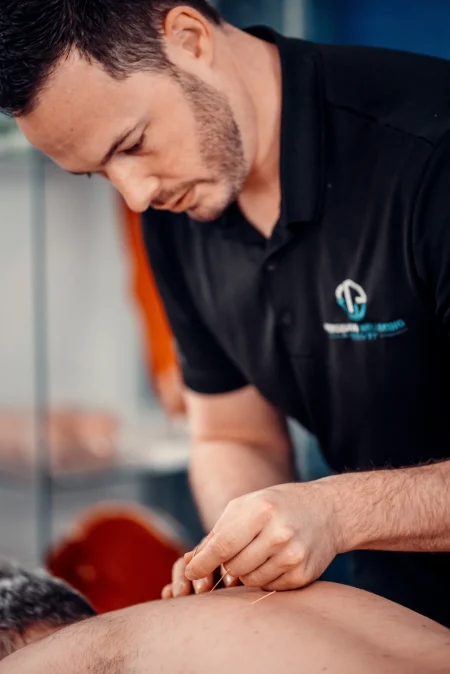
I’ve been an osteopath for over 14 years, working with desk-based professionals and athletes with musculoskeletal injuries, chronic pain and movement problems.
My approach combines:
- Manuell terapi
- Funktionell rehab
- Träningsrecept
- Smärta neurovetenskaplig utbildning
- I förekommande fall funktionell medicin och tilläggsterapier
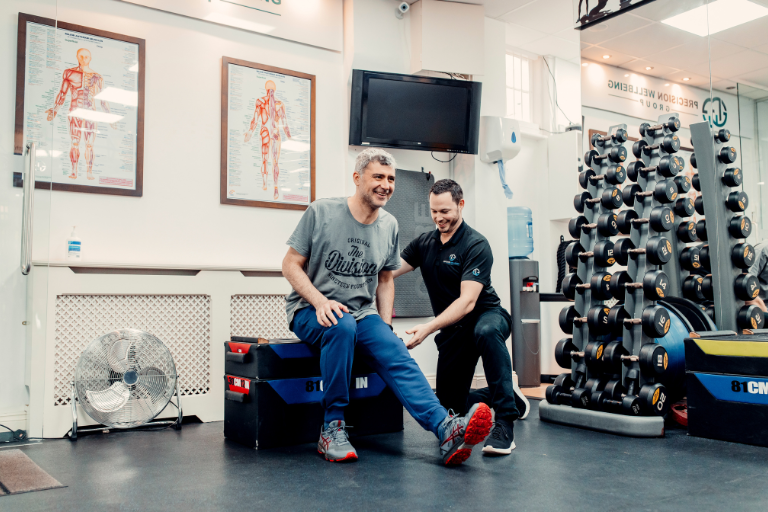
I’ve worked with people recovering from injuries and surgery, as well as people with persistent headaches, repetitive strain injuries, and spinal pain.
Across all those cases, one pattern keeps showing up: people can make changes to their posture, ergonomics, or movement and still experience pain.
That is because persistent pain is influenced by more than body position alone, including factors such as tissue sensitivity, movement, stress, sleep, previous injury, and the way the nervous system processes pain.
When You’re Doing Everything Right But Still in Pain
Some sick people have good posture, an ergonomic workstation and a consistent exercise routine, yet still experience persistent muscle tension or pain.
Och ändå:
- Their muscles feel "tight" before they even start the day.
- De växlar i sin stol med några minuter och letar efter komfort.
- Även lätt aktivitet lämnar ryggen ansträngd.
This isn’t laziness.
It’s not necessarily “bad form,” and it doesn’t mean you’re ignoring your therapy plan. In persistent pain, the nervous system can become more protective, changing how strongly the body responds to movement or other sensations.
Posture vs Muscle Tone: Why the Distinction Matters for Therapy
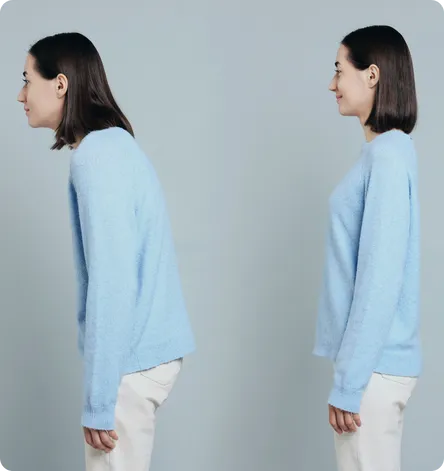
Posture is the visible position of your body.Muscle tone refers to the baseline level of muscle activity and resistance to passive movement.
If the nervous system is in a prolonged “fight or flight” state, tone stays elevated, even at rest.
When muscles remain tense for long periods, they can contribute to discomfort, tiredness, and a feeling of stiffness.
Over time, persistent muscle tension can contribute to discomfort, which may then be incorrectly attributed to posture alone.
You can check your posture in a mirror.
You cannot reliably judge muscle tone from posture alone.
Changes in pain sensitivity and stress responses can also occur alongside problems such as poor sleep, tiredness, and difficulty recovering from everyday stress.
If you’re curious about how stress, sleep, recovery, and other factors may be affecting you, a structured assessment can be a useful starting point.
The Nervous System’s Role in Muscle Tension
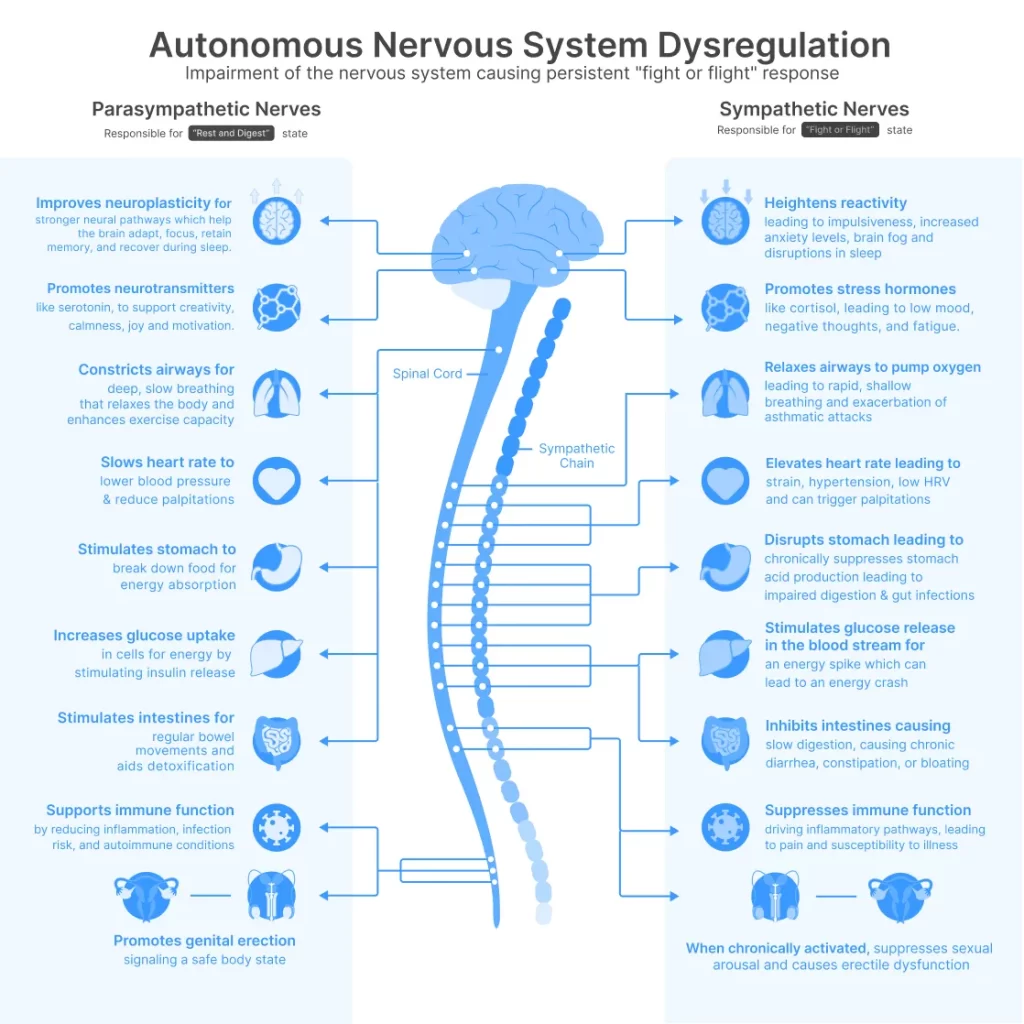
The autonomic nervous system includes sympathetic and parasympathetic pathways that help regulate functions such as heart rate, digestion, breathing, and responses to stress. These systems work together rather than functioning as two simple on/off modes.
In an ideal system, you move smoothly between the two.
Stress can increase sympathetic activity and influence muscle tension, pain sensitivity, sleep, and other body functions. These responses are usually more complex than simply being “stuck” in sympathetic activation.
That means your body holds tension just in case, even when you’re perfectly still.
When the brain perceives a threat, muscles may become more protective or guarded. In some people with persistent pain, this protective response can continue even after the original injury or threat has resolved.
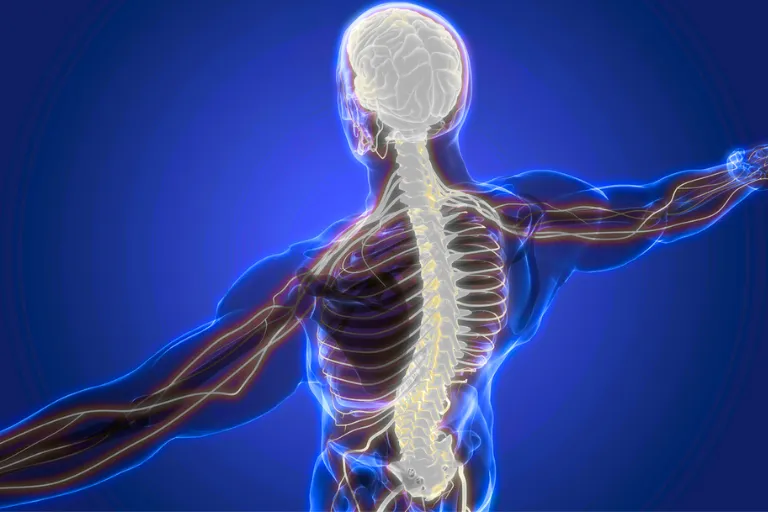
The Vagus Nerve and the Body’s Stress Response
The vagus nerve is a major part of the parasympathetic nervous system and carries signals between the brainstem and organs including the heart and digestive tract. Measures such as heart rate variability are sometimes used as indirect indicators of autonomic regulation, although HRV is influenced by many factors and is not a direct measurement of “vagal tone.”
Research is investigating whether stimulating the vagus nerve can influence autonomic regulation and pain processing. However, it is too early to say that a low level of “vagal tone” is the cause of persistent muscle tension or back pain.
Vad forskningen säger
Research suggests that posture, nervous-system activity and pain are more complexly related than a simple posture-causes-pain model suggests.
- Posture alone does not provide a reliable explanation for chronic low back pain. Reviews have found associations between some postural or physical exposures and low back pain, but the evidence does not establish a simple causal relationship.
- Research on transcutaneous auricular vagus nerve stimulation (taVNS) is growing, including studies investigating pain and autonomic function. Findings have included changes in measures such as heart rate variability and pain outcomes, but results vary across studies and stimulation protocols. A 2024 scoping review identified scientific research involving symptoms including chronic low back pain, while also noting important gaps around optimal stimulation parameters, long-term outcomes, and intervention fidelity.
- Safety: Over 50 published studies, including collaborations with Harvard, Yale, and Imperial College London, have reported no serious adverse events to date when taVNS is used appropriately.
Där Nurosym passar (At-Home Support)

I min praxis adresserar jag både mekanik (gemensam rörlighet, vävnadshälsa, rörelsemönster) och neurobiologi (känslighet, ton, återhämtning).
For some users, particularly those with persistent muscle guarding despite good rehab, I suggest an at-home nervous system support tool.
That’s where Nurosym comes in.
- What it is: A CE-marked device designed to deliver transcutaneous electrical stimulation to the ear, targeting the auricular branch of the vagus nerve.
- How it works: Delivers electrical pulses intended to stimulate vagal pathways through the ear. Research is investigating how this type of stimulation affects autonomic and other physiological responses.
- Why I may consider it: As a possible adjunct between appointments or during periods of increased stress, alongside established approaches such as exercise, rehabilitation, and appropriate medical care.
It’s not a replacement for hands-on care.
But for the right user, it can serve as an adjunct to an appropriate rehabilitation plan, potentially supporting relaxation and autonomic regulation as part of a broader recovery plan.
Who May Find It Useful
- The High-Stress Professional: Can't reduce workload, but needs to stop carrying it in their shoulders.
- The Post-Injury User: Cleared for movement, but the nervous system is still guarding the injured area.
- The "I've Tried Everything" Case: Ergonomics, physio, stretching all done; tension still there.
- The Sleepless Aching Back: Pain that occurs alongside poor sleep, stress, or heightened muscle tension.
Who May Be Suitable and Who Should Avoid It
Might benefit:
- Kontorsbaserade arbetare med ihållande nack / ryggstäthet
- Those with persistent back or neck discomfort despite making reasonable ergonomic and movement changes
- Rehab people whose muscle tone remains high despite exercise
- People whose pain or morning stiffness seems to fluctuate alongside stress or poor sleep
- Before using Nurosym, check the manufacturer's current safety information and speak with a healthcare professional if you have an implanted electronic device, a heart condition, are pregnant, are under 18, or have another symptom that could affect whether electrical stimulation is appropriate for you.
Följ alltid läkare innan du börjar.
Ett säkert sätt att prova på
- 30-Day Money-Back Guarantee: If the current offer and terms apply to you, this provides a period in which you can try the device and return it according to the company's stated return policy.
- Research offer: Eligible participants may be offered a discount or incentive for taking part in the company's research programme, subject to the current terms.
I can help sick people assess whether the device is appropriate, use it correctly and combine it with their existing rehabilitation plan.
Look Beyond Posture
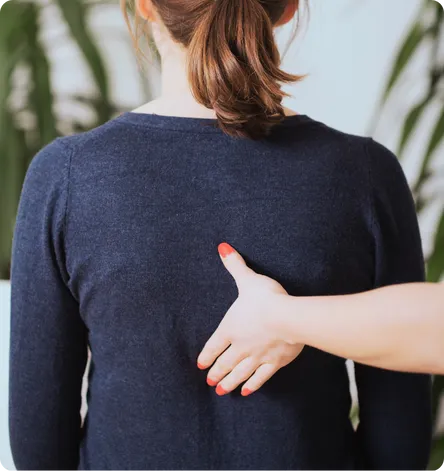
If you’ve been chasing “perfect posture” without relief, it might be time to look deeper. The position of your body matters, but it is only one part of the picture. Pain is influenced by a combination of physical, neurological, psychological, and environmental factors.
By calming the system that controls muscle tone, you can finally make your posture feel natural, not forced, and move without constant discomfort.
If your pain persists despite addressing posture and ergonomics, consider an assessment that looks at the wider factors contributing to your symptoms.
Free. Ten symptomatic areas. A nervous system health score at the end.
Referenser
- Tillbaka till grunderna: 10 fakta som varje person bör veta om ryggsmärta. O’Sullivan, P. B., Caneiro, J. P., O’Sullivan, K., Lin, I., Bunzli, S., Wernli, K., & O’Keeffe, M. (2020). British Journal of Sports Medicine, 54(12), 698–699. https://doi.org/10.1136/bjsports-2019-101611
- No consensus on causality of spine postures or physical exposure and low back pain: A systematic review of systematic reviews. Swain, C. T. V., Pan, F., Owen, P. J., Schmidt, H., & Belavy, D. L. (2020). Journal of Biomechanics, 102, 109312. https://doi.org/10.1016/j.jbiomech.2019.08.006
- Does transcutaneous auricular vagus nerve stimulation affect vagally mediated heart rate variability? A living and interactive Bayesian meta-analysis. Wolf, V., Kühnel, A., Teckentrup, V., Koenig, J., & Kroemer, N. B. (2021). Psychophysiology, 58(11), e13933. https://doi.org/10.1111/psyp.13933
- Ear your heart: transcutaneous auricular vagus nerve stimulation on heart rate variability in healthy young participants. Forte, G., Favieri, F., Leemhuis, E., De Martino, M. L., Giannini, A. M., De Gennaro, L., Casagrande, M., & Pazzaglia, M. (2022). PeerJ, 10, e14447. https://doi.org/10.7717/peerj.14447
- Transcutaneous vagal nerve stimulation blocks stress-induced activation of interleukin-6 and interferon-γ in posttraumatic stress disorder: A double-blind, randomized, sham-controlled trial. Bremner, J. D., Gurel, N. Z., Jiao, Y., Wittbrodt, M. T., Levantsevych, O. M., Huang, M., Jung, H., Shandhi, M. H., Beckwith, J., Herring, I., Rapaport, M. H., Murrah, N., Driggers, E., Ko, Y.-A., Alkhalaf, M. L., Soudan, M., Song, J., Ku, B. S., Shallenberger, L., … Pearce, B. D. (2020). Brain, Behavior, & Immunity: Health, 9, 100138. https://doi.org/10.1016/j.bbih.2020.100138
- Transcutaneous auricular vagus nerve stimulation reduces cytokine production in sepsis: An open double-blind, sham-controlled, pilot study. Wu, Z., Zhang, X., Cai, T., Li, Y., Guo, X., Zhao, X., Wu, D., Li, Z., & Zhang, L. (2023). Brain Stimulation, 16(2), 507–514. https://doi.org/10.1016/j.brs.2023.02.008
- Transauricular vagus nerve stimulation (taVNS) enhances conditioned pain modulation (CPM) in healthy subjects: A randomized controlled trial. Pacheco-Barrios, K., Gianlorenço, A. C., Camargo, L., Andrade, M. F., Choi, H., Song, J. J., & Fregni, F. (2024). Brain Stimulation, 17(2), 346–348. https://doi.org/10.1016/j.brs.2024.03.006
- Transcutaneous auricular vagus nerve stimulation modulates masseter muscle activity, pain perception, and anxiety levels in university students: A double-blind, randomized, controlled clinical trial. Ferreira, L. M. A., Brites, R., Fraião, G., Pereira, G., Fernandes, H., de Brito, J. A. A., Pereira Generoso, L., Maziero Capello, M. G., Santos Pereira, G., Scoz, R. D., Silva, J. R. T., & Silva, M. L. (2024). Frontiers in Integrative Neuroscience, 18, 1422312. https://doi.org/10.3389/fnint.2024.1422312
- Safety and tolerability of transcutaneous vagus nerve stimulation in humans: A systematic review. Redgrave, J., Day, D., Leung, H., Laud, P. J., Ali, A., Lindert, R., & Majid, A. (2018). Brain Stimulation, 11(6), 1225–1238. https://doi.org/10.1016/j.brs.2018.08.010
- Safety of transcutaneous auricular vagus nerve stimulation (taVNS): A systematic review and meta-analysis. Kim, A. Y., Marduy, A., de Melo, P. S., Gianlorenco, A. C., Kim, C. K., Choi, H., Song, J. J., & Fregni, F. (2022). Scientific Reports, 12(1), 22055. https://doi.org/10.1038/s41598-022-25864-1
- Terms of Service. Parasym Ltd. (n.d.). Parasym Official Website. Retrieved August 18, 2025, from https://www.parasym.co/compliance.html
Detta blogginlägg syftar till att vara informativt och bör inte ersätta professionell hälsorådgivning. Rådgör alltid med en vårdpersonal för personlig rådgivning.
Dela via:



 Swedish
  English
  German
  French
  Spanish