
You track your HRV (Heart Rate Variability). You hit your protein. You sleep eight hours. But if your output keeps dropping off and rest days are not fixing it, here is what most athletes are not addressing.
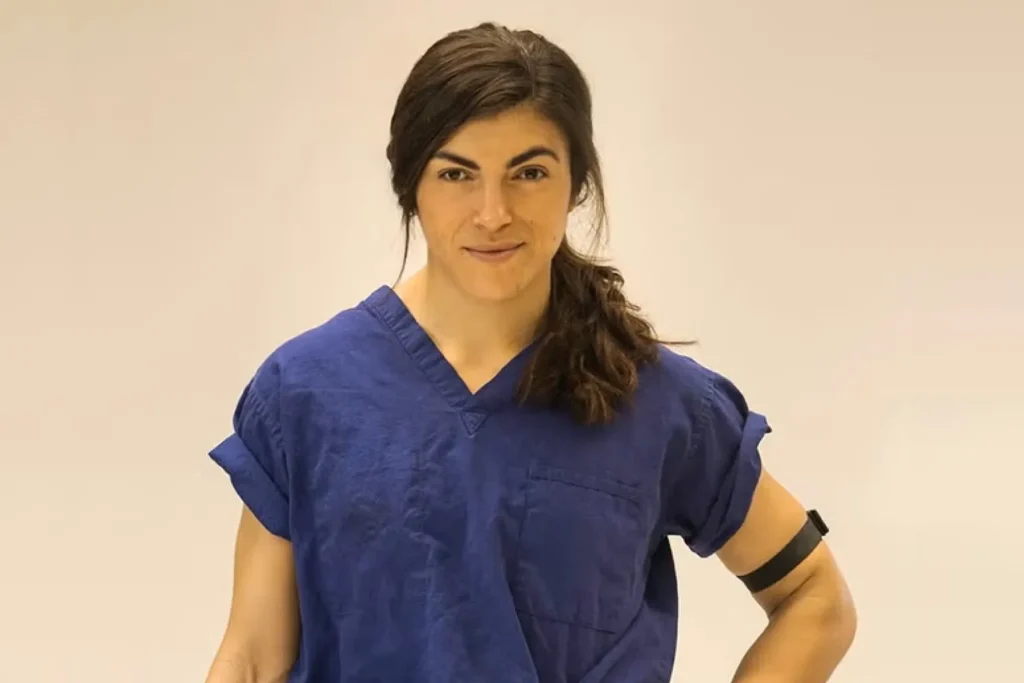
Olivia Tompkins competed at the CrossFit Games Semifinals in Madrid. She trains five to six days a week alongside twelve-hour shifts as a cardiothoracic ICU (Intensive Care Unit) nurse. She has been tracking HRV daily for over two years.
“I was doing everything right. Creatine. Protein timing. Eight hours of sleep. Cold plunges. For eighteen months my HRV would not move and every fourth round of every WOD felt like a different workout. The answer was not in my training programme.”
– Olivia Tompkins, CrossFit Athlete & ICU Nurse
I compete at a high level in CrossFit. I also work twelve-hour shifts as a cardiothoracic ICU nurse.
After years of ICU shifts through COVID on top of full training, I hit a wall I could not train through. Four months away from work. Could not explain why I could not get out of bed. Training had stopped feeling like a release. It felt like more of a load.
What I eventually found was not another supplement or a different training split. It was something that addressed the actual system my recovery was running through.
Here is what changed – and why it matters for any athlete whose output is not matching their effort.

Why Your HRV Stays Stuck Even When You Do Everything Right
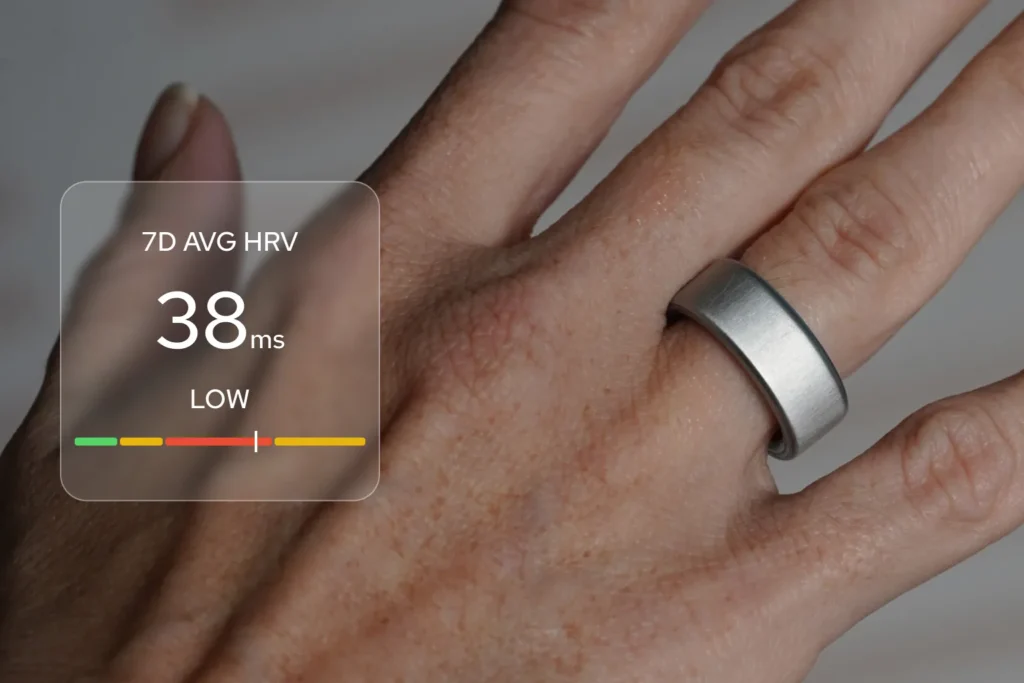
Every serious CrossFit athlete knows the feeling. You check your WHOOP or Oura in the morning. Red again. You slept. You ate well. You took the rest day. And the number still will not move.
Most athletes assume a stuck HRV means they trained too hard. So they add a rest day. Adjust the training split. Do more zone 2. And the number drifts back anyway.
HRV is not primarily a fitness metric. It is a nervous system readout.
HRV measures how well your autonomic nervous system is balancing two primary states:
- Sympathetic (fight-or-flight) - keeps you activated, alert, ready to perform
- Parasympathetic (rest and recover) - where adaptation, repair, and genuine recovery actually happen
The vagus nerve is the body’s primary pathway for shifting between the two.
When training load, work stress, and life pressure compound over time, the system gets stuck in sympathetic dominance. Vagal tone drops. HRV stays flat. And no amount of rest days fully moves the number, because the underlying system is still running on alert.
You are not overtrained. Your nervous system has forgotten how to shift – and when it has been stuck long enough, it needs a more direct signal to do so.
This is where VNS – Vagus Nerve Stimulation – comes in. Rather than trying to coax the nervous system toward recovery indirectly, VNS directly activates the vagus nerve, supporting the shift from sympathetic dominance back toward parasympathetic recovery.
In peer-reviewed scientific studies, a single VNS session favourably altered all HRV parameters compared to placebo, with an average 18% increase in HRV across study populations.
My HRV sat at 52 for eighteen months. In the next four Ways, I explain the specific tool that finally moved it – and why it works where everything else had stopped.
What You May Notice:
- Waking up before checking the app and already knowing it is going to be a green day
- The number that would not move regardless of rest days is finally trending in the right direction
- Training blocks that used to accumulate into a wall are starting to feel like separate efforts
“I’ve struggled with a consistently low HRV for years. Since I started, I’ve consistently seen a 10-20% increase, which has had a noticeable impact on my recovery. It’s been especially valuable in helping me balance a high-cognitive-load job, regular training, and family life.” – Will, Trustpilot

The Reason Your DOMS Takes Days to Clear – And How to Cut It
Every serious athlete knows DOMS (Delayed Onset Muscle Soreness – the deep muscle soreness that peaks 24-48 hours after heavy training). The quad soreness still in your legs on Wednesday after Tuesday’s heavy back squat day.
The shoulder tightness after a session of muscle-ups and handstand push-ups that bleeds into the next morning’s clean and jerk warm-up.
The grip fatigue from a chipper of pull-ups and deadlifts that makes Thursday’s barbell work feel like a different workout.
Most athletes treat this as part of training. You earned it. You wait it out.
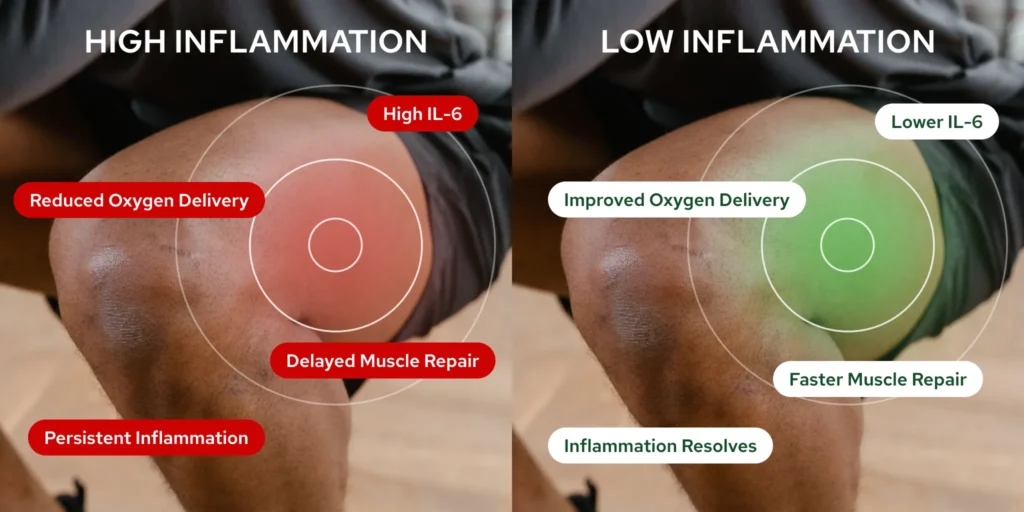
Here is what most do not know: when the vagus nerve is functioning well, it activates the cholinergic anti-inflammatory pathway – the body’s own mechanism for clearing inflammatory proteins after physical stress.
In a peer-reviewed scientific study, vagus nerve stimulation produced a 78% reduction in IL-6 (Interleukin-6, one of the primary inflammatory proteins that drives post-session soreness and fatigue).
The same anti-inflammatory pathway directly affects recovery, endurance and stamina. When IL-6 stays elevated between sessions, the body cannot efficiently oxygenate muscle tissue, clear soreness, or sustain output under load.
Two athletes with identical training loads can recover at completely different rates and reach completely different endurance ceilings – not because of fitness, but because one’s inflammatory baseline is running higher.
That is not a marginal effect. That is the difference between carrying Tuesday into Wednesday and arriving on Wednesday ready.
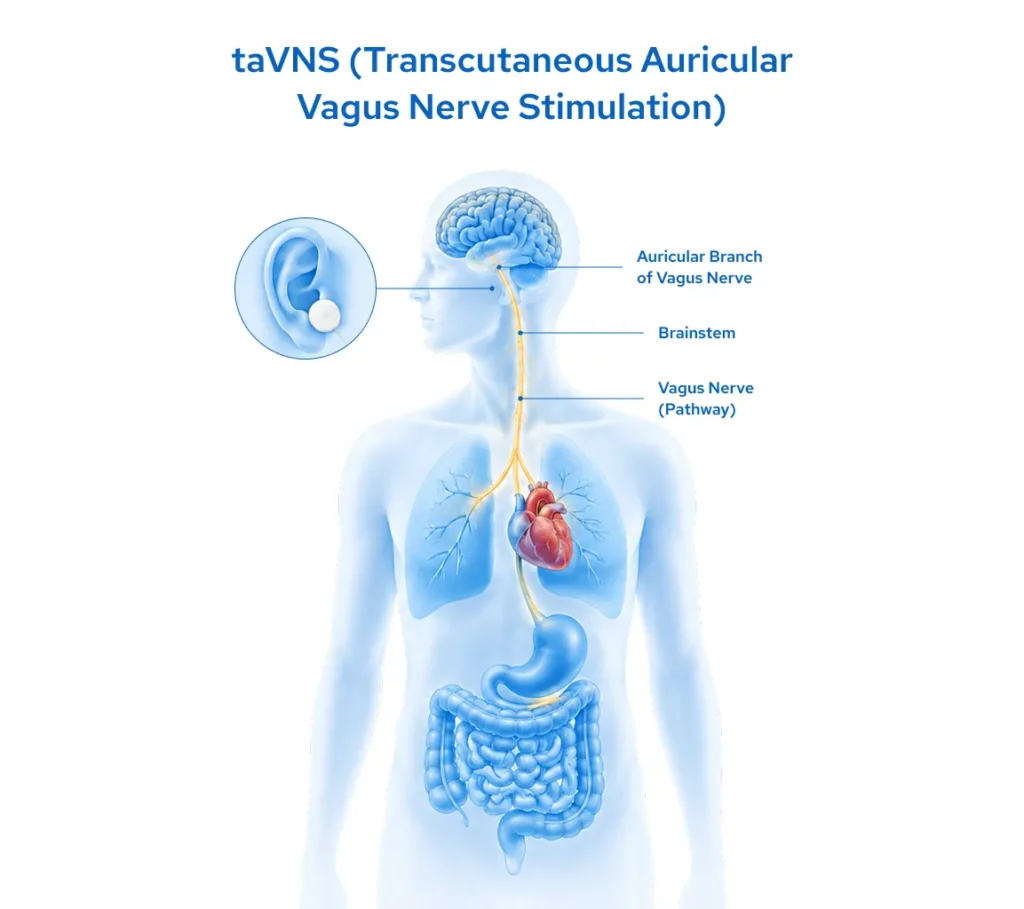
The most precise way to activate this pathway is through taVNS – Transcutaneous Auricular Vagus Nerve Stimulation.
taVNS delivers gentle electrical pulses through the outer ear to the auricular branch of the vagus nerve – activating the parasympathetic recovery pathway straight from the brainstem.
I will be honest – as someone who works in healthcare, I was sceptical. An ear device for athletic recovery was not something I expected to take seriously.
But the research behind this specific type of stimulation was substantial enough that I decided to try it properly.
This is where I found Nurosym – a CE-marked taVNS device backed by over 60 independent scientific studies across 150+ internationally recognised institutions, including King’s College London, UCL, and Imperial College London. I started using it after eighteen months of trying everything else. My DOMS stopped bleeding into the next session, the way it had been for months.
What You May Notice:
- DOMS clearing faster - less of Tuesday in Wednesday's warm-up
- Back-to-back training days feeling like separate sessions
- Repeat performances in competition feeling closer to first-attempt quality
“I’m definitely calmer and more relaxed than before. My HRV improved and my regeneration is way faster.” – verified user, Trustpilot

Why Eight Hours of Sleep Is Not Eight Hours of Recovery
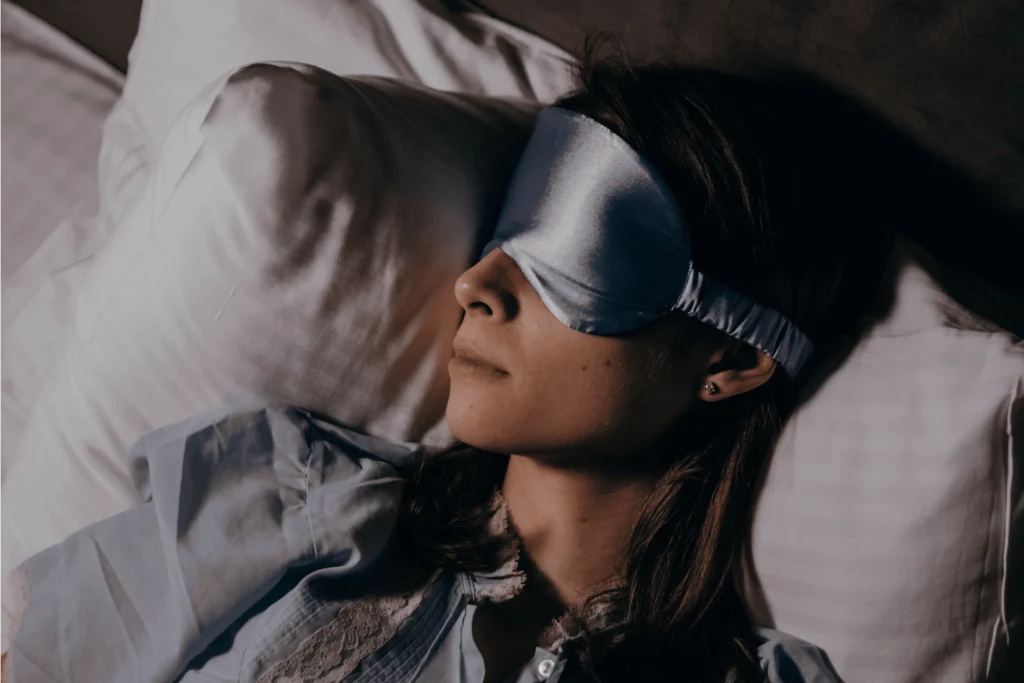
You did everything the programme said. Eight hours. No screens. Protein before bed. And you woke up with Tuesday’s deadlifts still in your lower back, a recovery score that does not match the hours you put in, and a heavy session starting in three hours.
Nobody talks about what happens after you fall asleep.
Strength gains, muscle repair, aerobic adaptation – none of that happens because you slept eight hours. It happens during specific stages:
- Deep slow-wave sleep - where growth hormone releases and protein synthesis peaks. Where the thrusters and box jumps from today's WOD get rebuilt into stronger muscle tissue for tomorrow
- REM (Rapid Eye Movement) sleep - where motor patterns consolidate and the snatch technique you drilled today gets encoded into movement memory for next session
What determines how much time you spend in those stages is not how long you sleep. It is what your autonomic nervous system does once you are asleep.
When sympathetic activity stays elevated overnight – which happens when training load and life stress compound across the day – the body cycles through lighter stages and cuts the deep phases short.
You sleep eight hours. You wake up exhausted. Your WHOOP recovery score is still red. The work from yesterday has not converted into adaptation.
This is where the fatigue data becomes relevant.
In peer-reviewed scientific studies, supporting vagal tone through stimulation produced a -48% reduction in tiredness and fatigue scores – with improvements sustained even one week after discontinuing use. Not post-session tiredness. The kind of accumulated fatigue that makes every morning feel like you are starting from a deficit before you have even chalked up.
By supporting the shift into parasympathetic dominance before sleep, taVNS works at the autonomic level – changing what the nervous system does during those hours, not how many hours you get.
After three weeks of consistent use, my resting overnight heart rate dropped from 62 to 58 beats per minute. My HRV was climbing through the night rather than staying flat. The DOMS from Tuesday’s deadlift session was not in my legs on Wednesday the way it had been for months.
Eight hours in bed is the input. What your nervous system does during it is the output.
What You May Notice:
- Waking up feeling like yesterday's session has already been absorbed
- Recovery scores climbing without changing training load or sleep hours
- The chronic tiredness that does not shift after rest finally starting to clear
“Better more restful sleep, and I feel calmer after using the device.” – Hannah, Trustpilot

Why Your Gut Turns Against You Before Competition – And What Is Actually Driving It
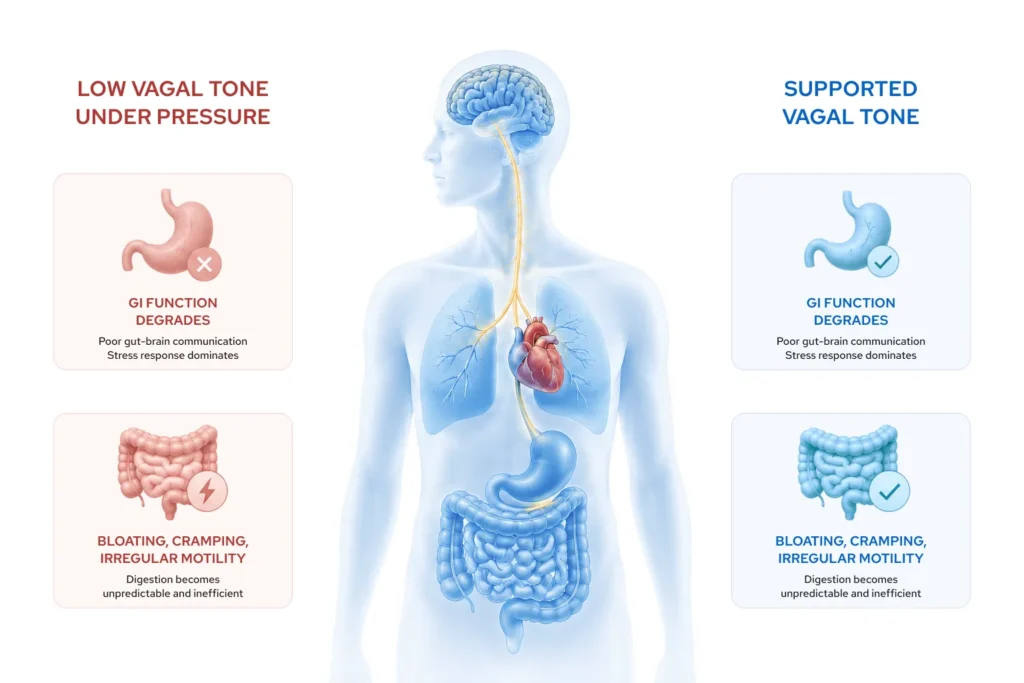
For as long as I can remember, I had irritable gut flare-ups during long shifts. Bloating, cramping, gut discomfort that arrived reliably whenever the pressure was high. I always put it down to cortisol and accepted it as part of the job.
What I eventually understood: this is a vagus nerve issue – and it is the same thing that happens to athletes before competition.
The vagus nerve is the primary communication pathway of the gut-brain axis – the direct line between your nervous system and your digestive system. When vagal tone is high, digestion is regulated and the gut stays calm.
When vagal tone drops under sustained pressure, GI (Gastrointestinal) function degrades.
Bloating increases. Motility becomes irregular. The gut becomes reactive to stress in ways that have nothing to do with what you ate or how many burpees you did in the warm-up.
For athletes, this shows up in a specific pattern:
- The closer to competition, the worse the gut behaves
- GI distress during events that no dietary tweak or pre-competition nutrition protocol fully resolves
- Pre-competition cramping or nausea that persists despite standard preparation
Research consistently shows GI symptoms are among the most common complaints during competition – yet most athletes put it down to nerves or nutrition. The underlying driver is often the same autonomic imbalance that shows up in every other recovery metric.
In peer-reviewed scientific studies, directly supporting vagal tone produced an 80% improvement in GI symptoms – the same pathway that regulates digestion under pressure.
Since using Nurosym consistently, my Irritable gut flare-ups during shifts reduced significantly. I had not changed my diet or routine. The only variable was directly supporting my vagal tone.

What You May Notice:
- Reduced GI symptoms during high-pressure training blocks or competition
- Gut behaving more consistently regardless of outside stress
- Less pre-competition nausea unrelated to nutrition
“We have noticed higher energy levels, improved digestion, higher HRV levels, improved sleep, and better stress management.” – Maciej, Trustpilot

Why You Unravel in the Final Rounds – And What Is Actually Running Out
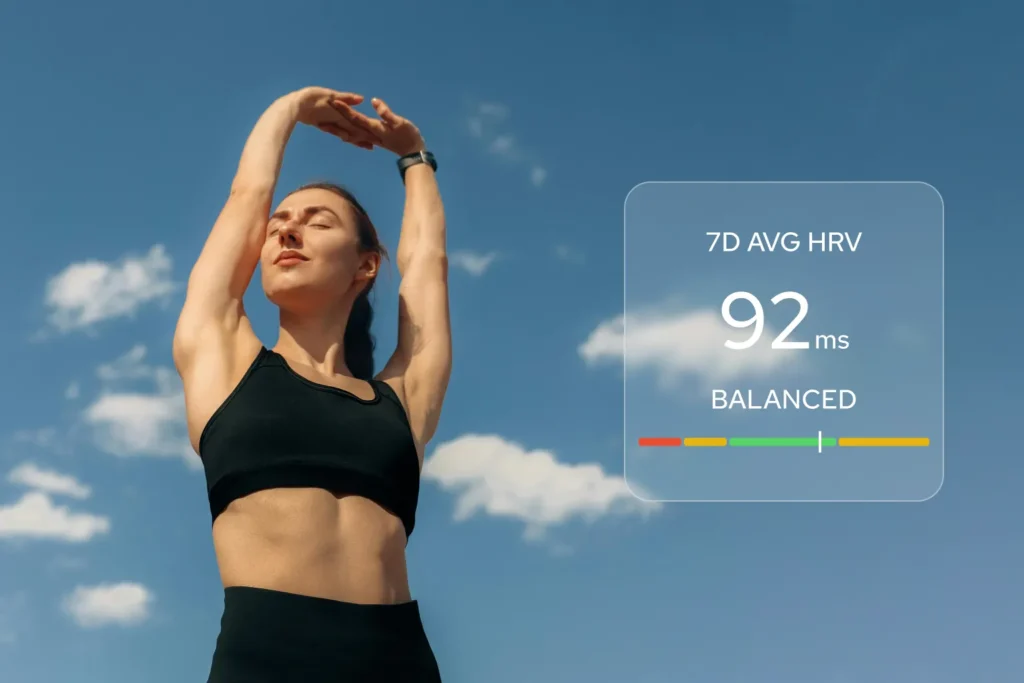
Every CrossFit athlete has been told the same thing: when the WOD gets hard, dig deeper. Push through. Build mental toughness.
What looks like a lack of mental toughness in the later rounds is not a psychological failure. It is a physiological one.
The vagus nerve governs not just physical recovery but emotional regulation – the speed at which the nervous system returns to baseline after a stressful stimulus.
High vagal tone → faster recovery from a missed lift or a failed set of pull-ups, better movement decisions under fatigue, longer before the brain starts negotiating with the body about stopping
Low vagal tone → tips into sympathetic overdrive at the first sign of difficulty, physical and cognitive decline follow rapidly
So what do you train instead of mental toughness? You train vagal tone. And the most direct way to do that is through consistent vagus nerve stimulation.
Vagal tone is also the foundation of endurance. The ability to sustain intensity – to keep form when the lungs are burning and the legs are gone – depends on how fast the nervous system recovers between efforts.
Higher vagal tone means faster return to baseline between reps, between sets, and between the moments that decide whether you hold on or let go.
I noticed the change before I understood what was causing it. Hard sessions started feeling emptied but not depleted. A missed snatch felt lighter.
I was staying present in the WOD longer in the moments that used to unravel me.
What You May Notice:
- Staying in the WOD mentally when it gets hard in the later rounds
- Faster reset after a missed lift or a broken set of pull-ups
- Less emotional drain compounding the physical fatigue of heavy training blocks
“It’s a really easy thing that I’ve just implemented into my everyday life.” – Olivia, CrossFit Athlete & ICU Nurse
The Evidence Behind It
The data behind vagus nerve stimulation has been building for over a decade across more than 60 independent scientific studies. Here is what the research shows Nurosym specifically delivers:
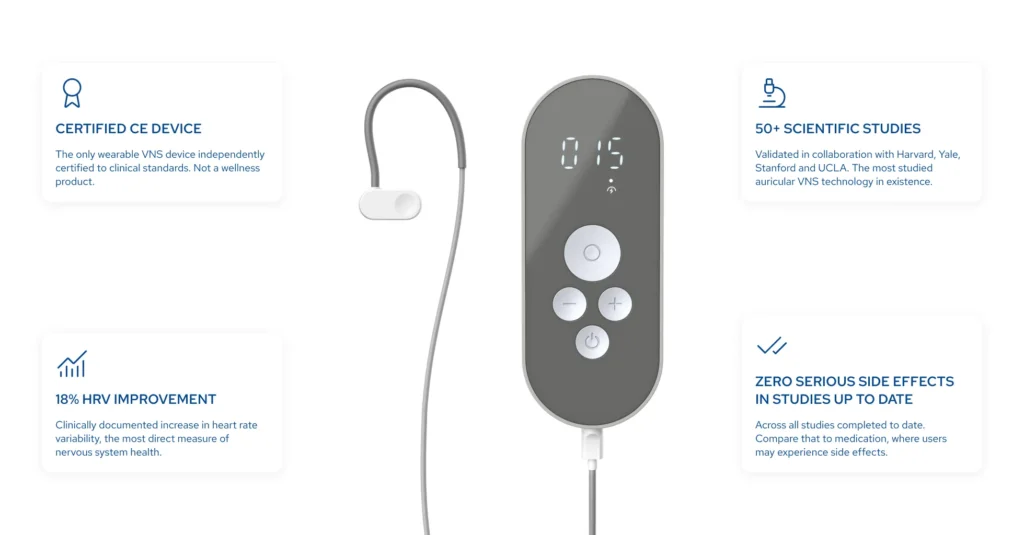
- +61% increase in vagal nerve activity within five minutes of a session
- +18% increase in HRV - a single session favourably altered all parameters compared to placebo
- -78% reduction in IL-6 inflammatory cytokines - activating the body's own anti-inflammatory pathway
- -48% reduction in tiredness and fatigue scores, sustained one week after discontinuing use
- +30% improvement in sleep quality over four weeks
- -35% reduction in anxious thoughts
- +80% improvement in GI symptoms
Results from peer-reviewed studies in specific study populations. Figures reflect relative change compared to placebo or baseline. Individual results may vary.
How I Use It
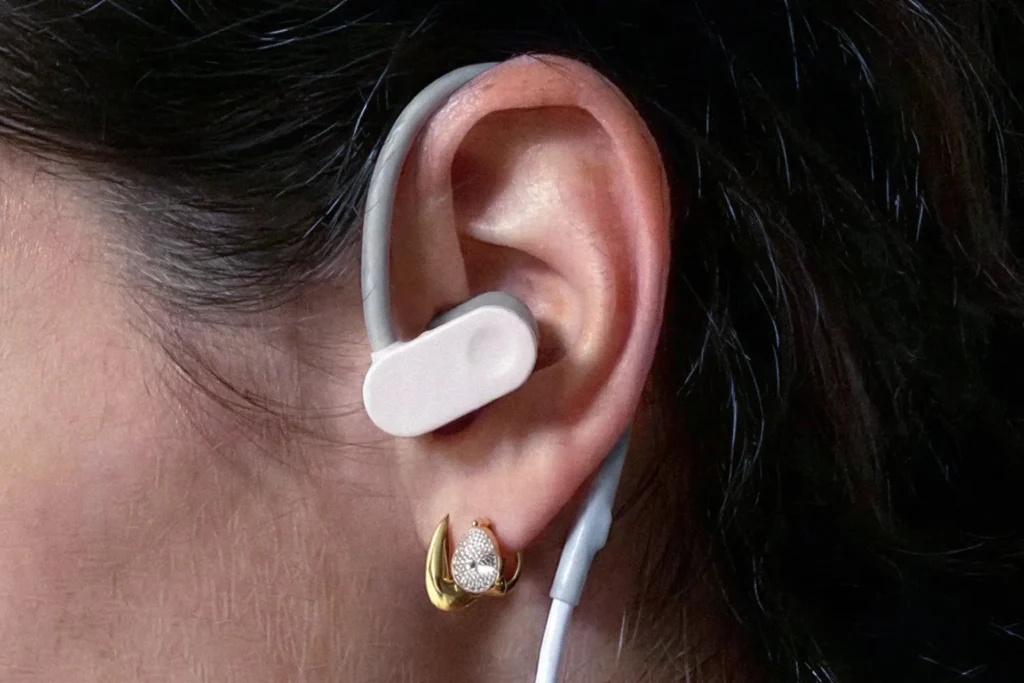
My protocol fits around training, not instead of it. I use it during rest periods – not as a separate task:
- At work: Fifteen minutes in our quiet break room instead of reaching for another coffee - clipped to my ear while reading. The break happens anyway. This is just what I do with it.
- After training: 30-45 minutes while eating my post-WOD meal or sitting on the assault bike cool-down. Body is already resting. Device goes on.
- Rest days: 60 minutes in the evening while reading before sleep - when the nervous system most needs the shift.
Sessions run from 15 minutes to an hour. The sensation is a gentle tingle – adjustable, nothing dramatic. You can wear it while eating, resting, reading, watching film of your lifts. Not during the workout itself or in the shower.
I carry it in whichever bag I have – gym bag or hospital bag. It became as automatic as packing my lunch.
No prescription required. 30-day money-back guarantee.
Who This Is For
May benefit:
- CrossFit athletes whose HRV has been stuck despite structured training, sleep and nutrition
- Those whose DOMS and accumulated fatigue between sessions are not clearing the way they should
- Athletes who notice GI symptoms or emotional drain during competition or high-pressure periods
- Anyone carrying sustained pressure outside the gym - demanding jobs, shift work, new parents, long hours at a desk - the nervous system does not distinguish between training stress and life stress
- Anyone whose recovery stack - creatine, magnesium, cold plunge, protein timing - has stopped moving the needle
Do not use if you have a pacemaker or implantable cardiac device, are pregnant, have had a recent serious cardiac event, or are under 18. Always consult a qualified healthcare professional before starting.
A Safe Way to Explore It
- 30-day money-back guarantee - a full training block is enough to see whether your recovery metrics move
- Limited subsidised research slots - some participants may receive up to €70 off in exchange for sharing their experience
My Honest Take
I spent eighteen months trying to move a number that would not move. This one did not fade back.
My HRV went from 52 to 61. Resting overnight heart rate dropped four beats. Irritable gut flare-ups reduced significantly. DOMS between sessions started clearing the way it was supposed to.
The chronic tiredness that had become my baseline finally started to lift.
The hard WODs did not get easier. I just stopped arriving at them already depleted.
The same pattern shows up in people who have never set foot in a CrossFit gym. Parents running on broken sleep.
Professionals carrying the weight of demanding careers. Anyone who has spent too long under sustained pressure without enough genuine recovery. The circumstances are different.
The load on the nervous system is the same.
For the first time in eighteen months, my HRV chart looks like a staircase going up. But the number is just the readout. What changed underneath it is what actually matters.
References
- Geng D, et al. The effect of transcutaneous auricular vagus nerve stimulation on HRV in healthy young people. PLoS ONE. 2022. https://doi.org/10.1371/journal.pone.0263833
- Geng D, et al. Circadian stage-dependent and stimulation duration effects of taVNS on heart rate variability. PLoS ONE. 2022. https://doi.org/10.1371/journal.pone.0277090
- Dasari TW, et al. Low-level tragus stimulation reduces systemic inflammation. Clinical Autonomic Research. 2023. https://pubmed.ncbi.nlm.nih.gov/36689057/
- Forte G, et al. Ear your heart: taVNS on heart rate variability in healthy young participants. PeerJ. 2022. https://pmc.ncbi.nlm.nih.gov/articles/PMC9638401/
- Verbanck P, et al. Non-invasive vagus nerve stimulation boosts mood recovery after effort exertion. 2021. https://www.ncbi.nlm.nih.gov/pmc/articles/PMC9693679/
- Dolcini J, et al. Effects of taVNS on sleep quality: Randomised controlled trial. 2025.
- Breit S, et al. Vagus nerve as modulator of the brain-gut axis. Frontiers in Psychiatry. 2018. https://www.frontiersin.org/articles/10.3389/fpsyt.2018.00044/full
- Zhu S, et al. taVNS enhanced emotional inhibitory control via increasing intrinsic prefrontal couplings. International Journal of Clinical and Health Psychology. 2024. https://pubmed.ncbi.nlm.nih.gov/38665809/
- Farmer AD, et al. International consensus based review and recommendations for minimum reporting standards in research on taVNS. Frontiers in Human Neuroscience. 2021. https://www.frontiersin.org/articles/10.3389/fnhum.2020.568051/full
- Williams S, et al. Heart Rate Variability is a Moderating Factor in the Workload-Injury Relationship of Competitive CrossFit Athletes. Journal of Sports Science & Medicine. 2017. https://pmc.ncbi.nlm.nih.gov/articles/PMC5721172/



 English
  German
  French
  Spanish
  Swedish