
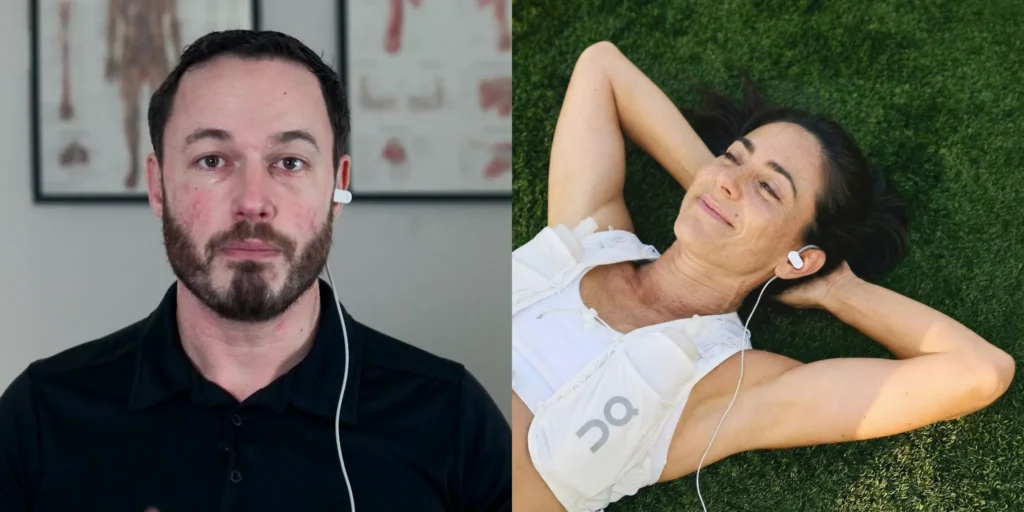
Probablemente ya has probado las cosas obvias.
Magnesium before bed. An ashwagandha capsule every evening. L-theanine for the mental chatter. A meditation app – opened regularly for about three weeks before the habit quietly dissolved. Box breathing. No screens after nine.
Algunas de ellas ayudaron. Otras ayudaron por un tiempo.
Y aquí estás. Agotado. Pero de alguna manera sigue corriendo.
The wired feeling at 11 pm when you have been up since 6. The weekends do not recover you the way they used to. The racing thoughts that arrive the moment you stop moving. The low hum of unease that sits just below the surface even when nothing is actually wrong.
I see the same pattern almost every week in my practice. Someone comes in with neck tension that will not shift, a jaw that aches in the morning, headaches that arrive by Wednesday. They are not sleeping badly. They are sleeping fine and waking up exhausted anyway. They come home ready to rest, and the moment they sit down, something starts again. Tomorrow’s meeting. The email they forgot. The conversation they keep replaying.
"Llego a casa, me quito los zapatos, me siento con una taza de té - y de alguna manera me siento más agotado que cuando me fui."
El cuerpo está en el sofá. El sistema nervioso sigue en la oficina.
The nervous system only registers load – whether it comes from a difficult patient, a demanding boss or a crying baby. Tiredness responds to rest. What I am describing does not.
The people who cannot switch off are not doing anything wrong. Their nervous system has simply not received the signal that the working day is over. And until it does, no amount of rest will feel restorative.
Most of what people try never reaches the nervous system itself. Below I rank five approaches by how directly they do – and explain the one that does.

Suplementos: glicinato de magnesio, ashwagandha, L-teanina
El enfoque bioquímico - Beneficios reales, techo real
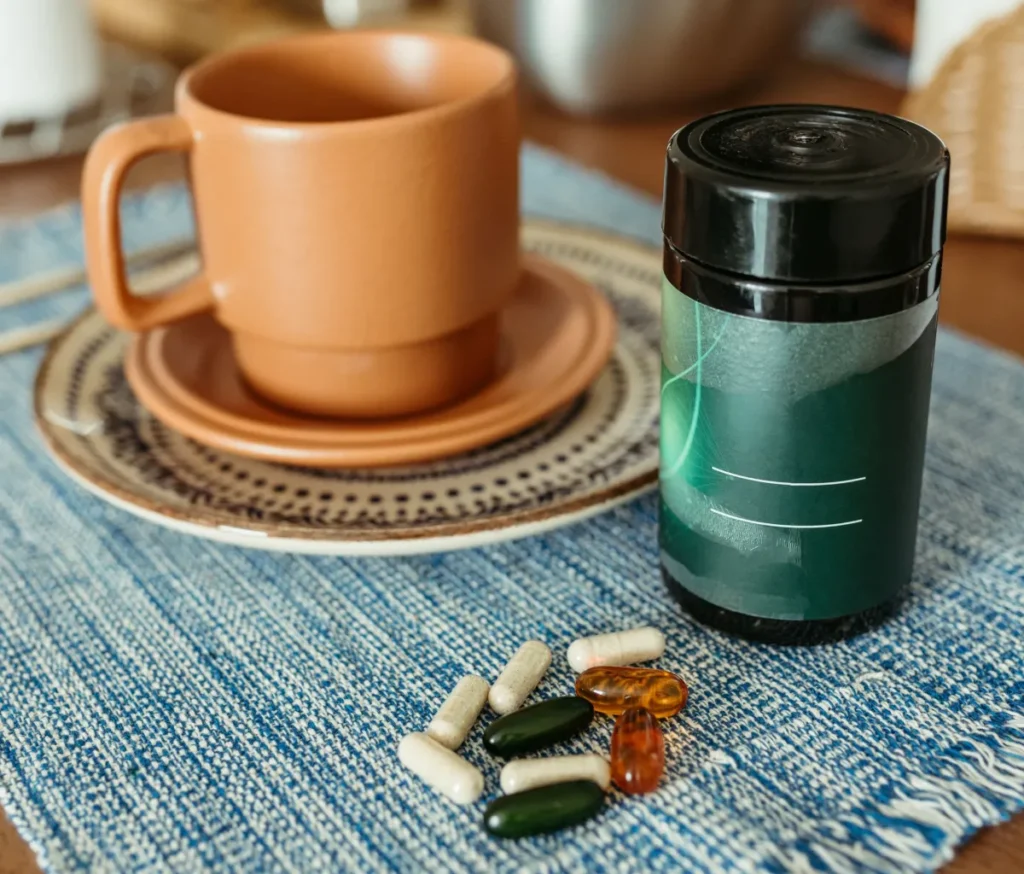
The “calm trio” is what most exhausted, wired people reach for first. Magnesium glycinate supports muscle relaxation and GABA, ashwagandha modulates cortisol (a 2024 meta-analysis in EXPLORE found it may help reduce stress and anxiety), and L-theanine promotes calm focus without sedation.
Desventajas: easy to incorporate, no technique needed, widely available.
La Verdadera Limitación: supplements work at the hormonal level, and ashwagandha needs weeks of consistent use. A body can be well supplemented and still have a nervous system that treats every quiet moment as something to prepare for.

Meditación, aplicaciones de atención plena, retiros
El enfoque mental - probado, pero que demanda exactamente lo que te has quedado sin

Meditation has one of the strongest evidence bases of any stress management tool, and for people who practise consistently it genuinely changes how the nervous system responds to stress.
Desventajas: well-researched, accessible via app, builds long-term resilience. Retreats offer a genuine deep reset.
La Verdadera Limitación: meditation asks you to quiet the mind first – which is precisely what an overactivated nervous system resists. Many people find that sitting in silence intensifies racing thoughts.

Trabajo respiratorio: respiración en caja, 4-7-8, suspiro fisiológico
El enfoque del sistema nervioso directo - potente, con una barrera práctica
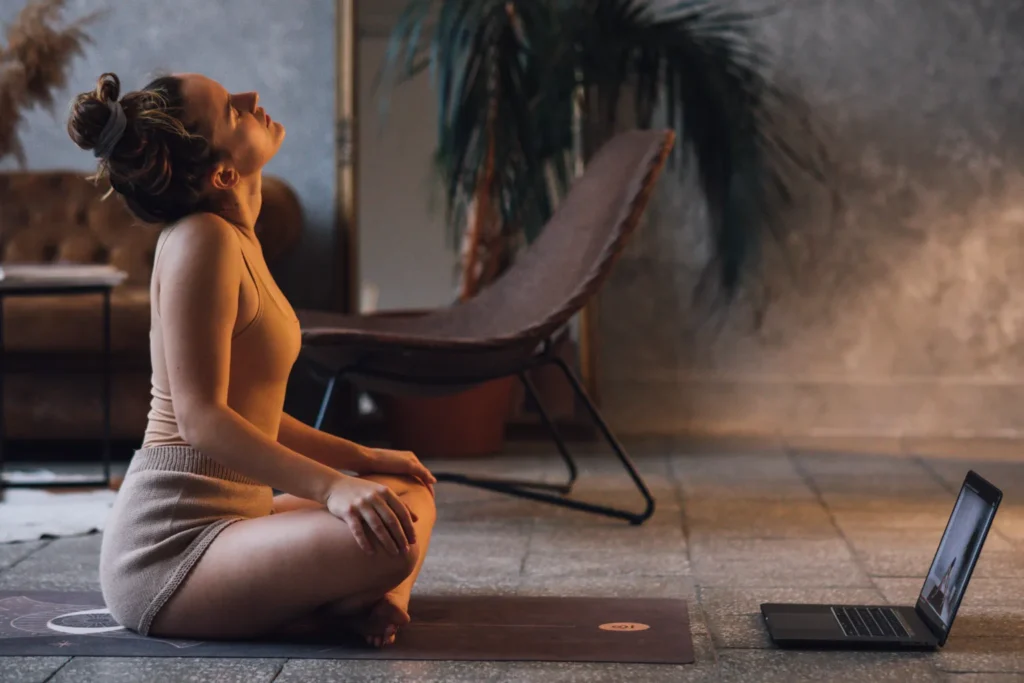
Slow breathing with a longer exhale directly activates the parasympathetic nervous system, and the physiological sigh has been shown in peer-reviewed research at Stanford to be one of the fastest methods for reducing physiological stress in real time.
Desventajas: no equipment, directly influences the vagus nerve and heart rate variability, backed by peer-reviewed evidence.
La Verdadera Limitación: breathwork needs a quiet space and mental calm, which is rarely realistic on a commute or between meetings. I have tried box breathing between patients and been asked by a colleague if I needed a moment. It works in the moment – when you stop, the nervous system can drift back toward its habitual state.

Liberación física: rodadura de espuma, pistola de masaje, estiramiento, yoga, pilates
El enfoque estructural - mi especialidad, y dónde alcanza su límite
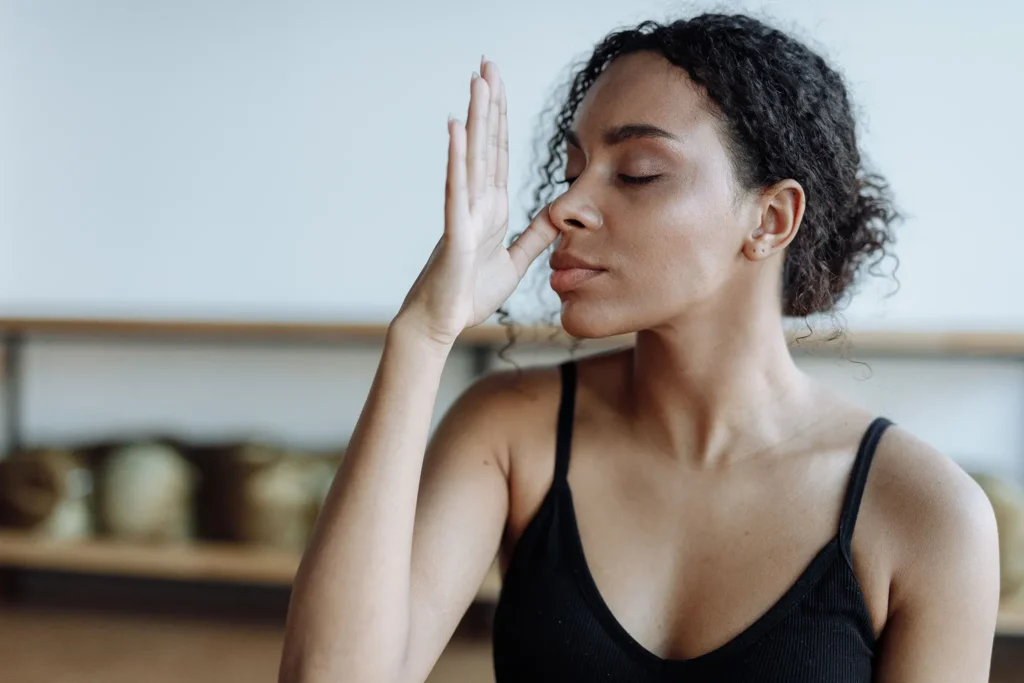
This is the territory I work in every day, and I place it above breathwork because releasing what the body is holding physically sends a different and often faster signal. When the nervous system stays in fight-or-flight long enough, the body holds the evidence: shoulders toward the ears, jaw tension, neck and upper back pain.
Desventajas: addresses where chronic stress builds up physically, easy at home, relief within a single session.
La Verdadera Limitación: physical release works at the structural level and does not reach the autonomic control system directly. A patient can feel significantly better walking out of a session and be back to baseline within two days – the underlying system has not changed.
Lo que los cuatro tienen en común
All four have real value, and I use and recommend them. But they all approach the nervous system indirectly – they address what chronic stress leaves behind without reaching the system that produced it. This is not a discipline problem. It is a nervous system pattern.
The One Pathway to the Autonomic Nervous System
The autonomic nervous system is primarily reached through the vagus nerve. It runs from the brainstem through the neck, heart, lungs and digestive system – in simple terms, it is the body’s primary off switch. When vagal tone is low, which develops after sustained periods of pressure, rest stops feeling restorative and the body stays braced even when nothing demands it.
For a long time, directly stimulating the vagus nerve required a surgically implanted device. That changed when researchers discovered that a branch of the vagus nerve runs close to the skin at the outer ear – making taVNS (Transcutaneous Auricular Vagus Nerve Stimulation) possible, with gentle electrical pulses applied externally and no surgery.
When I first encountered consumer devices making this claim, I was sceptical. I have spent fourteen years working with bodies, and ear clips claiming to reset the nervous system fall into exactly the category I would normally dismiss. What made me look more carefully was the volume and independence of the scientific literature behind one specific device – peer-reviewed studies in institutions I recognise. That is a different category of evidence.
Ese dispositivo era Nurosym.

Estimulación directa del nervio vago: Nurosym AVNT™
Trabajar a nivel autónomo
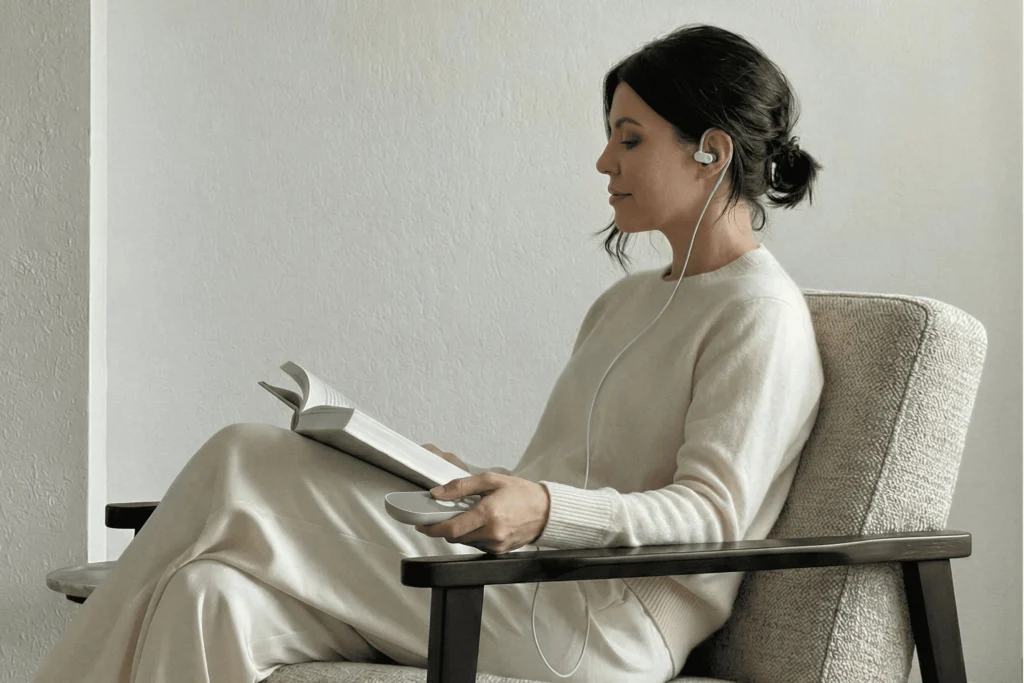
Nurosym Is a CE-Marked Device Built on 10+ Years of Research
Nurosym is a CE-marked taVNS device – the first of its kind to achieve CE medical device certification for auricular vagal neuromodulation. The technology behind it is called AVNT™ (Auricular Vagal Neuromodulation Therapy) – a proprietary method developed after 10+ years of R&D specifically to activate the vagus nerve through the outer ear.
It is backed by over 60 independent peer-reviewed scientific studies across 150+ internationally recognised institutions including King’s College London, UCL, and Imperial College London – a depth of device-specific research that is unusual in this category.
Published Research Has Shown Effects on Vagal Activity, HRV, Fatigue and Sleep
- +61% increase in vagal nerve activity within five minutes of a session
- +18% de aumento en la HRV (Heart Rate Variability) - a single session favourably altered all parameters compared to placebo
- -48% reduction in fatigue scores, sustained one week after discontinuing use
- +30% de mejora en la calidad del sueño over four weeks
- -35% de reducción en los pensamientos ansiosos
- -78% reduction in IL-6 (Interleukin-6) inflammatory cytokines
Resultados de estudios revisados por pares en poblaciones específicas del estudio. Las cifras reflejan el cambio relativo en comparación con placebo o la línea de base. Los resultados individuales pueden variar.
Unlike Everything Else on This List, Nurosym Asks Nothing of an Exhausted System
Lo que la hace diferente de todo lo demás en esta lista no es que las otras no funcionen. Es lo que te pide.
Every other approach on this list requires something from a system that may already be running on empty. Supplements require consistency and weeks before a meaningful effect. Meditation requires focus. Breathwork requires a quiet space and concentrated attention. The foam roller requires floor space, energy, and motivation.
Nurosym no requiere nada de esto. No hay habitación silenciosa. No hay atención concentrada. No hay técnica para aprender. No hay motivación para bajarse del sofá.
Te lo pegas a la oreja. Te sientas en el sofá. Miras por la ventana si quieres. Simplemente existes.
It works not by asking more of an exhausted system, but by sending a direct signal to the one part of the system that controls the rest.
"Personalmente, he encontrado dos beneficios claros. Me ayuda a concentrarme -hay estudios que lo respaldan- y cuando medí mi HRV después de las sesiones, la diferencia fue clara."
One patient – a secondary school teacher carrying a full timetable and two young children at home – came back after three weeks and said something I have heard in different words from several people since: “I get home and I actually feel like I’ve stopped. I didn’t know I’d forgotten what that felt like.”
Desventajas:
- Primer dispositivo de neuromodulación auricular vagal con marca CE
- Más de 60 estudios científicos revisados por pares completados
- Más de 10 años de I+D y más de 10.000 horas de desarrollo
- En la confianza de más de 1.000 profesionales sanitarios
- Más de 5.000.000 de sesiones completadas hasta la fecha
- No se requiere aplicación. Sin gel. Sin receta.
- Se puede usar mientras vas a casa, comes, lees o descansas
Una consideración: consistent use matters. Most people notice changes within two to three weeks of daily sessions. It works well alongside the other approaches on this list – not as a replacement for them, but as something that works at a different level.
Quién está dirigido
People who feel exhausted after work but cannot properly wind down in the evening may benefit:
- Aquellos que duermen adecuadamente pero despiertan sin reposo, o que tienen una tensión recurrente en la mandíbula, el cuello o los hombros
- Cualquiera que tenga pensamientos acelerados o un zumbido de inquietud en el fondo que no pueda resolver solo con esfuerzo consciente
- Anyone whose recovery toolkit - supplements, breathwork, meditation - has stopped delivering the results it once did
- Personas cuyos fines de semana ya no se sienten restauradores como antes
- High-performers, shift workers, parents, and carers carrying sustained pressure - the nervous system does not distinguish between sources of demand
- Cualquiera que haya probado todo lo de esta lista y aún esté despierto
No usar si tiene un marcapasos o dispositivo cardíaco implantable, está embarazada, ha tenido recientemente un episodio cardíaco grave o es menor de 18 años. Siempre consulte a un profesional de la salud calificado antes de comenzar.
Una forma segura de intentarlo
Nurosym comes with a Garantía de devolución del dinero en 30 días – enough time to notice whether your evenings, your sleep, and your mornings actually feel different.
Una nota final de Ashley
The people I see who struggle most with this are not struggling because they lack discipline or willpower. Most are highly capable people managing significant demands – and managing them well, from the outside.
What I notice is that the body keeps score quietly. The tension in the jaw, the shoulders that never quite drop, the sleep that never quite restores – these are not character flaws. They are a nervous system that has been running hard for a long time without the signal to stand down.
La buena noticia es que el sistema nervioso no está atascado permanentemente. Responde. Si recibe la señal correcta, cambia.
Pero para cambiarlo, hay que alcanzarlo, no rodearlo.
Esa es la distinción que, en mi experiencia, marca la diferencia entre los enfoques que ayudan temporalmente y los que realmente cambian el patrón.
EXCLUSIVE OFFER FOR OUR READERS: Get 5% Off Nurosym From Our Editorial Team!
Referencias
- Geng D, et al. The effect of transcutaneous auricular vagus nerve stimulation on HRV in healthy young people. PLoS ONE. 2022;17(2):e0263833. https://doi.org/10.1371/journal.pone.0263833
- Dasari TW, et al. Low-level tragus stimulation reduces systemic inflammation. Clinical Autonomic Research. 2023. https://pubmed.ncbi.nlm.nih.gov/36689057/
- Ferstl M, et al. Non-invasive vagus nerve stimulation boosts mood recovery after effort exertion. 2021. https://www.ncbi.nlm.nih.gov/pmc/articles/PMC9693679/
- Dolcini G, Favretti M, Franculli D, et al. Vagal nerve stimulation and fibromyalgia: an additional therapeutic option. Clinical and Experimental Rheumatology. 2025;43(6):1095-1104. https://doi.org/10.55563/clinexprheumatol/johqvo
- Forte G, et al. Ear your heart: transcutaneous auricular vagus nerve stimulation on heart rate variability in healthy young participants. PeerJ. 2022. https://pmc.ncbi.nlm.nih.gov/articles/PMC9686410/
- Arumugam, et al. A meta-analysis of ashwagandha for anxiety and stress. EXPLORE. 2024. https://www.sciencedirect.com/science/article/abs/pii/S1550830724001691
- Farmer AD, et al. International consensus based review and recommendations for minimum reporting standards in research on transcutaneous vagus nerve stimulation (version 2020). Frontiers in Human Neuroscience. 2021;14:568051. https://www.frontiersin.org/articles/10.3389/fnhum.2020.568051/full
- Zheng S, et al. Transcutaneous vagus nerve stimulation improves Long COVID symptoms in a female cohort: a pilot study. Frontiers in Neurology. 2024;15:1393371. https://pmc.ncbi.nlm.nih.gov/articles/PMC11097097/
This article reflects my professional evaluation of the evidence and experience. I may receive a referral arrangement from purchases made through links in this article. This is not medical advice – always consult a qualified health professional before starting any new intervention. Individual results may vary.

 Spanish
 English
 German
 French
 Swedish
 Italian