
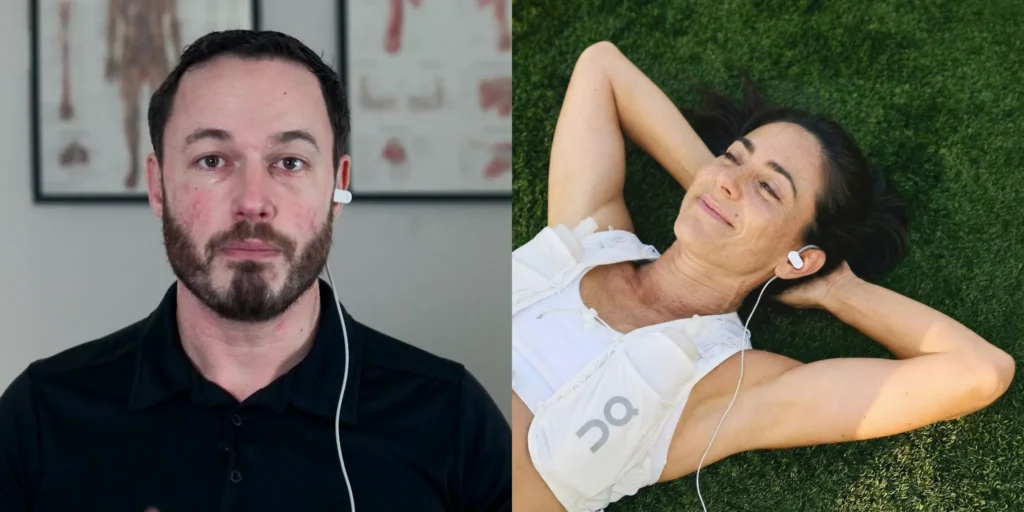
You have probably already tried the obvious things.
Magnesium before bed. An ashwagandha capsule every evening. L-theanine for the mental chatter. A meditation app – opened regularly for about three weeks before the habit quietly dissolved. Box breathing. No screens after nine.
Some of it helped. Some of it helped for a while.
And yet here you are. Exhausted. But somehow still running.
The wired feeling at 11 pm when you have been up since 6. The weekends do not recover you the way they used to. The racing thoughts that arrive the moment you stop moving. The low hum of unease that sits just below the surface even when nothing is actually wrong.
I see the same pattern almost every week in my practice. Someone comes in with neck tension that will not shift, a jaw that aches in the morning, headaches that arrive by Wednesday. They are not sleeping badly. They are sleeping fine and waking up exhausted anyway. They come home ready to rest, and the moment they sit down, something starts again. Tomorrow’s meeting. The email they forgot. The conversation they keep replaying.
“I get home, kick off my shoes, sit down with a cup of tea – and somehow feel more wound up than when I left.”
The body is on the sofa. The nervous system is still at the office.
The nervous system only registers load – whether it comes from a difficult patient, a demanding boss or a crying baby. Tiredness responds to rest. What I am describing does not.
The people who cannot switch off are not doing anything wrong. Their nervous system has simply not received the signal that the working day is over. And until it does, no amount of rest will feel restorative.
Most of what people try never reaches the nervous system itself. Below I rank five approaches by how directly they do – and explain the one that does.

Supplements: Magnesium Glycinate, Ashwagandha, L-Theanine
The Biochemical Approach – Real Benefits, Real Ceiling
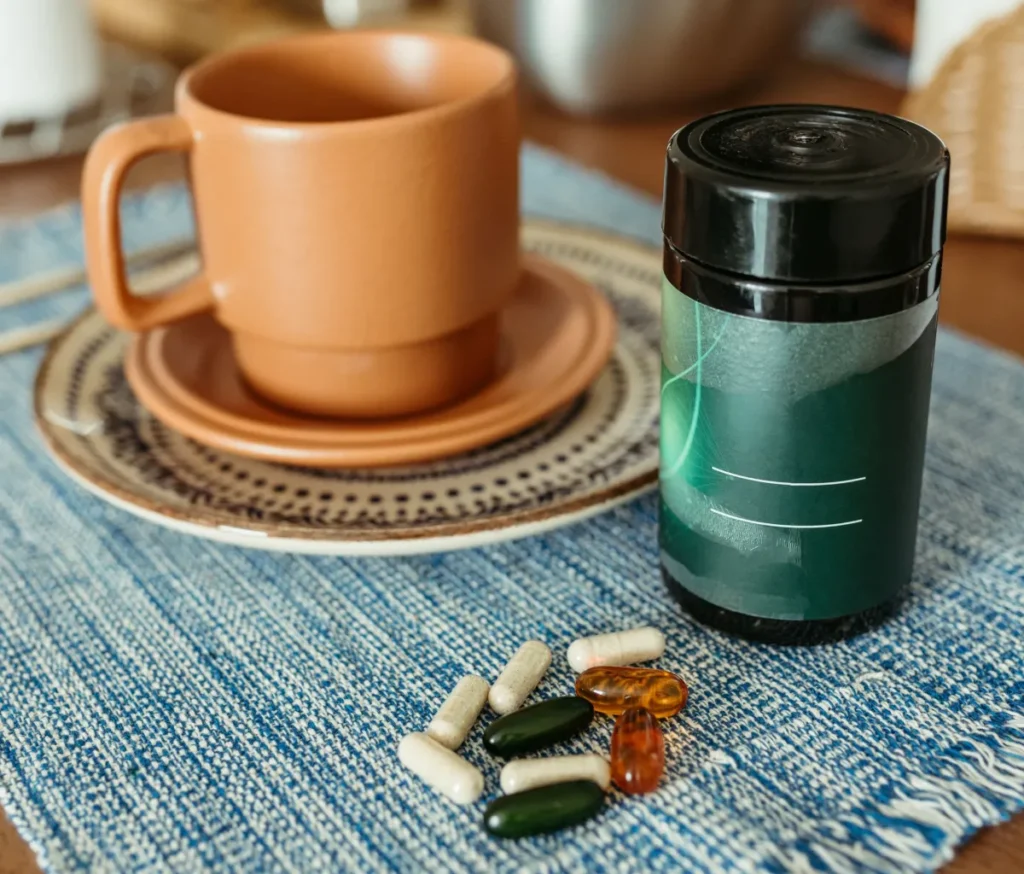
The “calm trio” is what most exhausted, wired people reach for first. Magnesium glycinate supports muscle relaxation and GABA, ashwagandha modulates cortisol (a 2024 meta-analysis in EXPLORE found it may help reduce stress and anxiety), and L-theanine promotes calm focus without sedation.
Pros: easy to incorporate, no technique needed, widely available.
The Real Limitation: supplements work at the hormonal level, and ashwagandha needs weeks of consistent use. A body can be well supplemented and still have a nervous system that treats every quiet moment as something to prepare for.

Meditation, Mindfulness Apps, Retreats
The Mental Approach – Proven, But Demanding Exactly What You Have Run Out Of

Meditation has one of the strongest evidence bases of any stress management tool, and for people who practise consistently it genuinely changes how the nervous system responds to stress.
Pros: well-researched, accessible via app, builds long-term resilience. Retreats offer a genuine deep reset.
The Real Limitation: meditation asks you to quiet the mind first – which is precisely what an overactivated nervous system resists. Many people find that sitting in silence intensifies racing thoughts.

Breathwork: Box Breathing, 4-7-8, Physiological Sigh
The Direct Nervous System Approach – Powerful, With One Practical Barrier
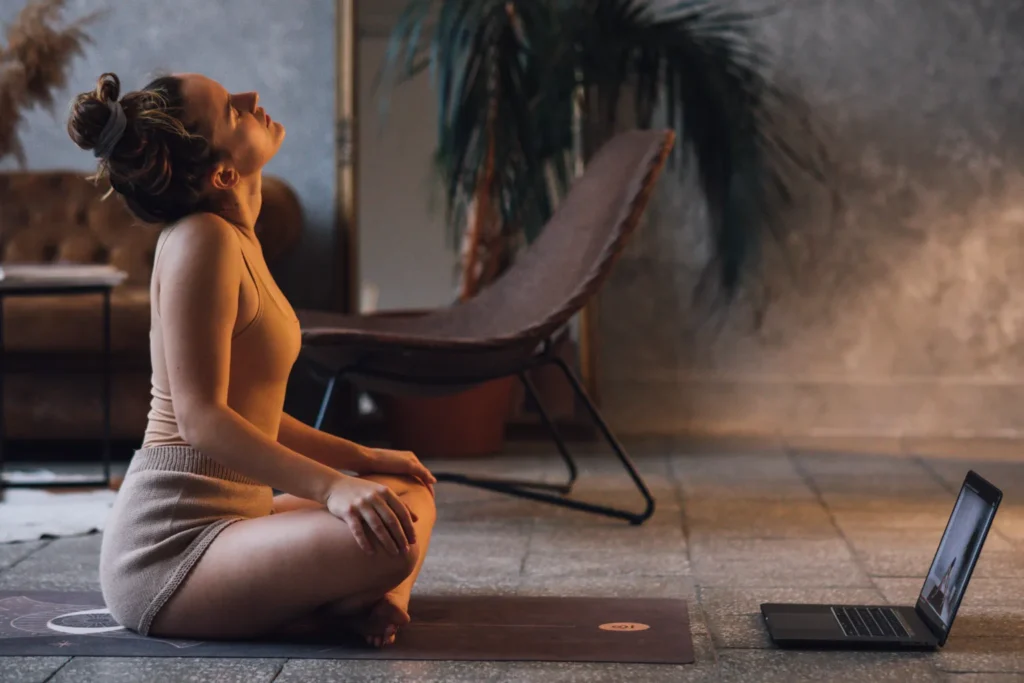
Slow breathing with a longer exhale directly activates the parasympathetic nervous system, and the physiological sigh has been shown in peer-reviewed research at Stanford to be one of the fastest methods for reducing physiological stress in real time.
Pros: no equipment, directly influences the vagus nerve and heart rate variability, backed by peer-reviewed evidence.
The Real Limitation: breathwork needs a quiet space and mental calm, which is rarely realistic on a commute or between meetings. I have tried box breathing between patients and been asked by a colleague if I needed a moment. It works in the moment – when you stop, the nervous system can drift back toward its habitual state.

Physical Release: Foam Rolling, Massage Gun, Stretching, Yoga, Pilates
The Structural Approach – My Specialty, And Where It Reaches Its Limit

This is the territory I work in every day, and I place it above breathwork because releasing what the body is holding physically sends a different and often faster signal. When the nervous system stays in fight-or-flight long enough, the body holds the evidence: shoulders toward the ears, jaw tension, neck and upper back pain.
Pros: addresses where chronic stress builds up physically, easy at home, relief within a single session.
The Real Limitation: physical release works at the structural level and does not reach the autonomic control system directly. A patient can feel significantly better walking out of a session and be back to baseline within two days – the underlying system has not changed.
What All Four Have in Common
All four have real value, and I use and recommend them. But they all approach the nervous system indirectly – they address what chronic stress leaves behind without reaching the system that produced it. This is not a discipline problem. It is a nervous system pattern.
The One Pathway to the Autonomic Nervous System
The autonomic nervous system is primarily reached through the vagus nerve. It runs from the brainstem through the neck, heart, lungs and digestive system – in simple terms, it is the body’s primary off switch. When vagal tone is low, which develops after sustained periods of pressure, rest stops feeling restorative and the body stays braced even when nothing demands it.
For a long time, directly stimulating the vagus nerve required a surgically implanted device. That changed when researchers discovered that a branch of the vagus nerve runs close to the skin at the outer ear – making taVNS (Transcutaneous Auricular Vagus Nerve Stimulation) possible, with gentle electrical pulses applied externally and no surgery.
When I first encountered consumer devices making this claim, I was sceptical. I have spent fourteen years working with bodies, and ear clips claiming to reset the nervous system fall into exactly the category I would normally dismiss. What made me look more carefully was the volume and independence of the scientific literature behind one specific device – peer-reviewed studies in institutions I recognise. That is a different category of evidence.
That device was Nurosym.

Direct Vagus Nerve Stimulation: Nurosym AVNT™
Working at the Autonomic Level
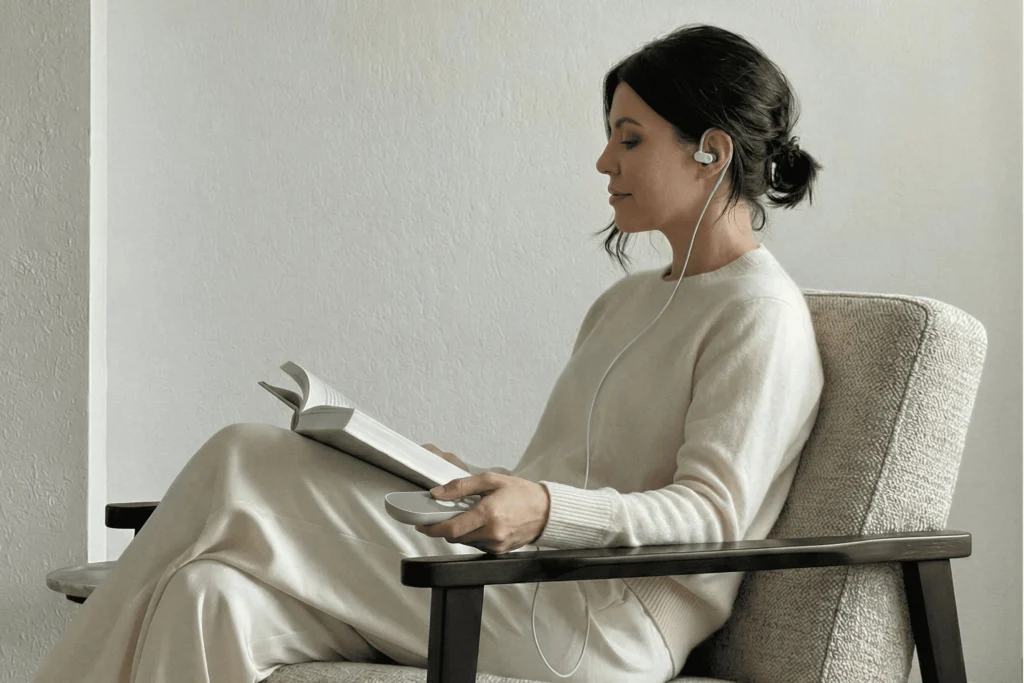
Nurosym Is a CE-Marked Device Built on 10+ Years of Research
Nurosym is a CE-marked taVNS device – the first of its kind to achieve CE medical device certification for auricular vagal neuromodulation. The technology behind it is called AVNT™ (Auricular Vagal Neuromodulation Therapy) – a proprietary method developed after 10+ years of R&D specifically to activate the vagus nerve through the outer ear.
It is backed by over 60 independent peer-reviewed scientific studies across 150+ internationally recognised institutions including King’s College London, UCL, and Imperial College London – a depth of device-specific research that is unusual in this category.
Published Research Has Shown Effects on Vagal Activity, HRV, Fatigue and Sleep
- +61% increase in vagal nerve activity within five minutes of a session
- +18% increase in HRV (Heart Rate Variability) - a single session favourably altered all parameters compared to placebo
- -48% reduction in fatigue scores, sustained one week after discontinuing use
- +30% improvement in sleep quality over four weeks
- -35% reduction in anxious thoughts
- -78% reduction in IL-6 (Interleukin-6) inflammatory cytokines
Results from peer-reviewed studies in specific study populations. Figures reflect relative change compared to placebo or baseline. Individual results may vary.
Unlike Everything Else on This List, Nurosym Asks Nothing of an Exhausted System
What makes it different from everything else on this list is not that the others do not work. It is what it asks of you.
Every other approach on this list requires something from a system that may already be running on empty. Supplements require consistency and weeks before a meaningful effect. Meditation requires focus. Breathwork requires a quiet space and concentrated attention. The foam roller requires floor space, energy, and motivation.
Nurosym requires none of this. No quiet room. No focused attention. No technique to learn. No motivation to get off the sofa.
You clip it to your ear. You sit on the sofa. You stare out the window if you want. You just exist.
It works not by asking more of an exhausted system, but by sending a direct signal to the one part of the system that controls the rest.
“Personally, I have found two clear benefits. It helps me focus – there are studies to support that – and when I measured my HRV after sessions, the difference was clear.”
One patient – a secondary school teacher carrying a full timetable and two young children at home – came back after three weeks and said something I have heard in different words from several people since: “I get home and I actually feel like I’ve stopped. I didn’t know I’d forgotten what that felt like.”
Pros:
- First CE-marked auricular vagal neuromodulation device
- 60+ completed peer-reviewed scientific studies
- 10+ years of R&D and 10,000+ hours of development
- Trusted by 1,000+ healthcare professionals
- 5,000,000+ sessions completed to date
- No app required. No gel. No prescription.
- Can be used while commuting, eating, reading or resting
One Consideration: consistent use matters. Most people notice changes within two to three weeks of daily sessions. It works well alongside the other approaches on this list – not as a replacement for them, but as something that works at a different level.
Who This Is For
People who feel exhausted after work but cannot properly wind down in the evening may benefit:
- Those who sleep adequately but wake unrefreshed, or who carry recurring tension in the jaw, neck or shoulders
- Anyone dealing with racing thoughts or a background hum of unease that conscious effort alone cannot settle
- Anyone whose recovery toolkit - supplements, breathwork, meditation - has stopped delivering the results it once did
- People whose weekends no longer feel restorative the way they used to
- High-performers, shift workers, parents, and carers carrying sustained pressure - the nervous system does not distinguish between sources of demand
- Anyone who has tried everything on this list and is still lying awake
Do not use if you have a pacemaker or implantable cardiac device, are pregnant, have had a recent serious cardiac event, or are under 18. Always consult a qualified healthcare professional before starting.
A Safe Way to Try It
Nurosym comes with a 30-day money-back guarantee – enough time to notice whether your evenings, your sleep, and your mornings actually feel different.
A Final Note From Ashley
The people I see who struggle most with this are not struggling because they lack discipline or willpower. Most are highly capable people managing significant demands – and managing them well, from the outside.
What I notice is that the body keeps score quietly. The tension in the jaw, the shoulders that never quite drop, the sleep that never quite restores – these are not character flaws. They are a nervous system that has been running hard for a long time without the signal to stand down.
The good news is that the nervous system is not stuck permanently. It responds. Given the right signal, it changes.
But to change it, you have to reach it – not manage around it.
That is the distinction that, in my experience, makes the difference between approaches that temporarily help and approaches that actually shift the pattern.
EXCLUSIVE OFFER FOR OUR READERS: Get 5% Off Nurosym From Our Editorial Team!
References
- Geng D, et al. The effect of transcutaneous auricular vagus nerve stimulation on HRV in healthy young people. PLoS ONE. 2022;17(2):e0263833. https://doi.org/10.1371/journal.pone.0263833
- Dasari TW, et al. Low-level tragus stimulation reduces systemic inflammation. Clinical Autonomic Research. 2023. https://pubmed.ncbi.nlm.nih.gov/36689057/
- Ferstl M, et al. Non-invasive vagus nerve stimulation boosts mood recovery after effort exertion. 2021. https://www.ncbi.nlm.nih.gov/pmc/articles/PMC9693679/
- Dolcini G, Favretti M, Franculli D, et al. Vagal nerve stimulation and fibromyalgia: an additional therapeutic option. Clinical and Experimental Rheumatology. 2025;43(6):1095-1104. https://doi.org/10.55563/clinexprheumatol/johqvo
- Forte G, et al. Ear your heart: transcutaneous auricular vagus nerve stimulation on heart rate variability in healthy young participants. PeerJ. 2022. https://pmc.ncbi.nlm.nih.gov/articles/PMC9686410/
- Arumugam, et al. A meta-analysis of ashwagandha for anxiety and stress. EXPLORE. 2024. https://www.sciencedirect.com/science/article/abs/pii/S1550830724001691
- Farmer AD, et al. International consensus based review and recommendations for minimum reporting standards in research on transcutaneous vagus nerve stimulation (version 2020). Frontiers in Human Neuroscience. 2021;14:568051. https://www.frontiersin.org/articles/10.3389/fnhum.2020.568051/full
- Zheng S, et al. Transcutaneous vagus nerve stimulation improves Long COVID symptoms in a female cohort: a pilot study. Frontiers in Neurology. 2024;15:1393371. https://pmc.ncbi.nlm.nih.gov/articles/PMC11097097/
This article reflects my professional evaluation of the evidence and experience. I may receive a referral arrangement from purchases made through links in this article. This is not medical advice – always consult a qualified health professional before starting any new intervention. Individual results may vary.

 English
 German
 French
 Spanish
 Swedish
 Italian