
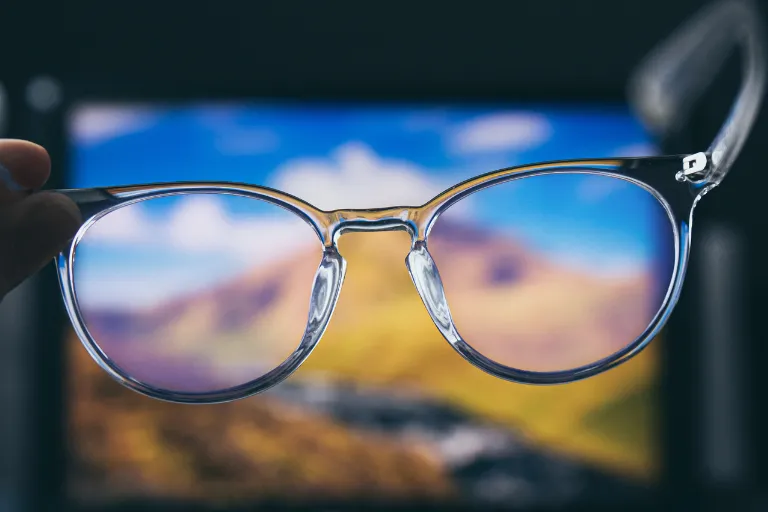
Keypoints:
- Las gafas de luz azul son populares, pero no una solución comprobada para reducir la fatiga visual digital durante el día.
- La tensión ocular digital es causada principalmente por el enfoque prolongado, las parpadeantes reducidas, la mala postura y la iluminación-no solo la luz azul.
- Los estudios científicos muestran resultados mixtos:
- La mayoría de las investigaciones no encuentran ningún beneficio significativo para el cansancio ocular.
- Algunas evidencias apoyan una mejor calidad de sueño cuando se usa antes de dormir.
- Expertos como el AAO recomiendan cambios de comportamiento (regla 20-20-20, parpadear más, ajustes de pantalla) sobre las gafas de luz azul para aliviar la tensión.
- Las reseñas de los usuarios son mixtas-algunos informan mejoras en la comodidad, otros no ven ninguna diferencia.
- El uso vespertino puede ayudar a regular el ritmo circadiano al reducir la exposición a la luz azul que retrasa la liberación de melatonina.
- No existen estándares universales para las afirmaciones de "bloqueo de luz azul"; la calidad de las lentes varía ampliamente.
- La estrategia más efectiva: combinar hábitos saludables de uso de pantallas con un bloqueo de luz azul dirigido para el uso nocturno.
En un mundo donde el tiempo de pantalla ya no es opcional, ¿pueden las lentes tintadas ser la solución para los ojos cansados?
El problema a simple vista
Son las 3:47 de la tarde. Tu cuarta videollamada del día acaba de terminar. Te frotas los ojos. Están secos, con picazón y, de alguna manera, tensos y borrosos. Tal vez sean las luces del techo. Tal vez sea la tercera taza de café. O tal vez, como millones de profesionales digitales, estás experimentando un síntoma común pero no reconocido de la vida moderna: el cansancio ocular causado por una exposición prolongada a la pantalla.
Entra en las gafas de luz azul, esas lentes de moda y color ámbar que probablemente hayas visto en anuncios que prometen un enfoque más nítido, mejor sueño y menos fatiga ocular. Pero, ¿son herramientas respaldadas por la ciencia o solo lentes elegantes sin un beneficio real? Nos propusimos investigar lo que realmente sucede cuando los pones.
Lo que está en juego: Una epidemia moderna de tensión ocular digital
Según la American Diabetes Association, más del 60% de los adultos estadounidenses reportan síntomas de tensión ocular digital (también conocida como síndrome de visión por computadora), un grupo de molestias -sequedad, visión borrosa, dolores de cabeza y tensión en el cuello- causadas por horas de uso de la pantalla. Con un tiempo promedio de pantalla que oscila por encima de 7 horas al día, los riesgos son altos, especialmente para estudiantes, jugadores, trabajadores remotos y niños.
La luz azul emitida por las pantallas digitales suele ser la culpable. ¿Pero es realmente el problema principal?
¿Qué es la luz azul y por qué el alboroto?
La luz azul es parte del espectro de luz visible (400-495 nanómetros), que se encuentra en la luz solar, iluminación led y -más notablemente- pantallas. Tiene longitudes de onda cortas y alta energía, por lo que se dispersa más fácilmente y puede contribuir a un "ruido" visual que cansa el ojo con el tiempo.
Sin embargo, según la Academia Americana de Oftalmología (AAO), no hay evidencia científica de que la luz azul de las pantallas cause daño a los ojos o sea un contribuyente significativo al cansancio ocular.
En cambio, los síntomas surgen de la forma en que usamos las pantallas:
- Largos períodos de concentración estrecha
- Reducción del parpadeo
- Distancias de visualización cortas
- Deslumbramiento y mala iluminación.
También es importante tener en cuenta que las pantallas digitales emiten solo una pequeña fracción de la luz azul que recibimos de la luz solar.
Lo que la ciencia realmente dice
1. Uso diurno: poco o ningún efecto sobre la fatiga ocular
Un estudio controlado aleatorizado de 2021 (American Journal of Ophthalmology) no encontró ninguna mejora significativa en el cansancio ocular entre las lentes que filtran la luz azul y las claras durante dos semanas.
Una revisión sistemática de Cochrane de 2023 se hizo eco de esto:
No hay mejoras mensurables en el rendimiento visual, la comodidad o la productividad laboral.
2. Uso nocturno: posibles beneficios para el sueño
Un RCT de 2021 reportó mejoras modestas en:
- Tiempo que se tarda en conciliar el sueño
- Calidad subjetiva del sueño
- Despertares nocturnos
Estos cambios fueron principalmente percibidos, no reflejados fuertemente en medidas objetivas como el tiempo total de sueño.
En resumen: Las gafas de luz azul pueden ayudar a dormir, pero es poco probable que resuelvan la fatiga ocular diurna.
Opiniones de expertos: Una dosis saludable de Escepticismo
El Dr. Rahul Khurana, portavoz clínico de la AAO, resumió el consenso:
"No hay evidencia científica de que las gafas bloqueadoras de luz azul ayuden con la fatiga ocular. Los síntomas que experimentan las personas se deben a la forma en que utilizan las pantallas, no a la luz azul propiamente dicha".
El NHS y el Consejo de la Visión hacen eco de esta postura, al recomendar ajustes conductuales en lugar de gafas especializadas para la mayoría de los usuarios.
Sin embargo, algunos expertos reconocen un efecto placebo -y en algunos casos, eso no es algo malo. "Si alguien encuentra alivio subjetivo, no lo descarto", dice la doctora Stephanie Erwin, una optometrista con sede en San Francisco. "El consuelo y la seguridad psicológica pueden ser terapéuticos por derecho propio."
Alternativas que realmente funcionan
Antes de invertir en gafas de luz azul, considere probar estas estrategias respaldadas por la investigación:
- Regla 20-20-20: Cada 20 minutos, mira algo a 20 pies de distancia durante 20 segundos.
- Parpadee con frecuencia: Parpadear menos mientras miras las pantallas conduce a la sequedad. Pestañear conscientemente más puede ayudar.
- Usar gotas para los ojos lubricantes: Las lágrimas artificiales pueden reducir significativamente la tensión relacionada con la sequedad.
- Ajustar la posición de la pantalla: Mantenga su monitor ligeramente por debajo del nivel de los ojos y a una distancia de 20-28 pulgadas.
- Optimizar la iluminación: Reduce el deslumbramiento y utiliza fuentes de luz cálidas e indirectas para minimizar la fatiga ocular.
- Usar aplicaciones de tintado de pantalla: Programas como f.lux o Night Shift reducen automáticamente la exposición a la luz azul por la noche.
- La ergonomía es importante: Una mala postura y la altura de la pantalla pueden exacerbar la tensión que imita o agrava el malestar ocular.
Lo que los usuarios realmente están diciendo
En plataformas como Reddit, Amazon y Trustpilot, los comentarios sobre las gafas de luz azul varían:
- Anécdotas positivas: Algunos usuarios reportan sentirse "menos agotados" o "más afilados" después de usar las gafas durante largas sesiones de edición o juegos.
- Críticas mixtas: Otros dicen que ayudan por la noche, pero no notan mucho cambio durante el día.
- Crítica: Muchos creen que los efectos son insignificantes o puramente cosméticos.
Los temas recurrentes incluyen la comodidad, el diseño estético y la incertidumbre de si los beneficios son psicológicos o fisiológicos.
¿Qué pasa con el sueño?
Esta es una área donde las gafas de luz azul muestran más potencial.
La exposición a la luz azul por la noche retarda la liberación de melatonina del cuerpo, interrumpiendo el ritmo circadiano. Los estudios muestran que usar lentes bloqueadores de luz azul 2-3 horas antes de acostarse puede ayudar a mejorar la calidad del sueño, especialmente entre adolescentes y trabajadores por turnos.
Así que, si bien los beneficios para el cansancio ocular pueden ser limitados, existe un respaldo científico para su papel en apoyar patrones de sueño más saludables.
¿Existen estándares para las gafas de luz azul?
Desafortunadamente, la respuesta es no-al menos no universalmente. El término "bloqueo de la luz azul" no está regulado, lo que significa que la calidad y eficacia del producto varían ampliamente.
Busca:
- Claridad de los detalles del corte de longitud de onda (idealmente 400-480 nm)
- Porcentaje de luz azul bloqueada (lentes de día: 10-30%, noche: 80-100%)
- Transparencia sobre el límite de longitud de onda (idealmente bloqueando la luz en el rango de 400-480 nm)
- Políticas de devolución amigables con el cliente, ya que la efectividad es altamente individual
Sin un etiquetado claro o estándares de la industria como la certificación ISO o ANSI, es difícil verificar si una lente cumple con sus promesas.
Veredicto final: ¿Deberías comprar?
Si compras gafas de luz azul específicamente para reducir la fatiga ocular, la evidencia dice: tal vez quieras buscar en otro lugar. Es probable que las estrategias conductuales -como hacer pausas en la pantalla, mejorar la iluminación y ajustar la ergonomía- sean más efectivas.
Sin embargo, si su preocupación es el uso de la pantalla por la noche y la interrupción del sueño, las gafas de luz azul pueden ser beneficiosas cuando se usan constantemente antes de dormir.
En última instancia, no son escudos mágicos-pero bajo las circunstancias correctas, pueden ser una herramienta útil en tu kit de herramientas de bienestar digital.
Aprender Más
- Academia Americana de Oftalmología - Consejos para la distensión ocular
- Consejo de Visión - Informes digitales sobre la tensión ocular
- Estudio internacional de cronobiología sobre melatonina y luz azul
Este artículo de blog tiene como objetivo ser informativo y no debe reemplazar el asesoramiento profesional en salud. Consulte siempre con un profesional de la salud para obtener asesoramiento personalizado.
¿Buscas desarrollar hábitos de uso de pantallas más saludables? Únase a nuestro boletín gratuito para obtener consejos simples y basados en la investigación para reducir el cansancio digital y apoyar un mejor sueño.
Fuentes
- The Vision Council. (2023). Screen Time & Your Eyes. https://thevisioncouncil.org/research-reports
- DataReportal. (2024). Digital 2024: Global Overview Report.
- American Academy of Ophthalmology. (2021). Blue Light and Digital Eye Strain. https://www.aao.org/newsroom/news-releases/detail/blue-light-and-digital-eye-strain
- Rosenfield, M., et al. (2021). Effect of Blue-Blocking Spectacle Lenses on Digital Eye Strain in a Simulated Office Environment: A Randomized Controlled Trial. American Journal of Ophthalmology. https://doi.org/10.1016/j.ajo.2021.02.022
- Lawrenson, J.G., et al. (2020). The Efficacy of Blue-Light Filtering Lenses on Visual Performance and Sleep Quality: A Randomized Controlled Trial. Optometry and Vision Science, 97(9). https://doi.org/10.1097/OPX.0000000000001560
- Burkhart, K., Phelps, J. (2009). Amber Lenses to Block Blue Light and Improve Sleep: A Randomized Trial. Chronobiology International, 26(8). https://doi.org/10.3109/07420520903523719
- American Optometric Association. (2023). Computer Vision Syndrome. https://www.aoa.org
- Heath, M., et al. (2014). Effects of Evening Exposure to Blue-Enriched Light on Sleep and Melatonin in Adolescents. Journal of Adolescent Health, 55(4). https://doi.org/10.1016/j.jadohealth.2014.06.007


 Spanish
  English
  German
  French
  Swedish
So it’s not the blue light, it’s how we use screens. That explains a lot
I wear them and still get tired eyes, so it’s nice to know taking breaks and blinking more actually matters