
Pourquoi les pensées anxieuses arrivent-elles quand tout se calme – et l’habitude quotidienne qui a finalement aidé mon système nerveux à s’éteindre.
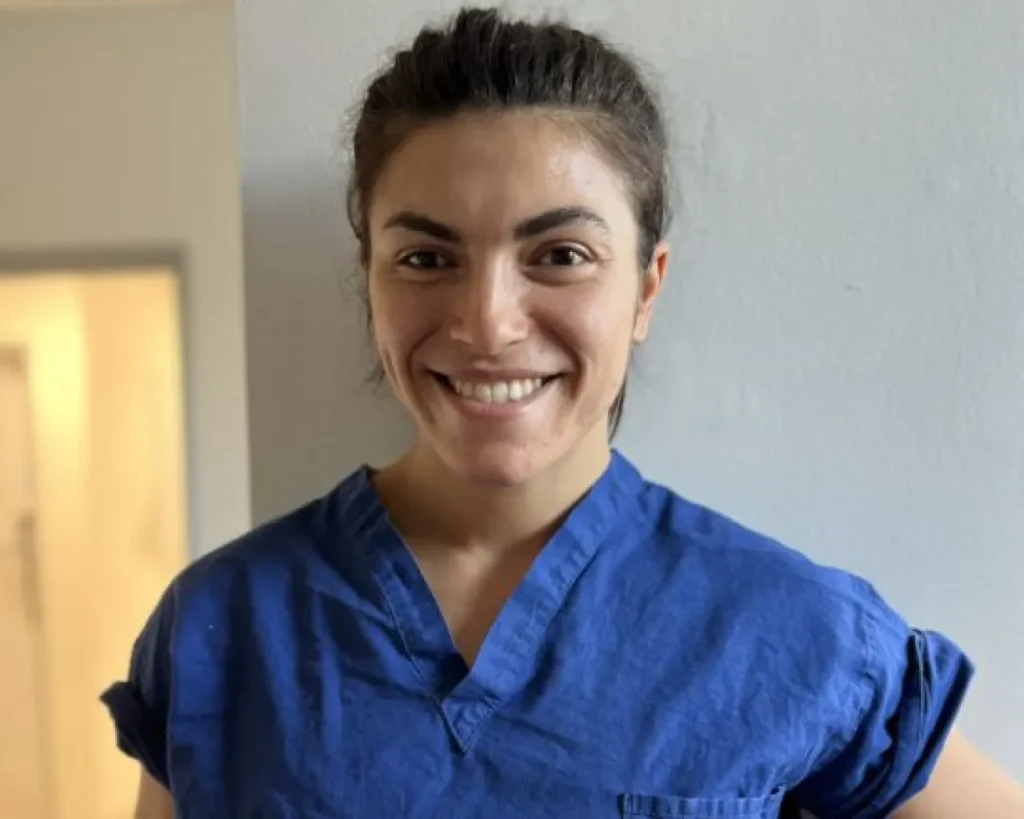
Je dois dire quelque chose que la plupart des infirmières ne disent pas à voix haute.
Les pensées anxieuses n’arrivent pas pendant les moments difficiles.
Il arrive après. Dans la voiture, au supermarché, à la salle de sport. Un dimanche matin où rien ne cloche vraiment.
Pendant des années, je n’ai pas compris pourquoi. Je travaille en soins intensifs. Un athlète CrossFit qui se présente, performe et persévère.
Et pourtant – au moment où tout s’est calmé, quelque chose a fait surface. Un poids que je n’ai pas pu nommer. Des pensées anxieuses qui n’avaient aucune cause évidente. Un système nerveux qui refusait de s’éteindre même quand le service était terminé, les blouses étaient enlevées et j’étais assis sur le canapé à la maison.
Ce n’est pas un problème d’état d’esprit. Ce n’est pas un problème de résilience. C’est un problème de physiologie. Et ce qui m’a le plus surpris, c’est de découvrir qu’il existe déjà une méthode cliniquement étudiée pour atteindre le système même responsable de la désactivation de cet état – pourtant presque personne n’en parlait jamais.
Une fois que j’ai compris ce qui se passait réellement, tout le reste a commencé à avoir un sens.
Ce que je continue de voir – en soins intensifs, à la salle de sport et dans ma propre vie
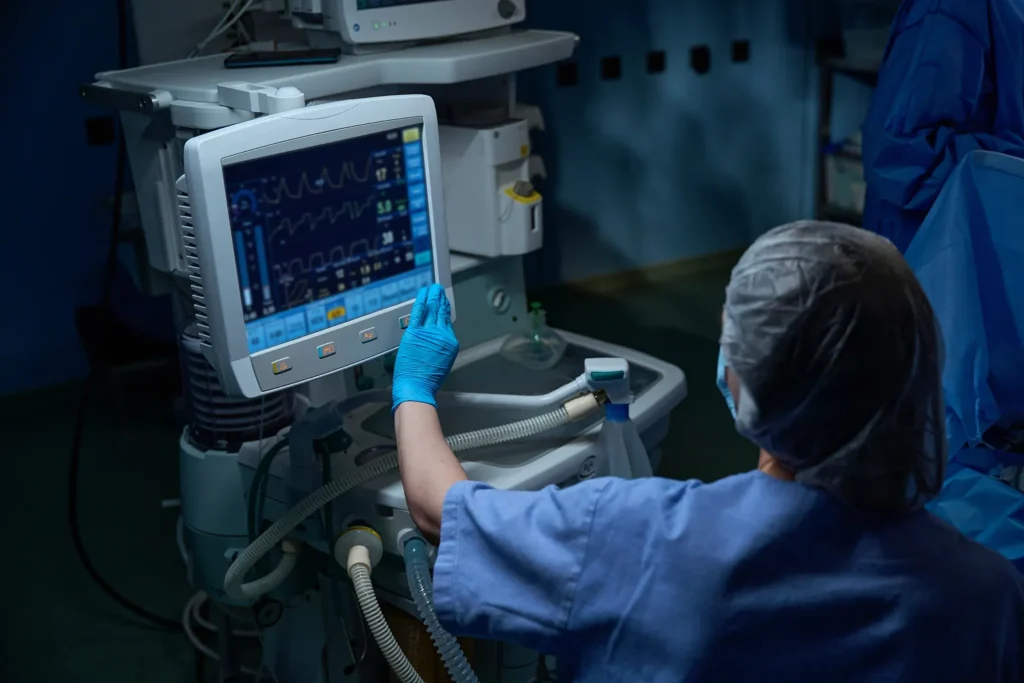
Je travaille comme infirmière cardiothoracique en soins intensifs et agent de liaison pour la famille. Lors d’un quart de travail normal, je peux effectuer des RCP, soutenir une famille pendant le pire moment de leur vie, prendre des centaines de micro-décisions qui affectent les résultats réels et absorber le poids émotionnel des personnes qui ne peuvent pas parler pour elles-mêmes.
Je suis aussi coach en CrossFit. Je m’entraîne à un niveau élite et je travaille avec des athlètes sur leurs propres limites.
Ce que j’ai remarqué – à la fois dans cet environnement et sur le sol du gymnase – est un schéma dont presque personne ne parle.
- L’infirmière termine une garde de 13 heures qui a tout fait correctement. Elle était calme en pleine crise. Elle a performé. Puis elle est montée dans la voiture pour rentrer chez elle et son cœur bat encore la chamade. Elle est toujours en mode infirmière. Elle évalue encore. Elle analyse encore. J’attends toujours la prochaine chose qui nécessite une réponse. Ce n’est pas parce que quelque chose se passe. Parce que son corps ne sait pas que le service est terminé.
- Le soignant équilibre un emploi à temps plein et un parent âgé qui a besoin d’un soutien quotidien. Elle décrit les pensées anxieuses qui arrivent au moment où elle s’assoit - le premier vrai moment de la journée qui lui appartient. Au lieu de se sentir soulagée, elle ressent de la peur. Pour aucune raison, elle ne peut nommer.
- Le parent, l’employé de quarts, la personne qui fait tout correctement - qui obtient enfin un moment de calme et trouve que le calme ne l’autorise pas à se reposer. L’esprit accélère au moment où il cesse d’être occupé.
« Je fais tout ce qu’il faut. Je fais de l’exercice. Je mange bien. J’essaie de me détendre. Et mon cerveau ne s’arrête toujours pas. »
Ce qu’aucun d’eux n’avait entendu, c’est ceci :
Les pensées anxieuses ne sont pas un problème de réflexion ou d’adaptation. Ce n’est pas le signe que quelque chose ne va pas fondamentalement dans la façon dont elles sont construites.
C’est ce qui se passe lorsqu’un système nerveux en état d’alerte maximale ne reçoit pas le signal indiquant que la menace est passée.
Et c’est beaucoup plus courant que la plupart des gens ne l’admettent. Les recherches montrent que les infirmières éprouvent les niveaux de pensées anxieuses les plus élevés parmi tous les travailleurs de la santé. 56 % disent sacrifier leur santé mentale au travail. L’état d’esprit selon lequel « j’aide les autres, je n’ai pas besoin d’aide » est profondément ancré – et cela signifie que la plupart des gens gèrent cette situation de manière totalement autonome, avec des approches qui n’ont jamais été conçues pour l’état du système nerveux dans lequel ils se trouvent.
La chose que personne n’explique sur les pensées anxieuses
Voici quelque chose que j’aurais aimé qu’on me dise des années avant mon burnout.
Les pensées anxieuses ne sont pas toujours la cause. Très souvent, elles en sont le résultat.
Lorsque vous travaillez dans un environnement de haute alerte – où les enjeux sont réels, où les demandes sont constantes, où il n’y a pas de place à l’erreur – votre système nerveux fonctionne selon ce que les chercheurs appellent dominance du système nerveux sympathique (SNS). Combat-ou-fuite. On. Prêt. Recherche la prochaine chose qui nécessite une réponse.
C’est exactement ce que le travail exige. C’est ce qui fait une bonne infirmière dans un environnement à enjeux élevés.
Le problème, c’est ce qui se passe quand le service prend fin.
Le SNS n’a pas d’interrupteur d’arrêt automatique. Il ne sait pas que vous avez quitté l’hôpital. Il ne sait pas que les enfants sont au lit, ou que la séance de gym est terminée, ou qu’on est dimanche après-midi et que rien n’est vraiment menaçant.
Quand le tonus vagal (la mesure de l’efficacité avec laquelle le système nerveux peut se déplacer entre les états) est chroniquement supprimé par le stress accumulé, le travail posté, la charge émotionnelle ou la surcharge prolongée – le SNS reste dominant.
Et les pensées anxieuses continuent de venir. Dans la voiture, au supermarché, à la salle de sport. Le dimanche tranquille. Ce n’est pas parce que quelque chose ne va pas. Parce que le système qui est censé les calmer ne fonctionne plus comme il le devrait.

Les pensées anxieuses qui surviennent lorsque tout finit par se taire ne sont pas le signe que quelque chose ne va pas chez vous.
C’est un signe que votre système nerveux n’a pas reçu le signal qu’il attendait.
Ce qui m’a laissé avec une question que je ne pouvais pas arrêter de poser : y a-t-il un moyen direct de l’envoyer ?
« J’ai tout essayé. » La plupart des gens l’ont fait. Voici ce qui manque réellement.
Tout ce que la plupart des gens essaient pour des pensées anxieuses a une valeur réelle.
Après mon burn-out, j’ai essayé la plupart du temps moi-même. Voici ce que j’ai trouvé.
- Rituels de décompression post-équipe - changer de vêtements, préparer du thé, se promener. Utile pour marquer la transition. Mais lorsque le système nerveux est en pleine surexcitation sympathique, une tasse de thé n’atteint pas le système générant des pensées anxieuses. Le rituel aide l’esprit conscient. Le corps est encore à l’hôpital.
« Je ne peux pas passer du mode travail au mode maison. Peu importe ce que j’essaie. »
- Techniques de respiration (4-7-8, respiration en boîte) - ceux-ci activent le nerf vague et peuvent modifier l’état du système nerveux lorsqu’ils sont utilisés de manière constante. Mais ils nécessitent de la concentration, du calme et plusieurs minutes d’attention ininterrompue. Lors d’une pause à l’hôpital avec des collègues autour, ou dans un gymnase entre les séries, cette fenêtre existe rarement.
- Tenir un journal - aide à traiter les pensées les jours où la capacité émotionnelle est disponible. Après un quart de travail de 13 heures où vous avez absorbé le poids de trois familles en crise, rester assis avec une page blanche et essayer d’accéder à des sentiments nécessite exactement ce que vous avez déjà dépensé.
- Le froid plonge - Je les utilise, j’y crois, ils fonctionnent. Mais une petite piqûre après un quart de nuit signifie s’installer, entrer, sortir, s’échauffer, se changer. C’est une production de 25 minutes les jours où il ne reste plus rien. La plupart des gens commencent, la plupart s’arrêtent.
- Exercice - Je m’entraîne dur et ça aide. Mais l’exercice augmente l’activation sympathique avant de la diminuer. Pour un système nerveux déjà en train de chauffer, une mauvaise séance au mauvais moment peut aggraver les pensées anxieuses avant qu’elles ne s’améliorent.
- Thérapie - la chose la plus précieuse que j’aie faite pour ma santé mentale à long terme. Mais la thérapie nécessite des rendez-vous, et la marge de manœuvre mentale doit être approfondie. Pendant les semaines où je faisais des quarts de travail consécutifs, j’ai constaté que la bande passante était une source de stress en soi.
Rien de tout cela n’est faux. J’en utilise encore la plupart.
Le problème n’est pas qu’ils ne fonctionnent pas. C’est qu’ils ont tous besoin d’une version de toi que les pensées anxieuses ont déjà rendue indisponible.
Le calme pour méditer. L’énergie pour faire de l’exercice. La largeur de bande émotionnelle pour tenir un journal. Le temps de plonger.
Ce dont j’avais besoin était quelque chose qui fonctionnait avant que je n’aie réussi à trouver l’une de ces choses.
La question qui a tout changé
Je me souviens d’être assis dans la voiture après un service de nuit – ma tenue est toujours allumée, le moteur en marche, je ne peux pas encore entrer. Je suis juste assis là. Je ne pense à rien de spécifique. Je ne suis tout simplement pas encore prêt à être une personne.
C’est arrivé souvent. Et j’ai commencé à réaliser que ce n’était pas de la fatigue. C’était autre chose. Quelque chose qui ne s’est pas soulevé même après le sommeil, même après une journée de repos, même après une bonne séance d’entraînement.
Au moment où je suis revenu de l’épuisement professionnel – quatre mois de congé, incapable de comprendre pourquoi je ne pouvais pas fonctionner – j’avais arrêté de demander : « Que devrais-je faire différemment ? »
Et a commencé à demander : « Quel système produit ces pensées – et pourquoi ne s’est-il pas éteint ? »
Cette question m’a ramené, à chaque fois, au même endroit.
Nerf vague (le mot latin « vagus » signifie « errant », c’est-à-dire le plus long nerf du corps, qui s’étend du tronc cérébral jusqu’au cou, à la poitrine et à l’abdomen, reliant le cerveau directement au cœur, aux poumons, à l’intestin et au système immunitaire).
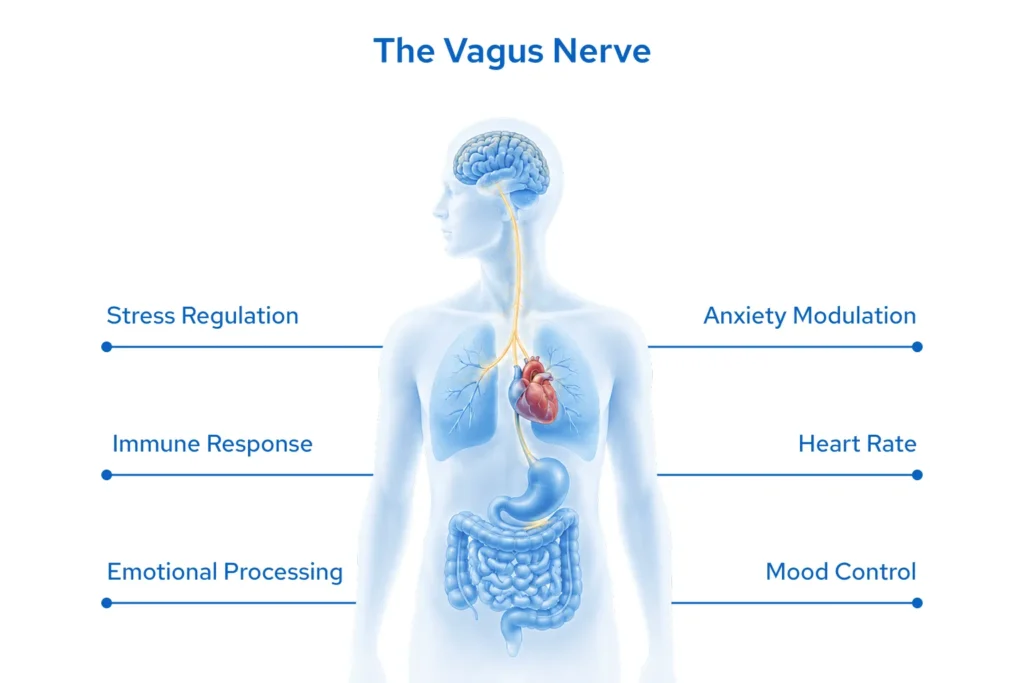
C’est la voie principale par laquelle le système nerveux passe de la surstimulation sympathique à parasympathique (SNP – repos et récupération) état. Lorsque le tonus vagal est sain, le changement se produit naturellement une fois la demande passée. Les pensées anxieuses se taisent – non pas parce que vous les avez réprimées, mais parce que le système qui les a générées a cessé d’exécuter une réponse sous forme de menace.
Lorsque le tonus vagal est chroniquement supprimé – par le travail posté, la charge émotionnelle ou une surcharge prolongée – cette transition cesse de se produire. Le SNS reste dominant. Le corps reste tendu. Les pensées continuent d’arriver. Même le dimanche après-midi. Même quand tout va bien.
Serait-il vraiment possible d’atteindre ce nerf directement – sans chirurgie, sans clinique, sans ordonnance ?
Pourquoi j’étais sceptique – et ce que les données ont montré
En tant qu’infirmière, je ne prends pas les allégations de santé pour argent comptant. Je cherche des preuves.
Quand j’ai découvert pour la première fois des recherches sur la stimulation du nerf vague (VNS), ma question immédiate était : où sont les études évaluées par des pairs ?
L’approche établie était chirurgicale – un dispositif implanté dans la poitrine. Utilisé pour l’épilepsie et les pensées dépressives résistantes à la thérapie. Complètement hors de propos pour quelqu’un qui essaie de décompresser après un quart de nuit.
Puis j’ai trouvé quelque chose auquel je ne m’attendais pas.
Des chercheurs avaient identifié une branche du nerf vague accessible depuis l’extérieur du corps – au niveau de l’oreille externe, sur un petit morceau de cartilage appelé le tragus. IRM fonctionnelle (fMRI) des études ont confirmé que la stimulation de cet emplacement active les mêmes voies du tronc cérébral que la SNV chirurgicale – ce qui en fait le seul emplacement externe cliniquement établi où le nerf vague peut être atteint directement sans chirurgie.
Other scales : stimulation transcutanée du nerf vague auriculaire (taVNS – « transcutanée » signifiant à travers la peau, « auriculaire » signifiant via l’oreille). Signaux électriques de bas niveau. Pas d’aiguilles. Pas de clinique.
J’ai parcouru la recherche publiée. Études examinées par des pairs, contrôlées contre placebo. Pas de contenu sur le bien-être – données cliniques.
C’est à ce moment-là que j’ai arrêté de demander si cela semblait plausible et que j’ai commencé à regarder les chiffres.
Dans une étude contrôlée contre placebo, les pensées anxieuses ont été réduites par 35 % sur 10 jours – et l’effet s’est maintenu un mois après la fin de l’étude.
En tant qu’infirmière, je sais ce que signifie une réduction relative de 35 % dans une étude contrôlée par placebo. Ce n’est pas une affirmation de bien-être. C’est une réponse physiologique mesurable.
Je ne cherchais pas quelque chose qui nécessitait des symptômes parfaits ou un autre rituel à ajouter à une liste déjà complète.
Je cherchais quelque chose qui fonctionnait au niveau du système lui-même. Et c’était la première chose que j’ai trouvée qui fonctionnait.
Mais il restait un problème.
J’avais besoin de quelque chose que je pourrais vraiment utiliser – pendant une pause à l’hôpital, dans un sac de sport, sans visite à la clinique, sans 30 minutes de préparation.
Je l’ai trouvé. Et c’était plus simple que prévu.
Ce que la recherche montre
Avant de commencer à l’utiliser moi-même, j’avais besoin de voir si les preuves correspondaient à ce que je vivais.
Pas des chiffres parfaits. Suffisamment de preuves pour que j’arrête de rejeter complètement l’idée.
| Résultat | Métrique |
| −35% | Pensées anxieuses (étude contrôlée versus placebo de 10 jours, maintenue un mois après le traitement) |
| −45% | États dépressifs / humeur maussade (étude de 10 jours) |
| −48% | Fatigue |
| +30% | Qualité du sommeil |
| +61% | Activité du nerf vague (dans les 5 minutes suivant l’utilisation) |
| −78% | Marqueurs inflammatoires IL-6 (étude de 3 mois) |
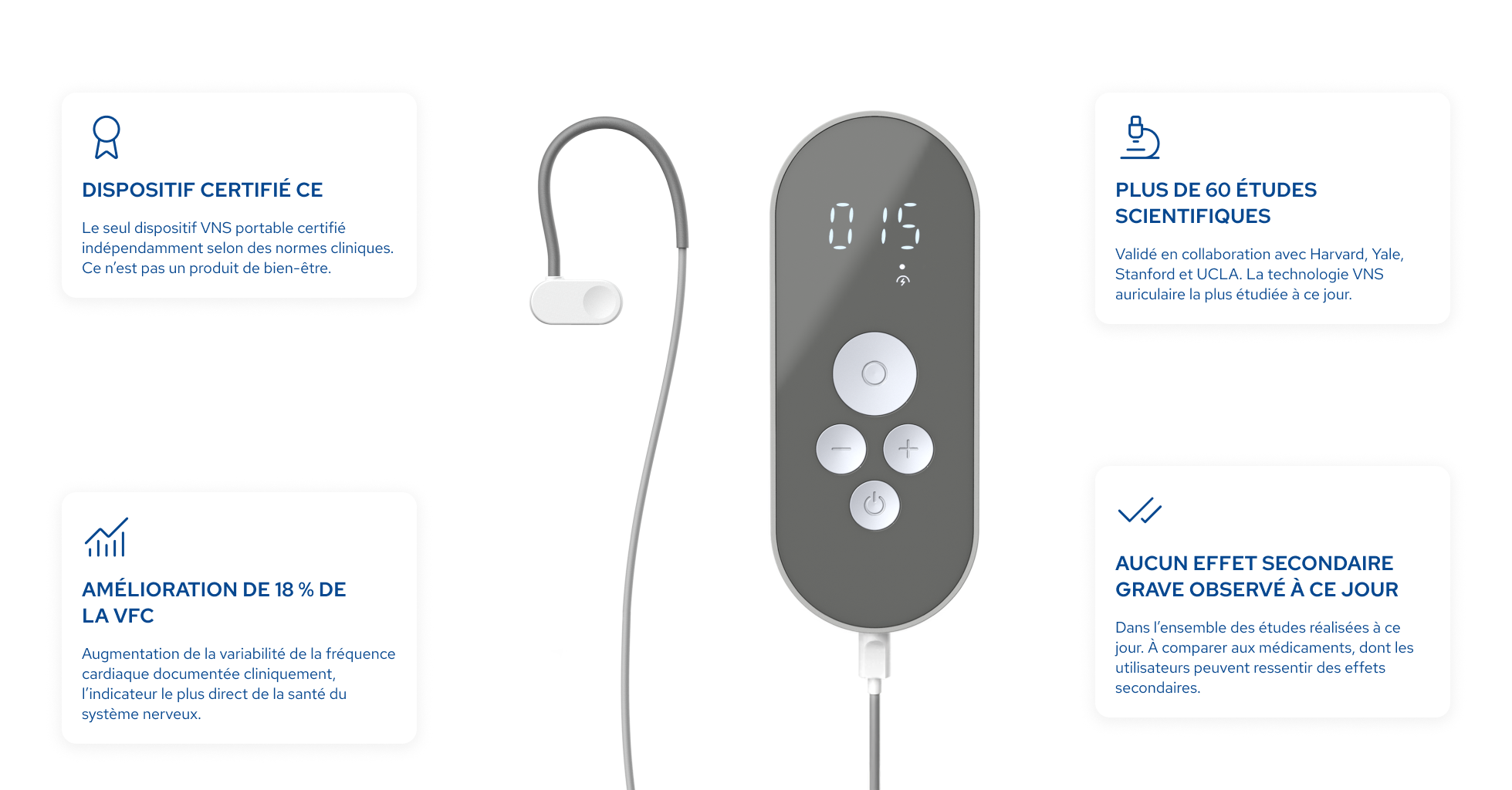
Plus de 60 études cliniques terminées.
Cela m’a donné l’assurance que les chercheurs ne se contentaient pas d’examiner si cela fonctionnait, mais aussi s’il était sûr à utiliser.
Aucun événement indésirable grave signalé à ce jour
Pas une seule statistique impressionnante. Un schéma entre différentes études pointe dans la même direction.
Moins de pensées anxieuses. Meilleur sommeil. Plus d’énergie. Un système nerveux plus calme qui pourrait réellement s’éteindre.
Tous simultanément – parce qu’ils partagent le même système réglementaire sous-jacent.
Cette réduction de 35 % des pensées anxieuses a été le premier chiffre qui m’a fait arrêter de rejeter cela comme une autre tendance de bien-être.
L’appareil qui a produit ces résultats s’appelle Nurosym.
L’habitude quotidienne qui a finalement fait une différence
Ces chiffres m’importaient car j’avais besoin de savoir que je ne me fiais pas à une autre tendance du bien-être. En tant qu’infirmière, j’ai vu trop de clients dépenser de l’argent pour des choses qui n’étaient pas fondées sur des preuves. Je n’allais pas faire la même chose.
Pendant que je lisais, un appareil continuait à apparaître tout au long de la recherche.
Nurosym.
Pourquoi celui-ci ? Parce qu’il s’agissait du dispositif de stimulation vagale portable le plus cliniquement étudié disponible – et non d’un gadget grand public accompagné d’une allégation de bien-être.
Nurosym est un appareil taVNS marqué CE développé par Parasym – une société basée au Royaume-Uni avec plus de 10 ans de R&D. Soutenu par plus de 150 instituts de recherche reconnus internationalement et plus de 60 études cliniques terminées. Recommandé par plus de 1 000 professionnels de santé.
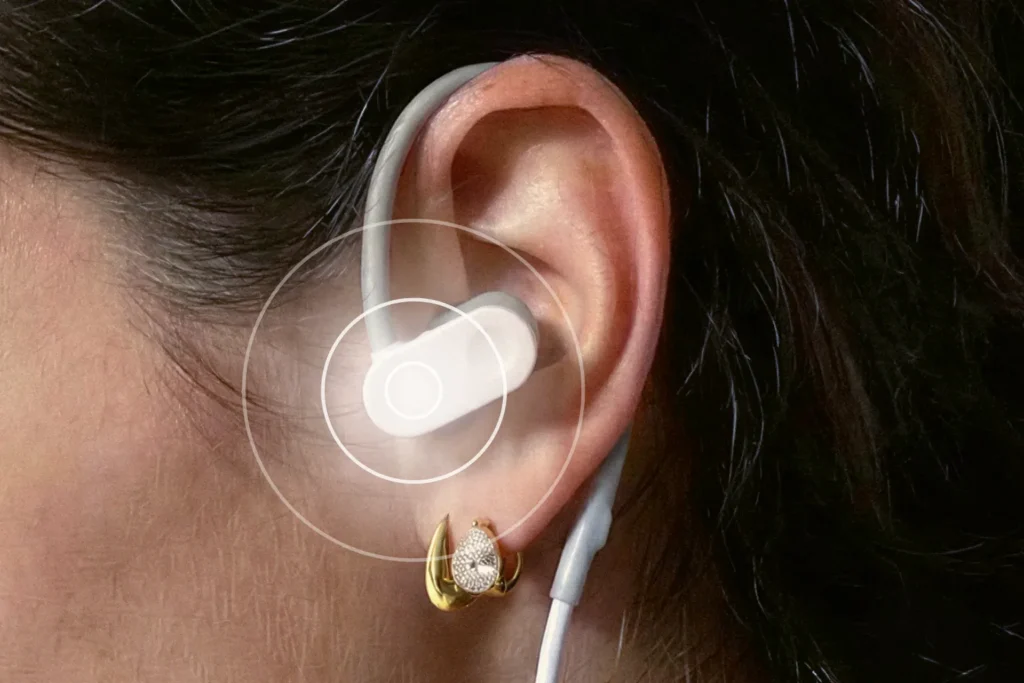
Il utilise un code propriétaire Technologie AVNTTM (Auricular Vagal Neuromodulation Therapy – un signal électrique calibré avec précision délivré par le tragus de l’oreille gauche, stimulant directement la branche auriculaire du nerf vague).
Dans la pratique, il se fixe à l’oreille avec un petit câble – discret, léger, simple.
Comment ça marche
Nurosym n’est pas un substitut à la thérapie, au travail respiratoire ou à quoi que ce soit d’autre qui aide déjà. Je fais encore toutes ces choses.
Ce que cela ajoute, c’est un accès direct au système sous-jacent – sans que vous ayez besoin d’être calme d’abord, ou d’avoir une pièce silencieuse, ou de l’énergie que vous n’avez peut-être pas.
Il vise à activer directement le nerf vague – soutenant le passage de la suralimentation sympathique à la récupération parasympathique, sans vous obliger à trouver d’abord un état que vous n’avez pas pu atteindre.
Comment je l’utilise réellement

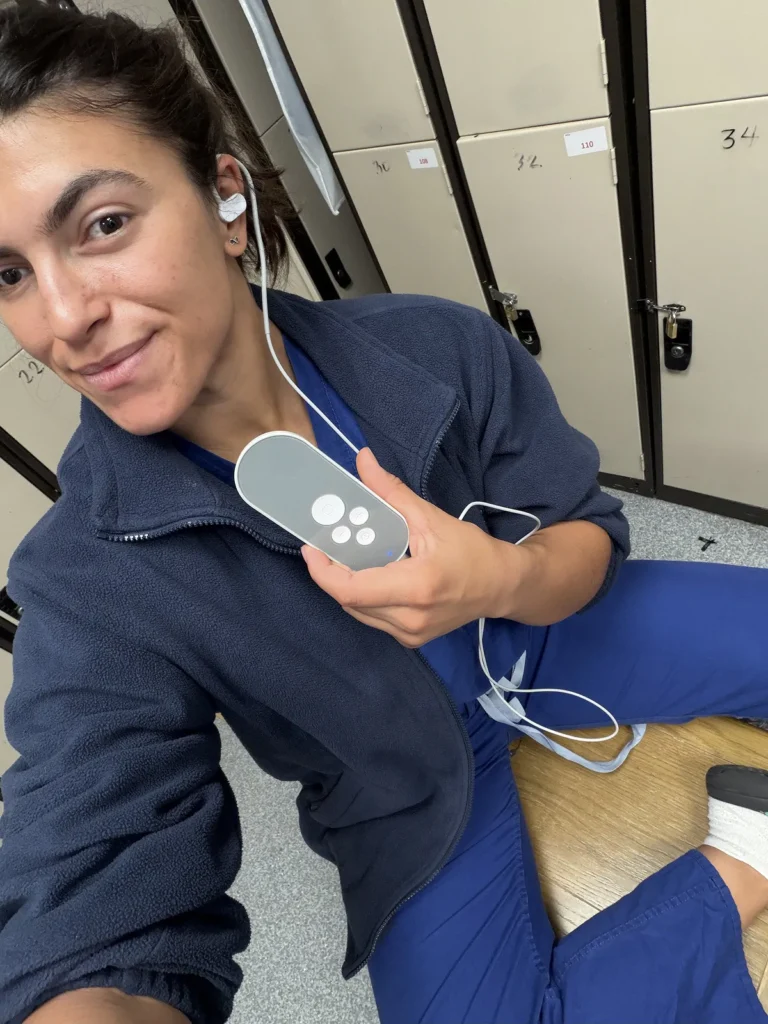
Je le porte dans n’importe quel sac que j’ai – sac de travail, sac d’entraînement. Il va partout, comme si j’emballais mon déjeuner.
Au travail, je l’utilise pendant ma pause du matin. Je m’assois dans notre salle d’ébranlement, j’attache le lecteur et je lis ou je reste simplement assis tranquillement pendant 15 minutes. Parfois au déjeuner, si j’ai manqué le matin. Les jours d’entraînement, entre les séances ou pendant que je mange. À la maison – pendant que je lis, je repasse, je fais la vaisselle, tout ce qui ne me prend pas les deux mains.
Il ne nécessite pas de configuration. Il ne nécessite pas de décision quant à savoir si j’ai l’énergie. Cela correspond aux 15 minutes dont je dispose déjà, pas à l’heure que je n’ai pas.
Ce que j’ai remarqué après quelques semaines : j’ai commencé à pouvoir méditer. Pas parce que je suis devenu meilleur dans ce domaine. Parce que lorsque le système nerveux a bénéficié d’un soutien direct pendant la journée, l’immobilité du soir donne en fait l’impression d’une immobilité – au lieu de l’instant où tout refait surface en même temps.
Ce qui change – Et quand
Les changements arrivent discrètement. Pas de manière spectaculaire.
« Les pensées anxieuses d’avant le quart de travail sont encore parfois là. Mais elles ne restent plus toute la nuit dans ma poitrine. »
« Je suis monté dans la voiture après le travail et j’ai réalisé que je ne rejouais pas au quart de travail. Pour la première fois depuis des mois ».
« Mon petit ami a dit que j’avais retrouvé mon apparence. Ça s’est passé différemment de ce à quoi je m’attendais. »
« Les pensées anxieuses du dimanche... ont simplement cessé d’arriver. Je ne m’en suis pas rendu compte pendant un moment. Puis je l’ai fait. »
Ce sont les signaux d’un système nerveux qui commence à se réguler. Graduel. Incrémental. Réel.
Pourquoi les pensées anxieuses sont rarement la seule chose qui change
Quelque chose auquel je ne m’attendais pas – et que la plupart des gens n’attendent pas non plus.
La même suppression du tonus vagal qui maintient en vie les pensées anxieuses entraîne également la fatigue que le sommeil ne répare pas, le sommeil qui ne se rétablit pas et l’humeur maussade qui arrive sans raison.
Les personnes qui commencent à utiliser le Nurosym pour des pensées anxieuses remarquent – presque comme une réflexion après coup – qu’elles dorment plus profondément. Que le crash énergétique de l’après-midi s’est atténué. Que l’irritabilité en arrière-plan a chuté. Qu’il reste quelque chose à la fin de la journée qui n’était pas là avant.
Ce n’est pas une coïncidence. C’est le même système qui commence à fonctionner de nouveau. Lorsque le nerf vague commence à fonctionner comme il se doit, plusieurs choses changent simultanément – parce qu’elles étaient toutes bloquées par la même chose.
Est-ce que c’est bien pour toi ?
Si tout cela vous est familier – les pensées anxieuses qui arrivent dans le calme, l’incapacité à se déconnecter complètement, les approches qui aident partiellement mais jamais complètement – cela vaut la peine d’être exploré sérieusement.
Une garantie de remboursement de 30 jours signifie aucun risque financier. Soit cela fait une différence significative, soit vous le retournez.
Nurosym peut valoir la peine d’être considéré si :
- Des pensées anxieuses surgissent lorsque les choses se calment – pas pendant les demandes, mais après.
- Vous travaillez dans le domaine de la santé, par quarts ou dans tout environnement en alerte élevée et avez du mal à décompresser
- Vous prenez soin des autres professionnellement ou personnellement - et les pensées anxieuses vous suivent chez vous
- Vous avez essayé la respiration, la tenue d’un journal ou la méditation et vous les avez trouvés difficiles à maintenir de manière constante.
- Vous cherchez quelque chose qui fonctionne dans les 15 minutes dont vous disposez réellement
Nurosym ne convient pas à tout le monde. Si vous avez un dispositif cardiaque implanté tel qu’un stimulateur cardiaque, êtes enceinte, avez eu un événement cardiaque grave au cours des cinq dernières années ou avez moins de 18 ans, veuillez ne pas l’utiliser. Comme pour toute nouvelle intervention, il vaut toujours la peine de vérifier d’abord avec votre professionnel de santé si vous avez un état médical existant.
S’il y a une chose que je veux que vous reteniez de cet article, c’est celle-ci :
Les pensées anxieuses qui arrivent quand tout finit par se taire ne sont pas un signe que tu es brisé. Ce n’est pas un signe que vous êtes faible ou que vous n’avez pas assez essayé.
C’est un système nerveux qui fonctionne à plein régime – et n’a pas encore reçu le signal qu’il peut s’arrêter en toute sécurité.
Aujourd’hui, le service se termine encore. J’enlève toujours ma blouse. Je reste assis dans la voiture avant de rentrer chez moi.
La différence, c’est que mon système nerveux ne reste plus là avec moi.
C’est ce que 15 minutes, dans une salle de pause, dans la journée que vous avez déjà, peuvent faire.
Cet article reflète mon expérience personnelle et mon évaluation des preuves cliniques disponibles. Il se peut que je reçoive un accord de parrainage pour des achats effectués via les liens de cet article. Je ne recommande que les approches que j’utilise moi-même et que j’ai examinées attentivement. Ce n’est pas un avis médical – consultez toujours un professionnel de santé qualifié avant de commencer toute nouvelle intervention. Le chiffre de 35 % reflète la variation relative par rapport au placebo dans une étude clinique évaluée par des pairs ; les résultats individuels peuvent varier.
– Olivia Tompkins, infirmière en réanimation cardiothoracique, coach CrossFit L1 et défenseure du bien-être | Londres
Cet article de blog est fourni à titre informatif et ne remplace pas l’avis d’un professionnel de santé. Consultez toujours un professionnel de santé pour obtenir des conseils personnalisés..
Références
- Zheng S, et al. Transcutaneous auricular vagus nerve stimulation reduces anxious thoughts and improves attention: placebo-controlled study. Stimulation Cérébrale. 2024.
- Verbanck P, et al. Transcutaneous auricular vagus nerve stimulation (taVNS) effects on fatigue, mood and autonomic function. Parasym Ltd peer-reviewed data. 2021.
- Dolcini J, et al. Effects of taVNS on sleep quality and widespread pain: randomised controlled trial. Parasym Ltd. 2025.
- Breit S, et al. Vagus nerve as modulator of the brain-gut axis in psychiatric and inflammatory disorders. Frontiers en psychiatrie. 2018;9:44. https://doi.org/10.3389/fpsyt.2018.00044
- Kaniusas E, et al. Current directions in auricular vagus nerve stimulation: a physiological perspective. Frontiers in Neuroscience. 2019. https://doi.org/10.3389/fnins.2019.00854
- Farmer AD, et al. International consensus on minimum reporting standards for transcutaneous vagus nerve stimulation research. Frontiers en neurosciences humaines. 2021. https://doi.org/10.3389/fnhum.2020.568051
- Redgrave J, et al. Safety and tolerability of transcutaneous vagus nerve stimulation in humans: systematic review. Stimulation Cérébrale. 2018;11(6):1225–1238. https://doi.org/10.1016/j.brs.2018.08.010



 French
  English
  German
  Spanish
  Swedish