
Four certified devices, ranked on evidence rather than marketing. What separates them, and what the price tags don’t tell you.
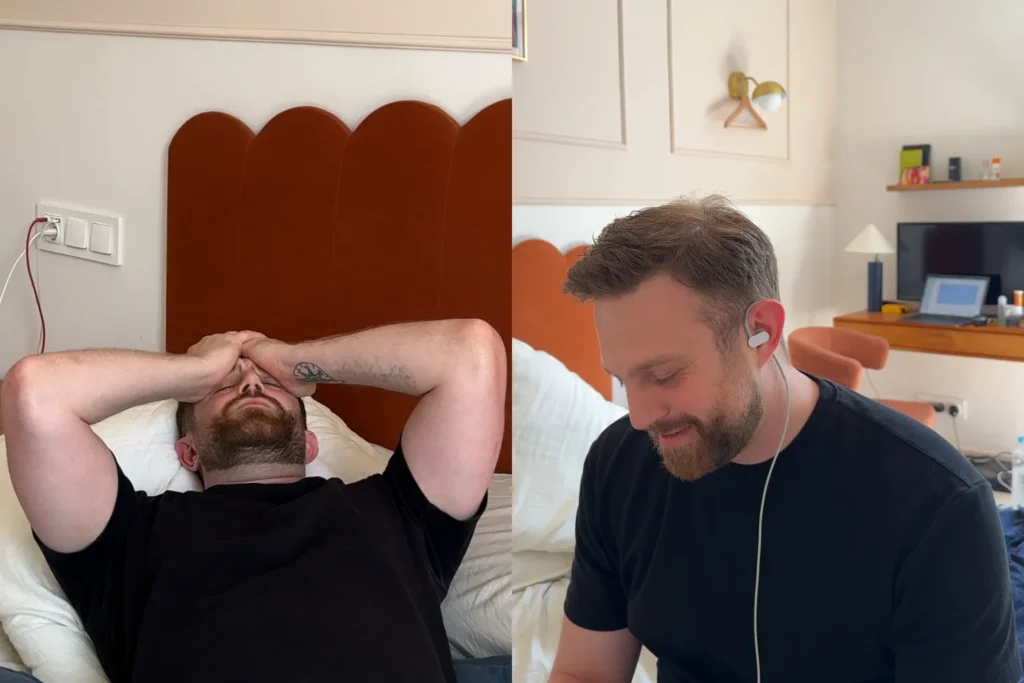
You’ve already worked out this isn’t a discipline problem.
Sleep is dialled, alcohol’s gone, zone 2 three times a week.
Your HRV climbed for about four months and then flattened.
Then you found the research on vagal tone, and realised the number you’ve been tracking every morning is vagal tone.
So now you’re looking at four devices… lost.
Here’s what separates them.
Why the Vagus Nerve?
Your HRV score is a direct readout of vagal tone.
RMSSD and high-frequency power are the standard non-invasive proxies for cardiac vagal activity.
Which means optimising HRV and stimulating the vagus nerve aren’t two projects. They’re the same one.
When vagal signalling is weak, the number stalls:
- RMSSD stays flat regardless of how long you slept
- Recovery after hard sessions drags past what your training load predicts
- A stressful Tuesday still shows up in Thursday's reading
- Your baseline hasn't moved in eight months
Here’s the part that matters:
Every other HRV intervention works indirectly, this is the only one that doesn’t.
Cold exposure, breathwork, cutting alcohol, sleep hygiene, zone 2… All of them raise HRV by removing load or nudging the system from the outside.
Direct stimulation acts on the pathway itself.
That’s why it keeps working after the input-side gains are exhausted, and exhausting the input side is exactly what a plateau is.
What Actually Separates These Four Devices
1. Evidence base.
Three of the four devices on this list have never published an HRV outcome.
Some have no published efficacy research at all. That gap matters more here than in any other category, because HRV is the one thing you can verify yourself.
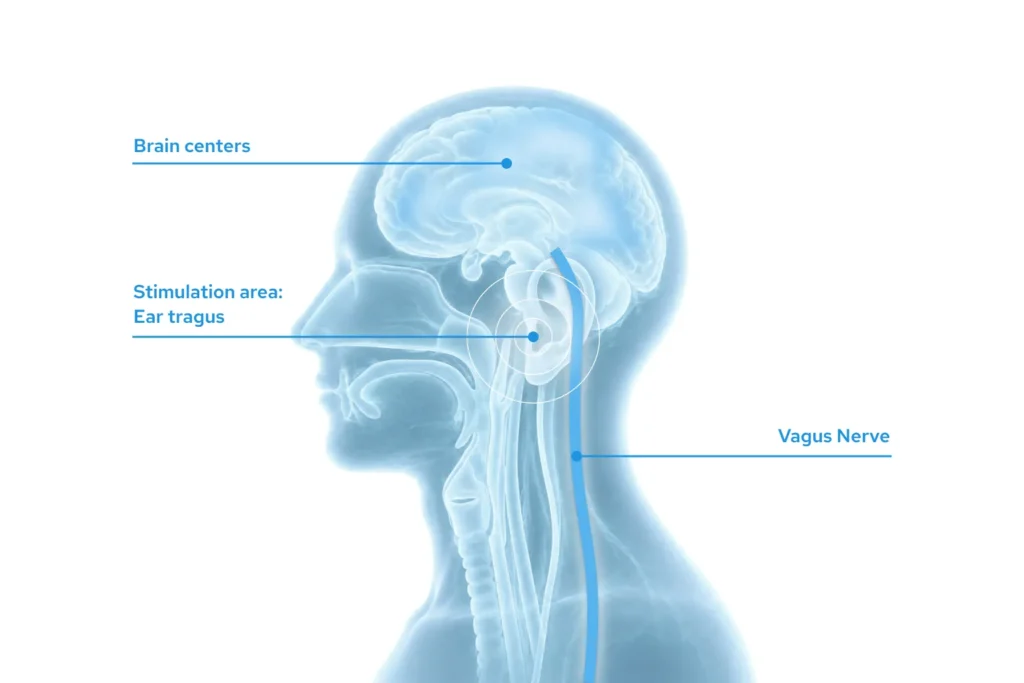
2. Placement. Ear devices target the tragus, the only spot a cranial nerve reaches the surface. Neck devices work near the carotid. Same nerve, different side effects.
3. Consumables. Two of these need a gel or spray to work at all.
The Four Devices: An Honest Ranking
#1: Nurosym
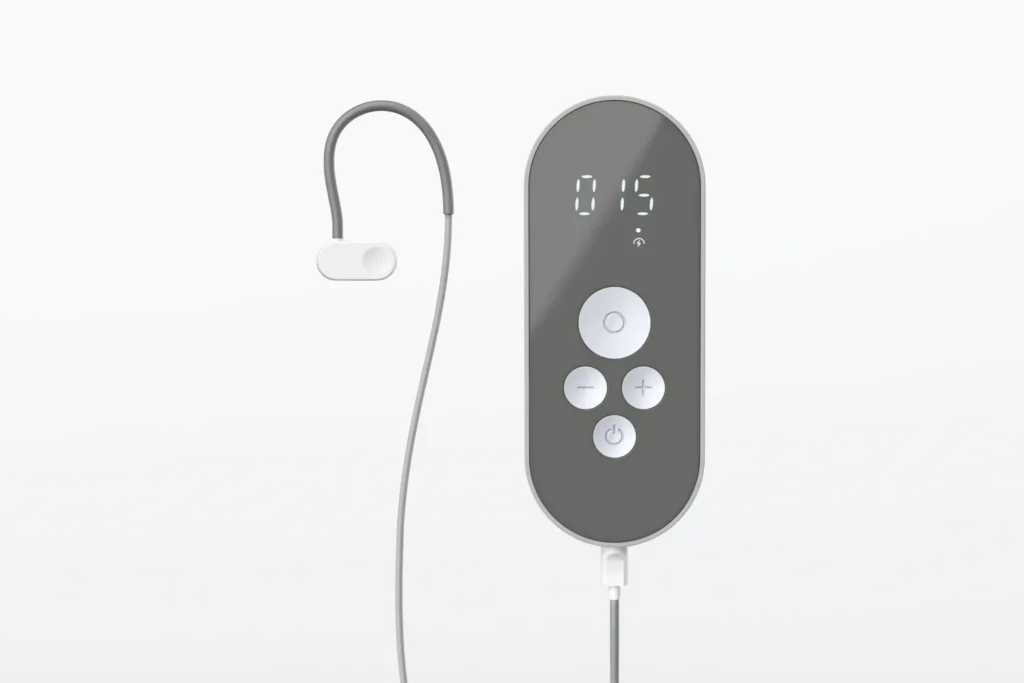
€700 (research subsidy available) · Auricular · AVNT™ by Parasym
Nurosym has 60+ completed scientific studies supporting its mechanism, Pulsetto and Sensate have none.
- Studies using AVNT™ technology document a 61% improvement in vagal tone metrics
- A 2019 randomised controlled study found measurable increases in cardiac vagal activity during and after auricular stimulation
- Zero serious adverse events reported in studies to date
- CE-marked, verified by independent third-party assessment
- Over 5,000,000 supervised stimulation sessions completed; used by 1,000+ health professionals
- No consumables. Buy it once
- 30-day evaluation period
Best for: anyone whose HRV has plateaued despite good sleep, clean training and controlled stress load.
#2: Truvaga Plus
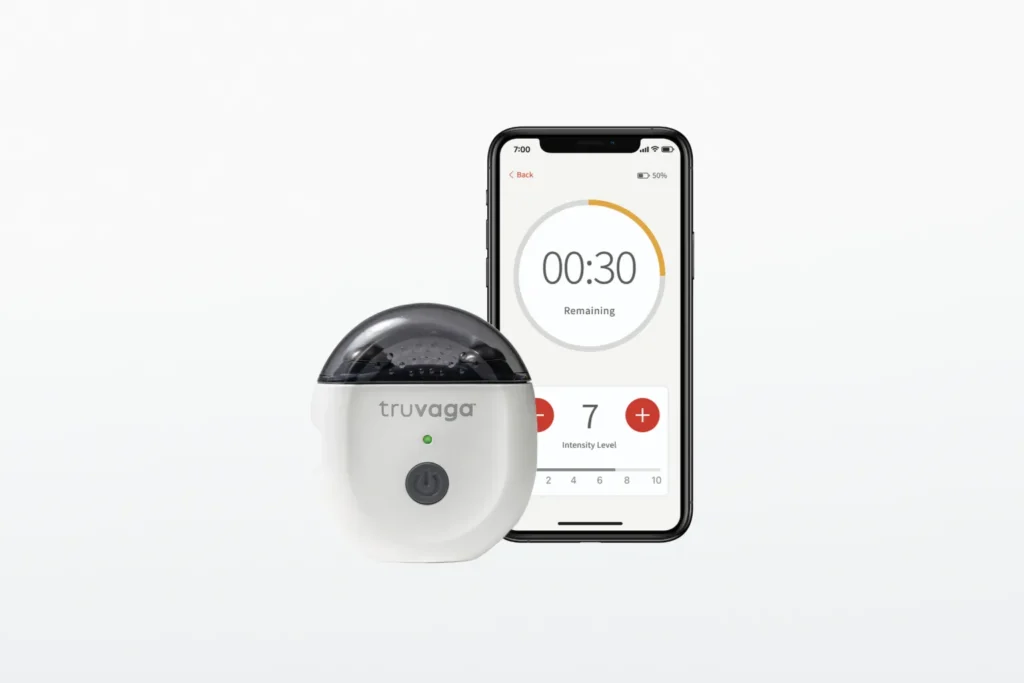
$544+ (device 499,spray~45/year) · Cervical, handheld
Shares its technology lineage with gammaCore, which holds FDA clearance for headache. Rapid parasympathetic effects, simple protocol.
Neck-worn devices carry a risk of facial droop and muscle spasms that ear devices don’t.
- Reported adverse effects in a subset of users include muscle spasms, facial droop, lip pull and localised headache
- The FDA clearance is for headache, not for HRV or autonomic optimisation
- No published HRV outcome data, which is the only metric you'd be buying it on
- Not suitable with pacemakers, cardiac symptoms or recent cardiovascular events
#3: Pulsetto
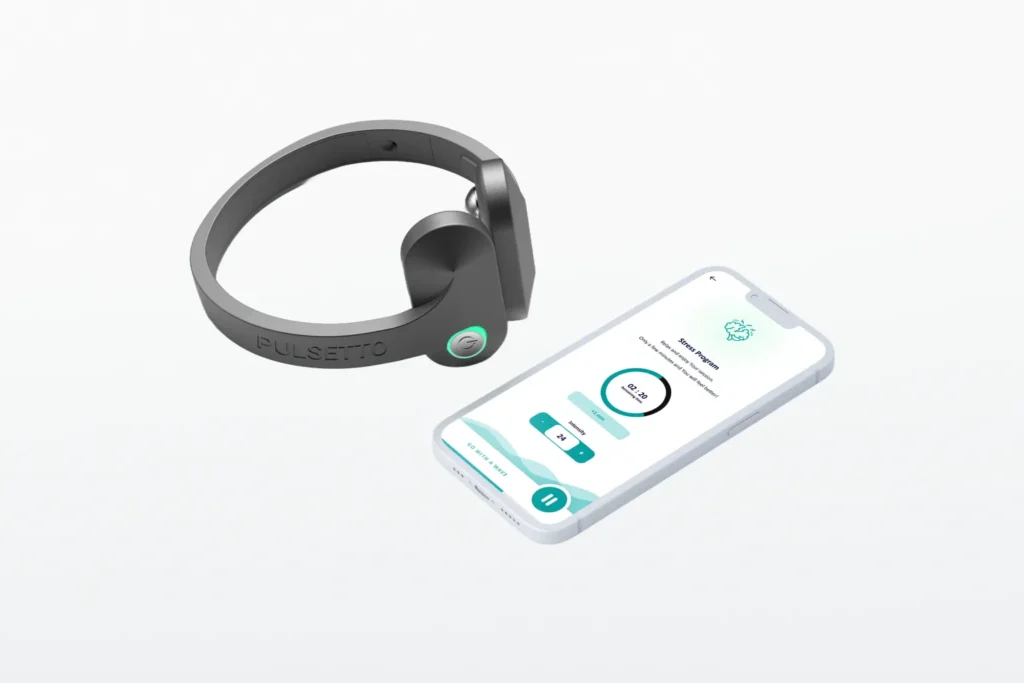
$350–371 (device $269, gel $81–102/year) · Cervical collar
Hands-free design, HSA and FSA eligible, two-year warranty.
The cheaper devices need gel or spray you’ll rebuy every year.
- We found no published peer-reviewed HRV outcome studies
- Fit problems are frequently reported, particularly on smaller necks, which means inconsistent nerve contact and inconsistent data
- Over three years the gel brings the real cost close to the devices it undercuts
#4: Sensate
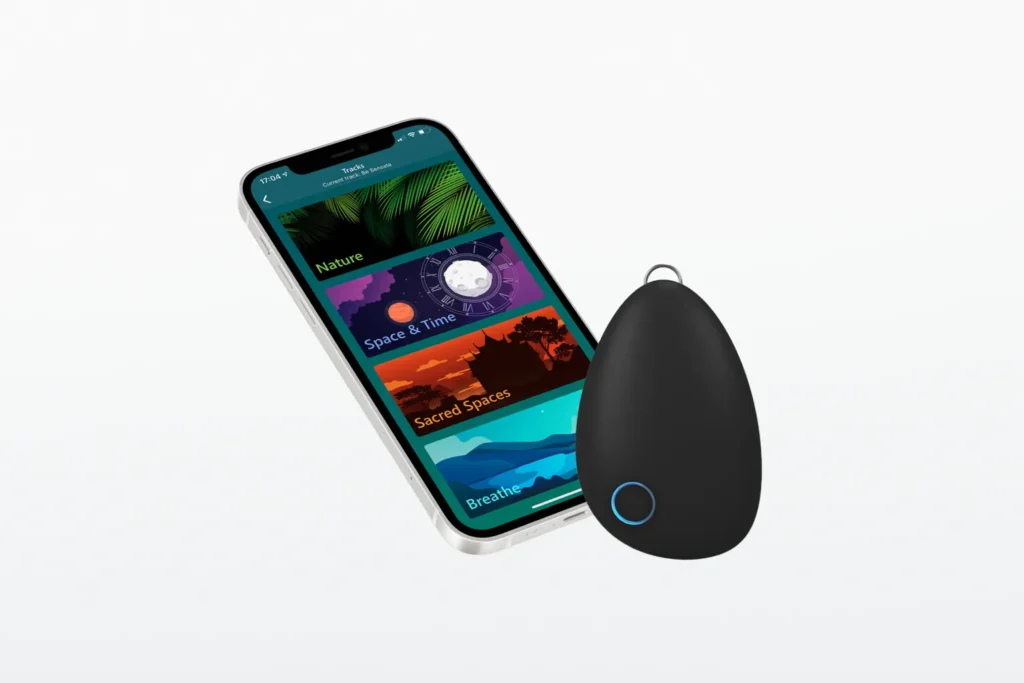
$299–349 · Chest-worn vibrotactile
A pebble-shaped device worn on the sternum, with an app and soundscapes. Pleasant, and genuinely relaxing for some people.
But it isn’t VNS. It uses infrasonic vibration and bone conduction at the chest rather than electrical stimulation of the vagal pathway.
It will probably lift your reading during a session. Lying still and breathing slowly does that for anyone.
Moving your 60-day baseline is a different problem, and general relaxation has never been shown to solve it.
Best for: a wind-down tool alongside something else. Not a rehabilitation device.
The Verdict
If you want the honest version: nobody has shown that any of these four reliably raises a resting HRV baseline in a healthy, already-optimised adult. If that’s your sole criterion, the evidence isn’t there yet – for any of them, from anyone, at any price.
Given that, the sensible thing is to choose on what you can verify.
Nurosym leads on published research volume and regulatory class, and has no ongoing cost. It’s also the most expensive, and most of its evidence comes from clinical populations rather than people like you.
A session tonight might not move tomorrow’s reading, and any device promising that is selling you something.
Train the pathway consistently and the number follows.
Disclaimer: This article has been written by a licensed medical professional and is intended for general informational purposes only. It does not substitute for personalised medical advice, diagnosis, or therapy. Always seek the guidance of a qualified health professional with any questions regarding a medical symptom or health objective.
Sources
- Task Force of the European Society of Cardiology and the North American Society of Pacing and Electrophysiology. Heart rate variability: standards of measurement, physiological interpretation and scientific use. Circulation. 1996;93(5):1043-1065. https://www.ahajournals.org/doi/10.1161/01.cir.93.5.1043
- Shaffer F, Ginsberg JP. An Overview of Heart Rate Variability Metrics and Norms. Frontiers in Public Health. 2017;5:258. https://doi.org/10.3389/fpubh.2017.00258
- Borges U, Laborde S, Raab M. Influence of transcutaneous vagus nerve stimulation on cardiac vagal activity: A randomized controlled study. PLOS ONE. 2019;14(10):e0223848. https://doi.org/10.1371/journal.pone.0223848
- Wolf V, Kühnel A, Teckentrup V, Koenig J, Kroemer NB. Does transcutaneous auricular vagus nerve stimulation affect vagally mediated heart rate variability? A living and interactive Bayesian meta-analysis. Psychophysiology. 2021;58(11):e13933. https://doi.org/10.1111/psyp.13933
- Laborde S, Mosley E, Thayer JF. Heart Rate Variability and Cardiac Vagal Tone in Psychophysiological Research. Frontiers in Psychology. 2017;8:213. https://pubmed.ncbi.nlm.nih.gov/28265249/
- Thayer JF, Åhs F, Fredrikson M, Sollers JJ, Wager TD. A meta-analysis of heart rate variability and neuroimaging studies. Neuroscience & Biobehavioural Reviews. 2012;36(2):747-756. https://pubmed.ncbi.nlm.nih.gov/22178086/
- Kaniusas E, Kampusch S, Tittgemeyer M, et al. Current Directions in the Auricular Vagus Nerve Stimulation I: A Physiological Perspective. Frontiers in Neuroscience. 2019;13:854. https://pubmed.ncbi.nlm.nih.gov/31447643/


 English
  German
  French
  Spanish
  Swedish