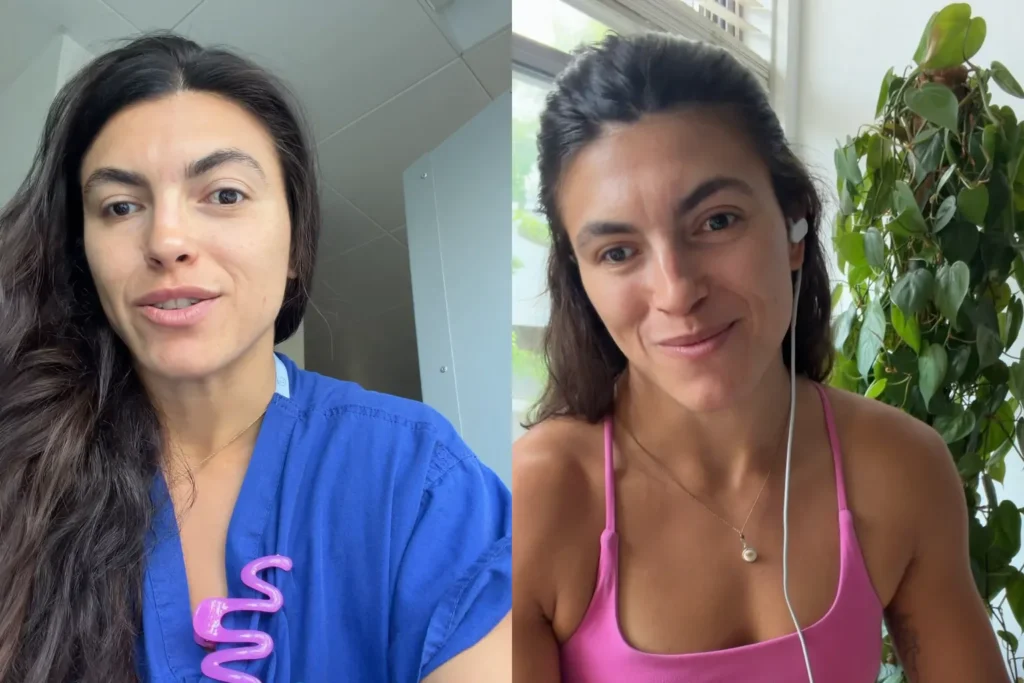
About Me
I work twelve-hour shifts as a cardiothoracic ICU nurse, alongside training and coaching CrossFit at a competitive level. For one week of every shift pattern, I’m also what we call a family liaison nurse, the person helping families navigate some of the hardest conversations they may ever face about their loved one’s care. I help facilitate discussions between families and the wellness team, making space for questions, emotions and difficult decisions. Sometimes that means supporting conversations in which we explain that, despite every effort, we can no longer offer therapy that will help their loved one recover. My role is to help families feel heard, supported and able to understand what comes next.
In the ICU, part of my job is being the calm person in the room. For the person in my care. For the family. Sometimes for the junior nurse standing beside me.
It didn’t stay at work:
- I'd wake up heavy and puffy, as if my body was having an allergic reaction, and I couldn't work out why
- Halfway through a hard training session I'd suddenly feel overwhelmed and have to stop. Everyone assumed I was moody. I couldn't say that the day before I'd held the hand of someone my own age while they died
- It reached home too. When you're that stretched and emotional, it affects your relationship, and mine felt it
- At my worst, if I was a button, you could hear static coming off me, constantly
By then I was ready to try almost anything, and sceptical of nearly all of it. Here are the five reasons I think the stress follows us home, and what led me to explore vagus nerve stimulation.

You Can Leave the ICU Without Your Nervous System Leaving It
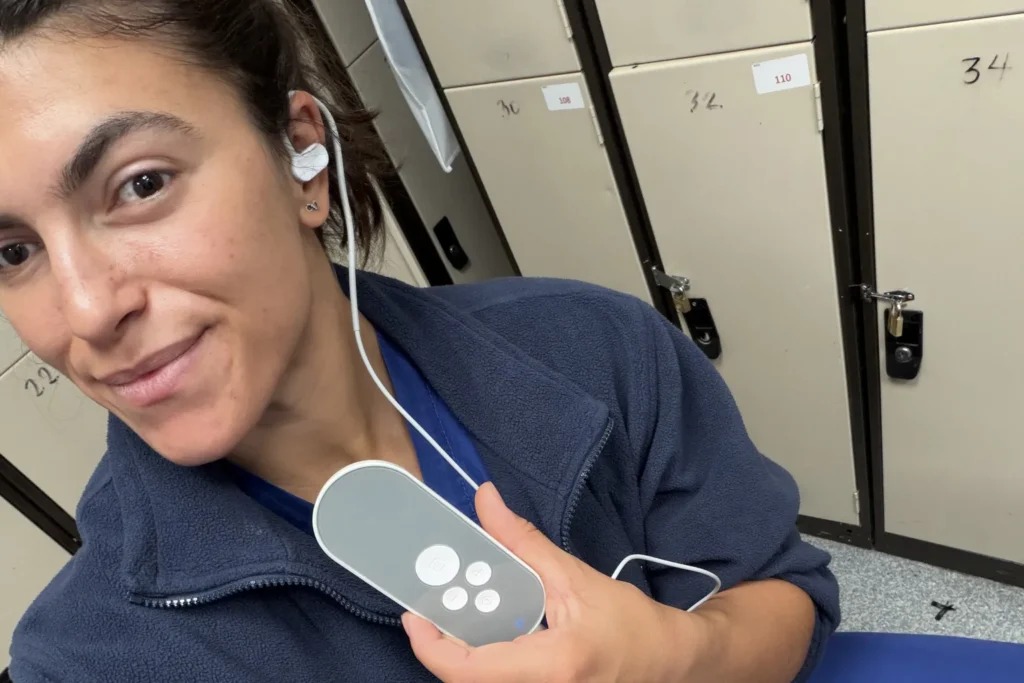
After a difficult shift, I sometimes sit in the changing room long after I’m ready to leave, trying to find the energy to face the Tube home. Other times, I’m finally sitting on the train and feel like I could stay there until the end of the line. No questions, no decisions, nothing needed from me for a moment. For a long time, I put that feeling down to tiredness.
It wasn’t. The shift ends physically. The physiological state you were in during it doesn’t necessarily end at the same moment. Your nervous system doesn’t automatically know the shift is over. It stays on, scanning, braced, waiting for the next thing that needs a response, long after you’ve actually clocked out.
Your autonomic nervous system has two major branches. The sympathetic nervous system (SNS) drives alertness and the stress response, exactly what activates during a resuscitation or a difficult family conversation. The parasympathetic nervous system (PNS) supports rest, recovery and the sense of actually being safe enough to come down from that.
That’s the first reason: I realised that feeling exhausted after a shift wasn’t always just about needing more sleep. I also had to think about how long my body was staying in that state of alert.

Caring for Other People Has a Cost Ordinary “Work Stress” Doesn’t Explain
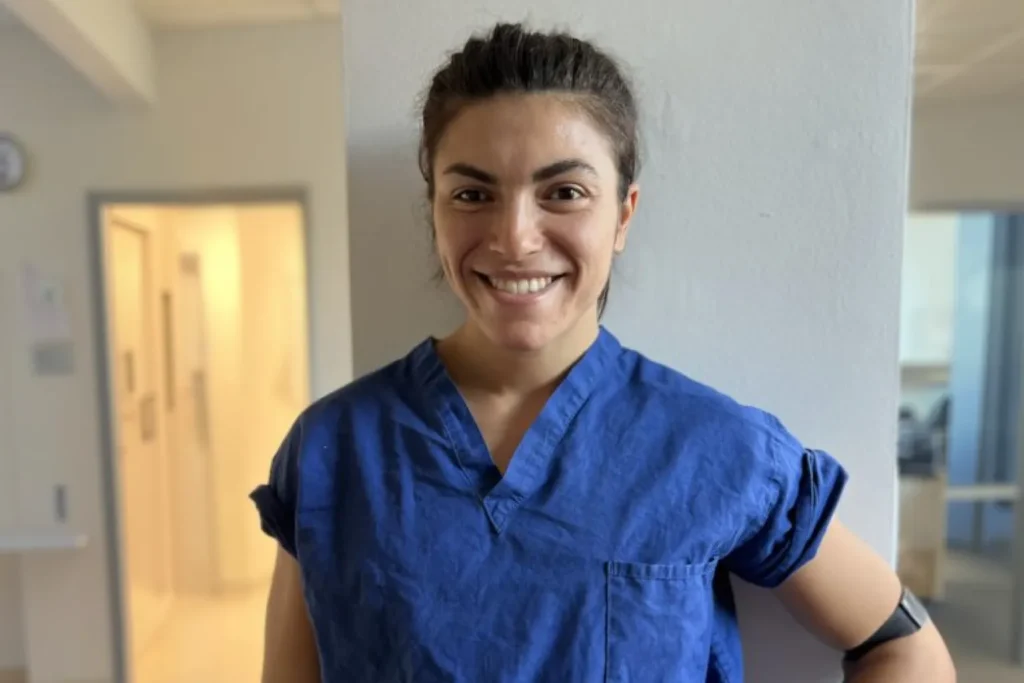
There’s a real scientific term for what happens to people in caring professions, distinct from ordinary burnout. It’s called compassion tiredness, first named by a nurse in the early 1990s, and it describes the emotional and physical exhaustion that comes specifically from repeated exposure to other people’s suffering, not just from working hard.¹
Being the family liaison nurse means I sit with grief and crisis on a rotating basis. Some of what critical care nurses carry goes further than that too, what’s sometimes called moral distress, real, but with organisational and ethical roots a device has no business claiming to fix.
I remember the strangest part wasn’t during the hard moments at work. It was afterwards. In the supermarket. On a Sunday morning when nothing was wrong. Something would surface that I couldn’t always name.
That’s the second reason: caring for people in crisis, repeatedly, is its own category of load, separate from simply having a demanding job.
“As a yoga teacher and psychotherapist, I’ve always focused on addressing the root causes of stress and imbalance, not relying on quick fixes.” – Laura Eisenberg, Trustpilot

Experience Doesn’t Necessarily Make You Immune to the Load
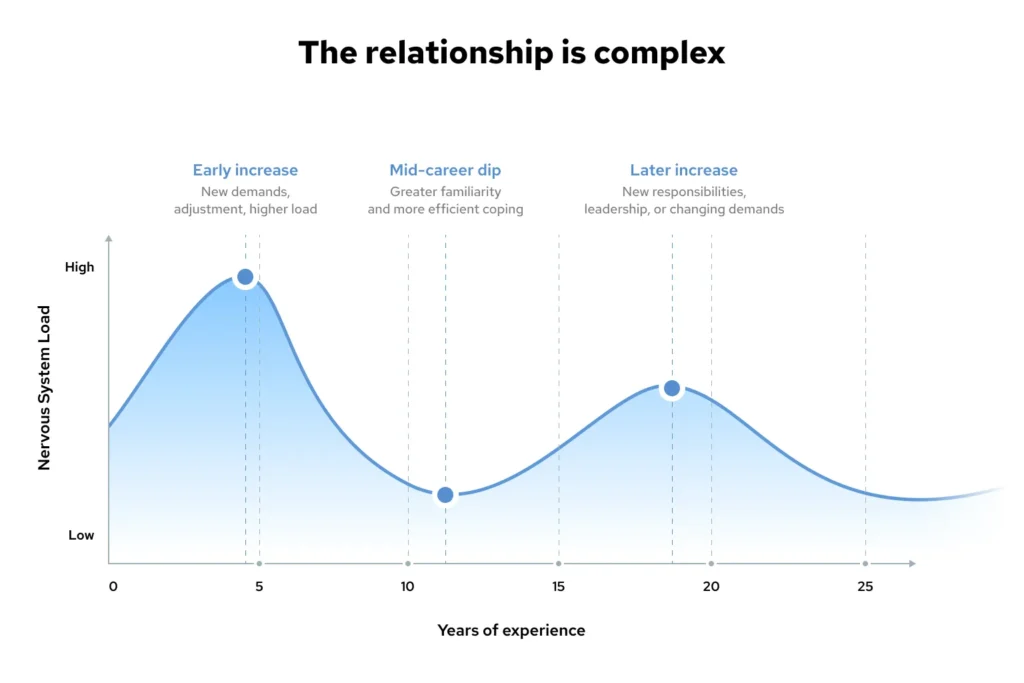
There’s an assumption that the longer you do this job, the easier it gets. I believed that too, for a long time.
One study of critical care nurses found that those with more than ten years of experience actually reported the highest levels of secondary trauma and burnout among the groups measured, not the lowest.² That’s one study, not a universal rule, and the wider picture is genuinely more complicated, workload, staffing, moral distress and organisational support all play a part alongside years on the job. But it was enough to make me stop assuming experience alone would protect me.
That’s the third reason: experience can make you better at handling the job. That doesn’t necessarily mean it makes you immune to what the job asks you to carry.

Recovery Tools Only Work If You Can Actually Use Them
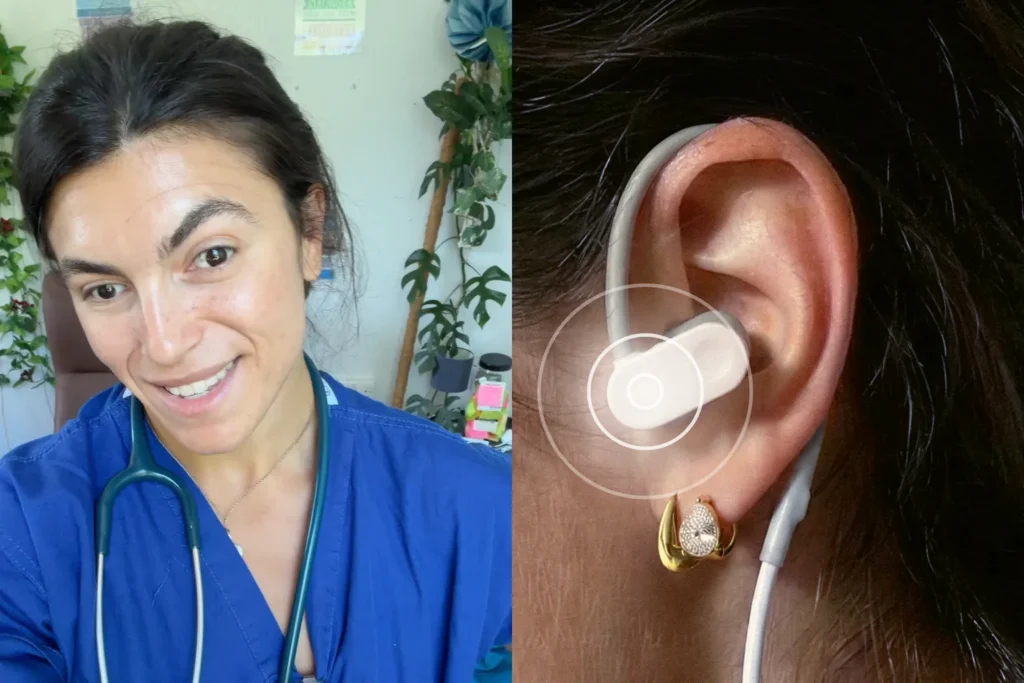
Therapy, debriefing, mindfulness, journaling, all of it genuinely helped me, and I still recommend it to colleagues without reservation. I started therapy myself after burning out through COVID, and it mattered.
The honest issue isn’t whether these tools work. It’s whether a twelve-hour shift leaves you in a position to actually use them. Meditation needs a settled enough mind and a quiet enough space to land properly. Some hospitals put apps like Headspace in break rooms, and even then, you need fifteen uninterrupted minutes to use them, which a busy shift rarely allows. Journaling needs the same thing, a quiet head and a few spare minutes. A proper debrief needs a colleague free at the same moment you are, which almost never lines up on a demanding day.
None of these tools were designed to work inside a shift pattern specifically. That’s an adherence problem, not a flaw in the tools themselves.
That’s the fourth reason: the gap isn’t in what helps. It’s in what’s actually usable at 3am on a night shift.

I Needed Something That Could Fit Inside the Shift, Not Another Thing to Recover From It

As someone working in healthcare, I’m naturally sceptical of wellness products. What made me look closer was going through the research itself, not marketing claims about calm.
The vagus nerve is one of the major communication pathways between the brain and the body, playing a role in helping the body shift back toward a calmer parasympathetic state after stress.³ taVNS (Transcutaneous Auricular Vagus Nerve Stimulation) delivers a gentle signal through the outer ear to reach this pathway, non-invasively. Peer-reviewed studies, many conducted at institutions I recognise, Harvard, UCL, UCLA, were what made me take it seriously.
That’s what led me to Nurosym, a CE-marked taVNS device using proprietary AVNT™ (Auricular Vagal Neuromodulation Technology).
We have a wobble room in the ICU, a quiet space staff use when things become overwhelming. I use my fifteen-minute break there instead of another coffee, Nurosym clipped on, sometimes reading, sometimes just sitting. No app, no gel, no real setup. I carry it in whichever bag I have, hospital or training, the same way I pack my lunch.
That’s the fifth reason: it doesn’t ask me to find recovery time. It sits inside time that already exists.
“It retrains your nervous system to understand that it’s safe to rest, relax, and let go.” – Marie, Trustpilot
Testimonials are the users’ own views and experiences, not company claims.
What Using It Actually Looks Like Day to Day
Setup: Clips to the outer ear. No app, no gel, no prescription. Wired, not wireless, a small cable to a control unit, which surprised me at first and stopped mattering within days. Sessions: 15 minutes to an hour.
You can use it while:
- Sitting in the wobble room during a break
- Ironing shirts for the week
- Eating your lunch
- Reading before bed
- Doing the washing up
The Evidence Behind It
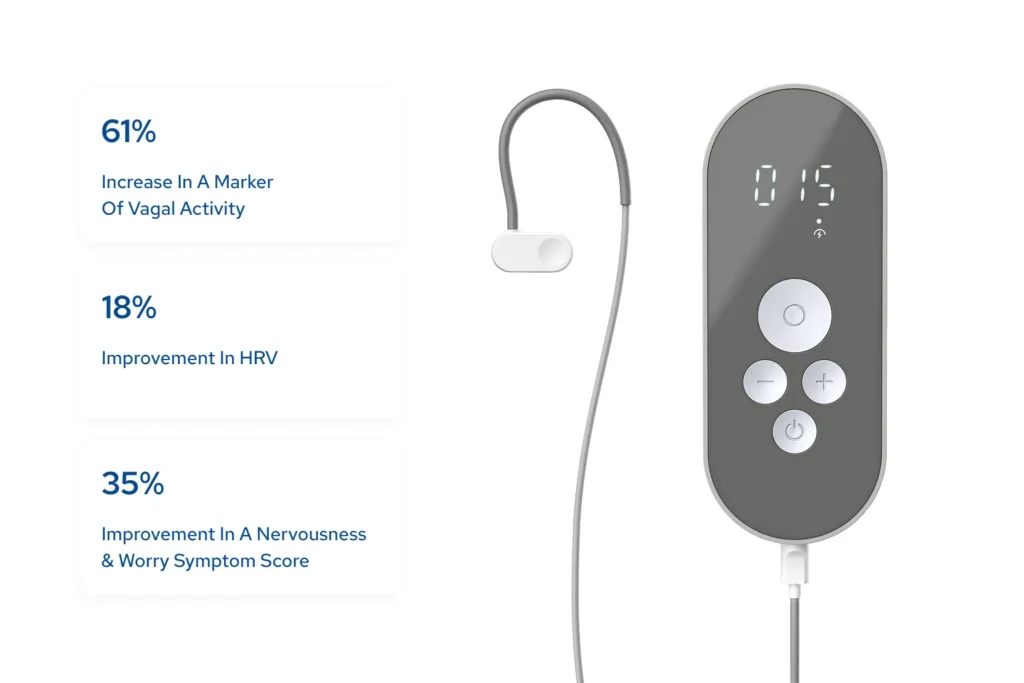
Results in specific study populations. Individual results may vary. The nervousness & worry figure is based on a validated composite symptom score covering nervousness, worry, feeling on edge and related symptoms.
Who This Might Be Worth Exploring For
- You work in a caring profession and absorb other people's distress as part of the job
- You've noticed the strange gap between clocking out and actually feeling like the day is over
- Your existing coping tools help but are hard to sustain around shift work
- You want something that fits inside a real break, not one more thing to schedule
Do not use it if you have a pacemaker or implantable cardiac device, are pregnant, have had a recent serious cardiac event, or are under 18. Always consult a qualified healthcare professional before starting.
A Safe Way to Try It
30-day money-back guarantee, enough time to see whether it fits your actual working pattern
My Honest Take
I’ve spent years being the calm one, the person families look to, the colleague who copes. What I didn’t understand for a long time was that coping and recovering aren’t the same thing. I took four months off work at one point because I’d been surviving for so long I forgot what actually recovering felt like.
These five reasons are why I think this is worth exploring, not instead of therapy, sleep, or the support systems that already help, but alongside them, for a system that absorbs more than most jobs ever ask of it. ICU is still ICU. The pressure hasn’t disappeared. But I understand what carrying it home was actually doing to my body, and I recover differently because of it.
EXCLUSIVE OFFER FOR OUR READERS: Get 5% Off Nurosym From Our Editorial Team!
References
- Alliant International University. Compassion Tiredness in Nursing: Overcoming the Challenge. https://www.alliant.edu/blog/compassion-fatigue-nursing-overcoming-challenge
- Hilderbrand L. Compassion Satisfaction, Secondary Trauma and Burnout by Years of Critical Care Experience. Johns Hopkins School of Nursing DNP Project. 2021. https://nursing.jhu.edu/wp-content/uploads/2024/03/Hilderbrand-L-Spr-2021-DNP-Project-Poster.pdf
- Breit S, Kupferberg A, Rogler G, Hasler G. Vagus nerve as modulator of the brain-gut axis in psychiatric and inflammatory disorders. Frontiers in Psychiatry. 2018. https://www.frontiersin.org/articles/10.3389/fpsyt.2018.00044/full
- Geng D, et al. The effect of transcutaneous auricular vagus nerve stimulation on HRV in healthy young people. PLoS ONE. 2022. https://doi.org/10.1371/journal.pone.0263833
- Zheng et al. Frontiers in Neurology. 2024. https://doi.org/10.3389/fneur.2024.1393371
This article reflects my personal experience and professional perspective. This article is published in partnership with Nurosym. I may receive compensation from purchases made through links in this article. This is not medical advice, always consult a qualified healthcare professional before starting any new intervention. Individual results may vary.


 English
 German
 French
 Spanish
 Swedish
 Italian