

Nurosym is a CE-marked, non-invasive vagus nerve stimulation (VNS) device that has been evaluated across multiple scientific and real-world studies. It is designed to support nervous system regulation and stress resilience by stimulating the parasympathetic (vagal) pathway.
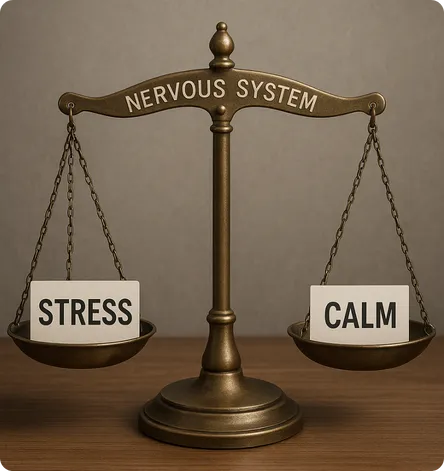

A Scientific Studied, Non-Invasive Approach to Nervous System Regulation
Nurosym is a portable vagus nerve stimulation device that has been evaluated across more than 50+ completed research studies.
It’s specifically designed to activate your parasympathetic nervous system—the biological system that controls your body’s ability to recover from stress and maintain balance.
Unlike techniques that rely on active mental engagement, vagus nerve stimulation works by directly influencing autonomic pathways involved in stress regulation. This allows nervous system support without requiring sustained attention during use.
This approach aims to support autonomic balance that may contribute to chronic stress patterns.
- Validated through 50+ completed scientific studies and over 4 million user sessions, showing significant improvements in stress biomarkers, heart rate variability, and inflammatory markers.
- CE Marked wearable device certification meets rigorous European Union standards for safety and effectiveness.
- Used by hundreds of healthcare professionals in neurology, psychiatry, and integrative medicine for measurable improvements in stress resilience.
- Developed through $10M+ research investment with leading academic medical centres, representing one of the most extensively studied non-invasive vagal neuromodulation approaches currently available.
“Among similar wellness devices, it stands out for its strong research foundation and user-friendly design.”
– DEREK, US


To Restore Balance Between Stress and Recovery
Your vagus nerve is the main pathway of your parasympathetic nervous system.
It connects your brain to your heart, lungs, and digestive system. Chronic stress pushes this system out of balance.
When your vagal tone becomes low, your body stays in constant stress activation. This shows up as elevated resting heart rate, strong reactions to minor stressors, poor recovery after stress, and declining health over time.
Nurosym delivers low-intensity electrical stimulation to the auricular branch of the vagus nerve via the outer ear. This stimulation engages neural pathways involved in parasympathetic regulation and stress recovery.
- Activates your body's natural calming pathways, generating rapid recovery signals through vagal connections to your heart and other vital organs.
- Shifts your nervous system from chronic stress to balanced function normalising baseline arousal and improving your capacity for rapid recovery.
- Works through your brainstem's primary stress control centre enhancing the brain's ability to regulate stress chemicals and mood naturally.
- Significantly enhances parasympathetic nervous system activity with measurable changes in HRV markers appearing within one hour (statistically significant at p=0.002), with effects lasting 2-4 hours after each session.
“It helps me achieve a state of tranquility similar to meditation. The shift is subtle, but I notice feeling more at ease.”
– TOM, UK
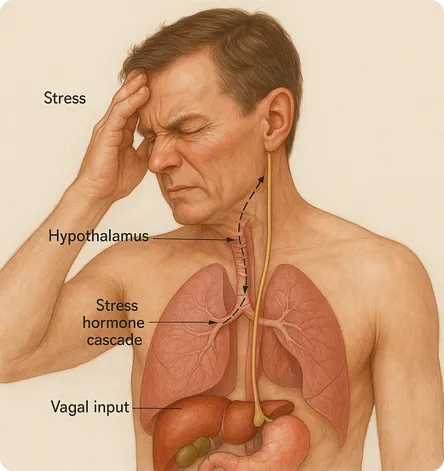

To Normalise Your Body’s Stress Hormone Response
Chronic stress disrupts your stress hormone system. This leads to flattened cortisol rhythms, elevated evening cortisol, poor morning awakening response, and loss of normal daily hormone patterns.
This hormone dysfunction creates sustained anxious thoughts, impaired stress recovery, and increased inflammation.
Your vagus nerve directly regulates this stress hormone system through connections to your brain’s stress control centre. Enhanced vagal signalling has been associated with modulation of stress hormone pathways and more balanced cortisol rhythms in some studies.
Vagus nerve stimulation influences stress-regulatory centres in the brain involved in hormone signalling, offering a physiological approach that does not rely on conscious stress-management techniques.
- Reduces activation of your brain's stress hormone centre through enhanced vagal signalling, producing downstream reductions in stress hormones.
- Improves stress reactivity and recovery speed by restoring your body's natural stress buffering capacity.
- Normalises daily cortisol rhythm, improving morning awakening response and reducing problematic evening cortisol elevation.
- Significantly reduces stress and anxious thoughts symptoms with 35% improvement in validated anxious thoughts measures within 4-8 weeks (p < 0.001).
“Because … of my workplace, because of really high stress … I got severe reflux. The constant push to deliver more work destroyed my organism. Each time I was putting the device I could release tension from my nervous system.”
– JAKUB, UK


For Better Sleep Quality and Natural Sleep Regulation
Chronic stress disrupts sleep through multiple pathways: constant activation prevents sleep initiation, elevated evening cortisol interferes with natural sleep hormones, and heightened arousal reduces deep sleep and increases nighttime awakenings.
Without adequate parasympathetic activation during sleep, you can’t restore proper balance, perpetuating daytime stress and progressive system sensitisation.
Vagus nerve stimulation enhances parasympathetic activation during the pre-sleep period and helps regulate sleep-stage transitions.
Scientific studies suggest that vagal stimulation may support more stable sleep architecture and improved subjective sleep quality.
- Helps your body transition into sleep naturally by accelerating the shift from waking stress mode to sleep-initiating calm mode.
- Supports sleep quality and restorative processes, as reflected by improvements in validated sleep quality scores.
- Reduces nighttime awakenings by stabilising nervous system tone throughout sleep cycles.
- 31% improvement in sleep quality scores as measured by the Pittsburgh Sleep Quality Index in scientific studies using 4-week protocols (p < 0.05).
“When I wasn’t getting enough deep, restorative sleep, it impacted my mood and daily routine. Nurosym has completely transformed the way I rest.”
– DANIEL, WALES


To Address Chronic Stress-Related Fatigue
Chronic stress produces profound fatigue through multiple mechanisms: sustained stress activation depletes your energy reserves, chronic hormone elevation creates resistance, elevated inflammatory markers trigger fatigue, and persistent hyperarousal increases metabolic demand while impairing cellular energy production.
This fatigue reflects systemic dysregulation rather than simple sleep deficit. Conventional stimulants temporarily override fatigue signals without addressing underlying dysfunction, often worsening the stress-fatigue cycle.
By supporting parasympathetic activity and modulating inflammatory and autonomic pathways, vagus nerve stimulation may help reduce fatigue associated with prolonged stress and autonomic imbalance.
- Reduces cumulative stress burden by shifting from energy-depleting stress mode to energy-restoring recovery mode.
- Activates your body's anti-inflammatory pathway through vagal signaling, suppressing inflammatory chemicals (TNF-α reduction) that drive fatigue.
- Enhances metabolic efficiency through improved regulation of energy metabolism
- Normalises stress hormone function, addressing the hormone resistance that links chronic stress to persistent exhaustion.
- 48% reduction in fatigue severity within 10 days (p < 0.0001), with sustained improvements maintained after therapy completion.
“Honestly, I’ve noticed such a positive change. I have far fewer days where I feel too drained to keep up with my daily routine.”
– FRANCESCA, UK
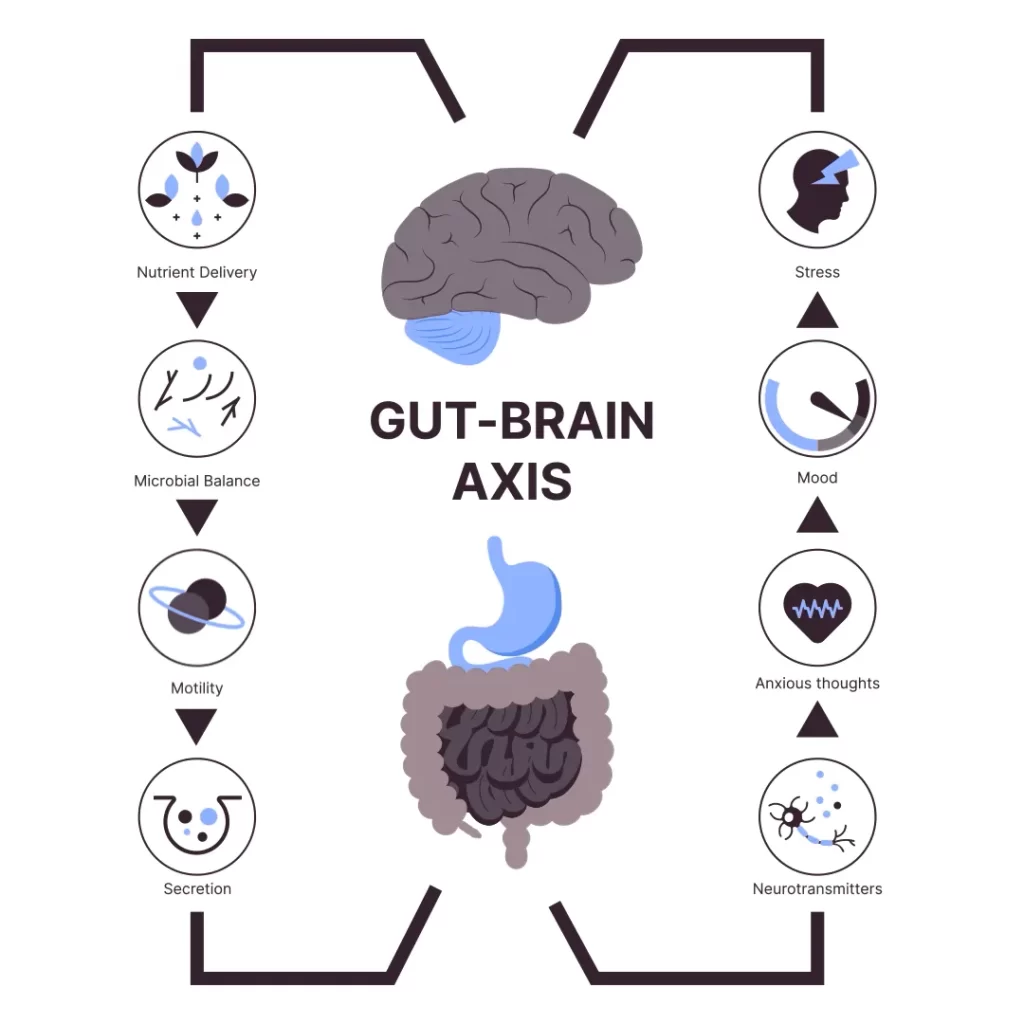

To Support Healthy Gut-Brain Communication
Your vagus nerve is the primary communication pathway between your gut and brain, continuously transmitting information from your digestive tract to your central nervous system while delivering calming control signals that regulate digestion.
Chronic stress disrupts this gut-brain connection.
Stress activation suppresses vagal control to your gut, producing delayed stomach emptying, altered intestinal movement, and gut barrier problems.
These gut changes amplify stress through vagal signalling back to the brain.
Improving vagal signalling can influence both digestive function and stress-related feedback between the gut and brain.
- Restores the calming regulation of your gut's nervous system, normalising stomach and intestinal function disrupted by chronic stress.
- Reduces intestinal inflammation through vagal activation of gut immune regulation.
- Modulates gut sensitivity by enhancing pain-blocking signals from the brain to the gut.
- Supports healthy gut bacteria balance by reducing stress-induced disruption.
- Scientific studies demonstrate significant improvement in gastrointestinal symptoms associated with autonomic dysfunction, with sustained reductions in symptom intensity following a 10-day protocol (p < 0.0001).
“Since I started using it, I’ve noticed a significant improvement in how I feel overall. It’s been three months now, and I’m hopeful for even more positive changes—it’s definitely a step in the right direction.”
– TERRY, UK
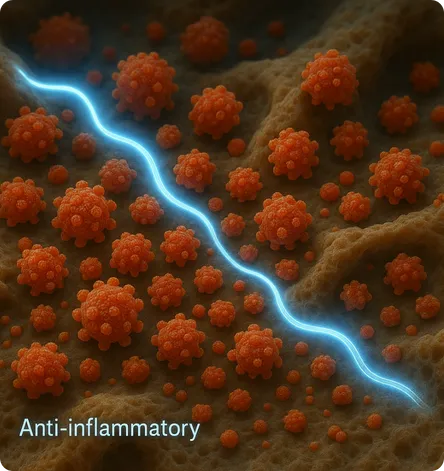

To Activate Your Body’s Natural Anti-Inflammatory System
Chronic stress creates a pro-inflammatory state characterised by elevated inflammatory markers (IL-6, TNF-α, IL-1β, CRP) and impaired resolution of inflammation.
This stress-induced inflammation contributes to multiple health issues: cardiovascular problems, metabolic dysfunction, cognitive impairment, and chronic inflammatory states.
Your vagus nerve represents the primary neural pathway controlling systemic inflammation. Vagal fibers release signals that directly suppress inflammatory chemical production in immune cells throughout your body.
In chronic stress, reduced vagal tone allows unchecked inflammatory signalling. Restoring vagal activity re-engages this natural anti-inflammatory mechanism, reducing systemic inflammation.
- Activates natural suppression of inflammatory chemical production through vagal signalling to immune cells in your spleen and other tissues.
- Vagal stimulation has been shown to influence immune signalling pathways associated with inflammatory regulation.
- Enhances resolution of inflammatory responses by promoting active termination rather than simple suppression.
- Significantly reduces inflammatory markers including IL-6, in randomized placebo-controlled studies over 3 months, correlating with improvements in fatigue, cognitive function, and stress resilience.
“I was looking for a way to better navigate seasonal challenges. I had tried workouts and meditation apps, but discovered Nurosym, and I noticed changes within just a couple of weeks. I feel more balanced and better equipped to manage daily pressures.”
– TIJANA, US
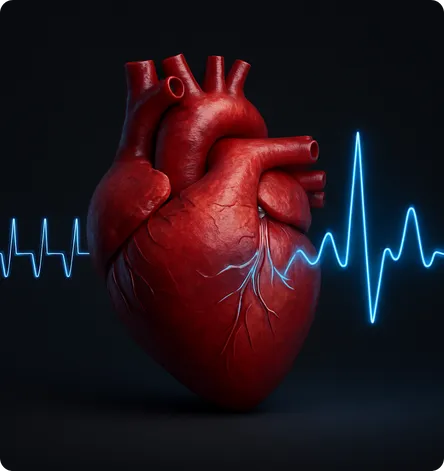

To Optimise Heart Rate Variability—Your Stress Resilience Biomarker
Heart rate variability (HRV)—the variation in time between consecutive heartbeats—is the most validated biomarker of nervous system function and stress resilience capacity.
Higher HRV indicates robust parasympathetic capacity and flexibility; reduced HRV signals impaired stress resilience.
Chronic stress progressively reduces HRV through sustained activation and vagal withdrawal. Low HRV independently predicts cardiovascular disease risk, metabolic syndrome, depressive states severity, cognitive decline, and poor stress recovery. HRV provides an objective, quantifiable assessment accessible through consumer wearables.
Vagus nerve stimulation directly enhances cardiac vagal activity, increasing parasympathetic influence on your heart’s natural rhythm and producing measurable, dose-dependent increases in HRV parameters.
- Significantly increases time-domain HRV metrics (SDNN, RMSSD), indicating enhanced overall autonomic modulation.
- Enhances frequency-domain measures, particularly high-frequency power, the validated marker of cardiac vagal tone.
- Improves stress reactivity and recovery with accelerated HRV recovery following stressors.
- Trackable through consumer wearables, including Oura Ring, WHOOP, Apple Watch, Garmin devices, and Polar H10.
“I’ve noticed improved recovery indicators tracked by my fitness device and a greater ability to stay focused or train for extended periods.”
– HENRY, UK
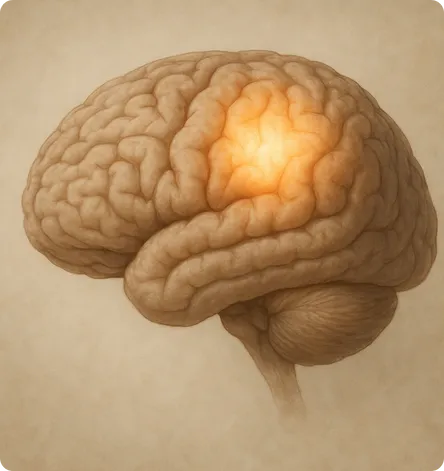

To Improve Stress-Related Cognitive Function
Chronic stress produces significant cognitive impairment: elevated stress hormones cause brain changes in memory and executive function areas, sustained activation shifts neural resources toward threat detection rather than thinking, chronic inflammation impairs brain plasticity, and sleep disruption prevents cognitive restoration.
These deficits show up as impaired working memory, reduced sustained attention, slowed processing speed, diminished cognitive flexibility, and compromised decision-making.
Your prefrontal cortex—responsible for planning, control, and emotional regulation—is particularly vulnerable to chronic stress effects.
Your vagus nerve modulates cognitive function through multiple pathways: regulating attention and arousal systems, influencing memory and learning chemicals, and affecting prefrontal cortex function.
- Enhances brain plasticity through increased brain growth factor, supporting memory and cognitive flexibility.
- Improves sustained attention and processing by optimising brain arousal systems.
- Reduces stress-related cognitive interference by normalising emotional brain reactivity and restoring balanced communication between emotional and executive brain regions.
- Strengthens executive function, improving working memory, impulse control, task switching, and decision-making.
- Significantly improves attention and inhibitory control as measured by validated cognitive testing, with 11% improvement within 10 days (p < 0.01) and sustained gains at one-month follow-up (p < 0.001).
“Sometimes I’ll put it on while reading, and I find it helps me stay focused, even on more challenging pieces of writing.”
– YVONNE, UK


As Complementary Support for Comprehensive Stress Management
Evidence-based stress management often requires multiple approaches: cognitive-behavioural techniques, mindfulness practices, exercise, and sometimes medication.
Each addresses different aspects of stress, and many individuals achieve suboptimal outcomes with single approaches alone.
Vagus nerve stimulation represents a unique category—direct nervous system modulation—that complements rather than duplicates other methods.
VNS offers a unique approach to nervous system regulation: direct autonomic modulation through a simple, device-based mechanism that works passively alongside your existing wellness routine.
The neurobiological effects of VNS—enhanced parasympathetic tone, normalised stress hormones, reduced inflammation, improved sleep—create a more favourable foundation for other interventions to work effectively.
- Enhances the effectiveness of cognitive-behavioral approaches by reducing baseline arousal, creating better state for cognitive work.
- Supports consistency with behavioural practices by improving energy levels, sleep quality, and motivation.
- May enable medication reduction under medical supervision as nervous system function normalises.
- Provides objective biometric feedback through HRV monitoring, enabling you to track progress with measurable outcomes.
- Addresses the neurophysiological foundation, creating synergistic effects when combined with psychological, behavioural, or pharmacological approaches.
“I often deal with tension at night that affects my face and head, but I started to notice a difference—it’s been a positive shift, even in how I feel physically.”
– HOGAN, US
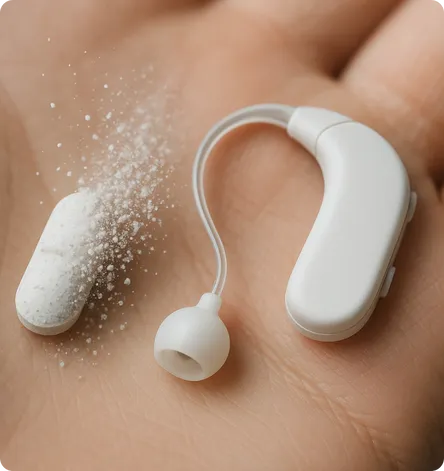

A Device-Based Approach to Nervous System Regulation
Many individuals seek non-pharmaceutical options for supporting their nervous system—whether as a primary approach or as a complement to other interventions they’re already using.
Vagal neuromodulation offers a fundamentally different mechanism: activating your body’s natural parasympathetic pathways through direct nerve stimulation, rather than working through brain chemistry or requiring sustained cognitive effort.
This approach provides:
- Direct nervous system regulation through activation of your body's built-in stress recovery pathways.
- Flexibility in how you use it as a standalone intervention or integrated with therapy, lifestyle changes, or medical therapy.
- A device-based mechanism that works passively during brief daily sessions
- Long-term value with no recurring prescription costs.
- Extensive validation through 60+ research studies and 4+ million supervised sessions, with the vast majority of users reporting meaningful improvements.
For those exploring evidence-based options beyond traditional approaches—or looking to enhance their current stress management strategy—vagal neuromodulation represents a scientifically validated pathway worth considering.
“I was told by a professional that they weren’t sure what was causing my challenges, but a long-term approach was suggested. I started researching ways to support myself and discovered Nurosym.”
– TREVOR, UK
The Mechanism: How Vagal Nerve Stimulation Works
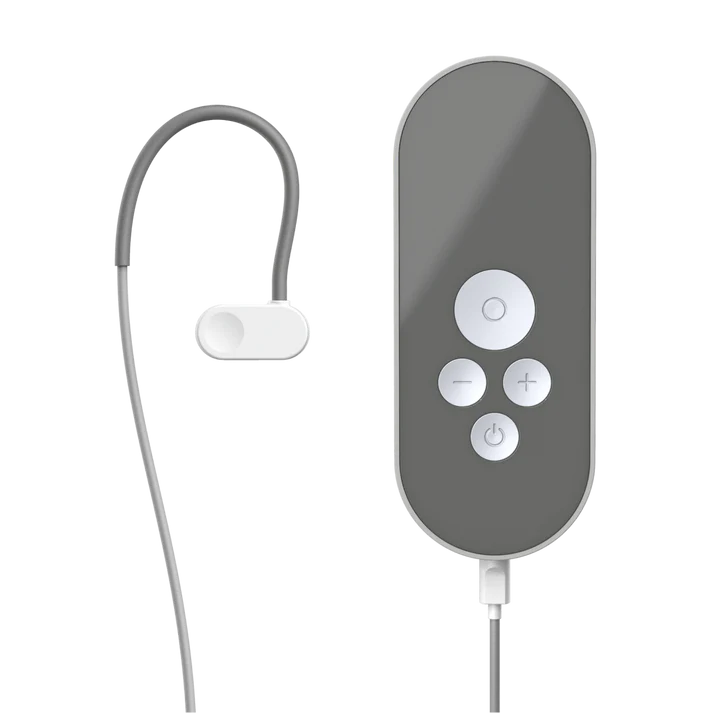
Auricular Vagal Neuromodulation Therapy (AVNT™) — Nurosym’s proprietary protocol developed with Chicago University Medicine School, UCLA, Imperial College London, and 100+ research institutions, validated through randomised controlled studies and 4+ million supervised sessions.
How It Works:
Nurosym delivers proprietary electrical waveforms to the auricular branch of the vagus nerve in your ear—a region with dense vagal nerve distribution accessible through the skin.
- Peripheral Activation: Electrical stimulation activates vagal nerve fibres in your ear, generating signals that travel to your brain.
- Brainstem Integration: These signals reach the nucleus tractus solitarius (NTS)—your primary autonomic control centre.
- Stress-Regulatory Network: The NTS connects to key structures governing stress and autonomic regulation:
- Locus coeruleus — regulates arousal and attention
- Raphe nuclei — modulate mood, anxious thoughts, and sleep-wake cycles
- Paraventricular nucleus — controls stress hormone release
- Amygdala — reduces threat-response hyperreactivity
- Prefrontal cortex — enhances emotional regulation capacity
- Autonomic Rebalancing: Enhanced parasympathetic activity while simultaneously reducing sympathetic overactivation
- Neurotransmitter Normalisation: Multi-pathway modulation normalises norepinephrine, serotonin, GABA, and dopamine function
- Anti-Inflammatory Activation: Vagal signals activate your body’s natural anti-inflammatory pathway, suppressing inflammatory chemical production
Scientific Outcome: Multi-level intervention producing enhanced autonomic flexibility, normalised stress hormones, reduced inflammation, improved sleep, and enhanced stress resilience—without sustained conscious effort.
Real-World Effectiveness
- Over 4 million user sessions completed
- Vast majority of users reporting clinically meaningful improvements in stress-related symptoms, sleep quality, energy levels, or autonomic function
- High adherence rates Favorable safety profile with no serious adverse events reported
The convergence of 50+ research studies, 4+ million user sessions, and CE Marked medical device certification establishes Nurosym as the gold standard in non-invasive vagal neuromodulation for stress resilience and nervous system rebalancing.
For individuals seeking evidence-based, non-pharmacological intervention to address the root causes of chronic stress—or healthcare professionals evaluating neuromodulation options for patients—Nurosym represents the most thoroughly validated transcutaneous VNS system available.
Nurosym is a CE-marked Class IIa wearable device. Clinical outcomes represent average results from controlled studies and real-world effectiveness analyses. Individual responses vary. The device is intended for general wellness and stress management; it is not intended to diagnose, treat, cure, or prevent any disease. Users with pacemakers or other significant medical symptoms should consult healthcare providers before use.
Sources
- Sanchez-Perez JA, Gazi AH, Rahman FN, Seith A, Saks G, Sundararaj S, et al. Transcutaneous auricular Vagus Nerve Stimulation and Median Nerve Stimulation reduce acute stress in young healthy adults: a single-blind sham-controlled crossover study. Frontiers in neuroscience. 2023 Sep 7;17.
- Vanderhasselt MA, Ottaviani C. Combining top-down and bottom-up interventions targeting the vagus nerve to increase resilience. Neuroscience & Biobehavioral Reviews. 2021 Nov;
- Mogilevski T, Rosella S, Aziz Q, Gibson PR. Transcutaneous vagal nerve stimulation protects against stress‐induced intestinal barrier dysfunction in healthy adults. Neurogastroenterology & Motility. 2022 Apr 28;
- Bremner JD. Vagal Nerve Stimulation for Patients With Stress-Related Psychiatric Disorders and Addictions. Journal of health service psychology. 2023 Aug 1;49(3):129–35.
- Lopez Blanco C, Tyler WJ. The vagus nerve: a cornerstone for mental health and performance optimization in recreation and elite sports. Frontiers in Psychology. 2025 Jul 11;16.
- Richer R, Zenkner J, Küderle A, Rohleder N, Eskofier BM. Vagus activation by Cold Face Test reduces acute psychosocial stress responses. Scientific Reports [Internet]. 2022 Nov 10 [cited 2023 Jan 25];12(1):1–11. Available from: https://eds.p.ebscohost.com/ehost/detail/detail?vid=15&sid=9ed21542-ccda-4dbd-b056-a3b3aae945cb%40redis&bdata=JnNpdGU9ZWhvc3QtbGl2ZQ%3d%3d#AN=160141057&db=a9h
- Zhu Y, Xu F, Sun C, Xu W, Li M, Gong Y, et al. Noninvasive Transcutaneous Auricular Vagal Nerve Stimulation Improves Gastric Slow Waves Impaired by Cold Stress in Healthy Subjects. Neuromodulation: Technology at the Neural Interface. 2023 Dec;26(8):1851–7.



 English
  German
  French
  Spanish
  Swedish
The connection between simple words like prevention and cure makes a lot of sense.
Encouraging to see research focusing on root causes rather than symptom masking.