
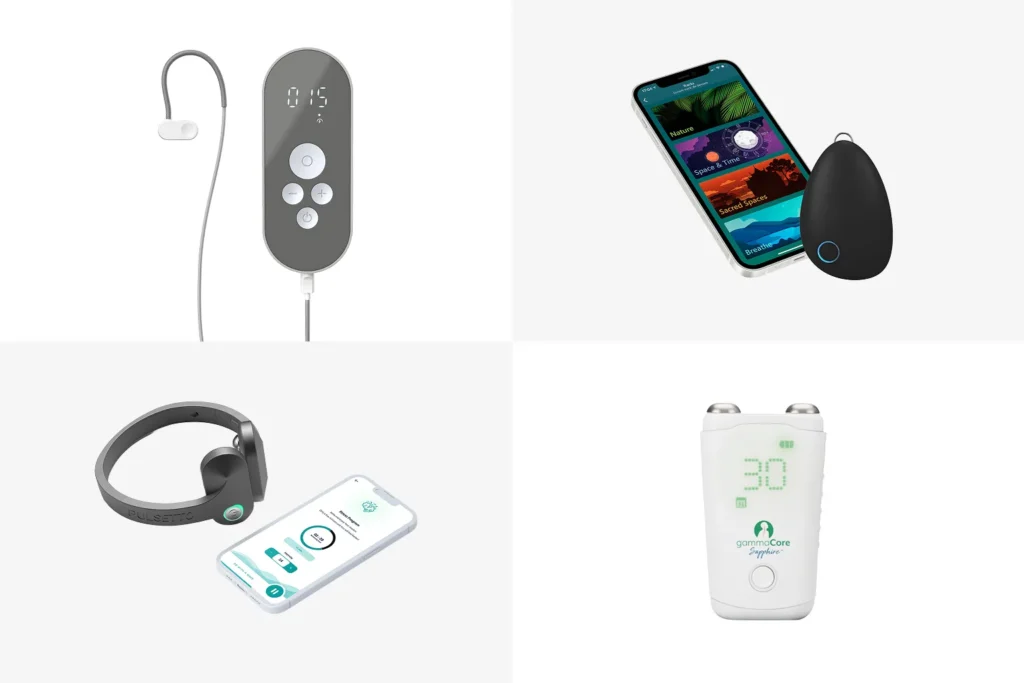
The verdict, up front
| Rank | Device | Score | Verdict |
| 1 | Nurosym | 9.2 | Our top pick. The only device with published placebo-controlled evidence showing activation of vagal brainstem pathways. |
| 2 | GammaCore | 7.4 | Excellent at one job. Genuinely evidenced for headache. Ruinously expensive over time. |
| 3 | Sensate | 5.1 | A pleasant relaxation tool. Not a vagus nerve stimulator, and does not claim to be certified as one. |
| 4 | Pulsetto | 3.6 | We do not recommend it. Electrical current to the neck with no published safety or efficacy studies on the device itself. |
Who we are and why we did this
We are a panel of health professionals and researchers. As health professionals and researchers, we are frequently asked about vagus nerve gadgets by users and do not have a straight answer to give them.
Interest in vagus nerve stimulation has grown rapidly over the past few years, particularly on social media.
The regulatory framework did not keep pace.
What followed was predictable: a wave of devices claiming to stimulate the vagus nerve, many of which have not published device-specific evidence demonstrating vagus nerve activation.
So we bought all four with our own money and evaluated them using the same five assessment criteria.
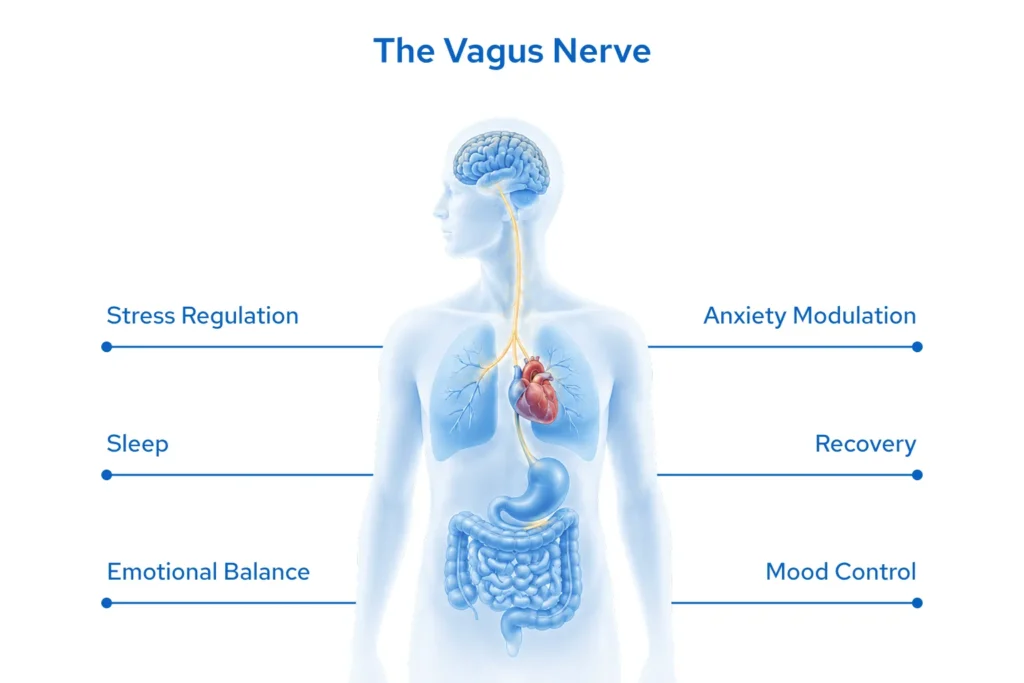
The five things we scored
Everything below is scored on evidence we could independently verify. If a manufacturer could not produce a study, they scored zero on that criterion. If we could not verify published evidence, that criterion received no score.

Scientific evidence
Not research about vagus nerve stimulation. Research on this device.
A company can cite forty years of implanted VNS literature without ever testing the thing it is selling you. That is not evidence; that is citing evidence generated using a different device.
We wanted peer-reviewed, placebo-controlled studies on the specific device, at named institutions.

Safety
Has it been tested in people, including unwell people? Can the manufacturer produce the data?
Applying electrical stimulation to the neck warrants careful safety evaluation because of the anatomical structures located there. Carotid arteries, jugular veins, cranial nerves, sympathetic fibres, and vagal fibres run straight to the heart. Mayo Clinic researchers, in Scientific American, have warned that unlicensed device stimulation applied in the cervical region should be supported by appropriate safety evaluation because of the nearby cardiovascular structures.
That does not make every neck device dangerous. It puts the burden of proof on the manufacturer, before sale rather than after.

Accessibility
Any potential benefit depends on consistent use. Every study in this field says so.
A device needing a phone, an app, a subscription, a gel and your full attention is less likely to be used consistently over time. One you can wear while reading is not.
We scored setup friction, app dependency, gel, battery life, and whether you can do anything else while using it.

Patents and proven mechanism
This is where many devices begin to differ.
Delivering an electrical current near a nerve is not the same as activating that nerve.
Electrodes on skin produce a tingle. That tingle proves you have stimulated skin receptors and maybe some local muscle. It proves nothing about a signal reaching the brain. Proving that needs a downstream response: brainstem activation on fMRI, autonomic change against a sham device.
Evidence of downstream physiological effects is needed.
That is not a marketing claim. That is where the nerve is.
- Stimulating the tragus aims to activate the auricular branch of the vagus nerve, with signals travelling towards brainstem nuclei involved in autonomic regulation, where downstream autonomic responses can then occur.
- Stimulate at the neck, and you are delivering stimulation through tissues containing multiple nerves and other anatomical structures containing cardiac fibres, making selective stimulation more challenging.
- Stimulate the chest with vibration, and you are not using a different mechanism from electrical neuromodulation.

Cost over time
Sticker price is the least interesting number here, because these devices only work if you use them for months.
We calculated five years of daily use, including refills, subscriptions and consumables. The results are not close.
| Nurosym | GammaCore | Pulsetto | Sensate | |
| Peer-reviewed placebo-controlled studies on this device | ✓ | ✓ | ✗ | ✗ |
| Studies conducted | 60+ | 20+ | 0 | 0 |
| R&D investment | $10M+ | $50M+ | Not disclosed | Not disclosed |
| Demonstrated brainstem activation | ✓ | ✓ | ✗ | ✗ |
| Target site | Auricular branch (ear) | Cervical branch (neck) | Neck | Chest |
| Mechanism | Electrical, proprietary waveform | Electrical, proprietary waveform | Electrical | Vibration |
| Certified wearable device | ✓ | ✓ | ✗ | ✗ |
| Serious adverse events in studies to date | 0 | 0 | No studies published | No studies published |
| Prescription required | No | Yes | No | No |
| Works without an app | ✓ | ✗ | ✗ | ✗ |
| Gel required | No | Yes | Yes | No |
| Battery life | 1 month+ | ~1 week | ~1 week | ~1 week |
| Use it while doing something else | ✓ | ✗ | ✗ | Partially |
| Sensation | Mild tingle | Intense, can clench the jaw | Intense | Gentle vibration |
| Upfront cost | £599 | £350 (first 3 months) | £209 | £299 |
| Ongoing cost | £0 | £466 per 3 months | £99/year app | £50/year app |
| 5-year total | £599 | £10,718 | £709 | £549 |
| Verdict | Top pick | Headache only | Not recommended | Relaxation tool |
1. Nurosym · 9.2/10
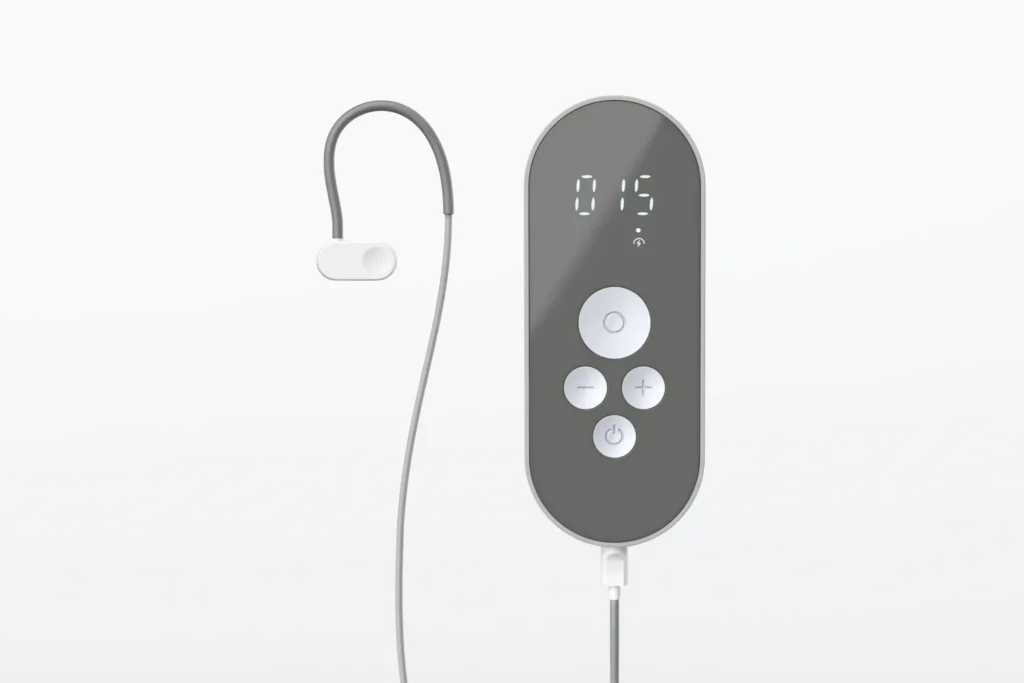
The only device in this comparison with published placebo-controlled evidence addressing whether stimulation reaches vagal brainstem pathways: can you show your signal reaches the nerve?
It can. Randomised placebo-controlled studies at named institutions, and the evidence goes past self-reported symptom scores into measured outcomes: heart rate variability, inflammatory markers, brainstem response.
The mechanism is why.
Nurosym targets the auricular branch at the left tragus, the one place vagal fibres reach the skin, where the fibres are sensory rather than motor. Sensory fibres project towards brainstem nuclei involved in autonomic regulation.
In use, it is unremarkable in the best way. Clips on like an earphone, mild tingle, and you read or work through it. During our testing, the battery lasted approximately one month between charges. Ours ran a full month of daily use without a charge: no gel, no app, no subscription. No consumables or ongoing subscriptions are required.
Limitations: slips on smaller tragus. At £599, it is not a cheap product.
Evidence 10 · Safety 9 · Accessibility 9 · Mechanism 10 · Cost 9
Bottom line: the device we considered the strongest overall based on the available evidence and usability.
2. GammaCore · 7.4/10
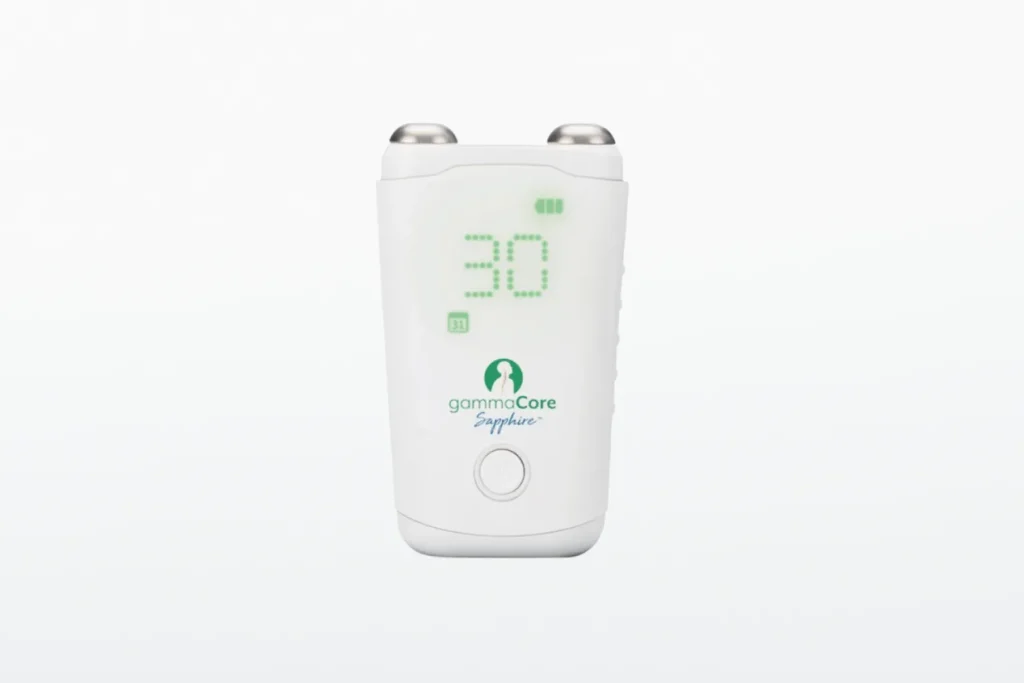
Excellent at one job. Expensive over long-term use.
A serious device, properly evidenced. 20+ studies, certification, real published results for cluster headach. If headache is your problem, our ranking should not discourage its use for that indication.
Two things keep it off the top.
It is validated for headache, not the autonomic and inflammatory outcomes most people are shopping for. Evidence supporting one medical indication cannot automatically be assumed to apply to another.
The long-term cost is substantial. Preloaded with three months of sessions, then roughly £466 per three months after. Five years of daily use runs past £10,000, against a one-time £599. You also need a prescription, which means a consultation you may pay for.
Didn’t like: cervical stimulation is intense. Several of us clenched our jaws. Positioning takes practice, and it needs gel.
Evidence 9 · Safety 9 · Accessibility 5 · Mechanism 9 · Cost 2
Bottom line: right for headache, if the ongoing cost works.
3. Sensate · 5.1/10
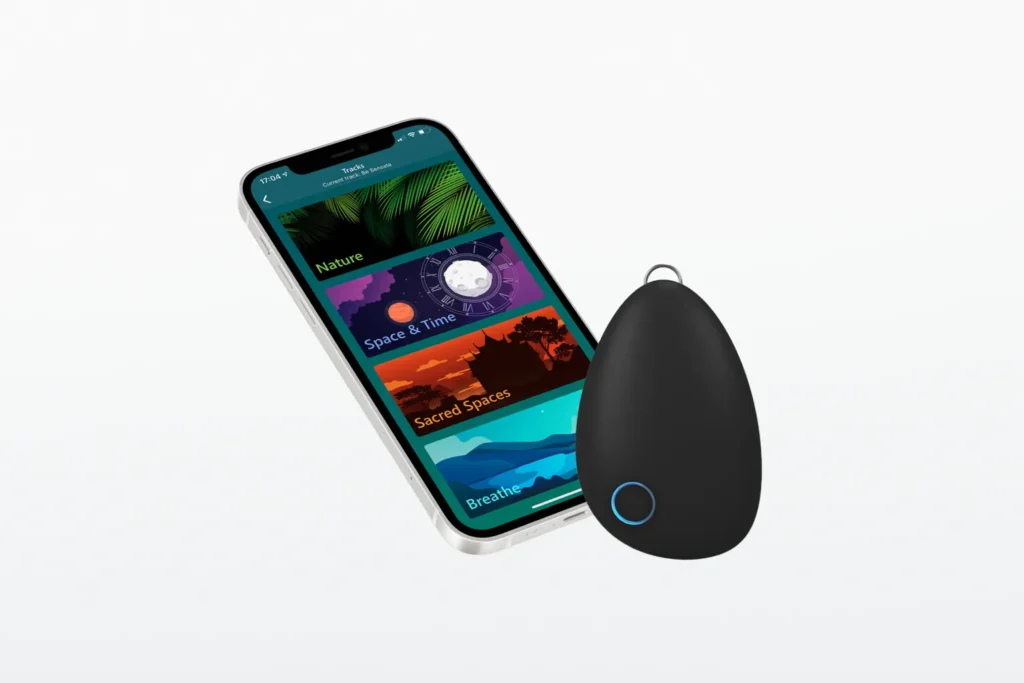
A well-designed relaxation device in the wrong category.
A smooth stone that sits on the chest, producing low-frequency vibration with audio. It was pleasant, and several of us enjoyed it.
It is not a vagus nerve stimulator. To its credit, it is not certified as one, does not claim to be, and sends no current into you.
But it sits in the same product category as devices that do, which invites a comparison it compares less favourably on the criteria we assessed. No peer-reviewed placebo-controlled studies. Vibration at the chest is indirect: the vagus communicates in electrical signals, and vibration operates through a different mechanism from electrical vagus nerve stimulation. Any benefit is plausibly relaxation and breathing, which may explain some of the reported benefits.
Evidence 2 · Safety 8 · Accessibility 7 · Mechanism 2 · Cost 7
Bottom line: fine as a relaxation aid. Not vagal neuromodulation.
4. Pulsetto · 3.6/10
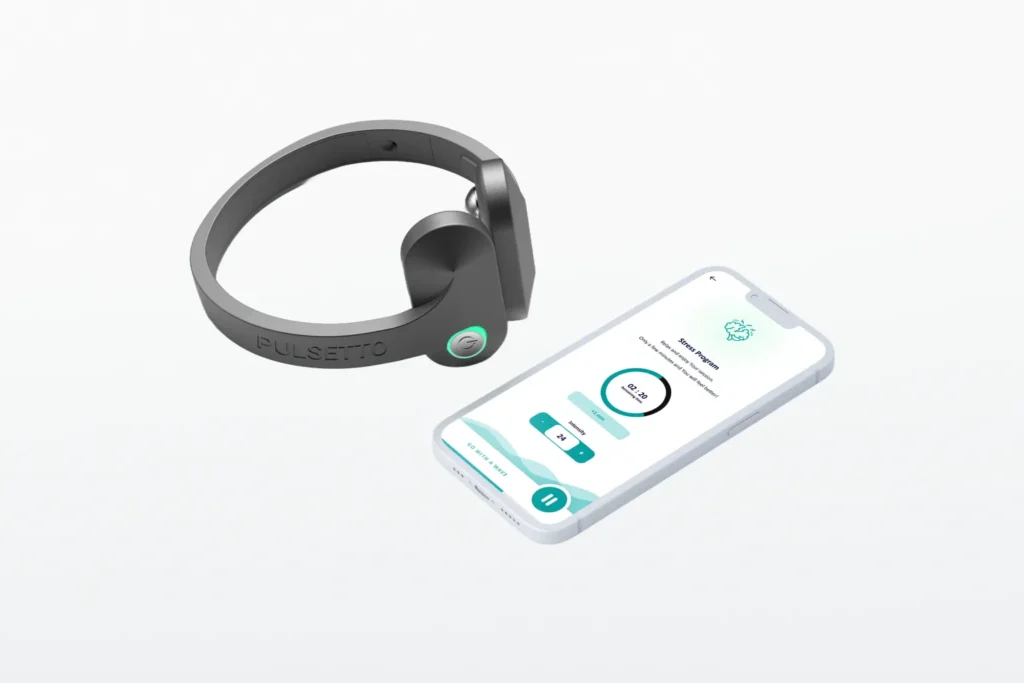
We do not recommend it.
A neck-worn device delivering bilateral electrical stimulation, with an app offering programs for stress, sleep, pain and anxious thoughts. Well made, easy to use.
We could not find peer-reviewed placebo-controlled studies on the device, and the company publishes none. That was our principal finding. This substantially limited the score it received in our assessment.
We could not identify published placebo-controlled evidence demonstrating vagus nerve activation with this specific device; we cannot verify the programs differ. And the safety profile of bilateral cervical stimulation at these parameters is not established in published work.
To be precise: we are not saying this device has harmed anyone. We are saying that current applied to both sides of the neck, in an area containing cardiac vagal fibres, would ideally be supported by published device-specific safety data.
Here it does not.
It is also important to note that FCC certification, which shows up in this category’s marketing, covers electromagnetic compatibility and radio emissions. It is not a safety assessment of a signal sent into your nervous system.
Evidence 0 · Safety 3 · Accessibility 6 · Mechanism 1 · Cost 8
Bottom line: want a neck device? GammaCore has the evidence. Want the evidence and the lower risk? Nurosym.
What this comes down to
Looking solely at the published evidence, the category divides in one place.
Two have published placebo-controlled evidence demonstrating activation of vagal brainstem pathways.
For the other two devices, we could not identify comparable published evidence.
Everything else follows from that. Published scientific studies provide the strongest basis for assessing safety and effectiveness. You cannot have proven benefit without a proven mechanism, and you cannot borrow either from research conducted on somebody else’s hardware.
Our ranking:
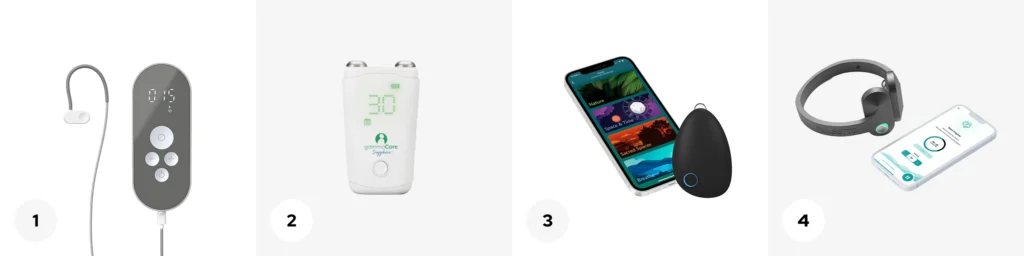
If you have an implanted cardiac device (such as a pacemaker), a cardiac arrhythmia, are pregnant, or have another significant medical symptom, consult your healthcare professional before using any vagus nerve stimulation device.
This blog post aims to be informational and should not replace professional health advice. Always consult with a health professional for personalised advice.
References
- Bu, Y., Liang, A., Hoffman, B. U., Schiehser, D. M., Case, O., Simmons, A., Klaming, R., Gottfried‐Blackmore, A., Mittal, R. K., Puleo, C., Lim, H., & Lerman, I. (2026). A review of vagus nerve stimulation for disease: Comprehensive theory and evidence for mechanisms of action. Comprehensive Physiology, 16(2). https://pmc.ncbi.nlm.nih.gov/articles/PMC12960021/
- Fang, Y.-T., Lin, Y.-T., Tseng, W.-L., Tseng, P., Hua, G.-L., Chao, Y.-J., & Wu, Y.-J. (2023). Neuroimmunomodulation of Vagus Nerve Stimulation and the Therapeutic Implications. Frontiers in Aging Neuroscience, 15, 1173987. https://pmc.ncbi.nlm.nih.gov/articles/PMC10358778/
- Ferstl, M., Teckentrup, V., Lin, W. M., Kräutlein, F., Kühnel, A., Klaus, J., Walter, M., & Kroemer, N. B. (2021). Non-invasive vagus nerve stimulation boosts mood recovery after effort exertion. Psychological Medicine, 52(14), 3029–3039. https://pmc.ncbi.nlm.nih.gov/articles/PMC9693679/
- Lommano, M. G., Farah, S., Bianchi, B., Risa, A. M., Sarzi-Puttini, P., Salaffi, F., & Di Carlo, M. (2025). Non-invasive auricular vagus nerve stimulation in fibromyalgia: Impacts on autonomic function, central sensitization and pain catastrophizing. Joint Bone Spine, 93(1), 105966. https://www.sciencedirect.com/science/article/pii/S1297319X25001289
- O’Connell, S., Dale, M., Morgan, H., Carter, K., Morris, R., & Carolan-Rees, G. (2021). GammaCore for Cluster Headaches: A NICE Medical Technologies Guidance. PharmacoEconomics – Open, 5(4), 577–586. https://pmc.ncbi.nlm.nih.gov/articles/PMC8611122/


 English
  German
  French
  Spanish
  Swedish
  Italian