
Four certified devices, ranked on evidence rather than marketing. What separates them, and what the price tags don’t tell you.
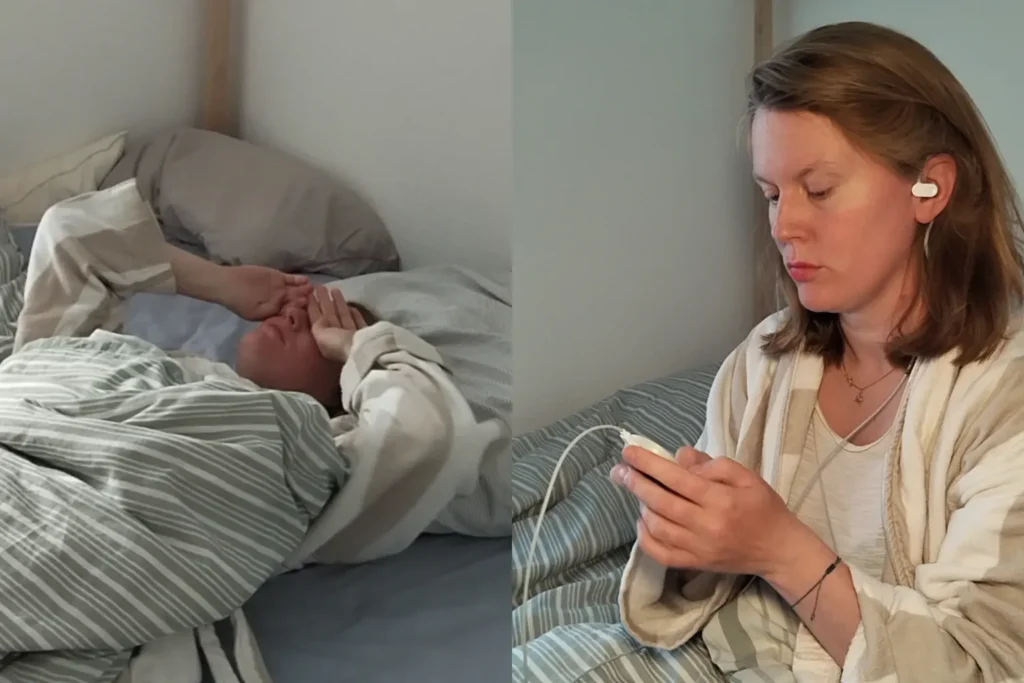
You’ve already worked out this isn’t a sleep problem.
You get the hours but you wake up flattened anyway.
Thyroid panel, iron, B12, full bloods, all normal.
Then you found the research on vagal tone, and it explained more about your body than any of those tests had.
So now you’re looking at four devices… lost.
Here’s what separates them.
Why the Vagus Nerve?
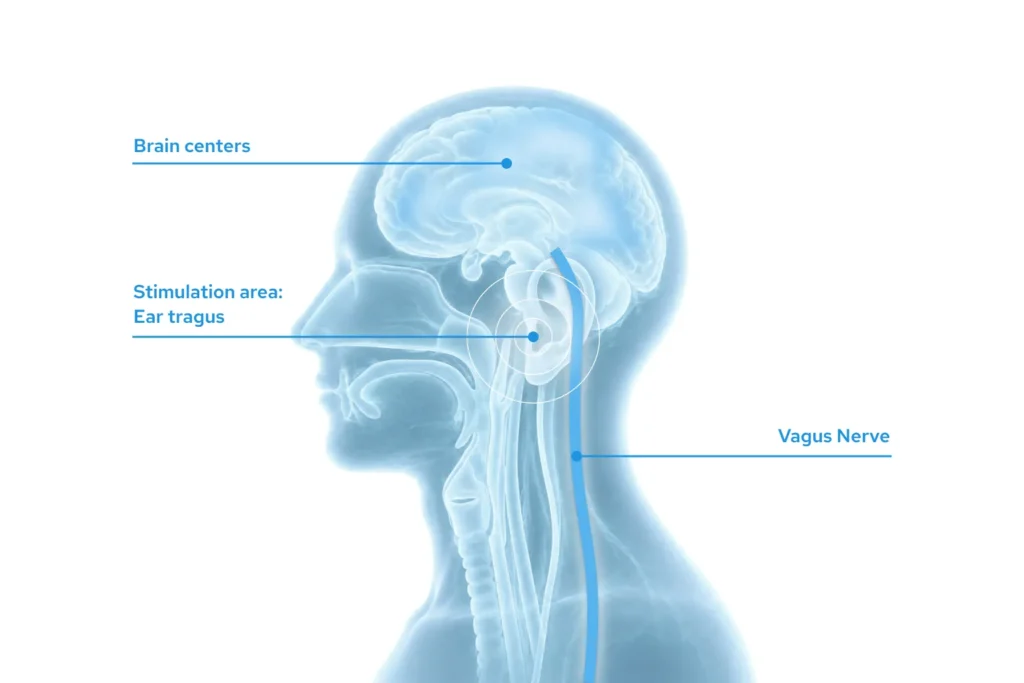
Chronic tiredness has a measurable physical driver, and it’s the vagus nerve.
It runs from your brainstem, through your neck, down to your heart and gut.
When the signal is strong, your body drops into repair mode on its own.
When it’s weak, you stay in low-grade fight-or-flight:
- Cellular energy production never fully switches on
- Inflammatory cytokines go unchecked, and those directly produce tiredness and brain fog
- Sleep loses its slow-wave stages, the ones that do the physical repair
- Mild activity costs you days instead of hours
Here’s the part that matters:
You can sleep nine hours and never once enter recovery.
Sleep is the opportunity and vagal tone is what lets your body take it.
Repair, immune regulation and cellular energy production only run in the parasympathetic state.
A body stuck in sympathy spends the night burning reserves instead of rebuilding them.
Which is why the hours look fine and the mornings don’t.
What Actually Separates These Four Devices
Three things, and none of them is price.
Evidence base.
Three of the four devices on this list have never been studied for tiredness.
Some have no published efficacy research at all. That gap is not a technicality when you’ve already spent two years on approaches that half-worked.
Placement. Ear devices target the tragus, the only spot a cranial nerve reaches the surface. Neck devices work near the carotid. Same nerve, different side effects.
Consumables. Two of these need a gel or spray to work at all.
The Four Devices: An Honest Ranking
#1: Nurosym
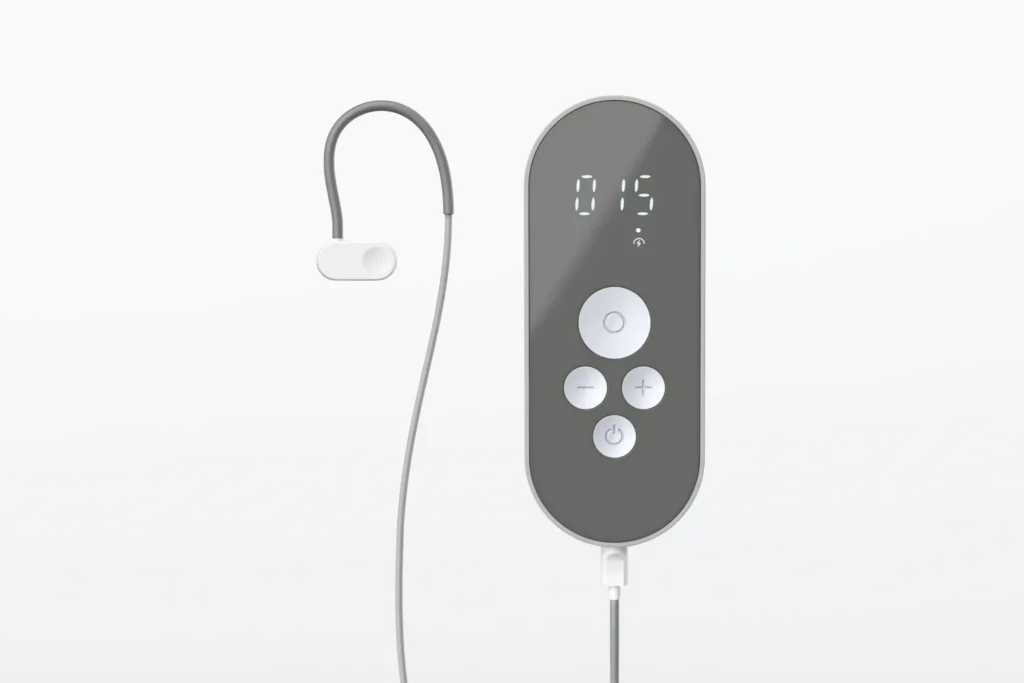
€700 (research subsidy available) · Auricular · AVNT™ by Parasym
Nurosym has 60+ completed scientific studies supporting its mechanism, Pulsetto and Sensate have none.
- Studies using AVNT™ technology document a 61% improvement in vagal tone metrics
- A 2022 study in EClinicalMedicine (The Lancet) found transcutaneous VNS significantly improved tiredness scores and functional status after 8 weeks of daily use
- Zero serious adverse events reported in studies to date
- CE-marked, verified by independent third-party assessment
- Over 5,000,000 supervised stimulation sessions completed; used by 1,000+ health professionals
- No consumables. Buy it once
- 30-day evaluation period
Best for: anyone whose tiredness came on after a virus, shows up as low HRV on a tracker, or has survived every normal blood test intact.
#2: Truvaga Plus
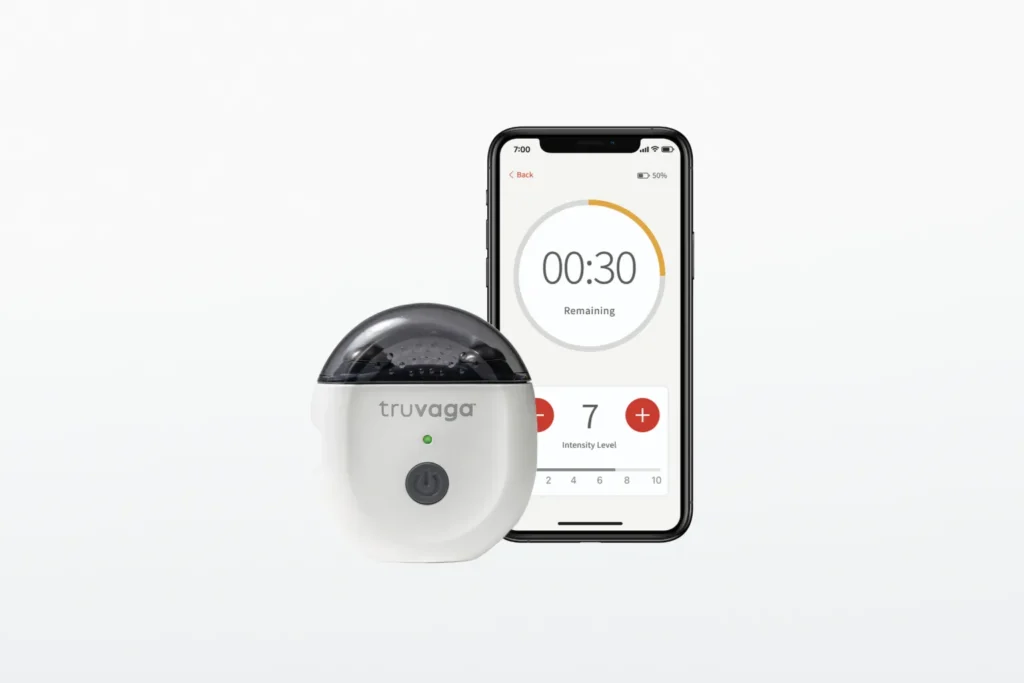
$544+ (device 499,spray~45/year) · Cervical, handheld
Shares its technology lineage with gammaCore, which holds FDA clearance for headache. Rapid parasympathetic effects, simple protocol.
Neck-worn devices carry a risk of facial droop and muscle spasms that ear devices don’t.
- Reported adverse effects in a subset of users include muscle spasms, facial droop, lip pull and localised headache
- The FDA clearance is for headache, not for tiredness or autonomic dysregulation
- Not suitable with pacemakers, cardiac symptoms or recent cardiovascular events
- Holding a handheld device to your neck twice a day is a real barrier when your problem is that everything already costs too much energy
#3: Pulsetto
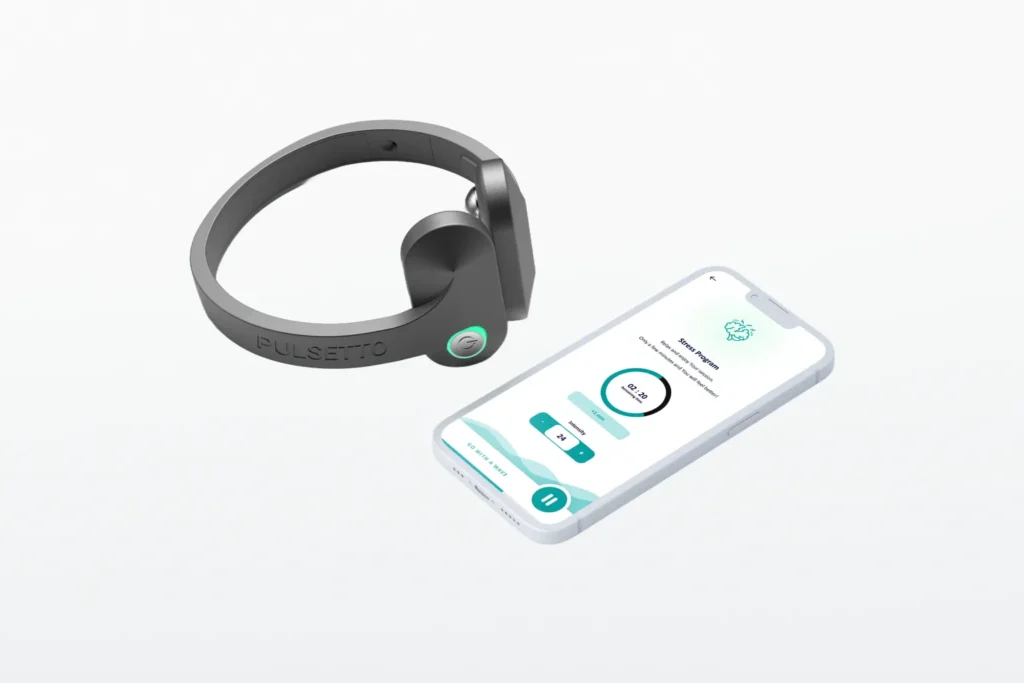
$350–371 (device $269, gel $81–102/year) · Cervical collar
Hands-free design, HSA and FSA eligible, two-year warranty.
The cheaper devices need gel or spray you’ll rebuy every year.
- We found no published peer-reviewed efficacy studies for tiredness or autonomic dysregulation
- Fit problems are frequently reported, particularly on smaller necks, which means inconsistent nerve contact
- Over three years the gel brings the real cost close to the devices it undercuts
#4: Sensate
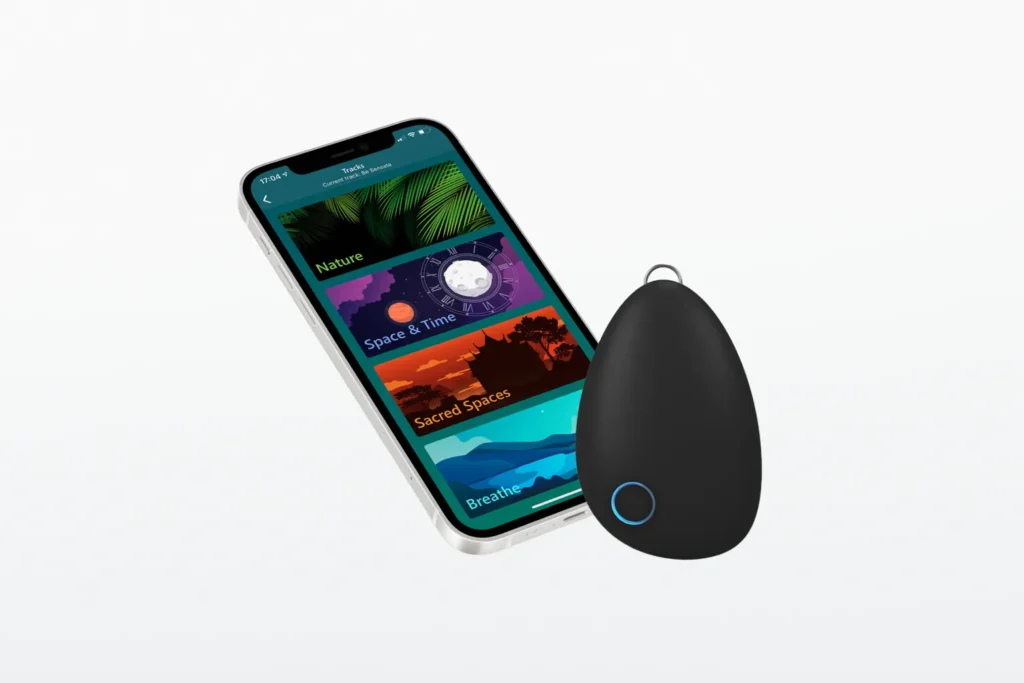
$299–349 · Chest-worn vibrotactile
A pebble-shaped device worn on the sternum, with an app and soundscapes. Pleasant, and genuinely relaxing for some people.
But it isn’t VNS. It uses infrasonic vibration and bone conduction at the chest rather than electrical stimulation of the vagal pathway. That’s general relaxation, not targeted vagal activation.
The distinction matters, because chronic tiredness isn’t a relaxation deficit. If your system could drop into recovery on its own, nine hours of sleep would already be working.
Best for: a wind-down tool alongside something else. Not a rehabilitation device.
The Verdict
Before any of this: fatigue is a symptom, not a diagnosis.
Persistent tiredness has a long differential, and a good chunk of it is cheap to rule out: ferritin and full blood count, thyroid panel, B12 and vitamin D, HbA1c, and a sleep apnoea screen if you snore or wake unrefreshed.
If you haven’t had those done in the last year, do that first.
Given that, the sensible thing is to choose on what you can verify.
Nurosym leads on published research volume and regulatory class, and has no ongoing cost. It’s also the most expensive, and most of its evidence comes from clinical populations rather than people like you.
A session tonight might not move tomorrow’s reading, and any device promising that is selling you something.
Train the pathway consistently and the number follows.
Disclaimer: This article has been written by a licensed medical professional and is intended for general informational purposes only. It does not substitute for personalised medical advice, diagnosis, or therapy. Always seek the guidance of a qualified health professional with any questions regarding a medical symptom or health objective.
Sources
- Badran BW, et al. Transcutaneous auricular vagus nerve stimulation for post-viral tiredness. EClinicalMedicine (The Lancet). 2022.https://pubmed.ncbi.nlm.nih.gov/36002874/
- Stavrakis S, Chakraborty P, Farhat K, et al. Noninvasive Vagus Nerve Stimulation in Postural Tachycardia Syndrome. JACC: Clinical Electrophysiology. 2023 Nov 1. https://pubmed.ncbi.nlm.nih.gov/37999672/
- Wang Z, Zhu T, Li X, Lai X, Chen M. Tragus Nerve Stimulation Attenuates Postural Orthostatic Tachycardia Syndrome in Post COVID-19 Infection. Clinical Cardiology. 2025 Feb 27;48(3).https://pubmed.ncbi.nlm.nih.gov/37999672/
- Tracey KJ. The inflammatory reflex. Nature. 2002;420(6917):853-859. https://www.nature.com/articles/nature01321
- Thayer JF, Åhs F, Fredrikson M, Sollers JJ, Wager TD. A meta-analysis of heart rate variability and neuroimaging studies. Neuroscience & Biobehavioural Reviews. 2012;36(2):747-756. https://pubmed.ncbi.nlm.nih.gov/22178086/
- Komaroff AL, Lipkin WI. Insights from myalgic encephalomyelitis/chronic tiredness may help unravel the pathogenesis of post-acute COVID-19 syndrome. Trends in Molecular Medicine. 2021;27(9):895-906. https://pubmed.ncbi.nlm.nih.gov/34175230/
- Bonaz B, Bazin T, Pellissier S. The Vagus Nerve at the Interface of the Microbiota-Gut-Brain Axis. Frontiers in Neuroscience. 2018;12:49. https://pubmed.ncbi.nlm.nih.gov/29467611/

 English
  German
  French
  Spanish
  Swedish