La conexión energética que la mayoría de los practicantes nunca mencionan - y por qué el propio sistema de recuperación del cuerpo puede ser la pieza faltante.
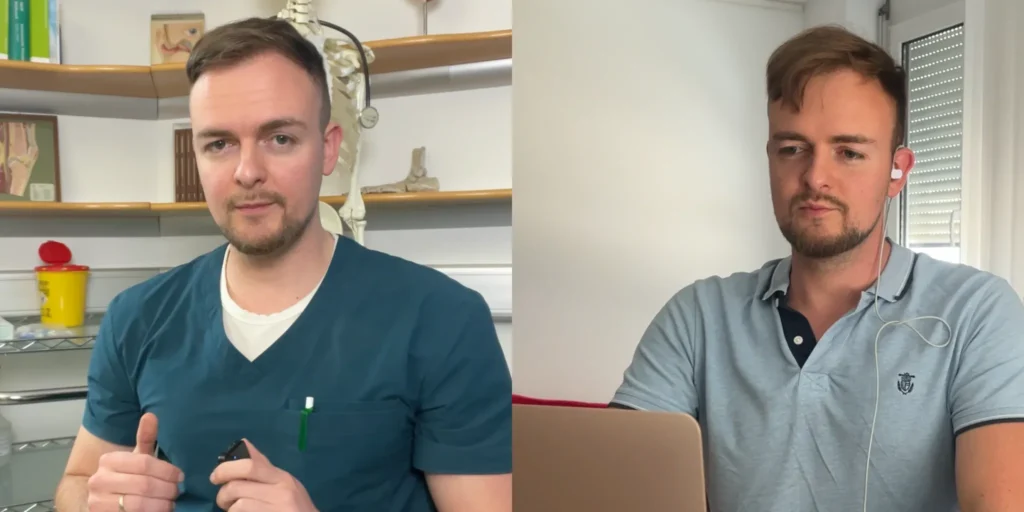
La mayoría de las personas que vienen a mí con cansancio ya están haciendo lo correcto.
Más sueño. Mejor nutrición. Magnesio. Ashwagandha. Vitamina D. B12. Paneles de hierro. Controles de tiroides.
Y luego añaden, en silencio: "Lo he probado todo. Todavía estoy exhausto."
Después de 15 años en la medicina funcional -y mi propia experiencia con el tipo de cansancio que no responde al descanso-, comencé a notar algo que ni la medicina convencional ni la mayoría de los protocolos de suplemento alguna vez abordaron.
Durante años no pude explicarlo. Los usuarios estaban haciendo todo bien. Las muestras de sangre mejoraban. Y aún así - el agotamiento permanecía.
Finalmente encontré la respuesta. Y cambió completamente mi manera de abordar el cansancio.
Te mostraré exactamente lo que quiero decir.
Lo que sigo viendo - Y lo que más se acerca a Miss
La gente que viene a mí no está luchando porque no lo intenta.
Tienden a ser capaces, responsables y con frecuencia la persona de la que depende su familia o su lugar de trabajo. Rara vez admiten lo empobrecidos que se sienten en realidad.
Llegué a la medicina funcional en parte debido a este patrón - y en parte porque lo viví yo mismo. Hace años desarrollé SIBO, hinchazón persistente y un cansancio que no parecía cambiar con el sueño. Estaba haciendo todo lo que mi entrenamiento convencional sugería. Los laboratorios estaban al borde de la normalidad. La energía no lo estaba.
Esa experiencia me sumergió en la investigación de la energía, la inflamación y el sistema nervioso. Y lo que encontré allí cambió la forma en que entendía no sólo la salud intestinal, sino el cansancio mismo.
Lo que describen sigue un patrón que ahora reconozco inmediatamente.
- El padre de los niños pequeños que no ha dormido una noche completa en tres años. Toma hierro, B12, magnesio. Se va a la cama temprano. Se despierta y siente que no ha dormido en absoluto. El café deja de funcionar a las 10 de la mañana.
- Al cuidador - cuidar de un padre anciano además de tener un trabajo a tiempo completo. Lleva tanto tiempo sin hacer nada que se ha olvidado de lo que es tener energía. Cada suplemento que su médico de cabecera le ha dado un alivio parcial en el mejor de los casos.
- El profesional bajo una presión incesante - reuniones consecutivas, plazos que no se detienen, un teléfono que nunca se queda en silencio. Hace ejercicio, come bien y no puede entender por qué se siente más agotada ahora que hace diez años cuando trabajaba igual de duro.
Un usuario lo describió de la siguiente manera:
"Lo hago todo bien. Duermo, como bien, tomo suplementos. Sigo sin comer. Y no sé por qué."
Lo que a ninguno de ellos se les había dicho era esto:
El cansancio no siempre es un problema de deficiencia. Muy a menudo, es un reglamento problema.
Y esas son dos cosas completamente diferentes - con dos soluciones completamente diferentes.

El cambio de creencia que cambia todo
Aquí hay algo que me tomó años en la práctica para entender completamente - y que rara vez veo explicado fuera de los círculos especializados.
La energía no se trata solo de lo que uno pone en él. Se trata de si sus células realmente pueden usarla.
Cuando el cuerpo está bajo estrés crónico -por la presión del trabajo, la prestación de cuidados, las demandas familiares o simplemente años de no recuperación completa- el sistema inmunológico produce mensajeros inflamatorios llamados citoquinas proinflamatorias (pequeñas proteínas que indican una amenaza y activan los sistemas de defensa del cuerpo).
Piense en las citocinas como el sistema de alarma del cuerpo. Están diseñadas para ayudarle a sobrevivir a amenazas de corto plazo. El problema comienza cuando la alarma nunca se apaga.
En los episodios cortos, esto es útil. En la activación crónica, se convierte en un problema.
Estas citocinas no solo causan inflamación. Bloquean activamente el funcionamiento de las mitocondrias -las estructuras productoras de energía dentro de sus células-.
Se puede pensar en las mitocondrias como minúsculas centrales eléctricas dentro de casi todas las células del cuerpo. Cuando funcionan bien, tienes energía. Cuando algo los bloquea, ninguna cantidad de sueño o nutrición cambia eso.
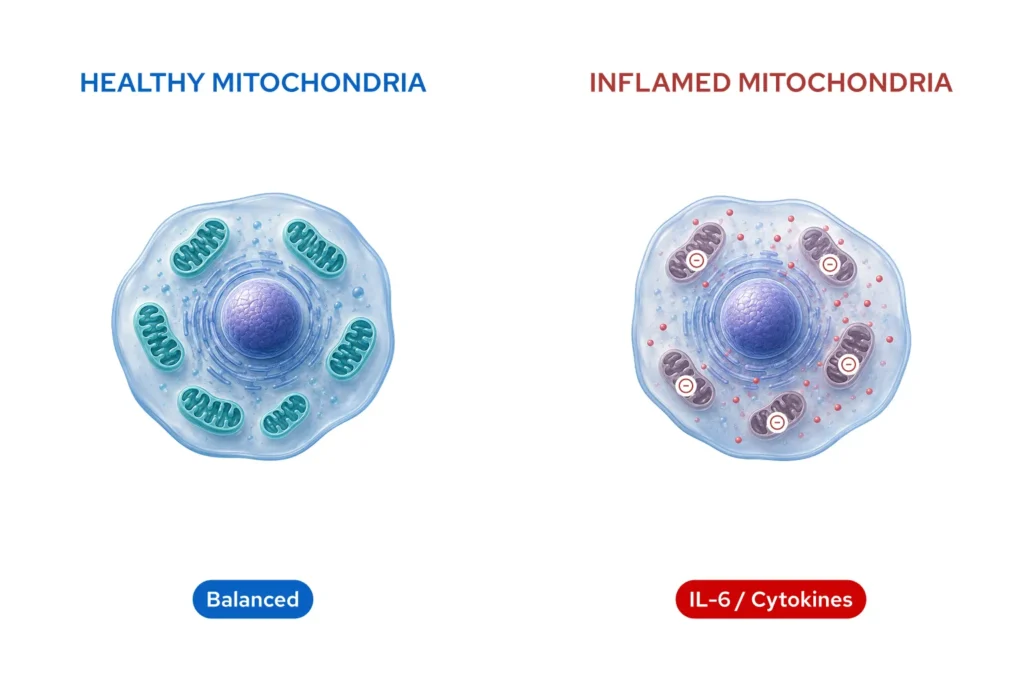
Es por esto que las personas exhaustas pueden dormir 9 horas y aún sentirse agotadas. Esta es la razón por la que los suplementos pueden aumentar los niveles en un análisis de sangre, pero no la energía en una persona real. El problema no es la entrada, sino el sistema que la procesa.
El cuerpo tiene su propio mecanismo para regular estas citocinas y restaurar la producción de energía celular. Y el estrés crónico -en cualquiera de sus formas- parece debilitar este sistema regulatorio con el tiempo.
Lo que me dejó con una pregunta en la que no podía dejar de pensar:
¿Hay una manera directa de llegar a ese sistema regulatorio?
"Lo he probado todo." Probablemente lo has hecho. Esto es lo que en realidad falta.
Todo lo que la mayoría de las personas intentan hacer para cansarse tiene un valor genuino.
Pero esto es lo que me doy cuenta una y otra vez en la práctica.
- Cafeína y bebidas energéticas - la primera cosa que busca la mayoría de las personas, y es comprensible. Trabajan. Durante unas horas. Pero la cafeína aumenta el cortisol, y la elevación sostenida del cortisol empeora el ciclo inflamatorio subyacente. La mayoría de los usuarios crónicamente cansados que veo están tomando café a las 9 de la mañana y se preguntan por qué se estrellan antes de las 2 de la tarde.
- Suplementos - magnesio, B12, hierro, vitamina D. Estos aumentan los niveles en las células sanguíneas y a veces eso es lo que importa. Pero no abordan por qué esos niveles cayeron en primer lugar, o por qué las celdas no están utilizando lo que ya está disponible.
- Adaptógenos - ashwagandha, rhodiola, ginseng. Los uso en mi propia práctica y realmente pueden apoyar la resiliencia al estrés. Pero funcionan mejor cuando el sistema regulatorio subyacente está funcionando. Cuando no lo está, están apoyando una tubería que gotea en lugar de arreglarla.
- Más sueño - realmente necesario, y la primera cosa que pido. Pero cuando el sistema nervioso está desregulado, el sueño se vuelve superficial y no reparador sin importar cuántas horas uno tenga. Las personas registran sus índices de sueño y se encuentran en un nivel bajo, incluso después de 8 o 9 horas en la cama.
- Dieta y la nutrición - fundamental, y siempre parte de lo que recomiendo. Pero los alimentos solo se pueden procesar eficazmente cuando el intestino y el sistema inmunológico están regulados. La misma comida alimenta a un cuerpo regulado de manera muy diferente que una comida desregulada.
- Reducción del estrés y atención plena - valioso cuando es accesible. Pero requieren una base de calma que la mayoría de las personas con cansancio crónico ya han agotado. Decirle a alguien con energía agotada que medite es un poco como decirle a alguien con una pierna rota que dé un paseo.
"Como mejor que nadie que conozco. Duermo 8 horas. Tomo más suplementos de los que mi médico puede controlar. Y aún siento que estoy corriendo al 40%."
Estos no son enfoques erróneos. Muchos de ellos están exactamente en lo cierto.
El problema es que todos ellos apuntan a donde aparece el cansancio, no al sistema que lo genera.
La cafeína gestiona el síntoma. Los suplementos abordan la deficiencia. Los adaptógenos apoyan la resiliencia. La atención plena calma la mente.
Ninguno de ellos trabaja directamente en la vía inflamatoria que está bloqueando la producción de energía celular.
Un usuario había estado haciendo todo lo anterior durante cuatro años. Tres profesionales diferentes. Optimizado para la tiroides. El microbioma intestinal trabajó en ello. Protocolo suprarrenal completado. Energía todavía plana. Porque estaba tratando las ramas, no la raíz.
La pregunta que me llevó a la respuesta
En este punto de mi práctica, había dejado de preguntar: "¿En qué es deficiente esta persona?"
Y empezó a preguntar: "¿Qué sistema debe regular la inflamación y la energía - y por qué ha dejado de funcionar?"
Esa pregunta me llevaba de vuelta al mismo lugar.
Al nervio vago (vagus significa "deambular" en latín: corre desde el tronco encefálico hasta el tórax y el abdomen, conectando directamente el cerebro a todos los órganos principales, incluidos el intestino, el corazón y el sistema inmunológico).
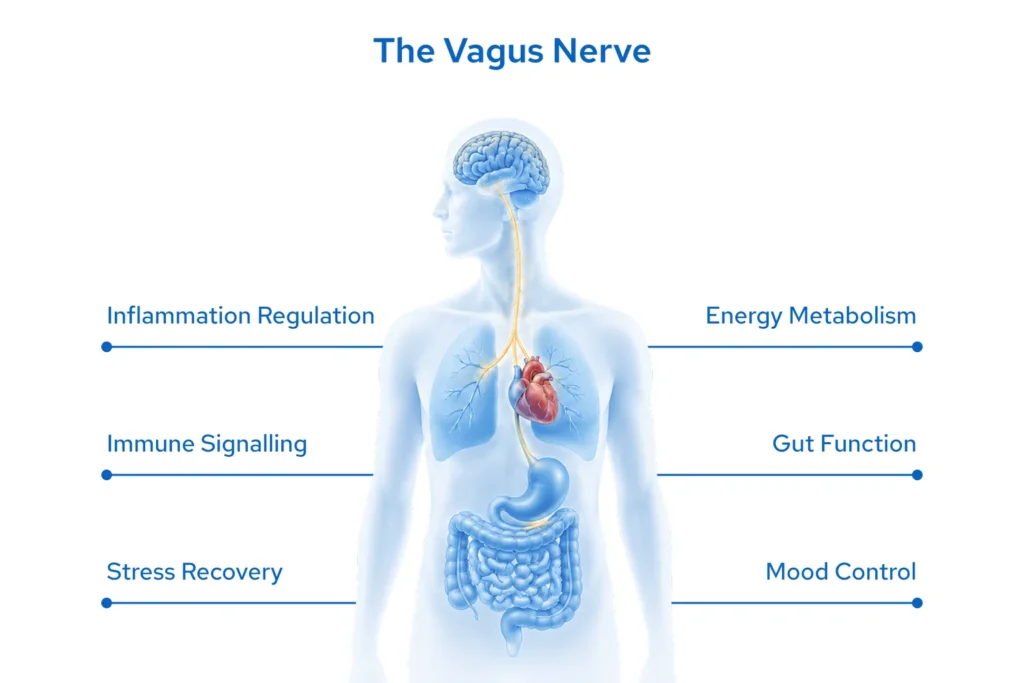
Es el nervio más largo del cuerpo. Y es la principal vía a través de la cual el cerebro se comunica con el sistema inmunitario, incluida la regulación de las citoquinas proinflamatorias como la IL-6.
Piénsalo como el interruptor antiinflamatorio incorporado en el cuerpo.
Su trabajo no es detener la inflamación por completo. Es ayudar a apagarla una vez que el peligro ha pasado.
Cuando el tono es vagal (la medida de lo bien que funciona el nervio vago) es saludable, el cuerpo se mueve de manera fluida: llega el estrés, se activa la respuesta inflamatoria, pasa la amenaza, las citoquinas se limpian, las células vuelven a producir energía eficientemente.
En el estrés crónico, la sobrecarga de cuidados y el agotamiento sostenido: las caídas del tono vagal. El interruptor antiinflamatorio deja de funcionar. Las citocinas se acumulan. Las mitocondrias permanecen bloqueadas. La energía se mantiene estable, independientemente de cuánto duermas o cuántos suplementos tomes.
Dos entradas diferentes. Un sistema regulatorio defectuoso detrás de ambos.
Lo que me llevó a la única pregunta que quedaba: ¿hay una manera de llegar directamente a ese interruptor?
Lo que encontré - Y por qué fui escéptico
Seré honesto - cuando me encontré por primera vez con la investigación sobre la estimulación del nervio vago (VNS), mi reacción inmediata fue el escepticismo.
El enfoque establecido era quirúrgico: un dispositivo implantado en el pecho, conectado directamente al nervio vago en el cuello. Se utiliza para estados depresivos resistentes a la terapia. Realmente eficaz en el contexto. Completamente irrelevante para un usuario que lidia con cansancio crónico y una vida que no se detiene.
Entonces encontré algo que no esperaba.
Los investigadores habían identificado una rama del nervio vago que discurre justo debajo de la superficie de la piel, en el oído externo, en un pequeño trozo de cartílago llamado trago, a la entrada del canal auditivo.
Resonancia magnética funcional (fMRI) estudios confirmaron que estimular este lugar activa las mismas vías del tronco encefálico que la estimulación quirúrgica del nervio vago.
Este es el único lugar del cuerpo donde se puede llegar directamente al nervio vago - sin cirugía, sin receta, sin una cita médica.
Los científicos desarrollaron una técnica que utiliza señales eléctricas de bajo nivel: Estimulación del nervio vagus auricular transcutáneo (taVNS - "transcutáneo" significa a través de la piel, "auricular" significa a través del oído).
Revisé cuidadosamente la investigación publicada. Estudios científicos controlados por placebo y revisados por pares, realizados en colaboración con instituciones como Harvard, UCL y King’s College London.
Y entonces encontré el resultado que me hizo dejar de ser escéptico.
En un estudio controlado con placebo y revisado por pares, las puntuaciones de cansancio se redujeron en 48% en 10 días.
No con suplementos. No con más sueño. No con ningún cambio en la dieta o el estilo de vida.
Con una señal diaria de 15 minutos entregada directamente a un nervio en el oído.
Ese era el "hábito doméstico simple" al que apuntaba la investigación. Y el mecanismo detrás de ello -la vía antiinflamatoria colinérgica- explicaba exactamente por qué todo lo demás había llegado tan lejos.
No estaba buscando otro suplemento para añadir a un protocolo ya largo - porque la mayoría de mis usuarios ya tenían armarios llenos de ellos.
No estaba buscando otra técnica de sueño que requiriera un ambiente perfecto para trabajar.
No estaba buscando otro enfoque que pidiera más a la gente que no tenía nada.
Estaba buscando algo que funcionara en el nivel del sistema mismo. Y esta fue la primera cosa que encontré que funcionó.
Pero todavía había un problema.
La investigación fue clara. El mecanismo dio sentido a todo lo que había visto en la práctica. Lo que necesitaba era algo que los usuarios pudieran usar de verdad -en casa, en su vida actual, sin necesidad de energía que no tuvieran para utilizarlo.
Lo que muestra la investigación
Antes de recomendar este enfoque a los usuarios, quería ver si la investigación reflejaba lo que había estado observando en la práctica.
Resultado | Métrico |
−48% | Cansancio (estudio revisado por pares de 10 días) |
−40% | Niebla cerebral |
−78% | Marcadores inflamatorios IL-6 (estudio de 3 meses) |
+61% | Actividad del nervio vago (dentro de los 5 minutos de uso) |
+30% | Calidad del sueño |
−35% | Pensamientos de ansiedad |
−45% | Estados depresivos / estado de ánimo bajo |
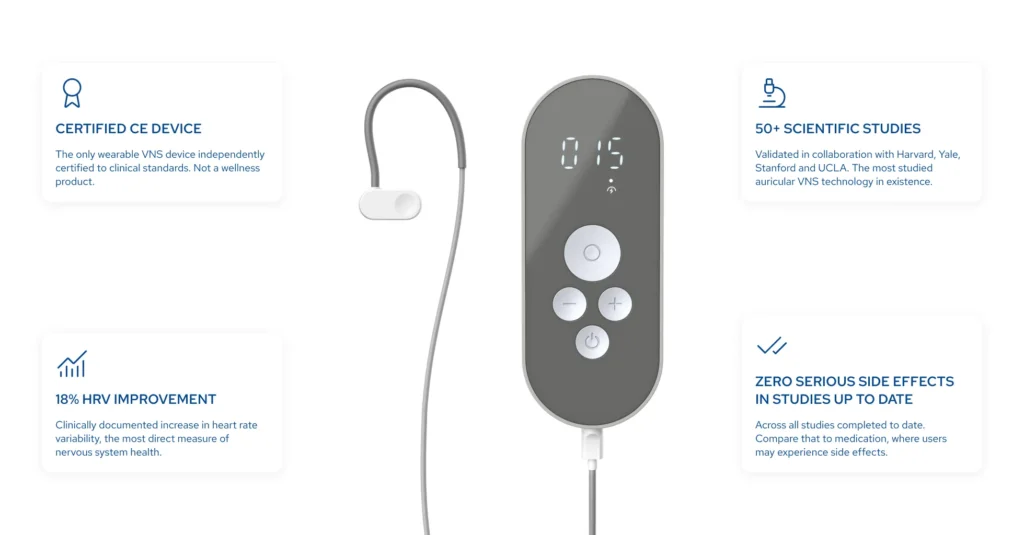
Más de 60 estudios científicos completados. Hasta la fecha, no se han reportado eventos adversos graves.
Lo que me llamó la atención no fue un solo número, sino el patrón.
El cansancio disminuye. La inflamación desaparece. Se levanta la neblina cerebral. El sueño se profundiza. Todo al mismo tiempo, porque todos comparten el mismo sistema regulatorio.
El hábito del hogar que ahora recomiendo
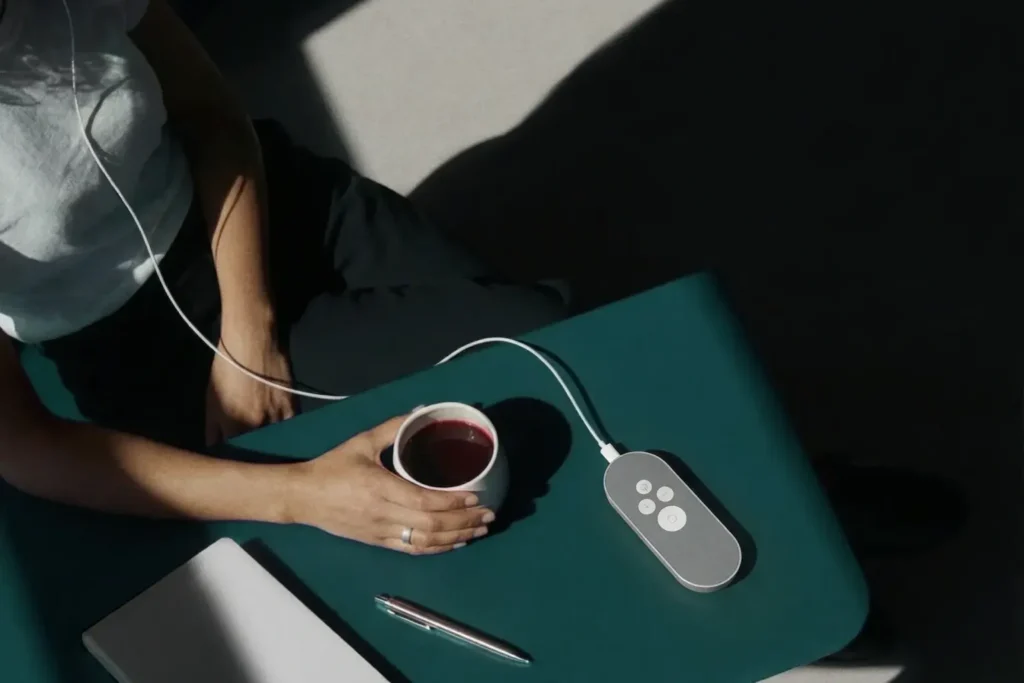
Lo que más me gustó de Nurosym no fue el diseño, sino la evidencia.
Desarrollado por Parasym - una empresa con sede en el Reino Unido con más de 10 años de I+D y más de £10 millones invertidos en investigación científica - Nurosym es un dispositivo taVNS con marca CE y el sistema de estimulación vagal portátil más estudiado científicamente en el mundo.
Respaldado por más de 60 estudios revisados por pares, incluyendo colaboraciones con instituciones como Harvard, UCL y King’s College London.
Recomendado por más de 1000 profesionales de la salud. Más de 5 millones de sesiones completadas.
Utiliza tecnología patentada Tecnología AVNTTM (Terapia de neuromodulación vagal auricular - una señal eléctrica calibrada con precisión que se transmite a través del tragus del oído izquierdo, estimulando directamente la rama auricular del nervio vago).
En términos prácticos: se sujeta suavemente al oído, como un auricular inalámbrico.
Cómo funciona
A diferencia de los suplementos, no intenta elevar el nivel. A diferencia de la higiene del sueño, no intenta optimizar la arquitectura. A diferencia de la atención plena, no requiere que primero encuentres un estado de calma del cual te hayas quedado sin.
Tiene como objetivo activar directamente la vía antiinflamatoria colinérgica -el mecanismo propio del nervio vago para eliminar las citocinas y restaurar la producción de energía celular-.
En otras palabras: en lugar de agregar más entradas a un sistema bloqueado, apoya la capacidad del sistema para desbloquearse.
Cómo se usa
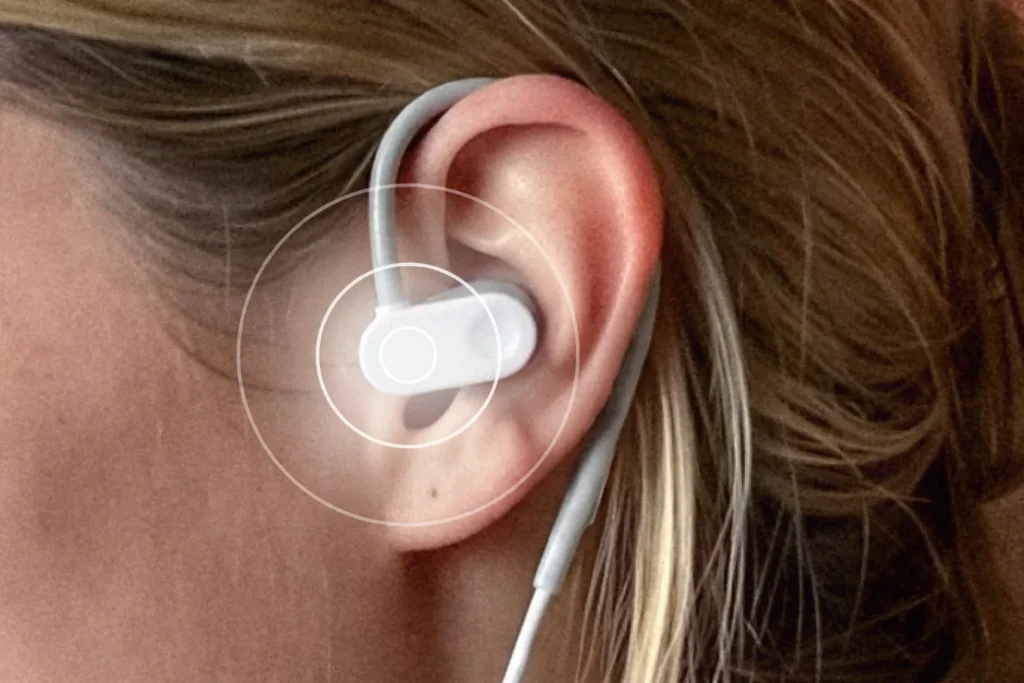
15 a 30 minutos. Mientras desayunamos. Mientras leemos. Mientras nos sentamos tranquilamente. Antes de dormir.
Sin cita. Sin protocolo a seguir primero. No se requiere energía para usarlo.
Nurosym puede ser particularmente adecuado:
- El padre o cuidador que sigue sin tener hijos - que lo ha intentado todo y todavía está exhausto
- El profesional cuya energía ha disminuido a pesar de hacer todo bien
- La persona cuyo cansancio persiste incluso después de dormir mejora
- La persona cuyos análisis de sangre no muestran nada - pero que sabe que algo sigue mal
- Cualquier persona cuyo sistema nervioso simplemente nunca se ha recuperado completamente de un período prolongado de estrés
Requiere sólo lo que una mañana ordinaria ya proporciona.
Lo que la gente realmente nota
Los cambios tienden a llegar sin previo aviso.
"Regresaba a casa del trabajo sintiéndome capaz de cocinar una comida adecuada en lugar de poner una comida lista en el microondas. Sentí que podía aceptar salir a tomar unas copas con amigos sin comprobar si podía dormir la mayor parte del día siguiente."
"Siento como si hubiera salido de una larga hibernación."
"El cambio más notable es un enorme aumento de energía. Mi cansancio es menor y me he sentido capaz de hacer más."
"Llevo dos meses usando el dispositivo. Mis niveles de sueño y energía han mejorado mucho."
Estas son las señales de un sistema inflamatorio que comienza a regular - y la producción de energía celular que comienza a regresar. Pequeña. Incremental. Real.
Y casi siempre - el cansancio no es lo único que cambia.
Por qué el cansancio rara vez es lo único que cambia
Algo que noto de manera consistente - y que los usuarios rara vez esperan.
La misma vía inflamatoria que bloquea la producción de energía también interrumpe la calidad del sueño, reduce el estado de ánimo y mantiene los pensamientos ansiosos en segundo plano.
Estos no son problemas separados que coexisten. Son un sistema desregulado que se expresa en múltiples direcciones a la vez.
Los usuarios que acuden a mí por cansancio comienzan a mencionar -casi como algo secundario- que están durmiendo mejor. Que los pensamientos ansiosos de fondo han desaparecido. Que su ánimo ha mejorado. Que están pensando con más claridad.
Esto tiene sentido una vez que entiendes el mecanismo. No has arreglado varias cosas. El sistema simplemente ha comenzado a regular de nuevo -y cuando lo hace, todo lo que está por debajo empieza a estabilizarse.
¿Es esto correcto para ti?
Si este patrón es familiar -agotamiento que persiste a pesar del sueño y los suplementos, energía que nunca regresa por completo, un cuerpo que parece estar funcionando en la reserva-, vale la pena explorarlo.
Nurosym funciona junto con todo lo que ya estás haciendo, no en lugar de ello. En mi práctica, lo recomiendo junto con el apoyo dietético y el trabajo del microbioma, porque abordar directamente el nervio vago suele ser la pieza que hace que todo lo demás se mantenga.
Una garantía de devolución del dinero de 30 días significa que no hay riesgo financiero. O hace una diferencia significativa - o la devuelves.
Nurosym puede valer la pena considerarlo si:
- El cansancio persiste a pesar de un sueño adecuado y suplementos
- Los niveles de energía han disminuido sin una explicación médica clara
- La niebla mental, el mal humor o los pensamientos ansiosos acompañan al agotamiento
- Los síntomas empeoran consistentemente durante periodos estresantes o exigentes
- Has probado varios enfoques y encontrado un alivio parcial - pero no suficiente
Nurosym no es adecuado para todos. Si usted tiene un dispositivo cardíaco implantado como un marcapasos, está embarazada, ha tenido un evento cardíaco grave en los últimos cinco años o es menor de 18 años, por favor no lo use. Como con cualquier intervención nueva, siempre vale la pena consultar primero con su profesional de salud si tiene un síntoma médico existente.
Si hay algo que espero que este artículo ofrezca, es esto:
Si estás exhausto a pesar de hacer todo bien - eso no es un problema de fuerza de voluntad. No es una señal de que algo está fundamentalmente mal contigo.
Es un sistema regulatorio que ha dejado de recibir la señal que necesita para eliminar la inflamación y restaurar la energía.
Durante años, pensé que el cansancio consistía principalmente en reemplazar lo que le faltaba al cuerpo. Hoy creo que igual de importante es restaurar lo que el cuerpo dejó de regular.
Esa señal es ahora algo que puedes entregar. Desde casa. En una mañana normal. Sin necesidad de energía, todavía no la tienes.
Este artículo refleja mi evaluación profesional de la evidencia y 15 años de experiencia científica en medicina funcional y naturopatía. Es posible que reciba un acuerdo de referencia por compras realizadas a través de los enlaces en este artículo. Solo recomiendo enfoques que he examinado cuidadosamente y me quedaría atrás con mis propios usuarios. Este no es un consejo médico - siempre consulte a un profesional de la salud calificado antes de comenzar cualquier nueva intervención. La cifra del 48% refleja un cambio relativo en un estudio científico revisado por pares; los resultados individuales pueden variar.
- Thomas Hottmann, naturópata y médico funcional | YourBestHealth, Lake Constance
Este artículo de blog tiene como objetivo ser informativo y no debe reemplazar el asesoramiento profesional en salud. Consulte siempre con un profesional de la salud para obtener asesoramiento personalizado.
Referencias
- Verbanck P, et al. Transcutaneous auricular vagus nerve stimulation (taVNS) effects on fatigue, mood and gastrointestinal function. Parasym Ltd peer-reviewed data. 2021.
- Zheng S, et al. Transcutaneous auricular vagus nerve stimulation reduces anxious thoughts and improves attention: placebo-controlled study. Estimulación Cerebral. 2024.
- Dolcini J, et al. Effects of taVNS on sleep quality and widespread pain: randomised controlled trial. Parasym Ltd. 2025.
- Tracey KJ. The inflammatory reflex. Naturaleza. 2002;420:853–859. https://doi.org/10.1038/nature01321
- Breit S, et al. Vagus nerve as modulator of the brain-gut axis in psychiatric and inflammatory disorders. Las fronteras de la psiquiatría. 2018;9:44. https://doi.org/10.3389/fpsyt.2018.00044
- Kaniusas E, et al. Current directions in auricular vagus nerve stimulation: a physiological perspective. Frontiers in Neuroscience. 2019. https://doi.org/10.3389/fnins.2019.00854
- Farmer AD, et al. International consensus on minimum reporting standards for transcutaneous vagus nerve stimulation research. Frontiers in Human Neuroscience. 2021. https://doi.org/10.3389/fnhum.2020.568051
- Redgrave J, et al. Safety and tolerability of transcutaneous vagus nerve stimulation in humans: systematic review. Estimulación Cerebral. 2018;11(6):1225–1238. https://doi.org/10.1016/j.brs.2018.08.010


 Spanish
  English
  German
  French
  Swedish