
Qué años en el frente de la UCI me enseñaron sobre el agotamiento y por qué el cansancio, el mal humor y la sensación de vacío son todos síntomas del mismo patrón oculto.
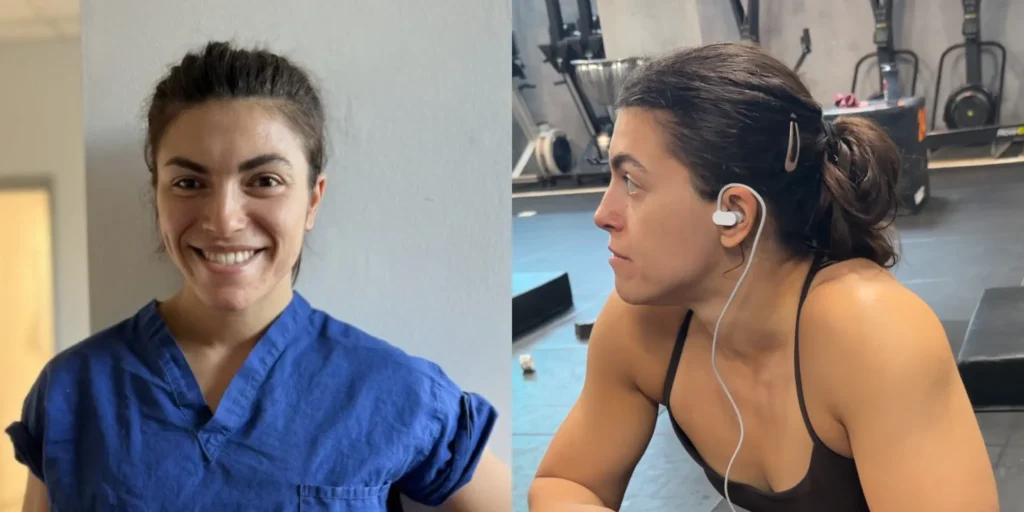
Pasé años pensando que tenía múltiples problemas. La UCI me dio uno. CrossFit me dio otro. El agotamiento me dio un tercero - y el agotamiento fue el que finalmente me detuvo por completo. Cuatro meses de descanso, incapaz de entender por qué me sentí como me sentía, habiendo dado todo lo que tenía durante tanto tiempo que no sabía quién era sin él.
Me llevó mucho tiempo darme cuenta de que todos eran la misma cosa - expresándose en diferentes direcciones.
Lo mismo es válido para la mayoría de las personas con las que hablo.
No son perezosos. No son débiles. No están fallando en el autocuidado.
Son personas que se han vuelto excepcionalmente buenas para dar a todos los demás. Simplemente no se han dado cuenta de que su sistema nervioso ha dejado de recibir.
Lo sé por los turnos de 13 horas en la UCI. Lo sé por sostener la mano de un usuario de mi misma edad mientras su familia se desmorona frente a mí. Lo sé por haber entrenado CrossFit después de un cambio que afectaría a la mayoría de las personas.
Lo que finalmente descubrí cambió completamente mi forma de entender el agotamiento.
No era un problema de motivación. No era un problema de descanso. Ni siquiera era un problema de autocuidado.
Era un patrón oculto: un sistema nervioso atascado en modo de salida permanente, incapaz de recibir. Ese patrón es la causa raíz del agotamiento. Y casi nadie lo explica de esa manera.
Lo que veo todos los días - en la UCI y en todas partes
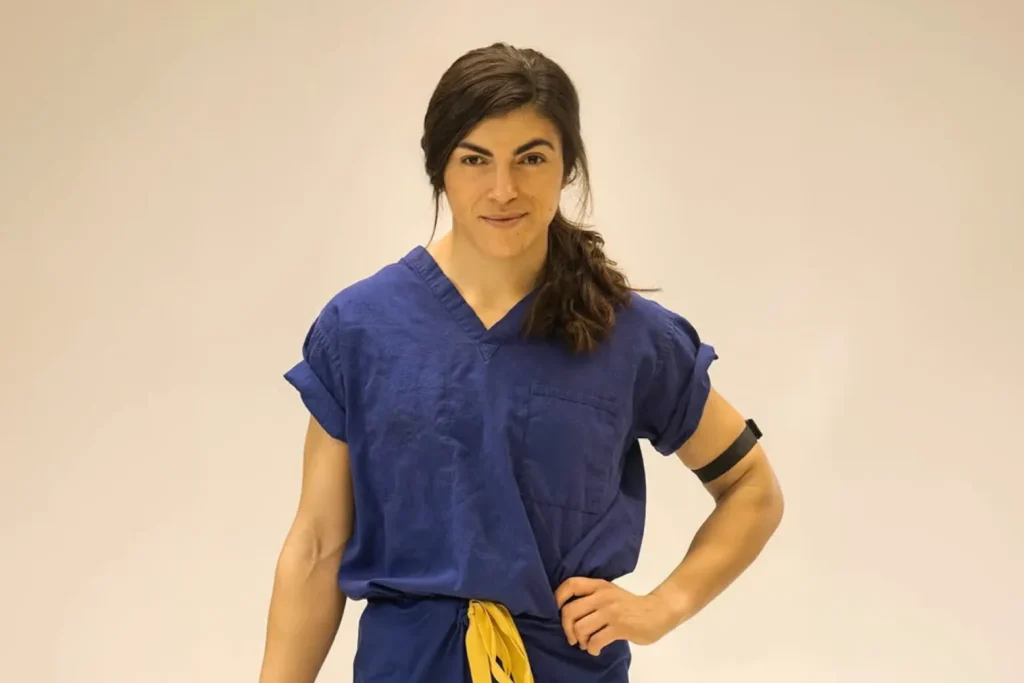
Las personas que terminan sintiéndose exhaustas, agotadas y vacías suelen ser las que han pasado años apareciendo ante todos los demás.
Son los que se esforzaron más, durante más tiempo y en silencio.
Trabajo como enfermera de enlace familiar en la UCI. Parte de mi papel es ser la persona entre el usuario, los profesionales de la salud y la familia -traducir, apoyar, absorber las emociones que no tienen otro lugar a donde ir. Te conviertes en un hombro sobre el que llorar. Te conviertes en la cara a la que la gente mira cuando no sabe qué le está pasando a alguien que ama.
En la UCI, lo veo claramente. Pero veo el mismo patrón en los atletas de CrossFit que adiestro, en los amigos con los que hablo y en los mensajes que recibo de la gente que sigue mi trabajo.
- La enfermera termina un turno de 13 horas - Después de realizar la reanimación cardiopulmonar, consolar a una familia afligida y tomar cientos de microdecisiones que afectaron vidas reales - quién se va a casa y no puede desconectarse. Quien se acuesta no porque esté pensando en algo específico, sino porque su cuerpo nunca recibió la señal de que el día había terminado.
- El padre o madre y el cuidador - Mantener un trabajo, administrar un hogar, cuidar a un padre mayor o a un niño con necesidades adicionales - que describe su vida con una silenciosa devastación:
"Me paso todo el día dando. Al final no tengo nada para mí. Nadie me pregunta cómo estoy. Me siento invisible."
- El profesional de alto rendimiento - que construyó una carrera presentándose, entregando, sin decepcionar a nadie - que se sienta en una reunión y se da cuenta de que no siente nada. No está estresado. No triste. Sólo vacío.
"No estoy viviendo. Estoy sobreviviendo."
- La persona que no puede explicar el mal humor - quien no está en crisis, no se está desmoronando, pero no se ha sentido como ellos mismos en meses. Quien se despierta cansado. Quien encuentra cosas que antes traían alegría ahora se siente tranquilo. ¿Y quién le dice a la gente que está bien, porque la alternativa requiere más energía de la que tienen?
"No estoy triste. Sólo estoy... vacío."
Lo que a ninguno de ellos se les había dicho era esto:
Estos no son cuatro problemas diferentes. Son cuatro síntomas del mismo patrón: el agotamiento que se expresa en cuatro vidas diferentes.
Vidas diferentes. La misma fisiología subyacente.
Y es mucho más común de lo que la mayoría de la gente cree. Las investigaciones muestran que el 78% de los cuidadores familiares experimentan síntomas de agotamiento semanalmente. El 87% informa de estrés crónico y pensamientos ansiosos. Las tasas de agotamiento entre los profesionales con alto desempeño han aumentado un 65% en un solo año -y las personas más afectadas rara vez son aquellas que trabajan menos. En la fuerza laboral más amplia, los trabajadores de la salud siguen estando entre los más afectados.
Pero las estadísticas pasan por alto la parte más importante: el porqué.
El sistema nadie lo explica
Esto es algo que desearía que alguien me hubiera dicho antes de mi agotamiento.
El agotamiento, el agotamiento emocional y el mal humor no son defectos de carácter. Son estados fisiológicos.
Cuando estás dando constantemente - en el trabajo, en casa, emocional, físicamente - tu sistema nervioso funciona en lo que los investigadores llaman dominancia del sistema nervioso simpático (SNS). El estado de lucha o huida. En marcha. Listo. Dando.
El SNS está diseñado para episodios cortos. Una crisis. Un plazo. Una emergencia. No está diseñado para funcionar continuamente - hora tras hora, turno tras turno, año tras año.
Qué sucede cuando lo hace:
El cuerpo permanece en estado de alta alerta. El cortisol se mantiene elevado. El sistema inmunológico comienza a suprimirse. El sueño se vuelve poco profundo. La capacidad emocional se estrecha - puedes funcionar, pero no puedes sentirte completamente. Las cosas que solían restaurarte dejan de funcionar. Y, finalmente, llega el vacío -no porque hayas dejado de preocuparte, sino porque el sistema que se suponía debía reabastecerse nunca tuviste la oportunidad de funcionar.
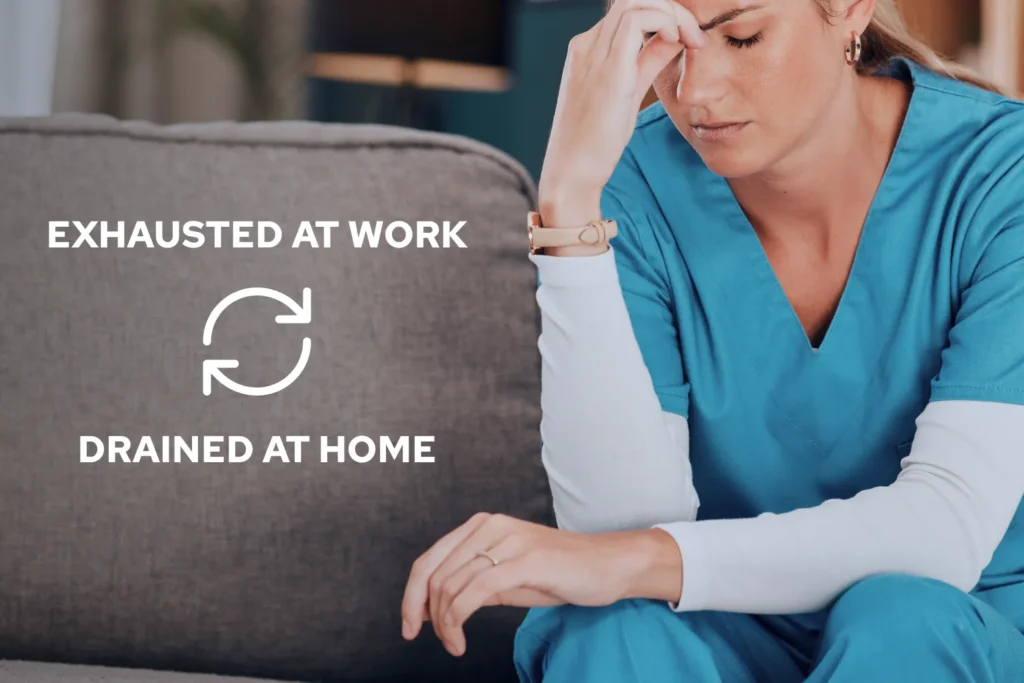
El cuerpo está en el sofá. El sistema nervioso sigue en la oficina. Esa desconexión lo cambia todo.

Este es el patrón detrás de "exhausto en el trabajo, agotado en casa, sintiéndose vacío por dentro".
No tres problemas separados. Un sistema -el sistema nervioso- que lleva tanto tiempo funcionando a la salida que su capacidad para recibir, recuperarse y reponerse se ha roto silenciosamente.
Lo que me dejó con una pregunta que no podía dejar de hacer:
¿Hay alguna forma de llegar a ese sistema directamente y ayudarlo a reponerlo?
"Lo he probado todo." La mayoría de la gente lo ha hecho. Esto es lo que falta.
Quiero decir claramente: todo lo que la mayoría de la gente intenta por agotamiento y mal humor tiene un valor genuino.
Después de mi agotamiento, lo intenté casi todo yo mismo.
- Terapia - genuinamente transformadora, y aún sigo yendo. Pero requiere citas, consistencia y el ancho de banda mental para ir a fondo. Para los cuidadores que ponen a todos los demás primero, reservar una cita de terapia puede sentirse como un acto de culpa.
- Meditación - No era bueno para meditar. Porque cuando tu sistema nervioso está en un estado de hipersensibilidad, la quietud no es reconfortante: parece que todo lo que has tenido llega a la vez. Requiere una base de calma que las personas agotadas a menudo no tienen.
- Ejercicio, diario, suplementos, televisión por la noche - Los he probado todos. Algunos ayudan en los días buenos. Pero todos requieren algo primero: tiempo, tranquilidad, espacio mental, el ambiente adecuado. Y eso es exactamente de lo que la gente que corre en vacío ya se ha quedado sin.
El problema no es que estas cosas no funcionen. Es que todas funcionan al nivel de los síntomas, no al nivel del sistema que los produce.
Lo que necesitaba era algo que funcionara sin que primero tuviera algo que no tenía.
La pregunta que cambió todo
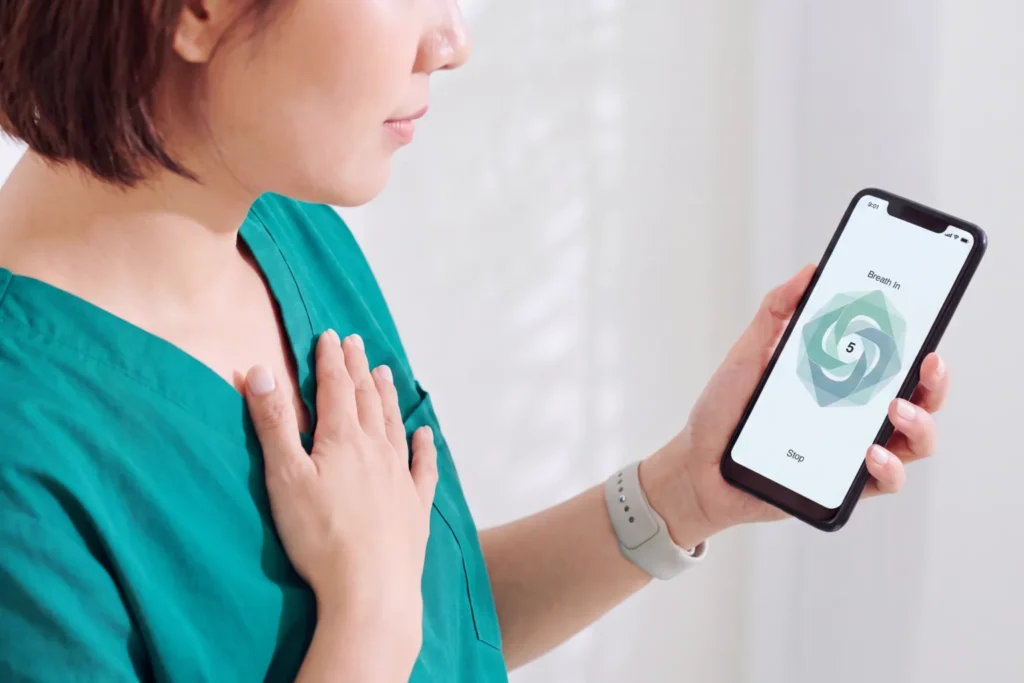
Para cuando volví del agotamiento, había dejado de preguntar: "¿Qué más debería estar haciendo?"
Y empezó a preguntar: "¿Qué sistema se supone que me repone - y por qué ha dejado de funcionar?"
Esa pregunta me llevaba de vuelta al mismo lugar.
Al nervio vago (vagus significa "deambular" en latín: va desde el tronco encefálico hasta el pecho y el abdomen, conectando el cerebro directamente con el corazón, los pulmones, el intestino y el sistema inmunitario).
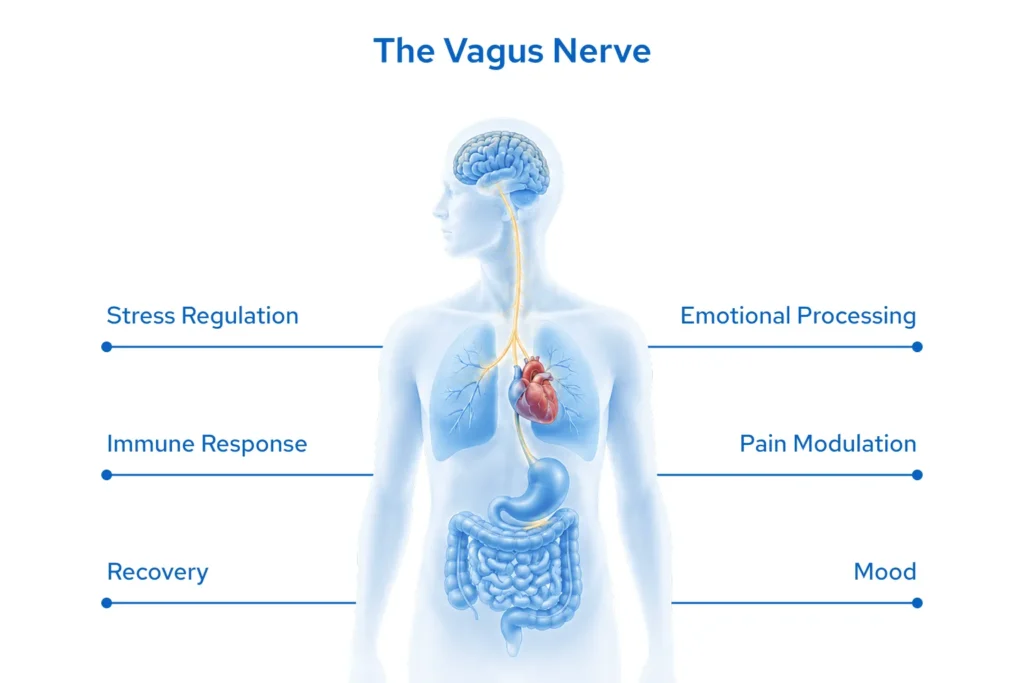
Es el nervio más largo del cuerpo. Y es la vía principal por la que el sistema nervioso pasa de ser un producto simpático a parasimpático (PNS) recuperación - descansar, digerir, restaurar, reponer.
Piensa en el tono vagal (la medida de lo bien que funciona el nervio vago) como la capacidad del cuerpo para recuperarse.
Cuando el tono vagal está sano, el cuerpo se mueve entre estados de manera fluida. Das. La demanda pasa. El nervio vago se activa. El cortisol cae. La capacidad emocional se restaura. Duermes profundamente. Te despiertas con algo que queda. El cuerpo vuelve a ser capaz de recibir.
Pero cuando ese sistema ha estado bajo presión durante años – debido a la producción emocional, la sobrecarga sostenida, el estrés acumulado: ese cambio deja de ocurrir. El cuerpo permanece en modo de producción. El sistema que habilita la recuperación deja de funcionar como debería. No porque no estés descansando. Porque la señal que le dice que se reinicie ya no está llegando.
¿Hay una manera de llegar a ese sistema directamente? Esa era la pregunta.
Lo que encontré - Y por qué fui escéptico

Como enfermera, abordo las afirmaciones de salud con escepticismo científico. Necesito ver la evidencia.
Cuando me topé por primera vez con la investigación sobre la estimulación del nervio vago (VNS), mi primera pregunta fue: ¿dónde están los estudios controlados aleatorios?
El enfoque científico establecido era quirúrgico: un dispositivo implantado en el pecho, conectado directamente al nervio. Utilizado para estados depresivos resistentes a la terapia. No es relevante para alguien que intenta pasar una semana de turnos sin desmoronarse.
Entonces encontré algo que no esperaba.
Los investigadores habían identificado una rama del nervio vago que discurre justo debajo de la superficie de la piel: en el oído externo, en un pequeño trozo de cartílago llamado trago. Resonancia magnética funcional (fMRI) estudios confirmaron que estimular esta ubicación activa las mismas vías del tronco encefálico que el VNS quirúrgico.
Este es el único lugar externo del cuerpo científicamente establecido donde se puede llegar directamente al nervio vago - sin cirugía, sin receta, sin una cita médica.
La técnica se llama Estimulación del nervio vago auricular transcutáneo (taVNS - "transcutáneo" significa a través de la piel, "auricular" significa a través del oído). Señales eléctricas de bajo nivel. Sin agujas. Sin clínica. Sin preparación.
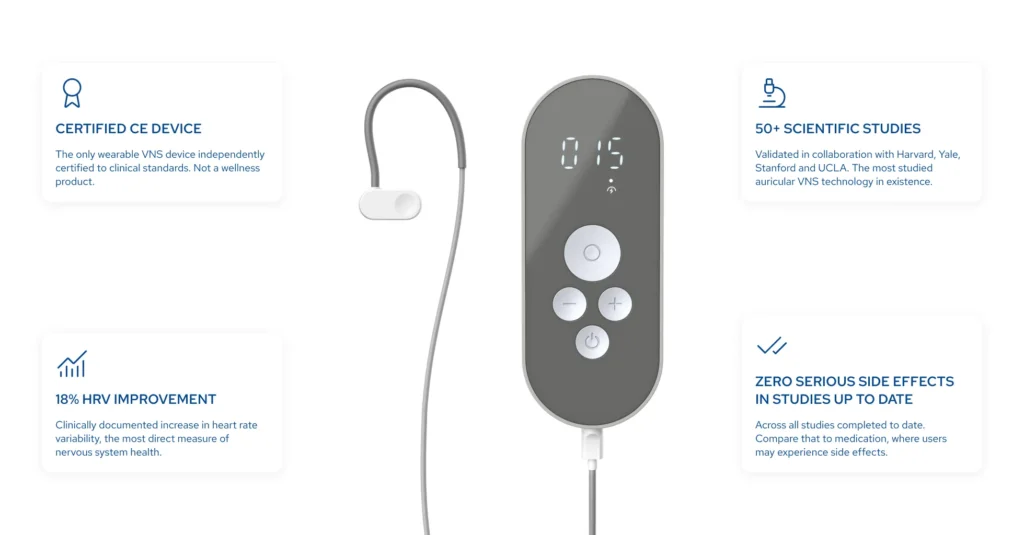
Revisé la investigación publicada. Estudios controlados con placebo y revisados por pares en más de 150 instituciones de investigación reconocidas internacionalmente, más de 60 estudios científicos completados, recomendados por más de 1.000 profesionales de la salud.
Cuanto más leo, más me sorprende una cosa. Pasamos años tratando de cambiar nuestros pensamientos, nuestros hábitos, nuestras rutinas. Sin embargo, casi todo lo que estaba leyendo seguía apuntando al mismo sistema debajo de todos ellos.
Fue entonces cuando dejé de preguntar si sonaba verosímil y comencé a mirar los datos.
No estaba buscando otro ritual de autocuidado que requiriera un ambiente que no tuviera.
No estaba buscando algo que pidiera más a la gente que no tenía nada.
Estaba buscando algo que funcionara en el nivel del sistema mismo. Y esto fue lo primero que encontré que funcionó.
Pero todavía había un problema.
La investigación fue clara. Lo que necesitaba era un dispositivo que pudiera usar de verdad - en una pausa del hospital, en una bolsa de gimnasio, sin una visita a la clínica, sin treinta minutos de preparación.
Lo encontré. Y fue más sencillo de lo que esperaba.
Lo que muestra la investigación
Antes de empezar a compartir esto con alguien, necesitaba ver si la evidencia coincidía con lo que había estado observando.
No estaba buscando una estadística impresionante. Quería ver si diferentes estudios apuntaban en la misma dirección.
| Resultado | Métrico |
| −45% | Estados depresivos / estado de ánimo bajo (estudio de 10 días) |
| −35% | Pensamientos de ansiedad (estudio de 10 días controlado con placebo, un mes sostenido después de la terapia) |
| −48% | Cansancio |
| +30% | Calidad del sueño |
| +61% | Actividad del nervio vago (dentro de los 5 minutos de uso) |
| −78% | Marcadores inflamatorios IL-6 (estudio de 3 meses) |
Más de 60 estudios científicos completados. Hasta la fecha, no se han reportado eventos adversos graves.
Lo que me llamó la atención no fue un solo número, sino el hecho de que las mejoras seguían apareciendo en diferentes síntomas que a menudo se piensa que no están relacionados.
Los estados depresivos disminuyen. Los pensamientos ansiosos se reducen. El cansancio mejora. El sueño se profundiza. Todo a través de una intervención - porque todos comparten el mismo sistema subyacente.
Las tres cosas que aparecen en el titular de este artículo -exhaustas en el trabajo, agotadas en casa, sintiéndose vacías por dentro- están todas aquí. No como coincidencias. Como un patrón conectado con una raíz compartida.
El dispositivo que produjo estos resultados se llama Nurosym.
El hábito diario que encaja dentro de la vida que realmente tienes
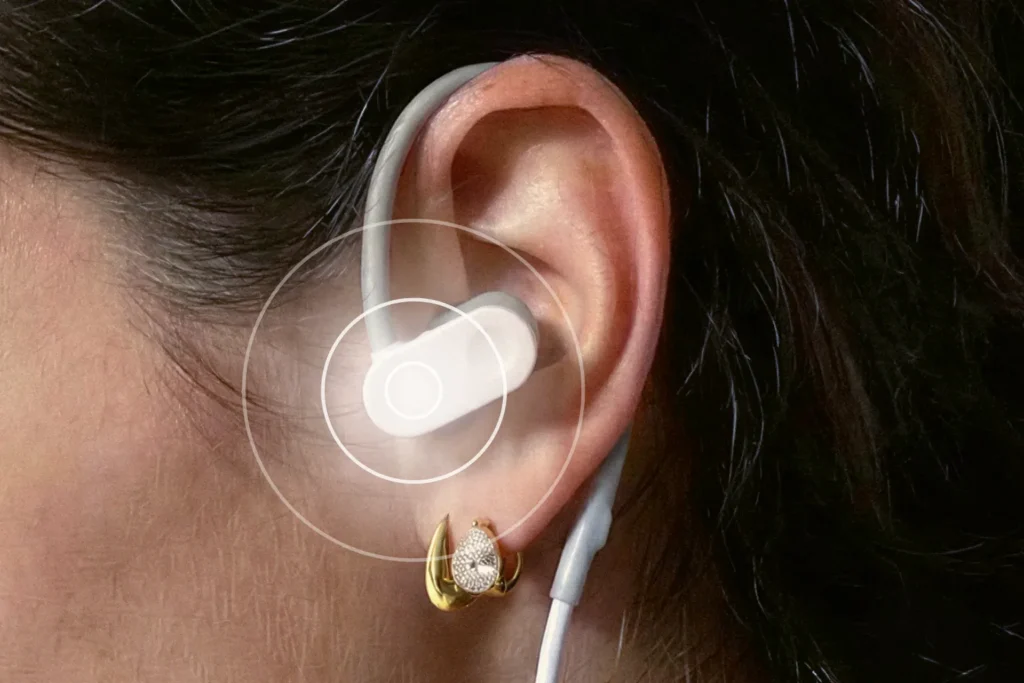
Nurosym es un dispositivo taVNS con marca CE desarrollado por Parasym - una empresa con sede en el Reino Unido con más de 10 años de I+D y más de £10 millones invertidos en investigación científica. Respaldado por más de 150 instituciones de investigación reconocidas internacionalmente, más de 60 estudios científicos completos y más de 100 en curso. Recomendado por más de 1000 profesionales de la salud. Más de 5 millones de sesiones completadas.
Utiliza tecnología patentada Tecnología AVNTTM (Terapia de neuromodulación vagal auricular - una señal eléctrica calibrada con precisión que se transmite a través del tragus del oído izquierdo, estimulando directamente la rama auricular del nervio vago).
En términos prácticos: se engancha a la oreja con un pequeño cable: discreto, ligero y sencillo.
Cómo funciona
Nurosym no es un sustituto para la terapia, el descanso o cualquier otro enfoque que ya está ayudando. Todavía hago todas esas cosas.
Lo que añade es algo diferente. No requiere que estés en el estado correcto primero. No necesita un horario aprobado o una sala de silencio. Funciona durante el día que ya tienes - no el que planeaste.
Tiene como objetivo activar directamente el nervio vago, apoyando el paso de la producción simpática a la recuperación parasimpática, sin tener que pediros nada primero.
En otras palabras: funciona a nivel del sistema mismo, de modo que todo lo demás que ya estás haciendo puede aterrizar.
Cómo lo uso realmente
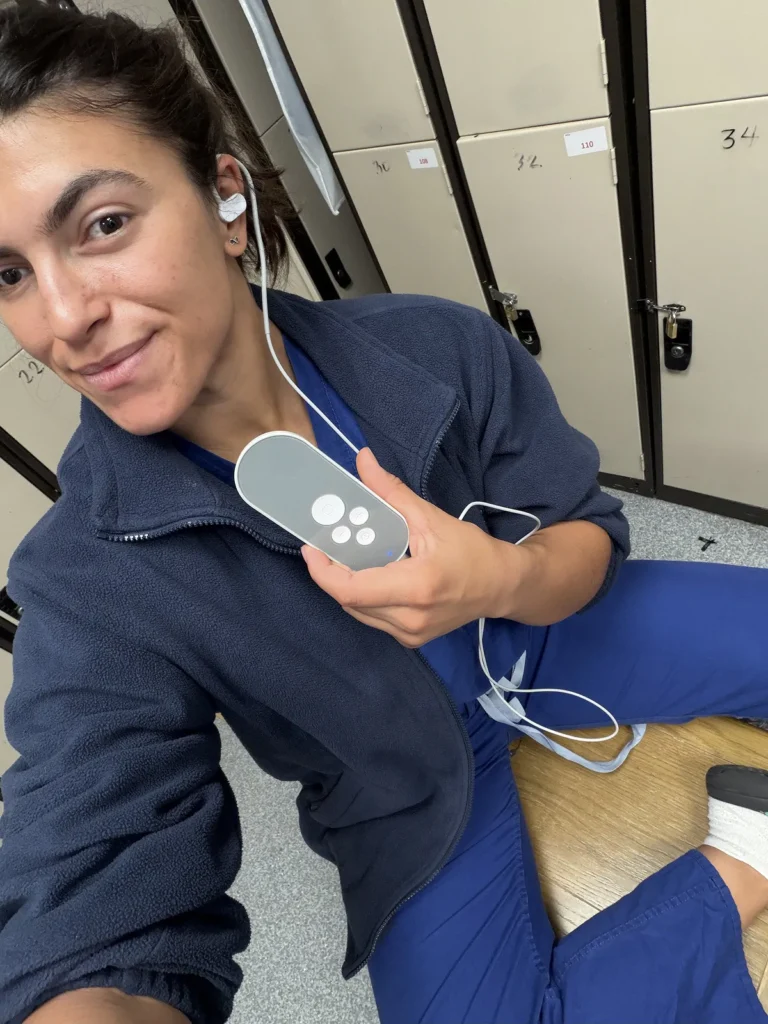
Llevo mi Nurosym en la bolsa que tengo: mi bolsa de trabajo, mi bolsa de entrenamiento. Va a donde quiera que voy, como cuando empaco mi almuerzo.
En el trabajo, lo uso durante mi descanso matutino de 15 minutos. En lugar de buscar otro café -que sé que empeora las cosas durante un turno largo-, me siento en lo que llamamos nuestra habitación vacilante y la uso mientras leo o simplemente me siento en silencio.
Si no puedo usarlo por la mañana, el almuerzo funciona igual de bien. En los días de entrenamiento, lo uso entre sesiones o mientras como. En casa, puede ser mientras estoy leyendo, planchando, lavando los platos... cualquier cosa que no necesite ambas manos. Puede ir en un bolsillo. Encaja en lo que realmente trae el día.
Es, como una vez lo describí, metódico pero nunca rígido. La recuperación finalmente comenzó a encajar en la vida que ya tenía.
Ahora que miro hacia atrás, creo que esto fue lo más grande que entendí mal. No se puede verter de una taza vacía. Y no se llena de nuevo esforzándose más. Tu sistema nervioso necesita una señal directa, no más esfuerzo.
Lo que cambia - y lo que la gente a mi alrededor nota
Los cambios no llegan todos a la vez. Llegan silenciosamente... y un día te das cuenta de que algo ha cambiado.
De hecho, casi me los perdí.
"Me di cuenta de que estaba más tranquilo. No actuando calmado. En realidad, calmado."
"El mal humor que había estado ahí por meses comenzó a aliviarse. Al principio no me di cuenta. Mi novio se dio cuenta."
"Dejé de despertarme ya preparado para el día."
"Por primera vez en años, me quedaba algo al final del día."
Estas son las señales de un sistema nervioso que comienza a regular - y algo que empieza, lentamente, a volver a conectarse.
Por qué el agotamiento y la depresión rara vez son las únicas cosas que cambian
Algo que yo no esperaba - y que la mayoría de la gente tampoco espera.
La misma supresión del tono vagal que produce agotamiento emocional también impulsa el cansancio que no se alivia con el descanso, el sueño que no se restaura y el mal humor que no tiene nombre ni causa evidente.
Las personas que comienzan a usar Nurosym para el agotamiento notan -casi como una reflexión posterior- que su sueño se ha profundizado. Que la irritabilidad de fondo ha disminuido. Que hay, inesperadamente, algo que queda al final del día y que no estaba antes.
Esto no es una coincidencia. Es el mismo sistema que comienza a funcionar de nuevo. Cuando el tono vagal mejora, la capacidad de restaurar mejora -y múltiples cosas comienzan a cambiar simultáneamente, porque todas venían del mismo lugar.
¿Es esto correcto para ti?

Si algo de esto es familiar -el dar que nunca para, el vacío que no tiene nombre, los enfoques que ayudan parcialmente pero nunca completamente- vale la pena explorarlo.
Una garantía de devolución del dinero de 30 días significa que no hay riesgo financiero. O hace una diferencia significativa - o la devuelves.
Nurosym puede valer la pena considerarlo si:
- Das todo en el trabajo y no te queda nada cuando llegas a casa
- Te preocupas por los demás -profesional o personalmente- y nadie pregunta cómo estás
- El estado de ánimo bajo, la sensación de holgura emocional o una sensación de vacío se han convertido en el trasfondo de tu vida
- Has probado los enfoques obvios y te han resultado difíciles de sostener
- Estás buscando algo que encaje en los 15 minutos que realmente tienes, no la hora que no
Nurosym no es adecuado para todos. Si usted tiene un dispositivo cardíaco implantado como un marcapasos, está embarazada, ha tenido un evento cardíaco grave en los últimos cinco años o es menor de 18 años, por favor no lo use. Como con cualquier intervención nueva, siempre vale la pena consultar primero con su profesional de salud si tiene un síntoma médico existente.
Si hay algo que quiero que saques de este artículo, es esto:
El agotamiento que sientes no es una señal de que estás fallando. El vacío no es una señal de que algo está roto y no se puede reparar. Son señales de que un sistema diseñado para reabastecerte ha estado funcionando con la salida durante demasiado tiempo - y no se le ha dado lo que necesita recibir.
No puedes pensar en cómo salir de un cuerpo que todavía cree que está bajo amenaza.
Pero puedes empezar a llegar al sistema que está debajo de él.
En 15 minutos. En una sala de descanso. El día que realmente tienes.
Este artículo refleja mi experiencia personal y mi evaluación de la evidencia científica disponible. Es posible que reciba un acuerdo de referencia por compras realizadas a través de los enlaces en este artículo. Solo recomiendo enfoques que uso yo mismo y que he examinado cuidadosamente. Este no es un consejo médico - siempre consulte a un profesional de la salud calificado antes de comenzar cualquier nueva intervención. Las cifras reflejan el cambio relativo en los estudios revisados por pares en poblaciones de estudio específicas; los resultados individuales pueden variar.
- Olivia Tompkins, enfermera de cuidados intensivos cardiotorácicos, entrenadora CrossFit L1 y defensora del bienestar | Londres
Este artículo de blog tiene como objetivo ser informativo y no debe reemplazar el asesoramiento profesional en salud. Consulte siempre con un profesional de la salud para obtener asesoramiento personalizado.
Referencias
- Verbanck P, et al. Transcutaneous auricular vagus nerve stimulation (taVNS) effects on tiredness, mood and autonomic function. Parasym Ltd peer-reviewed data. 2021.
- Zheng S, et al. Transcutaneous auricular vagus nerve stimulation reduces anxious thoughts: placebo-controlled study. Estimulación Cerebral. 2024.
- Dolcini J, et al. Effects of taVNS on sleep quality and widespread pain: randomised controlled trial. Parasym Ltd. 2025.
- Breit S, et al. Vagus nerve as modulator of the brain-gut axis in psychiatric and inflammatory disorders. Las fronteras de la psiquiatría. 2018;9:44. https://doi.org/10.3389/fpsyt.2018.00044
- Kaniusas E, et al. Current directions in auricular vagus nerve stimulation: a physiological perspective. Frontiers in Neuroscience. 2019. https://doi.org/10.3389/fnins.2019.00854
- Farmer AD, et al. International consensus on minimum reporting standards for transcutaneous vagus nerve stimulation research. Frontiers in Human Neuroscience. 2021. https://doi.org/10.3389/fnhum.2020.568051
- Redgrave J, et al. Safety and tolerability of transcutaneous vagus nerve stimulation in humans: systematic review. Estimulación Cerebral. 2018;11(6):1225–1238. https://doi.org/10.1016/j.brs.2018.08.010


 Spanish
  English
  German
  French
  Swedish