

När din tarm känns upprörd oavsett vad du äter, och symtomen dyker upp även om ingenting verkar “fel ”, kan det lämna dig fast och söka efter svar.
Till en början känns det som att mat är problemet.
Så du börjar försöka “fixa ” din matsmältning:
- hoppar över frukosten för att känna “lättare ”
- fasta längre till “återställ ” din tarm
- skär ut gluten, mejeri, socker eller kolhydrater
- läsa varje ingrediensetikett innan du äter
Och ibland förbättras saker ett tag.
Sedan kommer uppblåsningen tillbaka.
En måltid som kändes helt fin förra veckan lämnar dig plötsligt obekväm i timmar.
Även enkla livsmedel börjar känna “för tung ” utan uppenbar anledning.
Om detta låter bekant är du inte ensam.
I flera år har matsmältningssymtom som uppblåsthet, irriterande tarmliknande obehag, återflöde, kramp och matkänslighet huvudsakligen behandlats som matproblem.
Och mat kan absolut betyda.
Men här är den överraskande delen: mat ensam är sällan hela frågan.
Eftersom många märker något konstigt:
Deras symtom blossar ofta upp mest under stressiga perioder – även när deras diet förblir exakt densamma.
Så vad händer egentligen?
Vad jag började märka efter flera års arbete med tarmproblem

I flera år har jag jobbat i funktionell medicin och naturopati med människor som kämpar med uppblåsthet, irritabla tarmliknande symtom, matintoleranser, trötthet, dålig sömn, överbelastning av nervsystemet och kroniska matsmältningsproblem som ofta fortsätter att återvända trots terapi.
Jag arbetar med alla från kontorsbaserade yrkesverksamma som lever under ständig stress för aktiva människor som försöker optimera sin hälsa, återhämtning och energi – men ändå känner sig kontrollerade av deras matsmältning.
Mitt arbete kombinerar tarmhälsosupport, reglering av nervsystemet, funktionell diagnostik, näring och orsak till medicin.
Och med tiden visade ett mönster upp:
Människor städade upp sin diet, men symptomen fortsatte fortfarande att återvända.
Eftersom frågan ofta inte bara var maten själv.
Det var hur nervsystemet reglerade tarmen.
När du gör allt rätt – Men du känner dig fortfarande uppblåst

Vissa människor blir extremt försiktiga kring mat.
De:
- undvik “utlösa måltider ”
- hoppa över måltider eftersom äta känns oförutsägbart
- gå djupt in i keto, låg-FODMAP eller eliminationsdieter
- spåringredienser, reaktioner och “säkra livsmedel ”
- planera sin dag runt matsmältningen
Vissa slutar till och med äta före möten, långa körningar eller sociala evenemang eftersom de är oroliga för uppblåsthet, magljud, brådskande eller plötsligt känner sig obekväma offentligt.
Och ändå känns deras tarm fortfarande alltför känslig.
Livsmedel som en gång kändes “säkert ” börjar plötsligt orsaka problem igen.
En normal lunch lämnar dem tunga i timmar.
Deras mage känns svullen även när de knappt åt något.
Vid en viss tidpunkt slutar många att känna sig förvirrade av symtomen och börja känna sig kontrollerade av dem.
Med tiden slutar äta att känna sig naturligt och börjar känna sig stressande.
Detta är inte en brist på viljestyrka.
Det är inte “som gör dieten fel. ”
I många fall, det är ett nervsystem som har fastnat i ett mönster av överreagerande och överskydd.
Food Triggers vs. Gut Reactivity – Skillnaden som förändrar allt

Matutlösare är vad folk märker.
Tarmreaktivitet är tillståndet i systemet som svarar på den maten.
Och med tiden började jag märka något viktigt:
En vecka blir någon övertygad gluten är frågan.
Nästa, de skära ut mejeri.
Sedan socker.
Sedan koffein.
Vissa slutar så småningom äta mindre och mindre listor med “säkra livsmedel ” eftersom tarmen känns oförutsägbar så ofta.
Samma mat kan kännas helt annorlunda beroende på tillståndet för den som äter den.
Under stressiga perioder, dålig sömn, utbrändhet eller emotionell överbelastning blir tarmen ofta mycket mer reaktiv – även för livsmedel som normalt skulle känna sig helt fina.
Plötsligt slutade symtomen att känna sig slumpmässiga.
Eftersom problemet inte alltid bara var maten själv.
Det var tillståndet i nervsystemet svarar på det.
Nervsystemets roll i tarmreaktivitet
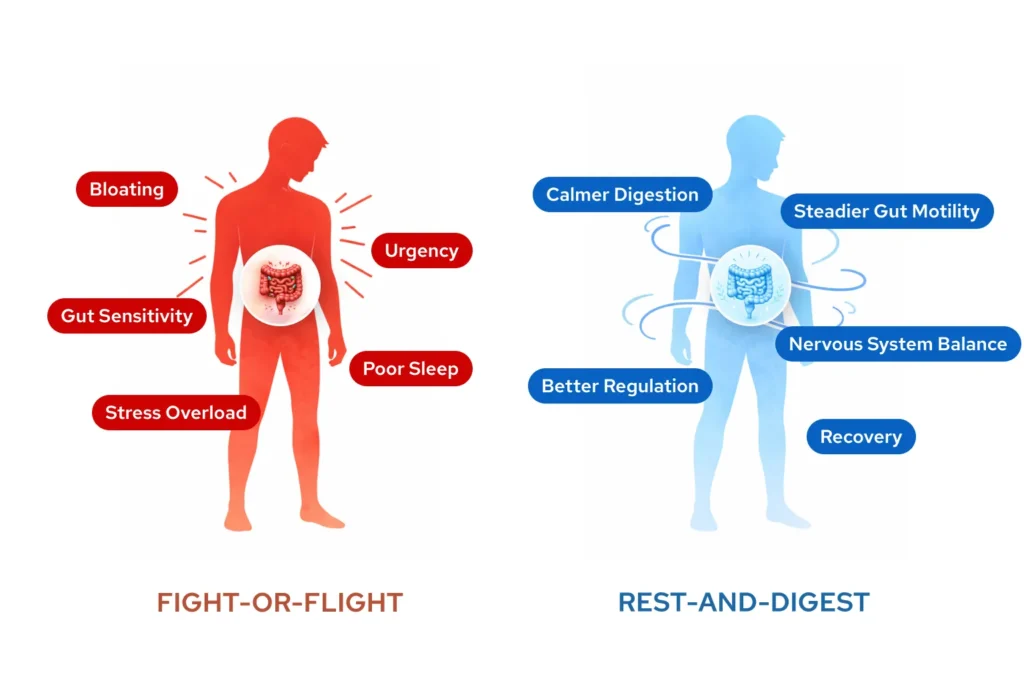
Två nervsystemstater
Det autonoma nervsystemet har två primära tillstånd:
- Sympatisk (“ kamp eller flygning ”) - förknippat med stress, vakenhet och överlevnad
- Parasympatisk (“ vila och smälta ”) - förknippat med återhämtning, reglering och hälsosam matsmältning
I ett hälsosamt system rör sig kroppen naturligt mellan de två.
Men många människor idag kommer aldrig helt ur stressläge.
Inte på grund av en dramatisk händelse.
Men på grund av konstant tryck, dålig återhämtning, mental överbelastning och känslan av att alltid behöva stanna “på. ”
För de flesta människor idag ser stress inte dramatiskt ut.
Det ser ut som:
- svara på e-postmeddelanden medan du äter
- sover dåligt men skjuter igenom ändå
- för mycket koffein
- aldrig helt avkopplande
- känner mig alltid lite bakom
Och när nervsystemet förblir fast i det tillståndet för länge blir matsmältningen ofta en av de första sakerna som påverkas.²
Tarmen blir mer känslig, lättare utlöst och mycket mindre förutsägbar.
Tarmen reagerar ofta på stress långt innan människor inser hur överbelastad kroppen faktiskt har blivit.³
Om nervsystemet hjälper till att avgöra om kroppen förblir i spänningsläge eller flyttar tillbaka till återhämtning blir en väg särskilt viktig:
Den vagusnerv.
Vagusnerven: En av tarmens viktigaste kommunikationsvägar
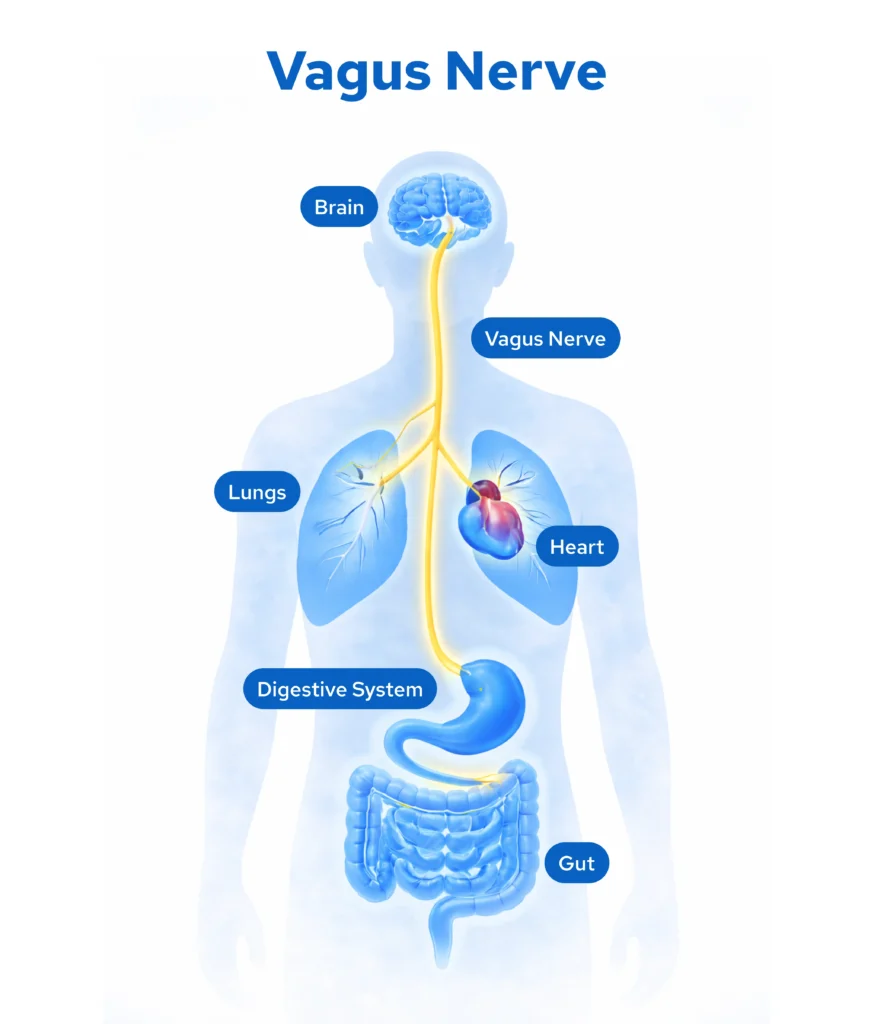
Den vagusnerv hjälper till att ansluta hjärnan till större organ i hela kroppen, inklusive matsmältningssystemet.¹
Det spelar en viktig roll i matsmältning, tarmmotilitet, återhämtning och kommunikation mellan hjärnan och tarmen.
När vagal aktivitet är stark, kroppen kan lättare växla till en lugnare “vila och smälta ” stat
Matsmältningen tenderar att känna sig mer stabil, tarmen blir mindre reaktiv och återhämtningen känns ofta lättare totalt sett.
Men när nervsystemet förblir fast i spänningsläge för länge, det motsatta händer ofta.
Kroppen förblir grundad för stress.
Tarmen blir mer känslig.
Och till och med små triggers kan skapa större uppblåsningar.
För många människor är frågan inte bara själva matsmältningen.
Det är en kropp som aldrig helt lämnar överlevnadsläget.
Så när jag ser matsmältningssymtom försämras under stress, utbrändhet, dålig sömn eller känslomässig överbelastning tänker jag inte bara på mat.
Jag tänker på reglering.
Eftersom matsmältningen inte bara är en matfråga.
Det är också nära kopplat till nervsystemets reglering och tarm-hjärnaxeln.⁶
Vad forskningen säger
Många försöker probiotika, eliminationsdieter, matsmältningstillskott eller skära ut fler och fler livsmedel för att lugna symtom.
Och ibland hjälper dessa tillvägagångssätt tillfälligt.
Men för människor vars symtom verkar nära kopplade till stress, dålig sömn, överbelastning eller utbrändhet kommer mönstret ofta tillbaka.
Det var det som fick mig att titta närmare på sambandet mellan nervsystemet och matsmältningen.
En anledning till att denna koppling är viktig är att kronisk stress inte bara påverkar humör eller energinivåer.
Det ändrar också signalering inuti kroppen.
När nervsystemet förblir fastnat i överlevnadsläge kan stressrelaterade inflammatoriska signaler förbli förhöjda, matsmältningen blir mindre effektiv och tarmen blir ofta mer reaktiv mot annars normala ingångar.
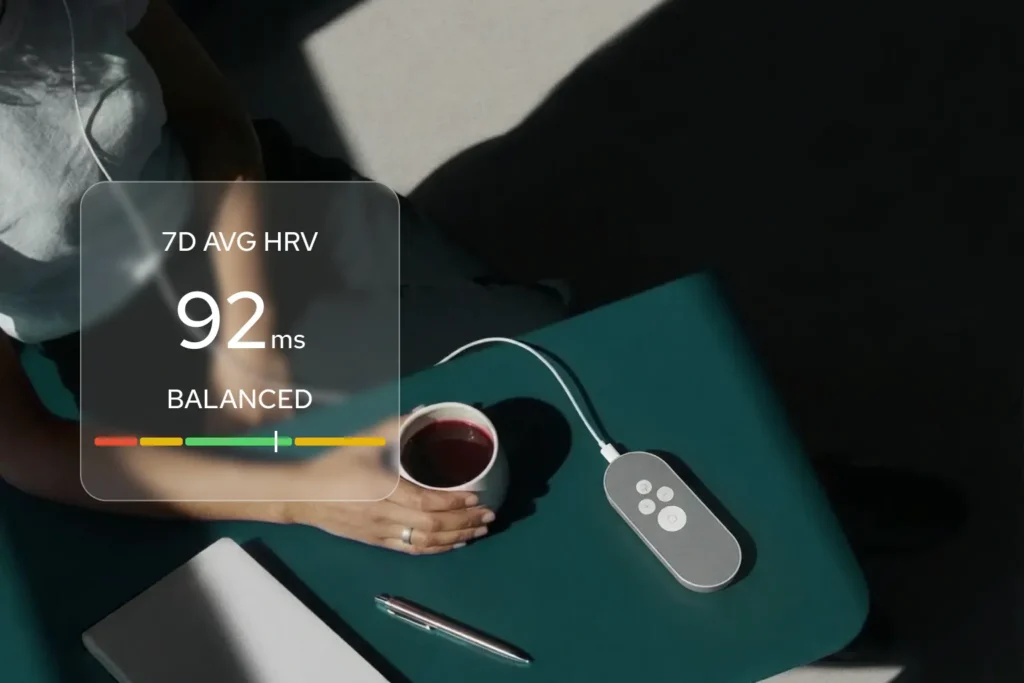
Forskning kring vagusnervstimulering har undersökt dess effekter på HRV (hjärtfrekvensvariabilitet), inflammatoriska markörer, stressreglering och mag-hjärnkommunikation – alla system som är nära kopplade till matsmältningsreglering och återhämtning.
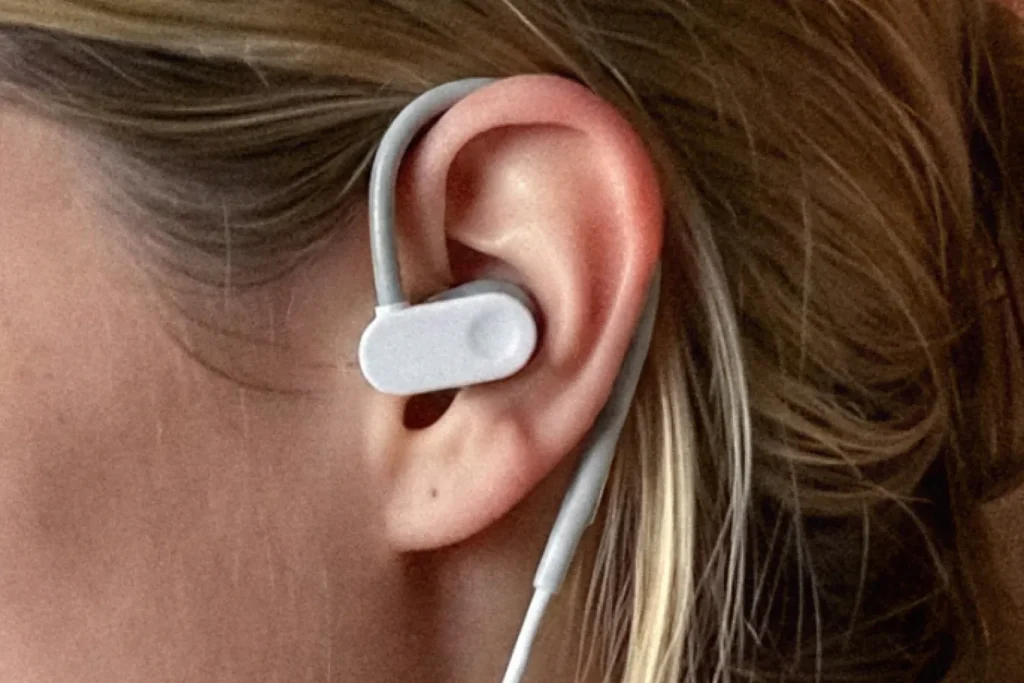
Under de senaste åren blev jag särskilt intresserad av taVNS – transkutan aurikulär vagusnervstimulering – ett mjukt, icke-invasivt sätt att stimulera vagusnerven genom en del av det yttre örat ⁴ för att stödja kroppens “vila och smälta ” svar.
Under många år utfördes vagusnervstimulering huvudsakligen genom kirurgiskt implanterade enheter.
Men nyare utveckling gjorde det möjligt att stimulera vagusnerven externt utan operation.
Och bland enheterna jag utforskade, Nurosym stod konsekvent ut på grund av mängden vetenskaplig forskning och utveckling bakom det – som betydde för mig, för jag letade inte efter en annan wellness-trend eller snabbkorrigering.
Där Nurosym passar (At-Home Support)
I mitt arbete stöder jag både själva matsmältningen och nervsystemets mönster som ofta driver reaktiva tarmsymtom under.
För vissa människor – särskilt de vars uppblåsthet, tarmkänslighet eller irriterande tarmliknande symtom verkar nära kopplade till stress, överbelastning, dålig sömn eller utbrändhet – föreslår jag ett stödverktyg för nervsystemet hemma.
Det är där Nurosym kommer in.
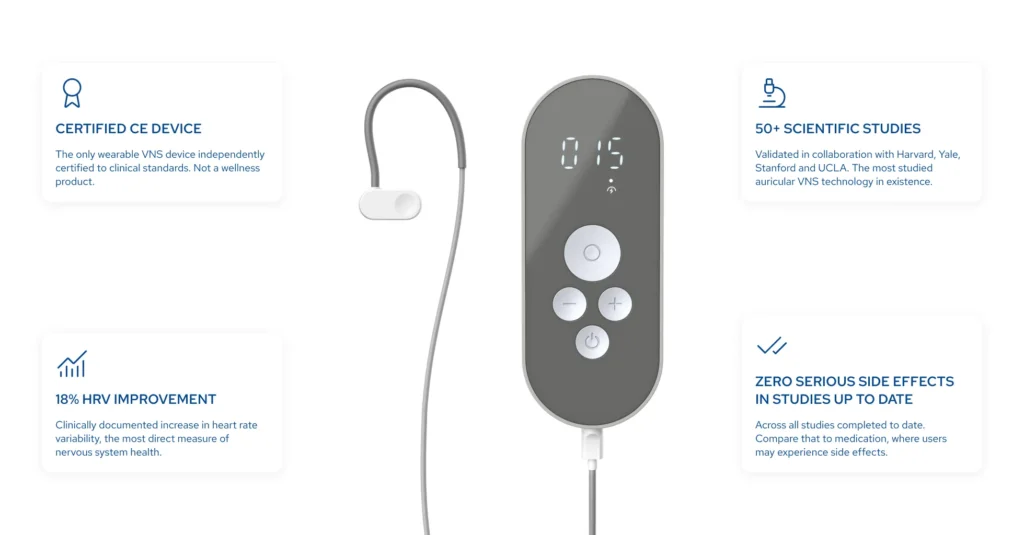
Nurosym är en CE-certifierad taVNS-enhet utformad för att försiktigt stimulera vagusnerven genom en del av det yttre örat med mild elektrisk stimulering avsedd att stödja parasympatisk (“ vila och smälta ”) aktivitet och reglering av nervsystemet.
Jämfört med de flesta enheter jag utforskade stod Nurosym konsekvent ut på grund av mängden vetenskaplig forskning och utveckling bakom det, med över 60 vetenskapliga studier som utforskade områden som HRV (hjärtfrekvensvariabilitet), stressreglering och vagusnervaktivitet ⁵, inklusive samarbeten med institutioner som Harvard, Yale och Imperial College London.
Som utövare är jag naturligtvis försiktig med apparater som påstår sig stödja komplexa symtom som matsmältning, stress eller trötthet.
Jag letade inte efter en annan wellness-trend eller en snabb fix.
Det ersätter inte näring, livsstilsarbete, testning eller medicinsk vård. Men för rätt person kan det hjälpa till att stödja ett lugnare nervsystem – som för vissa människor också kan betyda stabilare matsmältning, bättre återhämtning, förbättrad sömn och mindre av den ständiga “trådbunden ” känsla som körs i bakgrund.
Vad vissa människor märker när förordningen förbättras

I mitt arbete beskriver människor sällan förändringen som en dramatisk omvandling över natten.
Människor beskriver ofta subtila förändringar som:
- “Jag kunde äntligen äta ute utan att stressa hela dagen om magen. ”
- “Min matsmältning kändes lugnare under stressiga veckor istället för spiral. ”
- “Jag insåg inte hur spänd min kropp ständigt kändes förrän den äntligen började koppla av. ”
- “Till och med min sömn förbättrades när mitt system började lugna ner. ”
Och intressant nog märker många förändringar utöver matsmältningen ensam.
- Bättre sömn.
- Mindre spänning.
- Känner mig lugnare i kroppen.
- Mindre av den konstanta “trådbunden ” känsla i bakgrunden.
För när nervsystemet blir mer reglerat sträcker sig effekterna ofta långt bortom tarmen.
Real-World-mönster som jag vanligtvis ser
Högspänningsgutten
Symtomen blossar upp mest under perioder med tryck, dålig sömn, rusade måltider och konstant mental överbelastning – även när kosten förblir exakt densamma.
“Jag har provat allt ” Fall
Vissa människor tillbringar månader med att rotera genom probiotika, eliminationsdieter, fasta protokoll, låga FODMAP-planer, keto, glutenfritt ätande, kosttillskott och matspårningsappar.
The Burnout Gut
Uppblåsthet börjar dyka upp tillsammans med trötthet, hjärndimma, spänning, dålig återhämtning och känslan av att kroppen aldrig helt slår sig ner.
Den oförutsägbara tarmen
Livsmedel som tolereras en vecka utlöser plötsligt symtomen nästa, vilket gör att människor ständigt gissar vad de kan äta.
Vem kan dra nytta av – Och vem ska inte använda det
Might benefit:
- Personer med stressrelaterade matsmältningsuppblåsningar
- De med irriterande tarmliknande symtom kopplade till stress eller dålig återhämtning
- Människor vars tarmsymtom förvärras under utbrändhet eller överbelastning
- De som ständigt känner sig “på ” tillsammans med matsmältningssymtom
Undvik om:
- Du har en pacemaker eller implanterad hjärtenhet
- Du är gravid
- Du har haft en allvarlig hjärthändelse nyligen
- Du är under 18 år
Följ alltid läkare innan du börjar.
Ett säkert sätt att prova på
- 30-dagars pengarna-tillbaka-garanti - utforska hemma utan risk.
- Begränsade studieplatser tillgängliga - Vissa deltagare kan få en subvention på ~ € 70 i utbyte mot att ge feedback.
I mitt arbete hjälper jag människor att avgöra om denna typ av nervsystemstöd är vettigt för deras individuella situation och hur det passar in i en bredare orsakssätt.
Slutliga tankar: Bättre matsmältning börjar med ett mer reglerat nervsystem

Om du har spenderat år med att fixa matsmältningen endast genom mat kan det vara dags att titta djupare.
Mat är viktig.
Men i många fall är nervsystemets tillstånd också viktigt.
Det är därför vissa människor fortsätter att kämpa även efter att ha rensat upp sin diet och provat alla “rätt ” saker.
Inte för att de saknar disciplin.
Men eftersom systemet som reglerar matsmältningen kan behöva stöd också.
För ibland behöver kroppen inte mer begränsning.
Det behöver hjälp för att flytta ur överlevnadsläget.
Om din tarm fortfarande känns reaktiv trots att du gör allt “rätt, ” lära dig mer om reglering av nervsystemet och Nurosym kan vara nästa steg värt att utforska.
Detta blogginlägg syftar till att vara informativt och bör inte ersätta professionell hälsorådgivning. Rådgör alltid med en vårdpersonal för personlig rådgivning.
Referenser
- Breit S, Kupferberg A, Rogler G, Hasler G.
Vagus Nerve as Modulator of the Brain–Gut Axis in Psychiatric and Inflammatory Disorders. Front Psychiatry. 2018.
https://doi.org/10.3389/fpsyt.2018.00044 - Bonaz B, Bazin T, Pellissier S.
The Vagus Nerve at the Interface of the Microbiota–Gut–Brain Axis. Front Neurosci. 2018.
https://doi.org/10.3389/fnins.2018.00049 - Konturek PC et al.
Stress and the Gut: Pathophysiology, Scientific Consequences, Diagnostic Approach and Therapy Options. J Physiol Pharmacol. 2011.
https://pubmed.ncbi.nlm.nih.gov/22314561/ - Yap JYY et al.
Critical Review of Transcutaneous Vagus Nerve Stimulation: Challenges for Translation to Scientific Practice. Front Neurosci. 2020.
https://doi.org/10.3389/fnins.2020.00284 - Clancy JA et al.
Non-invasive Vagus Nerve Stimulation in Healthy Humans Reduces Sympathetic Nerve Activity. Brain Stimul. 2014.
https://doi.org/10.1016/j.brs.2014.07.031 - Carabotti M et al.
The Gut-Brain Axis: Interactions Between Enteric Microbiota, Central and Enteric Nervous Systems. Ann Gastroenterol. 2015.
https://pmc.ncbi.nlm.nih.gov/articles/PMC4367209/
Dela via:



 Swedish
  English
  German
  French
  Spanish