

Vagus nerve stimulation (VNS) is being explored as a non-pharmacological approach to fatigue and low energy by supporting autonomic nervous system balance. Emerging research suggests that improving vagal activity may influence recovery, stress resilience, and perceived energy levels in certain individuals.


Why Vagus Nerve Stimulation Is Being Explored for Energy and Fatigue
Nurosym is the first portable vagus nerve stimulation device validated through 50+ completed research studies. It delivers non-invasive stimulation to the auricular branch of the vagus nerve, a pathway involved in autonomic regulation that may influence recovery and fatigue perception.
Unlike stimulant-based approaches that temporarily increase alertness, autonomic-based interventions aim to support underlying recovery processes rather than short-term arousal.
- Validated through 50+ completed scientific studies and over 4 million user sessions.
- CE Marked wearable device certification meets rigorous EU standards.
- Used by hundreds of healthcare professionals for measurable energy improvements.
- Developed through $10M+ research investment with leading academic medical centres.
“Among similar wellness devices, it stands out for its strong research foundation and user-friendly design.”
– DEREK, US
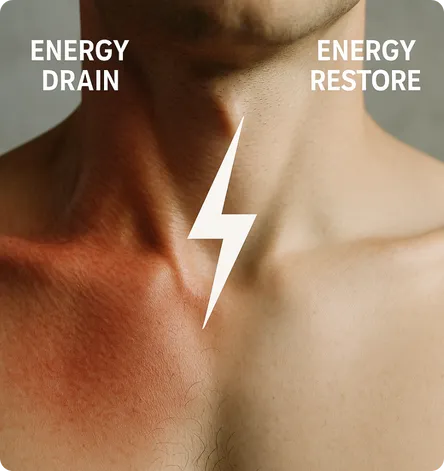

To Shift From Energy Depletion to Recovery Mode
Your vagus nerve controls whether your body burns through energy or restores it. Chronic stress locks you in “fight-or-flight”—a state designed for survival, not sustainable energy.
When stuck in stress mode, your body prioritises immediate fuel over long-term reserves. This creates rapid depletion, impaired recovery, and progressive dysfunction.
Nurosym delivers precise electrical signals to your vagus nerve through your ear, activating pathways that shift your metabolism from depletion to restoration.
- Activates your body's natural recovery state, shifting from breakdown to restoration.
- Reduces baseline energy expenditure by normalising the elevated cost of chronic stress.
- Supports parasympathetic nervous system activity, which plays a role in recovery and energy conservation during periods of rest.
“It helps me achieve a state of tranquility similar to meditation. The shift is subtle, but I notice feeling more at ease.”
– TOM, UK
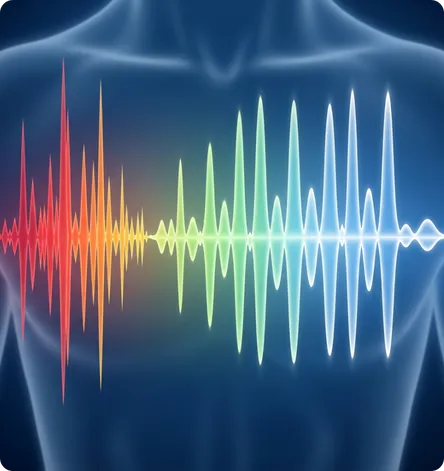

To Normalise Energy-Disrupting Stress Hormones
Chronic stress creates hormone patterns that drain your energy: flattened cortisol eliminates your morning surge, elevated evening cortisol prevents overnight recovery, and sustained hormone exposure creates cellular resistance.
This produces morning fatigue despite sleep, afternoon crashes, inability to sustain energy, and progressive worsening.
Your vagus nerve directly regulates stress hormone production. Enhanced vagal signaling normalizes cortisol patterns and restores your natural daily energy rhythm.
Research suggests that vagal activity is involved in stress-hormone regulation, which may contribute to improved energy patterns and reduced fatigue in some populations.
- Restores healthy cortisol awakening response producing natural morning energy.
- Reduces evening cortisol elevation allowing proper overnight recovery.
- Reverses stress hormone resistance improving cellular response.
- Normalizes daily energy rhythm creating predictable patterns.
- Significantly reduces fatigue with 48% improvement in validated fatigue assessments within 10 days (p < 0.0001), with sustained benefits after therapy completion.
“Because … of my workplace, because of really high stress … I got severe reflux. The constant push to deliver more work destroyed my organism. Each time I was putting the device I could release tension from my nervous system.”
– JAKUB, UK


For Restorative Sleep That Actually Restores Energy
Poor energy reflects inadequate overnight restoration. Stress disrupts deep sleep stages where your body replenishes energy substrates, repairs cellular damage, and resets stress systems.
Without sufficient parasympathetic activation during sleep, your body can’t complete restoration. You wake unrested despite hours in bed and progressively accumulate energy deficits.
Vagus nerve stimulation enhances parasympathetic activation during sleep transition and stabilises autonomic tone, facilitating deep sleep essential for complete energy restoration.
- Accelerates transition into restorative sleep by rapidly shifting to parasympathetic dominance.
- Increases slow-wave sleep duration, enhancing deepest sleep where maximum restoration occurs.
- Improves sleep efficiency, reducing nighttime waking.
- Enhances next-day energy levels through complete overnight restoration.
- Scientific studies of auricular VNS have reported improvements in subjective sleep quality, which may support better daytime energy and recovery.
“When I wasn’t getting enough deep, restorative sleep, it impacted my mood and daily routine. Nurosym has completely transformed the way I rest.”
– DANIEL, WALES
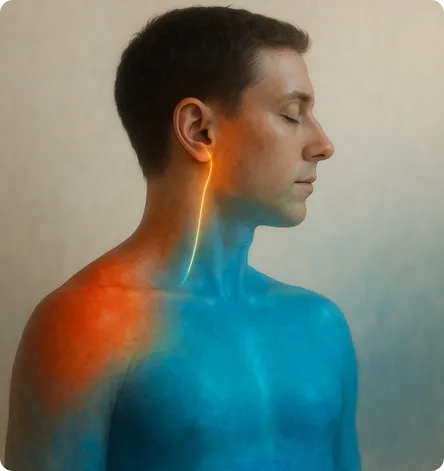

To Reduce Energy-Draining Inflammation
Chronic low-grade inflammation is one of the most overlooked causes of persistent fatigue. Elevated inflammatory markers directly impair cellular energy production, increase metabolic demand, and trigger “sickness behaviour” that manifests as profound fatigue.
This inflammatory fatigue persists despite rest, creates heavy sensations, impairs motivation and mental energy, and resists conventional interventions.
Your vagus nerve controls your body’s primary anti-inflammatory pathway. Chronic stress weakens this control. Restoring vagal activity reactivates natural anti-inflammatory systems.
- Activates natural inflammatory suppression, reducing fatigue-inducing inflammatory chemicals.
- Vagal pathways are involved in immune-nervous system communication, and modulation of this pathway is being studied for its potential role in inflammatory regulation and fatigue perception.
“Honestly, I’ve noticed such a positive change. I have far fewer days where I feel too drained to keep up with my daily routine.”
– FRANCESCA, UK


To Optimise Your Cellular Power Plants
Your mitochondria produce ATP—your body’s direct energy currency. Chronic stress impairs mitochondrial function through oxidative stress, inflammation, and sustained sympathetic activation that shifts metabolism toward inefficient pathways.
Declining mitochondrial function creates a progressive energy crisis: reduced ATP production, increased fatigue-inducing byproducts, and compounding energy deficits.
Vagal nerve stimulation enhances mitochondrial function through parasympathetic-mediated metabolic optimisation, supporting both efficiency and biogenesis.
Mitochondrial function is closely linked to stress physiology and autonomic balance. Preliminary research suggests that interventions supporting parasympathetic activity may indirectly influence cellular energy processes, though this remains an evolving area of study.
- Enhances mitochondrial biogenesis stimulating creation of new, healthy mitochondria.
- Improves mitochondrial efficiency increasing ATP production per oxygen molecule.
- Reduces oxidative stress protecting mitochondria from progressive damage.
- Optimizes cellular metabolism by shifting from inefficient to efficient energy pathways.
- Measurable improvements in cellular oxidative stress markers—28% reduction in reactive oxygen species (p = 0.004) in placebo-controlled trials, supporting enhanced mitochondrial function and cellular energy production.
“Since I started using it, I’ve noticed a significant improvement in how I feel overall. It’s been three months now, and I’m hopeful for even more positive changes—it’s definitely a step in the right direction.”
– TERRY, UK
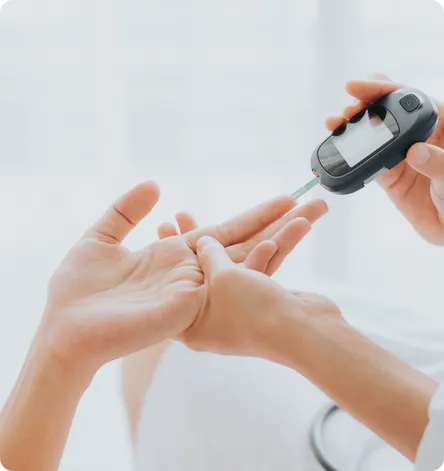

To Stabilize Blood Sugar and Prevent Energy Crashes
Energy crashes reflect autonomic dysfunction. Your vagus nerve regulates insulin secretion, glucose uptake, and metabolic fuel selection. Impaired vagal function creates erratic blood sugar: exaggerated spikes after eating, rapid crashes as insulin overcompensates, and poor metabolic flexibility.
These swings create the energy roller coaster: post-meal fatigue, mid-afternoon crashes, carbohydrate cravings, and inability to maintain stable energy.
Enhanced vagal tone improves metabolic regulation: optimising insulin timing, improving cellular glucose uptake, and enhancing your body’s ability to utilise stored energy smoothly.
Autonomic function plays a role in metabolic regulation, including digestive and post-meal responses. Supporting vagal activity may contribute to more stable perceived energy levels throughout the day.
- Improves insulin sensitivity enhancing cellular glucose absorption.
- Stabilizes post-meal glucose response reducing spikes that lead to crashes.
- Enhances metabolic flexibility improving smooth transitions between fuel sources.
- Reduces hunger and cravings by normalizing blood sugar instability.
- Creates sustained energy availability throughout the day.
“I was looking for a way to better navigate seasonal challenges. I had tried workouts and meditation apps but discovered Nurosym, and I noticed changes within just a couple of weeks. I feel more balanced and better equipped to manage daily pressures.”
– TIJANA, US

To Restore Energy-Critical Neurotransmitters
Mental fatigue and brain fog reflect neurotransmitter dysfunction. Chronic stress depletes dopamine (motivation), norepinephrine (alertness), serotonin (mood), and acetylcholine (cognitive processing).
This neurochemical depletion creates mental fatigue: difficulty initiating tasks, impaired focus, reduced motivation, and an exhausting sensation of forcing through basic activities.
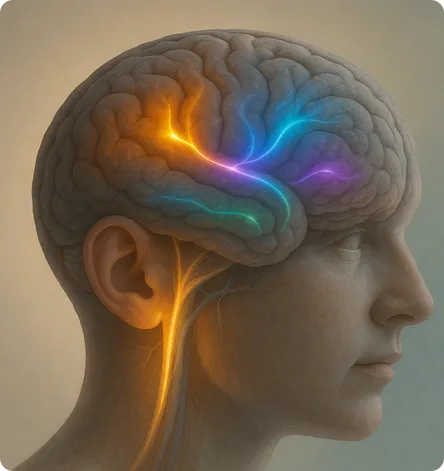
Your vagus nerve modulates neurotransmitter systems. Vagal stimulation influences brain centres that produce and regulate these energy-critical chemicals.
Vagal pathways interact with brain regions involved in alertness, motivation, and cognitive processing, which may influence mental fatigue and focus.
- Enhances dopamine function improving motivation and mental energy.
- Optimizes norepinephrine systems enhancing alertness and focus without jitters.
- Normalizes serotonin pathways supporting mood stability.
- Improves acetylcholine signaling enhancing cognitive processing efficiency.
- Measurable improvements in cognitive energy including reduced mental fatigue.
“I’ve noticed improved recovery indicators tracked by my fitness device and a greater ability to stay focused or train for extended periods.”
– HENRY, UK


To Improve Heart Rate Variability—Your Energy Biomarker
Heart rate variability (HRV) predicts energy availability and recovery capacity. High HRV indicates robust autonomic flexibility and efficient energy management. Low HRV signals autonomic rigidity and impaired recovery.
Chronic tiredness consistently correlates with reduced HRV, reflecting autonomic dysfunction underlying energy depletion.
Vagus nerve stimulation directly enhances cardiac vagal activity that determines HRV, producing measurable improvements in autonomic flexibility and energy management.
- Increases time-domain HRV metrics indicating enhanced autonomic capacity.
- Enhances high-frequency HRV power, the validated marker of parasympathetic activity.
- Improves HRV recovery after exertion, accelerating return to baseline.
- Trackable through consumer wearables, including Oura Ring, WHOOP, Apple Watch, and Garmin.
“Sometimes I’ll put it on while reading, and I find it helps me stay focused, even on more challenging pieces of writing.”
– YVONNE, UK


As the Foundation for Other Energy Strategies
Effective energy optimisation requires multiple approaches: adequate sleep, proper nutrition, regular exercise, and stress management.
Each addresses different aspects, but many achieve suboptimal results when underlying autonomic dysfunction remains unaddressed.
- Diet provides substrates, but autonomic dysfunction impairs utilisation.
- Exercise builds capacity, but poor recovery prevents adaptation.
- Sleep offers restoration opportunities, but without parasympathetic activation, restoration remains incomplete.
Vagus nerve stimulation provides the autonomic foundation, allowing other interventions to work optimally, creating the physiological environment where diet, exercise, sleep, and supplementation deliver full potential.
- Enhances dietary intervention effectiveness by improving nutrient metabolism and stabilising blood sugar.
- Amplifies exercise benefits by enhancing recovery capacity and reducing inflammation.
- Maximises sleep restoration by deepening restorative sleep stages.
- Improves supplement utilisation by normalising metabolic pathways.
- Provides objective biometric tracking through HRV monitoring.
- Creates synergistic effects when combined with nutrition, exercise, and sleep optimisation.
“I often deal with tension at night that affects my face and head, but I started to notice a difference—it’s been a positive shift, even in how I feel physically.”
– HOGAN, US


As a Non-Stimulant Alternative for Sustained Energy
Standard energy management relies on caffeine, energy drinks, or stimulants. These work through sympathetic activation—borrowing tomorrow’s energy for today—creating dependency, tolerance, crashes, sleep disruption, and anxious thoughts.
The stimulant approach conflicts with sustainable energy: it depletes rather than restores reserves, impairs recovery, disrupts sleep, and perpetuates fatigue.
Vagal neuromodulation delivers energy enhancement through opposite mechanisms: activating parasympathetic pathways that restore reserves, enhancing overnight recovery that creates next-day energy, and building sustainable capacity.
- Eliminates stimulant-associated effects, including jitters, anxious thoughts, crashes, and dependency.
- Builds sustainable energy capacity rather than borrowing from depleted reserves.
- Enhances rather than disrupts sleep, creating overnight restoration.
- Works synergistically with morning routines, complementing healthy practices.
- Provides a cost-effective long-term solution without recurring purchases or dose escalation.
- Targets upstream autonomic dysfunction, potentially delivering more comprehensive improvements.
- Non-stimulant approaches that support recovery may be useful for individuals seeking sustainable energy strategies without reliance on stimulants.
“I was told by a professional that they weren’t sure what was causing my challenges, but a long-term approach was suggested. I started researching ways to support myself and discovered Nurosym.”
– TREVOR, UK
The Mechanism: How Vagal Nerve Stimulation Enhances Energy
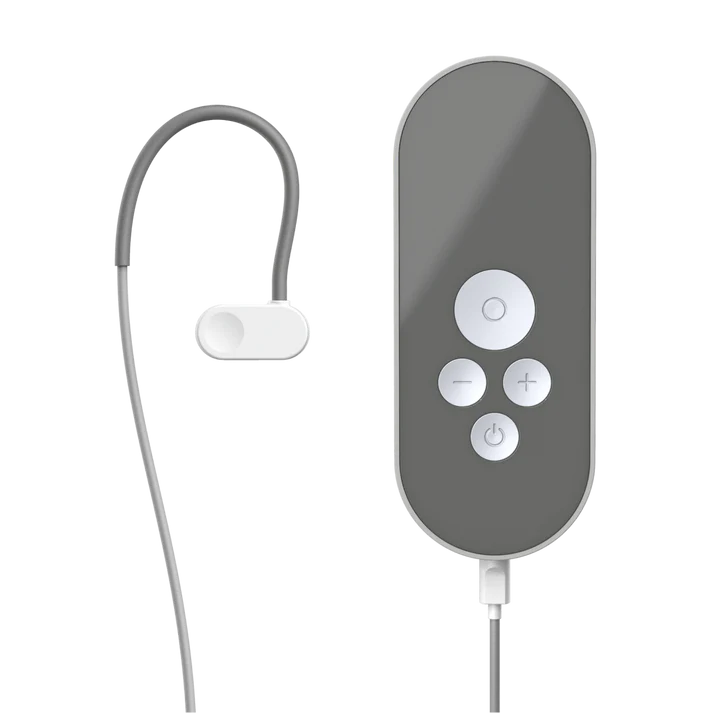
Auricular Vagal Neuromodulation Therapy (AVNT™) — Nurosym’s proprietary protocol developed with Chicago University Medical School, UCLA, Imperial College London, and 60+ research institutions.
How It Works:
Nurosym delivers proprietary electrical waveforms to the auricular branch of the vagus nerve in your ear.
- Peripheral Activation: Electrical stimulation activates vagal nerve fibres, generating signals that travel to your brain.
- Brainstem Integration: Signals reach the nucleus tractus solitarius (NTS)—your primary autonomic control centre.
- Energy-Regulatory Network: The NTS connects to key structures governing energy and metabolism:
- Locus coeruleus — optimises alertness and mental energy.
- Hypothalamus — regulates energy-critical hormones.
- Dorsal motor nucleus — controls digestive function.
- Periaqueductal grey — modulates energy-draining discomfort.
- Prefrontal cortex — enhances cognitive energy.
- Metabolic Rebalancing: Shift from energy-depleting stress activation to energy-restoring parasympathetic mode.
- Cellular Energy Optimisation: Multi-level enhancement including 28% reduction in cellular oxidative stress (p=0.004), supporting mitochondrial function, inflammatory suppression, and metabolic efficiency.
- Systemic Energy Restoration: Normalised stress hormones, enhanced sleep quality, improved nutrient utilisation.
Scientific Outcome: Multi-system intervention producing enhanced cellular energy production, optimised metabolic efficiency, improved recovery capacity, normalised daily energy rhythm, and sustained energy enhancement—without stimulants.
Scientific Significance:
The magnitude of fatigue reduction (48% within 10 days, p < 0.0001) and autonomic function improvement (significant parasympathetic enhancement within one hour, p=0.002) achieved through vagal neuromodulation provides a non-stimulant pathway to sustainable energy—without tolerance development, dependency risk, sleep disruption, or rebound fatigue.
Additional validated outcomes include:
- 31% improvement in sleep quality over 4 weeks (p < 0.05).
- 28% reduction in cellular oxidative stress in placebo-controlled studies (p = 0.004).
- Significant reductions in inflammatory markers, including IL-6, over 3 months.
- 45% improvement in depressive state scores and 35% reduction in anxious thought symptoms within 10 days.
The convergence of 50+ research studies, 4+ million user sessions, and CE Mark wearable device certification establishes Nurosym as the gold standard in non-invasive vagal neuromodulation for sustainable energy enhancement and metabolic optimisation.
For individuals seeking evidence-based, non-stimulant intervention to address the root causes of chronic tiredness—or healthcare professionals evaluating neuromodulation options for users with persistent energy deficits—Nurosym represents the most thoroughly validated transcutaneous VNS system available.
Nurosym is a CE-marked Class IIa wearable device. Scientific outcomes represent average results from controlled studies and real-world effectiveness analyses. Individual responses vary. The device is intended for general wellness and energy management; it is not intended to diagnose, treat, cure, or prevent any disease. Users with pacemakers or other significant medical symptoms should consult healthcare providers before use.
This blog post aims to be informational and should not replace professional health advice. Always consult with a health professional for personalised advice.
Sources
- Tarn J, Evans E, Traianos E, Collins A, Stylianou M, Parikh J, et al. The Effects of Noninvasive Vagus Nerve Stimulation on Fatigue in Participants With Primary Sjögren’s Syndrome. Neuromodulation: Technology at the Neural Interface. 2022 Oct;
- Percin A, Ozden AV, Yenisehir S, Pehlivanoglu BE, Yılmaz RC. Effects of Transcutaneous Auricular Vagus Nerve Stimulation on Fatigue in Post‐COVID Syndrome: A Randomized, Single‐Blind, Sham‐Controlled Study. International Journal of Clinical Practice. 2025 Jan 1;2025(1).
- McIntire LK, McKinley RA, Goodyear C, McIntire JP, Brown RD. Cervical transcutaneous vagal nerve stimulation (CTVNS) improves human cognitive performance under sleep deprivation stress. Communications Biology. 2021 Jun 10;4(1).
- Gierthmuehlen M, Höffken N, Timmesfeld N, Schmieder K, Reinacher-Schick A. Effect of transcutaneous auricular vagal nerve stimulation on the fatigue syndrome in patients with gastrointestinal cancers — FATIVA: a randomized, placebo-controlled pilot study protocol. Pilot and Feasibility Studies. 2023 Apr 22;9(1):66–6.
- Ferstl M, Teckentrup V, Lin WM, Kräutlein F, Kühnel A, Klaus J, et al. Non-invasive vagus nerve stimulation boosts mood recovery after effort exertion. Psychological Medicine. 2021 Feb 15;52(14):1–11.
Share via:



 English
  German
  French
  Spanish
  Swedish
The science behind vagal stimulation is quite compelling
The HRV section helped me understand how stress affects the body.