
If you’ve tried melatonin, CBD oil and magnesium and still wake at 3 am – here’s what’s actually behind it.

Most people who come to me with sleep problems are already doing the right things.
No screens after 9 pm. Magnesium before bed. Blackout curtains. A consistent bedtime. Chamomile tea. Melatonin.
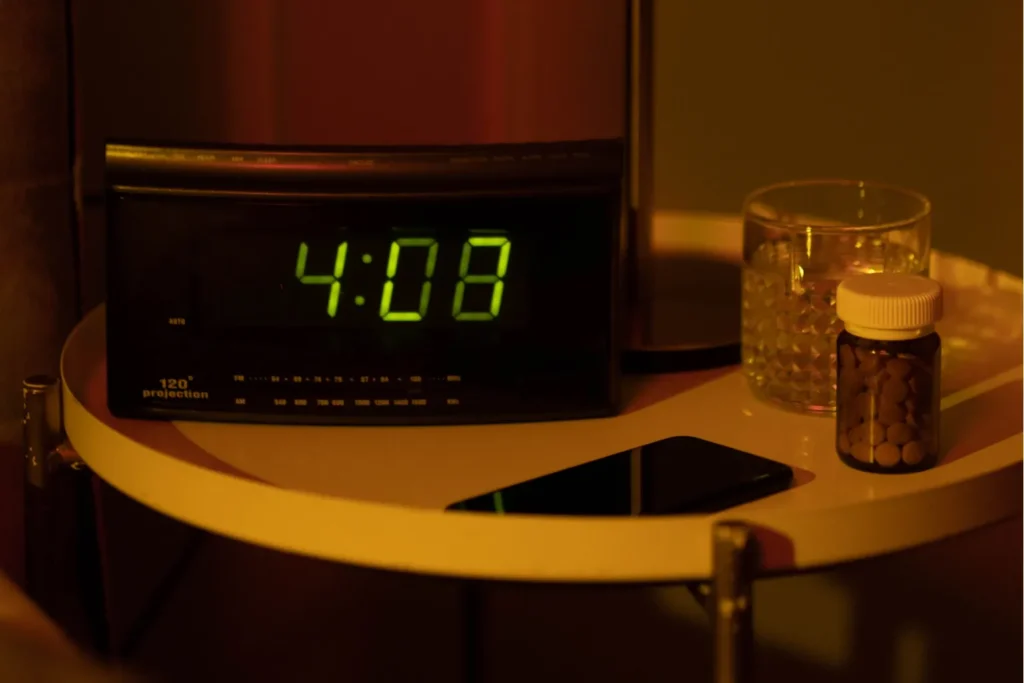
And then they say, almost apologetically: “I fall asleep fine. I just woke up at 3 am. And then I can’t get back.”
After 15 years in functional medicine, I’ve come to see that for many people, repeated early-morning waking reflects more than sleep habits alone.
I came to understand why partly through my own history – years of broken sleep during a period of healthcare overload, when I was running a practice, building a client base, and running on what felt like permanent reserve. I followed every piece of advice I gave my own clients. The sleep hygiene was impeccable. The supplements were optimised. The sleep remained broken.
What I eventually discovered changed the way I understood not just sleep – but the entire relationship between stress and the body’s ability to recover.
I’ll show you exactly what I mean.
What I Keep Seeing – And What Most Sleep Advice Misses

The people who come to me with sleep problems are not bad sleepers.
They tend to be disciplined about it. They’ve read the articles, tried the supplements, downloaded the apps. Many of them are the same people I see for burnout, adrenal fatigue, gut dysfunction, and chronic exhaustion – symptoms that share more with sleep disruption than most practitioners acknowledge. They take sleep seriously. And they still wake up at 3 am their their heart already racing and their mind already running through tomorrow.
What my cases describe follows the same pattern every time.
- The parent of young children who finally has a full night ahead - no feeds, no wake-ups - and still finds herself lying awake at 3 am, mind already on the day ahead, unable to understand why her body won't take the rest it's being offered.
- The professional under pressure - demanding job, phone that never truly goes quiet, a head that doesn't stop when the laptop closes. He falls asleep quickly from sheer exhaustion. Wakes at 3 am, fully alert. Cannot get back to sleep for two hours. Gets up depleted and does it all again.
- The caregiver - looking after someone else's needs around the clock. She collapses into bed exhausted. Her sleep is shallow, restless, full of half-dreams that don't feel restful. She wakes unrested regardless of how many hours she's technically spent asleep.
- The woman who wakes at 3:07 every single night. Doesn't even look at the clock anymore. Because she already knows the time.
One case described it in a way I haven’t forgotten:
“I’m not an anxious person. I don’t lie awake worrying. I just woke up at 3 am as an alarm has gone off – and there’s nothing I can do about it.”
What none of them had been told was this:
The alarm is real. It’s just not where they think it is.
The Belief Shift: It’s Not Your Sleep. It’s Your Cortisol.
Here is something that took me years in practice to fully understand – and that I rarely see explained clearly outside specialist circles.
Cortisol – your body’s primary stress and wakefulness hormone – follows a precise 24-hour rhythm.
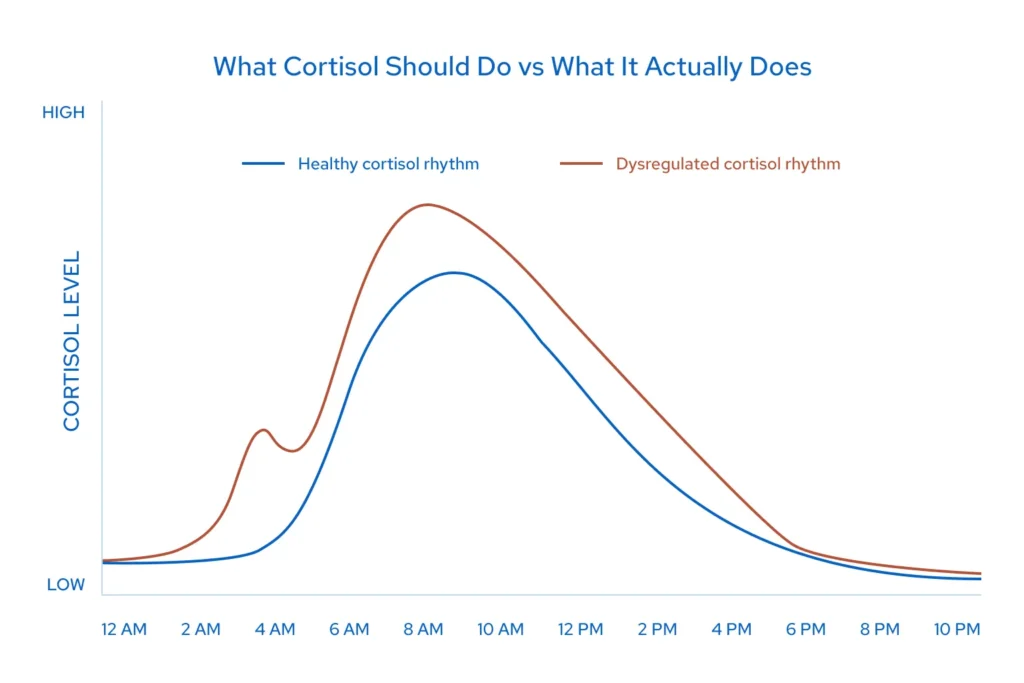
Under normal states, cortisol reaches its lowest point around midnight, allowing the body to enter its deepest, most restorative sleep. Then, gradually, from around 2 am onward, cortisol begins to rise in preparation for waking.
This is normal. In a healthy nervous system, you sleep straight through it.
But when the body has been under sustained stress – from work pressure, caregiving, family demands, or simply years of not fully recovering – something shifts.
The HPA axis (hypothalamic-pituitary-adrenal axis – the control system that governs cortisol release) becomes dysregulated. A meta-analysis pooling 20 studies across more than 800 participants confirmed that chronic sleep problems is consistently associated with significantly elevated 24-hour cortisol, most pronounced in the evening and early morning hours.
In some people experiencing chronic stress or sleep problems, cortisol rhythms may become altered. An earlier or higher overnight cortisol rise may contribute to waking in the early hours, although it is unlikely to explain every case.
It can feel as though an internal alarm has gone off, even though the causes are often more complex than a single trigger.
And Then There’s the REM Problem
3 am isn’t a random time to wake up. It’s a biological weak point – and here’s why.
Sleep doesn’t unfold in a straight line. It moves through cycles of approximately 90 minutes, alternating between deep slow-wave sleep (SWS) and rapid eye movement sleep (REM).
The first half of the night is dominated by deep, slow-wave sleep – the phase that repairs tissue, consolidates physical recovery, and restores immune function.
The second half of the night – from roughly 3 am onward – is when REM sleep dominates.
REM is not just dreaming. It is the phase during which the brain:
- Processes and consolidates emotional experiences from the day
- Transfers short-term learning into long-term memory
- Regulates mood, stress resilience, and the ability to handle pressure the following day
Waking repeatedly during the second half of the night can interrupt REM-rich sleep, which may affect mood, memory processing and how rested you feel the next day.
Not just the quantity of sleep, but the quality of what that sleep was supposed to do. This is why people with chronic 3 am wake-ups often describe not just tiredness, but a particular kind of depletion: emotional flatness, poor concentration, low resilience, a mood that doesn’t match their circumstances.
“I’m not tired. I’m something worse than tired. I wake up already behind.”
The 90-minute cycle that should have carried them through another two or three rounds of REM sleep simply didn’t happen.
And this – not the hours of sleep, not the sleep hygiene – is what the usual advice fails to address.
So what does?
“I’ve Tried Everything.” You Probably Have. Here’s What’s Actually Missing.
Everything most people try for sleep has genuine value.
But here is what I notice again and again in practice.
- Melatonin - genuinely helps with sleep onset and circadian rhythm issues. Melatonin mainly helps regulate sleep timing and may be more helpful for some sleep-onset problems than repeated early-morning waking.
- Magnesium - I recommend it to most of my clients, and it genuinely supports nervous system regulation. But it works at the periphery of the system. Its effects on HPA-axis regulation remain uncertain, and it may not resolve persistent early-morning waking on its own - which is why blood magnesium can look normal while the 3 am wake-up continues.
- Sleep hygiene - screens, temperature, consistent schedules. All correct, all important, and I encourage them. But even a perfect sleep environment doesn't prevent the cortisol spike. Sleep environment remains important, but it may not be sufficient if other physiological or psychological factors are contributing.
- Breathing exercises and meditation - genuinely effective for calming the nervous system. But they require quiet, focus, and a baseline of mental space that most people under sustained stress have already exhausted. Trying to meditate when your mind is already running is a bit like trying to slow down a car with no brakes by gripping the steering wheel harder. And for someone waking at 3 am - fully alert, heart already going - the environment needed to make these work are exactly what isn't available.
- CBD oil - increasingly popular and for good reason. It can genuinely support relaxation and reduce the time it takes to fall asleep. But the effect varies significantly between people, and finding the right dose and product takes time and study. More importantly, like magnesium, it works on the symptoms around sleep, not on the HPA axis dysregulation that fires cortisol too early in the night.
- Alcohol - reduces sleep onset time, which is why people reach for it. But it suppresses REM sleep in the second half of the night. The 3-4 am wake-up that follows is a direct consequence - arriving exactly when REM should be peaking.
- CBT-I (Cognitive Behavioural Therapy for sleep problems) - the most evidence-based approach available, and genuinely effective over time. But it requires multiple sessions, sustained effort, and weeks of implementation. For someone already depleted, finding the consistency to engage with a structured programme is often one barrier too many.
“I’ve done everything I was told to do. I’m disciplined about it. And I still wake up at 3 am.”
These aren’t wrong approaches. Most of them are genuinely good approaches.
The problem isn’t that they don’t work. It’s that they all require something from a person who is already running on empty. Time. Quiet. Consistency. Mental space. Energy.
And they all address the environment around sleep, not the system firing the alarm at 3 am.
The Question That Led Me to the Answer
By this point in my practice, I had stopped asking: “How do we improve your sleep environment?”
And started asking: “What system is supposed to regulate cortisol release at night – and why has it stopped working properly?”
That question kept bringing me back to the same place.
The vagus nerve (vagus is Latin for “wandering” – it runs from the brainstem all the way through the chest and abdomen, connecting the brain directly to the heart, lungs, gut, and immune system).
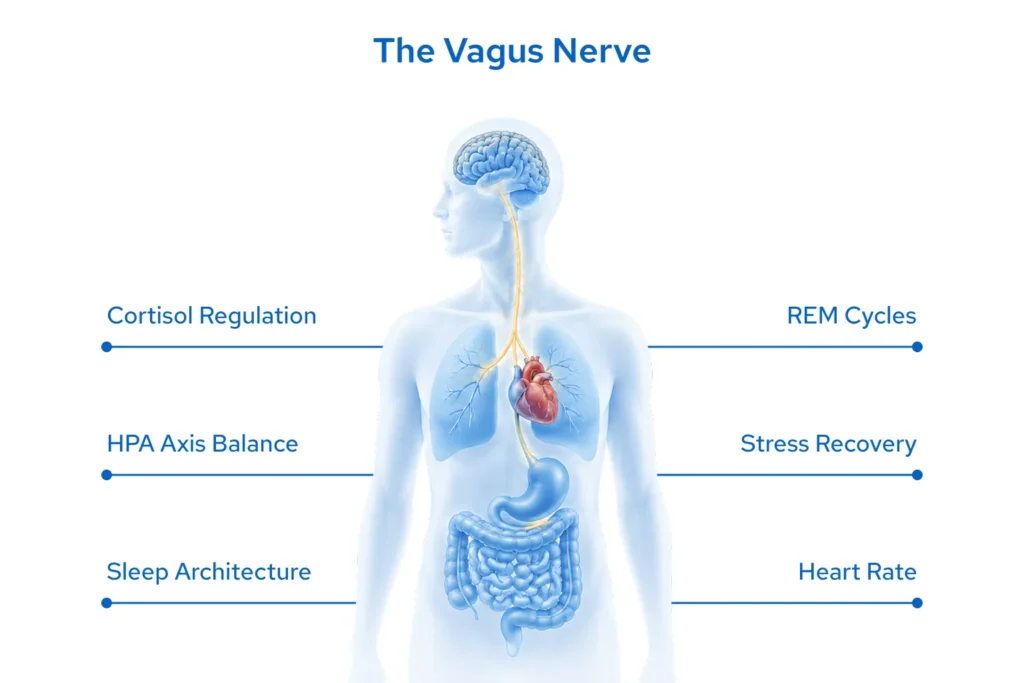
It is the longest nerve in the body. It is one of the major pathways involved in communication between the brain and organs throughout the body, including processes that influence autonomic regulation.
Think of vagal tone as the body’s volume control for the stress response.
When vagal tone (the measure of how well the vagus nerve is functioning) is healthy, the parasympathetic nervous system (PNS – the “rest and digest” state) maintains balance. Cortisol rises and falls on schedule. Sleep cycles complete. REM is protected.
When vagal tone drops – through chronic stress, accumulated overload, or sustained exhaustion – that volume control stops working.
The sympathetic nervous system (SNS – “fight or flight”) gains dominance.Chronic stress may contribute to changes in HPA-axis regulation, although individual cortisol patterns vary considerably. The body treats the early hours of the morning as a threat response. And the alarm goes off at 3 am – every night, like clockwork.
Which brought me to the only question that remained: is there a direct way to reach the vagus nerve – and restore that regulation?
What I Found – And Why I Was Sceptical
I’ll be honest – when I first came across research on vagus nerve stimulation (VNS), my immediate reaction was scepticism.
The established therapeutic approach was surgical – a device implanted in the chest, wired directly to the vagus nerve in the neck and used in hospitals for therapy-resistant depressive states. Genuinely effective in those contexts. Completely irrelevant to someone trying to get through the night without waking at 3 am.
Then I found something I hadn’t expected.
Researchers had identified a branch of the vagus nerve that runs just beneath the surface of the skin – on the outer ear, at a small piece of cartilage called the tragus, at the entrance to the ear canal.
Functional MRI (fMRI) studies suggest that stimulation at this location activates brain regions associated with vagal pathways.
This is the only therapeutically established external location on the body where the vagus nerve can be reached directly – without surgery, without a prescription, without a healthcare appointment.
Scientists developed a technique using low-level electrical signals: transcutaneous auricular vagus nerve stimulation (taVNS – “transcutaneous” meaning through the skin, “auricular” meaning via the ear).
I went through the published research carefully. Peer-reviewed, placebo-controlled scientific studies – conducted in collaboration with institutions including Harvard, UCL, and King’s College London.
And then I found the result that made me take this seriously.
In a peer-reviewed study, sleep quality scores improved by +30% – measured using the PSQI (Pittsburgh Sleep Quality Index – the gold standard therapeutic scale for measuring sleep quality).
Not by optimising sleep hygiene. Not by adding another supplement. The study reported improvements in sleep-quality scores following stimulation, although larger independent studies are still needed to confirm these findings.
This was the first time I had seen evidence pointing to the actual mechanism – the HPA axis dysregulation and vagal tone suppression – that I had been watching drive sleep problems in clients for years.
I wasn’t looking for another supplement – my cases already had enough of those.
I wasn’t looking for another tool that worked only when you were already calm enough to use it.
I wasn’t looking for something that helped people fall asleep. The problem wasn’t falling asleep. The problem was what happened at 3 am.
I was looking for something that reached the system itself. This was one of the first approaches I found that directly targeted a pathway thought to be involved in autonomic regulation.
But there was still one problem.
The research was detailed. The mechanism made complete sense. What I needed was a device users could actually use – at home, before sleep, without therapeutic support, without a protocol that required energy they had already run out of.
I found it. And it was simpler than I expected.
What the Research Shows
Before recommending this to clients, I wanted to make sure the evidence reflected what I had been seeing in practice.
Result | Metric |
+30% | Sleep quality (PSQI score, peer-reviewed RCT) |
+61% | Vagus nerve activity (within 5 minutes of use) |
−78% | Inflammatory markers IL-6 (3-month study) |
−48% | Fatigue |
−40% | Brain fog |
−35% | Anxious thoughts |
−45% | Depressive states / low mood |
60+ completed scientific studies. Zero serious adverse events reported to date.
What struck me wasn’t any single number. It was the pattern – and how closely it mapped to what I had been observing. Across different studies, improvements have been reported in sleep quality, fatigue and several other outcomes in specific study populations. These findings are encouraging, although they come from different studies and should not be interpreted as evidence that all outcomes improve together through a single mechanism.
All simultaneously. Because they all share the same underlying regulatory system.
The device that produced these results is called Nurosym.
The At-Home Habit I Now Recommend

Nurosym is a CE-marked taVNS device developed by Parasym – a UK-based company with more than 10 years of R&D and over £10 million invested in scientific research.
Backed by 60+ peer-reviewed studies, including collaborations with institutions such as Harvard, UCL and King’s College London.
Recommended by 1,000+ healthcare professionals. Over 5 million sessions completed.
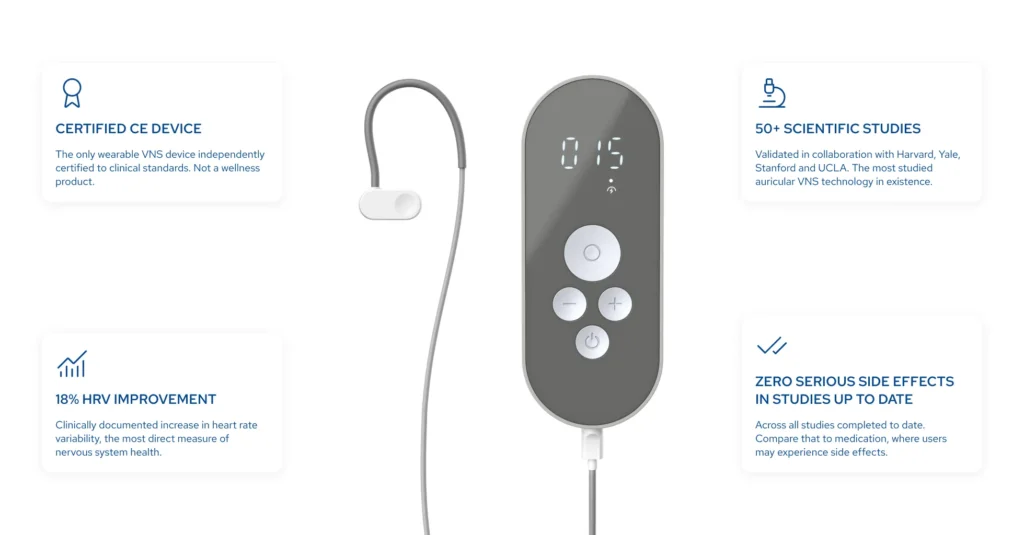
It uses proprietary AVNT™ technology (Auricular Vagal Neuromodulation Therapy – a precisely calibrated electrical signal delivered through the tragus of the left ear, directly stimulating the auricular branch of the vagus nerve).
In practical terms, it clips gently onto the ear with a small cable – discreet, lightweight, and simple to use.
How it works
Nurosym is not a replacement for good sleep hygiene, magnesium, or any other approach that is already helping. Those things matter – and I continue to recommend them.
What it adds is something different. Unlike melatonin, it isn’t telling the body when to sleep. Unlike magnesium, it isn’t adjusting nervous system chemistry from the periphery. Unlike sleep hygiene, it isn’t optimising the environment around sleep.
It aims to stimulate the auricular branch of the vagus nerve, which may influence vagal activity and autonomic regulation – supporting the HPA axis regulation that determines when cortisol rises, how high it spikes, and whether REM sleep is protected in the second half of the night.
In other words, It is intended to support one of the physiological pathways involved in nervous-system regulation, rather than focusing solely on sleep habits or supplements. For cases who have done everything right and still wake at 3 am, this is usually the missing piece.
How you use it

15 to 30 minutes. Before sleep, or during an evening wind-down.
No quiet room needed. No mental preparation. No consistency protocol to follow.
You can use it while reading. While watching something. While lying quietly. While doing the dishes. While ironing. It clips onto the ear like a wireless earbud – and then it simply works, while you do whatever the evening already involves.
This is the part that matters most for people who are already depleted: it doesn’t ask anything of you first. It doesn’t require you to be calm for it to work. It doesn’t need twenty minutes of silence and a darkened room. It doesn’t add to the list of things you have to do before bed.
The state it requires are the environment an ordinary evening already provides.
Nurosym may particularly suit:
- The person who falls asleep fine but wakes at 3 am - consistently, without explanation
- The person whose sleep tracker shows poor REM despite adequate hours in bed
- The caregiver or parent whose nervous system simply never fully unwinds between demands
- The professional who collapses into bed exhausted - and still can't stay asleep
- Anyone whose sleep deteriorated during a stressful period and hasn't recovered since
What People Actually Notice
The changes tend to arrive quietly – and then suddenly feel obvious.
“My sleep has improved, and one day I scored 99/100 for the quality and depth of my sleep. My regrets: that I didn’t order one sooner.”
“I feel as though I have emerged from a long hibernation.”
“I’ve been using the device for two months now. My sleep and energy levels have greatly improved.”
“The first night I used it, I slept all the way through. I hadn’t done that in months.”
These are the signals of an HPA axis beginning to regulate – and cortisol beginning to follow its natural rhythm again. Gradual. Incremental. Real.
And almost always – sleep is not the only thing that changes.
Why Sleep Is Rarely the Only Thing That Improves
Something I see consistently in practice – and that clients rarely expect.
The same HPA axis dysregulation that fires cortisol too early also drives daytime fatigue, brain fog, low mood, and the kind of background anxious thoughts that has no name and no obvious cause.
Sleep disruption, fatigue, low mood, and anxious thoughts frequently occur together and may share overlapping biological pathways, although their causes differ between individuals.
Clients who come to me specifically about 3 am wake-ups start mentioning – almost as an afterthought – that the afternoon energy crash has gone. The background tension has dropped. That they’re sharper in the mornings. That the mood has lifted in a way they can’t quite explain.
This makes sense once you understand the mechanism. The HPA axis doesn’t only govern sleep. It governs the body’s entire stress and recovery rhythm – across the day and the night. Improvements in stress regulation may coincide with improvements in other symptoms, although responses vary and causation has not been established.
Is This Right for You?
If this pattern is familiar – waking at 3 am, lying there unable to return to sleep, getting through the day on less than you need – this is worth exploring seriously.
Nurosym works alongside everything else you’re already doing. Sleep hygiene matters. Magnesium helps. What Nurosym adds is direct support for the system underneath – support for autonomic regulation, which may be relevant for some people experiencing persistent sleep disruption.
A 30-day money-back guarantee means no financial risk. Either it makes a meaningful difference, or you return it.
Nurosym may be worth considering if:
- You wake between 2 and 4 am consistently - and lie there, fully alert, unable to get back to sleep
- You fall asleep easily but feel unrested regardless of how many hours you've had
- Your sleep tracker shows poor REM or shallow sleep despite adequate time in bed
- You're a parent, caregiver, or professional whose nervous system simply never fully unwinds
- Sleep deteriorated during a stressful period - and hasn't recovered since, even though the stress has eased
- You've tried supplements, hygiene changes, and apps with only partial results
Nurosym is not suitable for everyone. If you have an implanted cardiac device such as a pacemaker, are pregnant, have had a serious cardiac event in the last five years, or are under 18, please do not use it. As with any new intervention, it is always worth checking with your healthcare professional first if you have an existing medical symptoms.
If there is one thing I hope this article offers, it is this:
If you wake at 3 am every night, that is not a character flaw. It is not a sign that you are a bad sleeper, that you are too stressed, or that you simply need to relax more.
For some people, repeated early-morning waking may reflect changes in stress regulation and autonomic function rather than sleep habits alone. Approaches that support autonomic regulation are being actively studied, but they should be considered as one part of a broader sleep-management strategy rather than a standalone solution.
Once you understand that, waking at 3 am no longer feels mysterious. It becomes something that finally makes physiological sense – and something you can actually do something about.
Looking Beyond Sleep Hygiene?
Sometimes the challenge isn’t falling asleep; it’s helping your body stay in a restorative state throughout the night.
Discover how supporting vagal activity may complement healthy sleep habits and overall nervous system regulation.
This article reflects my professional evaluation of the evidence and 15 years of clinical experience in functional medicine and naturopathy. I may receive a referral arrangement from purchases made through links in this article. I only recommend approaches I have examined carefully and would stand behind with my own patients. This is not medical advice – always consult a qualified healthcare professional before starting any new intervention. The 30% sleep improvement figure reflects a relative change in a peer-reviewed clinical study; individual results may vary.
– Thomas Hottmann, Naturopath & Functional Medicine Practitioner | YourBestHealth, Lake Constance
This blog post aims to be informational and should not replace professional health advice. Always consult with a health professional for personalised advice.
References
- Hirotsu C, Tufik S, Andersen ML. Interactions between sleep, stress, and metabolism : From physiological to pathological conditions. Sleep Science. 2015;8(3):143–152. https://pmc.ncbi.nlm.nih.gov/articles/PMC4688585/
- Abell JG, et al. Recurrent short sleep, chronic insomnia symptoms and salivary cortisol: A 10-year follow-up in the Whitehall II study. Psychoneuroendocrinology. 2016. https://pmc.ncbi.nlm.nih.gov/articles/PMC4862960/
- Besedovsky L, Lange T, Born J. Sleep and immune function. Pflügers Archiv – European Journal of Physiology. 2012;463:121–137. https://doi.org/10.1007/s00424-011-1044-0
- Breit S, et al. Vagus nerve as modulator of the brain-gut axis in psychiatric and inflammatory disorders. Frontiers in Psychiatry. 2018;9:44. https://doi.org/10.3389/fpsyt.2018.00044
- Kaniusas E, et al. Current directions in auricular vagus nerve stimulationI – A physiological perspective. Frontiers in Neuroscience. 2019. https://doi.org/10.3389/fnins.2019.00854
- Farmer AD, et al. International Consensus Based Review and Recommendations for Minimum Reporting Standards in Research on Transcutaneous Vagus Nerve Stimulation (Version 2020). Frontiers in Human Neuroscience. 2021. https://doi.org/10.3389/fnhum.2020.568051
- Redgrave J, et al. Safety and tolerability of transcutaneous vagus nerve stimulation in humans: a systematic review. Brain Stimulation. 2018;11(6):1225–1238. https://doi.org/10.1016/j.brs.2018.08.010


 English
  German
  French
  Spanish
  Swedish
  Italian