

I’m a 40-year-old marketing manager, and for the last three years I became increasingly focused on a single metric: my HRV.
If you track yours, you already know exactly what I mean.
If you don’t, the short version is this:
HRV, or heart rate variability, is the variation in the timing between heartbeats, and it’s commonly used as a non-invasive marker of autonomic nervous system activity associated with autonomic balance and recovery capacity. Higher is usually better, and lower usually means under greater physiological stress and not recovering well from whatever you’re putting it through.
I bought an Oura ring to fix my sleep, became increasingly focused on the data, and within a month, I was checking my HRV before I’d even had a coffee.
Mine was 34.
It had been 34 for as long as I’d owned the ring, and no matter what I threw at it, it would not move.
I used a meditation app twice a day for six months, a winter of cold showers, every breathing technique on the internet, magnesium and glycine before bed, an alcohol-free stretch, earlier bedtimes, and cutting caffeine after lunch. Each thing nudged my number up for a week or two, then it always drifted back down to 34.
After a while, I started attaching more meaning to the number than was probably healthy.
I’d wake up, check the ring, and I started treating the score as predictive of how my day would feel before I’d even stood up. A low score and I’d already feel behind. I knew that wasn’t healthy, and I also couldn’t seem to stop.
Then a colleague mentioned vagus nerve stimulation.
She tracked her HRV too, and she said hers had climbed steadily since she’d started using a device. I’d vaguely heard of the technology and filed it under another wellness trend, but she’s not someone who falls for nonsense, and she showed me her chart. The trend line was consistently upward.
I checked the company website, saw the 30-day money-back guarantee, and decided to run a proper experiment. Thirty days, the ring on every night, a journal each morning, treating it like any other thing I’d ever studied on myself. If my number didn’t move, I’d send the device back.
Here’s what actually happened.
Day 1–4: The Number That Wouldn't Move
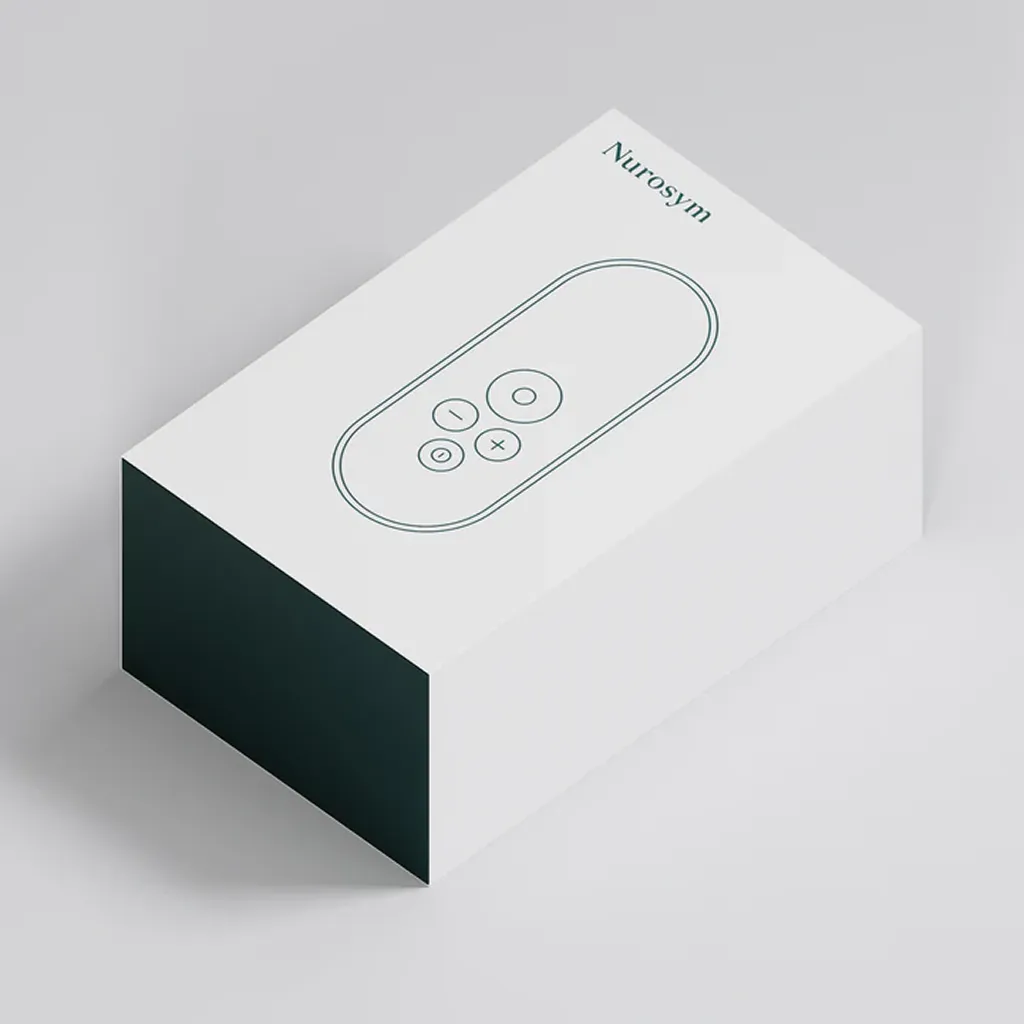
It came in a plain white box, smaller than I’d expected.
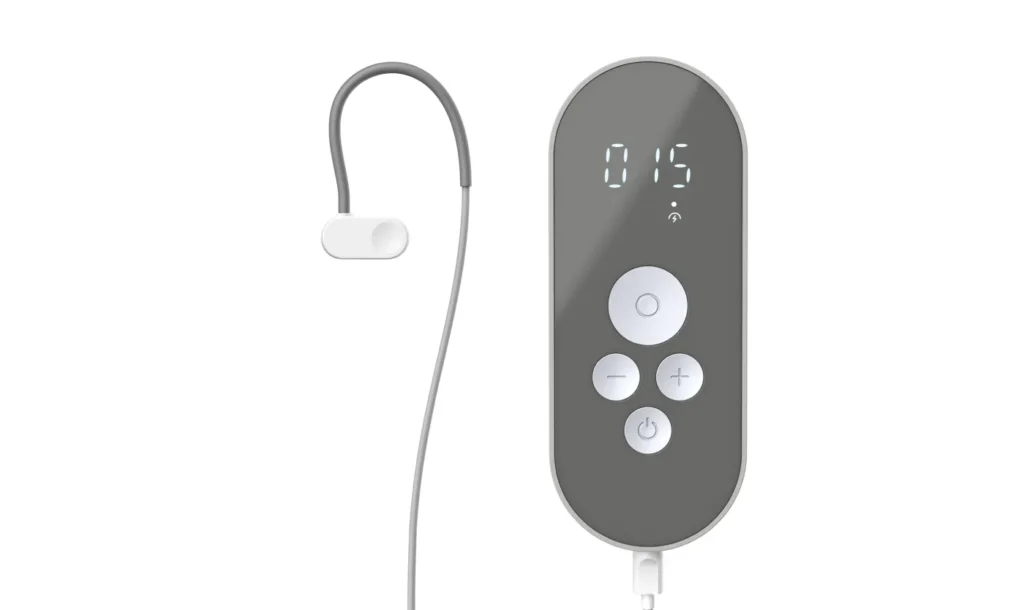
I clipped it onto my left ear while the coffee was brewing, set the intensity to a level I could just barely feel, and got on with my morning. It was a faint tingle, nothing more.
For three days, my HRV did exactly nothing: it read 34, then 35, then 34. I’d seen enough flat-line interventions in my own data to recognise the familiar pattern of no meaningful change.
I was already drafting the refund email in my head.
On day four, I read the manual properly and realised I’d been doing short sessions. The recommended duration was at least fifteen minutes, and I’d been doing less than ten. So I wore it for a little over fifteen minutes while answering emails that morning.
And I noticed a subtle shift.
My shoulders weren’t around my ears, my jaw wasn’t clenched, and a layer of background tension I rarely noticed had eased, was gone. I didn’t suddenly feel different. I just felt like I’d been maintaining more physical tension than I had realised, and I’d finally put it down.
I’d read enough about HRV by then to know that this was broadly consistent with what HRV is often interpreted to reflect.
So I decided to keep going and let the ring tell me whether it was real.
Day 8–12: The First Meaningful Changed
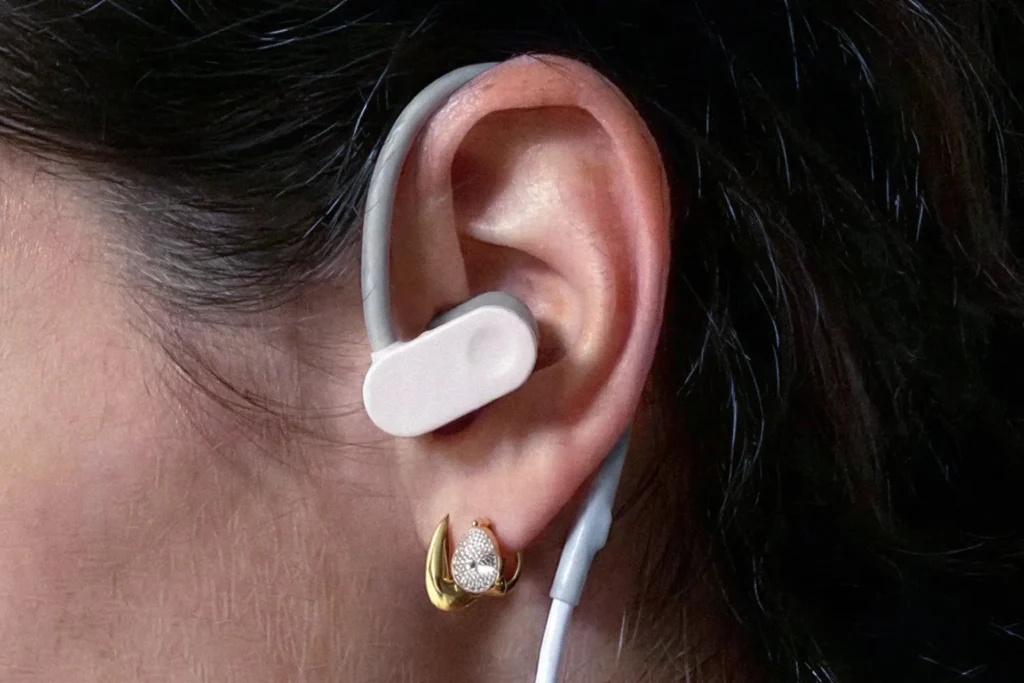
By the second week, I was doing two sessions a day, fifteen minutes in the morning while I caught up on emails and thirty minutes in the evening while watching TV.
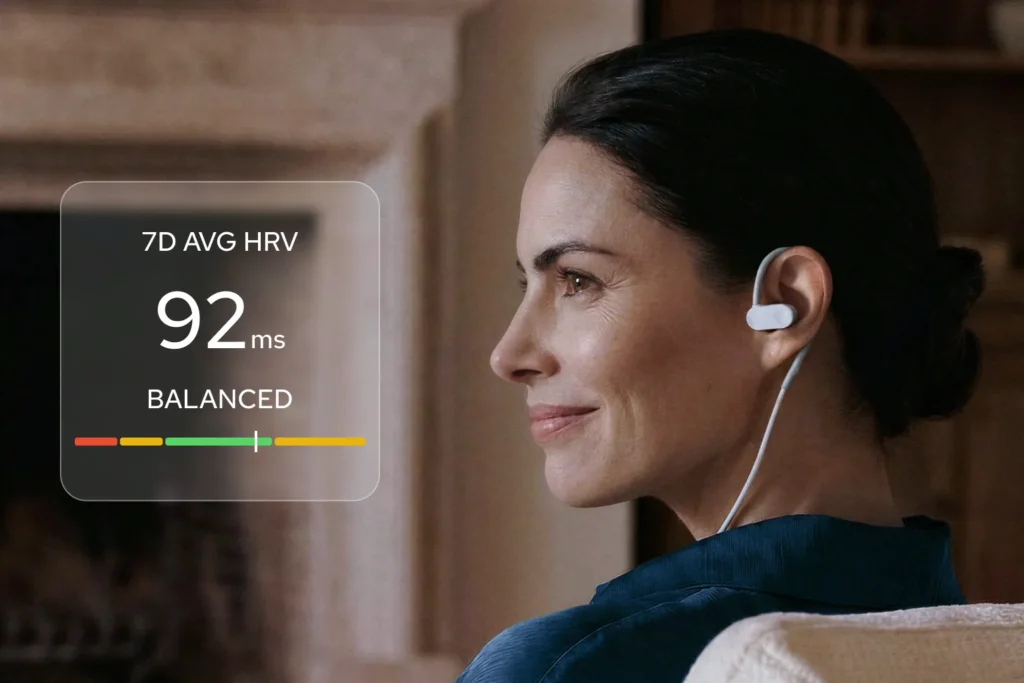
On day nine, I checked the ring, and my HRV reading came in at 41.
What surprised me most was how unusual that reading was for me.
I had been chasing this number for three years, and 41 was a number I’d seen maybe three times in all that time, always after a holiday, never on a normal working Tuesday. I assumed it was a glitch. But day ten came in at 43, day eleven at 40, and day twelve at 44. My weekly average had jumped from 34 to 42.
I started screenshotting every morning because I genuinely didn’t trust what I was seeing.
The subjective changes became more noticeable about a week later.
I was still in the same job, still in the same meetings, still answering the same volume of messages, but I wasn’t ending the day feeling mentally depleted. When a difficult call ended, I wasn’t remaining physiologically activated long after the interaction ended.
The recovery between stressful moments had quietly gotten quicker, which aligned with how improved autonomic recovery is often described in HRV research.
Day 16–22: Sleep, and the Number Climbing Overnight
Sleep was the reason I’d bought the ring in the first place, and it had always been my problem area. I got my seven hours, my sleep efficiency looked fine on paper, but I woke up groggy more often than not, and I’d assumed that was just my normal.
I’d been wearing the device for an hour before bed for two weeks.
In week three, I started waking up feeling like I’d actually slept. It wasn’t a dramatic, well-rested high, just a settled feeling, the kind of morning where I didn’t need twenty minutes and a coffee to feel fully alert.
The ring backed it up, and this was the part that interested me most.
My deep sleep was up by about twelve minutes a night, my resting heart rate overnight had dropped from 58 to 54, and my HRV was climbing during sleep, not just on the morning reading. The overnight recovery metrics appeared to improve in the hours it was supposed to.
For someone who had spent three years staring at a number that wouldn’t move, seeing sustained overnight improvement in the trend data was reassuring.
Day 23–26: I Went Down a Research Rabbit Hole
By week four, I’d stopped wondering whether this was working and started wondering why a number that had ignored everything else I’d ever tried was finally moving.
I gave myself a Saturday afternoon with a coffee and a stack of open browser tabs.
This was my understanding after reviewing the literature.
The vagus nerve is the body’s main parasympathetic pathway, which is the “rest, digest, recover” system. It’s the longest cranial nerve, running from the brainstem down through the neck and into the heart, lungs, and digestive system. About 80% of its fibres are afferent, meaning they send signals to the brain, and only 20% are efferent, meaning they send signals away from the brain.
This was the part that helped contextualise the pattern I had been seeing.
HRV is commonly used as a non-invasive marker associated with autonomic nervous system regulation, including parasympathetic activity. It had been stuck because my autonomic recovery patterns may not have been functioning optimally, and HRV reflects part of that broader autonomic picture.
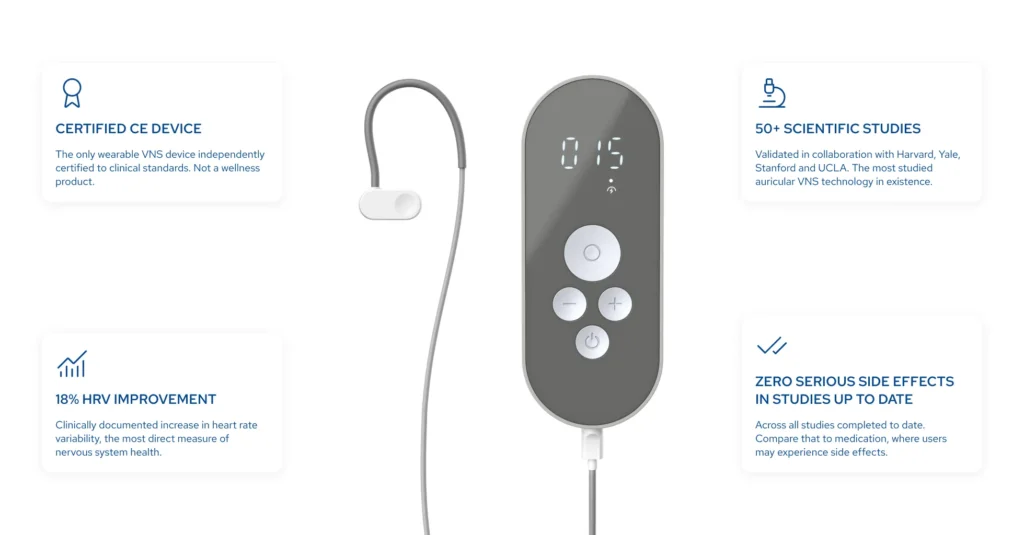
The technology I was using was called Nurosym.
It’s an auricular vagus nerve stimulation that sends mild electrical signals through a branch of the vagus nerve that runs close to the skin in the outer ear. The signal travels up the nerve to the brainstem.
Auricular vagus nerve stimulation has been evaluated in small scientific studies and systematic reviews.
A few numbers from that body of research stood out:
- A 61% increase in vagal activity
- A 35% reduction in stress-response reactivity
- A 31% improvement in reported sleep quality
- A 48% reduction in reported tiredness, alongside improved energy
I won’t pretend I read every paper, but it was enough to convince me that what I was seeing on my ring wasn’t a fluke run of good days, and that there was a mechanism behind it.
Day 30: What Changed

I’m still 40, I’m still in the same job, and I still have a full inbox. This isn’t magic, and some mornings the number is still lower than I’d like.
But here’s where things landed after 30 days:
- My HRV went from an average of 34 to 45, and it's still slowly climbing.
- My resting heart rate overnight has dropped four beats.
- My sleep is the same length, but it's deeper, and it actually restores me now.
- My recovery feels faster, and a stressful day doesn't write off the day after it anymore.
- I'm less reactive to small things, the late reply, the meeting that overruns, the traffic.
And the one I really didn’t expect, I’ve stopped reaching for my phone the second I wake up. For three years, that number ran in my mornings, and it decided how I was allowed to feel before I’d even got out of bed. It doesn’t do that anymore.
Ironically, once the number improved, I also became less emotionally dependent on it.
Why Your Body Stays Stuck (And How This Helps)
The vagus nerve is the longest cranial nerve in the body.
It runs from the brainstem down through the neck and into the abdomen, branching into the heart, lungs, and digestive system. About 80% of its fibres are afferent, meaning they send signals to the brain, and only 20% are efferent, sending signals away from the brain.
When you’ve been running in low-grade stress mode for a long time, which is common during prolonged periods of stress and insufficient recovery, the parasympathetic side can have a harder time doing its job.
The sympathetic (“go-go-go”) side takes over, and the autonomic recovery processes may become less efficient, even when you’re trying to rest.
HRV measurements may trend lower over time in some individuals..
This is one reason a stuck HRV is so hard to move with the usual levers.
A supplement, an earlier bedtime, or a breathing app each nudges one small input, but if the underlying autonomic stress patterns remain unchanged, the number always drifts back. Those interventions may not address the broader factors influencing autonomic recovery.
Auricular vagus nerve stimulation works by sending mild electrical signals through a branch of the vagus nerve that runs close to the skin in the outer ear.
It’s not a hack, and it’s not a stimulant. It’s about giving the recovery side of your nervous system the additional parasympathetic stimulation, which is the part HRV has been trying to tell you about all along.
A Note on the Practical Side
If you’re thinking of trying one, here are a few things I wish someone had told me.
I paid full price, around €700 which is a significant financial investment.
I later found out they run a remote research study you can sign up for. You fill out some forms, share your data, and you get around €40 off.
The other thing that made me commit was the 30-day money-back guarantee. If it hadn’t worked, I’d have sent it back, and that reduced the financial risk for me personally.
You wear it clipped to your ear, and sessions run from 15 minutes up to two hours. I do thirty minutes in the morning while working and an hour in the evening while reading or watching TV. The sensation is a faint tingle, not painful.
You can wear it during most sedentary daily activities that aren’t a workout or a shower.
My Honest Take
I’ve spent three years and significant resources trying to move one number on a screen. Most of what I tried gave me a small bump for a week or two before things drifted back to 34.
This was one of the few interventions that produced changes I could track consistently over time.
It hasn’t made me twenty-five again, because that’s not how this works. But it’s moved a number I’d genuinely given up on, and along with it, it’s given me deeper sleep, faster recovery, calmer evenings, and less emotionally reactive mornings around the data.
For the first time in three years of tracking, the long-term trend is now consistently upward.
That’s the most honest summary I can give.
Looking for a Different Way to Support Recovery?
Many people focus on sleep, supplements, and stress management, yet overlook one of the body’s most important recovery pathways: the vagus nerve.
Nurosym provides a simple, drug-free way to support vagal activity and autonomic nervous system regulation from home.
See how daily vagus nerve stimulation is being studied for its effects on HRV, sleep, stress resilience, and overall wellbeing.
This blog post aims to be informational and should not replace professional health advice. Always consult with a health professional for personalised advice.
References
- Borges, U., Laborde, S., & Raab, M. (2019). Influence of transcutaneous vagus nerve stimulation on cardiac vagal activity: Not different from sham stimulation and no effect of stimulation intensity. PLOS ONE, 14(10), e0223848.
- Cao, R., et al. (2022). Accuracy Assessment of Oura Ring Nocturnal Heart Rate and Heart Rate Variability in Comparison With Electrocardiography in Time and Frequency Domains: Comprehensive Analysis in Comparison With Electrocardiography in Time and Frequency Domains: Comprehensive Analysis. Journal of Medical Internet Research, 24(1), e27487.
- Peuker, E. T., & Filler, T. J. (2002). The nerve supply of the human auricle. Clinical Anatomy, 15(1), 35–37.
- Redgrave, J., et al. (2018). Safety and tolerability of transcutaneous vagus nerve stimulation in humans; a systematic review. Brain Stimulation, 11(6), 1225–1238.
- Yap, J. Y. Y., et al. (2020). Critical review of transcutaneous vagus nerve stimulation. Frontiers in Neuroscience, 14, 284.
- NIH. (1996). Heart rate variability. Task Force of the European Society of Cardiology and the North American Society of Pacing and Electrophysiology. Circulation, 93(5), 1043–1065.



 English
  German
  French
  Spanish
  Swedish
  Italian