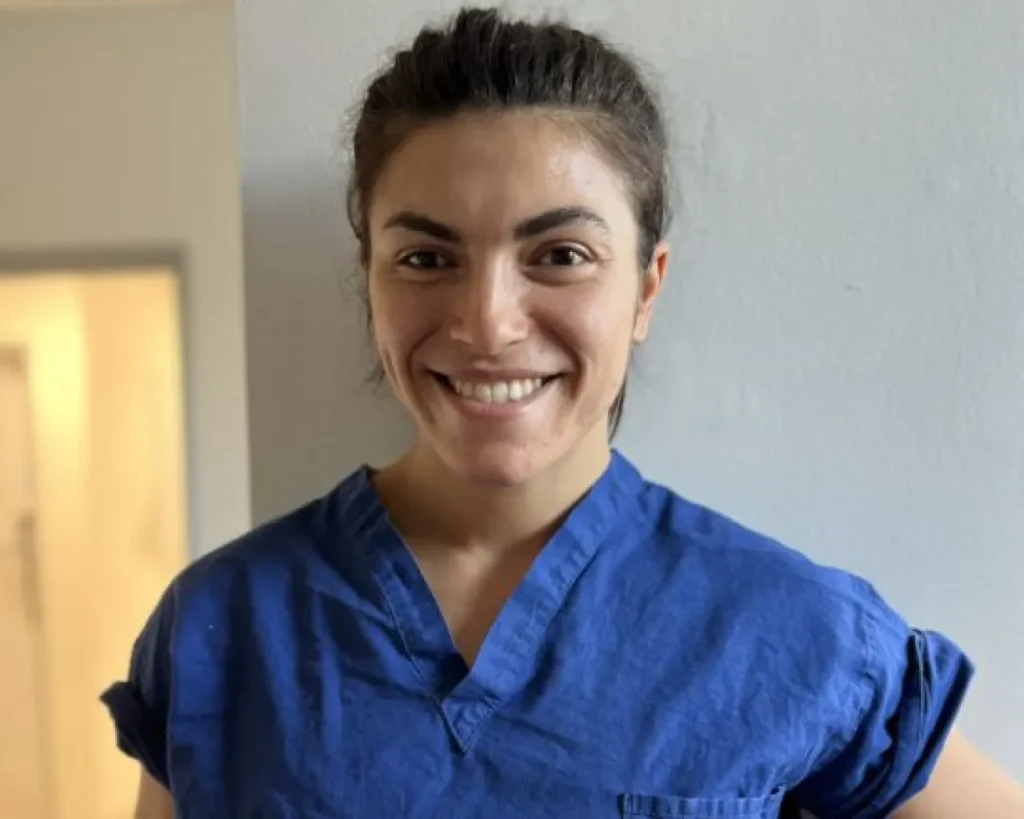
Lange Krankenhausschichten zu arbeiten, in denen man mehr als nur die Arbeit trägt, sich erschöpft zu fühlen, fühlte sich normal an. Was mir damals nicht klar war, war, dass es nicht die Art von Müdigkeit war, die Ruhe beheben konnte.
Die Leute gehen davon aus, dass der Druck endet, wenn Ihre Schicht endet. Aber die ängstlichen Gedanken und die emotionale Erschöpfung können noch viel länger bei dir bleiben.
Auf der Intensivstation funktioniert das nicht wirklich so.
Eines Tages hält man die Hand eines Gleichaltrigen, während dieser stirbt. Am nächsten Morgen sind Sie im Fitnessstudio und versuchen, sich normal zu verhalten, auf Nachrichten zu antworten, Lebensmittel einzukaufen, Kurse zu trainieren und weiterzumachen, als hätte Ihr Nervensystem nicht gerade zwölf Stunden im Überlebensmodus verbracht.
Das war für mich wahrscheinlich der seltsamste Teil.
Die Arbeit würde zu Ende gehen, aber mein Körper schien nie zu glauben, dass der stressige Teil tatsächlich vorbei war.
Und ehrlich gesagt glaube ich nicht, dass dies nur Menschen passiert, die auf der Intensivstation arbeiten.
Gehirn und Nervensystem sind nicht immer sehr gut darin, zwischen körperlicher Gefahr und ständigem psychischen Druck zu unterscheiden.
Mit der Zeit können Fristen, emotionaler Druck, Benachrichtigungen, mangelnde Ruhe und nie vollständiges Abschalten dazu führen, dass der Körper so funktioniert, als ob ständig etwas nicht stimmt.
Rückblickend denke ich, dass die ängstlichen Gedanken und Burnout-Symptome Anzeichen dafür waren, dass mein Nervensystem schon sehr lange im Überlebensmodus feststeckte.
Ich arbeite auf einer Intensivstation und die Umgebung ist auf eine Weise intensiv, die schwer zu erklären ist, wenn man sie nicht selbst erlebt hat. Du bist ständig um Leben und Tod herum. Um die Angst herum. Um Trauer herum. Rund um Familien, die den schlimmsten Tag ihres Lebens haben, während Sie versuchen, ruhig genug zu bleiben, um Ihre Arbeit richtig zu erledigen.
Manchmal geht man davon aus, dass Mitarbeiter im Gesundheitswesen dagegen immun werden.
Dann
Man lernt, wie man darin professionell funktioniert. Aber der Körper nimmt immer noch auf, was er irgendwo erlebt.
Und irgendwann holt es dich ein.
Ich begann, es außerhalb der Arbeit zu bemerken
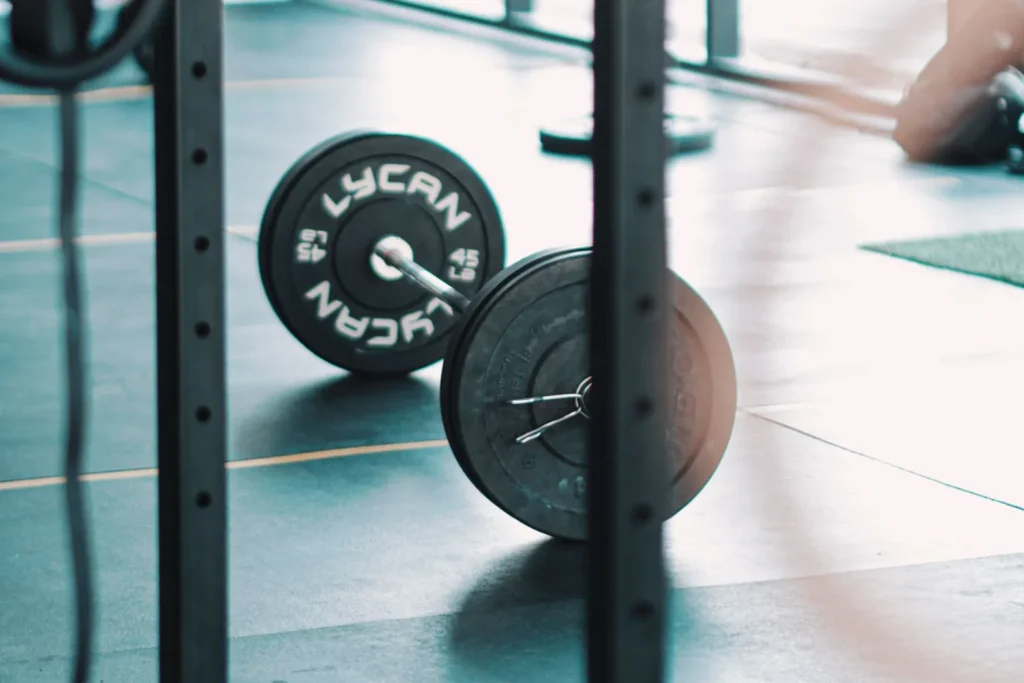
Außerhalb des Krankenhauses trainiere und trainiere ich CrossFit auf einer hohen Ebene. Das Training war für mich schon immer eine Erleichterung. Wenn ich mich gestresst, überfordert oder emotional fühlte, bestand mein Instinkt immer darin, mich stärker zu bewegen, stärker zu trainieren und stärker zu pushen.
Eine Zeit lang dachte ich, das würde mir helfen, damit klarzukommen.
Aber wenn ich jetzt zurückblicke, glaube ich, dass ich von einer intensiven Umgebung direkt in eine andere übergegangen bin, ohne meinem Körper jemals wirklich zu erlauben, sich zwischendurch zu erholen.
An manchen Morgen wachte ich bereits ängstlich auf, bevor der Tag überhaupt begonnen hatte. Schwer. Geschwollen. Erschöpft. Fast so, als hätte mein Körper eine Art allergische Reaktion auf das Leben.
Ein anderes Mal fühlte ich mich während des Trainings plötzlich emotional, ohne ersichtlichen Grund. Ich musste mitten in der Sitzung aufhören und versuchen, mich zusammenzureißen, während alle um mich herum davon ausgingen, dass ich einfach nur müde oder launisch war.
Aber wie erklärt man den Leuten, dass man gestern Stunden mit einer Familie verbracht hat, um sich von jemandem zu verabschieden, den sie lieben?
Viele Angehörige der Gesundheitsberufe tragen solche Dinge schweigend.
Und das Schwierige daran ist, dass es einen selten trifft, während man tatsächlich bei der Arbeit ist. Es ist danach. Auf der Heimfahrt. Nachts im Bett. Zufällig im Fitnessstudio. In einem Supermarkt stehen. Den ganzen Tag zum ersten Mal mit deinen Gedanken sitzen. Dann wurden die ängstlichen Gedanken normalerweise lauter. Nicht während des Chaos, sondern als es endlich still wurde.
Ich dachte, ich wäre einfach ausgebrannt
Lange Zeit dachte ich, ich sei einfach erschöpft.
Und ehrlich gesagt habe ich versucht, alle “richtigen” Dinge zu tun.
Ich habe trainiert. Ich habe gut gegessen. Ich habe es mit Meditation versucht. Atemarbeit. Tagebuch führen. Therapie nach COVID. Ich begann wieder zu lesen, weil mir klar wurde, dass ich die Fähigkeit, auch nur zwanzig Minuten lang ruhig mit meinem eigenen Gehirn zu sitzen, völlig verloren hatte.
Einige dieser Dinge haben wirklich geholfen.
Doch das Gefühl schlich sich immer wieder ein.
Und ehrlich gesagt glaube ich, dass das der Grund ist, warum so viele Menschen Burnout nicht früh genug erkennen. Sie funktionieren weiter, auch wenn sich darunter ängstliche Gedanken, Erschöpfung und emotionale Überlastung aufbauen.
Burnout sieht zunächst nicht immer dramatisch aus. Es sieht so aus, als würde man beim Mittagessen E-Mails beantworten, zwischen den Aufgaben hetzen, den ganzen Tag ängstliche Gedanken auf niedrigem Niveau mit sich herumtragen und sich selbst zu Hause nie ganz geistig außer Dienst fühlen.
Ich könnte mich den ganzen Tag ausruhen und würde am nächsten Morgen immer noch erschöpft, aber seltsam nervös aufwachen. Mein Körper fühlte sich müde an, aber mein Geist fühlte sich immer noch ständig eingeschaltet – als hätte er vergessen, wie er herauskommen sollte Kampf- oder Fluchtmodus angemessen
Wenn ich ein Knopf wäre, könnte man ständig Rauschen von mir hören.
Da wurde mir klar, dass es hier wahrscheinlich nicht mehr nur darum ging, “beschäftigt” oder “heruntergekommen” zu sein. Es fühlte sich wirklich an wie ein Problem mit dem Nervensystem.
Was ich über Burnout und ängstliche Gedanken nicht verstanden habe
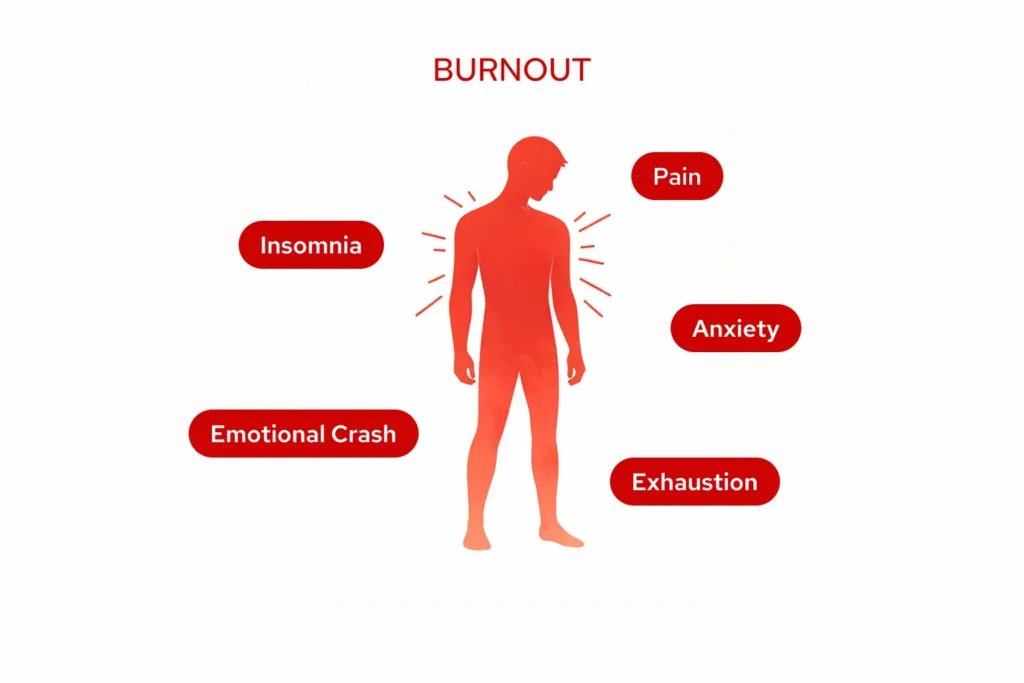
Vor all dem dachte ich, Burnout und ängstliche Gedanken seien hauptsächlich mentaler Natur.
Ich habe nicht ganz verstanden, wie körperlich sie werden könnten.
Bei mir ist es überall aufgetaucht:
- Renngedanken spät in der Nacht
- Reizdarmschübe während der Schicht
- sich ständig angespannt fühlen
- ängstlich aufwachen
- Emotionaler Absturz wegen kleiner Dinge
- Ich hatte Mühe, richtig langsamer zu werden, selbst als ich endlich Zeit zum Ausruhen hatte
Und seltsamerweise fühlte sich die Entspannung tatsächlich umso schwieriger an, je erschöpfter ich wurde.
Das war der Teil, der mich am meisten verwirrt hat.
Denn logischerweise sollte Ruhe die Erschöpfung beheben.
Aber manchmal, wenn der Körper zu lange unter Druck verbracht hat, Nervensystem Es kann schwierig sein, diesen Zustand hoher Alarmbereitschaft richtig zu verlassen.
Und dieser Druck entsteht nicht immer durch ein dramatisches Ereignis.
Manchmal sind es einfach Jahre, in denen man die ganze Zeit mental “an” ist.
Was ich über das Nervensystem gelernt habe
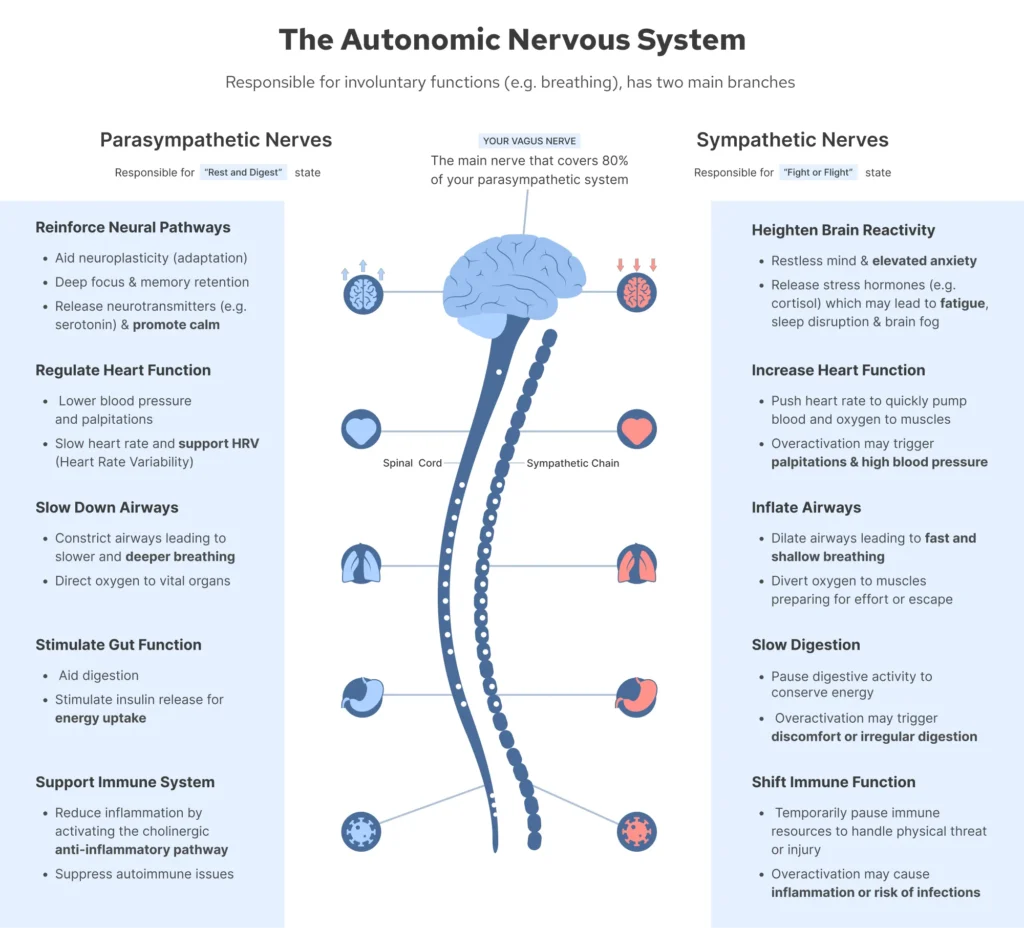
Damals begann ich, mehr über das autonome Nervensystem¹ zu erfahren und darüber, warum anhaltender Stress Menschen nicht nur emotional, sondern auch körperlich so stark beeinträchtigen kann.¹
Das Nervensystem besteht aus zwei Hauptzuständen, die ständig zusammenarbeiten.
Die sympathisches Nervensystem ist Ihre Kampf- oder Fluchtreaktion¹. Es hilft Ihnen, wachsam zu bleiben, schnell zu reagieren, unter Druck Leistung zu erbringen und Stresssituationen zu überleben.¹
Die parasympathischen Nervensystems ist das Gegenteil. Es ist mit Genesung, Verdauung, Schlaf und emotionaler Regulierung verbunden¹,² und der Körper fühlt sich sicher genug, um wieder richtig langsamer zu werden.
Beide Staaten sind wichtig. Wir brauchen beides.
Das Problem besteht darin, dass der Körper bei konstantem Druck in einem Zustand leben kann, der sich sehr nach Burnout anfühlt⁹, ¹⁰: müde, reaktiv, unruhig und nicht in der Lage, sich vollständig zu erholen.
Und wenn das passiert, beschreiben die Leute oft Gefühle:
- unruhig, erschöpft
- emotional
- kann nicht ausgeschaltet werden
- ständig
- oder als ob ihr Körper sich nie mehr vollständig entspannt
Diese Erklärung ergab für mich ehrlich gesagt mehr Sinn als alles andere, was ich bis zu diesem Zeitpunkt gehört hatte.
Der Vagusnerv war etwas, das ich immer wieder auftauchen sah
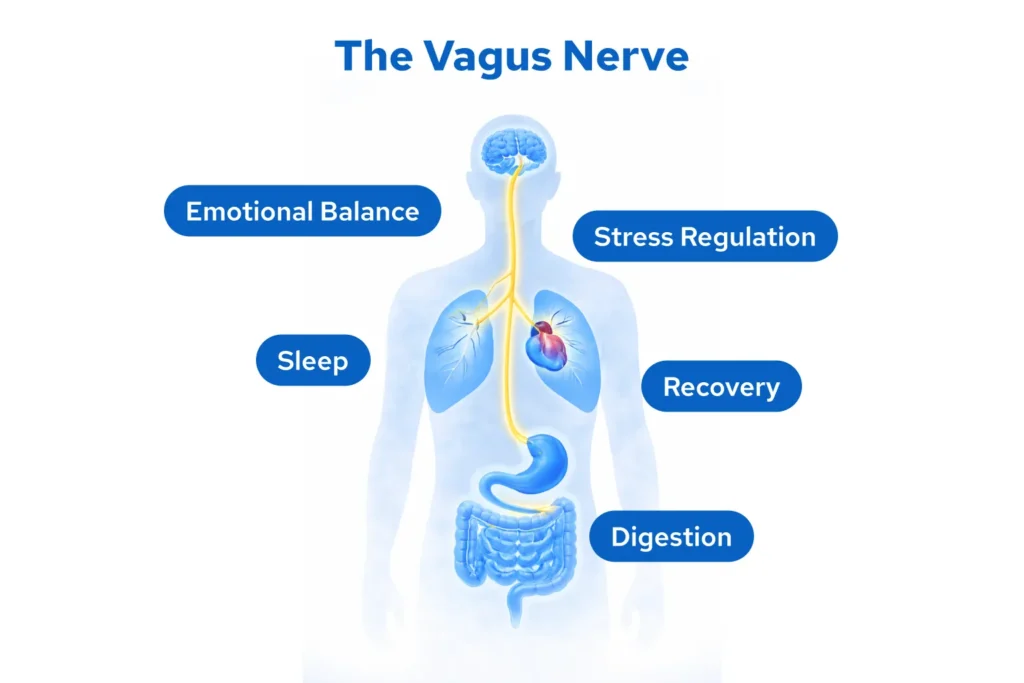
Als ich anfing, mehr zu lesen, stieß ich immer wieder auf Diskussionen rund um die Vagusnerv und seine Rolle bei der Hilfe Regulierung der ängstlichen Erregung, Burnout-Erholung⁷,⁸ und die Fähigkeit des Körpers, nach Druck wieder herunterzukommen.
Die Vagusnerv ist einer der wichtigsten Kommunikationswege zwischen Gehirn und Körper. Es spielt eine wichtige Rolle bei der Unterstützung des Körpers¹,² zurück zu einem ruhigeren parasympathischer Zustand nach Stress.
Wenn dieses System gut funktioniert, erholen sich Menschen im Allgemeinen effektiver von Stress. Der Schlaf verbessert sich tendenziell. Die Verdauung funktioniert besser. Emotional fühlt man sich sesshafter und Weniger ständig nervös.
Aus diesem Grund werden Praktiken wie Meditation, langsames Atmen, Achtsamkeit und Kälteeinwirkung oft in irgendeiner Weise mit vagaler Stimulation in Verbindung gebracht.
Und ehrlich gesagt haben mir viele dieser Dinge geholfen.
Das Problem war die Konsistenz.
Wenn Sie lange Schichten auf der Intensivstation arbeiten, intensiv trainieren und sich bereits geistig überlastet fühlen, kann es schwierig werden, selbst gesunde Gewohnheiten aufrechtzuerhalten.
Meditation klingt großartig, bis sich Ihr Gehirn die ganze Zeit laut anfühlt.
Die Burnout-Zeit, die mich zur Veränderung zwang
Irgendwann kam ich an einen Punkt, an dem ich völlig ausgebrannt.
COVID auf der Intensivstation endete für das Gesundheitspersonal im Jahr 2020 nicht wirklich. Für viele von uns hielt dieser Druck noch Jahre danach an. Rücken an Rücken geschichtete Schichten. Nächte. Ständige emotionale Belastung. Ständige Verantwortung.
Gleichzeitig trainierte ich immer noch intensiv und versuchte, körperlich auf hohem Niveau zu sein.
Ich habe nicht genug geschlafen. Ich habe nicht genug gegessen. Ich habe versucht, Arbeit, Ausbildung, Beziehungen, Hobbys, soziales Leben – alles – auf einmal aufrechtzuerhalten.
Schließlich drückte sich mein Körper einfach zurück.
Und ehrlich gesagt glaube ich nicht, dass es dem Gremium besonders wichtig ist, welche Berufsbezeichnung Sie haben.
Sie müssen nicht auf der Intensivstation arbeiten, damit Ihr Nervensystem überlastet wird. Der Körper reagiert auf anhaltenden Druck, emotionale Belastung, Unvorhersehbarkeit und ständiges Durchdrücken, ohne sich zwischendurch richtig zu erholen.
Ich erinnere mich an Tage, an denen ich körperlich nicht aus dem Bett aufstehen konnte und mir wirklich nicht erklären konnte, warum.
Nicht weil ich faul oder unmotiviert war – mein Körper fühlte sich einfach völlig überlastet an. Ich fühlte mich die ganze Zeit emotional flach. Sogar das Training fühlte sich nicht mehr wie eine Möglichkeit zum Entspannen an.
Am Ende habe ich über den NHS vier Monate von der Arbeit ferngeblieben, weil mir klar wurde, dass sich etwas ändern musste.
Nicht nur, wie ich gearbeitet habe.
Wie ich gelebt habe.
Warum ich angefangen habe, mich ernster mit der Regulierung des Nervensystems zu befassen
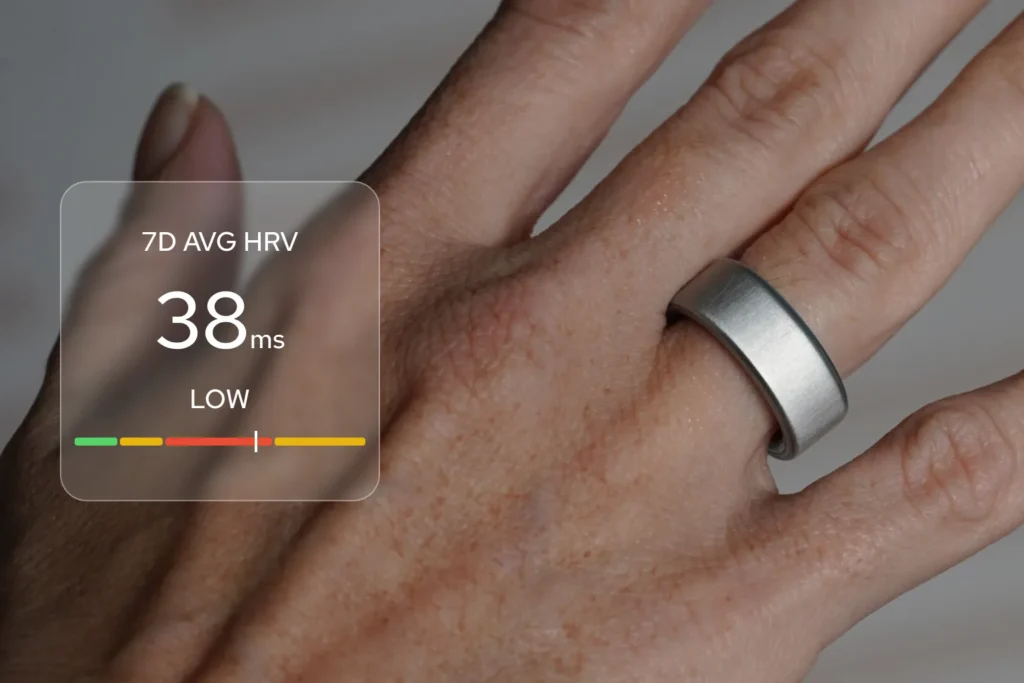
Als jemand, der im Gesundheitswesen arbeitet, stehe ich Wellnessprodukten natürlich skeptisch gegenüber.
Aber zu diesem Zeitpunkt war ich auch so erschöpft, dass mir klar wurde, dass ich nicht mehr so funktionieren konnte wie zuvor.
Damals habe ich schon auf Dinge geachtet wie HRV⁴ (Herzfrequenzvariabilität) durch Training und Erholung, die Sportler oft als groben Indikator dafür verwenden, wie gut sich der Körper zwischen Intensitätsphasen an Stress anpasst und erholt.
Und je mehr ich über Stressphysiologie las, desto mehr stieß ich auf Diskussionen rund um Vagusnerv-Stimulation und etwas namens taVNS³ – transkutane Stimulation des Nervus auricularis vagus.
Es wirkt, indem es einen Teil des Vagusnervs sanft durch das Außenohr stimuliert³,⁵,⁶ um zu Unterstützung parasympathischer Aktivitäten im Zusammenhang mit der Genesung.
Das war das erste Mal, dass ich wirklich neugierig wurde, ob die Unterstützung des Nervensystems tatsächlich auf praktische, alltägliche Weise nützlich sein könnte – nicht nur theoretisch.
Das war es, was mich schließlich dazu brachte Nurosym.
Warum Nurosym sich anders fühlte als ich
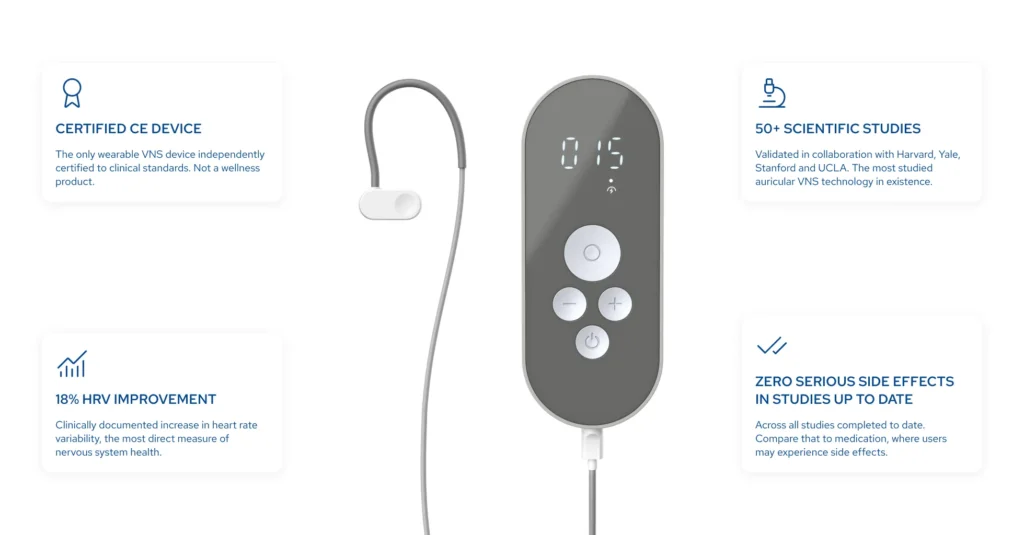
Nurosym ist ein CE-zertifiziertes nicht-invasives taVNS-Gerät Entwickelt, um einen Teil des Vagusnervs durch das Ohr zu stimulieren unterstützen die Regulierung des Nervensystems während der Zeiträume von Burnout, ängstliche Gedanken und langen Druck.
Was mich dazu brachte, es ernster zu nehmen, war, dass bereits eine beträchtliche Menge wissenschaftlicher Forschung dahinter steckt Nurosym und diese Art der Stimulation.
Zu diesem Zeitpunkt wurde die Technologie durch mehr als unterstützt 10-jährige Forschung&Entwicklung Über 60 abgeschlossene wissenschaftliche Studien, laufende Forschung in mehr als 150 Institutionen¹¹ und Kooperationen mit Orten wie Harvard, Yale, Imperial College London, UCLA und dem NHS.⁵
Als jemand, der im Gesundheitswesen arbeitet, war mir das wichtig.
Nicht, weil ich dachte, es wäre eine Wunderlösung –, sondern weil es sich eher auf legitimer Forschung als nur auf Wellness-Marketing basierte.
Ehrlich gesagt fand ein Teil von mir zunächst, dass es ein wenig seltsam klang.
Und bei den ersten paar Malen, als ich es benutzte, war ich mir nicht einmal ganz sicher, ob ich überhaupt viel fühlte. Ich glaube, wenn der Körper so lange von ängstlichen Gedanken, Überlastung und Burnout geplagt wird, vergisst man fast, wie sich Ruhe anfühlen soll.
Was mir aber sehr schnell auffiel, war, wie einfach es sich anfühlte, sich in das wirkliche Leben zu integrieren.
Es gab keinen komplizierten Aufbau. Kein Gel. Keine große Wellness-Routine drumherum.
Ich könnte es in meine Tasche werfen, während einer Arbeitspause, nach dem Training oder beim Lesen im Bett verwenden, ohne meinen Tag vorher komplett unterbrechen zu müssen.
Und ehrlich gesagt glaube ich, dass das wichtiger war als alles andere.
Denn wenn Menschen überfordert sind, ist Konsistenz meist das erste, was verschwindet.
Wie es in meinen eigentlichen Tag passt
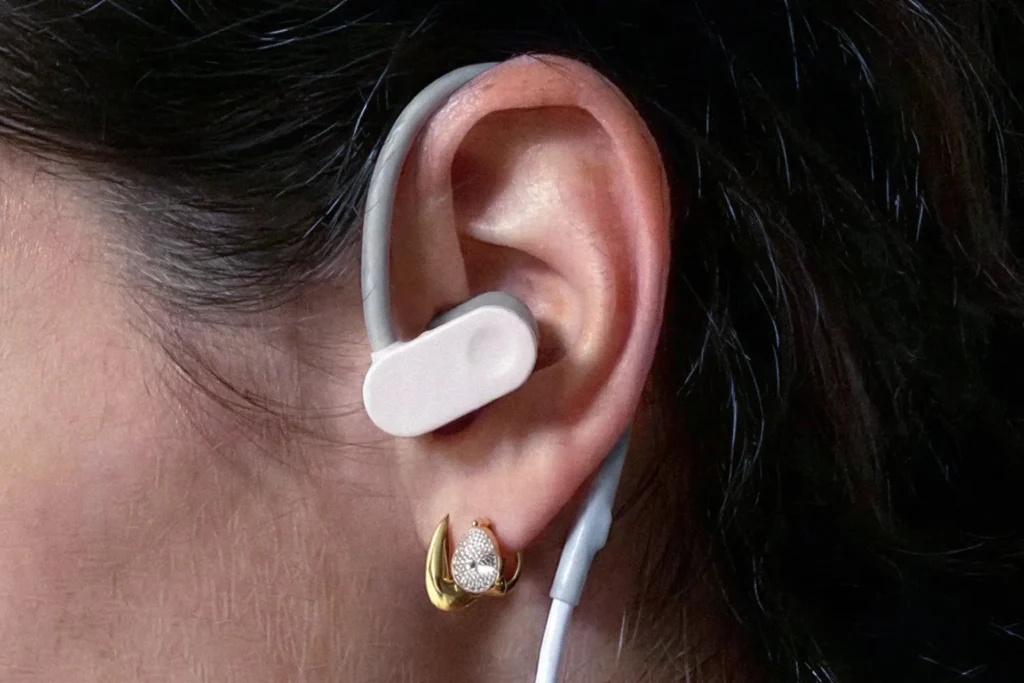
Trage ich meine Nurosym in der Tasche, die ich an diesem Tag trage – meine Krankenhaustasche oder meine Trainingstasche.
Anfangs fühlte es sich tatsächlich ein wenig seltsam an, etwas an meinem Ohr befestigt herumzutragen, aber irgendwann wurde es einfach Teil meiner Routine, so wie es das Packen meines Mittagessens oder meiner Kopfhörer ist.
Bei der Arbeit benutze ich es oft während meiner 15-minütige Morgenpause anstatt noch einen Kaffee zu trinken. Wir haben etwas namens “Wackelraum” auf der Intensivstation – ein ruhiges Zimmer, das das Personal nutzt, wenn die Dinge emotional überwältigend werden – und manchmal sitze ich einfach da drin Fünfzehn Minuten Lesen während der Nutzung.
Ein anderes Mal verwende ich es nach dem Training beim Essen oder bei der Genesung.
Und an ruhigeren Abenden, normalerweise sonntags, verwende ich es im Bett beim Lesen vor dem Schlafengehen.
Ich brauchte weder Stille, Kerzen noch die perfekte Umgebung, um es zu benutzen.
Und ehrlich gesagt, nach den Schichten auf der Intensivstation war das wahrscheinlich wichtiger als alles andere.
Es gibt kein perfektes Ritual damit.
Wahrscheinlich ist es deshalb für mich nachhaltig geworden.
Denn wenn Ihr Leben hektisch und stressig ist, muss sich Beständigkeit realistisch anfühlen. Sonst verschwinden selbst hilfreiche Dinge langsam.
Was sich tatsächlich geändert hat
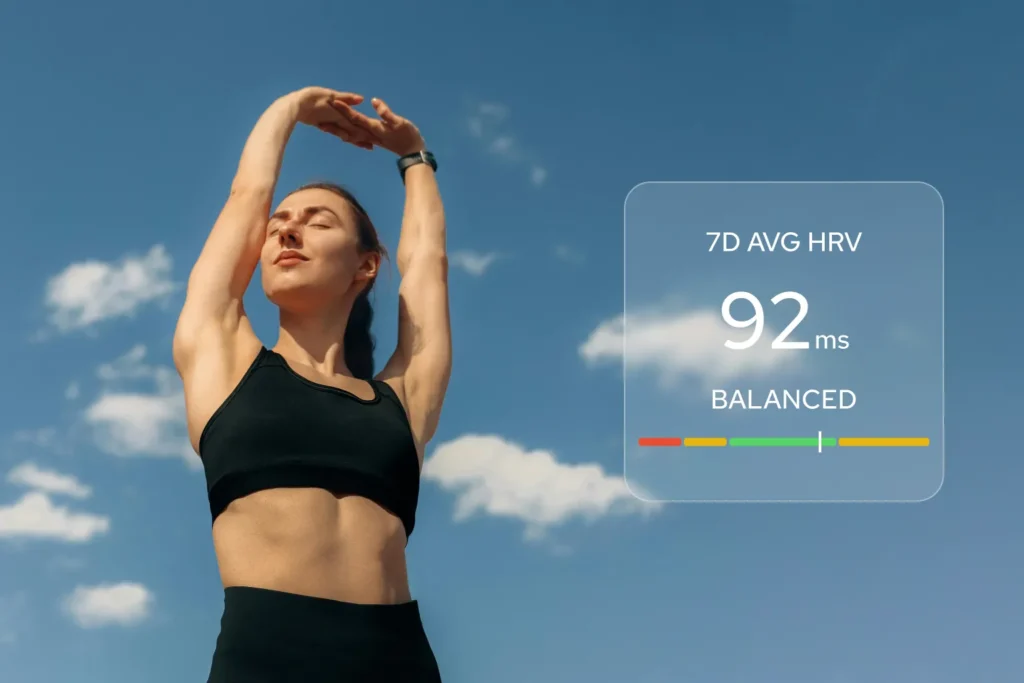
Ich möchte zu diesem Teil sehr ehrlich sein.
Nurosym war nicht das Einzige, was mein Leben verändert hat.
Therapie war wichtig.
Mehr Schlaf war wichtig.
Richtiges Essen war wichtig.
Training war anders wichtig.
Es war wichtig zu lernen, langsamer zu werden.
Aber Nurosym wurde zu einem Teil des Gesamtsystems, der mir half, mich wieder geregelter und mir meiner selbst bewusster zu fühlen.
Es gab mir kleine Momente am Tag, in denen mein Körper wirklich begann beruhigen anstatt ständig alles durchzudrücken.
Und mit der Zeit begann ich, die Überlastung früher zu erkennen, anstatt zu warten, bis ich völlig abgestürzt war.
Auch die Menschen um mich herum haben es bemerkt.
Meinem Freund ist es aufgefallen.
Meine Kollegen haben es bemerkt.
Die Leute, mit denen ich trainiere, haben es bemerkt.
Normalerweise merkten sie, wann ich eine besonders schwierige Schicht hinter mir hatte, bevor ich überhaupt etwas sagte. Und mit der Zeit bemerkten sie auch, dass ich ruhiger, präsenter und wieder mehr wie ich selbst wirkte.
Eine sichere Möglichkeit, es zu erkunden
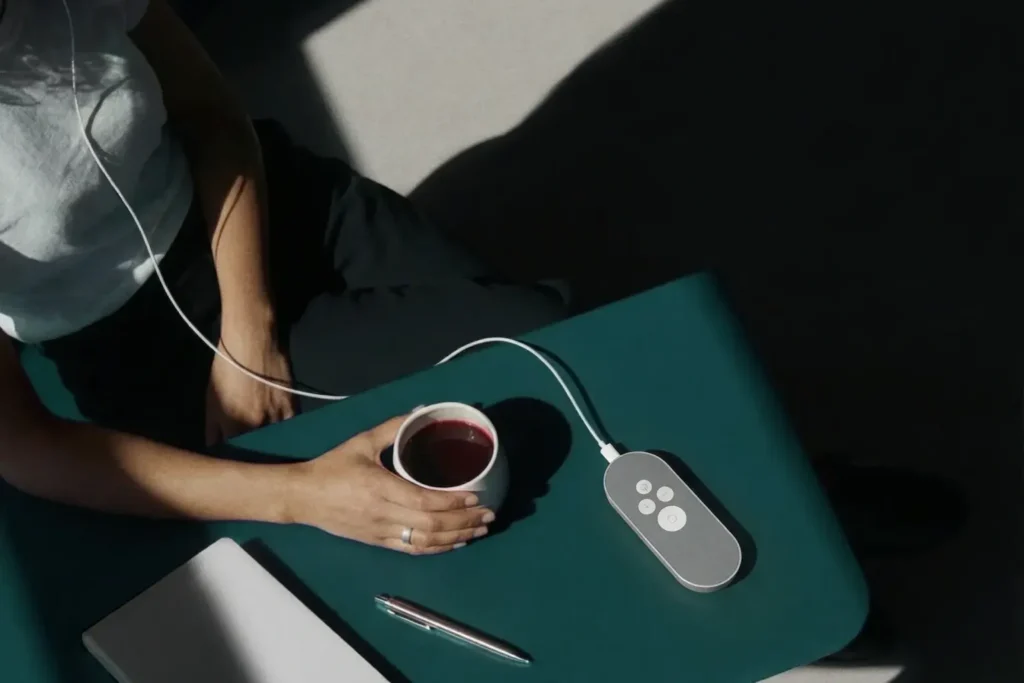
Eine Sache, die ich schätzte, war, dass es eine gab 30-tägige Rückgabefrist, wodurch sich beim Ausprobieren ein geringerer Druck anfühlte.
Begrenzte Studienplätze verfügbar – Einige Teilnehmer erhalten möglicherweise einen Zuschuss von etwa €70 als Gegenleistung für den Austausch von Feedback zu ihren Erfahrungen.
Und ehrlich gesagt, wenn man geistig bereits erschöpft ist, ist dieser sanftere Ansatz mit geringerem Druck wichtiger, als den Leuten bewusst ist.
Das Größte, was ich gelernt habe
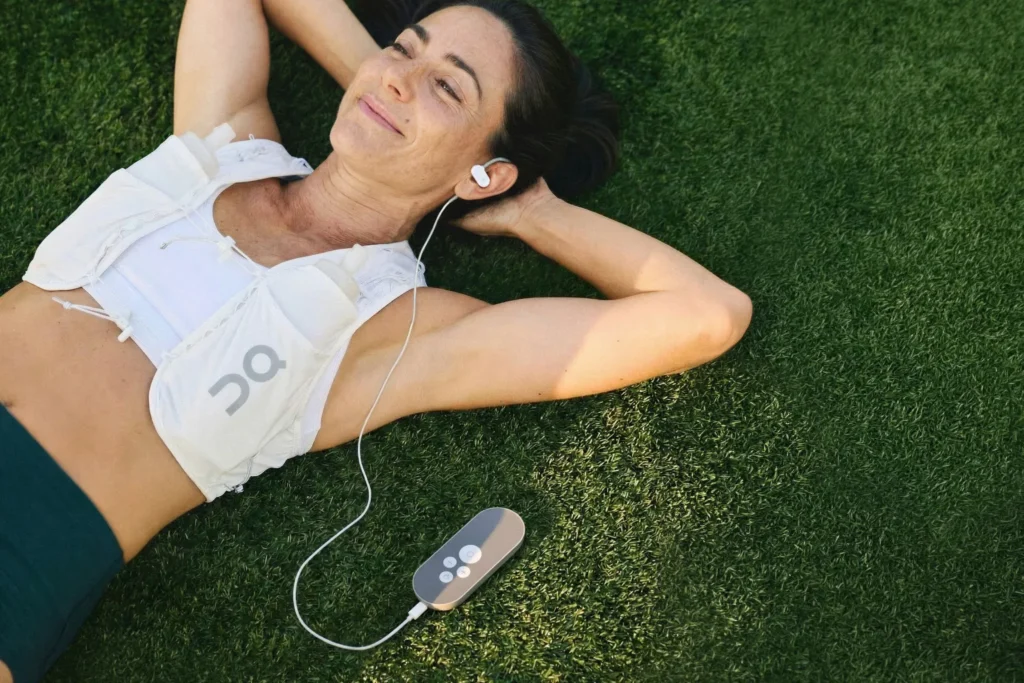
Das Wichtigste, was ich gelernt habe, ist, dass es bei der Genesung nicht nur darum geht, aufzuhören.
Es geht darum, ob sich Ihr Körper tatsächlich sicher genug fühlt, um überhaupt aus dem Stressmodus herauszukommen.
Ich glaube, dass viele Menschen funktionieren, während sie weit mehr tragen, als ihnen bewusst ist. Vor allem Menschen, die im Gesundheitswesen, in Hochdruckberufen oder in ständig anspruchsvollen Umgebungen arbeiten.
Menschen werden sehr gut im Überleben.
Und ich glaube, viele von uns gewöhnen sich so sehr daran, ständig “im Ein-Modus” zu arbeiten, dass wir nicht mehr erkennen, wie es sich überhaupt anfühlt, sich wirklich ruhig zu fühlen.
Der Körper passt sich sehr allmählich an den Überlebensmodus an – bis er sich schließlich einfach normal anfühlt.
Aber Überleben und Genesung sind nicht dasselbe.
Und irgendwann kennt der Körper den Unterschied.
Wenn Ihnen das bekannt vorkommt
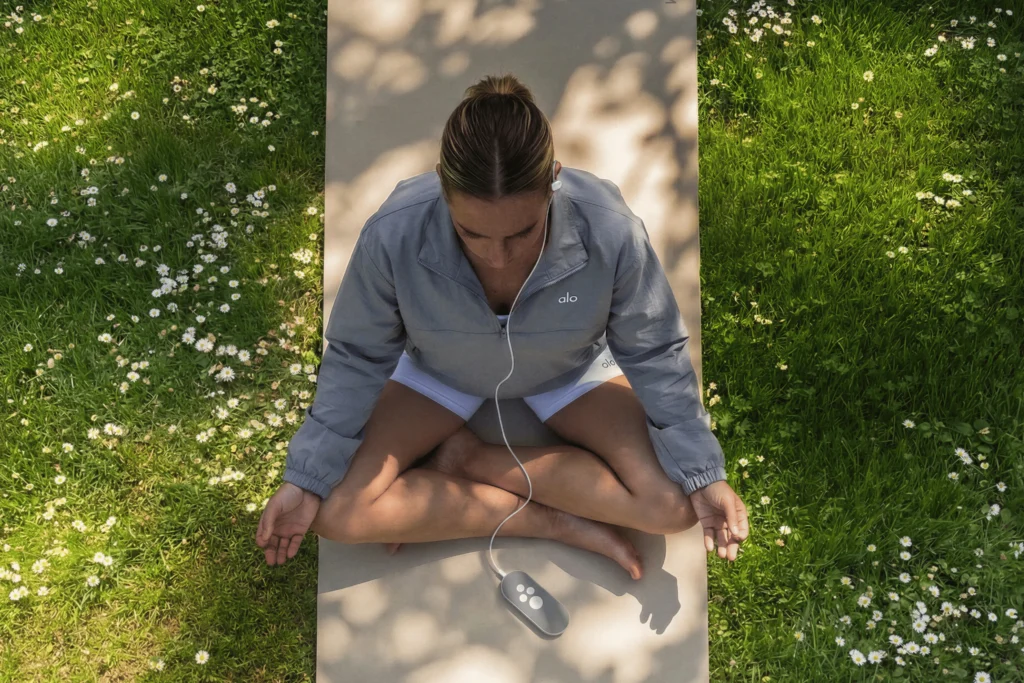
Wenn Sie sich darin wiedererkennen – die ständige Anspannung, emotionale Erschöpfung, ängstliche Gedanken, das Gefühl, selbst wenn Sie müde sind, verkabelt zu sein und Schwierigkeiten zu haben, sich vollständig zu entspannen –, kann es sich lohnen, über das bloße “Bemühen, sich mehr anzustrengen” hinauszuschauen, um sich zu entspannen.
Bei manchen Menschen geht es bei ängstlichen Gedanken und Burnout möglicherweise nicht nur um Denkweise⁹¹⁰, Disziplin oder das Bedürfnis nach mehr Ruhe. Auch die Regulierung des Nervensystems kann Teil des Genesungsbildes sein.
Nurosym ist kein Ersatz für Therapie, Schlaf, medizinische Versorgung oder Änderungen des Lebensstils.
Für manche Menschen kann es jedoch ein nützliches zusätzliches Instrument sein, das die Genesung unterstützt und dem Körper mehr Möglichkeiten gibt, aus diesem ständigen Zustand hoher Alarmbereitschaft herauszukommen.
Besonders in Zeiten, in denen sich das Leben unerbittlich anfühlt und Ihr Körper nicht mehr das Gefühl hat, dass er fest davon überzeugt ist, dass der stressige Teil schon vorbei ist.
Für mich ist die Intensivstation immer noch eine Intensivstation. Der Druck ist nicht verschwunden. Aber jetzt verstehe ich, was eine längere Überlastung tatsächlich mit meinem Körper gemacht hat – und ich erhole mich dadurch ganz anders.
Referenzen
- Thayer JF, Lane RD. Claude Bernard and the heart-brain connection: further elaboration of a model of neurovisceral integration. Neuroscience & Biobehavioral Reviews. 2009.
https://pubmed.ncbi.nlm.nih.gov/18771686/ - Breit S, Kupferberg A, Rogler G, Hasler G. Vagus nerve as modulator of the brain-gut axis in psychiatric and inflammatory disorders. Frontiers in Psychiatry. 2018.
https://www.frontiersin.org/articles/10.3389/fpsyt.2018.00044/full - Farmer AD, Strzelczyk A, Finisguerra A, et al. International consensus based review and recommendations for minimum reporting standards in research on transcutaneous vagus nerve stimulation (taVNS). Frontiers in Human Neuroscience. 2021.
https://www.frontiersin.org/articles/10.3389/fnhum.2020.568051/full - Shaffer F, Ginsberg JP. An Overview of Heart Rate Variability Metrics and Norms. Frontiers in Public Health. 2017.
https://www.frontiersin.org/articles/10.3389/fpubh.2017.00258/full - Forte G, Morelli M, Grässler B, Casagrande M. Ear your heart: transcutaneous auricular vagus nerve stimulation on heart rate variability in healthy young participants. PeerJ. 2022.
https://pubmed.ncbi.nlm.nih.gov/36438582/ - Soltani D, et al. Transcutaneous auricular vagus nerve stimulation on baroreflex sensitivity and heart rate variability in healthy subjects: a systematic review. Scientific Autonomic Research. 2023.
https://pubmed.ncbi.nlm.nih.gov/37119426/ - Bremner JD, et al. Application of Noninvasive Vagal Nerve Stimulation to Stress-Related Psychiatric Disorders. Journal of Personalized Medicine. 2020.
https://www.ncbi.nlm.nih.gov/pmc/articles/PMC7563188/ - Fanselow MS. Fear and Anxious Thoughts Take a Double Hit From Vagal Nerve Stimulation. Biological Psychiatry. 2013.
https://pmc.ncbi.nlm.nih.gov/articles/PMC4176918/ - McEwen BS. Protective and damaging effects of stress mediators. New England Journal of Medicine. 1998.
https://pubmed.ncbi.nlm.nih.gov/9428819/ - Chrousos GP. Stress and disorders of the stress system. Nature Reviews Endocrinology. 2009.
https://pubmed.ncbi.nlm.nih.gov/19488073/ - Nurosym Scientific Research Overview — published taVNS studies and institutional collaborations involving Harvard, Yale, UCLA, Imperial College London and the NHS.
https://nurosym.com/pages/science
Dieser Blogbeitrag soll informativ sein und sollte keine professionelle Gesundheitsberatung ersetzen. Konsultieren Sie immer einen Arzt, um eine individuelle Beratung zu erhalten.
Teilen über:



 German
  English
  French
  Spanish
  Swedish