
A comprehensive review of how VNS devices support sleep by addressing nervous system dysregulation, with expert rankings of the top 4 certified options.
Chronic sleep disruption is estimated to affect a substantial share of the adult population, with research suggesting that roughly 10 to 15 percent of adults experience persistent difficulty falling or staying asleep, and up to a third report regular sleep disturbance.
Unlike a single bad night or occasional jet lag, chronic sleep disruption can involve multiple mechanisms, including circadian dysregulation, psychological stress, medical symptoms, and autonomic nervous system dysfunction.
The science is promising
Recent neuroscience research suggests that vagus nerve dysfunction may be an important contributing mechanism in a subset of individuals with chronic sleep disruption, alongside circadian misalignment, psychological stress, and primary medical symptoms.
When this principal parasympathetic nerve demonstrates reduced activity, the body may become less efficient at transitioning into a restorative sleep state, settle heart rate and arousal, and maintain the stable, restorative sleep needed for recovery.
This guide examines the relationship between vagus nerve function and chronic sleep disruption, and evaluates the leading vagus nerve stimulation (VNS) devices that may help restore autonomic balance and support healthier sleep.
Symptoms of Chronic Sleep Disruption
Chronic sleep disruption is characterised by persistent difficulty initiating or maintaining sleep, occurring despite adequate opportunity, and accompanied by daytime consequences. Common manifestations include:
Sleep-onset difficulties:
- Prolonged time to fall asleep, often 30 minutes or more
- A racing or "switched-on" mind at lights-out despite physical exhaustion
- Physical restlessness or tension when trying to settle
- A sense of being "wired but tired"
- Anxious thoughts or dread associated with going to bed
Sleep-maintenance difficulties:
- Waking repeatedly through the night
- Waking in the early hours and being unable to return to sleep
- Light, fragmented sleep that feels easily disturbed
- Early-morning waking before the intended time
- Long periods lying awake before drifting back off
Daytime and cognitive consequences:
- Waking unrefreshed despite adequate hours in bed
- Persistent daytime tiredness and low energy
- Cognitive slowing, poor concentration, and "brain fog"
- Irritability, low mood, and reduced stress tolerance
- Reliance on caffeine to function and on sedatives to sleep
Autonomic and physiological features:
- Elevated resting and nighttime heart rate
- Reduced heart rate variability, particularly overnight
- Feeling unusually alert or easily startled
- Muscle tension, clenched jaw, or shallow breathing at rest
- Difficulty relaxing even during designated downtime
The functional impact extends well beyond the night itself, affecting work performance, mood regulation, relationships, physical health, and overall quality of life.
Chronic Sleep Disruption Self-Assessment
Evaluate the features you experience with regularity:
Falling Asleep
- It regularly takes me 30 minutes or longer to fall asleep
- My mind races, or will not switch off, when I lie down
- I feel physically tense or restless trying to settle
- I am exhausted but unable to sleep
- I have started to dread going to bed
Staying Asleep
- I wake one or more times most nights
- I wake in the early hours and cannot get back to sleep
- My sleep feels light and easily disturbed
- I wake earlier than I want to and cannot return to sleep
- I spend long stretches awake during the night
Sleep Quality and Daytime Function
- I wake unrefreshed even after enough hours in bed
- I am tired throughout the day, regardless of how long I slept
- I struggle with focus, memory, or mental clarity
- I am more irritable or low than I would like
- I rely on caffeine to get through the day
Physiological and Autonomic Signs
- My resting or nighttime heart rate feels elevated
- A wearable shows my overnight HRV is consistently low
- I feel "on alert" even when there is nothing to address
- I carry physical tension even when trying to relax
- I find it hard to wind down at the end of the day
History and Context
- My sleep difficulties have persisted for three months or more
- Standard sleep hygiene measures have provided incomplete relief
- My difficulties worsen during periods of stress
- Sleep medication helps temporarily, but the problem returns
- Medical evaluation has not identified a single clear cause
If you identify with multiple features across the falling-asleep, staying-asleep, and physiological categories, chronic sleep disruption may be worth formal evaluation by a clinician experienced in sleep medicine.
In some individuals, impaired vagal tone and heightened physiological arousal may contribute to the difficulty, making approaches that support autonomic regulation a potential adjunct under medical guidance.
You may wish to discuss vagus nerve stimulation with your healthcare provider as one such adjunctive approach.
La Conexión Del Nervio Vago
¿Qué es el nervio vago?
The vagus nerve (cranial nerve X) is the longest and most complex nerve of the autonomic nervous system, originating in the medulla oblongata and projecting through the neck to innervate the heart, lungs, and gastrointestinal tract. It mediates several functions directly relevant to sleep:
- Cardiovascular regulation, including slowing of the heart rate
- Respiratory pattern and the calming of breathing at rest
- The body's shift into rest-and-recovery states
- The inflammatory reflex pathway (cholinergic anti-inflammatory pathway)
- Integration of arousal and relaxation signals in the brainstem
- Modulation of overall physiological arousal
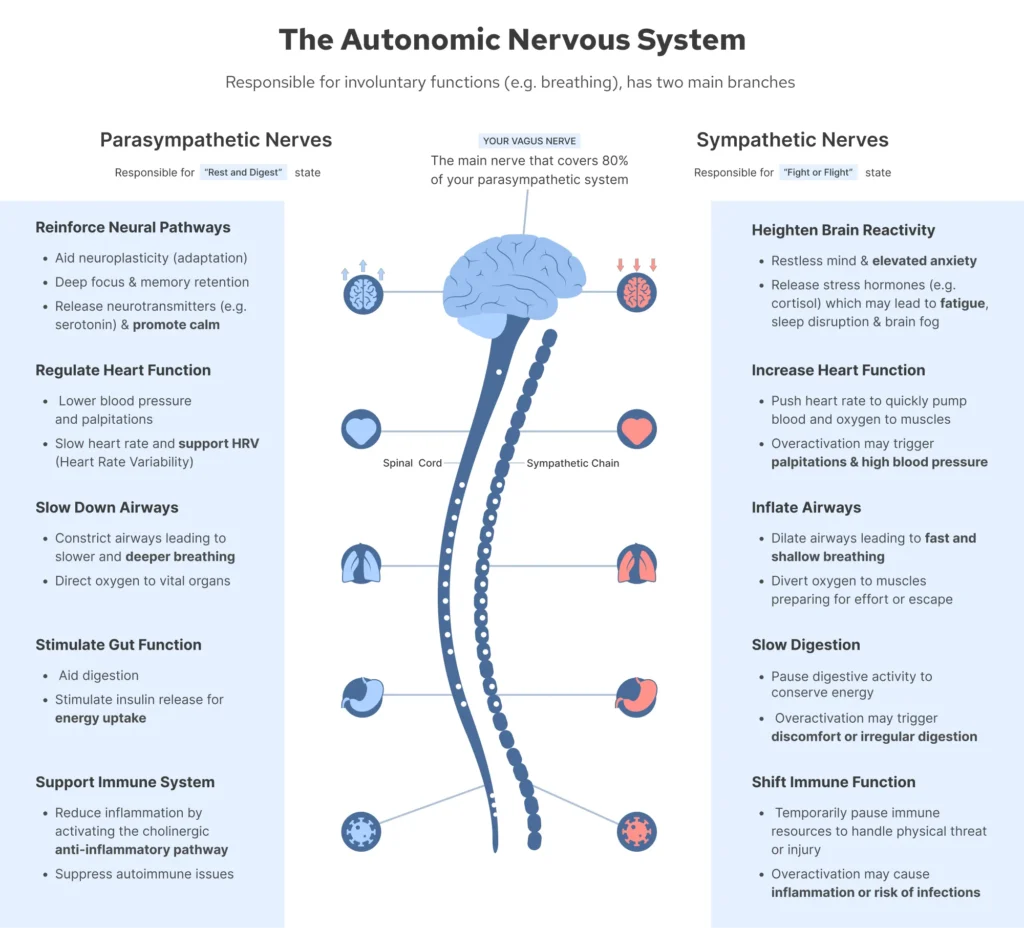
The Two Branches of the Autonomic Nervous System
Su sistema nervioso autónomo opera a través de dos divisiones complementarias:
- Sympathetic (thoracolumbar outflow): Increases heart rate, elevates blood pressure, raises alertness and arousal, and prepares the body for activity or perceived threat. This is the system that should quieten down at night.
- Parasympathetic (vagal outflow): Controlled predominantly by the vagus nerve, it lowers heart rate, calms arousal, facilitates recovery, and supports the physiological wind-down that allows sleep to begin and continue.
Healthy sleep requires the parasympathetic side to take over from the sympathetic side as the night approaches.
However, sustained stress, illness, or chronic strain can impair vagal tone, leaving the sympathetic system in charge when it should be becoming less active.
How Vagus Nerve Dysfunction Contributes to Chronic Sleep Disruption
When the vagus nerve demonstrates reduced activity (low vagal tone):
- Difficulty transitioning into a restful state: Sleep depends on a handover from the alert sympathetic state to the restful parasympathetic state. With weak vagal tone, that handover is incomplete, and the body remains in a low-grade alert state at bedtime. This is what the racing mind and "wired but tired" feeling often reflect.
- Physiological hyperarousal: Sleep research increasingly frames persistent sleep problems as a disorder of hyperarousal, in which both the mind and body remain over-activated around the clock. Reduced vagal tone may contribute to elevated physiological arousal in some individuals.
- Reduced heart rate variability (HRV): HRV is widely used as a non-invasive marker of autonomic nervous system function and vagal activity. Individuals with chronic sleep disruption frequently show reduced HRV, particularly overnight, suggesting that the recovery system is not fully engaged during sleep.
- Elevated nighttime sympathetic activity: Sustained sympathetic predominance keeps heart rate and arousal elevated throughout the night, prolonging sleep onset, increasing awakenings, and reducing time spent in deep, restorative sleep.
- Inflammatory dysregulation: The vagus nerve regulates the cholinergic anti-inflammatory pathway. Reduced vagal activity has been associated with increased inflammatory signalling in some studies, which has itself been associated with disrupted and non-restorative sleep, creating a self-reinforcing cycle.
It is important to note that chronic sleep disruption is a heterogeneous symptoms rather than a single disease entity.
Vagus nerve dysfunction does not account for all cases.
Some individuals are driven primarily by circadian factors, others by psychological or environmental causes, and many by overlapping mechanisms.
Vagal impairment appears most relevant in individuals with low heart rate variability, high physiological arousal, or a post-viral or high-stress onset.
Las Pruebas Científicas
Published research has identified associations between autonomic function and sleep:
- The hyperarousal model: Sleep medicine research has established that persistent sleep problems are associated with elevated physiological and cognitive arousal, including increased sympathetic activity and a reduced ability to down-regulate the stress response at night.
- HRV and sleep quality: Multiple studies report that reduced heart rate variability, a validated marker of vagal tone, is associated with poorer sleep quality, longer time to fall asleep, and more fragmented sleep, while higher vagal tone is associated with more consolidated, restorative sleep.
- Effects of transcutaneous vagus nerve stimulation: Controlled research demonstrates that transcutaneous auricular vagus nerve stimulation can increase measures of vagal activity within minutes of a session and shift autonomic balance toward parasympathetic predominance, the physiological state on which sleep depends.
- One proposed mechanism: Supporting vagus nerve function through targeted stimulation may target one contributor to sleep disruption in some individuals of chronic sleep disruption, the failure of the nervous system to switch into its recovery state at night, rather than simply sedating the brain.
Dispositivos VNS como solución: cómo funcionan
How Non-Invasive VNS Changed Access
Until recently, vagus nerve stimulation required invasive surgical procedures, implanting electrodes directly on the nerve through operations that carried surgical risk, recovery time, and permanent device placement.
This confined VNS therapy primarily to severe, therapy-resistant symptoms where the benefits justified surgery.
Non-invasive devices have expanded access to this approach.
Modern transcutaneous vagus nerve stimulation aims to stimulate vagal pathways non-invasively through the skin, supporting the restoration of appropriate tone, but completely non-invasively through the skin: no surgery, no implantation, and no recovery period.
These devices operate through precisely positioned electrodes at two accessible locations:
- Auricular (oreja): Targeting the auricular branch of the vagus nerve at the tragus and cymba conchae, the only place a cranial nerve reaches the body's surface.
- Cervicalmente (cuello): Targeting the cervical branch of the vagus nerve, where it runs superficially beneath the skin near the carotid artery.
This represents a fundamental shift: stimulation that was once confined to operating rooms is now available for daily home use, with parameters informed by published research and no surgical risk.
Mecanismo De Acción
When precisely calibrated electrical impulses reach the vagus nerve, they trigger several physiological responses relevant to sleep:
- Neurotransmitter modulation: Stimulation triggers the release of acetylcholine at parasympathetic terminals, directly counteracting sympathetic predominance and supporting a calmer physiological state.
- Brainstem nucleus activation: Afferent vagal signals project to the nucleus tractus solitarius, which integrates autonomic information and influences the brainstem centres involved in arousal and sleep regulation.
- Reequilibrio autonómico: Consistent stimulation supports a shift from sympathetic dominance toward parasympathetic restoration, improving heart rate variability and lowering nighttime arousal.
- Potential long-term adaptation: Sustained use may help lower the elevated arousal set-point that characterises chronic sleep disruption, rather than producing only a single-session effect.
- Inflammatory regulation: Vagal stimulation supports the cholinergic anti-inflammatory pathway, helping reduce the low-grade inflammation associated with non-restorative sleep.
Parámetros Científicos
Common protocols used in scientific studies often employ:
- Duración de la sesión: 30 to 60 minutes daily, often timed toward the evening, allowing for sustained effects.
- Intensidad: Individualised to sensory threshold, perceptible but comfortable.
- Coherencia: Daily application for a minimum of 8 to 12 weeks, since neuroplastic changes require sustained use.
Plazo Previsto
Effects appear to develop gradually with consistent use rather than immediate sedation:
- Week 1-2: Enhanced relaxation during sessions, a modest reduction in time taken to fall asleep, and a possible easing of nighttime arousals.
- Week 3-4: More consolidated sleep, fewer night-time awakenings, improved morning restfulness, and steadier overnight heart rate.
- Month 2-3: Sustained improvement in sleep continuity and quality, measurable HRV improvements, and reduced reliance on sleep aids.
- Mes 3+: Restored autonomic balance, durable improvement in sleep, and improvements in daytime energy, mood, and concentration.
Consideraciones De Seguridad
Transcutaneous VNS is generally well tolerated in research settings.
Potential transient responses may include:
- Mild tingling at the stimulation site
- Temporary muscle tension in the neck region (cervical devices)
- Brief lightheadedness, which typically resolves with protocol adjustment
limitaciones importantes: No es adecuado para personas con marcapasos cardíacos, episodios cardíacos agudos recientes, embarazo o antecedentes de vagotomía.
Healthcare provider consultation is essential before initiating any VNS protocol.
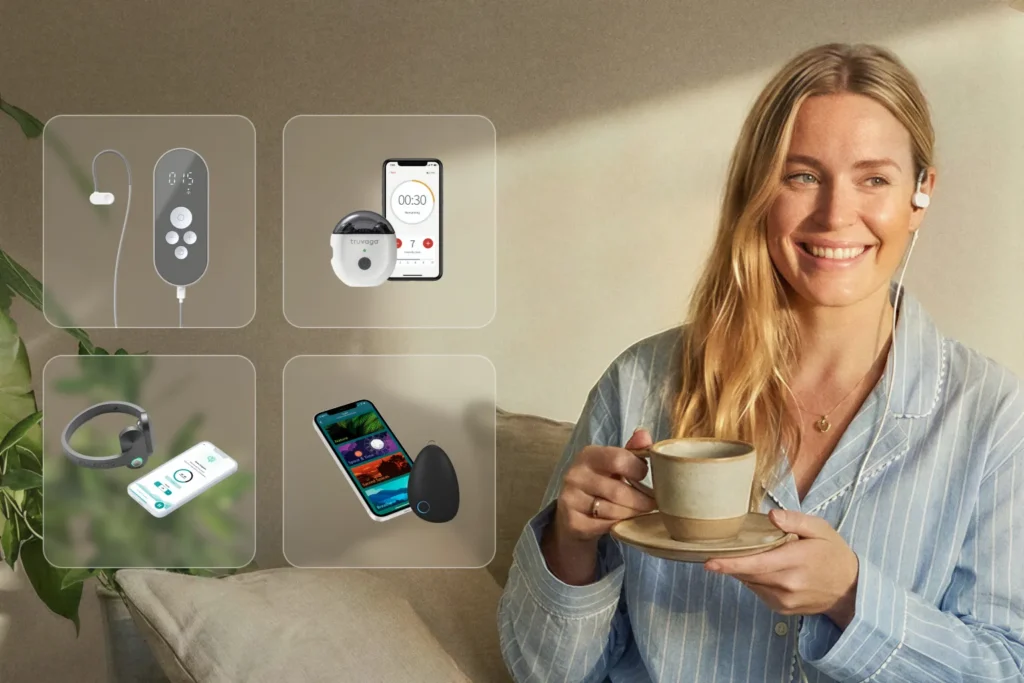
Top 4 VNS Devices for Chronic Sleep Disruption
#1: Nurosym
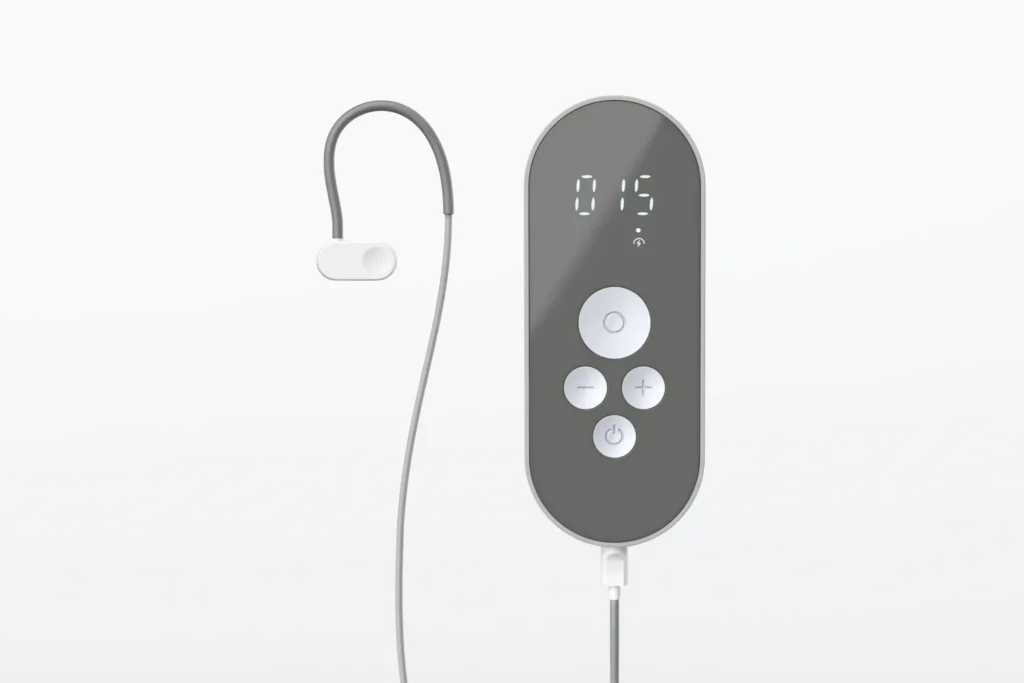
Price: 700 EUR. Varies by region (research subsidy available)
Tipo: Auricular (usado en el oído)
Tecnología: AVNT™ por Parasym
Por qué #1:
- Más ampliamente validado: Supported by 60+ completed scientific studies from leading research institutions worldwide.
- Demonstrated effect on autonomic function: Research documents a 61% improvement in vagal tone (HRV metrics) and a meaningful reduction in sympathetic overactivation, the physiological state most relevant to sleep onset and continuity.
- Certificación independiente: CE-marked wearable device meeting rigorous safety and performance standards, third-party verified.
- Research adoption: Used by 1000+ healthcare professionals and researchers, with 5,000,000+ user sessions and 100+ ongoing scientific studies underway
- Evidence-based parameters: Stimulation protocols derived from rigorous research rather than proprietary guesswork.
- Comprehensive support: 30-day evaluation period, guidance resources, and responsive technical support.
Ideal para: Individuals whose sleep disruption is driven by autonomic hyperarousal or low HRV, those with a post-viral or high-stress onset, and those prioritising evidence over marketing claims.
#2: Truvaga Plus
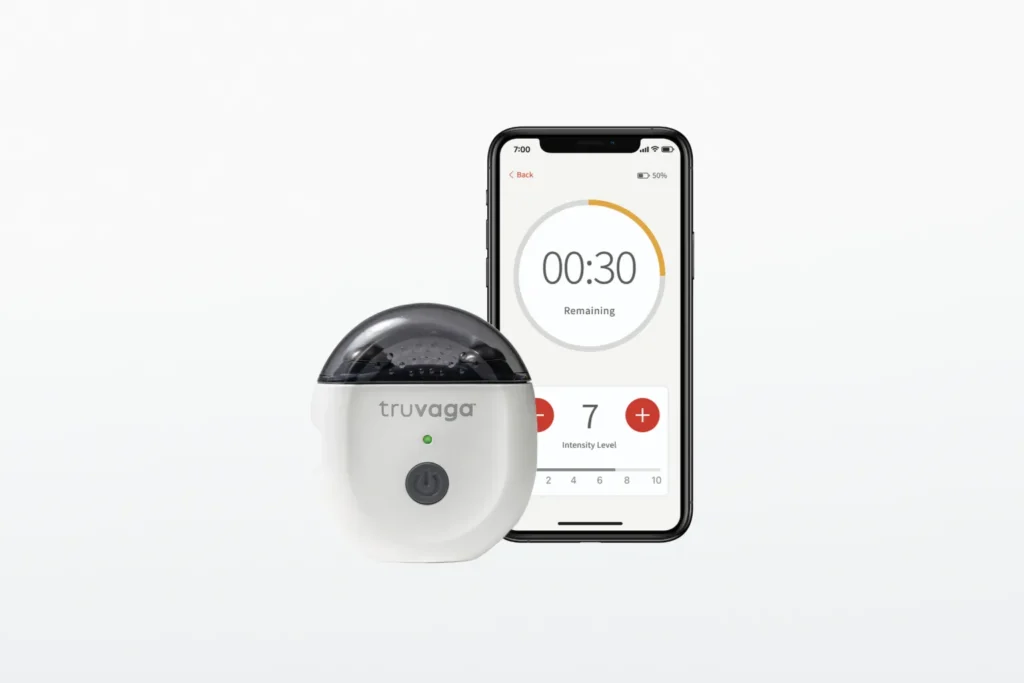
Precio: $544+ (device plus conductive spray and potential subscription).
Tipo: Cervical (neck handheld).
Shares core technology with gammaCore, an FDA-cleared device for cluster headache, not sleep. Produces rapid parasympathetic effects with a straightforward protocol.
Consideraciones: Ongoing costs for conductive spray and a potential app subscription, so verify pricing before purchase.
Reported adverse effects include muscle spasms, facial muscle contractions, and headache. Not suitable for users with cardiac symptoms, pacemakers, or recent heart issues. Some app connectivity issues have been reported.
Ideal para: Those preferring cervical stimulation with an FDA-cleared technology lineage (for headache, not sleep) who can tolerate potential facial muscle effects.
#3: Pulsetto
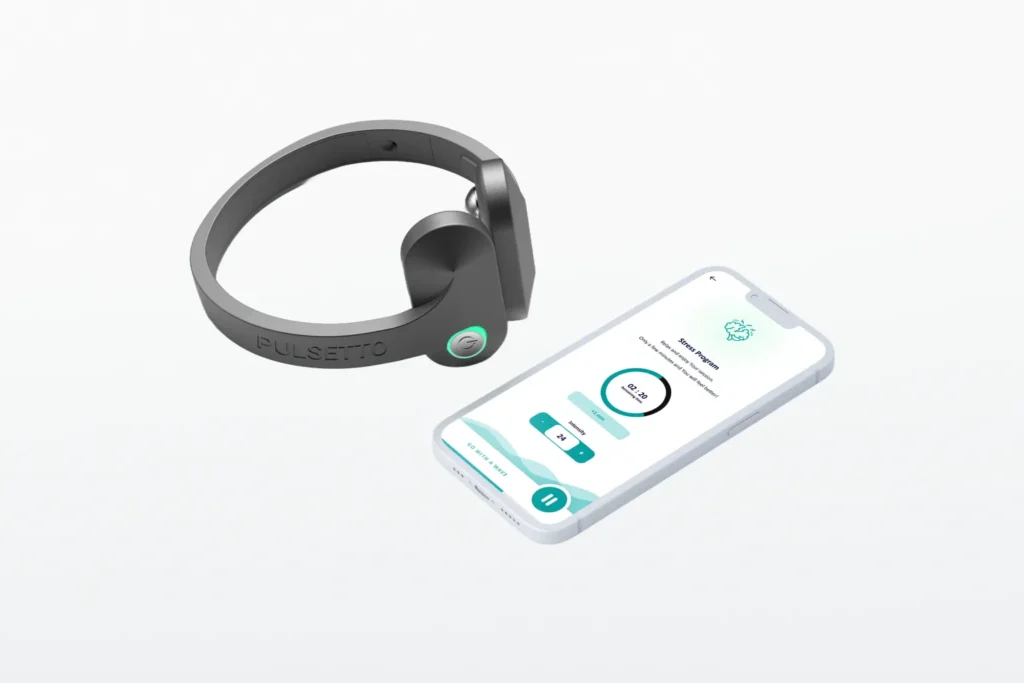
Precio: $350-$371 (device plus annual gel).
Tipo: Cervical (hands-free collar).
Advantages include a hands-free wearable design, HSA/FSA eligibility, and a 2-year warranty.
Limitaciones críticas: No significant studies demonstrating efficacy specifically for sleep disorders, with independent peer-reviewed evidence remains limited.
Fit issues can create inadequate nerve contact, particularly with smaller necks. The lower price can be appealing, but the lack of independent validation means its effectiveness in addressing sleep-related autonomic dysregulation remains uncertain.
#4: Sentido
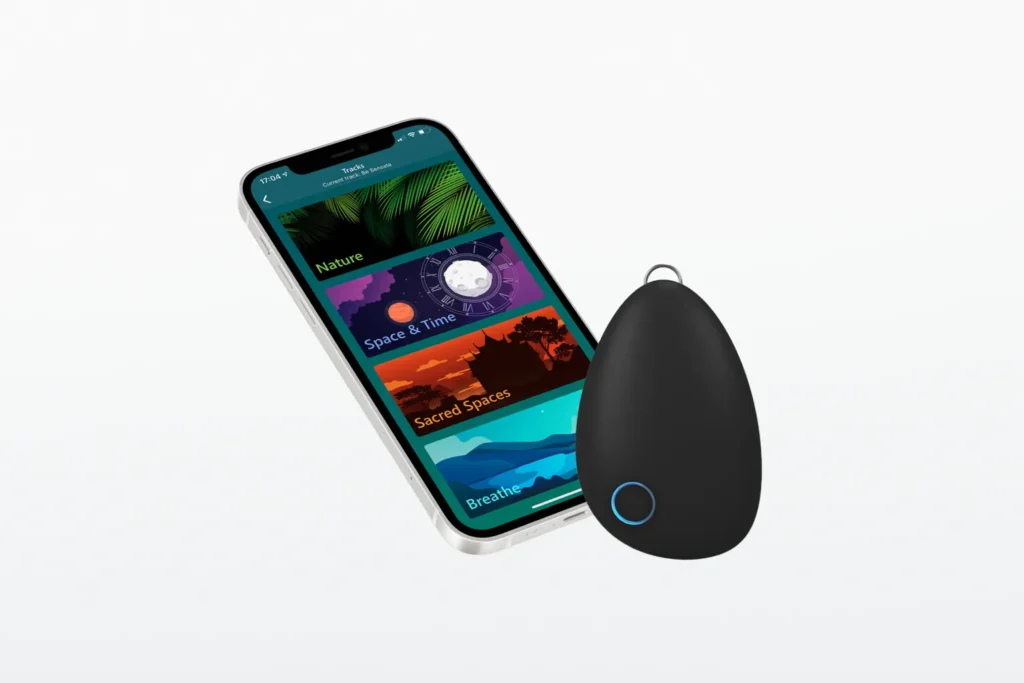
Precio: $299-$349.
Tipo: Chest-worn vibrotactile device (not true VNS).
Advantages include a comfortable design, a simple app with soundscapes, a lower price point, and heavy marketing toward relaxation and sleep.
Distinción crítica: Sensate does not directly stimulate the vagus nerve with electrical impulses. It uses infrasonic vibration and bone conduction placed on the chest, an indirect approach aimed at general relaxation rather than specific vagal activation.
For sleep disruption driven by autonomic hyperarousal, this matters because general relaxation tools may help with wind-down but do not target the underlying vagal dysfunction in a measurable way.
Available evidence reflects general stress reduction rather than validated effects on sleep architecture or autonomic markers.
Ideal para: Those seeking a general relaxation aid rather than targeted vagus nerve stimulation for autonomic dysregulation.
Conclusión:
Nurosym offers the most comprehensive research validation, a demonstrated effect on the autonomic markers most relevant to sleep, independent certification, and the best balance of research foundation and practical daily use for those prioritising evidence-based outcomes.
Ponte en marcha
Chronic sleep disruption can be difficult to manage, and researchers are increasingly exploring adjunctive approaches that support autonomic regulation.
The nervous system remains capable of change throughout life and supporting the physiological symptoms that promote healthy sleep.
Este artículo de blog tiene como objetivo ser informativo y no debe reemplazar el asesoramiento profesional en salud. Consulte siempre con un profesional de la salud para obtener asesoramiento personalizado.
Fuentes
- Borges, U., Laborde, S., & Raab, M. (2019). Influence of transcutaneous vagus nerve stimulation on cardiac vagal activity: Not different from sham stimulation and no effect of stimulation intensity. PLOS ONE, 14(10), e0223848.
- Redgrave, J., et al. (2018). Safety and tolerability of transcutaneous vagus nerve stimulation in humans: A systematic review. Estimulación cerebral, 11(6), 1225-1238.
- Yap, J. Y. Y., et al. (2020). Critical review of transcutaneous vagus nerve stimulation: Challenges for Translation to Clinical Practice. Frontiers in Neuroscience, 14, 284.
- Task Force of the European Society of Cardiology. (1996). Heart rate variability: standards of measurement, physiological interpretation and clinical use. Task Force of the European Society of Cardiology and the North American Society of Pacing and Electrophysiology. Circulation, 93(5), 1043-1065.
Compartir a través de:


 Spanish
  English
  German
  French
  Swedish