
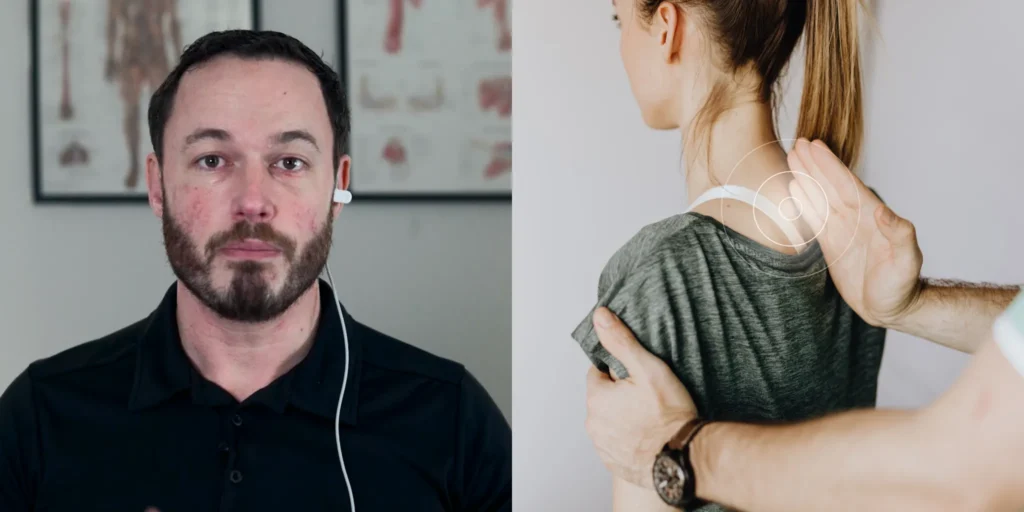
When You’ve Tried Everything To Relieve The Neck Pain – But It Still Keeps Coming Back
You’ve probably already tried:
- changing your pillow
- using heat therapy before bed
- stretching before bed
- posture exercises
- massage guns, physio, or mobility routines
- constantly adjusting your desk or screen height
And yet… the pain still comes back.
By midday, tension starts building in the neck.
Then:
- The ache spreads into the shoulders
- Tension builds between the shoulder blades
- Headaches start showing up
- The jaw feels tight
- Sleep becomes lighter and less restorative
Some people wake up feeling exhausted despite a full night’s sleep.
At some point, many people start thinking:
- “Maybe there’s a nerve issue.”
- “Maybe it’s starting to affect my shoulder too.”
- “Maybe I slept wrong again.”
Om detta låter bekant är du inte ensam.
For years, people have blamed posture, screens, weak muscles, long hours at a desk, or what’s now often called “tech neck.”
And honestly, those things probably do play a role.
Men här är den överraskande sanningen:
“Tech neck” alone does not always explain why symptoms persist or recur.¹
In fact, many people with ergonomic workstations and excellent posture still experience recurring neck pain, while others with less-than-ideal posture remain symptom-free.
Så vad händer?
Why do some people keep hurting despite doing everything they can to relieve it?
What I See In Clinic (15+ Years, Thousands Of Cases)
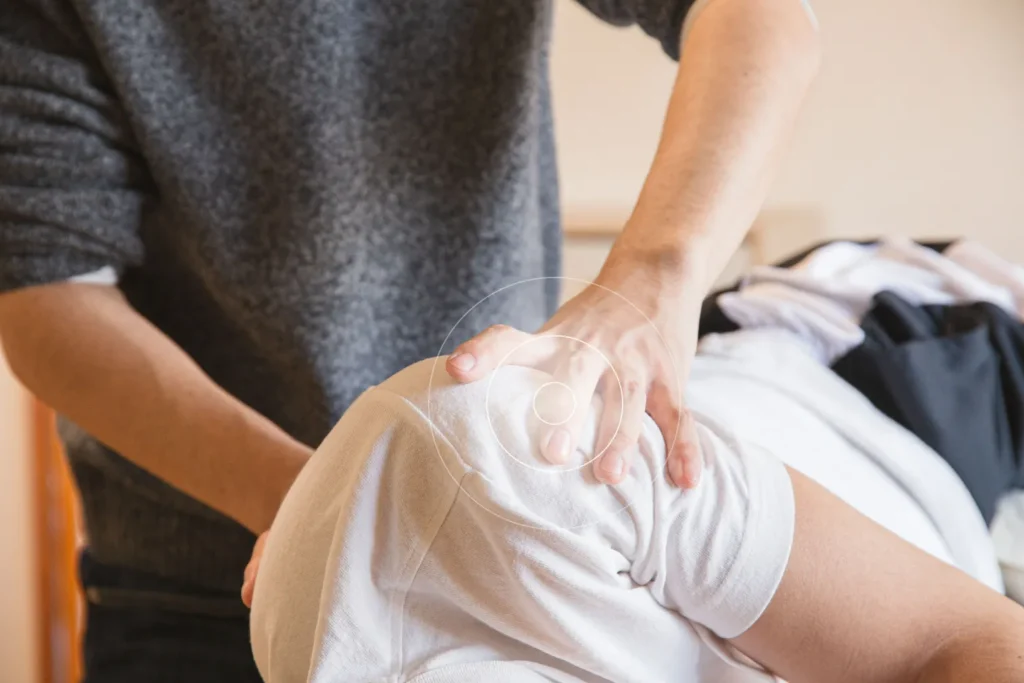
I’ve been working as an osteopat for over 15 years, helping everyone from office workers and busy parents to active people recover from pain, move better, and feel more comfortable in their bodies again.
My work combines:
- osteopathic therapy
- rehabilitation and movement work
- pain education
- lifestyle education and stress-management support where appropriate
Over the years, I’ve worked with people dealing with chronic neck pain, headaches, repetitive strain injuries, frozen shoulders, jaw tension, and recurring pain that keeps returning no matter what they try.
And across all those cases, one pattern keeps showing up again and again:
people improve their posture and try to fix what they think is “tech neck” – but still wake up in pain.
Because often, the problem isn’t just the screen, the phone, or posture itself.
“In some cases, the nervous system may remain in a prolonged protective state.
When You’re Doing Everything Right – But Still In Pain
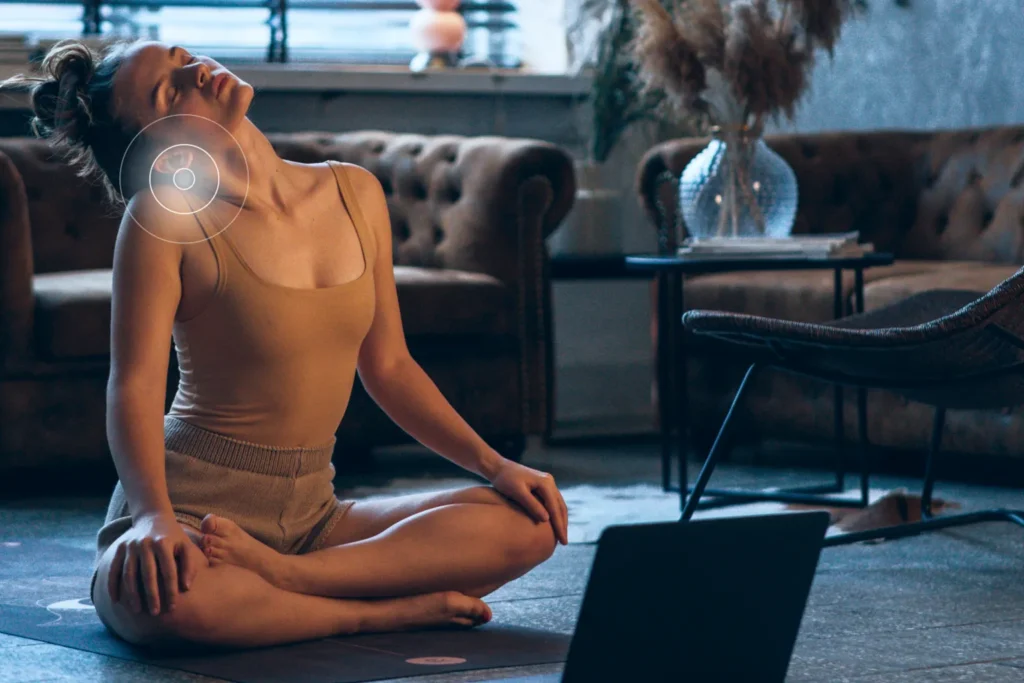
Some of my clients arrive convinced they’re dealing with “tech neck” or early neck degeneration.
Many people already do “all the right things”:
- physio
- stretching
- heat therapy
- posture exercises
- ergonomic setups
- mobility work
And honestly, those things often help temporarily.
Och ändå:
- The neck still feels tight before they've even begun their day
- They keep shifting position, trying to get comfortable
- The jaw, shoulders, or upper back still feel heavy by evening
The problem often goes deeper than posture alone – even when those therapies are helping.
In some cases, heightened stress responses and muscle tension may contribute to persistent symptoms.
“Tech Neck” vs Muscle Tone – The Difference That Changes Therapy
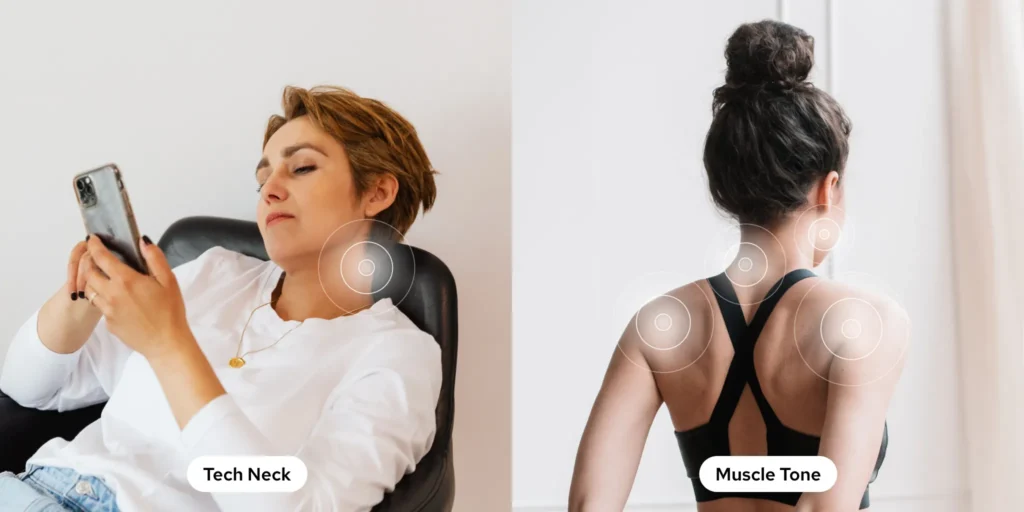
“Tech neck” is the visible position of the body.
Muscle tone refers to the baseline level of activity within a muscle, even at rest.
Prolonged stress responses may contribute to increased resting muscle tension in some individuals. ²
That constant low-level tension can increase stiffness, reduce movement, and make the neck, shoulders, upper back – and sometimes even the lower back – feel stiff, strained, or painful.
It’s like the body never fully lets go – shoulders slightly raised, jaw tight, lower back braced.
Over time, this creates the very discomfort people end up blaming entirely on posture, screens, or “tech neck.”
The Nervous System’s Role In Neck Pain
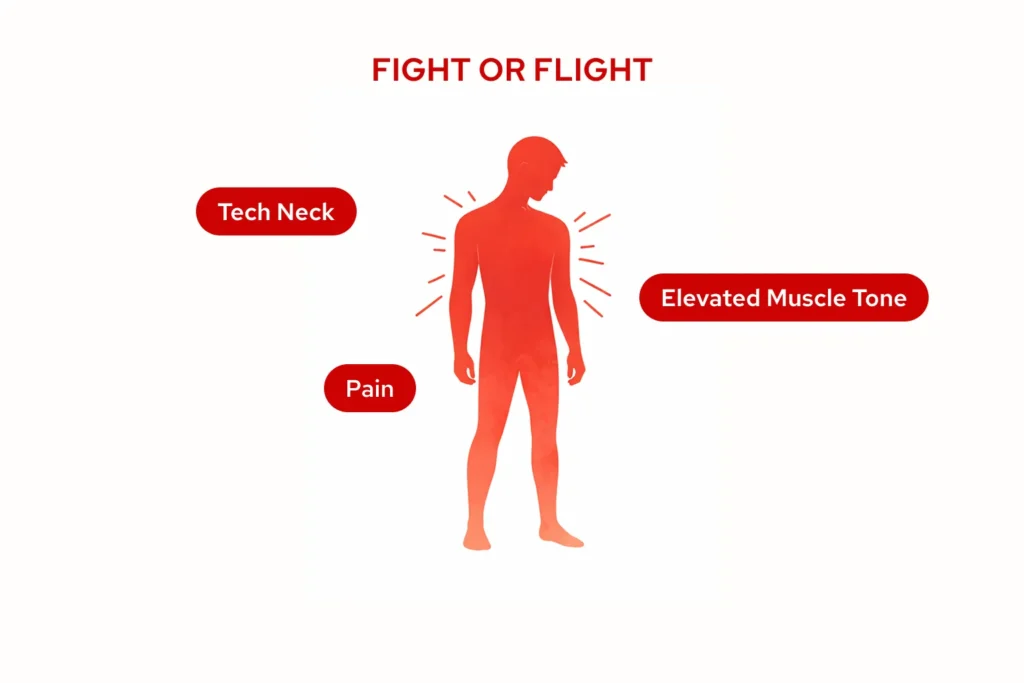
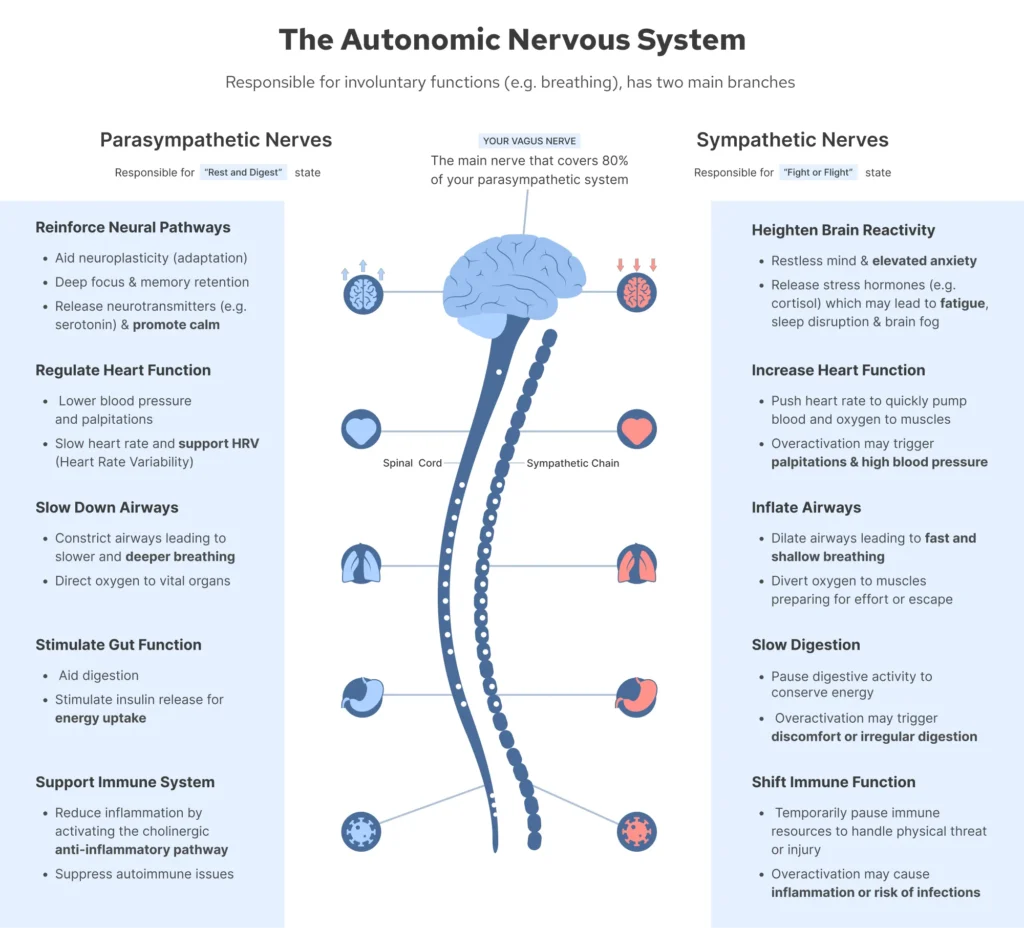
The autonomic nervous system is often described as having two major branches:
- sympathetic (“fight or flight”) - alert and switched on
- parasympathetic (“rest and recover”) - where the body relaxes and repairs
I ett hälsosamt system rör sig kroppen naturligt mellan de två.
But deadlines, notifications, parenting, poor sleep, constant stimulation, and constant mental demands can keep the nervous system stuck in a more protective state.
Some people report feeling persistently tense or unable to relax, particularly during periods of ongoing stress.
And when the brain perceives stress or threat – even subconsciously – the body responds by increasing muscle tension and staying slightly guarded.
It’s like subtly shrugging your shoulders all day without fully realising it.
Over time, many people end up blaming posture alone – without realising the nervous system may be keeping the tension going underneath it.
The Vagus Nerve – Your Body’s “Calm Switch”
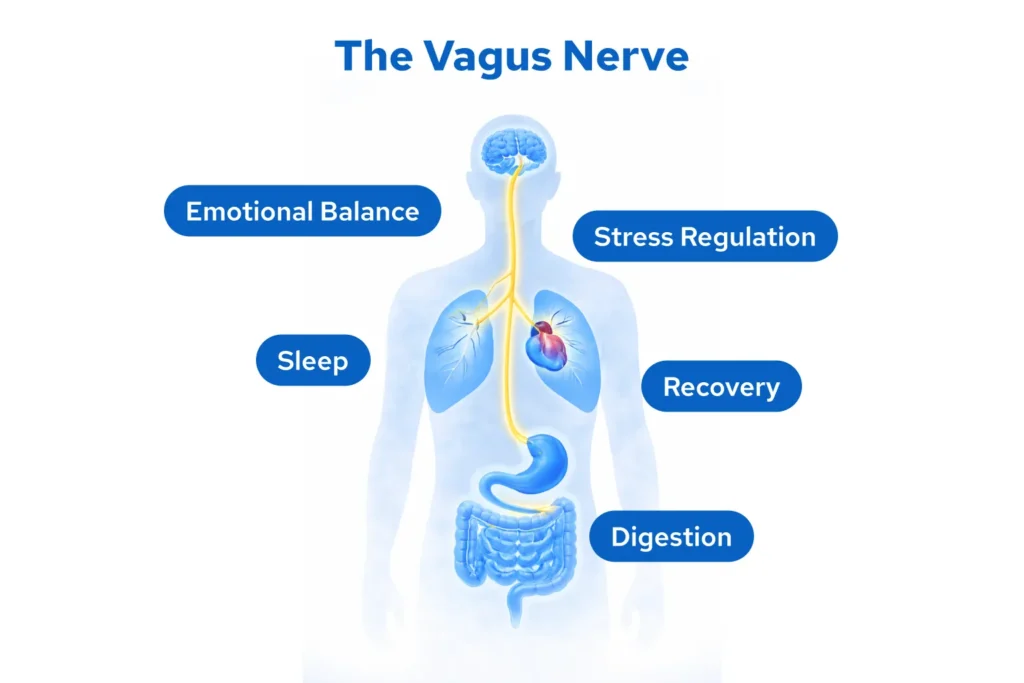
One of the main pathways connected to the body’s recovery state is the vagusnerv – a long nerve running from the brain down through the chest and abdomen.
När vagal ton is strong, the body can shift into a calmer, recovery state more easily.
Stronger vagal activity has been associated with improved recovery, relaxation, and sleep quality.
But when vagal tone is low, the nervous system stays more alert and protective.
Tension lingers.
Sleep becomes lighter.
And even small amounts of stress, screen time, or poor sleep can trigger another flare-up of symptoms.
Vad forskningen säger
The science backs up what I see in the clinic:
Even when people improve posture, stretch regularly, or try to “fix” their tech neck, the nervous system can still stay stuck in a prolonged stress response.
Research suggests chronic stress can increase pain sensitivity and protective muscle tension.
In such cases, taVNS (transkutan aurikulär vagusnervstimulering) has been shown to:
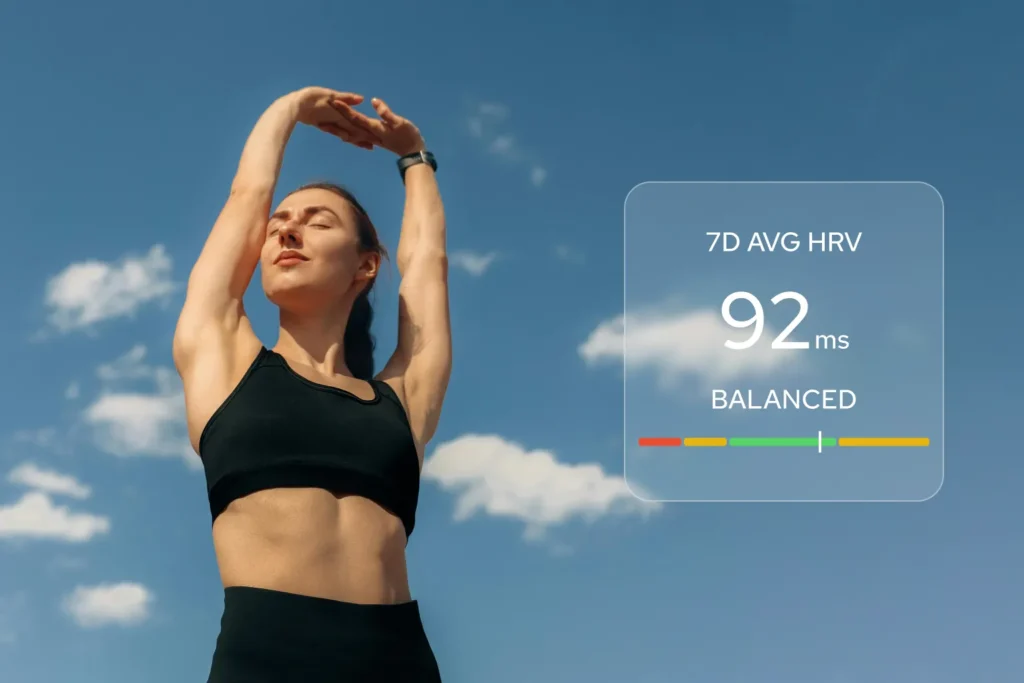
- increase HRV (heart rate variability), a key marker of nervous system recovery and resilience²
- influence pain modulation and muscle activity in preliminary studies³ ⁴
- support parasympathetic nervous system activity²
Safety: More than 60 published studies on taVNS, including work associated with leading research institutions, report no serious adverse events when used appropriately.⁵ ⁶
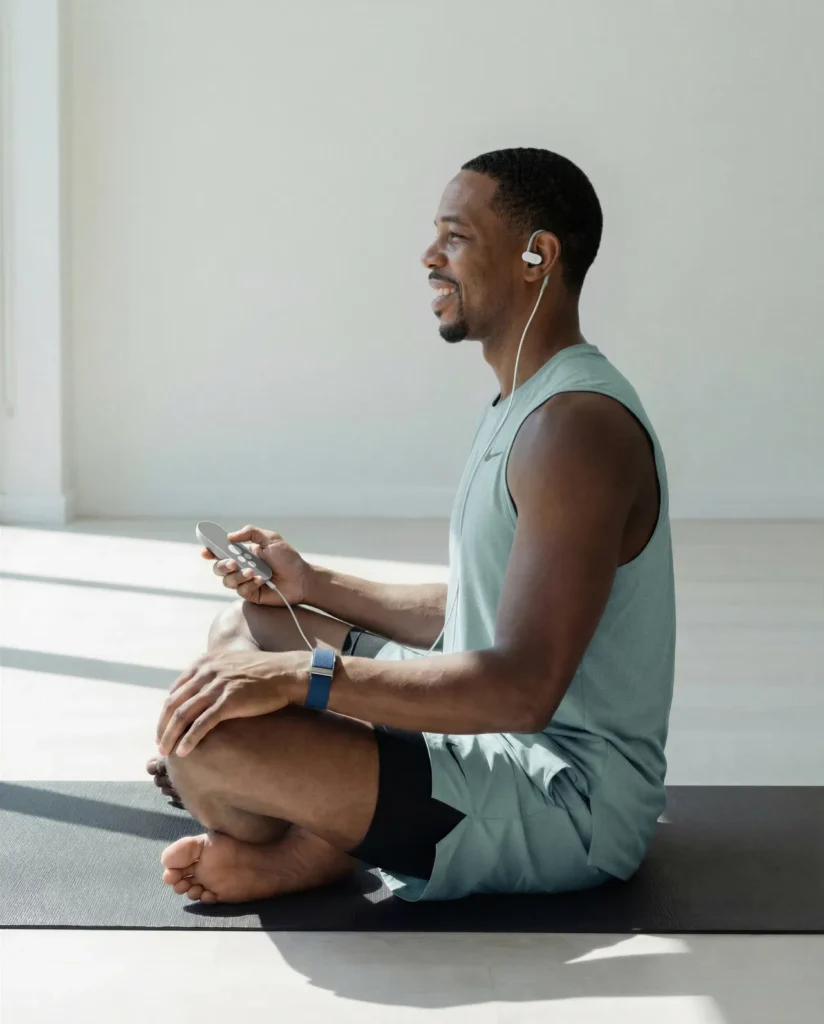
This is also the same type of technology used in devices like Nurosym.
Where Tools Like Nurosym Can Help (At-Home Support)
I always try to identify the factors contributing to symptoms – not just temporarily calming the symptoms.
That means looking at how a person’s nervous system responds to stress, tension, poor sleep, and constant overload – not just treating the neck pain itself.
For some people, especially those who feel constantly tense or “switched on” despite stretching, physio, or healthy habits, I sometimes recommend additional nervous system support at home.
Because realistically, many people already struggle to find extra time for recovery.
Another appointment, another routine, another hour carved out of an already overloaded day isn’t always sustainable.
Vad det är: A CE-marked taVNS device that gently stimulates part of the ear connected to the vagus nerve.
Så fungerar det: It uses gentle electrical pulses delivered to part of the outer ear that is innervated by branches of the vagus nerve. Some users report improvements in relaxation and sleep, although individual responses vary and research is ongoing.
Some people use it while reading, working, eating lunch, or winding down in the evening.
Varför jag rekommenderar det: Compared to many wellness tools on the market, Nurosym is supported by a growing body of research in autonomic nervous system regulation.
Det är inte a “quick fix” or miracle cure. But for some individuals, it may be a useful adjunct to broader strategies to support relaxation and recovery.
The Patterns I See Most Often

The Desk-Job Professional – Spends all day at a laptop, finishes work exhausted, but the neck and shoulders still can’t fully relax.
The “Tech Neck” Spiral – Keeps blaming posture, screens, or scrolling, yet the pain still returns, no matter how careful they become.
The Persistent Symptoms Case – Physio, stretching, massages, heat packs, posture exercises… but the tension and headaches keep creeping back.
The Restless Sleeper – Finally lies down at night, but the neck still feels tense, sleep stays light, and they wake up exhausted, no matter how long they stay in bed.
Vem kan dra nytta av – Och vem ska inte använda det
Might benefit:
- Desk-based workers dealing with recurring neck and shoulder pain
- People whose “tech neck” symptoms keep returning despite physio or posture work
- Those waking up stiff, tense, or with headaches after stressful days
- People who feel constantly “on” and struggle to relax fully, even at rest
Undvik om:
- You have a pacemaker or an implanted cardiac device
- Du är gravid
- Du har haft en allvarlig hjärthändelse nyligen
- Du är under 18 år
Always follow medical advice before starting any new therapy or device.
Ett säkert sätt att prova på
- 30-dagars pengarna-tillbaka-garanti - explore at home with no risk.
- Begränsade studieplatser tillgängliga - some participants may receive a ~€70 subsidy in exchange for providing feedback.
I help sick people decide whether this is a good fit, set up the device correctly, and integrate it into a broader recovery plan.
Final Thoughts: Treat The System, Not Just The “Tech Neck”
Posture matters.
Movement matters.
Sleep, mobility, and ergonomics matter too.
But recurring neck pain is often bigger than just screens or how you hold your head.
Because for many people, the issue goes deeper than posture alone.
In some cases, it may reflect a body that struggles to switch off, even at night.
The result can be a body that feels continuously guarded and slightly “on,” even during rest.
And over time, the body starts carrying that load physically.
If you’ve been trying to fix your “tech neck” without lasting relief, it may be time to look deeper than posture alone.
Because sometimes, helping the nervous system feel safe again is what finally allows the body to relax.
Om du vill ha en bedömning som ser bortom ytan, låt oss prata.
Detta blogginlägg syftar till att vara informativt och bör inte ersätta professionell hälsorådgivning. Rådgör alltid med en vårdpersonal för personlig rådgivning.
Referenser
- Kim, M. S. (2023). Influence of neck pain on cervical movement in the sagittal plane during smartphone use. PMC. https://pmc.ncbi.nlm.nih.gov/articles/PMC9982850/
- Wolf, V., et al. (2021). Does transcutaneous auricular vagus nerve stimulation affect vagally mediated heart rate variability? A living and interactive Bayesian meta-analysis. Psychophysiology, 58(11), e13933. https://doi.org/10.1111/psyp.13933
- Pacheco-Barrios, K., et al. (2024). Transauricular vagus nerve stimulation (taVNS) enhances conditioned pain modulation (CPM) in healthy subjects: A randomized controlled trial. Brain Stimulation, 17(2), 346–348. https://doi.org/10.1016/j.brs.2024.03.006
- Ferreira, L. M. A., et al. (2024). Transcutaneous auricular vagus nerve stimulation modulates masseter muscle activity, pain perception, and anxiety levels in university students: a double-blind, randomized, controlled clinical trial. Frontiers in Integrative Neuroscience, 18, 1422312. https://doi.org/10.3389/fnint.2024.1422312
- Redgrave, J., et al. (2018). Safety and tolerability of transcutaneous vagus nerve stimulation in humans: A systematic review. Brain Stimulation, 11(6), 1225–1238. https://doi.org/10.1016/j.brs.2018.08.010
- Kim, A. Y., et al. (2022). Safety of transcutaneous auricular vagus nerve stimulation (taVNS): A systematic review and meta-analysis. Scientific Reports, 12(1), 22055. https://doi.org/10.1038/s41598-022-25864-1
Dela via:


 Swedish
  English
  German
  French
  Spanish