
Four certified devices, ranked on evidence rather than marketing. What separates them, and what the price tags don’t tell you.

If you’ve done the elimination diets, low FODMAP, dairy, gluten, the lot.
Colonoscopy clear, bloods clear, coeliac negative.
Then you found the research on the gut-brain axis, and something finally lined up with what your body actually does.
So now you’re looking at four devices… lost.
Here’s what separates them.
Why the Vagus Nerve?
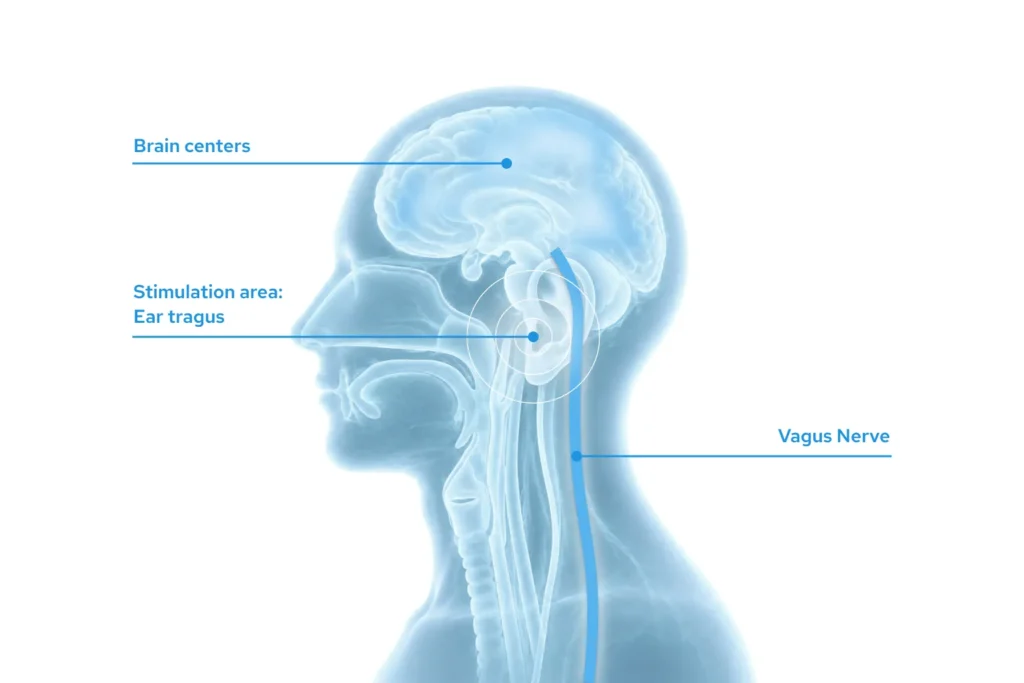
The vagus nerve is the physical wiring between your gut and your brain.
Not a metaphor for the gut-brain connection, the actual cable.
It’s the main parasympathetic supply to your entire digestive tract, and it’s why Irritable Gut was formally reclassified as a disorder of gut-brain interaction rather than a functional complaint.
When its signalling is weak, the effects are mechanical:
- Motility goes erratic, which is why you swing between extremes
- Visceral sensitivity climbs, so ordinary gut activity starts registering as pain
- Digestive secretions drop, because digesting isn't a priority in fight-or-flight
- Low-grade inflammation goes unchecked, since vagal signalling is what dampens it
Here’s the part that matters:
Most of the traffic runs from your gut to your brain, not the other way.
Roughly 80% of vagal fibres are afferent.
Which means your gut is mostly reporting to your brain, not receiving orders from it.
That’s why the stress makes the gut worse, and the gut makes the stress worse, on a loop, and why treating either end alone only ever half-works.
What Actually Separates These Four Devices
- Evidence base.
Three of the four devices on this list have never been studied for gut symptoms.
Some have no published efficacy research at all. That gap is not a technicality when you’ve already spent two years on approaches that half-worked.
- Placement: Ear devices target the tragus, the only spot a cranial nerve reaches the surface. The FDA has separately cleared an auricular neurostimulation device for irritable gut-related abdominal pain in adolescents, which tells you the ear-to-gut pathway is taken seriously by regulators. Neck devices work near the carotid.
- Consumables. Two of these need a gel or spray to work at all.
The Four Devices: An Honest Ranking
#1: Nurosym
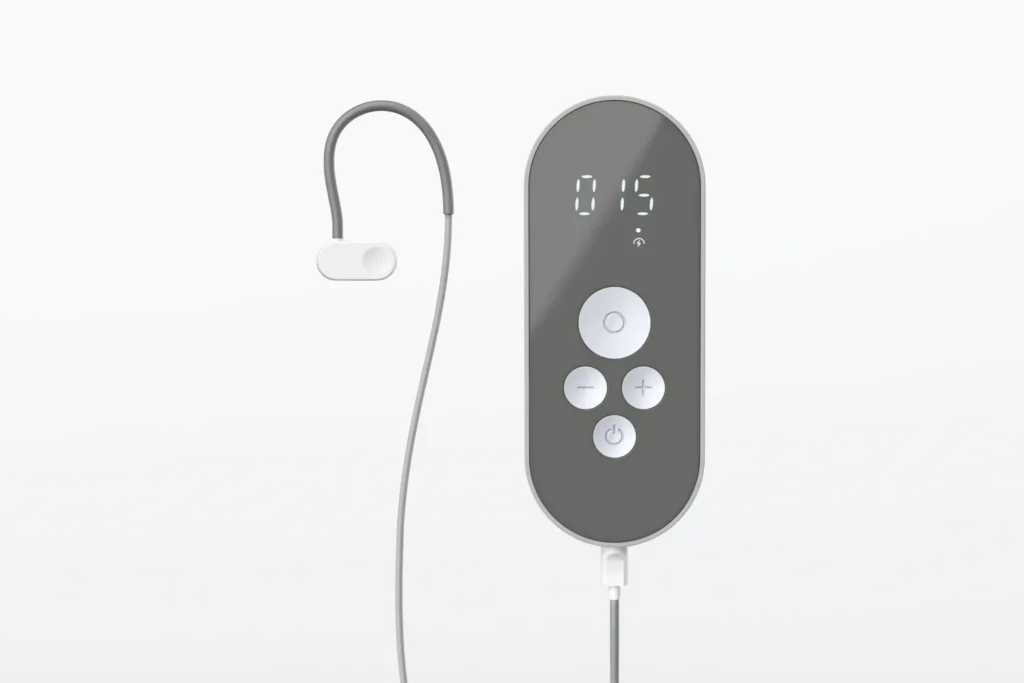
€700 (research subsidy available) · Auricular · AVNT™ by Parasym
Nurosym has 60+ completed scientific studies supporting its mechanism; Pulsetto and Sensate have none.
- Studies using AVNT™ technology document a 61% improvement in vagal tone metrics
- Auricular placement, the same pathway regulators have recognised for gut-related pain
- Zero serious adverse events reported in studies to date
- CE-marked, verified by independent third-party assessment
- Over 4,000,000 supervised stimulation sessions completed; used by 1,000+ health professionals
- No consumables, buy it once
- 100-day evaluation period
Best for: anyone whose gut symptoms have survived a clear colonoscopy, a clean coeliac screen and every diet on the list.
#2: Truvaga Plus
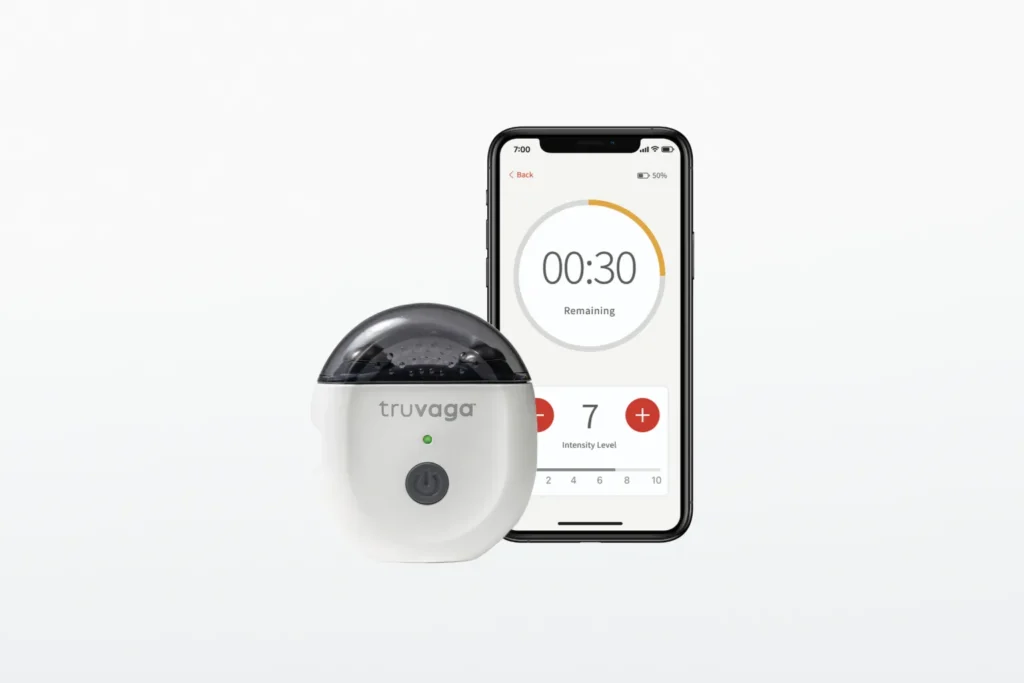
$544+ (device 499,spray~45/year) · Cervical, handheld
Shares its technology lineage with gammaCore, which holds FDA clearance for headache. Rapid parasympathetic effects, simple protocol.
Neck-worn devices carry a risk of facial droop and muscle spasms that ear devices don’t.
- Reported adverse effects in a subset of users include muscle spasms, facial droop, lip pull and localised headache
- The FDA clearance is for headache, not for gut symptoms or autonomic dysregulation
- No published outcome data on motility, visceral pain or bowel habit
- Not suitable with pacemakers, cardiac symptoms or recent cardiovascular events
#3: Pulsetto
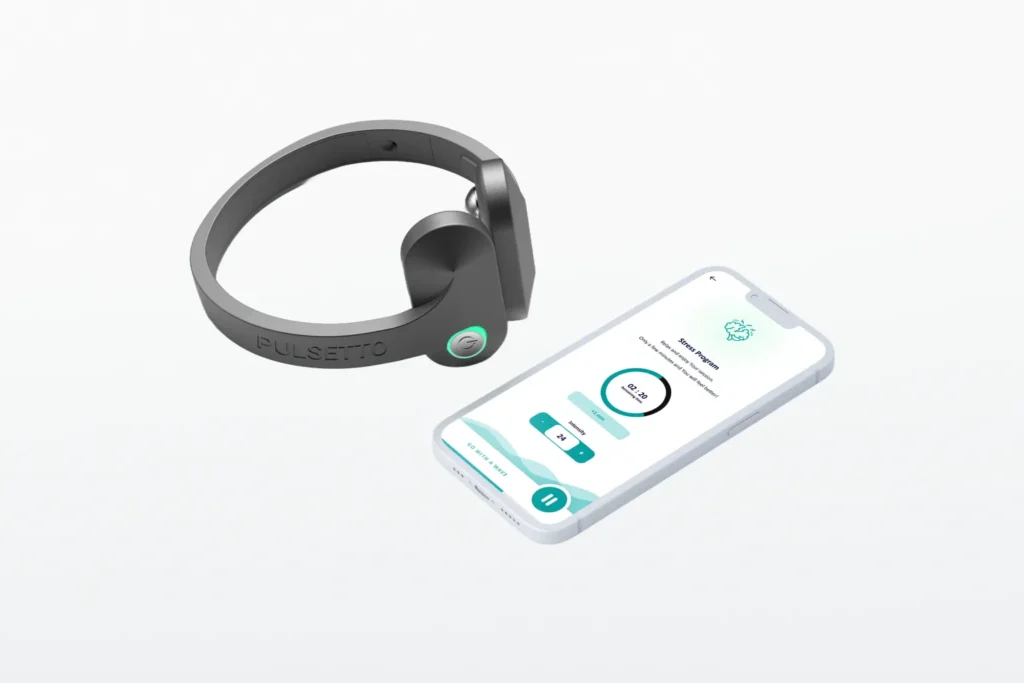
$350–371 (device $269, gel $81–102/year) · Cervical collar
Hands-free design, HSA and FSA eligible, two-year warranty.
The cheaper devices need gel or spray you’ll rebuy every year.
- We found no published peer-reviewed efficacy studies for gut symptoms or autonomic dysregulation
- Fit problems are frequently reported, particularly on smaller necks, which means inconsistent nerve contact
- Over three years, the gel brings the real cost close to the devices it undercuts
#4: Sensate
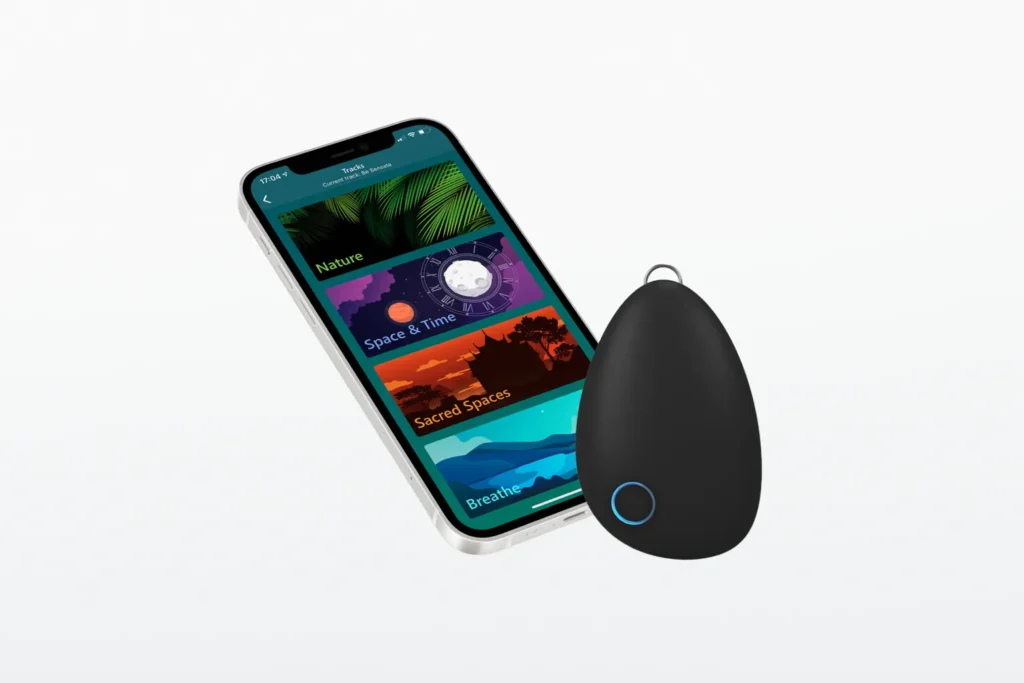
$299–349 · Chest-worn vibrotactile
A pebble-shaped device worn on the sternum, with an app and soundscapes. Pleasant, and genuinely relaxing for some people.
But it isn’t VNS. It uses infrasonic vibration and bone conduction at the chest rather than electrical stimulation of the vagal pathway.
Stress is a real irritable gut trigger, so a wind-down tool isn’t useless here. It just works on one input rather than on the nerve doing the signalling.
Best for: a wind-down tool alongside something else. Not a rehabilitation device.
The Verdict
If you’re choosing based on evidence, it isn’t close.
The goal is eating a meal without planning the rest of your day around it.
Expect changes in bloating and post-meal comfort before changes in bowel habits.
Real autonomic recalibration takes 8 to 12 weeks of daily use.
Disclaimer: This article has been written by a licensed medical professional and is intended for general informational purposes only. It does not substitute for personalised medical advice, diagnosis, or therapy. Always seek the guidance of a qualified health professional with any questions regarding a medical symptom or health objective.
Sources
- Bonaz B, Bazin T, Pellissier S. The Vagus Nerve at the Interface of the Microbiota-Gut-Brain Axis. Frontiers in Neuroscience. 2018;12:49. https://doi.org/10.3389/fnins.2018.00049
- Breit S, Kupferberg A, Rogler G, Hasler G. Vagus Nerve as Modulator of the Brain-Gut Axis in Psychiatric and Inflammatory Disorders. Frontiers in Psychiatry. 2018;9:44. https://doi.org/10.3389/fpsyt.2018.00044
- Drossman DA. Functional Gastrointestinal Disorders: History, Pathophysiology, Clinical Features and Rome IV. Gastroenterology. 2016;150(6):1262-1279.
- Kovacic K, Hainsworth K, Sood M, et al. Auricular neurostimulation for adolescents with functional abdominal pain: a randomised, double-blind, sham-controlled trial. The Lancet Gastroenterology & Hepatology. 2017;2(10):727-737.
- Tracey KJ. The inflammatory reflex. Nature. 2002;420(6917):853-859. https://doi.org/10.1038/nature01321
- Kaniusas E, Kampusch S, Tittgemeyer M, et al. Current Directions in the Auricular Vagus Nerve Stimulation I: A Physiological Perspective. Frontiers in Neuroscience. 2019;13:854.
- Borges U, Laborde S, Raab M. Influence of transcutaneous vagus nerve stimulation on cardiac vagal activity: A randomized controlled study. PLOS ONE. 2019;14(10):e0223848.



 English
  German
  French
  Spanish
  Swedish